Aussie Trick Dogs on Television
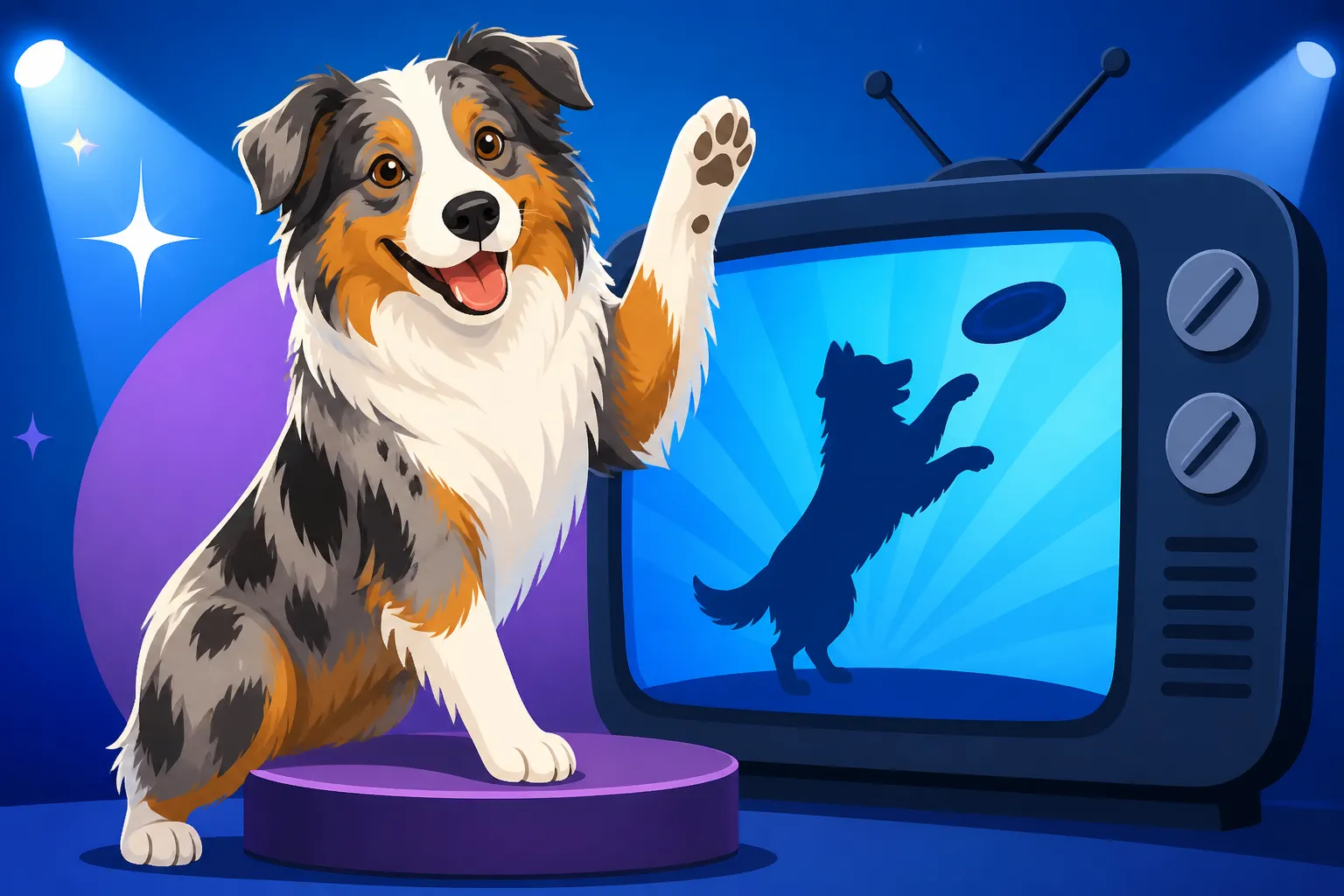
People often watch television shows and movies, utterly mesmerized by the incredible feats performed by canine actors, especially those brilliant Australian Shepherds. You see them leaping, fetching obscure objects, hitting their marks with precision, and even acting out complex emotional cues, making you wonder, "How on earth do they do that?" It's easy to assume these dogs are born with an extraordinary talent, or that their owners possess some secret magic. But the truth behind these four-legged stars is a fascinating blend of natural breed aptitude, dedicated training, and a whole lot of patience. This guide will pull back the curtain on the world of Aussie trick dogs in television, exploring their history, their innate abilities, the rigorous training that goes into their performances, and how you can tap into that same potential with your own beloved companion.
The Legacy of Australian Shepherds in Entertainment
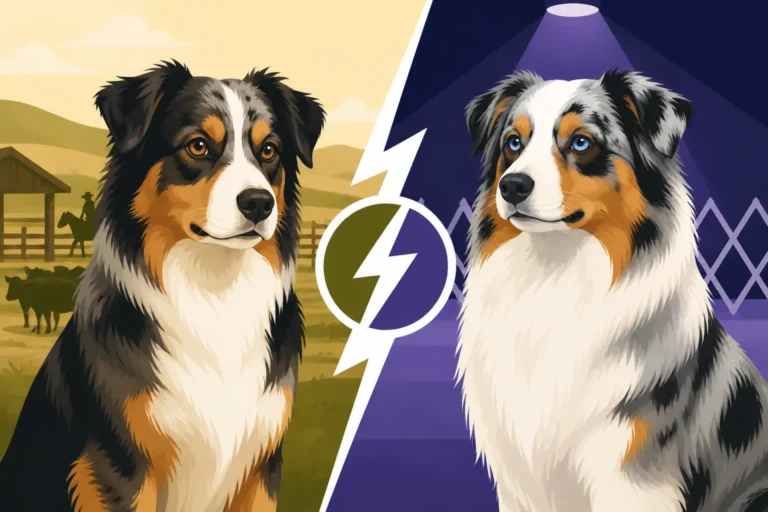
Long before Australian Shepherds were gracing our television screens, they were already captivating audiences with their intelligence and athleticism in live performances. Their journey from working ranches to the spotlight is a testament to their versatile nature and incredible trainability. It wasn't just their beauty or striking eyes that caught attention; it was their genuine eagerness to engage and perform.
Rodeo Arenas and Early Performers
The story of the Australian Shepherd's rise to entertainment fame truly begins in the dusty rodeo arenas of the American West. As we touched on in How Rodeos Made the Australian Shepherd Famous, these dogs were invaluable partners to cowboys, herding cattle and assisting with chores. But when the action paused, many quick-witted Aussies, often accompanying their owners, would step into the spotlight to perform incredible tricks.
These early performances weren't scripted Hollywood productions. Instead, they were spontaneous demonstrations of the dogs' natural talents, often involving jumping through hoops, retrieving specific items, or performing complex weaving patterns around their handlers' legs. These acts served as lively intermissions, showcasing the breed's agility and intelligence to an admiring public. Their charismatic presence and quick learning made them natural show dogs, even if their primary role was still on the ranch. These were the roots of their entertainment career, showing audiences just how capable and engaging an Aussie could be.
The Evolution to Screen
From the sawdust of the rodeo ring, it was a fairly natural progression for Australian Shepherds to transition to film and television. As their popularity grew and their reputation for intelligence spread, filmmakers and animal trainers began to take notice. The ability of these dogs to learn complex sequences, coupled with their striking appearance, made them ideal candidates for the growing demands of the entertainment industry. Early film shorts and commercials featuring dogs often sought out breeds that could reliably perform multiple actions on cue.
The Australian Shepherd, with its keen focus and desire to please, proved to be an excellent choice. Their captivating gaze and expressive faces translated beautifully onto the screen, allowing them to convey a range of emotions or intentions as required by a script. This transition was gradual, but once audiences saw these clever dogs in movies and on television, their star appeal became undeniable. They weren't just background animals; they were often central characters, solving problems, providing comic relief, or performing heroic deeds, cementing their place as beloved canine actors.
The Natural Aptitude: Why Aussies Excel at Tricks
It's not just luck or intensive training that makes Australian Shepherds so adept at performing tricks. A significant part of their success lies in their inherent breed characteristics. These traits, honed over generations for working livestock, translate incredibly well into the world of canine performance.
Innate Intelligence and Drive
Australian Shepherds are, by nature, highly intelligent dogs. They were bred to work closely with humans, often having to think independently to manage livestock, which means they possess a remarkable capacity for problem-solving and learning. This intelligence isn't just about understanding commands; it's about interpreting cues, adapting to new situations, and sometimes, anticipating what their handler wants. This is a crucial foundation for any trick dog.
Beyond intelligence, Aussies possess an immense drive. They are motivated, often intensely so, by the opportunity to work and engage with their people. This drive can manifest as a strong desire for praise, food, or simply the sheer joy of participation. When harnessed correctly, this means they approach training sessions with enthusiasm and focus, eager to learn and repeat behaviors. This inherent motivation makes the learning process faster and more enjoyable for both dog and trainer, turning what might be a chore for some breeds into an exciting challenge for an Aussie. Many owners find that even just basic obedience training for their Aussie requires significant mental engagement, as explored in Mental Work That Actually Tires an Australian Shepherd.
Agility and Physical Prowess
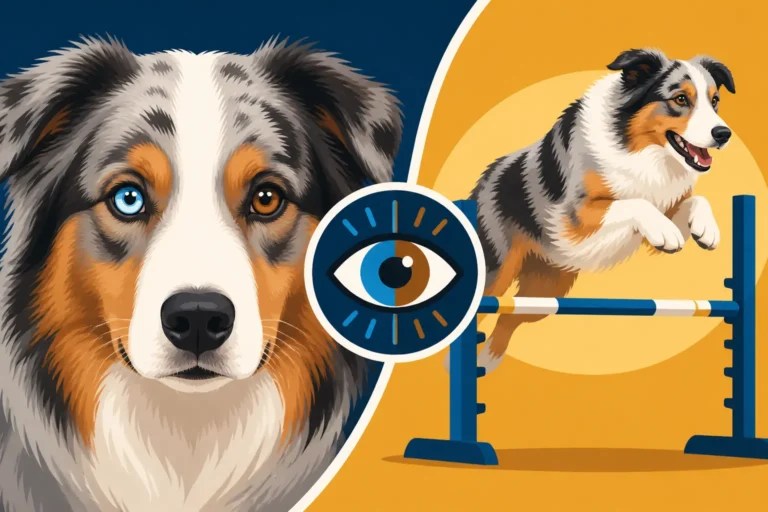
Watch an Australian Shepherd work, and you'll quickly notice their incredible agility. They are built for speed, quick turns, and effortless jumps. Their medium size, muscular build, and balanced proportions allow them to move with grace and power. This physical prowess is a huge asset when it comes to performing complex tricks that involve jumping, weaving, balancing, or navigating obstacles.
Whether it's leaping over a prop, catching a frisbee mid-air, or executing a rapid series of movements, their natural athleticism makes these feats look seamless. This isn't just about raw strength; it's about body awareness and coordination. An Aussie instinctively knows how to use its body effectively, which is something trainers can build upon to teach increasingly intricate physical tricks. Their resilience and stamina also mean they can sustain longer training sessions and multiple takes on a busy film set, without quickly fatiguing.
Herding Instinct as a Foundation
Perhaps one of the most unique aspects of the Australian Shepherd's aptitude for trick work comes from their deep-seated herding instinct. As discussed in Why Herding Instinct Is the Aussie Operating System, these dogs were bred to control and direct the movement of livestock. This fundamental drive might seem unrelated to performing tricks for a camera, but it provides a powerful framework for training.
The herding instinct gives Aussies an incredible focus on movement and a natural ability to "read" their handler's body language. They are keenly observant, picking up on subtle shifts in posture, gaze, and hand signals. This makes them highly responsive to remote cues, which are essential for filming where a trainer might be out of sight. Furthermore, the instinct to gather and control can be channeled into precision work – holding a specific position, staying on a mark, or moving props in a particular way. It’s about manipulating their environment, which, in a trick context, means manipulating objects or their own body with precise intent. This innate drive, when channeled creatively, turns a working dog into a spectacular performer.
Behind the Scenes: Training a Television Trick Dog
The dazzling performances we see on screen are the culmination of countless hours of dedicated, strategic training. It’s a methodical process that starts long before a dog ever steps onto a film set, focusing on building a strong foundation of trust, communication, and specific skills.
Early Foundations and Socialization
Just like any well-adjusted dog, a future canine actor needs a solid upbringing. This means starting with extensive socialization from a very young age. Puppies destined for a career in entertainment are exposed to a wide variety of sights, sounds, people, and environments. This isn't just about preventing fear; it's about building confidence and adaptability. A dog that is comfortable with loud noises, strange equipment, bustling crowds, and various handlers will be far more successful on a chaotic film set. The Aussie Puppy Curriculum Month by Month is a great resource for understanding the comprehensive development needed.
Basic obedience is the bedrock upon which all trick training is built. A dog that reliably responds to "sit," "stay," "come," and "down" under any distraction is already well on its way. These aren't just commands; they're the language of communication between dog and handler. Building a strong bond of trust and a clear understanding of expectations in a variety of settings, as detailed in Socializing an Aussie Puppy Off the Farm, ensures the dog feels secure and understands its role, even when faced with novel and potentially intimidating situations during filming. Without this strong foundation, advanced trick training would be incredibly difficult, if not impossible.
Positive Reinforcement and Shaping
The primary method for training trick dogs, especially those working in demanding environments like television, is positive reinforcement. This approach focuses on rewarding desired behaviors, making the learning process enjoyable and motivating for the dog. Trainers use high-value treats, toys, and praise to mark and reinforce correct actions. This builds a positive association with training and encourages the dog to offer behaviors eagerly. When looking for quality treats for training, many professionals and hobbyists alike turn to trusted online suppliers like Chewy for their extensive selection of options suitable for repetitive rewards.
Shaping is a key technique used in positive reinforcement, where a trainer rewards successive approximations of a desired behavior. For instance, to teach an Aussie to "play dead," the trainer might first reward the dog for lying down, then for rolling onto its side, then for staying still, and finally for adding a "bang" cue. This patient, step-by-step process allows dogs to figure out complex actions on their own, fostering problem-solving skills and confidence. It’s about breaking down elaborate tricks into tiny, manageable steps, and celebrating every small success along the way. This method not only teaches the trick but also strengthens the dog’s enthusiasm for learning and cooperation.
Specialized Skills for Filming
Training for film and television goes far beyond typical obedience or even advanced trick work. Canine actors need specialized skills to perform effectively on set. One critical skill is "hitting a mark," which means going to and staying in a specific spot, often indicated by tape on the floor, regardless of cameras, lights, or crew moving around them. This requires immense focus and reliability. Another is learning to work with props: fetching specific items, interacting with them in a particular way, or even carrying them for a set duration.
Dogs must also learn to ignore distractions, which are plentiful on a busy set. They might need to maintain a "stay" while people walk by, equipment clangs, or other animals are present. Furthermore, performing an action multiple times, perfectly consistently, for different camera angles is essential. This repetition can be tiring, so trainers also teach dogs an "off switch" – moments where they can relax and disengage, often in a crate or designated quiet space, ensuring they don't get overstimulated. Finding enrichment toys and comfortable crates for these quiet breaks is easy with online retailers like Chewy, which offers a wide array of options for working dogs.
From Audition to Screen: The Life of a Canine Actor
The journey from a well-trained dog to a television star involves more than just knowing tricks. It requires navigating the unique pressures and demands of the entertainment industry, which can be far more complex than a typical dog sport or competition.
The Demands of a Production Set
A film or television set is an environment unlike any other. It’s often loud, with crew members shouting, equipment moving, and bright lights shining. Days can be long and unpredictable, with extensive waiting periods followed by bursts of intense activity. For a canine actor, this means being able to perform on cue, sometimes repeatedly, under varying conditions and distractions. They might need to hit the same mark, perform the same sequence, or react in the same way for multiple takes from different angles.
This requires extraordinary focus and resilience. The dog needs to be adaptable, comfortable with strangers, and unfazed by strange objects or sudden movements. A dog might spend hours waiting in its crate, only to be called to perform for a few minutes, then wait again. This stop-and-start nature, coupled with the pressure of a tight production schedule, means only the most confident and well-trained Aussies truly thrive in this demanding professional setting.
Welfare and Ethical Considerations
The ethical treatment and welfare of animal actors are paramount in the entertainment industry. Responsible production companies and animal trainers adhere to strict guidelines to ensure the dogs are safe, comfortable, and treated humanely. This includes providing regular breaks, access to water and shade, and ensuring that no animal is ever put in a situation that causes undue stress or harm. The American Humane Association often monitors sets to ensure "No Animals Were Harmed."
A good trainer always prioritizes the dog's well-being over the shot. This means knowing when a dog needs a break, when it’s too tired, or when a particular task might be causing stress. Positive reinforcement methods are crucial, ensuring the dog enjoys its work and isn't coerced or intimidated. The bond between the dog and its trainer is central to ethical practice, as it allows the trainer to read the dog’s cues and advocate for its needs, ensuring a happy and healthy working life for the canine star.
The Star Aussies You Might Have Seen
While specific names of current canine actors aren't widely publicized for various reasons, Australian Shepherds have consistently appeared in roles where intelligence, agility, and a strong bond with a human character are key. You might have seen an Aussie playing a loyal companion in a family drama, a quick-thinking search and rescue dog in an action series, or a clever sidekick in a comedy. Their striking looks, especially the captivating blue eyes often seen in merle patterns, make them visually memorable on screen.
Their versatility allows them to portray a wide range of characters, from the serious and heroic to the playful and mischievous. They often appear in commercials, too, demonstrating products with their signature enthusiasm. These roles, whether big or small, showcase the incredible talent and dedication of these dogs and their trainers, bringing joy and wonder to audiences around the world who appreciate the magic that a well-trained Australian Shepherd can bring to storytelling.
Bringing the Magic Home: Teaching Your Aussie Basic Tricks
Inspired by the dazzling performances on TV? The good news is that you don't need a Hollywood budget or a professional trainer to teach your own Australian Shepherd some impressive tricks. With patience, consistency, and positive reinforcement, you can unlock your Aussie's potential and strengthen your bond.
Starting with Basic Obedience
Before attempting any elaborate tricks, ensure your Australian Shepherd has a solid foundation in basic obedience. Commands like "sit," "stay," "down," and "come" are not just polite manners; they are the building blocks for more complex behaviors. If your Aussie struggles with staying put when distractions are present, as might be the case described in Australian Shepherd Recall Around Moving Things, then perfecting that "stay" is crucial before trying to teach them to balance a treat on their nose.
Practice these commands in various environments, gradually introducing more distractions. Reliability is key. A dog that is confident in its understanding of basic cues will be much more eager and able to learn new, exciting tricks. Think of it as learning the alphabet before you can write a novel; each command is a letter, and tricks are the words and sentences you’ll form. The stronger the basics, the more intricate the tricks you can build upon them.
Fun and Engagement Over Perfection
Remember, the goal of teaching tricks at home isn't to create a Hollywood star, but to engage your Aussie's mind, provide enrichment, and build a stronger relationship with them. Keep training sessions short, positive, and fun. Australian Shepherds thrive on interaction and mental stimulation, so making it a game rather than a chore will yield the best results. If your dog isn't having fun, you're doing it wrong.
Don't strive for perfection on every single attempt. Celebrate small successes and ignore mistakes. If your dog isn't getting a trick, break it down into smaller steps or try a different approach. The emphasis should always be on making it a positive experience for your dog. A happy, engaged Aussie will be a willing learner, even if their "spin" isn't quite as tight as the one you saw on TV. This consistent, positive interaction is vital for an Australian Shepherd, as their intelligence means they need constant mental work to truly thrive.
Resources and Tools for Home Trainers
There's a wealth of resources available for aspiring trick dog trainers. Online tutorials, books, and even local dog training classes can provide guidance and inspiration. Look for trainers who use positive reinforcement methods. For specific tools, a good clicker can be invaluable for precise timing when marking desired behaviors. High-value, small treats that are easy to swallow quickly are also essential – you'll be giving a lot of them! Many owners find that purchasing training treats and engaging puzzle toys from online pet stores like Chewy offers convenience and a wide selection to keep things interesting for their smart Aussies.
Additionally, consider using props like small cones, agility tunnels, or even a simple blanket for tricks like "hide and seek" or "find it." Puzzle feeders are also fantastic for mental enrichment, and you can find a diverse range on platforms like Chewy to keep your Aussie's mind sharp even when you're not actively training tricks. Remember, consistency is your best tool. Even five to ten minutes of trick training a few times a day can make a huge difference in your Australian Shepherd's happiness and skill set.
| Trick Category | Examples of Tricks | Suitability for Aussies | Key Training Focus |
|---|---|---|---|
| Basic Obedience | Sit, Stay, Down, Come, Heel | Excellent | Foundation for all other tricks, reliable response under distraction. |
| Body Awareness | Spin, Weave, Bow, Play Dead, Roll Over | Excellent | Coordination, understanding body movement, handler cues. |
| Retrieve & Carry | Fetch specific toy, Carry a basket, Get leash | Excellent | Motivation, focus on object, gentle mouth, specific target. |
| Problem Solving | Open/close door, Turn on light, Ring bell | Very Good | Sequencing behaviors, understanding cause-and-effect, object manipulation. |
| Impulse Control | Leave it, Catch treat, Wait for food | Excellent | Self-control, patience, focus despite temptation. |
| Advanced Agility | Tunnel, Jumps, Weaves, Disc Dog | Outstanding | Speed, precision, handler communication, high energy output. |
Disclaimer
This article is for general informational purposes only and does not constitute professional advice. Laws, prices and regulations vary by location and change over time. Consult a qualified professional for guidance on your specific situation.