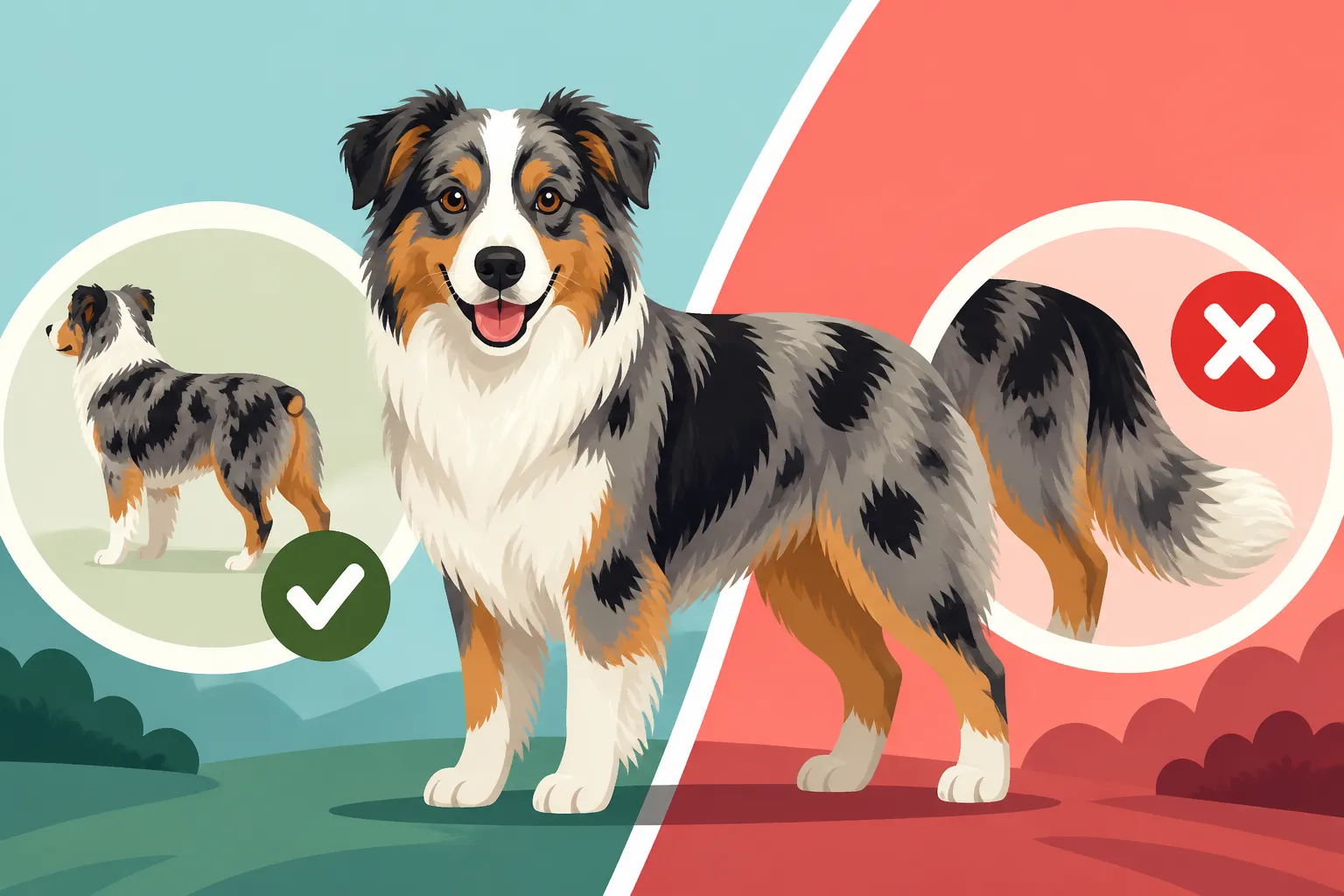
Tail Docking in Australian Shepherds Today
One common point of confusion and sometimes even distress for new Australian Shepherd owners, or those simply admiring the breed, revolves around their tails. You might see some with barely a nub, others with a flowing plume, and wonder what's natural or what's even allowed. This guide will untangle the complicated history and modern realities of tail docking in Australian Shepherds, helping you understand the different tail types and the changing attitudes surrounding them.
The Historical Roots of Australian Shepherd Tail Docking
For generations, the image of a working Australian Shepherd often included a short, "bobbed" tail. This wasn't just for aesthetics; it was deeply rooted in the practical demands of their work. Australian Shepherds were bred to be agile, quick-moving herding dogs, darting through brush, around livestock, and under fences. A long, flowing tail, in this rugged environment, was often seen as a liability, prone to injury.
Imagine an Aussie weaving through a dense thicket after a stray lamb, or crouching low to the ground to avoid a charging steer. A long tail could easily get caught, stepped on by livestock, or snagged on barbed wire, leading to painful injuries, infections, and time off work. To preempt these issues, early breeders often docked tails shortly after birth, a practice believed to benefit the dog's long-term health and ability to perform its duties. This historical context shaped the breed's appearance for decades, making the short tail an expected trait in many lines. This practice wasn't unique to Aussies; many herding and working breeds traditionally had their tails docked for similar reasons.
However, not all Australian Shepherds were born with long tails that needed docking. The breed also carries a fascinating genetic trait: the Natural Bobtail, or NBT. Some puppies are simply born with tails ranging from barely visible nubs to half-length bobtails, no surgical intervention required. This genetic predisposition further solidified the "short tail" look within the breed, blurring the lines between what was naturally occurring and what was surgically altered. It's a complex picture, one that speaks to both nature and human intervention in shaping the breed we know today.
Understanding the Australian Shepherd Breed Standard and Tails
The breed standard is essentially the blueprint for what an ideal Australian Shepherd should look like and how it should behave, set by national breed clubs. For a long time, these standards, notably from organizations like the Australian Shepherd Club of America (ASCA) and the American Kennel Club (AKC), either preferred or explicitly called for a docked or naturally bobbed tail.
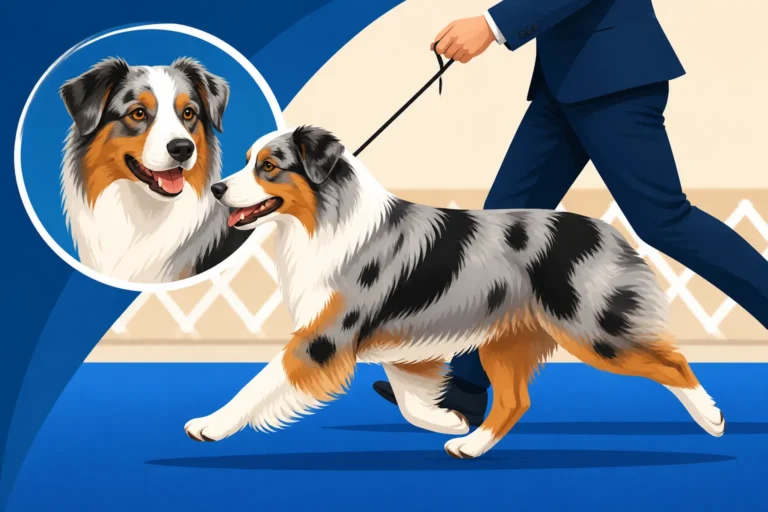
Historically, the ASCA standard stated that "tails are docked or naturally bobbed, not to exceed four inches." This preference was a direct nod to the breed's working heritage, where a short tail was considered practical and functional. For show rings, a tail that was too long could even be considered a fault. This meant that puppies born with full tails, even if they were otherwise exceptional, would almost certainly be docked if they were destined for the show ring or traditional working homes. The visual expectation of a short tail became deeply ingrained in the breed's identity. You can learn more about how genetics play a role by reading about The Aussie Bobtail Gene and Its Lethal Pairing.
However, societal attitudes and veterinary ethics have evolved significantly over time. Many countries around the world have banned or heavily restricted the practice of non-therapeutic tail docking, considering it an unnecessary cosmetic surgery. This has put breed clubs in a tricky position, balancing tradition with modern animal welfare concerns. In some regions, Aussies are now shown with full tails, and judges are instructed to not penalize them. This shift is a slow but steady acknowledgment that a dog's tail length does not define its ability or its value as a breed member. You might be surprised to learn about Whether a Long Tail Faults an Aussie in the Ring in various show circuits today. The conversation around Australian Shepherd Proportions in the Standard is ongoing, with more emphasis being placed on overall balance and function rather than a single physical characteristic like tail length.
The Ethical and Welfare Debate Around Tail Docking Today
The decision to dock an Australian Shepherd's tail, if not naturally bobbed, has become a hot-button issue, sparking passionate debates among breeders, veterinarians, and owners. At its core, the controversy boils down to animal welfare.
For those who advocate against docking, the primary arguments center on the pain and potential long-term impacts on the dog. Surgical tail docking is typically performed on puppies just a few days old, often without anesthesia, though practices vary. Critics argue that even at this young age, puppies experience pain, and that docking is an unnecessary elective procedure. Furthermore, a dog's tail is a crucial tool for communication. It helps them signal their mood, intentions, and social status to other dogs and humans. A docked tail, or a natural bobtail, can significantly limit this form of expression, potentially leading to misunderstandings in dog-to-dog interactions. Owners of bobtailed Aussies sometimes notice their dogs have to work harder with their whole body to convey messages that a long-tailed dog might signal with a simple flick of its tail. This can impact their The Aussie Reputation Among Trainers as a whole.
Veterinary organizations in many parts of the world, including the American Veterinary Medical Association (AVMA) in the United States, oppose cosmetic tail docking, stating there is no scientific evidence to support its claims of preventing injury in modern companion dogs, and that it causes unnecessary pain and distress. Many vets now refuse to perform the procedure unless there is a genuine medical reason, such as injury or disease, which is called therapeutic docking. This ethical stance is reflected in legislation; tail docking is now banned in many European countries, Australia, and parts of Canada, except when medically necessary.
| Tail Type | Description | Origin | Ethical/Welfare Consideration | Common Perception |
|---|---|---|---|---|
| Natural Bobtail | Born with a short tail, varying in length | Genetic (NBT gene) | No surgical intervention; natural variation | Traditional, functional, "authentic" Aussie look |
| Surgically Docked | Tail removed shortly after birth | Human intervention (historical injury prevention) | Elective surgery, pain, communication impact, widely debated | Traditional, can be perceived as "complete" by some breeders |
| Full Tail | Long, flowing tail, as nature intended | Genetic (no NBT gene, no docking) | Natural, no surgery; some claim higher injury risk in working settings | Increasingly accepted, allows full canine communication |
This table shows the various types of tails you might encounter on an Australian Shepherd. The shift in legal and ethical perspectives means that while historically common, surgical tail docking is becoming less prevalent and more scrutinized globally. It highlights a broader trend towards prioritizing animal welfare over aesthetic traditions.
Living with an Australian Shepherd, Tail or Not
Regardless of whether your Australian Shepherd sports a natural bobtail, a docked tail, or a magnificent full tail, understanding their needs and adapting your care is key to their well-being. Each tail type comes with its own considerations, though ultimately, the dog's personality and upbringing matter far more than the length of its caudal appendage.
Caring for a Full Tail
If your Aussie has a full, flowing tail, it's truly a beautiful sight – a feathered plume that moves with grace and expresses every emotion. However, a long tail does require some specific care to keep it healthy. Like the rest of their double coat, the tail feathers can collect burrs, twigs, and dirt, especially if your dog loves to explore tall grasses or fields. Regular brushing, at least a few times a week, is essential to prevent mats and tangles. Tools like a good slicker brush and an undercoat rake, easily found on sites like Chewy, will be your best friends. During their twice-yearly "coat blow," when they shed profusely, the tail will also need extra attention to remove dead hair.
While the historical concern about tail injuries for working dogs was real, for most companion Aussies, a full tail is rarely a problem. Still, be mindful during play, especially with other dogs, to ensure it doesn't get accidentally stepped on or caught in doors. If you're involved in active dog sports or fieldwork, occasional checks for scrapes or minor injuries are a good idea, just as you'd check their Australian Shepherd Paw and Coat Care After Fieldwork.
Understanding Communication with Different Tail Lengths
A dog's tail is a vital part of its body language, acting as a flag that signals excitement, fear, curiosity, or submission. When an Australian Shepherd has a full tail, you'll see a wide range of motion and carriage that clearly communicates its mood. A high, wagging tail often means happiness or excitement, while a tucked tail signifies fear or anxiety.
For Aussies with natural bobtails or surgically docked tails, this visual communication can be a bit different. They still use their tails to communicate, but the shorter length means the "message" might not be as obvious to others. Instead, they often compensate by using their entire body more expressively – wiggling their hips, lowering their whole stance, or using more facial expressions. Other dogs, especially those unfamiliar with bobtailed breeds, might sometimes misinterpret their signals, simply because the tail is harder to read. As an owner, you'll learn to read your own Aussie's unique body language, picking up on subtle cues. When introducing your bobtailed Aussie to other dogs, be observant and ensure interactions are positive. Some owners find Grooming an Australian Shepherd That Hates the Table can also be a challenge, and positive reinforcement is key.
Embracing the Natural Look
Ultimately, whether an Australian Shepherd has a natural bobtail, a docked tail, or a full, undocked tail, the most important thing is that the dog is healthy, happy, and well-cared for. As the world continues to shift towards more natural appearances for breeds, seeing full-tailed Australian Shepherds is becoming more common, especially outside of North America. Many owners cherish their Aussie's natural tail, finding it an elegant and expressive feature. If you adopt an Aussie with a full tail, embrace it! It’s a beautiful part of their heritage and their individual character.
When choosing products like dog beds or harnesses, ensure they comfortably accommodate your dog's tail type. For instance, some harnesses might rub against the base of a docked or natural bobtail, while others might snag on a full tail. Exploring options on platforms like Chewy for comfortable and durable gear suitable for active Aussies can make a big difference in their comfort. Focus on providing plenty of mental and physical stimulation, consistent training, and lots of love – because those are the things that truly make an Australian Shepherd thrive, regardless of tail length.
Disclaimer
This article is for general informational purposes only and does not constitute professional advice. Laws, prices and regulations vary by location and change over time. Consult a qualified professional for guidance on your specific situation.