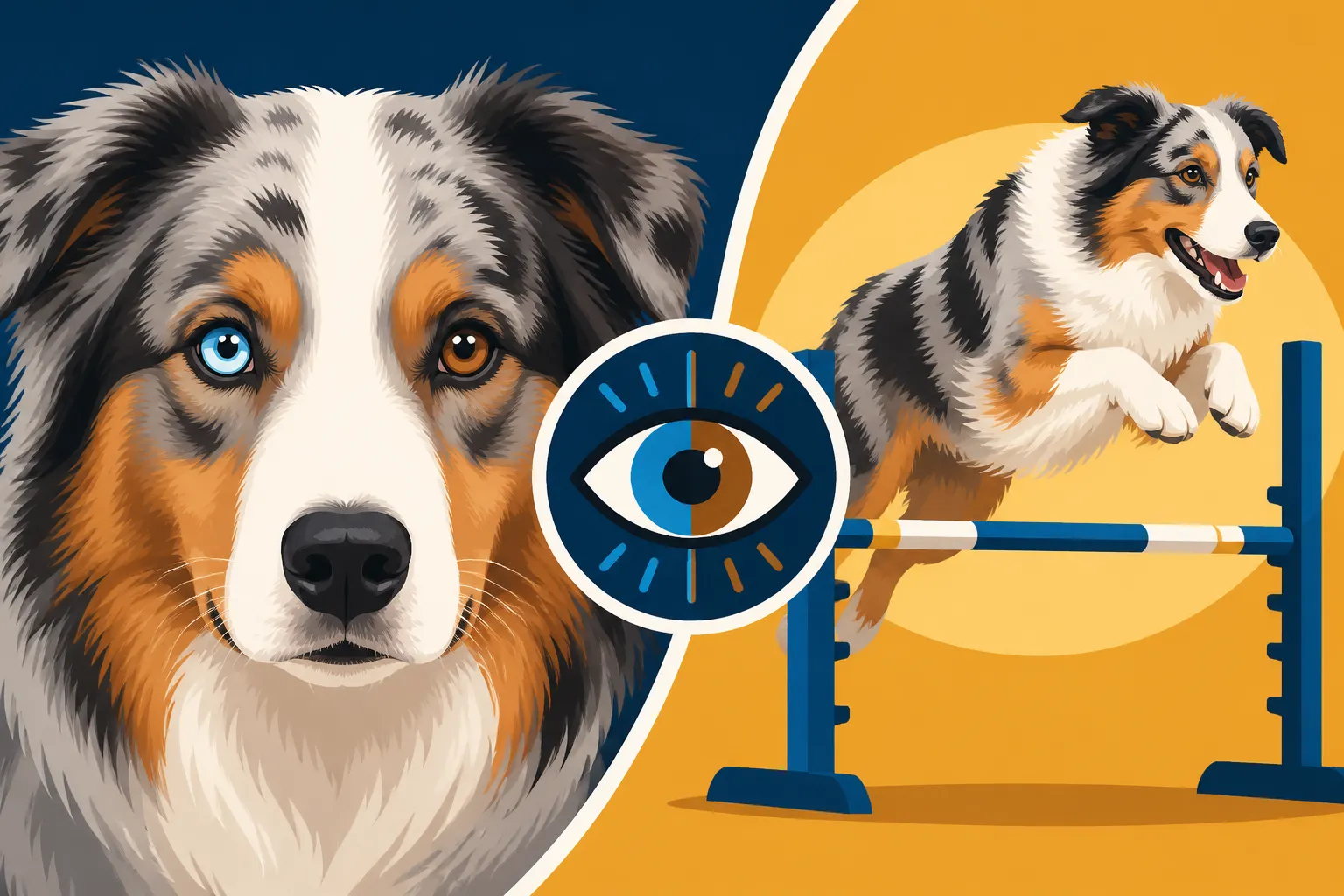
Whether Eye Color Affects an Aussie in the Ring
It's a common question, and one that often causes a fair bit of head-scratching for new Australian Shepherd owners, or even those just admiring the breed: does eye color actually matter when an Aussie steps into the show ring? With their incredible variety of eye shades, from piercing blues to warm browns and everything in between, it’s easy to wonder if some colors are preferred over others. This guide is here to clear up that confusion, diving deep into what the official breed standards really say about Australian Shepherd eye color and how judges truly evaluate these magnificent dogs.
Understanding Australian Shepherd Eye Color Diversity
One of the most captivating features of the Australian Shepherd is their incredibly diverse range of eye colors. Unlike many breeds where a specific eye color is mandatory, Aussies celebrate variety, and this often leads to some stunningly unique looks. It’s part of what makes them so individually charming, but it also sparks a lot of questions about what’s considered "correct" in the competitive world.
The Range of Acceptable Eye Colors
When you look into the eyes of an Australian Shepherd, you might be greeted by a deep, soulful brown, a startlingly clear blue, a captivating amber, or even a soft green. It's not uncommon to see eyes that are marbled with multiple colors, flecked with darker or lighter shades, or even completely mismatched – one blue and one brown, for example, which is often referred to as heterochromia. This incredible spectrum of color is a natural genetic trait within the breed, and it’s something to be admired, not scrutinized as a potential fault. These diverse hues are a testament to the breed's rich genetic heritage, and they contribute immensely to the Aussie's distinctive and expressive face. Breeders and enthusiasts alike appreciate this genetic predisposition for such striking and varied eye colors, understanding that it's a fundamental part of what makes an Australian Shepherd an Australian Shepherd. It's truly a hallmark of the breed, emphasizing their individuality rather than being a deviation from an ideal. You might even find an Aussie with eyes that are Australian Shepherd Eye Colors and Split Eyes, showcasing even more complexity.
The Merle Gene and Blue Eyes
Many people associate blue eyes in Australian Shepherds with the merle coat pattern, and for good reason! The merle gene, which creates those beautiful mottled coats, can also affect eye pigment. It's this gene that often leads to Aussies having striking blue eyes, or eyes that are partially blue, even if the dog isn't a merle itself but carries the gene from a merle parent. It’s a common misconception that blue eyes are somehow "weaker" or indicative of a problem, but in a healthy, well-bred Australian Shepherd, blue eyes are simply another expression of their genetic makeup. They are perfectly sound and healthy. The merle gene's influence is fascinating, and understanding The Merle Gene and How It Dilutes Aussie Coat can shed more light on how it impacts not just eye color but also overall appearance. It’s important to remember that these blue eyes are a natural, often sought-after characteristic, not a flaw.
The Australian Shepherd Breed Standard on Eye Color
When we talk about the show ring, the "standard" is everything. It's the blueprint that guides judges in evaluating how closely a dog conforms to the ideal of its breed. For Australian Shepherds, the standards set by organizations like the American Kennel Club (AKC) and the Australian Shepherd Club of America (ASCA) are remarkably inclusive when it comes to eye color, much to the surprise of some newcomers.
What the Major Breed Clubs Say (AKC, ASCA)
This is where a lot of the myths about Aussie eye color get debunked. Both the AKC and ASCA breed standards are quite clear: all eye colors are acceptable in the Australian Shepherd. Yes, you read that right. Brown, blue, amber, green, or any combination thereof, including marbled or flecked eyes, are permitted. What truly matters to the judges isn't the specific shade of blue or brown, but rather the overall health, clarity, and most importantly, the expression of the eye. The standards emphasize that the eyes should be "almond-shaped, not protruding or sunken," and they should convey an intelligent, alert, and keen expression. The focus is on the functional and aesthetic aspects of the eye within the context of the dog's head, not a preferential treatment for one color over another. This is why you'll see champions with piercing blue eyes standing shoulder-to-shoulder with those boasting rich amber or deep brown. They truly value the diverse beauty of this breed, and the standards reflect that openness. It’s worth looking into ASCA and the AKC Australian Shepherd Standards for a complete picture of what’s expected.
"Expression" and Eye Placement Over Color
While eye color is a dazzling feature, it's the expression that really brings an Aussie's eyes to life in the ring. A judge will spend far more time assessing the shape, size, and set of the eyes than their color. They want to see those characteristic almond-shaped eyes that are neither too round nor too narrow. They look for eyes that are set correctly on the head, neither too close together nor too far apart, giving the dog a balanced and alert appearance. The surrounding features – the strong brow, the well-defined muzzle – all work together to create that quintessential intelligent and thoughtful Aussie expression. A dog with perfectly colored eyes but a poor eye shape or an uncharacteristic expression will be faulted far more severely than one with an "unconventional" but perfectly healthy and expressive eye color. The eye should convey that deep, discerning gaze that Australian Shepherds are renowned for, reflecting their sharp minds and keen observation skills. It's about the window to the soul, not just the curtains.
Common Misconceptions and Judging Realities
It's natural to have questions and even some lingering doubts when you see the sheer variety of Australian Shepherd eye colors. Years of anecdotal whispers and misunderstandings can be hard to shake, even when presented with the official rules. Let's tackle some of the most persistent myths head-on and clarify what really happens in a show ring.
The Myth of "Faulty" Blue Eyes
Perhaps the most common misconception is that blue eyes in an Australian Shepherd are somehow a fault, a sign of poor breeding, or indicative of vision problems. This simply isn't true for a healthy, well-bred Aussie. For some, the association of blue eyes with genetic issues in other breeds, or with the health problems seen in double merles (which is a very specific and different genetic issue related to breeding two merle parents), leads them to unfairly label all blue-eyed Aussies. In reality, a blue-eyed Australian Shepherd, provided it comes from responsible breeding, is just as healthy and possesses the same keen vision as its brown-eyed counterparts. The blue color is merely a pigment variation, a beautiful one at that, and not an indicator of a defect. Don't let old wives' tales or misinformed opinions cloud your judgment; a healthy blue-eyed Aussie is a perfectly magnificent animal. We have a whole article dedicated to this topic, Whether Blue Eyes Mean Vision Problems in an Aussie, which might ease some of those worries.
How Judges Evaluate Eyes in the Ring
When an Australian Shepherd stands before a judge, that judge isn't pulling out a color chart to rate their eyes. Instead, they are performing a comprehensive assessment. They're checking for overall eye health: are the eyes clear and bright? Is there any discharge or irritation? Are the eyelids tight and free from defects? Then they look at structure: are the eyes almond-shaped as the standard describes? Are they set correctly in the skull, contributing to the breed's characteristic expression? The clarity, soundness, and overall contribution to the dog's intelligent and alert demeanor are paramount. The color, whether it's two different shades like One Blue Eye and One Brown on an Aussie, or a captivating marbled pattern, is simply a characteristic within the acceptable range, and it doesn't add or detract from a dog's score as long as the eye is healthy and correctly formed. They're looking for an honest representation of the breed, and the eye, regardless of its hue, should reflect that working intelligence.
When Eye Color Does Matter (and it's not what you think)
Now, there are very specific instances where aspects related to eye color, or lack thereof, can be a concern. This isn't about the iris color itself, but rather the pigment around the eye. The breed standard requires that eye rims (the skin directly surrounding the eye) should be fully pigmented, typically black for black-based dogs and liver for red-based dogs. Lack of pigment on the eye rims is considered a fault. Similarly, concerns arise with severe structural defects such as Microphthalmia in a Double Merle Australian Shepherd (abnormally small eyes) or Australian Shepherd Iris Coloboma and Merle Eyes (a defect in the iris), which can sometimes be more prevalent in double merles due to irresponsible breeding practices. These are true health issues, and they are what judges would fault, not simply the presence of a blue iris in an otherwise healthy eye. The distinction is crucial: a healthy blue eye is fine; an unhealthy or structurally unsound eye, regardless of color, is a serious concern.
Eye Color's Impact on Public Perception and Breeding Decisions
Beyond the show ring, the visual appeal of an Australian Shepherd's eyes plays a huge role in how people perceive the breed. From stunning photographs on social media to the initial "aww" factor when meeting a puppy, eye color often captures attention first. This external perception, while powerful, doesn't always align with the deep-seated principles of ethical breeding.
Public Preference vs. Breed Standard
Let's be honest, those piercing blue eyes on an Australian Shepherd can stop traffic. Many prospective puppy owners are drawn to them, sometimes even specifically seeking out a blue-eyed or heterochromatic Aussie. This is completely understandable – they are incredibly striking! However, this public preference is distinct from the breed standard, which, as we've discussed, is inclusive of all eye colors. A popular trend in desired eye color doesn't translate into a judge favoring it in the show ring. While breeders might occasionally find blue-eyed puppies easier to place due to demand, responsible breeders never compromise health, temperament, or overall conformation to achieve a specific eye color. They understand that a visually appealing trait, if not carefully managed within a sound breeding program, can quickly lead to undesirable consequences. The beauty of the Aussie is truly in the eye of the beholder, but the integrity of the breed rests on upholding the full standard.
Ethical Breeding Considerations
For ethical Australian Shepherd breeders, eye color is just one small piece of a very large and complex puzzle. Their priority is producing healthy, well-tempered dogs that exemplify the breed's working characteristics and conform to the entire standard. This means a focus on rigorous health testing for conditions like hip and elbow dysplasia, eye diseases, and genetic mutations such as MDR1. The goal isn't to breed for blue eyes, but to breed for overall soundness, and if blue eyes happen to occur in a healthy, otherwise excellent litter, that's just a bonus. Responsible breeders understand the genetics behind eye color, especially concerning the merle gene, and they make mating decisions based on a holistic view of the parent dogs' health, pedigree, and conformation, rather than chasing a specific aesthetic. They also make sure to provide The Genetic Panel Every Australian Shepherd Needs to their buyers, showing transparency and commitment to health. When you're looking for a puppy, always ask your breeder about their priorities and what The Test Results an Aussie Breeder Must Produce are for their dogs – it tells you a lot more than just looking at the color of a puppy's eyes.
Here's a quick summary table on how eye color is viewed in the Australian Shepherd show ring:
| Feature | Breed Standard Stance | Common Misconception | Reality in Judging |
|---|---|---|---|
| Eye Color (Iris) | All colors (brown, blue, amber, green, marbled) acceptable. | Blue eyes are a fault or unhealthy. | Color is not a factor if healthy and expressive. |
| Eye Rim Pigment | Must be fully pigmented (black for black-based, liver for red-based). | Often overlooked by public. | Lack of pigment is a fault. |
| Eye Shape & Set | Almond-shaped, well-set, not protruding/sunken. | Less focus than color by public. | Critical for breed type and expression. |
| Expression | Intelligent, alert, keen. | Assumed to be inherent with any eye. | Paramount; reflects temperament and alertness. |
| Health/Clarity | Clear, healthy, free of defects. | Blue eyes imply poor health. | Any defect (e.g., microphthalmia) is a serious fault. |
In conclusion, the stunning variety of eye colors in Australian Shepherds, including those captivating blues, is a beautiful and accepted characteristic of the breed. When an Aussie enters the show ring, judges are not looking for a specific eye color, but rather for a healthy, well-formed eye that contributes to the dog's intelligent and alert expression, and conforms to the overall breed standard. So, whether your Aussie has deep brown eyes, brilliant blue eyes, or eyes that are a mosaic of both, rest assured that their unique gaze is a celebrated part of who they are, both in your home and under the lights of the show ring.
Disclaimer
This article is for general informational purposes only and does not constitute professional advice. Laws, prices and regulations vary by location and change over time. Consult a qualified professional for guidance on your specific situation.