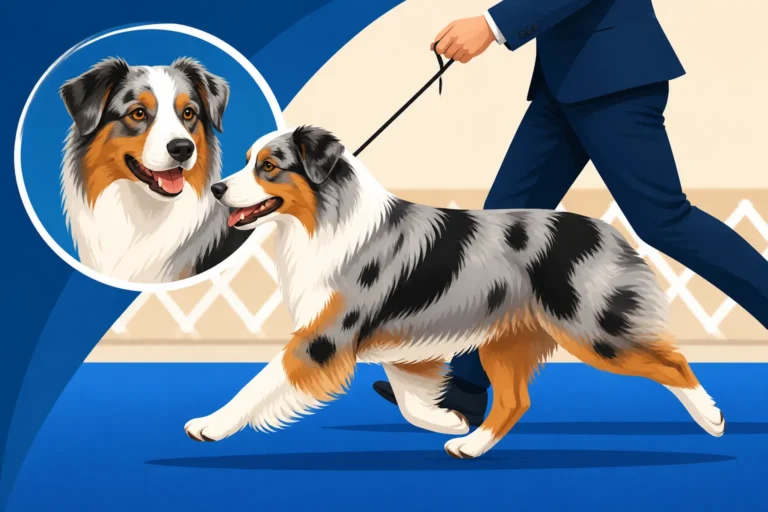
The Wait Before the Aussie Reached the AKC
It can be incredibly confusing to dig into the history of the Australian Shepherd and realize that this popular, iconic breed wasn't always recognized by the major registries like the American Kennel Club (AKC). For decades, these incredible dogs were working tirelessly on ranches and performing in rodeos without formal acknowledgment, leaving many to wonder why it took so long and what exactly that "wait" entailed before they finally stepped into the spotlight. This guide will walk you through that fascinating journey, explaining the breed's grassroots origins, the internal debates within its community, and the eventual path to AKC recognition.
The Australian Shepherd's Grassroots Ascendance
Before the bright lights of the show ring or the detailed breed standards of the American Kennel Club, the Australian Shepherd was a dog forged in the practical demands of ranch life across the American West. These were dogs of utility, bred for their intelligence, agility, and innate herding ability, not for conformation. Their story began far from formal kennel clubs, deeply rooted in the working culture of cowboys and stockmen.
Rodeo Stars and Ranch Hands
Long before they were AKC champions, Australian Shepherds earned their reputation as indispensable working partners on ranches and, perhaps most famously, in the thrilling spectacle of the rodeo circuit. These dogs weren't just decorative companions; they were an essential part of the workforce, moving cattle and sheep with an unmatched intensity and precision. Imagine a dusty rodeo arena, the roar of the crowd, and a flash of merle and copper as an Aussie expertly guides a stubborn steer or keeps a flock of sheep contained. This wasn't just a parlor trick; it was a demonstration of their profound working instincts, honed over generations. Their ability to respond to subtle cues, anticipate livestock movements, and work tirelessly from dawn until dusk made them legends among those who understood the demands of ranching. Many early owners were far more concerned with how well a dog could hold a herd or navigate a difficult pasture than with its ear set or tail length. Their fame spread through word-of-mouth and observation, not through formal registration papers. This hands-on, practical evaluation was the truest form of "recognition" they had for a very long time. How Rodeos Made the Australian Shepherd Famous delves into this period.
Early Efforts and the ASCA's Foundation
As the Australian Shepherd's reputation grew, naturally, people started to want to preserve the breed and its unique qualities. This organic desire led to the formation of early breed clubs, driven by passionate owners and breeders who saw the intrinsic value of these dogs. The primary organization that emerged from this grassroots movement was the Australian Shepherd Club of America (ASCA), founded in 1957. ASCA was established by individuals who deeply valued the breed's working heritage and sought to maintain its functionality above all else. They created their own registry, developed a breed standard emphasizing working ability, and organized performance events like herding trials. For decades, ASCA was the authority on Australian Shepherds. Their registry was meticulous, focusing on verifiable working bloodlines and sound temperament. They championed the breed through its inherent capabilities, solidifying its identity as a versatile working dog. This independent path meant that, for a significant period, the Australian Shepherd was thriving and evolving within its own dedicated community, entirely separate from the mainstream American Kennel Club.
The Great Debate: To AKC or Not to AKC?
The decision to pursue AKC recognition was anything but unanimous within the Australian Shepherd community. It sparked a passionate, sometimes contentious, debate that divided breeders and owners for years. At the heart of it was a fundamental question: could the Australian Shepherd maintain its working essence if it entered the conformation-focused world of the AKC?
Fear of Losing Working Integrity
One of the loudest concerns among traditional Australian Shepherd breeders and enthusiasts was the very real fear that AKC recognition would inevitably dilute the breed's cherished working integrity. The AKC, historically, places a strong emphasis on conformation – how closely a dog adheres to a written breed standard in appearance – and often, the show ring can overshadow practical working ability. Many ASCA breeders had dedicated their lives to producing dogs that could perform in fields and arenas, dogs with keen herding instincts, robust health, and the stamina to work all day. They worried that once the AKC spotlight shone on the breed, breeders would begin to prioritize flashy looks, color, and precise stack over traits essential for herding, like drive, biddability, and courage with livestock.
They had seen it happen with other working breeds that gained AKC popularity, where the demand for "show dogs" led to a bifurcation of the breed into distinct "show lines" and "working lines." The concern was that the Australian Shepherd, known for its incredible versatility, would become two separate breeds in practice, with one excelling in beauty pageants and the other in the pasture. This wasn't just a theoretical worry; it was a deeply felt conviction among those who understood the breed's origins. For them, a beautiful Aussie that couldn't herd was a betrayal of its very purpose. They believed the ASCA system, with its strong emphasis on working titles and practical evaluation, was the best guardian of the breed's soul. Ranch Bred Against Ring Bred Australian Shepherds discusses this divergence.
The Allure of Mainstream Visibility and Resources
Despite the legitimate concerns about working integrity, there was also a strong argument for pursuing AKC recognition, primarily centered on increased visibility, standardized health testing, and broader access to resources. For advocates of AKC recognition, the move represented a chance to elevate the Australian Shepherd from a "niche" working breed to a nationally recognized and admired companion. This increased visibility meant more potential owners, more public education about the breed's unique needs, and potentially, a larger pool of responsible breeders. Think about it: a dog being shown at Westminster or appearing on popular pet websites like Chewy would introduce it to millions who might never encounter a working ranch dog.
Beyond fame, AKC affiliation offered a more unified approach to breed health. The AKC actively promotes and supports health testing for various genetic conditions, often partnering with organizations like the Orthopedic Foundation for Animals (OFA) and the Canine Eye Registry Foundation (CERF). For a breed like the Australian Shepherd, known for carrying specific genetic markers like MDR1 or being prone to conditions like hip dysplasia, the widespread adoption of standardized health clearances under the AKC umbrella was seen as a significant benefit. It could lead to better overall breed health, easier access to veterinary research, and a more consistent approach to breeding practices across the nation. Many felt that these advantages outweighed the risks, believing the breed's working heart was strong enough to endure.
The Road to Full AKC Recognition
The path to becoming a fully recognized AKC breed is a long, multi-stage process, not a simple application. For the Australian Shepherd, this journey involved several years of being recognized conditionally before finally being able to compete in all AKC events.
The Foundation Stock Service and Miscellaneous Class
Before a breed can enter the AKC's official studbook, it typically spends time in preparatory programs. For the Australian Shepherd, this meant going through the Foundation Stock Service (FSS) and then the Miscellaneous Class. The FSS is essentially a holding tank for rare breeds, or breeds that are not yet eligible for AKC registration but whose enthusiasts are working towards full recognition. Dogs in the FSS can participate in some AKC events, primarily companion and performance events like obedience, agility, and rally, but not conformation shows. This period allows the AKC to monitor the breed, ensure that enough dogs are being consistently bred to a stable type, and that a national breed club is functioning effectively.
Once certain criteria are met—such as having a sufficient population, a clear breed standard, and an active national club—a breed can move into the Miscellaneous Class. This was a significant step for the Australian Shepherd, as it allowed them to compete in all AKC performance events and even participate in specific conformation classes, though still not for championship points. This transitional period, often lasting several years, is crucial. It gives the breed's parent club (in this case, the newly formed United States Australian Shepherd Association, or USASA, which broke off from ASCA to pursue AKC recognition) time to organize, educate judges, and prepare the breed for its eventual full debut. Owners during this time had to grapple with which registry their dog would be best suited for, balancing ASCA's deep working roots with the AKC's growing opportunities. Many found products on Chewy for their dogs, ensuring they had the right gear for whichever venue they chose to compete in.
The Official Date: Entering the Herding Group
After years of dedicated effort from breed enthusiasts, careful adherence to AKC protocols, and a thriving population base, the Australian Shepherd officially achieved full AKC recognition. This momentous occasion took place on January 1, 1993. From that date forward, Australian Shepherds were eligible to compete in all AKC events, including conformation shows for championship points, and were officially added to the Herding Group.
Placement in the Herding Group was a natural and fitting choice, acknowledging the breed's primary historical purpose and innate working style. This grouping meant that Australian Shepherds would be judged alongside other remarkable herding breeds like Border Collies, German Shepherds, and Shetland Sheepdogs, all known for their intelligence and specific working traits. This was the culmination of a long wait and a testament to the perseverance of those who championed the breed's inclusion. It opened doors for Australian Shepherds to gain widespread recognition beyond the ranch and rodeo, bringing them into homes and hearts across the country who might never have discovered them otherwise.
What AKC Recognition Meant for the Breed
The arrival of the Australian Shepherd into the AKC fold marked a significant turning point, bringing both opportunities and challenges that continue to shape the breed today.
Increased Popularity and Exposure
Without a doubt, AKC recognition brought an unprecedented surge in popularity and exposure for the Australian Shepherd. Suddenly, the breed was no longer a well-kept secret among stockmen and performance enthusiasts; it was on national television, in magazines, and prominently featured in dog shows across the country. This newfound fame led to a massive increase in public awareness and demand. Many people, charmed by their striking looks, intelligence, and athleticism, sought out Australian Shepherds as family pets.
This boom, while exciting, also had its downsides. It meant that some individuals, perhaps less informed about the breed's high energy and intense drive, acquired Aussies without fully understanding their needs. The breed's unique temperament, including its tendency to be reserved with strangers and its deep desire for a "job," became more widely known, sometimes through challenging experiences for unprepared owners. This also meant that products tailored for Australian Shepherds became more readily available through large retailers like Chewy, catering to a wider audience. The increased demand inevitably led to some less scrupulous breeding practices, with some prioritizing profit over health and temperament. This underscores the importance of finding a responsible breeder, regardless of AKC status. The Aussie Traits Owners Mention Most touches on these characteristics.
The Rise of Show Lines vs. Working Lines
As many traditionalists had feared, AKC recognition did indeed lead to a more pronounced differentiation between "show lines" and "working lines" within the Australian Shepherd breed. The AKC conformation ring prioritizes a specific aesthetic and movement, often favoring dogs with particular angles, coats, and temperaments that excel in a structured environment. Breeders focused on the show ring began to select for these traits, aiming to produce champions that fit the written The Australian Shepherd Standard and What Judges Want.
Conversely, breeders dedicated to working ability continued to prioritize traits like strong herding instinct, endurance, biddability, and a "can-do" attitude that might not always translate perfectly to the show ring. These working dogs often have a slightly different build—sometimes leaner, with less emphasis on extreme coat or elaborate presentation. While a good Australian Shepherd should ideally possess both sound structure and working drive, the demands of specialized competition in either realm led to distinct breeding philosophies. This division isn't necessarily a negative, as both types of dogs have their place, but it does mean that prospective owners need to be very clear about what they are looking for in an Australian Shepherd and carefully research the lines from which their puppy comes. This dual emphasis continues to be a defining characteristic of the Australian Shepherd community today.
Table: Key Milestones in Australian Shepherd AKC Recognition
| Milestone | Date | Significance | Impact on Breed |
|---|---|---|---|
| Formation of ASCA | 1957 | Established independent registry and breed standard focused on working ability. | Preserved working heritage, fostered a dedicated community. |
| AKC Foundation Stock Service | Early 1990s | Allowed initial registration and participation in some performance events. | First step towards mainstream recognition, increased exposure. |
| AKC Miscellaneous Class Entry | Early 1990s | Permitted participation in all performance events and limited conformation. | Further prepared breed for full recognition, tested club organization. |
| Full AKC Recognition | January 1, 1993 | Eligible for all AKC events, including championship conformation. | Huge surge in popularity, placed in Herding Group. |
| ASCA's Continued Independence | 1993-Present | Maintained its own registry and focus on working ability for many breeders. | Ensured a path for working-focused lines, ongoing debate on breed type. |
Navigating the Legacy of the Wait
Understanding the "wait" before Australian Shepherds reached AKC recognition isn't just a historical footnote; it offers crucial insight into the breed's enduring character. It explains why you might hear passionate debates among owners about "working lines" versus "show lines" or why the Australian Shepherd Club of America (ASCA) still holds such a vital place in the hearts of many traditionalists. The breed's journey reflects a deep-seated desire to preserve its intelligence, versatility, and innate drive while also gaining the broader appreciation it deserves.
For potential Australian Shepherd owners today, this history highlights the importance of truly understanding the individual dog and its lineage. A puppy from strong working lines will likely have different needs and an even more intense drive than one from lines primarily bred for the show ring, even if both are stunningly beautiful. It reminds us that whether your Aussie is competing in agility trials, herding sheep, or just being the best family companion, their ancestors worked hard to earn their place, both in the field and, eventually, in the prestigious rings of the American Kennel Club. And no matter their lineage, ensuring they have appropriate food and enrichment toys from places like Chewy is essential.
Disclaimer
This article is for general informational purposes only and does not constitute professional advice. Laws, prices and regulations vary by location and change over time. Consult a qualified professional for guidance on your specific situation.