Why Some Aussie Breeders Fought AKC Recognition
It’s a curious thing, isn't it? When the American Kennel Club (AKC), arguably the most recognized dog registry in the United States, extends an invitation to a breed, most communities jump at the chance. It brings recognition, increased popularity, and a pathway to prestigious conformation titles. But for the Australian Shepherd, it wasn't a unanimous celebration. Many dedicated breeders and enthusiasts vehemently opposed AKC recognition, creating a deep divide that still resonates today. This guide will explore the profound reasons behind their resistance, shedding light on the core values they felt were under threat, and explaining the ongoing impact of this pivotal moment in Australian Shepherd history.
The Deep Roots of Australian Shepherd Preservation
To truly understand why some Aussie breeders fought AKC recognition, you have to go back to the very soul of the breed. The Australian Shepherd, despite its misleading name, was developed in the American West by ranchers who needed a smart, tenacious, and versatile partner for working livestock. These dogs weren't bred for pretty ribbons or fancy walks in the park; they were bred for their ability to read stock, gather sheep, and protect the herd. Their worth was measured in their intelligence, their instinct, and their tireless work ethic.
A Working Dog First and Foremost
For generations, Australian Shepherds were selected purely on their working capabilities. A dog that couldn't perform its job on the ranch, that lacked the drive or the biddability, simply wasn't bred. This rigorous selection process forged a breed renowned for its intense focus, agility, and problem-solving skills. Breeders didn't care if a dog had a perfectly square muzzle or precisely angled legs; they cared if it could reliably bring in a stubborn steer or move a flock of skittish ewes. This utilitarian approach to breeding meant that function dictated form, and any physical trait that hindered work was undesirable, regardless of its aesthetic appeal. The very essence of the Australian Shepherd was tied to its job, and for many, compromising that was unthinkable.
The American Stock Dog Registry ASCA's Role
Long before the AKC entered the picture, the Australian Shepherd Club of America (ASCA) was the primary registry and governing body for the breed. Founded in 1957, ASCA was established by those very ranchers and working dog enthusiasts who understood the breed's heritage. Their mission was clear: to preserve the Australian Shepherd as a working stock dog. ASCA developed a comprehensive system of working trials and programs that evaluated a dog's natural herding ability, agility, and obedience, all designed to ensure the breed retained its functional integrity. The ASCA Australian Shepherd Standard itself is heavily influenced by the working requirements. For these breeders, ASCA was the guardian of the breed's soul, a sanctuary where the Australian Shepherd's working heart was celebrated above all else. The idea of another organization, one traditionally focused on conformation shows, dictating the breed's future felt like an existential threat to what they had meticulously built and protected for decades.
Concerns Over AKC's Influence on Breed Type
The prospect of AKC recognition, while offering broader appeal, also brought significant anxieties to many within the Australian Shepherd community. The main fear revolved around the potential for the breed to lose its distinctive working characteristics in favor of a "show dog" aesthetic. This wasn't just about appearances; it was about the very temperament and drive that defined an Australian Shepherd.
Prioritizing Form Over Function
One of the most vocal concerns was that AKC recognition would inevitably lead to a shift in breeding priorities. Conformation shows, by their nature, emphasize a dog's physical appearance, its adherence to a written standard, and how it moves in the show ring. While the AKC breed standard for Australian Shepherds does mention temperament and working ability, critics feared that the practical reality of show competition would push breeders to prioritize aesthetics over utility. This could mean breeding for flashier coats, specific eye colors, or exaggerated angulation, even if those traits did nothing to improve, or might even detract from, the dog's ability to work stock or perform demanding sports. For many working-line breeders, the idea of sacrificing a dog's functional soundness for a blue ribbon was anathema to everything they believed in. They had seen it happen to other working breeds that gained AKC recognition, where dogs became beautiful but less capable.
The Fear of Losing Drive and Instinct
Beyond physical appearance, there was a profound concern about the preservation of the Australian Shepherd's innate drive and herding instinct. A true working Aussie possesses an incredible "eye" for stock, the stamina to work all day, and the intelligence to problem-solve complex herding scenarios. These are not traits easily judged in a static show ring. Breeders worried that as the emphasis shifted to conformation, the intense drive that makes an Aussie an Aussie would be inadvertently bred out or diluted. Imagine a dog bred primarily for its coat pattern, but lacking the mental fortitude to handle sheep. Such a dog, while perhaps beautiful, would be a shadow of its working ancestors. For those who poured their lives into preserving these instincts, like the trainers teaching their dogs complex herding maneuvers, this was a heartbreaking thought. It wasn't just about winning titles; it was about protecting the very soul of the breed. They understood that Why Herding Instinct Is the Aussie Operating System and they didn't want to see that system degrade.
The "Split" and Divergent Paths
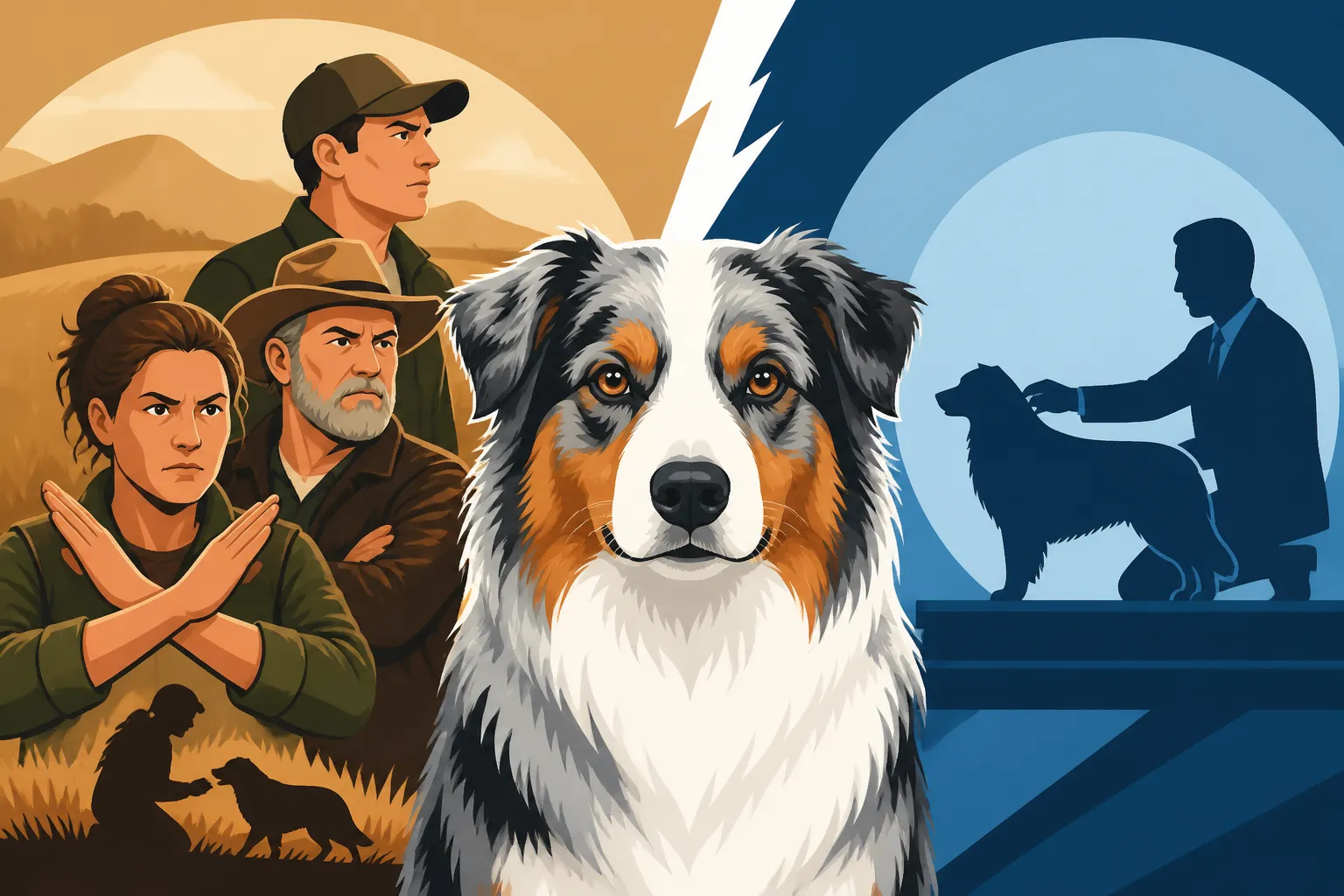
When the AKC officially recognized the Australian Shepherd in 1993, it didn't just add a new breed to its roster; it created a significant schism within the existing Australian Shepherd community. This event effectively carved the breed into two distinct, though sometimes overlapping, paths, each with its own philosophies, breeding goals, and preferred activities. It wasn't just a matter of which registry one chose; it became a declaration of one's fundamental vision for the Australian Shepherd.
Different Breeding Goals and Priorities
With AKC recognition, Australian Shepherd breeders essentially chose a side, or at least navigated a new landscape of options. Those who embraced the AKC path often focused on breeding dogs that excelled in conformation shows, aiming for the "perfect" physical specimen according to the AKC standard. Their breeding decisions prioritized structural soundness for the show ring, flashier markings, and a more refined appearance, often leading to what is now known as "show line" Aussies. These dogs might still possess some herding instinct, but it's often not the primary selection criterion.
On the other hand, many breeders staunchly remained with ASCA, continuing their focus on preserving the Australian Shepherd's working heritage. These "working line" breeders continued to prioritize herding ability, intelligence, biddability, and athletic endurance above all else. They bred dogs for success in herding trials, agility, obedience, and other performance events where a dog's functional capabilities were paramount. Their dogs might not always have the flashiest coats or the most symmetrical markings, but their drive and instinct for a job were undeniable. This divergence meant that potential puppy buyers now had to consider what kind of Aussie they wanted: a dog primarily bred for looks, or one primarily bred for work. You can read more about these differences in Ranch Bred Against Ring Bred Australian Shepherds and Working Line Australian Shepherd Traits.
Navigating Registration and Pedigrees
The split also created complexities around registration and pedigrees. For a period, it was possible for some dogs to be "dual registered" with both ASCA and AKC, especially those from mixed lines or early in the transition. However, as the breeding goals diverged, it became increasingly challenging to produce dogs that truly excelled in both arenas. ASCA implemented rules that discouraged dual registration for certain working titles, further solidifying the distinction.
Owners looking for a puppy now had to research not just breeders, but also the philosophies behind their breeding programs. Did the breeder prioritize AKC titles or ASCA working certificates? What did their pedigrees represent? This often meant more in-depth conversations with breeders, examining health clearances, and understanding the history of the lines. For a new owner, finding information and supplies for either type of Aussie is crucial, and resources like Chewy can be a great place to start looking for breed-specific books or durable toys that cater to their specific energy levels, regardless of their lineage.
Here's a simplified comparison of the general priorities that fueled the debate:
| Feature | Pre-AKC / ASCA Focus (Working Lines) | Post-AKC Focus (Conformation Lines) |
|---|---|---|
| Primary Goal | Preserve working ability & instinct | Achieve show ring aesthetic & standard |
| Breeding Select | Herding talent, intelligence, soundness for work | Conformation, coat, structure, movement |
| Key Traits | Drive, biddability, stamina, stock sense | Balance, symmetry, coat color, head shape |
| Evaluation | Herding trials, agility, obedience | Conformation shows, gait, appearance |
| Temperament | Focused, reserved with strangers, eager to work | Sociable, confident in crowds, calm in ring |
The Ongoing Debate and Modern Landscape
Even decades after the initial AKC recognition, the conversation around "show" versus "working" lines, and the fundamental differences between ASCA and AKC Australian Shepherds, continues to shape the breed. It's a testament to the passionate individuals who dedicated themselves to preserving the Aussie's heritage. The original concerns haven't entirely faded; rather, they've evolved into a nuanced discussion about how to best support the breed's diverse talents.
Reconciling Working and Conformation Lines
Today, some breeders attempt to bridge the gap, striving to produce Australian Shepherds that can perform well in both conformation and performance events, including herding. This is a difficult undertaking, as the demands of each arena can pull a breeding program in different directions. A dog with the intense herding drive needed to excel on livestock might be too "busy" or less outwardly calm for the show ring, while a dog bred for show ring presence might lack the grit and stamina for a day on the farm. Whether an Aussie Can Still Work Sheep is often a point of contention here.
Many breeders emphasize "versatility" – a dog that can do a bit of everything. They might participate in AKC conformation, but also title their dogs in AKC herding, agility, or obedience. They carefully select breeding partners that display a balance of correct structure and genuine working aptitude. For those seeking such a balanced dog, it's crucial to look for breeders who actively participate and title their dogs in multiple venues, demonstrating a commitment to both form and function. This dedicated approach often means more robust health testing and careful consideration of temperament. You can often find breeders promoting their versatile Aussies through various online platforms, and a quick search on sites like Chewy might even reveal books on training for diverse Australian Shepherd sports.
What the Standard Means Today
The existence of two prominent registries, ASCA and AKC, also means there are two slightly different "standards" for the Australian Shepherd, or at least different interpretations and emphases of similar standards. While both describe the ideal Australian Shepherd, ASCA's standard often implicitly prioritizes functional working ability, while the AKC standard, though acknowledging working traits, is primarily applied in the context of conformation. ASCA and the AKC Australian Shepherd Standards share many similarities but their application in breeding programs can lead to discernible differences in physical type and temperament.
For new owners, understanding these distinctions is important when choosing a puppy. An Australian Shepherd from a long line of AKC show champions might have a different energy level, drive, and physical build than one from pure ASCA working lines. Neither is inherently "better"; it simply depends on what an owner is looking for in a companion. Resources like Chewy can provide an array of training aids and enrichment toys tailored to both types of Aussies, whether you need mental puzzles for a highly intelligent working line dog or durable chew toys for an energetic show line companion. Ultimately, the choice of registry and breeding philosophy rests with individual breeders, and the legacy of the "split" ensures that the Australian Shepherd remains a breed with a rich, complex, and highly debated history.
Disclaimer
This article is for general informational purposes only and does not constitute professional advice. Laws, prices and regulations vary by location and change over time. Consult a qualified professional for guidance on your specific situation.