Blue Merle Australian Shepherd Coat Patterns
When you first lay eyes on a Blue Merle Australian Shepherd, it's easy to be completely captivated by their stunning, paint-splashed coats. But beneath that breathtaking exterior lies a complex genetic tapestry that can be confusing for many new owners and even seasoned enthusiasts. This guide is here to unravel the mystery of the Blue Merle coat, helping you understand its unique characteristics, how it differs from other patterns, and important considerations for caring for these beautiful dogs.
Understanding the Merle Gene in Australian Shepherds
The merle pattern is one of the most iconic and recognizable traits of the Australian Shepherd, and the blue merle is arguably the most striking. It’s not just a color; it’s a pattern that dances across the dog’s fur, creating a marbled, dappled, or patched appearance. This genetic trait is what gives these dogs their distinct and often mesmerizing look.
What Exactly is the Merle Pattern?
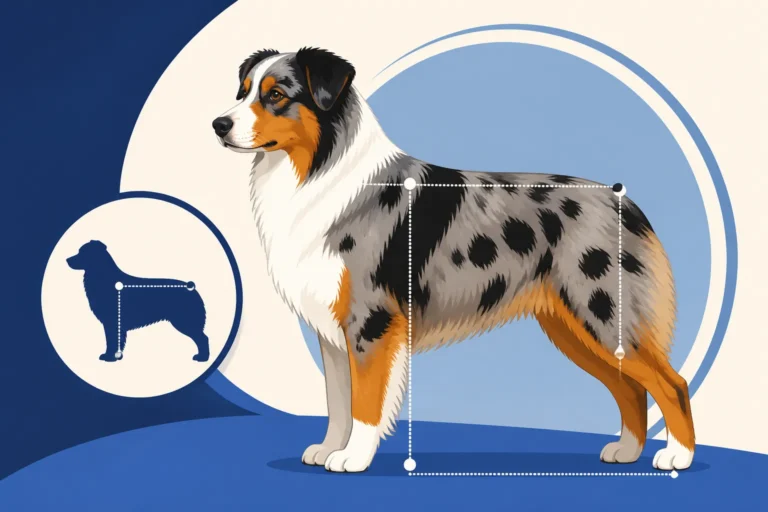
At its core, the merle pattern is caused by a gene that dilutes random areas of the dog's base coat color, leaving patches of the original color interspersed with diluted areas. Think of it like a painter dipping a brush into a solid color and then lightly dabbing it across a canvas, revealing the original color in some spots and a lighter, muted version in others. For blue merles, the base color is black, which gets diluted to shades of grey, often referred to as "blue" due to its cool undertones. You'll see solid black patches, sometimes quite large and bold, next to areas where the black has been diluted to various shades of grey, ranging from light silver to deep charcoal. This creates a visually dynamic effect that's rarely seen in other breeds with such prominence.
It's a dominant gene, meaning only one copy is needed for the pattern to express. However, the intensity and distribution of the merle can vary wildly. Some Aussies might have just a few small merle patches, almost looking like a solid dog, while others are heavily merled with very little solid color showing through. This unpredictability is part of what makes each merle Aussie so unique. How Merle Works in an Australian Shepherd Coat delves deeper into the mechanics of this fascinating gene.
The Genetics Behind Blue Merle
The "blue" in blue merle specifically refers to the dilution of the black base coat. An Australian Shepherd that is genetically black (or black-based) will express the merle gene as a blue merle. This means the solid black areas remain black, while the merle gene dilutes other black areas to grey. The gene responsible is called the M-locus, and if a dog inherits even one copy of the merle allele (M), it will display the merle pattern.
When we talk about a blue merle, we're looking at a dog that has a black pigment genotype, and the merle gene acts upon this black pigment. If the dog were genetically red-based, the merle gene would produce a red merle instead. The effect is simply a dilution of the existing base color. So, your blue merle Aussie has inherited genes that say, "Be black," and genes that say, "Now, let's dilute some of that black into a beautiful range of greys." Understanding this genetic interplay helps to appreciate why the color expresses the way it does. The Merle Gene and How It Dilutes Aussie Coat provides more technical detail on this.
Why No Two Blue Merles Are Exactly Alike
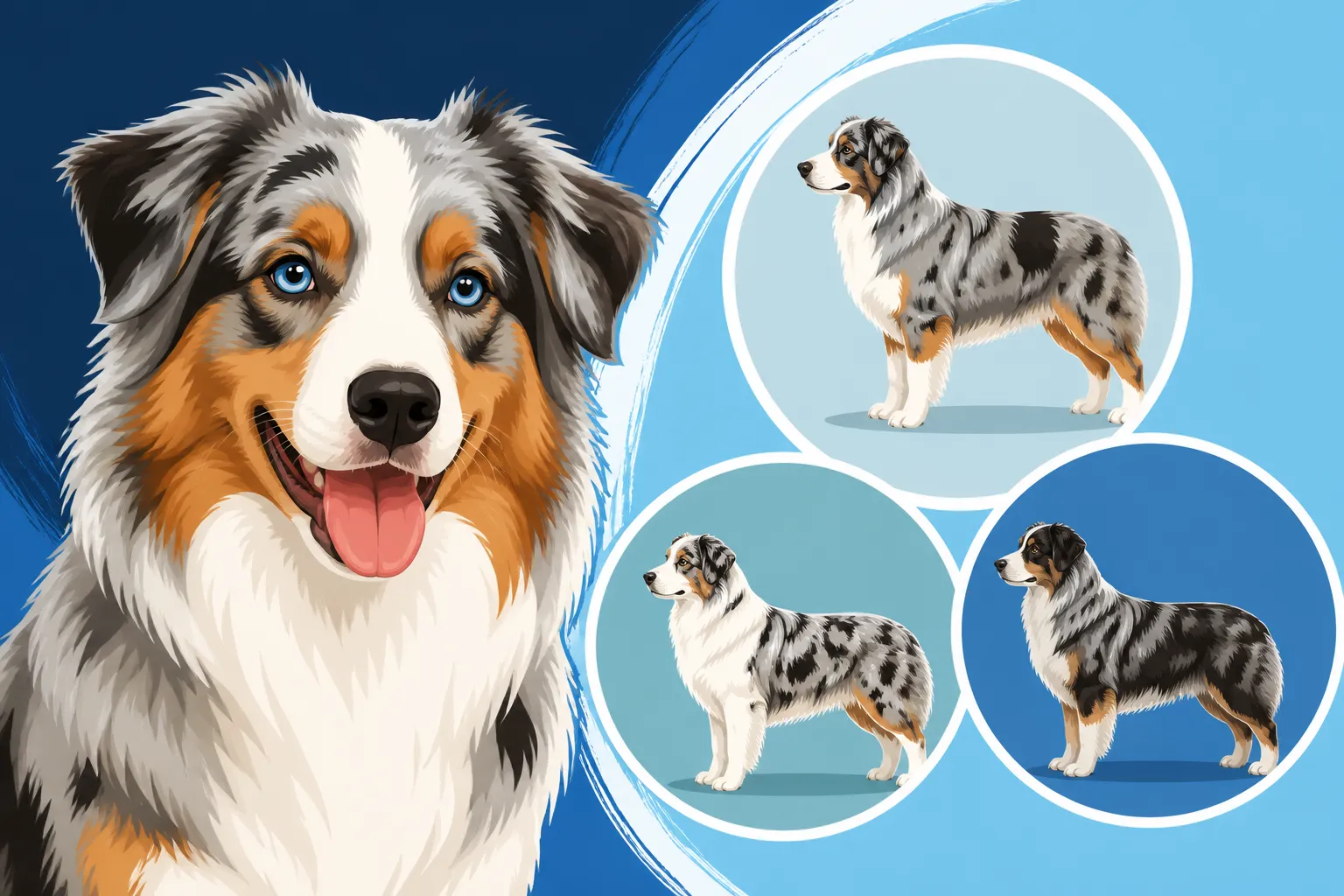
This is one of the most charming aspects of the blue merle Australian Shepherd: true individuality. Because the merle gene acts randomly, diluting pigment in unpredictable ways, no two blue merles will ever have precisely the same pattern. You might have one Aussie with large, distinct black patches against a lighter grey background, while another has a finely marbled, almost speckled appearance with smaller, more numerous black flecks.
Even within the same litter, you’ll see incredible variation. Some puppies might have a heavily merled body with solid black points, while their littermate is mostly solid black with only a few small blue merle patches. This unpredictability means that when you choose a blue merle, you are truly getting a one-of-a-kind canine companion. It’s like nature’s own bespoke artwork, making each blue merle Aussie a living masterpiece.
Characteristics and Variations of Blue Merle Coats
Beyond the basic blue and black, the blue merle coat can encompass a surprising array of shades, markings, and even eye colors. It’s these variations that add to the breed's allure and sometimes, the confusion for those unfamiliar with the standard.
The Spectrum of Blue and Grey
The "blue" in blue merle is really a broad term for grey, and it comes in a magnificent spectrum. You might see a dog whose diluted areas are a very light, almost silvery grey, giving them a frosty appearance. Other blue merles can have much darker, deeper grey or charcoal patches, which can sometimes be mistaken for black from a distance. The contrast between these diluted grey areas and the solid black patches can be stark or subtle, depending on the individual dog.
Some blue merles will have a more uniform distribution of these grey tones, while others might have areas where the dilution is heavier, leading to lighter sections, and other areas where it's lighter, resulting in darker grey. This variation is completely normal and contributes to the individual beauty of each dog. It’s not uncommon for an Aussie’s coat color to deepen or shift slightly as they mature, especially through their first year or two.
Black Patches and Their Placement
Interspersed within the blue (grey) merle areas, you will find solid black patches. These patches are where the merle gene did not express its diluting effect, leaving the original black base coat intact. The size, shape, and placement of these black patches are entirely random and contribute significantly to the unique look of each blue merle. Some dogs might have large, bold black patches that stand out dramatically, almost like islands in a sea of blue. Others might have smaller, more scattered black flecks, giving a more speckled appearance.
These solid black areas are crucial for defining the merle pattern. Without them, you’d simply have a grey dog. The contrast between the solid black and the diluted blue-grey is what creates that classic marbled or dappled effect. Typically, these black patches can appear anywhere on the body – on the back, sides, legs, or head – adding to the individuality of each Australian Shepherd.
Copper and White Markings
Many blue merle Australian Shepherds are not just blue and black; they're blue merle tricolor. This means they also carry genes for copper (tan) points and white markings. The combination of these three colors—blue (diluted black), solid black, copper, and white—creates an incredibly rich and vibrant coat.
- Copper Markings: These are typically found on the cheeks, over the eyes (often called "eyebrows"), on the chest, legs, and under the tail. The copper can range from a light cream to a deep, rich rust color. These points add warmth and definition to the dog's face and limbs.
- White Markings: White usually appears on the muzzle, as a blaze up the face, on the chest, belly, and legs/paws. The standard prefers white not to dominate the head or body, and generally, white should not extend too far up the leg or on the sides, but variations exist. It’s these white markings that often make the blue and black stand out even more, creating crisp lines and striking contrasts.
A blue merle without copper markings is simply called a blue merle bicolor, but it’s less common. Most blue merles you see will have at least some tan points, making them a "blue merle tri." Black Tricolor Australian Shepherds offers a good insight into how these markings present on a solid black base, which then applies to the merle version.
Eye and Nose Pigmentation in Blue Merles
The merle gene also has a fascinating impact on eye and nose pigmentation, often leading to some of the most distinctive features of a blue merle Australian Shepherd.
- Eye Color: Blue merles are famous for their stunning eye colors. It’s common to see bright blue eyes, often piercing and intense. Some dogs will have "marbled" or "cracked" eyes, where the iris is a mix of blue and another color like brown or amber. You might even see heterochromia, where one eye is completely blue and the other is brown or amber. Australian Shepherd Eye Colors and Split Eyes covers this in more detail. These unique eye colors are a direct result of the merle gene interfering with pigment deposition in the iris.
- Nose and Lip Pigmentation: For a blue merle, the nose, eye rims, and lips should ideally be fully pigmented with black. However, due to the dilution effect, it's not uncommon to see "butterfly noses" or partially pink areas on the nose, especially in lighter merles. While a fully black nose is preferred in the breed standard, slight pink spots can occur. It’s important to note that extensive lack of pigment on the nose or eye rims, or excessively light eyes, can sometimes be associated with Microphthalmia in a Double Merle Australian Shepherd or other eye issues, particularly if the dog is a double merle.
It's truly amazing how a single gene can influence so many aspects of an Aussie's appearance, from the swirls on their coat to the color of their eyes!
Distinguishing Blue Merle from Other Australian Shepherd Patterns
With so many beautiful coat variations in Australian Shepherds, it's easy to get them mixed up. Knowing the subtle (and sometimes not-so-subtle) differences between blue merle and other common patterns can help you appreciate your Aussie's unique look even more.
Blue Merle vs. Red Merle
This is probably the most common point of confusion. While both are merle patterns, the fundamental difference lies in the dog's underlying base color.
| Feature | Blue Merle Australian Shepherd | Red Merle Australian Shepherd |
|---|---|---|
| Base Coat Color | Genetically black (black pigment) | Genetically red/liver (red pigment) |
| Merled Areas | Diluted black appears as shades of grey (often called "blue") | Diluted red appears as shades of lighter red, cream, or buff |
| Solid Patches | Solid black patches | Solid red patches (liver-colored) |
| Nose Pigment | Black nose, eye rims, lips (or partially pink) | Liver/brown nose, eye rims, lips (or partially pink) |
| Paw Pads | Black or dark grey | Liver/brown or lighter pink/brown |
| Eye Color | Can have blue, marbled, brown, amber eyes | Can have blue, marbled, brown, amber eyes |
The key takeaway is that blue merle comes from a black base, and red merle comes from a red base. If you see deep grey and black solid patches, you're looking at a blue merle. If you see lighter red, buff, and solid liver-colored patches, it's a red merle. Blue Merle Against Red Merle Australian Shepherds offers a head-to-head comparison.
Blue Merle vs. Blue Bi/Tri
Sometimes people confuse a blue merle with a blue bicolor or tricolor, but once you know what to look for, the distinction is clear.
- Blue Merle: As we've discussed, a blue merle has that distinctive mottled, marbled, or patchy pattern of diluted grey areas mixed with solid black areas. The "blue" refers to the diluted black.
- Blue Bi/Tri: A blue bicolor or tricolor Aussie is simply a solid blue dog with or without white/copper markings. There is no merling present. The "blue" here actually refers to a genetic dilution of solid black, resulting in a solid grey dog. So, a blue tri would be a solid grey dog with copper points and white markings, but without any of the lighter/darker mottled patterns that define merle. Imagine taking a blue merle and smoothing out all the different shades of grey and black into one uniform grey color – that's closer to what a blue bi/tri would look like. They lack the striking, variegated pattern that makes a merle so unique.
The presence or absence of the dappled, blotchy pattern is the critical differentiator. If it’s mottled, it’s merle. If it's a uniform color (even if that color is grey), it's not merle.
The Hidden Dangers of Cryptic Merle
While identifying blue merle might seem straightforward now, there’s a sneaky variant that can fool even experienced breeders: cryptic merle. A cryptic merle carries the merle gene, but its expression is so minimal that it might not be visually apparent. The dog might look like a solid black, black bi, or black tri, with only a tiny, almost invisible patch of merle.
The danger comes when cryptic merles are bred to other merle dogs. Even if they don't look merle, they still carry the gene. If two merle dogs (even one cryptic merle and one obvious merle) are bred together, there's a 25% chance of producing a "double merle" or "homozygous merle" puppy. Double merles often face severe health issues, including deafness, blindness, and other eye defects. Double Merle Australian Shepherds and What Breeding Two Merles Costs outlines the severe consequences.
This is why responsible breeders rely on genetic testing, not just visual inspection, to confirm if a dog carries the merle gene. DNA tests can identify if a dog is cryptic merle, ensuring they are not unknowingly bred to another merle, which could result in devastating consequences for their offspring. Cryptic Merle That Fools Aussie Breeders goes into depth on this vital topic for breeders and prospective owners.
Care and Considerations for Your Blue Merle Aussie
Beyond their striking looks, blue merle Australian Shepherds have specific care needs, some of which are tied to their unique coat and pigmentation. Being proactive in these areas can help ensure a long, healthy, and happy life for your colorful companion.
Grooming the Double Coat
All Australian Shepherds, including blue merles, boast a magnificent double coat that requires consistent care. This coat consists of a softer, dense undercoat for insulation and a coarser, weather-resistant outer coat. While beautiful, it sheds, especially during seasonal "coat blows" twice a year. Neglecting grooming can lead to mats, skin issues, and discomfort.
- Regular Brushing: Aim to brush your blue merle at least two to three times a week, and daily during shedding seasons. Tools like a slicker brush and an undercoat rake are your best friends. The rake helps to get deep into the undercoat to remove loose hair and prevent matting, especially in areas like behind the ears, armpits, and the "feathers" on their legs and tail. Brushing an Australian Shepherd Twice a Week covers techniques.
- Bathing: Bathe your Aussie as needed, typically every few weeks to a couple of months, or when they get particularly dirty from their adventures. Always use a dog-specific shampoo and conditioner to avoid stripping their natural oils. Ensure you rinse thoroughly to prevent skin irritation and dry them completely to prevent mildewing of the undercoat.
- Professional Grooming: Many owners find professional grooming beneficial, especially during heavy shedding periods. A good groomer can perform a "deshedding" treatment that significantly reduces the amount of loose hair in your home. You can often find a wide range of grooming supplies, from brushes to shampoos, on sites like Chewy, making it easy to keep your Aussie's coat in top condition right at home.
Sun Sensitivity and Skin Care
Due to the diluted pigmentation associated with the merle gene, blue merle Aussies, especially those with very light merling or extensive white markings, can be more susceptible to sun damage. Areas with pink skin, like unpigmented patches on their nose or around their eyes, are particularly vulnerable.
- Sun Protection: If your blue merle Aussie has a pink nose or thin fur on their ears, they can get sunburned, just like people. Prolonged exposure to intense sun can lead to dryness, cracking, and even increase the risk of skin cancer over time. Consider using veterinarian-approved pet sunscreen on sensitive areas if your dog spends a lot of time outdoors. Nasal Solar Dermatitis on an Aussie Nose discusses this specific issue.
- Awareness of Hot Spots: The dense double coat can also trap moisture, leading to "hot spots" if not dried properly after swimming or baths. Regularly check their skin, especially in warmer months, for any signs of redness, irritation, or excessive licking. Early detection is key to preventing these minor irritations from escalating. Whether a Merle Aussie Sunburns More Easily reminds owners to be vigilant.
Health Implications of the Merle Gene
While the blue merle pattern itself is beautiful and generally healthy, the presence of the merle gene does carry significant health implications if breeding is not done responsibly. As discussed earlier, breeding two merle dogs together (regardless of whether they are blue merle, red merle, or cryptic merle) risks producing "double merle" puppies.
- Double Merle Issues: These puppies, which inherit two copies of the merle gene, often suffer from severe auditory and visual impairments. They can be completely deaf, blind, or both. Their eyes may be abnormally small (microphthalmia) or malformed, and some can have severe structural defects of the ears. Deafness in a Double Merle Australian Shepherd and Eye Defects in a Double Merle Australian Shepherd delve into these conditions.
- Responsible Breeding: It is absolutely crucial that breeders understand merle genetics and test their dogs to avoid these tragic outcomes. Reputable breeders will never intentionally breed two merle dogs together. If you are considering getting a blue merle puppy, always ask the breeder about the genetic testing they perform on their breeding pair, especially concerning the merle gene. This ensures that you are getting a puppy from a responsible program that prioritizes health over coat color.
It’s truly a testament to their spirit that many double merle Aussies, despite their challenges, thrive in loving homes with dedicated owners. However, these are preventable conditions, making responsible breeding paramount for the health and well-being of the Australian Shepherd breed.
Disclaimer
This article is for general informational purposes only and does not constitute professional advice. Laws, prices and regulations vary by location and change over time. Consult a qualified professional for guidance on your specific situation.