Whether an Aussie Can Still Work Sheep
Many Australian Shepherd owners find themselves living with a dog that constantly "organizes" the family, circles children, or stares intently at squirrels, wondering if their beloved pet still possesses the strong herding instincts their ancestors were famous for. It's a common misconception that because many Aussies are now primarily companion animals, their deep-seated drive has vanished. The truth is, that incredible herding ability is very much alive, and this guide will walk you through understanding if your Australian Shepherd can still work sheep, how to recognize their natural abilities, and where to find opportunities for them to thrive in their ancestral calling.
The Enduring Herding Instinct in Modern Australian Shepherds
It's easy to assume that because your Australian Shepherd is a beloved family pet, its herding instincts have somehow faded over generations of comfy couches and squeaky toys. But that's rarely the case. The herding drive is deeply embedded in their DNA, a fundamental part of their operating system. This isn't a learned behavior you teach; it's an innate genetic predisposition that makes them want to gather and control movement. Even Aussies from show lines, far removed from working ranches, can possess a surprising amount of instinct.
Think about it: have you ever noticed your Aussie trying to gently nudge you where it wants you to go? Or perhaps it attempts to round up other dogs at the park, or even your children in the backyard? These aren't just quirky behaviors; they are manifestations of that powerful herding instinct bubbling just beneath the surface. This drive is what makes them such intelligent, sensitive, and often intense companions. They are constantly observing, processing, and looking for patterns of movement they can influence. It's truly The Australian Shepherd Herding Drive You Cannot Train Out.
Instinct is Not Always Overt
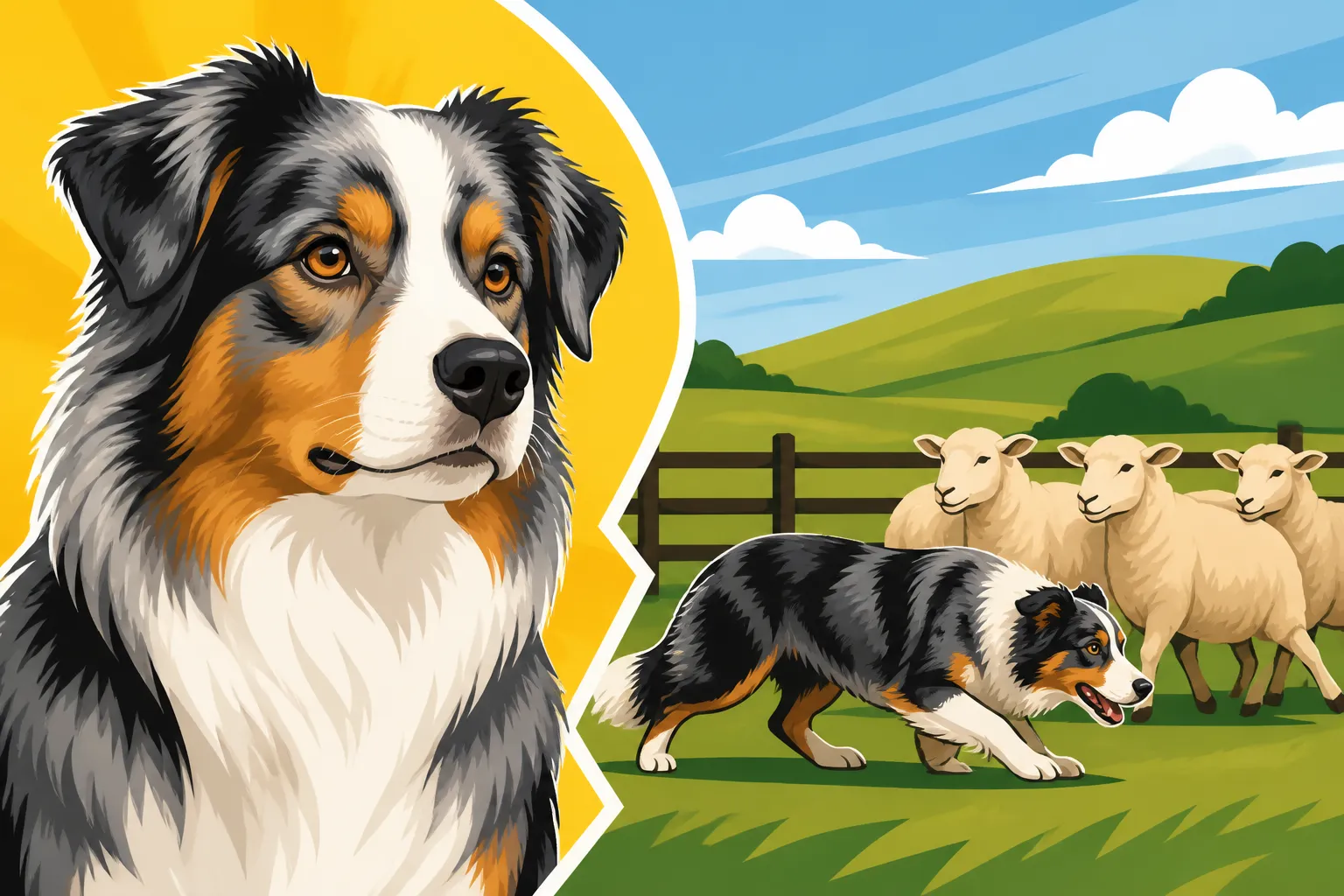
Not every Australian Shepherd will display their herding instinct in the same obvious way. Some might be "strong-eyed" dogs, meaning they use intense stares and body language to control stock. Others might be "loose-eyed," relying more on their agility, speed, and positioning. You might have an Aussie who barks to move stock, while another is nearly silent. The key is recognizing that the instinct itself is present, even if it's not expressed as a full-blown "head dog" circling a flock of sheep in your living room.
It's also important to remember that instinct is just the raw material. A dog with strong instinct still needs training and guidance to become a skilled herding dog. Without proper outlets and direction, this powerful drive can sometimes manifest as unwanted behaviors, like heel nipping, chasing cars, or excessive barking at moving objects. Understanding their innate tendencies is the first step toward channeling them constructively.
The Role of Genetics Versus Environment
While environment plays a role in shaping how an Aussie expresses its behaviors, the fundamental herding drive is genetic. You can't train an Australian Shepherd to herd if it doesn't have the instinct, and you can't truly train it out if it does. What you can do is manage it, provide appropriate outlets, and direct it. Breeders of working Australian Shepherds prioritize this instinct, often testing their puppies to ensure they carry the desired traits. They understand that a dog needs that internal engine to excel in fieldwork.
Even if your Aussie comes from lines that haven't worked stock in generations, the potential for that instinct to express itself remains. It might be less refined, or take longer to activate, but it's there. This is why many owners are so surprised when their couch potato Aussie suddenly "turns on" when introduced to sheep for the first time. The genetic blueprint is powerful and persistent, a testament to the breed's deep working heritage.
Assessing Your Australian Shepherd's Herding Potential
So, how do you know if your Australian Shepherd has the "stuff" to work sheep? It's not always about grand gestures; sometimes it's the subtle cues. Observing your dog's daily interactions and responses to movement can offer significant insights. Beyond informal observations, there are structured ways to assess their herding potential, which can be incredibly enlightening for both you and your dog.
Signs of Herding Instinct in Daily Life
Look for these behaviors in your everyday life, as they are often indicators of latent herding instinct:
- Nipping at heels or ankles: This is a classic herding maneuver, attempting to "gather" moving things. It's often directed at running children, joggers, or even other pets.
- Circling and gathering: Does your Aussie try to gather other dogs at the dog park, or "herd" family members into a particular room? This is a clear desire to control a group.
- Staring intently at movement: An intense focus on anything that moves – a remote control car, a leaf blowing in the wind, a bicycle – can be a sign of "eye," a key component of herding.
- Body blocking: Positioning themselves to intercept or redirect movement, often subtly, is another herding trait.
- Pushing with their nose or shoulder: While not as common as nipping, some Aussies will gently push to move things.
- Low crouch and stalk: Similar to a predatory sequence, but for herding, where they get low and move deliberately towards a "flock."
These behaviors, especially if persistent, strongly suggest your Aussie carries the herding gene. Instead of being frustrated by them, you can view them as valuable data points pointing to their natural abilities. Providing appropriate outlets, like Tug as a Legal Outlet for Aussie Herding Drive or specific toys, can help manage these instincts.
Formal Herding Instinct Tests
If you're truly curious, the best way to assess your Aussie's potential is through a formal herding instinct test. These tests are designed to provide a safe, controlled environment where your dog can be introduced to livestock (usually sheep, sometimes ducks or goats) under the guidance of an experienced herding trainer. The goal isn't to create a finished herding dog in one session, but to see if the natural instinct is present.
During an instinct test, a trainer will observe how your Aussie responds to the stock. Do they show interest? Do they try to move the animals? Do they use their "eye"? Do they bark, nip, or stalk? A good trainer can interpret these reactions and tell you if your dog has the basic drive needed for herding. It's an incredibly exciting experience to watch your dog connect with their ancestral purpose for the first time. You can learn more about Getting an Australian Shepherd Herding Instinct Tested and What Happens at an Aussie Herding Instinct Test to prepare. Many reputable trainers and facilities offer these tests, and a quick online search for "herding instinct test near me" or "Australian Shepherd herding training" will usually yield results.
Finding Opportunities for Your Aussie to Work Sheep
So you've done the instinct test, and your Australian Shepherd showed a spark! Now what? The next step is finding regular opportunities for them to develop those natural abilities. This isn't always as simple as walking out into a field, as working livestock requires specific skills, facilities, and knowledgeable instructors.
Herding Clubs and Trainers
The most common and effective way to introduce your Aussie to sheep work is through a local herding club or a private trainer specializing in herding. These facilities offer several advantages:
- Experienced Instructors: They understand dog behavior, livestock behavior, and the nuances of teaching a dog to herd. They can read your dog's actions and provide clear, consistent guidance.
- Safe Environment: They have fenced arenas and docile livestock, ensuring the safety of your dog, the sheep, and yourself.
- Structured Progression: Lessons typically start with very basic concepts and gradually increase in complexity as your dog gains skills and confidence. This slow, steady approach is crucial for building a solid foundation.
- Community: You'll meet other passionate Aussie owners and herding enthusiasts, forming a supportive community.
When looking for a trainer, ask about their experience with Australian Shepherds, their training philosophy (positive reinforcement is key!), and whether they offer beginner classes or instinct tests. Many will offer introductory packages to get you started on Starting an Australian Shepherd on Sheep. Websites like the Australian Shepherd Club of America (ASCA) or local kennel clubs often have directories of herding facilities.
What to Expect in Herding Lessons
Initial lessons will focus on teaching your Aussie fundamental control and communication around the stock. This often involves working on a long line, with the instructor guiding both you and your dog. You'll learn to read your dog's body language, understand the sheep's reactions, and use verbal cues and body position to influence your dog. It's a dance between handler and dog, with the sheep as the third partner.
As your dog progresses, they'll learn concepts like "fetch" (gathering the sheep towards you), "drive" (moving them away), and directional commands like "come by" (clockwise) and "away to me" (counter-clockwise). It's a continuous learning process, and every session is an opportunity for growth and bonding. Even if you never compete, the joy of watching your Aussie fulfill its natural purpose is immensely rewarding. If you do get competitive, there are different Australian Shepherd Herding Trial Levels to aim for.
Gear and Preparation
You don't need much specialized gear to start herding, but a few things are essential:
- Good Collar and Leash: A flat buckle collar and a sturdy leash are usually sufficient for initial lessons. Your trainer might recommend a specific type of lead for working on stock.
- Comfortable Clothing and Footwear: You'll be walking in fields, so wear weather-appropriate clothing and sturdy shoes.
- Treats and Water: High-value treats for rewarding good focus and plenty of water for your dog, especially on warm days. Consider a collapsible bowl from Chewy for easy hydration.
- Food for Active Dogs: If your Aussie starts herding regularly, they'll be burning more calories. Discuss with your vet if a high-performance dog food is appropriate. You can find excellent options on Chewy that cater to active breeds.
Remember, the emphasis is on a safe and positive experience for everyone involved. Your trainer will guide you on any specific equipment or preparation needed.
The Benefits and Challenges of Sheep Work for an Aussie
Embarking on the journey of sheep work with your Australian Shepherd can be one of the most enriching experiences for both of you. It taps into something primal within them, providing immense mental and physical fulfillment. However, it's also important to approach it with realistic expectations, understanding both the rewards and the potential hurdles.
Profound Mental and Physical Fulfillment
For an Australian Shepherd, working sheep isn't just exercise; it's a deep form of mental and emotional enrichment. Their minds are constantly engaged, problem-solving how to move the flock, responding to your commands, and anticipating the sheep's next move. This kind of intense focus and purpose is far more tiring and satisfying for an Aussie than just a physical walk or a game of fetch. Many owners report a calmer, more contented dog at home after a herding session. This is because their innate needs are being met, providing a legitimate outlet for An Aussie That Herds Everything.
Beyond the mental aspect, herding provides excellent physical conditioning. It involves bursts of speed, quick turns, steady pacing, and constant movement. It builds muscle, stamina, and agility. Watching your Aussie move with grace and precision around stock is a truly beautiful sight, a testament to their athletic build and inherent capabilities. It's a genuine "job" that validates their very existence as a working dog. Providing Giving an Australian Shepherd a Job Instead of a Walk is key to their overall well-being.
Strengthening the Handler-Dog Bond
Working together in such a challenging and rewarding environment naturally deepens the bond between you and your Australian Shepherd. Herding requires trust, clear communication, and mutual understanding. You learn to read your dog's subtle cues, and they learn to rely on your guidance. It fosters a partnership where you are truly a team, working towards a common goal. This shared experience creates memories and strengthens your relationship in ways that few other activities can.
The satisfaction of achieving a goal together, whether it's moving a single sheep through a gate or guiding a small flock, is incredibly powerful. It builds confidence in both the dog and the handler, and translates into a more harmonious relationship in all aspects of life. You'll likely notice an improvement in their focus and responsiveness even outside the herding arena.
Potential Challenges and Considerations
While incredibly rewarding, herding also comes with its challenges:
- Time and Financial Commitment: Herding lessons, facility fees, and potential travel to clinics or trials can add up. It requires a consistent time commitment, often weekly, to see progress. Budgeting for quality training and gear, perhaps even a durable leash or specialized treats from Chewy, is important.
- Not Every Aussie is a Herding Star: While most Aussies have some instinct, not all have the temperament or drive to excel at sheep work. Some might be too soft, too aggressive, or simply lack the intensity needed for advanced work. It's okay if your dog enjoys the instinct test but doesn't become a competitive herder. The goal is enjoyment, not necessarily perfection. Whether a Pet Aussie Can Learn to Herd largely depends on their individual drive and your commitment.
- Safety of Dog and Livestock: Working around live animals requires respect and caution. There's always a risk of injury, both to your dog and to the sheep, though reputable facilities minimize this with careful management. Understanding livestock behavior and ensuring your dog has basic manners and control are paramount.
- Frustration: Herding can be challenging for both handler and dog. There will be days when things don't click, or when the sheep simply aren't cooperating. Patience, perseverance, and a good sense of humor are essential.
- Finding Facilities: Depending on where you live, finding a nearby herding facility or experienced trainer can be difficult. Herding is a niche sport, and not every area has readily available resources.
Despite these challenges, for many Australian Shepherd owners, the deep connection to their dog's heritage and the sheer joy of watching them work makes every effort worthwhile. It's an opportunity to see your Australian Shepherd truly come alive, fulfilling the purpose for which they were so brilliantly bred.
Comparing Herding Instinct Levels in Aussies
Understanding the spectrum of herding instinct can help you appreciate your Australian Shepherd's unique qualities and determine the best path forward for engaging their natural drive. Not all herding instincts are created equal, and some dogs will have a stronger, more refined ability than others.
| Instinct Level | Description | Common Behaviors | Best Approach for Owners |
|---|---|---|---|
| High Drive | These Aussies often come from working lines and display intense focus, strong "eye," and a natural understanding of how to move stock. They can be persistent, sometimes pushy, and thrive on consistent work. They typically respond quickly to guidance and possess a strong desire to control. This instinct is often evident from a young age, with puppies showing interest in moving siblings or toys. | Intense staring, low crouch, circling, heel nipping at anything that moves, sometimes barking to influence movement. Highly responsive to subtle shifts in environment or movement. | Seek out experienced herding trainers and participate in regular lessons. Consider competitive herding trials if the dog shows aptitude. Provide ample mental stimulation and physical exercise to prevent unwanted behaviors. Explore advanced training classes like those found on Chewy for herding supplies. |
| Moderate Drive | Many pet Aussies fall into this category. They show clear interest in moving things but might lack the intensity or finesse of a high-drive dog. Their instinct may need more activation and guidance from a trainer. They enjoy the work and find fulfillment in it, but may not be suited for high-level competition. This can be a great level for an owner new to herding, as the dog is often more forgiving of handler mistakes. | Occasional heel nipping, attempts to gather family members or other dogs, moderate interest in moving toys. May stare intently but can be easily distracted if not engaged. Shows curiosity about livestock during an instinct test. | Regular herding lessons with a focus on developing technique and communication. Consider fun local herding events rather than high-stakes trials. Integrate mental games and puzzle toys from Chewy at home to satisfy their cognitive needs. |
| Low Drive / Companion | These Australian Shepherds may exhibit very subtle signs of herding instinct, or none at all. They might be more interested in playing with other dogs or interacting with people than focusing on livestock. While they can still learn some basic herding maneuvers, their primary fulfillment will likely come from other activities like agility, obedience, or simply being a loving family companion. This doesn't make them any less of an Aussie, just one whose particular talents lie elsewhere. | Little to no interest in moving people or objects. May briefly notice moving things but quickly loses focus. During an instinct test, they might be more interested in exploring the arena or interacting with the trainer than with the sheep. Rarely engages in typical herding behaviors. | Focus on other dog sports and activities that your Aussie genuinely enjoys, such as Australian Shepherd Agility and Disc Sports or Australian Shepherd Rally and Obedience. Provide plenty of affection and attention. Do not force herding, as it could create negative associations. |
Regardless of your Australian Shepherd's drive level, understanding and appreciating their unique temperament is key. Every Aussie is an individual, and the beauty of the breed lies in their versatility and intelligence, whether that's applied to the sheep pasture or the family living room.
Disclaimer
This article is for general informational purposes only and does not constitute professional advice. Laws, prices and regulations vary by location and change over time. Consult a qualified professional for guidance on your specific situation.