Whether an MDR1 Carrier Australian Shepherd Ever Reacts
It’s one of those heart-stopping moments when you get your Australian Shepherd’s genetic test results back, and amidst the alphabet soup of acronyms, you see "MDR1: Carrier." Immediately, your mind races. You’ve heard the horror stories about drug sensitivities in Aussies, and now you’re left wondering: does being a carrier mean your beloved companion is at risk? This guide will demystify the MDR1 carrier status, explaining exactly what it means for your Australian Shepherd’s health and drug reactions.
The Nuance of MDR1 Carrier Status in Australian Shepherds
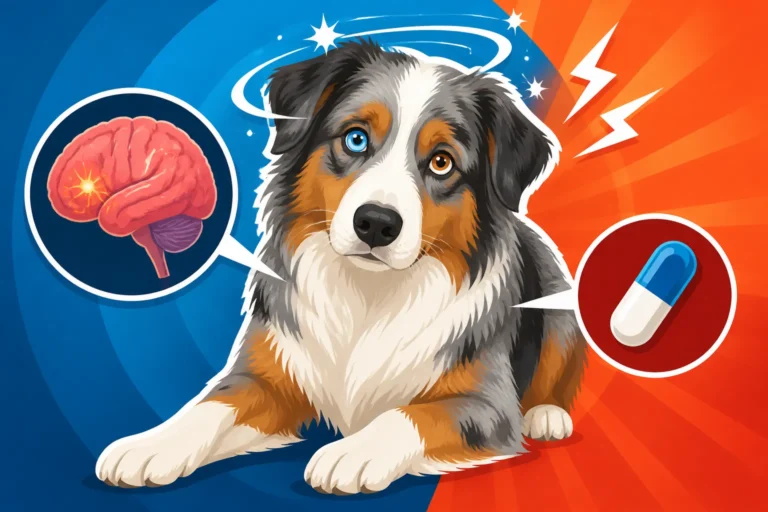
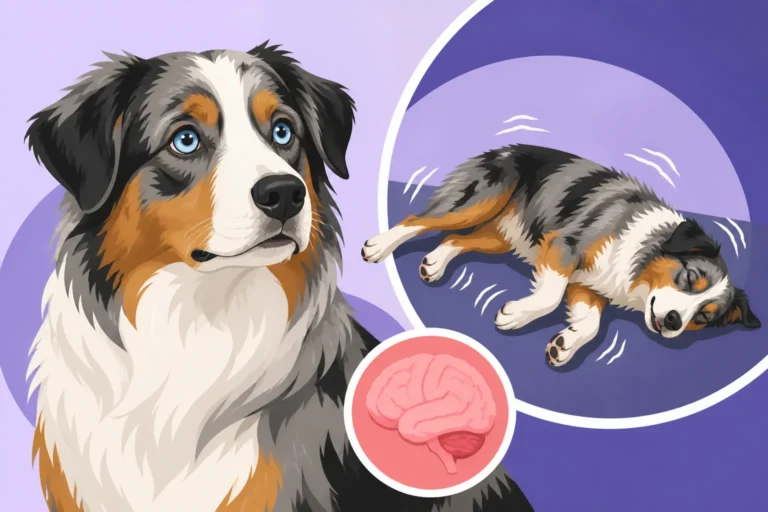
When we talk about the MDR1 gene, also known as the ABCB1 gene, we're discussing a really important piece of your Australian Shepherd's genetic puzzle. This gene is responsible for producing P-glycoprotein, a protein that acts like a bouncer at the blood-brain barrier, pumping certain drugs and toxins out of the brain. Think of it as a vital protective mechanism. If this gene isn't working correctly, those drugs can build up to toxic levels in the brain, leading to severe neurological issues, seizures, coma, or even death.
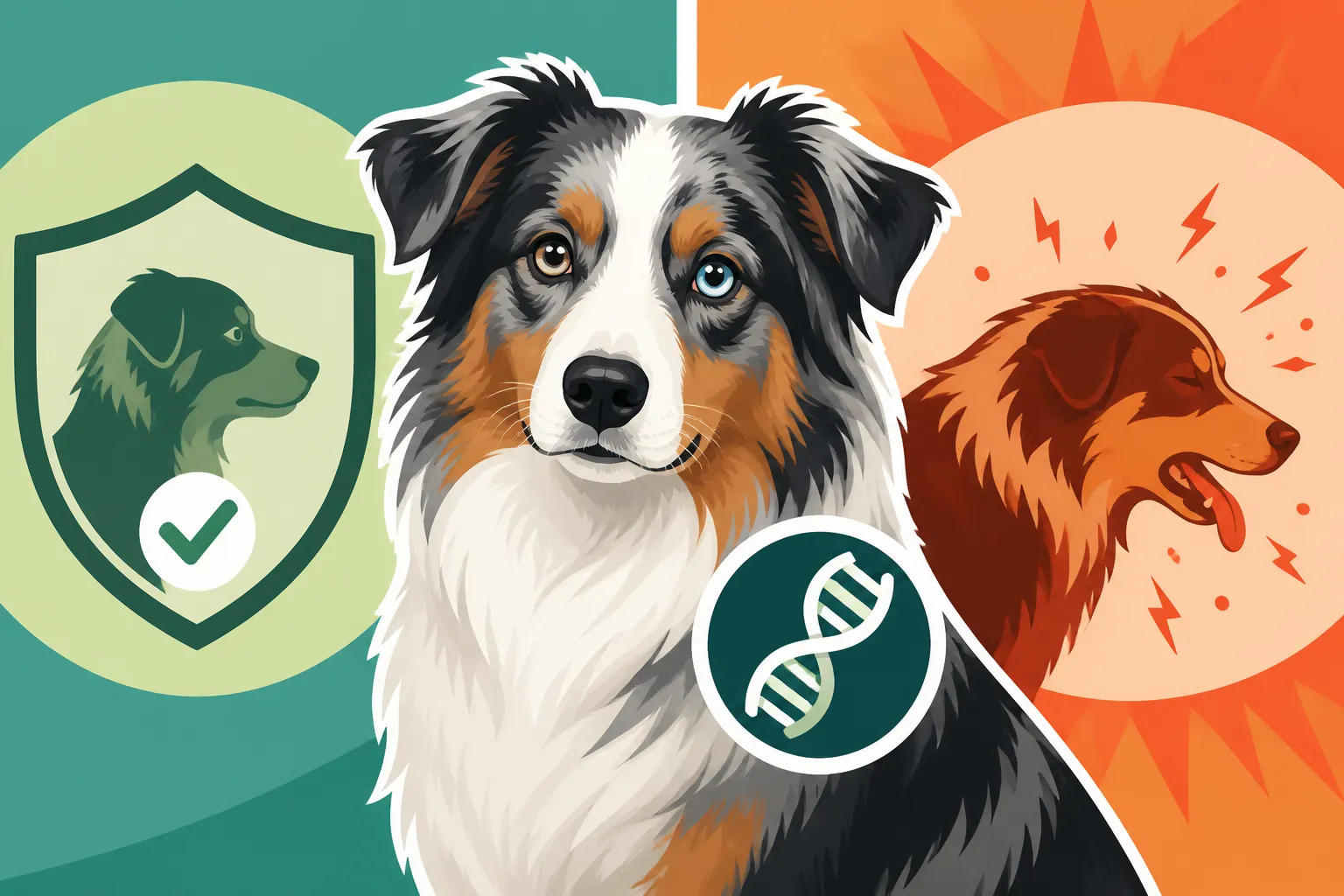
Now, let's talk about what "carrier" actually means. In genetics, it signifies that your Australian Shepherd has inherited one normal copy of the MDR1 gene and one mutated copy. It's not a full "double whammy" where both copies are mutated. This is crucial because it means there's still a functional gene doing its job. The most commonly accepted understanding is that having one normal copy is usually enough to produce sufficient P-glycoprotein to protect the brain from most drug accumulation. This differs significantly from an "affected" dog, which has inherited two mutated copies of the gene, meaning they have no functional P-glycoprotein. For an affected dog, even standard doses of certain drugs can be lethal.
The fear, however, is completely understandable. We’re often told that any deviation from normal is a cause for alarm, and the sheer volume of information about the severe risks associated with MDR1 can be overwhelming. Many owners feel a wave of anxiety, believing their carrier Aussie is walking a tightrope with every vet visit. This initial panic is a natural response to wanting to protect your dog, but understanding the scientific difference between carrier and affected status is the first step in easing that worry. For a deeper dive into the overall health implications, you might find our article on The MDR1 Mutation Half of Australian Shepherds Carry helpful.
Why Carriers Typically Don't React to Sensitive Drugs
The reason an MDR1 carrier Australian Shepherd typically doesn't experience the severe adverse reactions seen in affected dogs boils down to the concept of gene expression and biological redundancy. Even with one mutated gene, the single functional copy is generally quite efficient. It produces enough P-glycoprotein to effectively transport sensitive drugs out of the brain before they can reach dangerous concentrations. The body often has ways to compensate, and in the case of MDR1, one working gene is usually sufficient to maintain that critical protective barrier. It’s like having a well-staffed bouncer at the club—even if one bouncer calls in sick, the other one can usually handle the crowd.
Research and widespread veterinary experience consistently show that true adverse reactions to MDR1-sensitive drugs are exceedingly rare in carrier dogs. The P-glycoprotein pump isn't an all-or-nothing system. There's a threshold, and having one functional copy typically keeps drug levels below that threshold. While some studies have explored if there's any subtle, subclinical difference in drug metabolism in carriers, these findings usually don't translate to observable, negative health impacts in real-world scenarios under normal dosages. It’s important to note that this doesn't mean you should ignore their status, but it puts the risk into proper perspective.
Consider the common concern regarding drugs like ivermectin, often found in heartworm preventatives. For a truly affected Aussie, a typical dose of ivermectin can be devastating. However, for a carrier, the small amount of drug in heartworm preventatives is generally well below the threshold that would cause any issues, thanks to that one functional gene. This is why many vets will reassure owners that while vigilance is key, a carrier Aussie is not automatically on a path to drug complications. Understanding What MDR1 Does Inside an Australian Shepherd Brain can further clarify this complex mechanism.
Situations Where a Carrier Might Show Mild Signs
While significant adverse reactions are rare in MDR1 carriers, it's not entirely impossible for them to show mild signs under very specific, unusual circumstances. This is where the nuance really comes into play. For instance, if an Australian Shepherd carrier were to receive an extremely high, off-label dose of an MDR1-sensitive drug, far beyond what would be prescribed for their size and condition, their single functional gene might struggle to keep up. This is usually more of a theoretical concern than a practical one, as responsible veterinary care always adheres to appropriate dosing guidelines.
Another scenario could involve interactions with other medications. If a carrier Aussie is on multiple drugs, some of which might also interact with the P-glycoprotein pump, there's a slight, theoretical chance that the combined effect could overwhelm the single functional gene. However, this is something a vigilant veterinarian would consider when prescribing a complex medication regimen, especially if they are aware of the dog's carrier status. It's not about an inherent sensitivity, but rather an extreme overload. This highlights why open communication with your vet is paramount, and why discussing The Drugs an MDR1 Australian Shepherd Cannot Take is so important.
It's also worth remembering that some dogs can simply be more sensitive to medications in general, regardless of their MDR1 status, due to individual metabolism or other underlying health issues. Therefore, any unusual behavior after administering any medication should always be reported to your vet. Don't immediately jump to MDR1 as the sole cause for a carrier dog; investigate all possibilities. The key is that mild, transient, or vague signs would be the absolute exception for a carrier, and would likely resolve quickly once the drug is out of their system, unlike the severe, life-threatening reactions seen in affected dogs.
Here's a quick comparison of MDR1 statuses:
| MDR1 Status | Gene Copies | P-glycoprotein Function | Risk of Severe Drug Reaction | Typical Recommendation |
|---|---|---|---|---|
| Normal | Two functional copies | Full function | Minimal | No specific drug restrictions based on MDR1 |
| Carrier | One functional, one mutated | Sufficient function | Very Low (Rare/Mild) | Vet awareness, cautious dosing of some drugs, monitor |
| Affected | Two mutated copies | No function | High | Strict avoidance or significant dose reduction of sensitive drugs |
Managing an MDR1 Carrier Australian Shepherd with Confidence
Living with an MDR1 carrier Australian Shepherd doesn't have to be a source of constant worry, but it does require responsible management and proactive communication with your veterinary team. The absolute first step, if you haven't already, is to have your Aussie tested for MDR1. A simple cheek swab can provide definitive results, giving you the information you need to move forward. You can learn more about this in our guide, Testing an Australian Shepherd for MDR1.
Once you have those results, it is absolutely vital to inform every veterinarian, veterinary specialist, and even emergency vet clinic that your Australian Shepherd is an MDR1 carrier. Don't assume they have it on file, especially if you're visiting a new clinic or in an emergency situation. Make it a point to clearly state "My dog is an MDR1 carrier, please note this in their file and review all medications for potential interactions." This is particularly important for those moments when you're not thinking straight, like during an unexpected injury or illness. Having pet insurance, for example from a provider like Healthy Paws, can also give you peace of mind that if an emergency vet visit is needed, the focus can be purely on your dog's care.
Beyond simply informing your vet, empower yourself by keeping a list of drugs known to be affected by the MDR1 gene. While your vet will be the expert, having this information handy ensures you can engage in informed discussions. Medications like ivermectin (in high doses), loperamide (Imodium), acepromazine, and various chemotherapy drugs are among the most commonly cited. Always question any new medication, asking your vet if it's safe for an MDR1 carrier. If you're ever in doubt, a quick call to the veterinary clinic for clarification is always a good idea. Proactive communication is key to preventing any issues, and detailed insights can be found in Telling Your Vet an Australian Shepherd Is MDR1 Positive.
Lastly, general good health practices are your best defense. Maintain regular wellness checks, feed a high-quality diet, and provide plenty of appropriate exercise. A healthy dog with a robust immune system is generally better equipped to handle any challenge, genetic or otherwise. Should your Aussie ever require a procedure that involves anesthesia, remind your vet of their carrier status, as some anesthetic protocols might be adjusted out of an abundance of caution, even for carriers. Knowing you've done everything you can to protect your Australian Shepherd, and having a reliable pet insurance plan like those offered by Healthy Paws, allows you to enjoy your adventurous companion without unnecessary stress.
Disclaimer
This article is intended for informational purposes only and does not constitute veterinary advice. Always consult with a qualified veterinarian regarding any medical concerns or treatment decisions for your Australian Shepherd. Drug dosages and sensitivities can vary, and only a veterinarian can provide accurate, personalized advice based on your dog's specific health profile.