The Age an Australian Shepherd’s First Seizure Comes
Watching your beloved Australian Shepherd suddenly collapse, convulse, or stare blankly into space can be one of the most terrifying experiences an owner faces. The fear, the confusion, and the overwhelming helplessness in that moment are profound. For many Aussie owners, this first seizure event often happens within a specific age range, leaving them wondering why and what comes next. This guide will walk you through the typical age of onset for an Australian Shepherd's first seizure, help you understand what might be happening, and empower you with knowledge for navigating this challenging journey.
Understanding Idiopathic Epilepsy in Australian Shepherds
When we talk about seizures in Australian Shepherds, a common culprit is something called idiopathic epilepsy. The word "idiopathic" basically means "of unknown cause." It's frustrating, right? You want an answer, a clear reason why your loyal companion is going through this, but often, there isn't one immediately apparent. This isn't epilepsy caused by a brain tumor, a severe head injury, or a metabolic imbalance; it's a primary seizure disorder that seems to arise from the brain itself.
Defining Idiopathic Epilepsy
Idiopathic epilepsy is a chronic neurological disorder characterized by recurrent, unprovoked seizures. In simple terms, it means your Aussie experiences seizures repeatedly, and these aren't triggered by an external event that can be easily identified and removed, like poisoning or a sudden drop in blood sugar. It's an issue with the brain's electrical activity, where neurons fire abnormally, causing a temporary disruption in normal brain function. For many Australian Shepherds, this condition is inherited, making genetic factors a significant piece of the puzzle. Understanding this distinction is crucial because it guides the diagnostic process and treatment approach. It also helps manage expectations; unlike seizures caused by an underlying, treatable condition, idiopathic epilepsy often requires long-term management rather than a "cure."
Why Australian Shepherds Are Prone to Epilepsy
Australian Shepherds are unfortunately one of the breeds with a higher predisposition to idiopathic epilepsy. It's a sobering fact that many owners discover too late. This breed's genetic makeup appears to include genes that increase their susceptibility to this neurological disorder. While research is ongoing to pinpoint the exact genes involved, the evidence from breed surveys and familial patterns strongly suggests a hereditary component. This isn't to say every Aussie will develop epilepsy, but the breed's statistical risk is notably elevated compared to many others. This genetic vulnerability is a primary reason why The Genetic Panel Every Australian Shepherd Needs often includes considerations for conditions like epilepsy, even if direct genetic markers for idiopathic epilepsy aren't always definitive. Breeders striving for healthy lines take this predisposition very seriously.
Genetic Links and Inheritance
The inheritance pattern of idiopathic epilepsy in Australian Shepherds is complex, believed to be polygenic, meaning multiple genes contribute to the risk rather than a single dominant or recessive gene. This complexity makes breeding away from epilepsy a significant challenge, but responsible breeders are doing their best to minimize its occurrence by carefully selecting breeding pairs. They often rely on pedigree analysis and the health history of relatives to assess risk. If one parent has epilepsy, or if there's a strong history in the lineage, the chances of their offspring being affected or being carriers increase. This is why thorough health clearances and transparent communication from a breeder are absolutely non-negotiable when bringing an Aussie puppy home. Owners should always inquire about the incidence of epilepsy in a puppy's family tree.
The Typical Onset Window for First Seizures
It's common for Australian Shepherd owners to be caught off guard by the sudden appearance of seizures, especially when their dog seems otherwise healthy and vibrant. However, there's a generally recognized age range during which the first seizure is most likely to occur. This window helps owners and vets understand if the presentation is typical for idiopathic epilepsy or if other causes should be more strongly considered.
The "Prime Age" for First Seizures
For many Australian Shepherds with idiopathic epilepsy, the first seizure typically manifests between one and five years of age. This "prime age" window is quite consistent across affected individuals within the breed. It's a period when the dog is past puppyhood, often settled into their routine, and appears to be in the prime of their life. For example, you might have a two-year-old Aussie, perfectly healthy, active, and well-adjusted, who then suddenly experiences a terrifying grand mal seizure. This sudden onset in an otherwise healthy young adult is highly characteristic of idiopathic epilepsy. The shock can be immense because there are no prior warning signs or illnesses that would suggest a neurological problem. Many vets will focus their initial diagnostic efforts on ruling out other causes but will keep idiopathic epilepsy high on the differential list if the dog falls within this age bracket. This aligns closely with information discussed in Australian Shepherd Epilepsy Starting Between One and Five.
Variations in Onset Age
While the one-to-five-year range is typical, it's not a strict rule. Some Australian Shepherds might experience their first seizure slightly earlier, perhaps as young as six months to a year, though this is less common for pure idiopathic epilepsy and might prompt a more thorough investigation into other potential causes. On the other end of the spectrum, it's possible, though rarer, for an Aussie to have their first seizure later in life, sometimes after five or even six years old. When a seizure occurs much later, say at seven or eight years of age, veterinarians often become more suspicious of other underlying conditions, such as brain tumors, metabolic disorders, or even inflammatory brain diseases, even if it eventually turns out to be idiopathic. The timing of the first seizure is a critical piece of information that helps guide the diagnostic journey, ensuring that no stone is left unturned in understanding your dog's specific situation. This variation underscores why each case needs individual attention and a detailed veterinary work-up.
What Early or Late Onset Might Mean
The timing of that first seizure can sometimes offer clues to your vet. If an Aussie puppy under six months experiences a seizure, it's less likely to be classic idiopathic epilepsy, and your vet will probably pursue extensive testing for congenital abnormalities, toxins, or severe metabolic disturbances. These early-onset cases often have a different prognosis and require distinct treatment protocols. Conversely, if your older Australian Shepherd, say an eight-year-old, suddenly has a seizure, your veterinarian will likely lean towards investigating acquired conditions more thoroughly. They might recommend advanced imaging like an MRI to rule out structural brain issues that are more common in older dogs. It doesn't definitively rule out idiopathic epilepsy, as some dogs simply develop it later, but it shifts the diagnostic priority. Being transparent about the exact age and circumstances of the first seizure is paramount for your vet to formulate the most appropriate diagnostic plan for your Aussie.
What Happens During a First Seizure Event
Experiencing your Australian Shepherd's first seizure is incredibly frightening. It often feels like it comes out of nowhere, and the dog you know and love transforms into a terrifying, uncontrolled creature for a brief period. Understanding the different stages of a seizure can help you stay calmer, gather crucial information for your vet, and provide the best possible support to your dog.
Recognizing the Aura and Ictus
A seizure isn't just the visible convulsions; it's a whole event with distinct phases. The first, and often subtle, phase is the aura, which can precede the actual seizure by minutes or even hours. During the aura, your Aussie might act unusually. They might become restless, clingy, confused, or seem anxious. Some dogs try to hide, others seek comfort. You might notice subtle changes in their breathing or stare blankly. This is the brain starting to misfire.
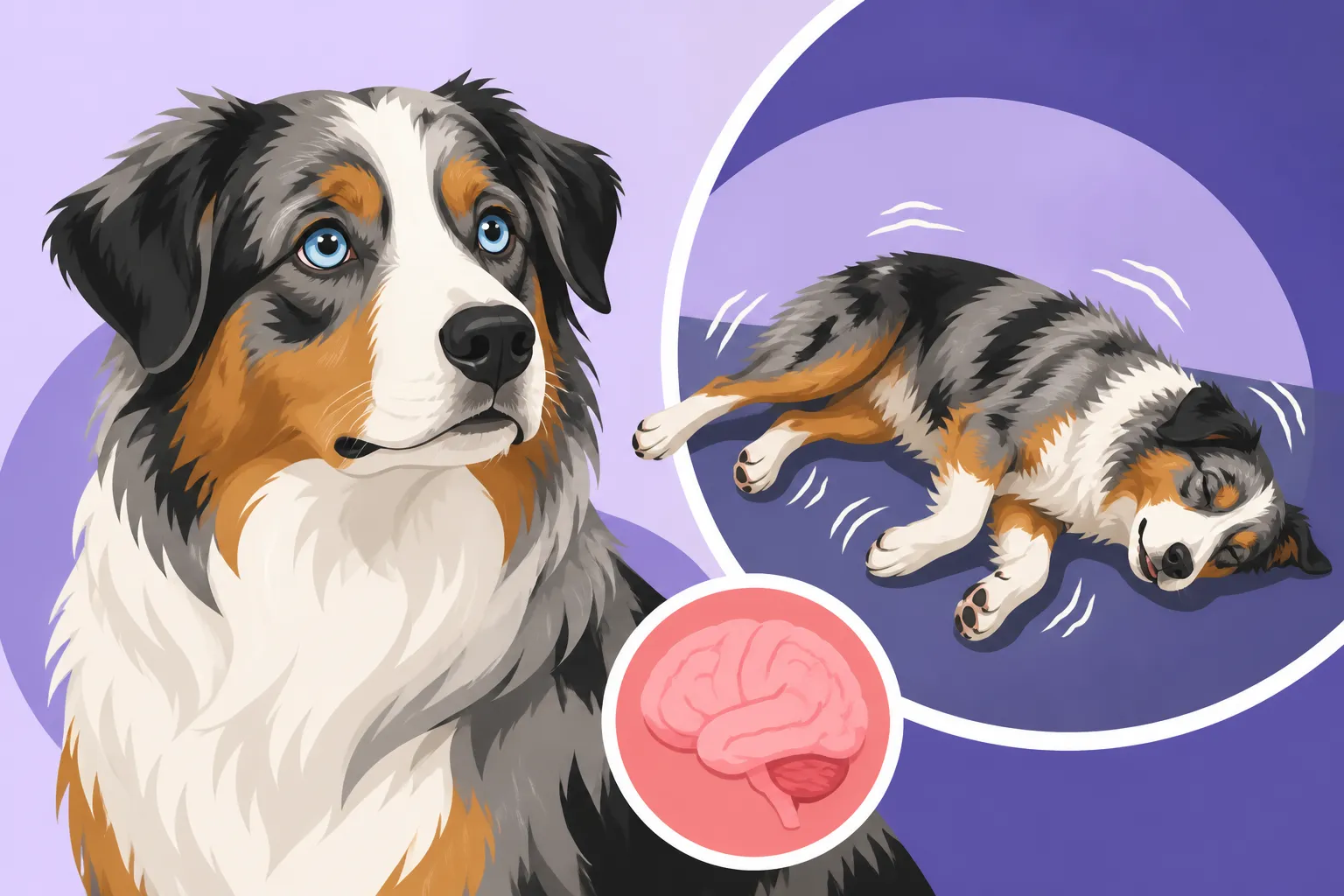
The most dramatic and recognizable phase is the ictus, which is the actual seizure itself. This is what most people picture when they think of a seizure. In a generalized or "grand mal" seizure, which is common in Aussies, your dog might fall to their side, paddle their legs stiffly, vocalize, drool excessively, chew at the air, and lose bowel or bladder control. Their eyes might be open and unfocused. This phase can last from a few seconds to several minutes, and though it feels like an eternity, timing it accurately is crucial for your vet. Try to avoid touching your dog during this phase, as they are completely unconscious and might unintentionally bite.
Here's a quick reference table for identifying the phases of a generalized seizure:
| Seizure Phase | Duration | Common Signs |
|---|---|---|
| Aura | Minutes to hours | Restlessness, anxiety, seeking owner, hiding, pacing, subtle changes in behavior. |
| Ictus | Seconds to minutes | Collapse, stiffening, limb paddling, vocalization, drooling, jaw chomping, loss of bladder/bowel control, unfocused eyes. |
| Post-Ictus | Minutes to days | Disorientation, confusion, temporary blindness, increased thirst/hunger, restlessness, extreme tiredness. |
The Post-Ictal Phase
Once the intense physical convulsions of the ictus subside, your Australian Shepherd enters the post-ictal phase. This can be almost as disorienting and upsetting for owners as the seizure itself. Your dog might appear confused, disoriented, or even temporarily blind. They might wander aimlessly, bump into furniture, seem restless, or be unusually hungry or thirsty. Some dogs are extremely tired and sleep profoundly, while others are agitated and can't settle. The post-ictal phase can last anywhere from a few minutes to several hours, or even a couple of days in severe cases. Your Aussie might not recognize you immediately, or they might be overly needy. It's vital to give them space and quiet during this time, offer water if they're coherent enough to drink, and guide them gently to prevent injury. Do not offer food until they are fully recovered and alert to avoid choking. Documenting the duration and specific behaviors during this phase provides invaluable information to your vet, helping them understand the severity and type of seizure your dog experienced. This phase is detailed further in Standing By an Australian Shepherd Mid-Seizure.
Differentiating Seizures from Other Events
It's important to understand that not every episode of collapse or strange behavior is necessarily a seizure. Other conditions can mimic seizure activity, and accurately describing what happened to your vet is key. For example, some Aussies might experience syncopal episodes, which are fainting spells caused by a temporary lack of blood flow to the brain, often related to heart conditions. During a syncopal episode, the dog usually collapses limply, recovers quickly once blood flow is restored, and doesn't typically show the rigid paddling or post-ictal confusion characteristic of a seizure.
Another possibility could be vestibular attacks, which affect balance and can cause head tilting, circling, and ataxia, making the dog seem disoriented or unable to stand. These are usually related to inner ear or brainstem issues, not abnormal electrical activity. Muscle tremors, sleep disorders, or even extreme pain could also be mistaken for seizure activity. When you call your vet after your Aussie's first episode, try to be as descriptive as possible about the specific movements, loss of consciousness, duration, and what happened both before and after the event. Taking a video with your phone, if it's safe to do so, can be incredibly helpful for your veterinarian to make an accurate diagnosis.
Seeking Veterinary Care After the First Seizure
The moment your Australian Shepherd has its first seizure, your first call should be to your veterinarian. Even if the seizure was brief and your dog seems to recover quickly, it's a serious event that warrants immediate professional attention. Early intervention and accurate diagnosis are critical for managing this condition effectively.
First Steps After a Seizure
After your Australian Shepherd's first seizure, the priority is to ensure their immediate safety and then contact your vet. Once the post-ictal phase begins and your dog is somewhat aware, guide them to a safe, quiet space away from stairs, sharp objects, or other pets. Offer a small amount of water if they seem thirsty and can drink without difficulty. Avoid offering food until they are fully recovered to prevent aspiration.
Call your vet as soon as possible. Even if it's after hours, most veterinary clinics have an emergency line or partner with an emergency hospital. Be prepared to provide details:
- The exact time and date of the seizure.
- The duration of the ictal (convulsive) phase.
- A detailed description of the movements, vocalizations, and any loss of bladder/bowel control.
- A description of the aura (if you noticed one) and the post-ictal phase.
- Any recent changes in diet, medication, or exposure to toxins.
- Your Aussie's current age.
Even if your dog appears completely normal an hour later, a vet visit is essential. This initial event is often the first sign of a larger neurological issue, and prompt investigation is necessary.
Diagnostic Work-Up for Seizures
When you bring your Australian Shepherd in after a first seizure, your vet will perform a thorough physical and neurological exam. This is the starting point to rule out common, treatable causes. They'll look for signs of head trauma, examine your dog's gait, reflexes, and cranial nerves.
Beyond the physical exam, a diagnostic work-up typically involves several steps:
- Bloodwork: This is crucial to check for metabolic causes of seizures. A comprehensive blood panel will look at organ function (liver, kidneys), blood sugar levels, electrolyte balance, and thyroid function. Sometimes, low blood sugar (hypoglycemia) or severe liver disease can cause seizures.
- Urinalysis: This helps assess kidney function and overall health.
- Infectious Disease Testing: Depending on your location and your dog's lifestyle, your vet might recommend tests for certain infectious diseases that can affect the brain, such as tick-borne illnesses.
- Advanced Imaging: If initial bloodwork is normal, especially for Aussies with an atypical age of onset or unusual seizure patterns, your vet might recommend advanced imaging like an MRI (Magnetic Resonance Imaging) of the brain. An MRI can detect structural abnormalities such as brain tumors, inflammation, hydrocephalus, or prior strokes. This is often an expensive step, but vital to rule out treatable underlying conditions. If you have pet insurance, a provider like Healthy Paws can often help with the significant costs associated with diagnostics like an MRI for seizures. The cost of an MRI for seizures can be substantial, as highlighted in Australian Shepherd MRI Cost for Seizures.
- Cerebrospinal Fluid (CSF) Analysis: In some cases, a spinal tap might be performed to collect and analyze CSF, which can help diagnose inflammatory or infectious conditions affecting the central nervous system.
If all these tests come back normal, and your Aussie falls within the typical age range for onset, a diagnosis of idiopathic epilepsy is usually made by exclusion.
When Medication Becomes Necessary
The decision to start anti-seizure medication for an Australian Shepherd is often a thoughtful process, not an immediate reaction to the first seizure. Vets generally consider several factors:
- Seizure Frequency: If your Aussie has isolated seizures that are very infrequent (e.g., less than once every few months), your vet might recommend monitoring before starting medication.
- Seizure Severity: Very severe or prolonged seizures (status epilepticus) or cluster seizures (multiple seizures within a 24-hour period) usually warrant immediate medication, regardless of frequency, due to the risk to the brain.
- Post-Ictal Severity: If your dog's post-ictal period is extremely debilitating, causing significant confusion or aggression, medication might be considered.
- Progression: If the frequency or severity of seizures is increasing over time, medication is typically recommended.
The goal of medication is not to cure epilepsy but to reduce the frequency, severity, and duration of seizures, improving your dog's quality of life. Common medications like phenobarbital or potassium bromide, or newer options such as Keppra (levetiracetam), are often used. Starting your Australian Shepherd on phenobarbital, for example, requires careful monitoring and dosage adjustments. Remember, pet insurance plans, like those offered by Healthy Paws, often provide coverage for chronic conditions like epilepsy, which can make the ongoing cost of anti-seizure medications more manageable.
Managing Life After an Epilepsy Diagnosis
An epilepsy diagnosis for your Australian Shepherd can feel overwhelming, but it's important to remember that many Aussies live full, happy lives with proper management. It requires dedication, observation, and a strong partnership with your veterinary team.
Logging Seizure Activity
One of the most powerful tools you have as an owner in managing your Australian Shepherd's epilepsy is meticulous record-keeping. After a diagnosis, you should create a seizure log and update it diligently after every event. This log should include:
- Date and Time: Exactly when the seizure started and ended.
- Duration: How long the active seizure (ictus) lasted.
- Description: What exactly happened? Was it a generalized grand mal? Did one limb twitch more? Did they vocalize? Lose bladder control?
- Aura & Post-Ictus: Any pre-seizure warning signs and what your dog was like immediately after and for several hours following the seizure.
- Medication: What medications your dog is on, the dosage, and if you missed any doses.
- Possible Triggers: Any unusual events, stressors, or changes in routine that occurred just before the seizure.
This detailed log is invaluable for your veterinarian. It helps them track the effectiveness of medications, adjust dosages, and identify patterns or potential triggers. Without this information, it's very difficult to make informed decisions about your Aussie's treatment plan. Keeping a log is highlighted as critical in Logging Aussie Seizures for the Neurologist.
Lifestyle Adjustments
Managing an Australian Shepherd with epilepsy often involves making some lifestyle adjustments to minimize potential triggers and ensure their safety.
- Consistent Routine: Dogs thrive on routine, and for an epileptic Aussie, consistency can be even more important. Try to keep feeding times, exercise schedules, and medication administration as regular as possible.
- Stress Reduction: Stress can be a seizure trigger for some dogs. Identify and minimize stressors in your Aussie's environment. This might mean avoiding busy dog parks, loud events, or prolonged periods of separation. If your Aussie tends to be reactive, working on Australian Shepherd Reactivity and Overarousal can significantly reduce stress levels.
- Diet: While diet isn't typically a cause of idiopathic epilepsy, a high-quality, consistent diet is important. Some vets might suggest exploring specific diets, like ketogenic diets, but always consult with your vet or a veterinary nutritionist before making significant changes.
- Safe Environment: If your Aussie has frequent or severe seizures, try to "seizure-proof" your home as much as possible. This might mean cushioning sharp furniture corners, blocking off stairs, or ensuring they're never left unsupervised near water.
- Avoid Known Triggers: Some dogs are sensitive to flashing lights, certain sounds, or even specific household chemicals. While these are less common, if you notice a pattern, try to eliminate the suspected trigger.
Remember, the goal is not to eliminate all possibility of a seizure, but to provide a stable, safe, and supportive environment that reduces the risk and allows your Aussie to live as normal a life as possible.
Support and Resources
Living with an Australian Shepherd with epilepsy can be emotionally taxing. It's important to remember you're not alone.
- Veterinary Neurologist: For complex cases, or if your Aussie isn't responding well to standard treatment, your vet might refer you to a veterinary neurologist. These specialists have advanced training in brain and nervous system disorders and can offer more specialized diagnostic and treatment options.
- Support Groups: There are numerous online forums and local support groups for owners of epileptic dogs. Connecting with others who understand your experience can provide immense emotional support, practical tips, and a sense of community.
- Breed-Specific Organizations: Organizations like the Australian Shepherd Health & Genetics Institute (ASHGI) provide a wealth of information specific to the breed's health issues, including epilepsy, and can be a great resource for understanding genetic factors and ongoing research. They also often provide advice on Breeding Away From Epilepsy in Aussie Lines.
- Pet Insurance: The financial burden of managing a chronic condition like epilepsy can be significant, encompassing everything from diagnostic tests to lifelong medications. Pet insurance can be a game-changer. Companies like Healthy Paws offer coverage for chronic conditions, helping to offset the costs of vet visits, medications, and specialized treatments. This can provide crucial peace of mind, allowing you to focus on your Aussie's care without constantly worrying about the budget. Exploring Epilepsy Coverage on an Australian Shepherd Policy is a wise step for any owner.
While an epilepsy diagnosis changes things, it doesn't mean the end of a happy life for your Aussie. With proper care, diligence, and support, your Australian Shepherd can continue to be a cherished and active member of your family for years to come.
Disclaimer
The information provided in this article is for educational purposes only and is not a substitute for professional veterinary advice. Always consult with a qualified veterinarian for any health concerns or before making any decisions related to your pet's health and treatment.