The MDR1 Mutation Half of Australian Shepherds Carry
It's incredibly unsettling when you first hear about something called the MDR1 mutation, especially when you realize it affects a significant number of our beloved Australian Shepherds. The thought that a common medication could unexpectedly harm your furry family member is enough to keep any devoted owner up at night. This guide is here to unravel the mystery of the MDR1 gene, explain its implications for your Aussie's health, and provide actionable steps to ensure their safety and well-being.
Understanding the MDR1 Mutation in Australian Shepherds
The MDR1 mutation isn't some rare, exotic disease; it's a genetic quirk that's surprisingly common within the Australian Shepherd breed and several other herding dogs. Understanding what it is and how it works is the first crucial step in protecting your dog.
What is the MDR1 Gene and Its Role?
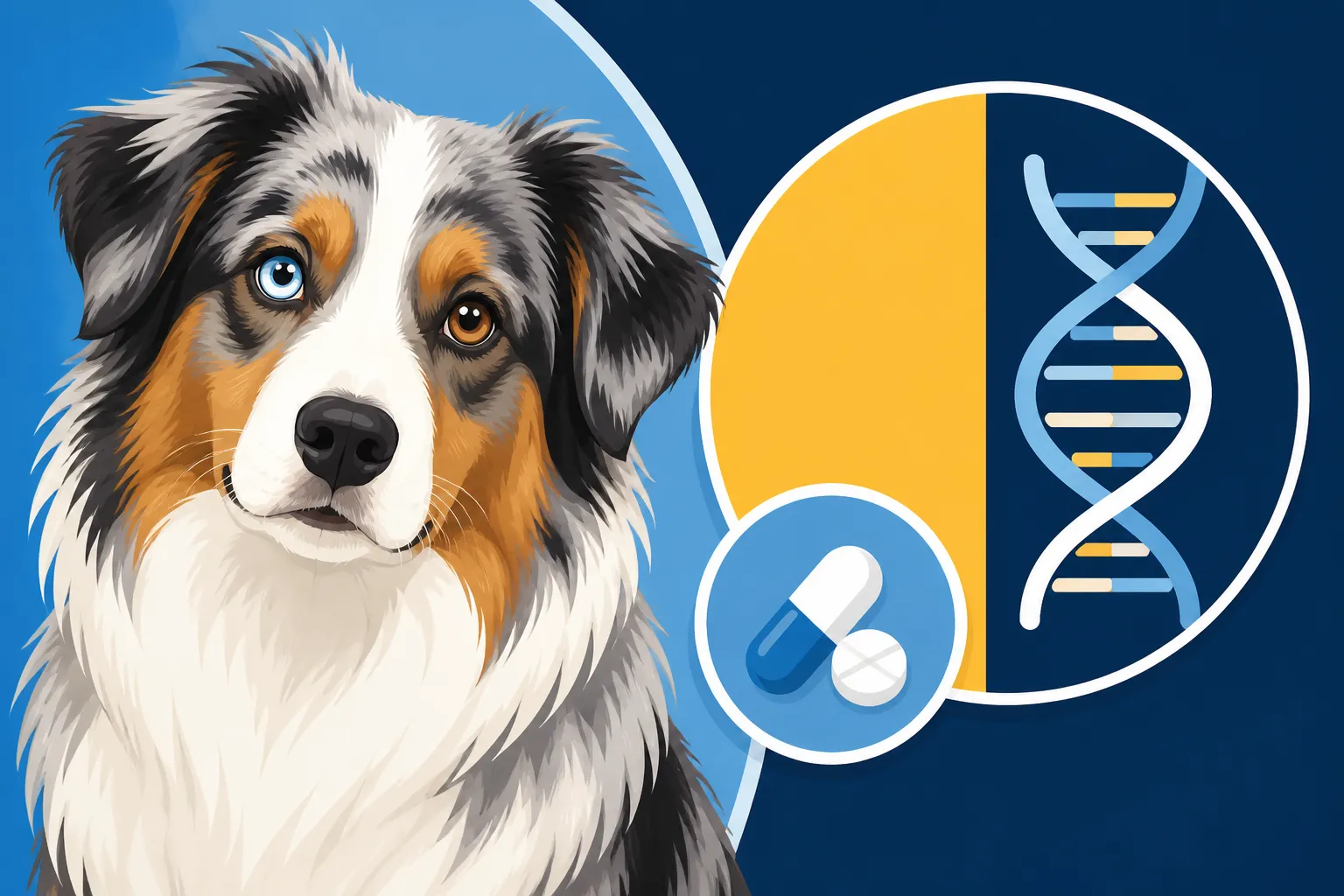
At its core, the MDR1 gene (which stands for Multi-Drug Resistance 1) is responsible for producing a very important protein called P-glycoprotein. Now, that sounds technical, but trust me, it's simpler than it seems once you break it down. Think of P-glycoprotein as a diligent bouncer or a biological security guard. Its job is to sit in the cell membranes of various organs, including the brain, intestines, kidneys, and liver, and actively pump certain drugs and toxins out of those cells.
For instance, in the brain, P-glycoprotein forms a critical part of the blood-brain barrier. This barrier is a protective shield that prevents harmful substances from entering the brain and wreaking havoc on sensitive neurological tissues. When a drug is ingested, this P-glycoprotein bouncer determines whether it should be allowed past the barrier or pumped right back out. It's a vital defense mechanism, ensuring that only necessary substances get through while potential threats are expelled.
The problem arises when there's a mutation in the MDR1 gene. In Australian Shepherds and related breeds, this mutation is typically a deletion, meaning a part of the gene is missing. This genetic flaw results in a faulty or non-functional P-glycoprotein. Imagine our diligent bouncer suddenly falling asleep on the job or having the club door stuck open. Without a properly functioning P-glycoprotein, certain drugs that would normally be kept out of sensitive organs, especially the brain, can accumulate to toxic levels. This accumulation is what leads to severe adverse drug reactions, which can range from mild disorientation to life-threatening neurological damage.
The Prevalence of MDR1 in Australian Shepherds
It might come as a shock, but roughly half of all Australian Shepherds carry at least one copy of the mutated MDR1 gene. This isn't a minor percentage; it's a widespread characteristic within the breed, making it essential for every Aussie owner to be aware and, ideally, to test their dog. This high prevalence is thought to be due to a "founder effect," where one or more early ancestors who carried the mutation passed it down through generations, becoming more common as those bloodlines became popular.
When we talk about prevalence, we often categorize dogs into three genotypes:
- N/N (Normal/Normal): These dogs have two copies of the normal MDR1 gene and produce fully functional P-glycoprotein. They are not affected by the mutation and typically tolerate all drugs well.
- M/N (Mutant/Normal): These are heterozygous carriers. They have one normal copy and one mutated copy. They still produce some functional P-glycoprotein, but not as much as an N/N dog. While they generally don't show reactions to typical doses of sensitive drugs, they can be more sensitive, especially to higher doses or certain combinations of medications. This is where the confusion often lies for owners, as their dog might react, but not always in a predictable way.
- M/M (Mutant/Mutant): These dogs are homozygous affected. They have two copies of the mutated MDR1 gene and produce little to no functional P-glycoprotein. These are the dogs at highest risk, as their bodies have very limited ability to keep sensitive drugs out of critical organs like the brain. They are highly likely to experience severe, potentially fatal, reactions even to standard doses of certain medications.
The fact that so many Aussies carry this gene, whether as carriers or fully affected, highlights why testing is not just a recommendation but a critical part of responsible Australian Shepherd ownership. It’s not just about protecting your own dog, but about understanding the breed as a whole.
The Critical Impact of MDR1 on Drug Metabolism
Knowing your Australian Shepherd's MDR1 status is arguably one of the most important pieces of health information you can have as an owner. It dictates how your dog will metabolize certain medications, and in turn, how you and your veterinarian approach their healthcare. Ignoring it could have dire consequences.
Drugs That Are Dangerous for MDR1-Affected Aussies
The list of drugs that can be problematic for an MDR1-affected Australian Shepherd includes some common medications that vets prescribe regularly. The danger comes from these drugs not being properly pumped out of the brain, leading to an accumulation that causes neurotoxicity. It’s like a toxic flood overwhelming the brain's defenses.
Here are some of the primary culprits you need to be acutely aware of:
- Ivermectin: This is perhaps the most well-known and often cited drug associated with MDR1 sensitivity. While generally safe at the low doses found in many heartworm preventatives (more on that later), higher doses used for treating certain mites or other parasites can be extremely dangerous, leading to severe neurological signs, coma, and even death in affected dogs.
- Loperamide (Imodium): A common over-the-counter anti-diarrheal medication for humans. For an MDR1-affected Aussie, loperamide can cross the blood-brain barrier unchecked, causing profound central nervous system depression, ataxia, and severe sedation. You should never give your Aussie Imodium without explicit veterinary instruction, and even then, only if their MDR1 status is known to be N/N. For a deeper dive into this specific risk, you can check out Loperamide and Other Drugs That Harm an MDR1 Aussie.
- Acepromazine: A tranquilizer often used for sedation during procedures or for anxiety. In MDR1-affected dogs, it can cause prolonged and profound sedation, incoordination, and even collapse. Doses usually need to be significantly reduced.
- Butorphanol: An opioid pain reliever and sedative. Similar to acepromazine, it can have exaggerated and prolonged effects in dogs with the MDR1 mutation.
- Chemotherapy Drugs: This is a particularly sensitive category. Drugs like Vincristine, Vinblastine, Doxorubicin, and Cyclosporine are actively pumped out by P-glycoprotein. For an M/M Aussie undergoing cancer treatment, these drugs can accumulate to highly toxic levels, leading to severe side effects that complicate already difficult treatment paths.
- Digoxin: A cardiac drug. While not as commonly used, it's another medication whose levels can become toxic in MDR1-affected dogs.
Imagine your vet prescribing an anesthetic for a routine dental cleaning, and without knowing your dog's MDR1 status, they administer a standard dose of acepromazine. Your dog might wake up hours later, still profoundly sedated, stumbling, and disoriented, experiencing a prolonged recovery that's terrifying for both you and the veterinary staff. This is a very real scenario that highlights why understanding The Drugs an MDR1 Australian Shepherd Cannot Take is so crucial.
Varying Sensitivities: Homozygous vs. Heterozygous Carriers
It's not always black and white, and that's where the worry often kicks in for owners, especially those with carrier dogs. The way an Australian Shepherd reacts to a problematic drug largely depends on their specific MDR1 genotype.
- M/M (Homozygous Affected): These dogs are at the highest risk. With two copies of the mutated gene, their P-glycoprotein is essentially non-existent or severely dysfunctional. Even standard, therapeutic doses of the sensitive drugs listed above can cause severe, life-threatening neurotoxicity. They are the most vulnerable and require extreme caution with drug selection and dosing. For these dogs, even a small error can be catastrophic, leading to immediate and severe symptoms like profound sedation, seizures, or coma.
- M/N (Heterozygous Carrier): This is where it gets a bit more nuanced. Dogs with one normal and one mutated gene still produce some functional P-glycoprotein, just not as much as a fully normal (N/N) dog. This means their ability to pump out sensitive drugs is reduced, but not completely absent. For many, standard doses of problematic drugs might not cause a severe reaction. However, they are still considered sensitive. Higher doses, prolonged administration, or the combination of multiple drugs that interact with P-glycoprotein can still lead to adverse reactions. It's less predictable than with an M/M dog, and often depends on the specific drug, the dose, and the individual dog's physiology. This uncertainty is precisely why many owners wonder Whether an MDR1 Carrier Australian Shepherd Ever Reacts. The general recommendation for M/N dogs is to treat them as if they are affected, meaning doses of problematic drugs should be reduced or alternative drugs chosen whenever possible, just to be on the safe side.
This distinction is vital for your vet to understand when making treatment decisions. It's not just about knowing if your dog has the mutation, but which version they have, to tailor medication protocols safely and effectively.
Recognizing and Reacting to an MDR1 Drug Reaction
Even with the best precautions, accidents can happen, or an unknown MDR1 status might lead to an adverse reaction. Knowing what to look for and how to respond immediately can make a life-saving difference for your Australian Shepherd.
Signs and Symptoms of Neurotoxicity
When an Australian Shepherd with the MDR1 mutation has an adverse reaction to a drug, the symptoms are primarily neurological, because the drugs accumulate in the brain. These signs can vary in severity depending on the drug, the dose, and the individual dog's genetic makeup, but they are almost always alarming.
Common signs to watch out for include:
- Lethargy and Weakness: Your usually vibrant Aussie might suddenly become unusually tired, sluggish, and reluctant to move. They might struggle to stand or walk.
- Disorientation and Confusion: They might appear "drunk," bumping into furniture, staring blankly, or failing to recognize familiar people or surroundings. Imagine your usually vibrant Aussie suddenly looking like they've had too many beers – it's a profound change in mental state.
- Ataxia (Wobbliness or Lack of Coordination): This is one of the most classic signs. Your dog might stumble, sway, or struggle to maintain balance, especially when walking. Their gait might appear exaggerated or uncoordinated.
- Excessive Drooling: Hypersalivation can be a sign of neurological distress or nausea.
- Vomiting: While not exclusively neurological, vomiting can accompany a drug reaction as the body tries to expel the toxins.
- Blindness: In some severe cases, drugs crossing the blood-brain barrier can affect vision, leading to temporary or even permanent blindness. Your dog might suddenly become clumsy as if they cannot see.
- Tremors and Seizures: As the brain becomes more affected, uncontrolled muscle twitching (tremors) or full-blown seizures can occur. This is a very serious sign requiring immediate intervention.
- Coma: In the most severe and untreated cases, the dog can slip into a coma, which is a life-threatening state.
The onset of these symptoms can sometimes be rapid, appearing within hours of drug administration, or they can develop more slowly over a day or two, especially if the drug has a longer half-life or the dog is a carrier reacting to a higher dose. The crucial thing is to recognize these changes as abnormal and potentially indicative of a drug reaction. For a comprehensive overview of these symptoms, you can refer to Neurological Signs an Aussie Is Reacting to a Drug.
Immediate Actions and Emergency Protocols
If you suspect your Australian Shepherd is having an adverse drug reaction due to their MDR1 status, do not wait. This is a medical emergency, and rapid intervention can dramatically improve the outcome.
Here’s what you need to do:
- Contact Your Veterinarian Immediately: Call your vet or the nearest emergency veterinary clinic without delay. Explain the situation clearly: "My Australian Shepherd is exhibiting neurological symptoms after receiving [name of drug], and I suspect an MDR1 reaction."
- Provide All Relevant Information: Be prepared to tell the vet:
- Your dog's known MDR1 status (N/N, M/N, or M/M). If you don't know, say so, but still describe the symptoms.
- The name of the suspected drug, the dose administered, and the time it was given.
- A clear description of the symptoms you're observing and when they started.
- Any other medications your dog is currently taking.
- Transport Safely: If advised to bring your dog in, ensure they are transported safely. If they are disoriented or ataxic, they could injure themselves. Have someone help you, and keep them secure in a crate or harness in the car.
- Do NOT Induce Vomiting Unless Directed: Unless specifically told to do so by a vet, do not try to make your dog vomit. Depending on the drug and your dog's state, this could cause more harm, especially if they are already disoriented or sedated and could aspirate vomit.
- Follow Vet Instructions Precisely: Once at the clinic, the veterinary team will assess your dog. Treatment for an MDR1 drug reaction is primarily supportive. This often includes:
- Intravenous (IV) Fluids: To help flush the drugs from the system and maintain hydration.
- Activated Charcoal: If the drug was recently ingested and hasn't been fully absorbed, activated charcoal can be administered orally to bind to the drug in the digestive tract and prevent further absorption.
- Supportive Care: This involves managing symptoms as they arise, such as anti-seizure medication if needed, oxygen therapy, keeping the dog warm and comfortable, and closely monitoring vital signs.
- Time: Often, the most important "treatment" is simply time, allowing the dog's body to metabolize and excrete the drug, supported by veterinary care.
Having your Aussie's MDR1 status clearly documented, perhaps even on their collar tag, is an excellent step. This can be crucial in an emergency, particularly if someone else needs to take your dog to the vet. For further preparedness, reviewing Australian Shepherd Drug Reactions at the Emergency Vet can provide invaluable insight. Remember, being prepared and acting swiftly are your best defenses against the severe impact of an MDR1 drug reaction.
Getting Your Australian Shepherd Tested for MDR1
The good news is that preventing these terrifying drug reactions is incredibly straightforward: get your Australian Shepherd tested for the MDR1 mutation. It's a simple, non-invasive process that provides lifelong peace of mind and equips you and your vet with critical information.
The Simple Process of Genetic Testing
Gone are the days when genetic testing was complicated or expensive. Today, getting your Aussie's MDR1 status determined is as easy as a cheek swab. Many reputable veterinary genetic testing laboratories offer this service. Popular options include Washington State University's Veterinary Clinical Pharmacology Lab (VCPL), which pioneered much of the research into MDR1, as well as commercial labs like Embark Veterinary and Optimal Selection.
The process typically follows these steps:
- Order a Testing Kit: You can usually order a kit directly from the laboratory's website. These kits often come with sterile cheek swabs, instructions, and return packaging.
- Collect the Sample: This is the easiest part. You'll receive clear instructions on how to collect a buccal swab (cheek swab) from your dog. This usually involves gently rubbing the sterile swab along the inside of your dog's cheek and gums for about 10-15 seconds to collect saliva and epithelial cells. It's painless and quick, something you can easily do at home. Make sure your dog hasn't eaten for about an hour beforehand to ensure a clean sample.
- Mail the Sample: Once collected, you'll follow the kit's instructions to properly package and mail the sample back to the lab.
- Receive Results: After a few weeks (the turnaround time can vary by lab), you'll receive a detailed report outlining your dog's MDR1 genotype (N/N, M/N, or M/M). Most labs provide these results online through a secure portal, and they can often be shared directly with your veterinarian.
The simplicity of this test means there's really no reason not to get it done. It's a small investment for a lifetime of knowledge that directly impacts your dog's safety. To learn more about the specifics of the sample collection, you can read The Cheek Swab That Tests Australian Shepherd MDR1.
Interpreting Your Aussie's MDR1 Results
Once you get that report back, understanding what those letters and slashes mean is key. The results are typically presented as one of three genotypes, which we've touched on, but let's reiterate what each one signifies for your dog's daily life and medical care:
- N/N (Normal/Normal): This means your Australian Shepherd has two normal copies of the MDR1 gene. Their P-glycoprotein is fully functional, and they can metabolize drugs normally. While it's always good practice to discuss any medications with your vet, you generally won't need to worry about the specific drug sensitivities related to MDR1. This result offers a huge sigh of relief for many owners.
- M/N (Mutant/Normal): This indicates your Aussie is a heterozygous carrier. They have one normal copy and one mutated copy. They produce some functional P-glycoprotein, but not as much as an N/N dog. This means they can be sensitive to certain drugs, especially at higher doses or with prolonged exposure. While they might not react as severely as an M/M dog, it's crucial to exercise caution. Many vets will treat M/N dogs with the same precautions as M/M dogs, opting for alternative medications or significantly reduced dosages when using problematic drugs. This result requires proactive communication with your vet to ensure appropriate drug protocols.
- M/M (Mutant/Mutant): This is the genotype that requires the most vigilance. Your Aussie has two mutated copies of the MDR1 gene and produces little to no functional P-glycoprotein. These dogs are highly sensitive to the known problematic drugs, and even standard doses can cause severe, life-threatening neurological toxicity. For an M/M dog, it is imperative to avoid all contraindicated drugs and only use alternatives or drastically reduced, carefully monitored doses under strict veterinary supervision for the few drugs that might be necessary.
Understanding these results isn't just a matter of curiosity; it's a foundational piece of information for responsible ownership. It empowers you to be an informed advocate for your dog's health at every vet visit. Knowing Reading an Aussie MDR1 Result Line by Line can help you confidently discuss your dog's health needs.
Managing an MDR1-Affected Australian Shepherd's Health
Having an Australian Shepherd with the MDR1 mutation might sound daunting, but it's completely manageable with the right approach. The key is proactive communication and careful management, ensuring every medical decision is informed by their genetic status.
Communicating With Your Veterinarian
This is, without a doubt, the most critical step in managing an MDR1-affected Australian Shepherd. You must become your dog's primary advocate and ensure that every veterinary professional who interacts with your dog is fully aware of their MDR1 status.
Here’s how to effectively communicate:
- Make it Prominent in Records: As soon as you receive your dog's MDR1 results, provide a copy to your primary veterinarian to add to their permanent medical file. Don't just mention it casually; ask for it to be flagged prominently in their system.
- Discuss with Every Vet Visit: Each time your Aussie sees a vet, whether for a routine check-up, an emergency, or a specialist consultation, bring up their MDR1 status explicitly. Don't assume they remember, especially if the clinic has multiple vets or new staff. Say, "Just a reminder, Fido is MDR1 M/M (or M/N), so we need to be careful with certain medications."
- Prepare for Emergencies: Have a printed copy of your dog's MDR1 results easily accessible, perhaps in your car's glove compartment or with their leash. Consider adding a tag to their collar or harness that clearly states "MDR1 Affected" or "MDR1 M/M (or M/N) – See Medical Records." This is vital if someone else has to rush your dog to an emergency vet. For comprehensive guidance, refer to Telling Your Vet an Australian Shepherd Is MDR1 Positive.
- Proactive Drug Discussions: Before any procedure requiring medication, or before starting a new prescription, initiate a conversation with your vet about drug choices. Ask specific questions: "Is this drug on the list of problematic MDR1 medications? If so, what are the alternatives or dose adjustments for an M/M (or M/N) dog?"
Pet insurance providers, such as Healthy Paws, emphasize proactive care and maintaining thorough medical records. Having your Aussie's MDR1 test results and a clear record of your discussions with your vet can not only ensure your dog receives the best care but also streamline any future claims related to medication adverse events, giving you greater peace of mind knowing you're prepared.
Safe Medications and Alternatives
The good news is that for nearly every drug on the "do not use" list for MDR1-affected Aussies, there are safe and effective alternatives. Your veterinarian, informed by your dog's MDR1 status, can guide you to these options.
Here are a few common scenarios and their safer alternatives:
- Flea and Tick Prevention:
- Problematic (some forms/doses): Certain older generation products containing macrocyclic lactones (like some forms of ivermectin, selamectin, milbemycin, moxidectin – though many modern, low-dose heartworm preventatives are generally considered safe, always double-check with your vet).
- Safer Alternatives: Many newer topical spot-on treatments (e.g., those containing fipronil, permethrin, dinotefuran) or oral medications (e.g., isoxazolines like afoxolaner, fluralaner, sarolaner, lotilaner) are safe. Your vet can recommend specific products like Bravecto, NexGard, or Credelio. Always check The Flea Products Dangerous to an MDR1 Aussie for the most current information.
- Heartworm Prevention:
- Problematic (some forms/doses): Higher doses of ivermectin.
- Generally Safe: Most modern, FDA-approved heartworm preventatives contain very low doses of ivermectin or related drugs (milbemycin, moxidectin) that are below the neurotoxic threshold for even M/M dogs. Products like Heartgard (ivermectin) and Interceptor Plus (milbemycin oxime/praziquantel) are typically considered safe. However, always confirm with your vet, especially for M/M dogs. For more details, explore Heartworm Cover That Suits an MDR1 Aussie.
- Pain Relief/Sedation for Procedures:
- Problematic: Acepromazine, Butorphanol.
- Safer Alternatives: Dexmedetomidine, Midazolam, Propofol, and Isoflurane (inhalant anesthetic) are generally safe when used appropriately. Your vet will select the best protocol based on the procedure and your dog's overall health.
- Diarrhea Treatment:
- Problematic: Loperamide (Imodium).
- Safer Alternatives: Many other anti-diarrheals and gut protectants (e.g., metronidazole, tylosin, bismuth subsalicylate in small, vet-approved doses) are safe. Dietary management with bland food is often the first line of defense.
To help you visualize some options, here's a table comparing common problematic drugs with general safer alternatives. Remember, this is for informational purposes only, and you should always consult your veterinarian for specific recommendations for your dog.
| Drug Category | Potentially Problematic (MDR1) | Generally Safer Alternatives (Consult Vet) |
|---|---|---|
| Parasite Control | High-dose Ivermectin, Selamectin, Milbemycin, Moxidectin | Fipronil, Permethrin, Afoxolaner, Fluralaner, Sarolaner, Lotilaner |
| Diarrhea | Loperamide (Imodium) | Metronidazole, Tylosin, Bismuth subsalicylate (vet-approved) |
| Sedation/Anesthesia | Acepromazine, Butorphanol | Dexmedetomidine, Midazolam, Propofol, Isoflurane |
| Chemotherapy | Vincristine, Vinblastine, Doxorubicin, Cyclosporine | Specific protocols and reduced doses under strict specialist guidance or alternatives if available |
| Cardiac | Digoxin | Pimobendan, Furosemide (discuss with vet) |
By working closely with your veterinarian and being educated about the alternatives, you can ensure your MDR1-affected Australian Shepherd receives excellent medical care without unnecessary risks.
Breeding Considerations and the Future of MDR1
The prevalence of the MDR1 mutation in Australian Shepherds places a significant responsibility on breeders. Ethical breeding practices are paramount not only for the health of individual puppies but for the long-term well-being of the entire breed.
Ethical Breeding Practices for Australian Shepherds
For any responsible Australian Shepherd breeder, genetic testing for MDR1 should be a non-negotiable step before any dog enters a breeding program. This isn't just a suggestion; it's a fundamental aspect of ensuring healthy offspring and preventing the spread of potential health issues.
Here are the cornerstones of ethical breeding related to MDR1:
- Test All Breeding Stock: Every single dog intended for breeding should be tested for their MDR1 genotype (N/N, M/N, or M/M). This provides the essential information needed to make informed breeding decisions. This is part of the broader commitment to responsible health screening, which includes a comprehensive The Genetic Panel Every Australian Shepherd Needs.
- Avoid M/M x M/M Crosses: Breeding two dogs that are both homozygous affected (M/M) is considered highly irresponsible. This pairing will guarantee that 100% of their offspring will also be M/M, meaning every single puppy will be severely sensitive to the problematic drugs. This practice puts future generations at significant risk and should be unequivocally avoided.
- Strategic Breeding with Carriers (M/N): The dilemma for breeders is that if all M/N (carrier) dogs were removed from the gene pool, it could drastically limit genetic diversity, potentially leading to other health problems or compromising desirable working traits. Therefore, a common and ethically sound practice is to breed M/N carriers only to N/N (normal) dogs.
- M/N x N/N Pairing: This combination will, on average, produce 50% N/N offspring and 50% M/N offspring. Crucially, it will not produce any M/M (affected) puppies. This allows breeders to retain valuable working lines or show qualities from carrier dogs while ensuring no puppies are born highly susceptible to severe drug reactions. All puppies from such a litter should still be tested so that their future owners and veterinarians are fully informed.
- Educate Puppy Buyers: A responsible breeder will not only test their dogs but will also openly share the MDR1 results with prospective puppy buyers. They should explain what the results mean, discuss the implications for veterinary care, and provide resources for further education. This transparency is key to ensuring new owners are prepared to manage their puppy's health.
The question of Whether an MDR1 Australian Shepherd Should Be Bred is complex, but generally, M/M dogs should not be bred due to the high risk of producing affected offspring. M/N dogs can be bred responsibly with N/N partners, provided the breeder is committed to testing and transparency.
The Role of Genetic Testing in Eradicating MDR1
The long-term goal for the Australian Shepherd breed, and others affected by MDR1, is to reduce the prevalence of the mutated gene without causing a severe bottleneck in the gene pool. Genetic testing is the primary tool to achieve this.
- Informing Breeding Decisions: As discussed, testing allows breeders to make informed choices. By strategically breeding M/N dogs to N/N dogs, breeders can gradually decrease the number of carrier dogs over generations, without immediately culling otherwise healthy and genetically valuable individuals from the breeding population. This slow, careful approach helps maintain genetic diversity while weeding out the problematic gene.
- Tracking Prevalence: Widespread genetic testing provides valuable data on the actual prevalence of the mutation within different lines and the breed as a whole. This data helps researchers and breed clubs understand the effectiveness of breeding strategies and identify potential areas of concern.
- Empowering Owners: Even if the mutation isn't completely eradicated, a world where every Australian Shepherd owner knows their dog's MDR1 status is a safer world for these dogs. Genetic testing empowers owners to be proactive and informed, ensuring their pets receive appropriate medical care throughout their lives.
While complete eradication might be a distant goal, responsible genetic testing and breeding practices bring us closer to a future where MDR1 drug reactions are a rarity, not a looming threat, for our beloved Aussies.
Living a Full Life with an MDR1 Aussie
Having an Australian Shepherd with an MDR1 mutation doesn't mean a life of constant worry or limitations. It simply means being a well-informed, proactive owner. With proper care and communication, your Aussie can live a vibrant, full life just like any other.
Everyday Precautions and Peace of Mind
Managing an MDR1-affected Aussie is largely about being consistent and meticulous in your daily routine and interactions with veterinary professionals. These simple precautions can offer immense peace of mind.
- Double-Check All Medications: Before administering any medication, whether it's a new prescription from your vet, an over-the-counter remedy, or even a supplement, double-check it against the list of problematic MDR1 drugs. Don't hesitate to politely ask your vet or the veterinary technician to confirm the drug is safe for an MDR1-affected dog. A quick, "Just to confirm, this is safe for an M/M Aussie, correct?" can prevent a potential crisis.
- Avoid Off-Label Use: Never administer medications intended for other animals or humans to your Australian Shepherd without explicit veterinary guidance, especially if they are MDR1 affected. Doses can vary drastically, and what's safe for one species or breed might be toxic for another, compounded by the MDR1 mutation.
- Maintain Detailed Medical Records: Keep an organized file, either physical or digital, of all your Aussie's medical history. This should prominently include their MDR1 test results, a list of safe medications, and any known drug sensitivities. This file becomes invaluable if you ever move, switch vets, or need emergency care when your regular vet isn't available. Healthy Paws and other pet insurance companies often appreciate well-maintained records, as it demonstrates responsible pet ownership and can sometimes expedite claims processing for unexpected health issues.
- Visual Identification: Consider getting an embroidered tag for your Aussie's collar or harness that states "MDR1 Sensitive" or "MDR1 M/M (or M/N)". This acts as a quick visual alert for anyone, including pet sitters, kennel staff, or emergency responders, who might need to administer care in your absence. This practice is detailed further in Putting MDR1 on an Australian Shepherd's Collar Tag.
- Inform Pet Sitters/Boarders: If your Aussie stays with a pet sitter or goes to a boarding facility, ensure they are fully aware of the MDR1 status and have clear instructions regarding any medications your dog takes (or should avoid). Provide them with emergency contact information and your dog's vet details.
- Educate Your Household: Make sure everyone in your home, especially if they are involved in your dog's care, understands the basics of MDR1 and the importance of avoiding certain drugs.
By integrating these practices into your routine, you're building a strong safety net for your Aussie, allowing them to focus on enjoying their active, joyful life.
Advocacy and Awareness for the Breed
Beyond your own dog, you have an opportunity to contribute to the broader health of the Australian Shepherd breed by advocating for MDR1 awareness.
- Encourage Other Owners to Test: Share your experience and knowledge with other Australian Shepherd owners you meet at the dog park, training classes, or online forums. Explain the simplicity of testing and the profound benefits it offers. Many owners simply aren't aware of the mutation or its implications until a problem arises.
- Share Knowledge with Local Vets: While most vets are aware of MDR1, not all may have the latest information or experience with specific breed sensitivities. You can be a valuable resource by sharing reputable information with your local clinics, especially if you encounter a vet who seems less familiar with the specific nuances of MDR1 in Aussies. Organizations like the Australian Shepherd Health & Genetics Institute (ASHGI) are excellent sources of up-to-date, scientifically sound information.
- Support Breed-Specific Health Initiatives: Consider supporting organizations like ASHGI or national Australian Shepherd clubs that fund research, promote health testing, and educate breeders and owners about genetic health issues like MDR1. Your involvement, even in small ways, can contribute to a healthier future for the breed.
Living with an MDR1-affected Australian Shepherd is a journey that emphasizes partnership with your vet, diligent attention to detail, and a commitment to awareness. It's a testament to the fact that with knowledge and care, even a genetic predisposition doesn't have to define your dog's quality of life.
Disclaimer
The information provided in this article is for educational and informational purposes only and does not constitute veterinary advice. Always consult with a qualified veterinarian for any health concerns or before making any decisions related to your pet's medical care or treatment. The specific needs of your Australian Shepherd may vary, and only a licensed veterinary professional can provide an accurate diagnosis and appropriate treatment plan.