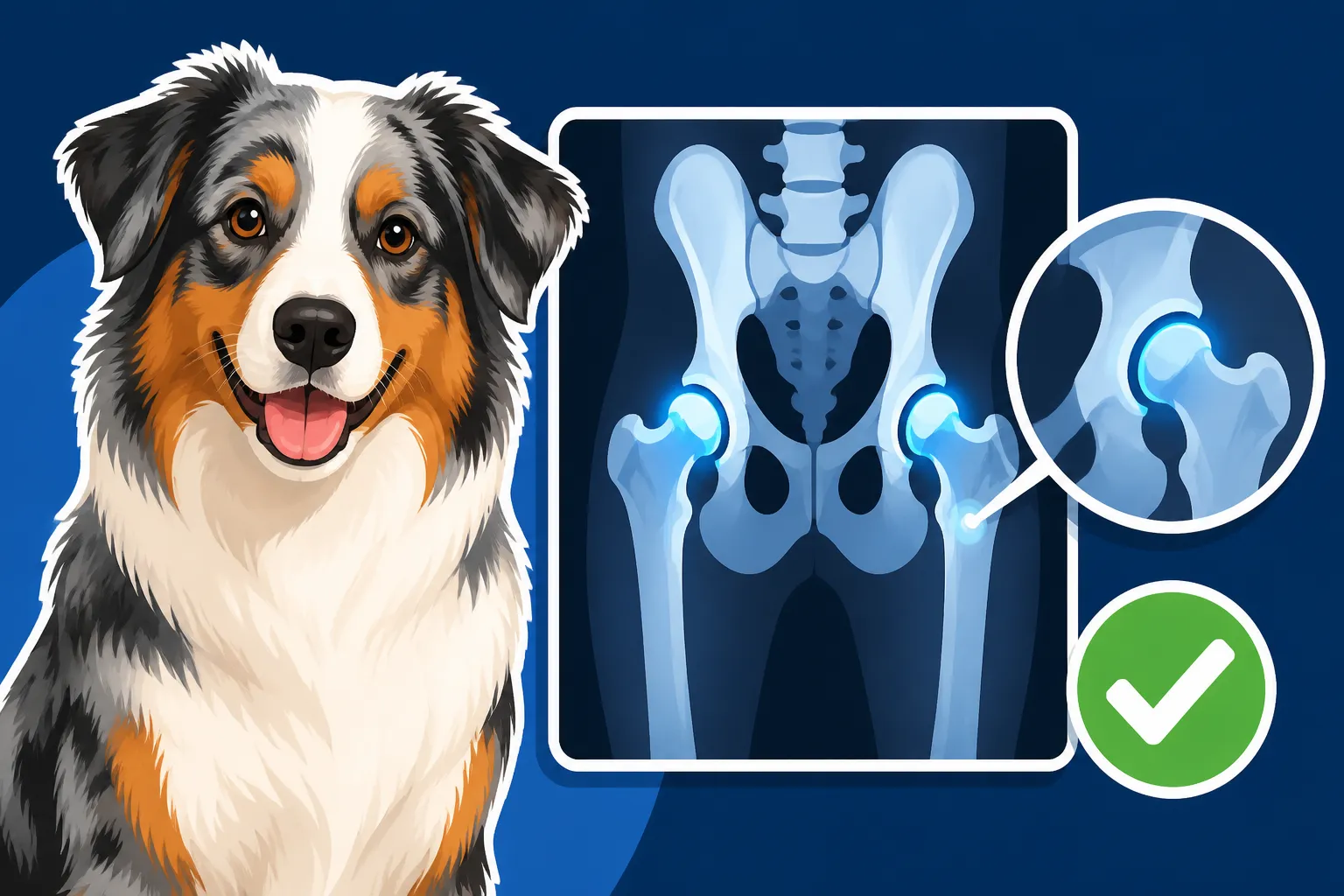
Reading an OFA Hip Grade on an Australian Shepherd
The day you get your Australian Shepherd's OFA hip grade back can feel like waiting for exam results, especially when you know how active and driven these dogs are. It's a moment filled with a mix of anticipation and anxiety because hip health is so paramount for an Aussie's quality of life, whether they're herding sheep, tearing it up in agility, or just being your best hiking buddy. This guide aims to pull back the curtain on what those letters and numbers on an OFA certificate truly mean, helping you understand your dog's hip health and what steps you can take moving forward.
Understanding OFA Grading for Canine Hips
When we talk about hip health in Australian Shepherds, the Orthopedic Foundation for Animals, or OFA, is often the gold standard. They've been working for decades to reduce the incidence of orthopedic and genetic diseases in dogs, and their hip evaluation program is probably the most recognized. It's a critical tool for both responsible breeders and proactive pet owners who want to understand their dog's predisposition to hip issues.
What is the Orthopedic Foundation for Animals OFA?
The OFA is a not-for-profit organization that started way back in 1966. Their main mission is to promote the health and welfare of companion animals through a reduction in the incidence of genetic disease. While they offer various health certifications for many conditions, their hip and elbow dysplasia evaluations are what most people know them for. For breeds like the Australian Shepherd, known for their athleticism and strong working drive, hip health is absolutely paramount. Without sound hips, an Aussie's ability to perform, play, and even just move comfortably through life can be severely impacted. The OFA provides a standardized, peer-reviewed system for evaluating hip radiographs (X-rays) to help identify dogs at risk for hip dysplasia, which is a complex condition where the hip joint doesn't form correctly. This means the ball and socket don't fit snugly, leading to friction, pain, and eventually arthritis.
The process involves submitting X-rays of your dog's hips, taken by your veterinarian, to the OFA. These X-rays are then reviewed by at least three independent, board-certified veterinary radiologists. Their consensus determines the final grade. This multi-reviewer system is designed to provide a highly reliable and consistent evaluation, minimizing individual bias. For Australian Shepherd owners, participating in this program is a proactive step, not just for their individual dog, but for the health of the entire breed. It contributes to a larger database that helps track health trends and allows breeders to make informed decisions to improve future generations.
The Radiographic Process for Hip Evaluation
Getting those crucial X-rays taken isn't just a quick snap and you're done. There's a specific protocol involved to ensure the images are diagnostic and can be properly evaluated by the OFA radiologists. Typically, your Australian Shepherd needs to be at least 24 months old (two years) for a final OFA certification. This age requirement is because the hip joints are still developing and maturing before that point, and an earlier X-ray might not give an accurate representation of the adult hip conformation. If you're wondering about hip health in a younger dog, sometimes preliminary evaluations are done, but they aren't considered final certification.
During the X-ray procedure, your vet will likely sedate your Aussie. This isn't just to keep them calm; it's essential for proper positioning. The dog needs to be perfectly straight on its back, with its hind legs extended straight and parallel to each other, and the femurs rotated inward. This specific "frog-leg" position allows the radiologists to get the best view of the femoral heads (the "ball" of the joint) and the acetabulum (the "socket"). Any rotation, uneven extension, or poor positioning can lead to an inaccurate interpretation, potentially masking good hips or making mild dysplasia look worse than it is. The sedation ensures muscle relaxation, which is vital for achieving this precise positioning, as tension can artificially make the hips appear tighter or looser than they truly are. It’s an investment in getting the clearest picture of your dog's future mobility and comfort.
The Seven-Point Grading Scale
Once the X-rays are submitted, the OFA's expert radiologists will scrutinize them for various indicators of hip dysplasia. They're looking at things like the depth of the hip socket, the tightness of the "ball" in the "socket," evidence of degenerative joint disease, and the shape and fit of the femoral head. Their findings are then assigned one of seven possible grades, ranging from excellent hip conformation to severe dysplasia.
These grades are:
- Excellent: Superior hip conformation, with a snugly fitting femoral head deeply seated into a well-formed acetabulum. There is virtually no space between the ball and socket.
- Good: Well-formed hip joint with a good fit and significant coverage of the femoral head by the acetabulum.
- Fair: Passable hip conformation. The femoral head is still reasonably seated, but the joint may not be as tight or the socket as deep as in "Good" or "Excellent" hips. It is still considered within the normal range.
- Borderline: This grade is for hips that have some very minor changes, but there is not enough evidence to definitively call them dysplastic or normal. OFA recommends re-x-raying at a later date, typically six months to a year, to see if changes progress.
- Mild Dysplasia: Significant subluxation (partial dislocation) of the femoral head, shallow acetabulum, or early degenerative changes like bone spurs.
- Moderate Dysplasia: Obvious signs of hip dysplasia, with significant subluxation, very shallow sockets, and often noticeable degenerative changes.
- Severe Dysplasia: Extreme hip dysplasia, with marked subluxation, flattening of the femoral head and/or acetabulum, and extensive degenerative joint disease.
It's a really comprehensive scale, and each grade tells a specific story about your dog's hip structure. Knowing this scale helps you understand the nuance when you finally receive your Australian Shepherd's results.
Deciphering Your Australian Shepherd's OFA Certificate
When that envelope finally arrives, or the email pops up, it can feel like a whole new language if you're not familiar with the certificate's layout. But understanding what each section means is crucial for fully grasping your Australian Shepherd's hip health status.
Breaking Down the OFA Results
The OFA certificate itself is designed to be informative, providing key details about your dog and their specific hip evaluation. At the top, you'll find important identification information for your Australian Shepherd, including their registered name, breed, date of birth, and OFA registration number. This ensures that the certificate is uniquely tied to your dog.
Crucially, it will list the date the X-rays were taken, which, as we discussed, should be when the dog is at least 24 months old for a final certification. Then comes the section you've been waiting for: the actual hip grade. This will be stated clearly, such as "OFA HIPS: GOOD" or "OFA HIPS: MILD DYSPLASIA." Sometimes, there will also be notations about elbow evaluations if those were submitted at the same time. Beneath the main grade, you might see a more detailed breakdown from the individual radiologists, but the overarching grade is the consensus.
It’s important to note the different types of OFA numbers you might encounter. A "preliminary" OFA number, usually given to dogs under two years old, starts with a "P" (e.g., OFA P-XXXXXXX). This indicates that the evaluation isn't final. A "permanent" or "final" OFA number, for dogs two years or older, typically starts with the breed code (e.g., AS-XXXXG24M-VPI, where 'AS' is for Australian Shepherd, 'G' for Good, '24M' for 24 months, and 'VPI' for the referring vet practice). If you're looking at a dog's pedigree or a breeder's records, this specific alphanumeric code is how you confirm their official OFA status. It’s a bit like a doggy social security number for their health records.
What Each Grade Truly Means for Your Aussie
Let’s really dig into what those grades imply, because an "Excellent" grade means something very different from a "Mild" grade for your Australian Shepherd's future.
-
Excellent, Good, and Fair: These are all considered within the "normal" range.
- An Excellent grade means your Aussie has truly superb hip conformation. These hips are tight, deep, and beautifully formed. For breeders, this is the gold standard, indicating a low genetic predisposition to hip dysplasia that they can confidently pass on. For a pet owner, it means your dog has the best possible structural foundation for a long, active life.
- Good hips are also fantastic. They are well-formed and perfectly suitable for any activity, whether it's high-impact sports like agility or just endless games of fetch. This is a very desirable outcome.
- Fair hips are still considered healthy, but they might not be as tight or deep as "Good" or "Excellent." Think of it like having slightly less robust factory parts. Your Aussie with "Fair" hips should still live a full, active life without issue, but for a breeder, combining two dogs with "Fair" hips might be considered less ideal than breeding a "Fair" with an "Excellent" or "Good" to ensure the strongest possible conformation in offspring. This is where Australian Shepherd Hip Dysplasia and Working Joints comes into play for understanding the long-term impact on active dogs.
-
Borderline: This grade is the gray area. It means there are some minor structural irregularities, but not enough to definitively diagnose hip dysplasia. It’s not abnormal, but it's not quite normal either. Often, OFA will recommend re-X-raying in 6-12 months. Some dogs mature and their hips improve slightly, moving into the "Fair" category, while others may show progression towards dysplasia. For breeders, breeding a dog with "Borderline" hips is generally not recommended until a final "normal" grade is achieved. For pet owners, it warrants monitoring and perhaps being a bit more mindful of high-impact activities in early life.
-
Mild, Moderate, and Severe Dysplasia: These grades indicate that the dog does have hip dysplasia.
- Mild Dysplasia means there are definite signs of the condition, though your Aussie might not show obvious clinical symptoms, especially if they are young and muscular. However, they are likely to develop arthritis as they age. This grade definitively means the dog should not be used for breeding, as they will pass on genes for hip dysplasia.
- Moderate Dysplasia will almost certainly cause clinical signs of pain, lameness, and reduced mobility. Dogs with this grade will need ongoing management, which might include pain medication, joint supplements, physical therapy, or even surgery later in life.
- Severe Dysplasia indicates a profoundly compromised hip joint. Dogs with this grade often experience significant pain and debilitating lameness, requiring extensive veterinary care to maintain quality of life. Surgical intervention, such as total hip replacement, might be the best option, though it is costly and requires significant recovery.
Understanding these distinctions is paramount. While some insurance providers, like Healthy Paws, offer robust coverage for unforeseen conditions, knowing your dog's OFA grade helps you anticipate potential issues and make informed decisions about their care, exercise, and diet from the start.
The Importance of OFA Grades for Australian Shepherd Health
The journey of dog ownership is filled with joy, but also a deep sense of responsibility for their well-being. For Australian Shepherds, a breed known for its robust nature and boundless energy, maintaining sound joint health is a cornerstone of that responsibility. OFA hip grades are more than just a piece of paper; they are a vital tool in ensuring a healthy future for individual dogs and the breed as a whole.
Predicting and Preventing Hip Dysplasia
One of the most significant values of OFA grading lies in its ability to help predict and, by extension, prevent hip dysplasia in future generations of Australian Shepherds. Hip dysplasia is a polygenic trait, meaning multiple genes contribute to its development, making it complex. However, environmental factors also play a huge role. For a breeder, ensuring that prospective parents have "Excellent," "Good," or "Fair" OFA hip grades dramatically reduces the likelihood of passing on a genetic predisposition to their puppies. This is why a reputable Australian Shepherd breeder will always provide proof of OFA certification for both parents. If you're looking for a puppy, always ask to see these certificates. It's an investment in your puppy's future health.
Beyond breeding, knowing your dog's OFA grade helps you tailor their care throughout their life. If your Aussie received a "Fair" or "Borderline" grade, or even a low "Good," you might be more proactive about certain preventive measures. This includes careful management of their exercise, especially during their growth phase. Pushing a young Australian Shepherd too hard before their growth plates are fully closed can put undue stress on developing joints, potentially exacerbating any underlying predisposition to hip dysplasia. This concept is closely tied to understanding Australian Shepherd Growth Plates and When They Close, which is critical for setting safe exercise limits for puppies and young adults.
Maintaining a healthy weight is another massive factor. Excess weight puts significantly more strain on the hip joints, accelerating the progression of arthritis in dogs predisposed to hip dysplasia. Even for an Aussie with "Excellent" hips, obesity is a recipe for joint issues down the line. So, those OFA grades are a reminder for us, as owners, to be vigilant and informed in our daily care decisions.
Beyond the Grade: What Else to Consider
While an OFA hip grade provides invaluable insight into the structural integrity of your Australian Shepherd's hips, it's just one piece of the puzzle. A "Good" or "Excellent" grade is certainly reason to celebrate, but it doesn't mean you can ignore joint health entirely. Similarly, a "Fair" grade doesn't automatically condemn your dog to a life of pain; it simply means you need to be more mindful.
Environmental factors like diet, exercise, and living conditions significantly impact joint health. Even a dog with genetically sound hips can develop issues if they are consistently over-exercised at a young age, allowed to become overweight, or suffer injuries. Conversely, a dog with a "Fair" or even "Borderline" grade can lead a perfectly comfortable and active life with careful management.
This management often includes:
- Nutrition: Feeding a high-quality diet that supports overall health and joint integrity is essential. Some owners choose to incorporate joint supplements, such as glucosamine, chondroitin, and omega-3 fatty acids, into their dog's diet. This is a conversation to have with your vet, especially if your Aussie has a "Fair" or "Borderline" hip grade, or if you're proactive about preventative care like Starting Joint Support on a Young Working Aussie.
- Controlled Exercise: For young Aussies, avoiding excessive high-impact activities like repetitive jumping or long-distance running before their joints are fully mature is crucial. Even for adults, a balanced exercise routine that includes varied activities is better than constantly pounding pavement. We need to remember that How Weight Multiplies the Load on Aussie Joints is a very real concern, so controlled exercise also aids in weight management.
- Regular Veterinary Check-ups: Consistent vet visits allow for early detection of any stiffness, lameness, or changes in gait that could indicate developing joint issues. Your vet can recommend appropriate interventions, which might include anti-inflammatory medications, physical therapy, or even alternative therapies like acupuncture.
- Comfortable Living: Providing soft bedding, ramps for elevated surfaces (like getting into the car or onto the couch), and keeping your dog warm in cold weather can all contribute to their comfort and joint health, especially as they age and may start to develop Australian Shepherd Arthritis After Years of Work.
It's also worth thinking about financial planning for potential health issues. While we hope for the best, the reality is that major orthopedic surgeries can be incredibly expensive. This is where pet insurance comes into play. Providers like Healthy Paws offer coverage for unexpected illnesses and accidents, which can be a lifesaver if your Aussie ever needs significant treatment for hip dysplasia or other joint problems. Having a policy with Healthy Paws can provide immense peace of mind, knowing that you can make treatment decisions based on what's best for your dog, not just your wallet.
Common Questions and Misconceptions About OFA Hip Grades
Even with all the information out there, there are still a lot of questions and sometimes confusion surrounding OFA hip grades. Let's tackle some of the most common ones to ensure you have a clear understanding.
Is "Fair" Good Enough?
This is a question I hear a lot, especially from owners of active Australian Shepherds. The short answer is, yes, "Fair" hips are absolutely considered "normal" by the OFA. As we discussed, the OFA's scale categorizes "Excellent," "Good," and "Fair" within the non-dysplastic range. So, if your Australian Shepherd receives a "Fair" hip grade, it means their hips meet the structural requirements for a healthy, functional joint.
However, the nuance comes in when considering breeding or extremely high-impact activities. For breeding, while a "Fair" dog can be bred, most responsible breeders strive to breed "Good" or "Excellent" to "Good" or "Excellent" in an effort to continually improve the breed's overall hip health. Breeding two "Fair" rated dogs together, while technically passing, might be considered less ideal as it wouldn't be maximizing the genetic health potential. For a companion or working Australian Shepherd, "Fair" hips should generally not limit their activity, provided they are kept at a healthy weight and conditioned properly.
It's about managing expectations and being proactive. A dog with "Fair" hips might benefit more from starting joint supplements earlier in life or from a more carefully managed exercise regimen to prevent wear and tear. They are still perfectly sound and capable dogs, and you should feel confident in their health, especially if you're not planning to breed. The grade is a diagnostic tool, not a pass/fail judgment on your beloved companion.
The Role of Age in OFA Testing
The requirement that dogs be at least 24 months (two years) old for a final OFA hip certification is a cornerstone of the program, and for good reason. Before a dog reaches this age, their skeletal system, particularly their hip joints, are still undergoing significant development and maturation. The ligaments and joint capsules are not fully tightened, and the bones themselves are still growing and solidifying.
Performing an X-ray earlier than 24 months can lead to an inaccurate assessment. For instance, a dog that might eventually develop excellent hips could appear "Borderline" or even "Mild" if X-rayed too early because the joints haven't fully tightened. Conversely, a puppy with early signs of dysplasia might be missed if the changes aren't pronounced enough to be visible on an immature joint. The 24-month mark provides a standardized point where the hips are considered mature enough for a definitive evaluation, allowing the radiologists to assess the final conformation more accurately.
If you have a younger Australian Shepherd and are concerned about hip health, perhaps because you notice signs like limping, a bunny hop gait, or reluctance to jump, your vet can perform preliminary X-rays. These preliminary evaluations are often graded using the same OFA scale, but they come with the caveat that they are not final and can sometimes change as the dog matures. Many breeders will do preliminary X-rays around 12-18 months just to get an early indication, but they will always follow up with a final OFA at 24 months. Remember, for an official OFA certification to be recognized in breeding programs, that two-year mark is non-negotiable. It's about ensuring the most reliable and consistent data possible for the long-term health of the breed.
Comparing OFA to PennHIP Assessments
While OFA is widely recognized, it’s not the only game in town for hip evaluations. PennHIP is another well-respected method that offers a different approach to assessing hip joint laxity, which is a key indicator of hip dysplasia. Understanding the differences can help you decide which method, or even both, might be right for your Australian Shepherd.
PennHIP, developed at the University of Pennsylvania, focuses on quantifying hip laxity – how loose the hip joint is. It involves three specific X-ray views, one of which is a compression view and another is a distraction view. The distraction view, in particular, stretches the hip joint to its maximum extent, allowing veterinarians to measure the amount of "play" or laxity in the joint. This measurement is called a Distraction Index (DI). A lower DI number (closer to 0) indicates tighter hips and less susceptibility to hip dysplasia, while a higher DI number (closer to 1) indicates looser hips and a higher risk.
One key difference is that PennHIP can be performed on dogs as young as 16 weeks (4 months) old, providing a much earlier assessment of hip laxity compared to OFA's 24-month requirement for final certification. This can be appealing for breeders who want earlier information. The procedure also requires specific certification for the veterinarian taking the X-rays, as the positioning is more technically demanding and involves specialized equipment.
The OFA system, by contrast, gives a subjective, qualitative score (Excellent, Good, Fair, etc.) based on the visual assessment of a single hip-extended view, evaluating features like joint congruity, femoral head coverage, and evidence of degenerative disease. While both systems aim to identify dogs prone to hip dysplasia, their methodologies are distinct. Some breeders choose to use both, viewing them as complementary tools. For an Australian Shepherd owner simply seeking peace of mind for their pet, either method provides valuable information. The OFA is often more accessible and widely recognized by breed clubs, but PennHIP offers the advantage of earlier assessment and a more quantitative measure of laxity.
It’s worth discussing with your veterinarian which method they prefer and which is most appropriate for your individual dog and your goals, whether it’s for breeding or just ensuring your pet's long-term comfort.
| OFA Hip Grade | Description & Meaning for Aussie | Breeding Recommendation |
|---|---|---|
| Excellent | Superior hip conformation; femoral head deeply seated, very tight. | Ideal for breeding. |
| Good | Well-formed hips; good fit and coverage. | Recommended for breeding. |
| Fair | Passable conformation; acceptable but not as tight or deep. | Considered acceptable for breeding, but ideally with a higher-rated mate. |
| Borderline | Minor irregularities, not definitively dysplastic or normal. | Re-X-ray recommended; generally not for breeding until final normal grade. |
| Mild Dysplasia | Definite signs of hip dysplasia; some subluxation or shallow sockets. | Should NOT be bred. |
| Moderate Dysplasia | Obvious hip dysplasia; significant subluxation, shallow sockets, degenerative changes. | Should NOT be bred. |
| Severe Dysplasia | Extreme hip dysplasia; marked subluxation, extensive degenerative disease. | Should NOT be bred. |
Disclaimer
The information provided in this article is for educational and informational purposes only and does not constitute veterinary advice. Always consult with a qualified veterinarian or veterinary specialist for any health concerns or before making any decisions about your Australian Shepherd's medical care or treatment.