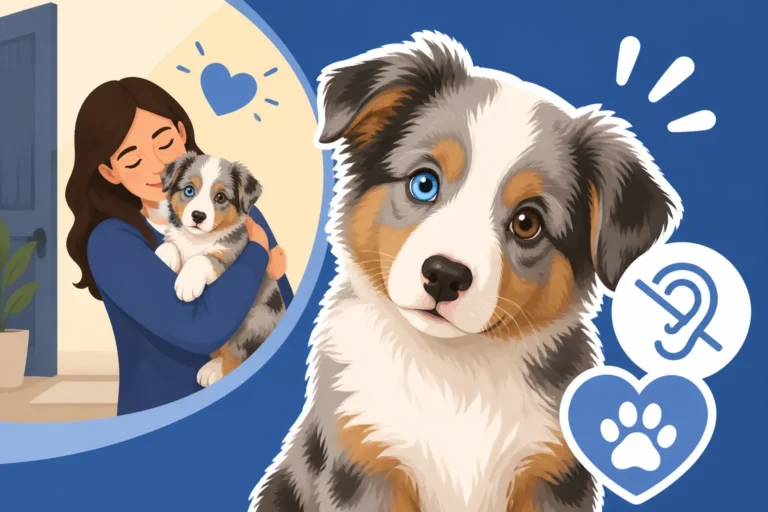
The Odds of a Double Merle in an Aussie Litter
The vibrant, eye-catching merle coat of an Australian Shepherd is undeniably beautiful, but it carries a hidden genetic complexity that many prospective owners, and even some breeders, don't fully understand. The heartbreaking reality is that irresponsible breeding practices can lead to devastating health consequences, particularly with what's known as a "double merle" Australian Shepherd. This guide will walk you through the genetics, the specific risks, and most importantly, the clear odds of encountering a double merle in a litter, arming you with the knowledge to make informed decisions and advocate for ethical breeding.
Understanding the Merle Gene in Australian Shepherds
Before we dive into the specifics of double merles, it's crucial to grasp what the merle gene actually is. It's not just a color; it's a dilution gene, scientifically designated as the M allele. This gene essentially dilutes random patches of the dog's base coat color, creating those stunning, mottled patterns we all adore in blue merles and red merles. It also often affects eye color, leading to those captivating blue or "marbled" eyes that are so common in the breed.
A dog only needs one copy of the merle gene to display the merle pattern, meaning they are genetically "Mm" – one merle allele, one non-merle allele. These are your beautiful, healthy merle Aussies. The non-merle dogs, on the other hand, carry two non-merle alleles, making them "mm." They will have a solid base coat color like black or red tri. The challenge arises because the merle gene is dominant, so even one copy makes a dog merle in appearance. This means that a merle Australian Shepherd carries a genetic blueprint that requires careful consideration when planning a breeding. We talk more about How Merle Works in an Australian Shepherd Coat in another post, but for now, just know it's a powerful genetic switch.
The allure of the merle coat can sometimes be so strong that it overshadows the genetic responsibilities that come with breeding these dogs. People are drawn to the unique patterns, the striking blue eyes, and the overall aesthetic that merle brings. However, this aesthetic comes with a profound responsibility for breeders to understand the underlying genetics to prevent severe health issues. Failing to do so can lead to immense suffering for the puppies and considerable heartache for their future families. It's a prime example of how beauty must be balanced with ethical considerations in the world of dog breeding.
The Peril of Breeding Merle to Merle: What is a Double Merle?
When you breed two merle Australian Shepherds together, you're not simply increasing your chances of getting more merle puppies. You're entering a high-risk territory where the probability of producing a "double merle" – a dog with two copies of the merle gene (MM) – becomes alarmingly high. This isn't just about coat color anymore; it's about significant, often debilitating, health problems that are entirely preventable.
A double merle Australian Shepherd is essentially a dog that has inherited a merle gene from both parents. Because the merle gene dilutes color, two copies of it cause extreme dilution, often resulting in a largely white coat. However, the external appearance is the least of the concerns. The real tragedy lies in the severe internal defects this genetic pairing causes. The most common and devastating issues include profound vision impairments, ranging from microphthalmia (abnormally small or malformed eyes) to complete blindness. Many double merles also suffer from varying degrees of deafness, sometimes total. These conditions stem from the gene's disruptive effect on pigment cells, which are crucial for the proper development of the eyes and inner ears. Imagine bringing home a puppy with such potential for joy, only to discover it struggles to see or hear – it's a heartbreaking reality for many who unknowingly acquire these dogs. This is why Why Aussie Breeders Never Cross Merle to Merle is one of the most fundamental rules of ethical breeding.
The emotional and financial toll of caring for a double merle Australian Shepherd can be immense. Owners often face significant veterinary bills for diagnoses, specialized care, and ongoing management of these conditions. While pet insurance providers like Healthy Paws can certainly help mitigate some of these costs for unexpected illnesses, the reality is that many of these double merle conditions are congenital and known risks, making prevention the absolute best course of action. Dealing with Deafness in a Double Merle Australian Shepherd or Eye Defects in a Double Merle Australian Shepherd requires a level of dedication and specialized training that many people aren't prepared for, especially if they weren't expecting a special needs dog. It's a profound responsibility, and it's a burden no puppy should have to carry due to a breeder's ignorance or negligence.
Understanding the Double Merle Genetic Outcome
To visualize the genetic outcome, let's use a simple Punnett Square for a merle (Mm) to merle (Mm) breeding.
| M | m | |
|---|---|---|
| M | MM | Mm |
| m | Mm | mm |
This table clearly illustrates the statistical probabilities for each puppy in a litter resulting from a merle-to-merle cross:
- MM (Double Merle): This puppy inherits a merle gene from both parents, resulting in a 25% chance of being born a double merle, often with severe health defects.
- Mm (Single Merle): This puppy inherits one merle gene and one non-merle gene, making it a healthy merle, with a 50% chance.
- mm (Non-Merle): This puppy inherits two non-merle genes, resulting in a solid-colored, non-merle dog, with a 25% chance.
It's a stark reminder that when you breed two merles, you are intentionally rolling the dice with a 1-in-4 chance of creating a puppy with severe, life-altering disabilities.
Calculating the Odds: How Double Merles Occur in a Litter
The statistics behind merle-to-merle breeding are chillingly straightforward, yet so often ignored. If you breed two Australian Shepherds who each carry one copy of the merle gene (Mm x Mm), the probability of a double merle (MM) puppy in that litter is a consistent 25%. This isn't just a theoretical number; it's a biological reality based on Mendelian genetics.
What many might misunderstand is that this 25% chance applies to each individual puppy conceived, not to the litter as a whole. This means that in a litter of four puppies from a merle-to-merle cross, you could theoretically have zero double merles, one, two, three, or even all four. While the average over many litters would trend towards that 25% figure, any single litter can deviate significantly. Imagine the emotional rollercoaster for a breeder who takes such a gamble, waiting to see which puppies will face a lifetime of challenges. This inherent randomness, coupled with the high risk, is why such pairings are universally condemned by ethical breeding communities. This also explains why A Quarter of a Merle Aussie Litter Born Double is a statistic that good breeders actively avoid.
The devastating impact of these odds extends beyond just the potential for disabled puppies. Breeders who knowingly engage in merle-to-merle breeding often do so out of ignorance, greed, or a misguided attempt to produce more "flashy" merle coats. They might not realize the severity of the health issues or the lifelong commitment required to care for these special needs dogs. Even if they manage to sell these puppies, the burden often falls on unsuspecting owners who suddenly find themselves facing immense emotional and financial strain. It highlights the absolute necessity for all breeders to perform thorough genetic testing on their breeding stock.
One of the insidious aspects of merle genetics is the existence of "cryptic merle," which is where a dog visually appears solid-colored but genetically carries a merle gene. This can happen if the merle patterning is so faint it's almost invisible, or if the dog also carries another gene that suppresses merle expression. An unsuspecting breeder might unknowingly breed a cryptic merle (Mm) to a visible merle (Mm), believing they are breeding a non-merle to a merle. The result? That same 25% chance of double merles with all their associated problems. This is why Cryptic Merle That Fools Aussie Breeders is such a concern and underscores the critical importance of genetic testing over relying solely on visual inspection. While pet insurance from providers like Healthy Paws can be a lifesaver for unexpected health crises, preventing these known genetic disasters through responsible testing is always the preferred path.
Responsible Breeding Practices and Preventing Double Merles
Preventing double merle Australian Shepherds is entirely achievable and is a cornerstone of ethical and responsible breeding. It boils down to one fundamental practice: never breeding two merle dogs together, regardless of how attractive their individual coats might be. This rule is non-negotiable for anyone who truly cares about the health and welfare of this magnificent breed.
The first and most critical step for any Australian Shepherd breeder is comprehensive genetic testing. It’s no longer acceptable to rely solely on a dog's outward appearance. DNA testing can definitively determine if an Aussie carries the merle gene, even in cases of cryptic merle where the pattern isn't obvious. This testing is relatively simple, usually involving a cheek swab, and provides clear, actionable results. Only by knowing the genetic makeup of both potential parents can a breeder make informed decisions to avoid dangerous pairings. For example, a merle (Mm) dog can be safely bred to a non-merle (mm) dog, producing a litter with approximately 50% merle and 50% non-merle puppies, with no risk of double merles. This approach eliminates the tragic odds of producing deaf or blind puppies. We have a detailed guide on DNA Testing for the Merle Allele in an Aussie that outlines the process.
Beyond merle testing, responsible breeders conduct a full suite of genetic health screenings. This includes tests for conditions common in Australian Shepherds like The Genetic Panel Every Australian Shepherd Needs which can cover issues such as MDR1, hereditary cataracts, and hip and elbow dysplasia. These comprehensive panels help ensure that breeders are producing puppies that are not only free from double merle issues but also have the best possible chance at a long, healthy life free from other inherited diseases. When searching for a puppy, always ask to see the health clearances and genetic test results for both parents. A reputable breeder will be transparent and proud to share this information.
For prospective puppy buyers, being educated is your most powerful tool. Don't be shy about asking breeders tough questions. Inquire about their breeding philosophy, specifically regarding merle genetics. Ask for proof of merle testing for both parents. If a breeder is evasive or seems unaware of the risks of merle-to-merle breeding, consider that a major red flag. Ethical breeders prioritize health and temperament above all else, and they will be eager to educate you on their practices. Organizations like the Australian Shepherd Club of America (ASCA) advocate for these stringent breeding standards, and many reputable breeders adhere to their guidelines. If you happen to be considering adopting a dog from a rescue, particularly one with a predominantly white coat or blue eyes, it's worth knowing How to Spot a Double Merle Australian Shepherd so you can be prepared for potential special needs. While pet insurance such as Healthy Paws offers valuable financial protection, the ultimate goal is to support breeding practices that reduce the incidence of these preventable conditions in the first place, giving every puppy the best start in life.
Disclaimer
The information provided in this article is for educational and informational purposes only and does not constitute veterinary advice. Always consult with a qualified veterinarian for any health concerns or before making any decisions about your Australian Shepherd's care or breeding.