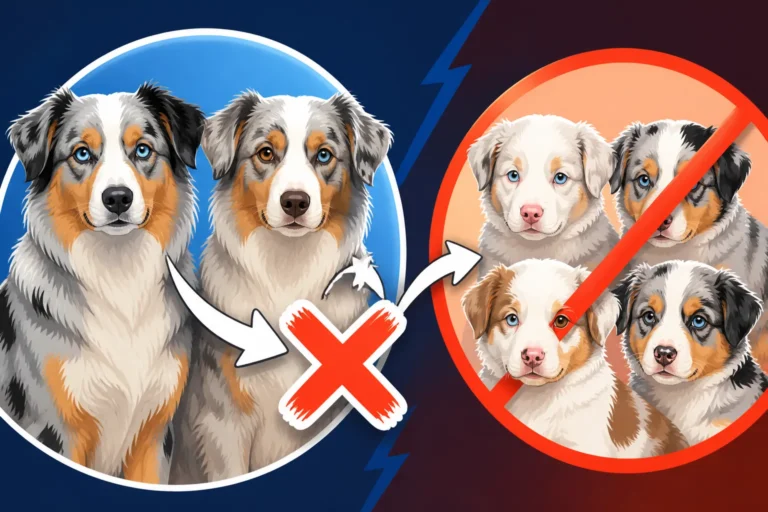
Congenital Deafness in an Australian Shepherd Puppy
Discovering that your brand new Australian Shepherd puppy has congenital deafness can be a truly heartbreaking and overwhelming experience. The joy of bringing home a furry friend can quickly turn into a flood of worry and questions about their future, how you'll communicate, and whether they'll live a full, happy life. This guide is here to walk you through understanding congenital deafness in Aussie puppies, how to identify it, and most importantly, how to provide the best possible care for your special companion.
The Genetic Roots of Deafness in Australian Shepherds
When we talk about deafness in Australian Shepherds, it's often inextricably linked to one of the most striking features of the breed: the merle coat pattern. This isn't just about aesthetics; it's a deep dive into genetics that explains why some puppies are born without the ability to hear. It's a complex topic, but understanding the basics is crucial for every Aussie owner.
Understanding the Merle Gene and its Impact
The merle gene is responsible for the beautiful, dappled patterns we see in blue merle and red merle Australian Shepherds. It dilutes random patches of the base coat color, creating those distinctive swirls of darker and lighter shades. Think of it like a painter splattering white over a colored canvas. However, this gene doesn't just affect coat color; it also plays a role in pigmentation elsewhere in the body, including the eyes and, critically, the inner ear.
For a dog to hear, the tiny hair cells in the cochlea of the inner ear need to be fully pigmented and functional. When the merle gene, particularly in its homozygous form (meaning two copies of the gene), causes a severe reduction or absence of pigment in these areas, it can lead to auditory nerve degeneration and, consequently, deafness. It's not a direct cause-and-effect in every single merle dog, but rather a significant risk factor tied to the pigment pathways. This is why you'll often hear discussions about How Merle Works in an Australian Shepherd Coat when congenital deafness comes up.
Why Double Merles Are Most at Risk
The real danger zone for deafness, and other sensory issues, arises when two merle-patterned Australian Shepherds are bred together. This combination significantly increases the probability of producing "double merle" offspring. A double merle puppy inherits two copies of the merle gene (Mm), which amplifies its effects. Instead of just diluting patches, this often results in a predominantly white coat because the pigment dilution becomes so extreme. These puppies are frequently, though not exclusively, born with blue eyes, which is another indicator of reduced pigmentation.
The severe lack of pigment associated with being a double merle often impacts more than just their coat. It can lead to a range of profound sensory deficits, including varying degrees of deafness, vision problems like microphthalmia (abnormally small eyes), and even complete blindness. This is why responsible breeders universally advise against "merle-to-merle" breedings, understanding the devastating consequences for the puppies involved. It's a serious ethical consideration, and the risks are so high that Why Aussie Breeders Never Cross Merle to Merle is a fundamental tenet of ethical breeding. When you consider Double Merle Australian Shepherds and What Breeding Two Merles Costs, it's not just financial, but the significant burden on the puppy's health.
Recognizing Congenital Deafness in a Puppy
Spotting deafness in a young puppy isn't always as straightforward as you might think. Puppies are naturally curious and easily distracted, which can sometimes mask the early signs of hearing loss. However, with careful observation, especially from breeders, certain cues can indicate a potential issue.
Early Signs and Behavioral Cues
One of the first things you might notice in a deaf puppy is a lack of response to sounds that would typically elicit a reaction. Imagine a loud clap, a sudden door bang, or even calling their name from behind – a hearing puppy would startle, turn its head, or perk its ears. A deaf puppy, however, might remain completely undisturbed. They may also be exceptionally deep sleepers, not waking even to loud noises in their immediate vicinity.
Deaf puppies might also play differently with their littermates. They might be more visually oriented, relying on sight and vibrations to understand their environment. Some may be more vocal, barking excessively, or making unusual noises, possibly because they cannot regulate their own volume. Others might be unusually quiet. It’s also common to see deaf puppies showing more reactive or startled behaviors if touched unexpectedly, as they lack the auditory warning signals that hearing dogs receive. While these signs can be subtle, they are often the first clues that lead a caring owner or breeder to investigate further.
The Importance of the BAER Test
The only definitive way to diagnose congenital deafness in a puppy is through a Brainstem Auditory Evoked Response (BAER) test. This is a non-invasive, painless procedure that measures the electrical activity in the cochlea and auditory pathways in the brain in response to sound stimuli. Tiny electrodes are placed on the puppy's head, and a click sound is played into each ear individually. The machine records the brain's response.
The BAER test is typically performed by a veterinary neurologist or a specialist at a university veterinary hospital. Most ethical breeders will have merle puppies tested around 6-8 weeks of age, often at the same time as their The Aussie Puppy Eye Check at Six Weeks. The test will indicate if a puppy has normal hearing, is unilaterally deaf (deaf in one ear), or bilaterally deaf (deaf in both ears). Getting a clear diagnosis early on is incredibly important for future training and safety protocols, giving you a solid foundation for how to proceed with your puppy's care.
Navigating Life with a Deaf Australian Shepherd Puppy
Bringing home a deaf Australian Shepherd puppy certainly comes with its unique set of challenges, but it also brings immense rewards. These dogs are incredibly adaptable, intelligent, and form deep bonds with their families. With the right approach and a little patience, a deaf Aussie can thrive and live a full, joyful life.
Communication and Training Strategies
The key to successfully raising a deaf Australian Shepherd is to switch from auditory-based communication to visual and tactile cues. Hand signals become your primary language, much like sign language for humans. Start immediately and be consistent. Begin with basic commands like "sit," "stay," "come," and "down," associating each action with a distinct, clear hand gesture. There are many established dog sign language guides available, or you can create your own, as long as you use them consistently.
Positive reinforcement is crucial. Since your puppy can't hear verbal praise, use enthusiastic visual cues (like a big smile and a thumbs-up) and high-value treats to reward desired behaviors. A "touch cue" can also be invaluable – a gentle tap on the shoulder or back to get their attention before giving a hand signal. This helps them understand you're trying to communicate. Remember, patience is paramount, and celebrating every small victory will make the journey much more rewarding for both of you. For more in-depth guidance, exploring resources on Raising a Deaf Australian Shepherd Puppy can be incredibly helpful.
Safety Considerations and Environmental Adaptations
Safety is perhaps the most significant concern when living with a deaf dog, especially a high-energy, intelligent breed like an Australian Shepherd. Without the ability to hear approaching dangers like cars, other dogs, or people, a deaf Aussie needs extra precautions.
- Secure Fencing: A securely fenced yard is non-negotiable. Even the most well-trained deaf dog should never be left unsupervised in an unfenced area.
- Leash Walking: Always keep your deaf Aussie on a leash when outside a secure, fenced area. A long line can provide more freedom for exploration in safe spaces, but always maintain a physical connection.
- Vibrating Collars: These can be excellent tools for "recall" at a distance in a fenced area. A quick vibration can get their attention, followed by a visual "come" signal. Ensure it's used correctly and never as a punishment.
- Visual Alerts: If your dog spends time indoors alone, consider visual doorbells or smart home devices that flash lights to alert you to visitors, rather than relying on sound.
- Predictable Routines: A consistent daily routine for feeding, walks, and playtime helps a deaf dog feel secure and understand what to expect.
- Public Identification: Your Aussie should wear a collar with tags clearly stating "Deaf Dog" along with your contact information. This can be critical if they ever get lost.
Thinking ahead about these adaptations can save a lot of heartache. When considering the long-term care and potential emergencies, some owners find peace of mind with pet insurance. Companies like Healthy Paws offer various plans that can help manage unexpected veterinary costs, which can be a valuable consideration for a dog with special needs. Knowing that you have support for potential health issues down the line can alleviate some of the stress that comes with Bringing Home a Deaf Australian Shepherd Puppy.
Emotional Support for Owners and the Puppy
It's completely normal to feel a range of emotions when you first learn your puppy is deaf – sadness, frustration, concern, or even guilt. It's a significant adjustment, and it's okay to acknowledge those feelings. Reach out to support groups for owners of deaf dogs; sharing experiences and tips can be incredibly validating and empowering. Many communities exist online and in person.
For your puppy, consistency, love, and patience are the greatest gifts you can give. Deaf dogs are often incredibly tuned into their human's emotions and body language. If you're stressed, they'll pick up on it. Remain calm, confident, and positive. Celebrate their unique strengths and the incredibly close bond you'll develop through visual communication. Many people who have raised deaf dogs describe the experience as profoundly rewarding, fostering a deeper connection than they might have had with a hearing dog. The journey with a deaf Aussie is a testament to the power of adaptation and unconditional love, and many find that their deaf companions lead incredibly rich and fulfilling lives, often highlighted in stories about Living With a Deaf Australian Shepherd.
Responsible Breeding and Prevention
The prevalence of congenital deafness in Australian Shepherds, particularly double merles, underscores the critical importance of responsible breeding practices. While it's impossible to eliminate all genetic health issues, breeders have a significant role in minimizing the risk of conditions like deafness.
Genetic Testing for Breeding Aussies
Ethical breeders prioritize the health and welfare of their puppies above all else. This means comprehensive genetic testing of all breeding stock before any mating takes place. For Australian Shepherds, this absolutely includes testing for the merle gene. Breeders need to know the merle status of both prospective parents – whether they are non-merle (m/m), merle (M/m), or extremely rarely, a cryptic merle.
By knowing the genetic makeup of their dogs, breeders can strategically plan pairings to avoid producing double merle puppies. The simple rule is: never breed two merles together. A merle should only be bred to a non-merle. This drastically reduces the chance of producing double merle puppies, thus mitigating the risk of associated health issues like deafness and blindness. This diligent approach is part of The Genetic Panel Every Australian Shepherd Needs for ensuring healthy puppies. Furthermore, understanding The Merle Gene and How It Dilutes Aussie Coat is foundational knowledge for any responsible breeder. Genetic tests are readily available for the merle allele, allowing breeders to make informed decisions and prevent the suffering that comes with preventable genetic conditions. DNA Testing for the Merle Allele in an Aussie has become a standard practice.
What Prospective Owners Should Ask Breeders
As a prospective Australian Shepherd owner, you have a vital role in promoting responsible breeding by asking thorough questions and seeking out ethical breeders. Don't be afraid to be inquisitive; a good breeder will welcome your questions and be transparent about their practices.
Here are some key questions to ask:
- "What are the merle statuses of both parents?" They should be able to provide documentation, ideally from a reputable laboratory. This is paramount to ensure they haven't bred merle to merle.
- "Can I see the health clearances for both parents?" This includes not only merle status but also other genetic tests common in Aussies, such as for the MDR1 mutation, hereditary cataracts (HSF4), and hip/elbow evaluations.
- "Have the puppies had their BAER test?" Especially if you are considering a merle puppy, or if there's any merle in the lineage, ask if the litter has undergone BAER testing for hearing. A responsible breeder should have these results available by the time the puppies are ready for new homes.
- "What are your breeding philosophies regarding health and temperament?" Listen for answers that emphasize health screening, genetic diversity, and matching puppies to appropriate homes, rather than solely focusing on appearance or competitive titles.
Be wary of breeders who offer "cheap" merle puppies without health testing or who cannot provide clear answers about the parents' genetics. While finding the perfect puppy can be exciting, prioritizing health and responsible breeding practices will help ensure you bring home a happy, healthy companion and support the future welfare of the Australian Shepherd breed.
| Feature | Hearing Australian Shepherd Puppy | Deaf Australian Shepherd Puppy |
|---|---|---|
| Communication | Primarily verbal commands, tone of voice | Primarily hand signals, visual cues, body language, tactile cues |
| Response to Sound | Startles at loud noises, responds to name, turns ears to sounds | No response to loud noises, deep sleeper, may not vocalize normally |
| Training Focus | Verbal commands reinforced with treats/praise | Visual consistency, positive reinforcement, attention on handler |
| Safety Concerns | Relies on hearing for environmental cues (cars, other dogs) | Cannot hear approaching dangers, requires strict visual management |
| Socialization | Learns social cues partly through vocalizations and context | Learns social cues primarily through visual and physical interaction |
| Tools | Standard leash, collar | Long line, vibrating collar (for recall), secure fencing, ID tags |
Disclaimer
The information provided in this article is for general informational purposes only and does not constitute veterinary advice. Always consult with a qualified veterinarian for any health concerns or before making any decisions about your pet's health or medical care.