How to Spot a Double Merle Australian Shepherd
It’s a truly heartbreaking situation to bring home an Australian Shepherd puppy, full of dreams and expectations, only to realize that something isn’t quite right. Many well-meaning families, or even those who didn't know what questions to ask, find themselves navigating the complex and often costly challenges that come with a double merle Aussie. This guide is here to help you understand what a double merle is, how to recognize the tell-tale signs, and what steps you can take to ensure these special dogs live their best possible lives.
Understanding the Merle Gene and Its Double Impact
To understand why some Australian Shepherds are born with significant health challenges, we first need to dive into the fascinating, yet sometimes problematic, world of merle genetics. It's a key part of what makes Aussies so strikingly beautiful, but also holds a hidden danger.
The Basics of Merle Genetics in Aussies
The merle gene, often denoted as 'M', is responsible for those gorgeous mottled patches of color we see on blue merle and red merle Australian Shepherds. It's a dilution gene, meaning it lightens random areas of the dog's base coat color, creating those distinctive irregular patches of darker color interspersed with lighter, diluted areas. A dog only needs one copy of the merle gene (Mm) to display the merle pattern. These single merles are generally healthy and fully sighted and hearing, assuming they come from responsible breeding. They might have striking blue eyes or eyes with blue flecks, often referred to as "marbled" eyes, which is a perfectly normal and desired trait in the breed. To learn more about this, you can read about The Merle Gene and How It Dilutes Aussie Coat.
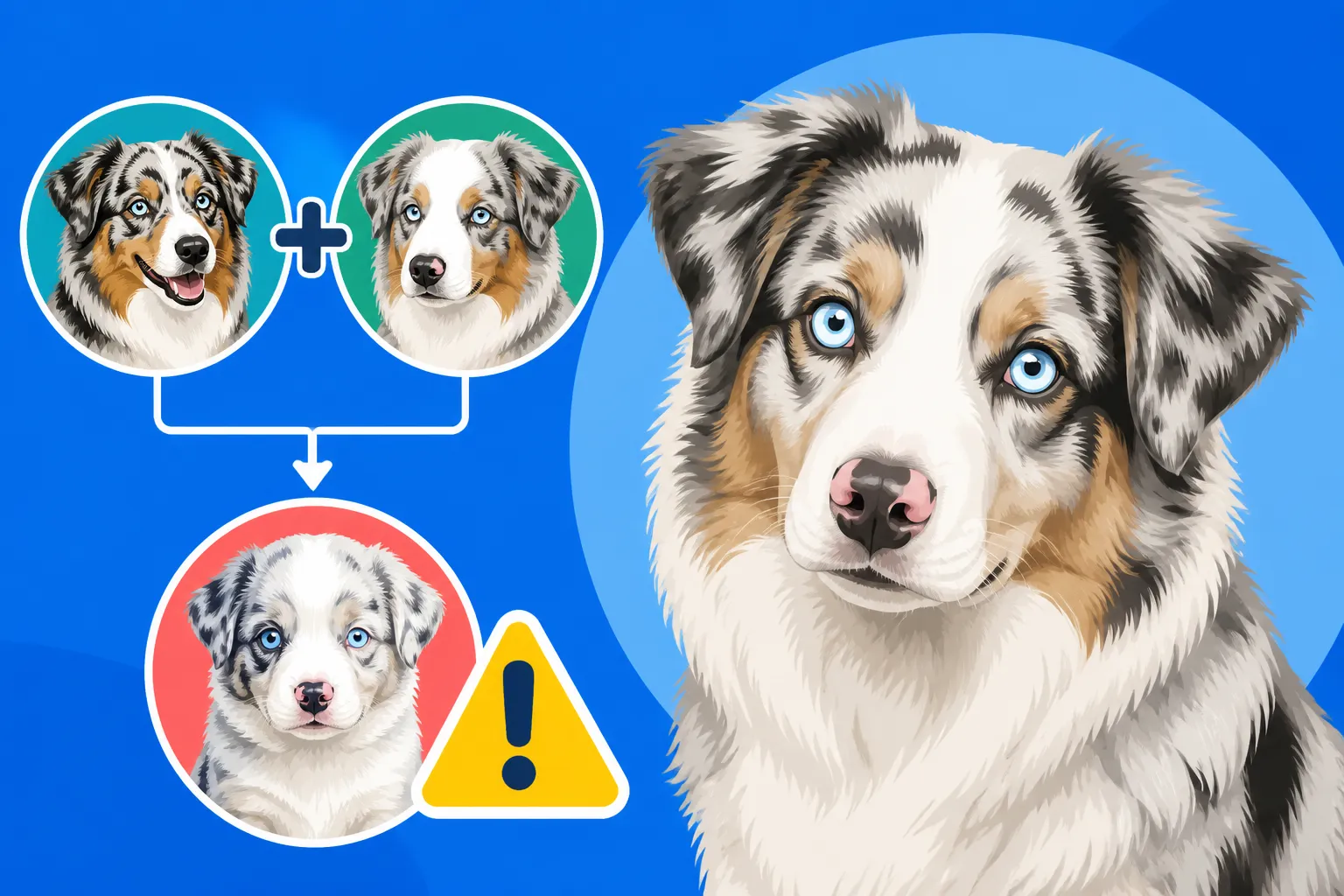
However, the magic of the merle gene comes with a critical caveat. When two merle dogs are bred together, there's a 25% chance that their puppies will inherit two copies of the merle gene (MM). This genetic combination is what we call a "double merle," and it’s the root cause of many health issues. Responsible breeders understand this risk intimately, which is why they adhere to strict ethical guidelines regarding merle breeding. They would never knowingly pair two merle parents because the consequences for the offspring can be devastating.
What Exactly is a Double Merle?
A double merle isn't just a specific color or pattern; it's a dog that has inherited two copies of the merle gene, one from each parent. This genetic overdose amplifies the dilution effect, often leading to an extreme lack of pigment. While single merles are typically healthy, the double merle genetic combination is widely associated with severe sensory defects, primarily affecting sight and hearing. It’s crucial to understand that these health problems aren't about the dog's beauty or uniqueness; they're about preventing a lifetime of struggle for an animal that deserves better.
The issue stems from the gene's impact on pigment development in various parts of the body, including the eyes and inner ears. Without adequate pigment, these delicate structures can't develop or function correctly. This is why you'll often hear experienced Aussie enthusiasts and veterinarians firmly state Why Aussie Breeders Never Cross Merle to Merle. It's a practice universally condemned within ethical breeding circles because the resulting puppies are often born with significant, irreversible disabilities. It's not about trying to create a "prettier" dog; it's about avoiding a genetic roll of the dice that stacks the odds heavily against the puppy's health and well-being.
Distinctive Physical Markers of a Double Merle Australian Shepherd
Spotting a double merle Australian Shepherd often comes down to recognizing certain physical traits that are far more prevalent, and often more extreme, than in a single merle or a non-merle Aussie. These markers are primarily tied to the excessive dilution of pigment, a direct consequence of carrying two copies of the merle gene.
The Tell-Tale Coat Patterns
The most immediate visual cue for a potential double merle is the coat. While single merles have distinct, varied patches of color, a double merle often presents with an overwhelming amount of white, especially on the head and body. This isn't just normal white marking; it's an extreme dilution that can make the dog appear almost entirely white, with only very small, faded, or washed-out patches of the original merle color. Imagine a watercolor painting that has been soaked in water – the colors are barely there, almost transparent. These pale or sparsely colored patches might be so light they're hard to discern, and sometimes, the base color is completely absent, resulting in large areas of unpigmented, pink skin underneath the white fur.
It's important to differentiate this from a naturally occurring piebald or Irish spotted pattern, which is caused by different genes and does not carry the same health risks. In double merles, the white is typically stark and covers areas where pigment would normally be present. This is a key identifier when trying to determine How to Spot a Double Merle Australian Shepherd. The merle pattern itself, if any is visible, will look diluted and often 'ghosted,' lacking the rich contrast seen in a healthy, single merle Australian Shepherd. If you see a puppy that is predominantly white, particularly on its face and around its ears, it should immediately raise a red flag.
Eye and Ear Abnormalities
Beyond the coat, the eyes and ears are where the most profound and devastating signs of double merle status manifest. These are the sensory organs most commonly affected by the lack of pigment caused by the MM gene combination.
One of the most striking ocular issues is microphthalmia, where the eyes are abnormally small, sometimes appearing sunken or even completely absent. This can range from slightly smaller eyes to barely discernible remnants. Related to this, many double merles suffer from colobomas, which are gaps or holes in parts of the eye, often the iris (giving a keyhole shape to the pupil) or the retina. These structural defects can severely impair vision, leading to partial or complete blindness. The eyes of a double merle are also frequently a very pale, almost translucent blue, or they might have irregular shapes and positions. While blue eyes are common in Aussies, it's the extreme paleness, sometimes unevenly matched with a non-functional eye, that indicates a problem in a double merle. You can learn more about these specific issues in Eye Defects in a Double Merle Australian Shepherd.
| Feature | Typical Single Merle Aussie | Double Merle Aussie |
|---|---|---|
| Coat Pattern | Distinct merle patches | Predominantly white; small, faded, or ghosted color patches; pink skin showing |
| Eye Color | Blue, brown, amber, or marbled | Pale, translucent blue; often mismatched or structurally abnormal |
| Eye Size | Normal | Microphthalmia (abnormally small); sometimes absent |
| Pupil Shape | Round | Colobomas (keyhole or irregular shape) |
| Hearing | Normal | Often deaf (unilateral or bilateral) |
| Nose/Paw Pads | Darkly pigmented | Pink or unpigmented |
Deafness is another hallmark of double merles, often caused by a lack of pigment in the inner ear, which is vital for sound transmission. This can be unilateral (deaf in one ear) or bilateral (deaf in both ears). A puppy that doesn't respond to sounds, startles easily when approached from behind, or doesn't seem to wake up to loud noises could be deaf. This sensory impairment requires careful attention and different training methods. You can find more information about this at Deafness in a Double Merle Australian Shepherd. Early detection of these issues is paramount, as it allows owners to adapt and provide the best care for their dog.
Behavioral Cues and Health Considerations for Double Merles
While the physical signs of a double merle are often obvious, the underlying sensory impairments lead to specific behavioral patterns and require careful consideration for their overall health and welfare.
Navigating Life with Sensory Impairments
Living without sight or hearing, or with impaired versions of them, profoundly shapes a double merle Australian Shepherd's world. A deaf Aussie won't respond to verbal commands, the crinkle of a treat bag, or the sound of footsteps approaching. They may appear startled if touched unexpectedly, as they can't hear you coming. This doesn't mean they can't lead full lives, but it does mean their human companions must adapt. Training a deaf dog relies entirely on visual cues, hand signals, and body language. You might notice them relying heavily on their other senses, like scent and vibration, to navigate their environment. For instance, they might be more attuned to changes in air pressure or vibrations in the floor.
Similarly, a blind or partially sighted double merle will move differently. They might bump into objects, especially in unfamiliar surroundings, or hesitate before stepping into new spaces. Their gait might be more cautious, their head held lower, constantly sniffing to map out their surroundings. They’ll need a consistent home layout with minimal furniture rearrangement to feel secure. These dogs often develop a heightened sense of smell and touch, using their whiskers and nose to compensate. For those who embrace the journey of Living With a Deaf Australian Shepherd, the bond can be incredibly deep, built on trust and a unique form of communication. It teaches patience, creativity, and a profound appreciation for a dog’s resilience.
General Health and Welfare Implications
Beyond the primary sensory challenges, double merles can face other health issues stemming from their genetic makeup. The extensive white on their coat often means they have unpigmented, pink skin, particularly on their noses, eyelids, and other sensitive areas. This skin is highly susceptible to sunburn and can have an increased risk of developing skin cancers, similar to humans with fair skin. Protecting them from harsh sunlight, especially during peak hours, becomes a crucial part of their daily care. It's a real concern, and something to consider when you hear about Whether a Merle Aussie Sunburns More Easily.
The emotional and financial toll on owners can be significant. Caring for a special needs dog requires dedication, time, and often, substantial financial resources for veterinary care, specialized training, and adaptive equipment. Regular vet check-ups are essential to monitor any new developments or related health concerns. This is where pet insurance, like a plan from Healthy Paws, can be a godsend for many owners, helping to mitigate the often-astronomical costs associated with managing chronic conditions or unexpected emergencies. However, it’s important to remember that pre-existing conditions are typically not covered, so getting insurance before any health issues are diagnosed is key. The ethics of breeding also come into sharp focus here; ensuring the welfare of these dogs should always be the priority, and preventing their creation through irresponsible breeding practices is the ultimate goal.
Responsible Ownership and Advocacy for Double Merles
Bringing a double merle Australian Shepherd into your life, whether intentionally or not, means taking on a significant responsibility. It's a journey that calls for empathy, patience, and a proactive approach to their care.
If You Suspect a Double Merle Puppy
If you've just brought home an Australian Shepherd puppy and you're noticing an unusual amount of white on its coat, particularly on the head, or if it seems unresponsive to sound or struggles with its vision, the very first step is to schedule an immediate veterinary check-up. Be specific with your veterinarian about your concerns, mentioning the possibility of a double merle. They will likely recommend a few key diagnostic tests.
For hearing, a BAER (Brainstem Auditory Evoked Response) test is the definitive way to diagnose deafness. This non-invasive test measures electrical activity in the brain in response to sound stimuli and can determine if the puppy is deaf in one or both ears. You can learn more about The BAER Test for Australian Shepherd Hearing. For vision, a comprehensive ACVO (American College of Veterinary Ophthalmologists) eye exam is crucial. A board-certified veterinary ophthalmologist can identify issues like microphthalmia, colobomas, or other congenital eye defects that may not be apparent to a general vet. This specialized exam is vital for understanding the extent of any vision impairment, as detailed in The ACVO Eye Exam Australian Shepherd Breeders Run. Genetic testing can also confirm the presence of two merle genes, providing a definitive diagnosis of double merle status. These early diagnostic steps are critical not only for confirming the condition but also for guiding you on how to best care for your new family member.
Supporting Double Merles and Preventing Irresponsible Breeding
The existence of double merle Australian Shepherds is a stark reminder of the importance of responsible breeding practices. When acquiring an Aussie puppy, always seek out ethical breeders who conduct comprehensive genetic health testing on their breeding dogs, including DNA tests for the merle gene. Avoid breeders who cannot provide documentation for both parents or who offer puppies at unusually low prices for merle patterns – often, Why a Cheap Merle Aussie Puppy Is a Warning is that corners have been cut on health and ethical breeding.
If you find yourself with a double merle, there are wonderful communities and resources available. Many breed-specific rescues specialize in caring for Australian Shepherds with special needs, including deaf or blind dogs. Supporting organizations that offer Adopting a Deaf Australian Shepherd or other special needs Aussies is an incredible way to make a difference. These rescues often provide invaluable guidance and support to adoptive families. Advocacy against merle-to-merle breeding is also crucial. Educating others about Why Merle-to-Merle Aussie Breeding Is Called Reckless can help prevent future generations of double merles from being born with preventable disabilities. When considering pet insurance like Healthy Paws, it’s always best to enroll your puppy as young as possible, ideally before any genetic conditions or health issues are diagnosed, to ensure the widest possible coverage for future care needs. By being informed and advocating for responsible practices, we can protect these beautiful, intelligent dogs from unnecessary suffering.
Disclaimer
The information provided in this article is for educational purposes only and should not be considered a substitute for professional veterinary advice. Always consult with a qualified veterinarian or veterinary specialist for any health concerns or before making any decisions about your pet's care.