Hot Spots Hidden in an Aussie Undercoat
It’s a scenario no Australian Shepherd owner wants to face, but many of us have: you’re petting your beautiful, fluffy companion, running your hands through that glorious double coat, and suddenly, your fingers hit something moist, sticky, and distinctly not right. Peeling back the fur reveals an angry, red, oozing patch of skin – a hot spot. These painful, fast-spreading skin infections are a particular nightmare for Aussies, whose dense undercoats can hide these nasties until they’re already a significant problem. This guide will walk you through understanding, identifying, treating, and most importantly, preventing those sneaky hot spots in your beloved Australian Shepherd.
Understanding Hot Spots in Australian Shepherds
Hot spots are more than just a minor skin irritation; they're a full-blown emergency in the making, especially for a breed like the Australian Shepherd. Their thick coats, while stunning, also create the perfect breeding ground for these painful lesions.
What Exactly is a Hot Spot?
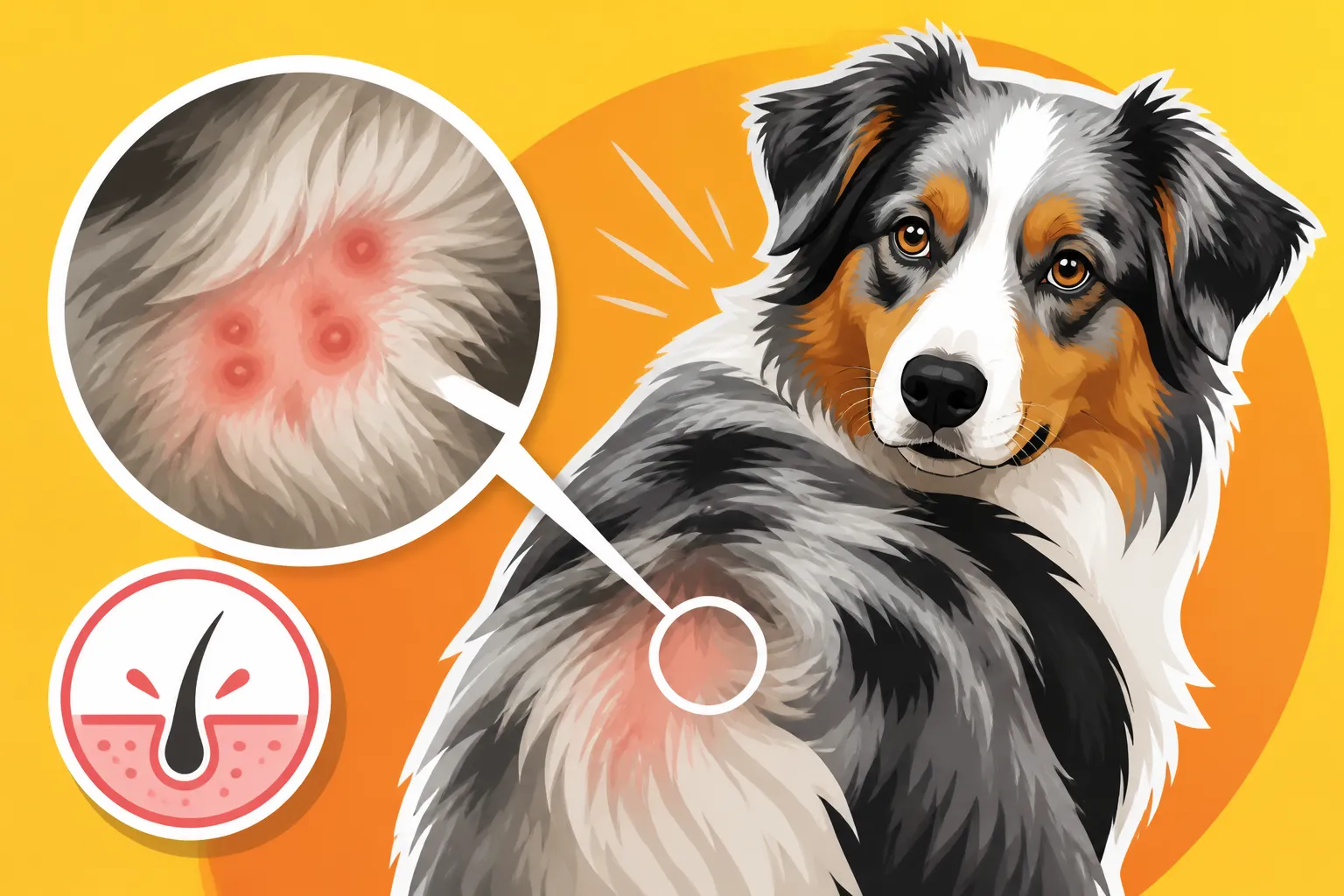
A hot spot, medically known as acute moist dermatitis or pyotraumatic dermatitis, is a rapidly appearing, inflamed, infected skin lesion that often looks exactly how it sounds: hot, red, and moist. They typically start when something irritates the skin, causing your Aussie to lick, chew, or scratch the area excessively. This self-trauma quickly breaks the skin barrier, allowing normal skin bacteria to invade and multiply. Within hours, a small irritation can explode into a large, oozing wound.
Imagine a tiny mosquito bite on your Aussie's flank. Your dog, being a dog, licks it. That licking irritates it more, so they lick more. The constant moisture and friction create a perfect, warm, bacterial soup, and boom – an angry, painful infection takes hold. It’s a vicious cycle of itch, lick, scratch, and infection that can escalate terrifyingly fast. What makes it particularly tricky for Aussies is how their coat acts as a fantastic incubator, holding in all that moisture and heat right against the skin.
The Hidden Nature of Aussie Hot Spots
This is where the Australian Shepherd's magnificent coat becomes both a blessing and a curse. While it provides excellent insulation and protection, it also acts like a perfectly camouflaged bandage over developing hot spots. You might not see the initial redness or irritation because it's buried under layers of dense fur. By the time you notice a matting of hair, a change in smell, or your Aussie incessantly licking one spot, the hot spot has often grown considerably and is already quite painful.
The undercoat traps moisture against the skin, creating an ideal environment for bacteria to thrive. A quick dip in a lake, a run in the rain, or even just high humidity can leave moisture lingering deep in the coat. If your Aussie then starts to scratch or chew at an itchy spot, that trapped moisture accelerates the bacterial growth exponentially. This is why vigilance is key – a subtle change in your dog’s licking habits or a localized patch of fur that feels matted or different to the touch could be the earliest warning sign. Regularly running your hands over your Aussie's body, parting the fur to inspect the skin, is crucial, especially in warmer, humid weather or after any water activity.
Common Triggers for Hot Spots in Aussies
Hot spots don't just appear out of nowhere; they're almost always a secondary infection to an underlying irritant. For Australian Shepherds, a variety of factors can kickstart this uncomfortable process.
- Allergies: This is a big one. Australian Shepherds can be prone to various allergies – environmental (like pollen, grass, dust mites, often called Seasonal Allergies in an Australian Shepherd), food sensitivities (which can lead to Food Allergy Itching in an Australian Shepherd), or flea allergies. Even one flea bite on an allergic dog can set off an intense itch-scratch cycle that culminates in a hot spot.
- Insect Bites: Beyond fleas, any insect bite – mosquitoes, spiders, even chiggers – can create an initial itchy bump that an Aussie then over-licks.
- Excess Moisture: As we touched upon, their double coat is a sponge. If your Aussie loves to swim, gets caught in the rain, or isn't thoroughly dried after a bath, that lingering moisture can irritate the skin and promote bacterial growth. Think of it as a damp towel left against your skin for too long.
- Poor Grooming: Mats and tangles, particularly behind the ears, in the armpits, or around the rump, can pull at the skin, create friction, and trap moisture and debris. This constant irritation often leads to licking and scratching, triggering a hot spot. It highlights the importance of consistent grooming and proper tools like The Rake That Reaches an Aussie Undercoat.
- Underlying Skin Conditions: Other skin issues, like a mild fungal infection, ear infections (especially in those floppy ears), or even anal gland issues, can cause enough discomfort to make your Aussie lick or chew excessively at the surrounding areas.
- Stress or Boredom: Sometimes, an Aussie under-exercised or under-stimulated might resort to compulsive licking as a self-soothing mechanism. If this licking is directed at one particular spot, it can eventually lead to a hot spot even without an initial skin irritant. Ensuring your Australian Shepherd gets adequate mental and physical stimulation, such as their recommended Australian Shepherd Exercise at One to Two Hours a Day, can help prevent these behavioral triggers.
Diagnosing and Treating Hot Spots at Home
Finding a hot spot can be alarming, but acting quickly and correctly can make a huge difference in your Aussie's comfort and recovery. While home treatment can be effective for minor cases, knowing when to call the vet is equally important.
The Importance of Early Detection
Because hot spots spread so rapidly and hide so well under that magnificent Aussie coat, early detection is your best defense. You need to become a detective of your dog's habits and skin.
Start by being observant. Does your Australian Shepherd suddenly seem obsessed with licking or chewing a particular spot? Are they pacing or restless, indicating discomfort? Has their demeanor changed, perhaps becoming a bit withdrawn or irritable when touched in certain areas? These are all red flags.
When you suspect something, it's time for a physical inspection. Gently part the fur in the suspected area. Look for any redness, inflammation, or matted fur that feels sticky or wet. You might also notice a distinct, unpleasant odor – often a yeasty or pus-like smell, which is a sure sign of bacterial growth. Don't be afraid to get your fingers down to the skin, even if your dog is a little sensitive in the area. The sooner you find it, the smaller it likely is, and the easier it will be to manage. If the area is already large, oozing, or your dog is clearly in severe pain, that's your cue to pick up the phone and call your vet right away.
First Aid Steps for Managing a Hot Spot
Once you’ve identified a hot spot, your immediate goal is to stop the spread and dry out the area. This isn't just about comfort; it's about breaking the cycle of irritation and infection.
The absolute most critical first step is to carefully clip the hair around and within the hot spot. I know, it feels counter-intuitive to take clippers to your beautiful Aussie, but you must create a wide margin around the lesion. Hair traps moisture, debris, and bacteria, and it prevents topical treatments from reaching the skin. Using blunt-nosed scissors is generally not recommended for this as it's easy to accidentally cut the skin, especially when dealing with a wiggling, painful dog. Electric clippers with a fine blade (like a #10 or #40) are best. Clip until you have at least an inch or two of healthy, clean skin visible around the entire lesion. This step is often the hardest for owners, but it is non-negotiable for healing.
Next, gently clean the area. A mild antiseptic solution, such as diluted chlorhexidine (you can often find this at pet stores or your vet) or a diluted povidone-iodine solution (like Betadine, diluted to the color of weak tea), works well. Avoid harsh soaps or alcohol, which can further irritate the skin. Dab the area with cotton balls or soft gauze until clean, removing any crusts or discharge.
After cleaning, the next crucial step is to keep the area dry and allow air to circulate. Do not cover it with bandages, as this will trap moisture. You can use a cool, damp compress for a few minutes if the area is very inflamed, but always follow up by thoroughly drying the area. A cool hairdryer on a low setting can work, or just gentle dabbing with a clean towel.
Finally, and this is perhaps the hardest part, you must prevent your Aussie from licking, chewing, or scratching the area further. This means bringing out the "cone of shame" – an Elizabethan collar. While your dog might look miserable, it’s essential for healing. A good fit for a larger breed like an Australian Shepherd is important. Some dogs tolerate inflatable collars better, but ensure it effectively prevents access to the hot spot. Remember, even a minute of vigorous licking can undo hours of progress. You might want to refer to Australian Shepherd Crates, Long Lines and Gear for recommendations on appropriate containment tools.
Over-the-Counter Remedies and Their Limitations
For very minor, newly developing hot spots, some over-the-counter (OTC) products can provide temporary relief and aid healing after you’ve clipped and cleaned the area. Topical sprays containing hydrocortisone can help reduce inflammation and itch, while those with lidocaine can numb the area, offering some pain relief. Some products also contain mild antiseptics to prevent further bacterial growth.
However, it’s vital to understand their limitations. These products are usually best for small, superficial lesions. If a hot spot is large, deep, oozing pus, or not showing improvement within 24-48 hours of your home care efforts, it's time to call the veterinarian. Many OTC products can also sting or irritate an already raw area, and some dogs will simply lick them off, making them ineffective.
It's also worth noting that hot spots can lead to significant veterinary bills, especially if they become chronic or severe. Having pet insurance can offer immense peace of mind. Companies like Healthy Paws offer policies that can help cover unexpected costs from conditions like hot spots, providing financial relief when your furry friend needs urgent care. While OTC solutions are a good first step, they shouldn't delay professional veterinary attention if the situation warrants it.
When to See the Vet and Professional Treatment Options
As much as we love to be able to handle everything at home, there are definite times when a hot spot demands professional veterinary intervention. Ignoring these signs can lead to more severe pain for your dog and a much longer recovery.
Recognizing When Home Care Isn't Enough
Sometimes, despite your best efforts, a hot spot simply won't resolve, or it might even get worse. Here are clear indicators that it's time to stop the home remedies and consult your veterinarian:
- Spreading or Worsening Infection: If the hot spot continues to grow in size, becomes deeper, or shows increased redness, swelling, or pus despite your clipping and cleaning, it’s a sign that the infection is too aggressive for topical, mild treatments.
- Severe Pain: If your Aussie is yelping, snapping, or becoming unusually aggressive when you try to examine or clean the area, the pain level is likely too high for home management alone. They might need prescription pain relief and stronger anti-inflammatory medications.
- Systemic Signs: Look beyond the skin. Is your Aussie lethargic, running a fever, or refusing to eat? These are signs that the infection might be affecting their overall health and requires immediate veterinary attention.
- Recurrent Hot Spots: If your Australian Shepherd seems to get hot spots repeatedly, especially in the same area or at certain times of the year, it's a strong indication that there’s an underlying issue that needs to be diagnosed and addressed. This could be anything from unmanaged allergies to a persistent ear infection that’s continually irritating them. This is often part of a broader picture of Australian Shepherd Skin, Coat and Allergy Problems that requires a vet's expertise.
Don't feel like you've failed if you need to go to the vet. Hot spots are tricky, and sometimes, they just need a bit more firepower than you can provide at home.
Veterinary Diagnostics and Prescribed Treatments
When you bring your Aussie to the vet for a hot spot, they'll typically start with a thorough examination, often shaving an even larger area around the hot spot to get a clear view of its extent and severity.
Your vet might perform a skin cytology, which involves gently pressing a microscope slide onto the skin lesion and examining it under a microscope. This quick test helps them identify the type of bacteria or yeast present and guide the choice of medication. In more stubborn cases, they might take a bacterial culture to determine precisely which bacteria are causing the infection and which antibiotics will be most effective.
Based on their findings, typical veterinary treatments often include:
- Oral Antibiotics: For moderate to severe hot spots, oral antibiotics are usually prescribed to combat the bacterial infection from the inside out. These typically need to be given for a week to several weeks.
- Oral Steroids: To quickly reduce severe inflammation and intense itching, a short course of oral corticosteroids (like prednisone) may be prescribed. This helps break the itch-scratch cycle and provides immense relief to your dog.
- Topical Medications: Stronger prescription topical creams, ointments, or sprays containing antibiotics and/or steroids are often used in conjunction with oral medications.
- Medicated Shampoos: In some cases, a medicated shampoo containing chlorhexidine or other antimicrobial agents might be recommended for regular bathing, especially if there are multiple hot spots or a generalized skin infection.
- E-Collar: Your vet will almost certainly reinforce the need for an Elizabethan collar, or "cone of shame," to prevent further self-trauma, often stressing that it needs to stay on continuously until the area is completely healed.
Beyond treating the hot spot itself, your vet will also work with you to identify and address the underlying cause. This might involve allergy testing (environmental or food), parasite control, or treatment for other infections like ear infections.
The Role of Diet and Supplements in Skin Health
While not a direct treatment for an active hot spot, nutrition plays a significant role in overall skin health and can help prevent future occurrences. A healthy skin barrier is more resistant to irritation and infection.
- Omega-3 Fatty Acids: Supplements containing omega-3 fatty acids (like fish oil) are renowned for their anti-inflammatory properties and their ability to support skin and coat health. They can improve the skin barrier function, reduce dryness, and lessen allergic responses, making your Aussie less prone to the initial itch that triggers hot spots.
- Probiotics: A healthy gut microbiome can positively influence overall immune function, including skin health. Probiotic supplements can help maintain a balanced digestive system, which in turn may support a healthier skin barrier.
- Hypoallergenic Diets: If your vet suspects a food allergy is contributing to your Aussie's hot spots, they might recommend an elimination diet using a novel protein source or a hydrolyzed protein diet. This means feeding a specialized diet for several weeks to identify if certain ingredients are causing the allergic skin reactions, which often manifest as itching. For more in-depth information, you can explore the connection to Food Allergy Itching in an Australian Shepherd. Choosing a high-quality, balanced diet specifically formulated for dogs with sensitivities can make a substantial difference in reducing chronic skin inflammation and preventing the triggers for hot spots.
Remember, always consult with your veterinarian before starting any new supplements or making drastic dietary changes, especially if your dog is on medication or has other health concerns.
Preventing Future Hot Spots in Your Australian Shepherd
The best hot spot is the one that never happens! Given the Australian Shepherd's predisposition due to their coat, a proactive approach to prevention is paramount.
Consistent Grooming and Coat Maintenance
This is arguably the most important defense against hot spots for an Aussie. Their stunning double coat needs diligent care.
- Regular Brushing: Brush your Australian Shepherd several times a week, and even daily during seasonal shedding periods, often referred to as Twice-Yearly Coat Blow in an Australian Shepherd. Focus on line brushing to ensure you reach the undercoat and remove dead hair and debris. This prevents mats and tangles, which are notorious hot spot incubators. Pay special attention to areas prone to matting, like behind the ears, armpits, and under the tail. Using the right tools, such as an undercoat rake, is key for getting through that dense fur.
- Proper Bathing and Drying: While Aussies don't need extremely frequent bathing, when you do bathe them, ensure you use a dog-specific shampoo and rinse thoroughly. Critically, you must dry them completely, right down to the skin. A high-velocity pet dryer can be a godsend for quickly and efficiently drying that thick double coat. Trapped moisture is an open invitation for hot spots.
- Professional Grooming: Consider professional grooming every 6-8 weeks. Professional groomers have the tools and expertise to handle double coats, address mats effectively, and identify potential skin issues you might miss. If your Aussie isn't keen on grooming, working on cooperative care techniques can make a big difference, as discussed in Grooming an Australian Shepherd That Hates the Table.
Allergy Management and Parasite Control
Addressing the root causes of itching is fundamental to preventing hot spots.
- Year-Round Flea and Tick Prevention: Even if you don't see fleas, just one bite can trigger an intense allergic reaction in sensitive dogs. Use a veterinarian-recommended, year-round flea and tick preventative. This is non-negotiable for dogs prone to skin issues.
- Allergy Management: If allergies are suspected, work closely with your vet. This might involve oral antihistamines, prescription medications like Apoquel or Cytopoint, or even immunotherapy (allergy shots) for severe environmental allergies. Controlling the initial itch prevents the self-trauma that leads to hot spots. For a deeper dive into seasonal triggers, look into Seasonal Allergies in an Australian Shepherd.
- Environmental Controls: If your Aussie has environmental allergies, try to reduce exposure to known allergens. This could mean wiping their paws and belly after walks, using air purifiers, and regular vacuuming.
Environmental Management and Lifestyle Adjustments
Beyond grooming and medical management, certain lifestyle choices can help keep hot spots at bay.
- Mindful Moisture Management: If your Aussie loves to swim, which many do, make sure they are thoroughly rinsed with fresh water and completely dried afterward. Pay extra attention to areas where moisture can linger, like the belly, groin, and behind the ears.
- Stress and Boredom Reduction: An under-stimulated Aussie is more likely to engage in compulsive licking, which can lead to hot spots. Ensure your dog receives plenty of physical exercise and mental enrichment. Puzzle toys, training sessions, and interactive games can help channel their energy productively. Meeting their daily needs for Australian Shepherd Exercise at One to Two Hours a Day is not just about physical health but mental well-being too, directly impacting behaviors that can lead to skin problems.
- Avoid Irritants: Be mindful of anything that could irritate your dog's skin. This includes harsh shampoos, certain lawn chemicals, or even ill-fitting harnesses or collars that can cause chafing.
- Routine Health Checks: Regular vet check-ups can catch underlying issues like ear infections or anal gland problems before they escalate into hot spots. Consider Australian Shepherd Dental and Ear Routine as part of your regular maintenance to prevent these common irritants.
By implementing these comprehensive preventative measures, you can significantly reduce the chances of your Australian Shepherd suffering from the painful and persistent problem of hidden hot spots. Your diligence will ensure their beautiful coat stays healthy, and their skin remains happy underneath.
Disclaimer
The information provided in this article is for general informational purposes only and is not a substitute for professional veterinary advice. Always consult with a qualified veterinarian for any health concerns or before making any decisions related to your pet's health and treatment.