Australian Shepherd Crates, Long Lines and Gear
Bringing home an Australian Shepherd is an exciting time, but it often comes with the realization that these intelligent, high-energy dogs have very specific needs. Many new owners quickly discover that standard-issue dog gear just doesn't cut it, leading to chewed-up beds, easily escaped crates, and frustrating walks. This guide is here to help you cut through the noise, providing a deep dive into selecting the right crates, long lines, and other essential equipment that will actually stand up to your Aussie's unique drive and keep them safe, stimulated, and happy.
Choosing the Right Crate for Your Australian Shepherd
For many Australian Shepherd owners, a crate isn't just a place to confine their dog; it's a vital tool for house training, managing destructive chewing, and providing a secure, den-like retreat. It’s an investment in your peace of mind and your Aussie’s well-being, but choosing the right one requires careful thought to ensure it meets their needs.
Why a Crate is More Than Just a Cage
Think of a crate not as a punishment cell, but as your Aussie’s private bedroom or den. Dogs, by nature, are den animals, and a properly introduced crate taps into this instinct, offering a safe, quiet space where they can retreat when feeling overwhelmed, tired, or just need a break from the household bustle. For a young, excitable Australian Shepherd puppy, this secure spot becomes invaluable. Without a designated safe space, a puppy might decide to chew on furniture, have accidents in inappropriate places, or get into things that could harm them.
A crate provides a controlled environment during crucial learning phases. When you can’t actively supervise your Aussie, which, let’s be honest, is most of the time unless you’re permanently tethered, the crate prevents the rehearsal of unwanted behaviors. It’s an essential part of house training because dogs are inherently clean creatures and are reluctant to soil their sleeping area. Imagine a bustling evening with guests over; your Aussie, who thrives on activity but can easily become overstimulated, can retreat to their cozy crate with a favorite chew toy and decompress, preventing nippy behavior or excessive barking driven by excitement. This positive association is key; the crate should always be a good place, never a place of banishment.
Crate Size and Material Considerations
When it comes to picking a crate, size definitely matters. For an adult Australian Shepherd, you're generally looking for a crate that allows them to stand up, turn around comfortably, and lie down fully stretched out. It shouldn't be so large that they can use one end as a potty area, which defeats the purpose of house training. For puppies, you might start with a smaller crate or use a divider to adjust the space as they grow. A general guideline for an adult Aussie, typically weighing between 40-65 pounds, would be a 36-inch to 42-inch crate. For specific guidance, our article on The Crate a Fifty Pound Aussie Needs offers detailed measurements and considerations.
The material of the crate is another crucial decision. Wire crates are popular because they offer excellent ventilation, are often collapsible for easy storage or transport, and allow your Aussie to see what’s going on around them. However, some Aussies, especially persistent chewers, might try to bend the bars or feel less secure in such an open environment. Plastic, or "airline-style," crates provide more of a den-like feel, which many dogs find comforting. They’re also sturdier for travel. Fabric crates are lightweight and portable, great for dog shows or short trips, but they are absolutely not suitable for chewers or unsupervised use with a high-drive Aussie, as they can be easily destroyed. For particularly persistent or anxious dogs, heavy-duty metal crates might be necessary, though they come with a higher price tag and less portability.
Regarding bedding, a soft, comfortable crate pad is wonderful, but be realistic. A young Aussie or a confirmed chewer will likely destroy a plush bed. Start with a tougher, easily washable pad or even just a thick towel, upgrading only when you're confident your dog is past the destructive chewing phase. Remember, the primary goal is safety and comfort, not luxury, especially in the early days.
Here's a quick comparison of common crate types:
| Crate Type | Pros | Cons | Ideal Use Case |
|---|---|---|---|
| Wire | Excellent ventilation, foldable, affordable | Less "den-like," some chew through, can be noisy | Home, temporary, moderate chewers |
| Plastic (Airline) | Den-like, good for travel, secure, easy to clean | Less ventilation, bulky, can be chewed | Travel, den for anxious dogs, moderate chewers |
| Fabric | Lightweight, portable, comfortable | Not chew-proof, harder to clean, less secure | Training, light travel, non-chewers |
| Heavy-Duty Metal | Indestructible, very secure, escape-proof | Very heavy, expensive, less portable, can be intimidating | Extreme chewers, escape artists, highly destructive Aussies |
Crate Training Techniques for a Positive Experience
Successful crate training hinges on making the crate a consistently positive place. Never, ever use the crate as a punishment. Instead, introduce it gradually. Start by tossing treats or favorite toys inside, allowing your Aussie to go in and out freely. Feed them meals inside the crate, leaving the door open initially. As they become comfortable, start closing the door for very short periods while they’re eating, then immediately opening it once they’re done.
Slowly increase the duration of time they spend in the crate, always returning before they show signs of distress. Practice leaving for a minute, then five, then fifteen, gradually building up. Provide a special chew toy or puzzle feeder, perhaps one filled with a tasty treat, only when they are in the crate. This builds a strong positive association. Many owners find that covering the wire crate with a blanket can enhance the den-like feel and reduce external distractions, helping their Aussie settle down more easily. Always ensure proper ventilation, especially in warmer weather. Consistency and patience are your best friends here. A well-crate-trained Aussie is a joy to have, offering both you and them a sense of security and structure.
Understanding and Utilizing Long Lines for Aussie Training
For an Australian Shepherd, a breed renowned for its intelligence, boundless energy, and often strong herding or prey drive, the concept of a "long line" is truly a game-changer. It’s far more than just an extra-long leash; it’s a crucial safety net and a powerful training tool that bridges the gap between on-leash control and reliable off-leash freedom.
The Indispensable Tool for Recall and Freedom
A long line allows your Aussie to explore, sniff, and move with a sense of freedom while you maintain control and safety. This is especially vital for a breed like the Australian Shepherd, whose natural instincts can compel them to chase after movement – a squirrel, a cyclist, or even another dog. Imagine you're at a local park, practicing recall with your spirited Aussie. A squirrel darts across their path. Without a long line, that squirrel could lead to a dash across a busy road. With a long line, you have the ability to gently guide them back, reinforce your recall command, and keep them safe.
This tool is absolutely indispensable for safely practicing and proofing your Aussie’s recall in a variety of environments before you even consider letting them off-leash in unfenced areas. It allows them to make choices and experience consequences (like getting to the end of the line) within a safe boundary you control. It’s about building confidence in your dog that they can explore, and confidence in you that you can prevent them from getting into trouble. It provides that essential mental and physical exercise without the inherent risks of a completely off-leash situation, particularly for those high-drive Aussies who might bolt after a fleeting shadow.
Choosing the Right Length and Material for Your Long Line
Long lines come in various lengths, typically ranging from 15 feet up to 50 feet or even more, and the best choice depends on your training goals and environment. A 15-foot line is great for starting recall work in smaller, more controlled spaces or for teaching boundaries around distractions. A 30-foot line offers more freedom and is excellent for open fields or parks where you want to simulate off-leash experience while still having control. For vast, open spaces where you truly want to give your Aussie a sense of independence, a 50-foot line can be invaluable, but be prepared for the added management it requires.
The material of the long line is also a key consideration. Biothane is a popular choice for many Aussie owners because it’s incredibly durable, waterproof, easy to clean (a quick wipe-down!), and doesn't absorb odors or get tangled easily. Nylon lines are common and affordable, but they can knot, get dirty, and can cause rope burn if pulled quickly through your hand. Cotton webbing lines are soft on the hands but tend to get wet, heavy, and absorb dirt. Regardless of material, ensure the snap clip is robust and secure enough to withstand your Aussie's strength and enthusiasm. For more options, take a look at our guide on Long Lines and Harnesses for an Australian Shepherd.
A crucial safety note: never, ever wrap the long line around your hand or wrist. Always hold it with an open palm or let it trail, using gloves if necessary to prevent burns if your Aussie makes a sudden dash. Always use a long line with a well-fitting harness, not a neck collar, to prevent injury to your dog's neck if they hit the end of the line at speed.
Integrating Long Lines into Training Routines
Incorporating a long line into your Aussie's training routine should be a systematic and positive experience. Start in a quiet, distraction-free environment, like a securely fenced yard, before moving to open parks. Begin by letting your Aussie explore the full length of the line. Periodically, call their name and, if they don’t respond immediately, gently reel them in while giving your recall command, praising and rewarding enthusiastically when they reach you. The goal is for them to associate coming back to you with positive outcomes, not with being yanked.
Teach a "check" command, where you gently put tension on the line and release it, getting them used to the feeling without it being alarming. This helps them understand the boundary of the line. Practice frequently and keep sessions short and fun to maintain your Aussie's engagement. As they gain confidence and their recall improves on the long line, you can gradually introduce more distractions and larger spaces. The ultimate aim is to build such a strong recall that the long line becomes superfluous, allowing them true freedom in appropriate, safe environments. For more practical advice on this, our article on Practicing Aussie Recall in a Fenced Field offers excellent tips.
Essential Gear for Walks, Hikes, and Outdoor Adventures
Australian Shepherds thrive on activity and exploration, making walks, hikes, and outdoor adventures an absolute must. But to ensure these excursions are safe, enjoyable, and productive, having the right gear is just as important as having the right mindset.
Harnesses, Collars, and Leashes for Safety and Control
When it comes to walking an Australian Shepherd, choosing between a collar and a harness, and the right leash, is more than just a preference; it’s about control, safety, and comfort. While a flat collar is essential for holding identification tags (always keep them updated!), it's generally not the ideal primary attachment point for walking a strong, enthusiastic Aussie. A collar can put strain on their neck and trachea, especially if they pull or lunge, potentially leading to injuries.
A harness is often the superior choice. It distributes pressure across the chest and shoulders, preventing neck strain and offering better overall control. For Aussies who tend to pull, a front-clip harness (where the leash attaches at the chest) can be incredibly effective. When the dog pulls, they are gently redirected to the side, discouraging the forward momentum. Back-clip harnesses are great for dogs that don’t pull and offer comfort, while Y-front harnesses provide unrestricted shoulder movement, which is excellent for active dogs. Whichever type you choose, ensure it fits snugly but doesn’t restrict movement or rub, especially around the armpits.
Leashes also come in various materials and lengths. A standard 6-foot nylon or leather leash is versatile for daily walks. For training, a slightly shorter 4-foot leash can offer more precise control, while longer leashes (like the long lines discussed earlier) provide more freedom in open spaces. Always choose a leash with a sturdy snap hook that won't accidentally detach. For a detailed breakdown of different options, check out our guide on Long Lines and Harnesses for an Australian Shepherd.
Keeping Your Aussie Hydrated and Comfortable on the Go
Aussies are built for activity, but they can easily overheat, especially with their dense double coats. Staying hydrated is paramount, particularly during longer walks or hikes. Invest in a good portable water bottle and bowl. Brands like Lixit and Gulpy offer excellent integrated solutions, making it easy to provide fresh water on the go. Always carry more water than you think you’ll need, especially on hot days or extended outings.
For summer adventures, consider cooling vests or bandanas. These clever items, often soaked in water, can make a significant difference in helping regulate your Aussie's body temperature. Brands like Ruffwear and The Chillout Series offer effective cooling gear. On long hikes or walks on hot pavement, paw protection is also key. Dog boots can shield paws from extreme temperatures (both hot and cold) and rough terrain, while paw wax can help condition and protect pads. Remember, if the pavement is too hot for your bare hand, it’s too hot for your Aussie’s paws. Our article, Water Intake for an Australian Shepherd on a Hot Trail, provides more insights into hydration, and you can also find helpful tips in Cooling Kit That Works Under an Aussie Coat.
Reflective Gear and Safety Lights for Visibility
Safety should always be a top priority, especially when walking your Australian Shepherd in low-light conditions – think early morning jogs, late evening strolls, or during inclement weather. Reflective gear and safety lights are inexpensive investments that can make a world of difference in preventing accidents.
Look for reflective vests or harnesses that make your Aussie highly visible to drivers, cyclists, and pedestrians. Many leashes and collars also come with reflective stitching or strips. For an extra layer of visibility, consider clip-on LED lights, such as those from Nite Ize, that attach to your dog's collar or harness. These small lights can be seen from a considerable distance and are particularly useful if your Aussie has a dark coat. Imagine walking your black tri Aussie in the dim twilight near Boulder, Colorado's bike paths; a reflective vest and a blinking light could literally be life-savers.
Pairing these with your own reflective clothing and a headlamp ensures both you and your furry companion are easily spotted. While not directly reflective, devices like GPS Collars for an Australian Shepherd can add another layer of security, allowing you to track your dog if they somehow slip away, especially in rural areas or open trails.
Interactive Toys and Mental Stimulation Tools
Australian Shepherds are not just physically energetic; they are incredibly intelligent and mentally driven. Providing ample physical exercise without corresponding mental stimulation is a recipe for a bored, and potentially destructive, Aussie. Interactive toys and mental challenges are critical for channeling their sharp minds and satisfying their innate need to "work."
Durable Chew Toys That Stand Up to an Aussie's Jaws
If you own an Australian Shepherd, you know they can be serious chewers, especially during puppyhood and adolescence. Finding toys that can withstand their powerful jaws and intelligent determination is a constant quest for many owners. Investing in high-quality, durable chew toys is not just about saving your furniture; it's about providing a safe and appropriate outlet for this natural behavior.
Look for brands known for their toughness. Kong has long been a favorite, with their Classic and even tougher Extreme lines designed for power chewers. Filling a Kong with peanut butter or yogurt and freezing it provides a long-lasting challenge. Nylabone offers a range of durable chew toys, some infused with flavors, that are designed to satisfy intense chewers. Brands like West Paw with their Zogoflex material also produce incredibly resilient toys that can withstand a good deal of abuse. Avoid cheap, easily destructible toys, as broken pieces can become choking hazards or cause internal blockages. Consider your Aussie's chewing style: do they gnaw, shred, or just hold and lick? This will help you choose the most appropriate texture and durability. For more ideas that won't end up in shreds, our article on Chew Toys That Last With an Australian Shepherd can offer great suggestions. You can find many of these durable toys through online retailers like Chewy, which often has a wide selection and helpful customer reviews on durability.
Puzzle Feeders and Enrichment Toys for Mental Exercise
Physical exercise alone, no matter how much, rarely tires out an Australian Shepherd's mind. Mental work is equally, if not more, exhausting and satisfying for this breed. Puzzle feeders and enrichment toys are fantastic tools for engaging their problem-solving skills and slowing down mealtime.
Snuffle mats, for example, turn mealtime into a foraging game, encouraging your Aussie to use their nose and brains to find hidden kibble or treats. Treat-dispensing balls or rollers, like those from KONG or OurPets, require your dog to manipulate the toy to get food out, turning eating into an interactive challenge. Brands like Nina Ottosson (available widely, including through Chewy) offer a range of sophisticated wooden or plastic puzzle toys with sliding parts and compartments that can keep an Aussie occupied for considerable time, making them think about how to unlock their reward. These types of toys are invaluable for those times when you can't provide extensive physical exercise, or when you need your Aussie to settle indoors. You can even use portioned fresh food meals from services like Ollie to fill certain puzzle feeders, adding extra incentive and making mealtime even more exciting. For an even deeper dive into these ingenious devices, read our article on Puzzle Feeders and Enrichment Gear for an Aussie.
Herding Balls and Flirt Poles for Instinctual Play
Australian Shepherds were bred to herd, and tapping into this instinct in a controlled, appropriate way is hugely beneficial for their physical and mental well-being. Herding balls and flirt poles are excellent ways to provide this outlet in a safe environment.
Herding balls, like the Jolly Ball or Push-N-Play by JW Pet, are oversized, durable plastic balls that Aussies can push, nose, and 'herd' around a yard or field. These toys are virtually indestructible and provide a fantastic workout, allowing your dog to engage their natural drive without chasing actual livestock or smaller, faster objects. It's a great way for them to express their innate desire to gather and move things.
Flirt poles, which resemble giant cat teasers with a lure attached to a long flexible pole, are another brilliant invention for Aussies. They allow you to simulate prey movement, encouraging your dog to chase, pounce, and "capture" the lure. This provides intense bursts of exercise in a small space, helps with impulse control (teaching "leave it" before the chase), and acts as a safe alternative to chasing small animals. It's a wonderful tool for controlled bursts of high-energy play and can be incredibly effective at tiring out a high-drive Aussie both physically and mentally. Our article, Flirt Poles and Herding Balls for an Australian Shepherd, delves further into how to best utilize these specific tools.
Grooming and Health Essentials for a Healthy Coat and Body
The Australian Shepherd’s striking double coat and active lifestyle mean that regular grooming and attention to health are not just aesthetic choices, but fundamental components of their overall well-being. Having the right tools on hand makes this ongoing care much more manageable.
Brushes, Rakes, and Shampoos for Double Coat Care
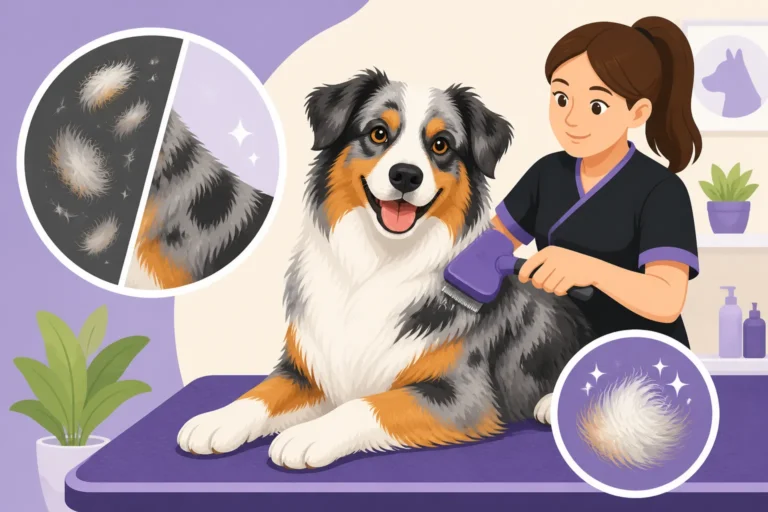
An Australian Shepherd's double coat—a dense undercoat for insulation and a coarser, water-resistant outer coat—is beautiful but demands consistent care. This coat is designed to protect them in various climates, but without proper grooming, it can quickly become matted, especially behind the ears, in the armpits, and on the "feathers" of their legs and tail. Twice a year, Aussies experience "coat blow," where they shed their entire undercoat, and during these periods, grooming becomes a daily task.
Essential tools include a high-quality undercoat rake. While some owners use tools like the Furminator, it’s crucial to use it sparingly and correctly to avoid damaging the outer coat or causing irritation. A better primary tool is a simple, broad undercoat rake with long teeth that can reach deep into the undercoat. A slicker brush is excellent for removing loose hairs and minor mats on the topcoat, while a steel greyhound comb with both wide and narrow teeth is indispensable for detangling and checking for mats, particularly in sensitive areas. Line brushing, where you part the hair and brush in sections down to the skin, is the most effective technique for thorough coat care. For more on this, our guide on Undercoat Rakes and Brushes for an Aussie offers a comprehensive breakdown.
When it comes to bathing, choose shampoos and conditioners specifically formulated for dogs. For Aussies with sensitive skin or during shedding season, oatmeal-based or deshedding shampoos can be beneficial. Always ensure you rinse thoroughly to prevent skin irritation.
Nail Trimmers, Ear Cleaners, and Dental Care Tools
Beyond the coat, regular attention to nails, ears, and teeth is critical for your Aussie's health. Long nails can cause discomfort, lead to splayed toes, affect their gait, and even result in painful injuries if they get caught. You'll need either a pair of sturdy clippers (guillotine or scissor-style) or a Dremel-style rotary grinder. Many Aussies, especially those who spend a lot of time on softer ground, don't naturally wear their nails down, so regular trimming every 2-4 weeks is often necessary. Start nail care early in puppyhood to desensitize them to the process.
Australian Shepherds, with their floppy or semi-prick ears, can be prone to ear infections due to moisture and trapped debris. Regularly check their ears for redness, odor, or discharge. A vet-approved ear cleaning solution and cotton balls (never cotton swabs, which can push debris deeper) should be part of your routine. Clean ears monthly, or more frequently if your Aussie swims often or has a history of ear issues.
Dental care is one of the most overlooked aspects of pet health, but it's incredibly important. Periodontal disease can lead to painful infections, tooth loss, and even systemic health problems. Aim to brush your Aussie's teeth several times a week, if not daily, using a dog-specific toothbrush and toothpaste (never human toothpaste, as it contains xylitol which is toxic to dogs). Dental chews can help, but they are not a substitute for brushing. Our detailed article, Australian Shepherd Dental Tartar and Cleanings, will give you all the information you need to maintain your Aussie's pearly whites.
First Aid Kit and Emergency Preparedness Items
No matter how careful you are, accidents happen. Having a well-stocked first aid kit specifically for your dog can be a lifesaver, especially if you're out on a trail or far from immediate veterinary care. Your kit should include items like vet wrap, antiseptic wipes, sterile gauze pads, medical tape, blunt-tipped scissors, tweezers (for splinters or ticks), styptic powder (to stop bleeding from quicked nails), a saline solution for flushing wounds or eyes, and an oral syringe. It’s also wise to include any regular medications your Aussie might need, clearly labeled.
Beyond the physical kit, emergency preparedness means knowing your local emergency vet's number and location, and having a plan for how you would transport your injured dog. Being aware of potential toxins in your home and yard is also part of being prepared. For the larger financial picture, many owners find peace of mind with pet insurance. Companies like Healthy Paws offer plans that can cover a significant portion of unexpected vet bills from accidents or illnesses. While no one wants to think about emergencies, a small investment in preparedness can save a lot of stress, and potentially lives. For guidance on financial readiness, our article Emergency Vet Bills an Aussie Owner Should Expect provides helpful context. If you suspect your Aussie is reacting to a substance or has been injured, act quickly and contact your vet immediately.
Travel and Transport Gear
Whether it's a short trip to the vet, a road trip across states, or even flying to a competition, traveling with an Australian Shepherd requires specific gear to ensure their safety and comfort. These intelligent and often sensitive dogs benefit from familiar, secure setups even when on the move.
Car Restraints and Travel Crates for Road Trips
Ensuring your Australian Shepherd is safely restrained in the car is not just a good idea; in many places, it's the law. An unrestrained dog can become a dangerous projectile in an accident, and they can also be a major distraction to the driver. Just think of an excited Aussie trying to get into the front seat to see what's happening.
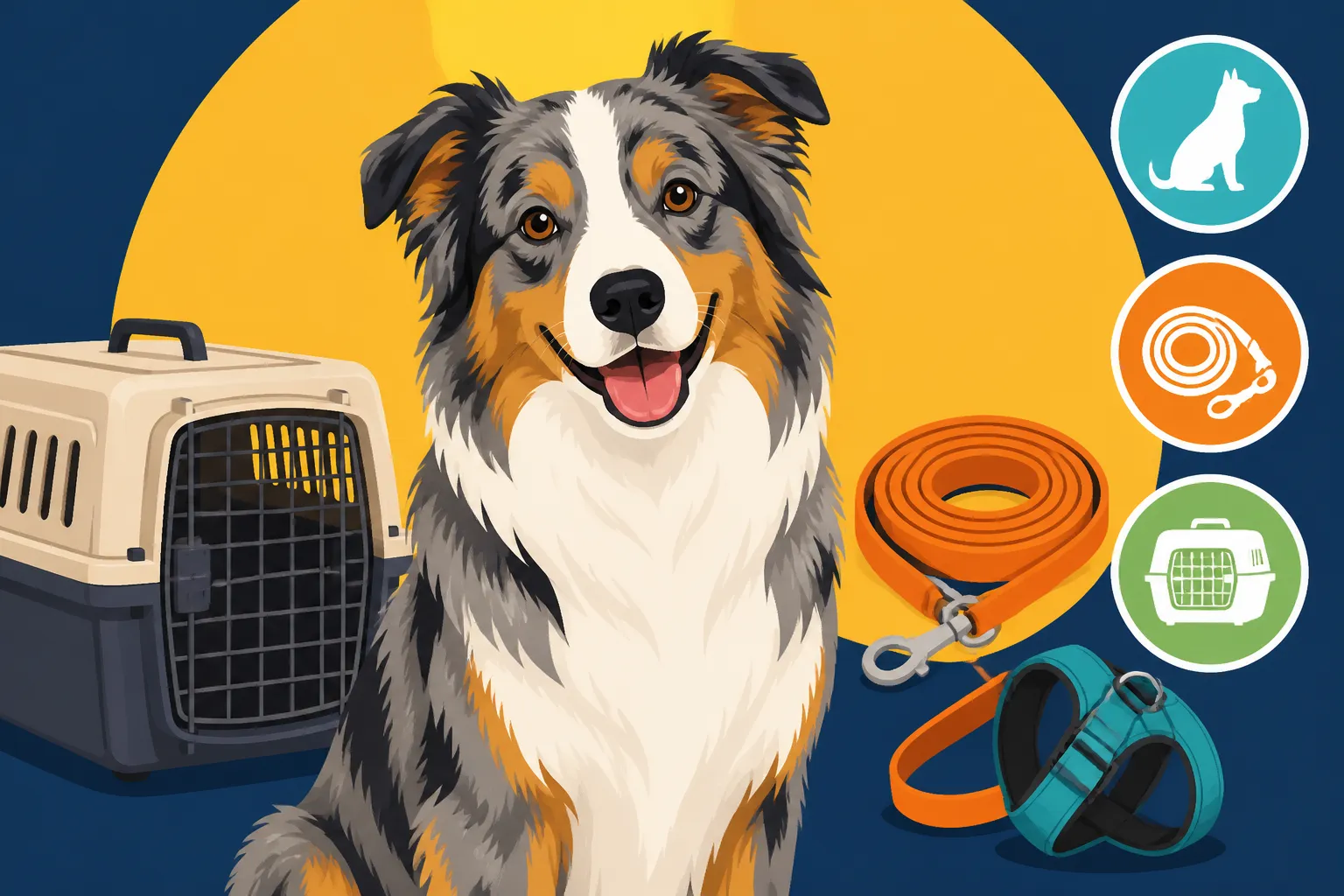
There are several options for car restraints. Seat belt harnesses are designed to buckle into your car's existing seatbelt system, keeping your Aussie secure in their seat. Look for crash-tested options for maximum safety. Car seats or booster seats are available for smaller Aussies (or puppies) and allow them to see out the window while remaining buckled in. For many Australian Shepherds, especially those who are anxious travelers or prone to motion sickness, a travel crate is the best option. It provides a secure, familiar, den-like space that helps reduce stress and prevents them from interfering with the driver. Always secure the crate so it doesn't slide around during travel. For more details on safe car travel, our article on Australian Shepherd Car Barriers and Crates offers valuable insights.
Pet ID and Microchipping Essentials
Even the most well-behaved Australian Shepherd, with their inherent herding drive and boundless curiosity, can sometimes bolt or get lost, especially in an unfamiliar environment. Current identification is your Aussie's ticket home. Always ensure your Aussie wears a collar with an up-to-date ID tag that includes your name and phone number. Some owners also add their address or a "Reward" message.
Beyond the collar, microchipping is a permanent form of identification. A tiny chip, about the size of a grain of rice, is inserted under your dog's skin, usually between the shoulder blades. This chip contains a unique identification number that can be scanned by a vet or shelter. The crucial step after microchipping is to register the chip with a national database and keep your contact information updated. A microchip is useless if the registration links back to an old phone number or address. Imagine your Aussie, a master of escapism, spotting a rabbit and taking off in a new town; a microchip and current ID tag are its best chances of being reunited with you. Our article on Chipping an Aussie That Bolts After Movement explains the importance of this safety measure in more detail.
Specialized Gear for Flying or Extended Travel
Traveling by air or undertaking extended journeys with an Australian Shepherd requires even more specialized gear and planning. If you plan to fly with your Aussie in the cabin (which is only possible for smaller dogs that fit under the seat), you'll need an airline-approved soft-sided carrier that meets specific dimensions and ventilation requirements. Larger Aussies will need to travel as cargo, which requires a rigid, airline-approved crate that meets IATA standards. These crates have specific ventilation, construction, and labeling requirements. Always check with your chosen airline well in advance, as rules can vary significantly and change frequently.
For any extended travel, make sure your Aussie has plenty of familiar items like their favorite blanket, a comfort toy, and their usual food and water bowls. Consider collapsible bowls for easy access. If you're traveling internationally, you'll need to research specific health certificates, vaccination records, and potential quarantine requirements, which can be extensive. Comfort items and thorough preparation can significantly reduce stress for your Aussie during long journeys. Our article on Getting an Aussie Onto a Plane provides practical advice for navigating air travel with your companion.
Disclaimer
As an experienced blogger and enthusiast of Australian Shepherds, the information provided here is based on general knowledge and best practices. However, this content should not be considered a substitute for professional veterinary advice, diagnosis, or treatment. Always consult with a qualified veterinarian or professional trainer regarding any health, medical, or behavioral concerns specific to your Australian Shepherd.