Week One Aussie Bills From Crate to Vet
Bringing home a new Australian Shepherd puppy is an incredibly exciting time, filled with dreams of adventures and loyal companionship. But amidst the joy and anticipation, it’s easy to overlook the financial reality that hits almost immediately. Beyond the initial purchase price, the first week with your furry friend can quickly accumulate a surprising number of bills, from setting up their new home to crucial veterinary care. This guide will walk you through the essential expenses you should anticipate in that whirlwind first week, ensuring you're prepared for your Aussie's grand arrival.
The Initial Purchase or Adoption Cost
Before you even think about collars or toys, there's the upfront cost of acquiring your Australian Shepherd. This can vary dramatically depending on where you get your puppy from, and it's important to understand what those costs often include.
Breeder Costs Versus Rescue Fees
If you're looking for a purebred Australian Shepherd with a known lineage and health history, you'll likely be working with a reputable breeder. These puppies often come with a price tag ranging from $1,000 to $2,500, or even more for top working or show lines. This cost isn't just for the puppy itself; it covers a significant amount of the breeder's investment in health testing the parents, ensuring proper nutrition and care for the mother and puppies, initial vet checks, first vaccinations, and often microchipping. A good breeder will also provide detailed records of their parent dogs' health clearances, such as hip and elbow evaluations, and genetic testing for conditions like MDR1 and hereditary cataracts. You can learn more about What an Australian Shepherd Puppy Costs generally, and specifically about Aussie Puppy Prices Between $1,000 and $2,500.
On the other hand, adopting an Australian Shepherd from a breed-specific rescue or a general animal shelter typically involves a much lower fee, usually in the range of $250 to $600. These adoption fees are designed to cover the costs the rescue has already incurred, which often include spaying or neutering, up-to-date vaccinations, microchipping, and any necessary medical treatments the dog received while in their care. Rescues often provide a starter bag of food and a collar or leash, making the initial setup a little lighter on the wallet. Beyond the financial aspect, adopting from a rescue gives a deserving dog a second chance, and many rescues are very transparent about the dog's known history and temperament. Check out our guide on Aussie Rescue Fees Between $250 and $600 for more in-depth information.
Deposits and Travel Expenses
Once you've decided on your new Aussie, especially if you're getting a puppy from a breeder, you'll almost certainly encounter a non-refundable deposit. This deposit typically ranges from $200 to $500 and serves to secure your place on a waiting list or reserve a specific puppy. It’s a commitment from you that you're serious, and from the breeder that a puppy will be held for you. Make sure you understand the breeder's policy regarding deposits.
If your chosen Australian Shepherd isn't local, don't forget to factor in travel expenses. This could mean gas, wear and tear on your vehicle, and potentially overnight accommodation if it's a long drive. For those importing a puppy or getting one from across state lines, costs can escalate rapidly. Shipping a puppy via air cargo can cost anywhere from $300 to $700 or more, depending on the airline, distance, and the size of the required travel crate. Always prioritize the puppy's safety and well-being, choosing reputable transport options. Sometimes, the added cost of a plane ticket for yourself to fly and pick up your puppy might be comparable and offer peace of mind.
Setting Up Your Home: Essential Supplies
Before your Australian Shepherd puppy even sets a paw in your home, you'll need to have a number of essential supplies ready. This isn't just about comfort; it's about safety, training, and making the transition as smooth as possible for your new family member.
Crate, Bedding, and Containment
A crate is a non-negotiable item for an Australian Shepherd puppy. It serves as a safe den, aids in house training, and can prevent destructive behavior when you can't supervise directly. Given that Australian Shepherds grow into medium to large dogs, typically reaching 35-70 pounds, you'll want to invest in a crate that can accommodate their adult size, often a 42-inch model, which can cost anywhere from $70 to $150. Many wire crates come with a divider panel, allowing you to adjust the size as your puppy grows, saving you from buying multiple crates. Look for sturdy options on sites like Chewy where you can compare different brands and features. You can find more detail in our article on Australian Shepherd Crates, Long Lines and Gear.
Inside the crate, comfortable, chew-resistant bedding is crucial. Avoid anything too plush or expensive initially, as puppies are prone to accidents and chewing. Simple fleece blankets or sturdy crate pads costing $20-$50 are good starting points. You might also want to invest in baby gates or a sturdy exercise pen to create safe, puppy-proofed zones within your home. These can cost $30-$80 per gate or panel set and are invaluable for containing a curious Aussie puppy, especially during those early weeks of house training and when you need to prevent them from "herding" your household items or children.
Food, Bowls, and Treats
The food you choose for your Australian Shepherd puppy is fundamental to their healthy development. Ideally, you'll get a recommendation from your breeder or rescue and purchase a small bag of the same food they've been eating to avoid stomach upset during the transition. A high-quality large breed puppy formula is often recommended to support their skeletal growth. Expect to pay $20-$40 for a small bag of premium puppy kibble. As your Aussie grows, you might explore fresh food options like Ollie, but for week one, consistency is key.
You'll need at least two bowls: one for water and one for food. Stainless steel bowls are hygienic, durable, and easy to clean, costing around $10-$25 each. For quick eaters, a slow feeder bowl is a great investment, costing $15-$30, as it can help prevent bloat, a serious condition that deep-chested breeds like Aussies can be prone to. Don't forget training treats! Small, soft, high-value treats are indispensable for early positive reinforcement. A bag will likely run you $5-$15.
Leash, Collar, Harness, and ID
Every Australian Shepherd puppy needs a basic collar and leash for walks, vet visits, and identification. An adjustable nylon or fabric collar with a quick-release buckle, costing $10-$20, is a good start. Make sure it fits snugly enough that it won't slip over their head, but loose enough for two fingers to fit underneath comfortably. A standard 6-foot leash, also in the $15-$30 range, is perfect for teaching leash manners.
For puppies, a front-clip harness can be a fantastic tool, especially for a breed known for its energy and potential to pull. A harness distributes pressure evenly across their chest rather than their delicate neck, which is safer during those early training sessions. Quality puppy harnesses range from $25-$50. Finally, an ID tag engraved with your phone number and your dog's name is a critical safety measure, costing $5-$15. Even if your puppy is microchipped, a visible tag is often the first thing someone checks if your Aussie decides to go on an impromptu adventure.
First Week Vet Visits and Health Costs
The first week with your Australian Shepherd is not just about snuggles and play; it's also a crucial time for establishing their health care routine. A prompt vet visit is paramount to ensure your puppy is healthy and to set them on the right path.
Initial Health Check-up
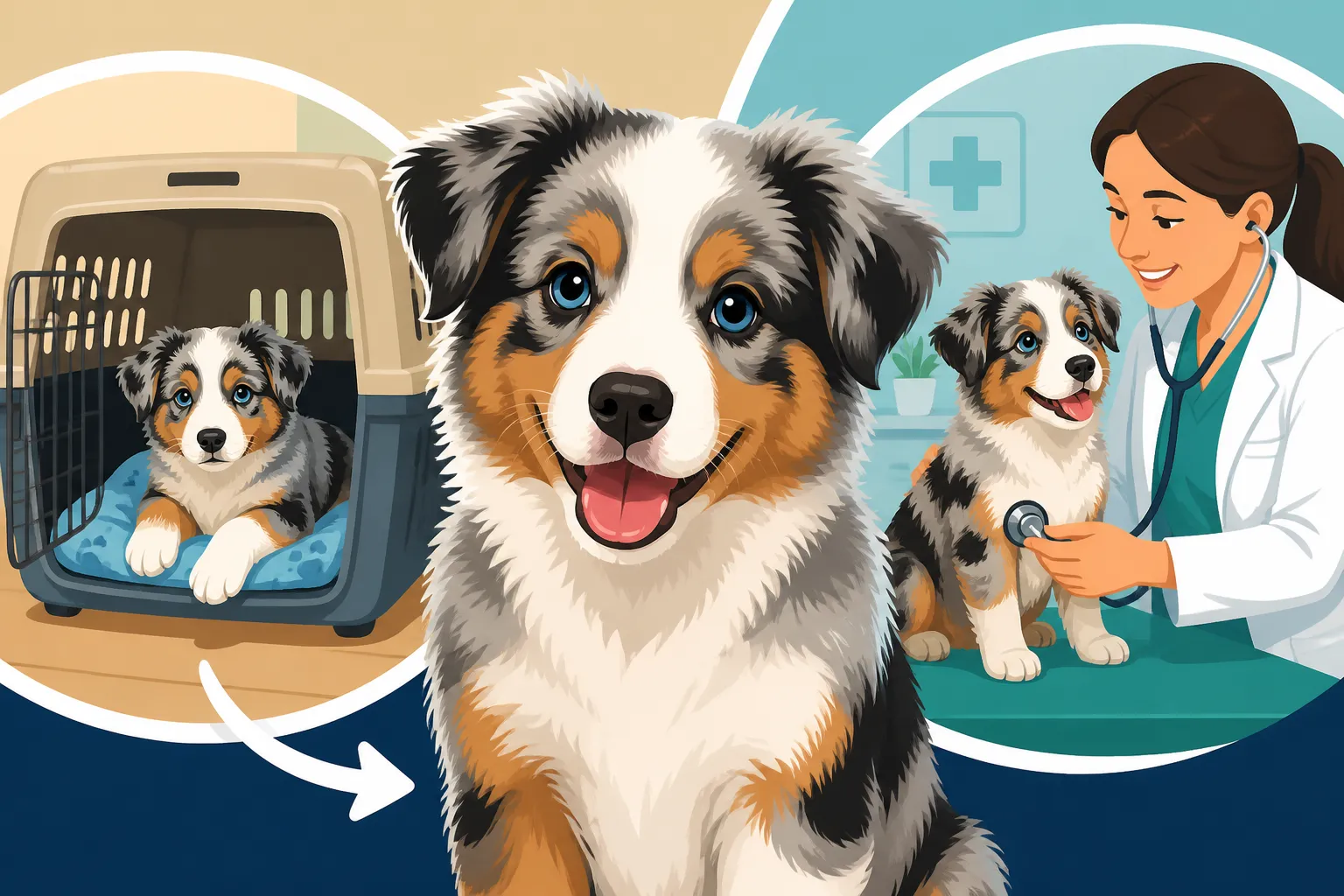
One of the most important things to do within the first 48-72 hours of bringing your Australian Shepherd home is to schedule an initial vet check-up. This visit allows a professional to confirm your puppy's overall health, which is especially important if you've adopted from a shelter or a breeder far away. The vet will perform a full physical examination, checking their eyes, ears, teeth, heart, lungs, and joints. They'll also typically recommend a fecal test to check for intestinal parasites, which are common in puppies and need to be treated promptly. This initial visit can cost anywhere from $50 to $150, not including any necessary medications or additional tests.
During this appointment, you'll also discuss your puppy's vaccination schedule and parasite prevention plan. It’s an ideal time to bring any health records provided by your breeder or rescue, so your vet can ensure all necessary vaccinations are up to date and plan any upcoming boosters. This proactive approach helps catch any potential issues early and ensures your Australian Shepherd starts life as healthily as possible.
Vaccinations and Parasite Prevention
Australian Shepherd puppies require a series of vaccinations to protect them from common and potentially fatal diseases. While your puppy may have received their first shots from the breeder or rescue, they will need boosters to complete the series. The typical puppy vaccination schedule includes doses for Distemper, Adenovirus, Parvovirus, and Parainfluenza, usually given in a series of three or four shots, a few weeks apart. Rabies vaccination is generally given around 12-16 weeks of age, often coinciding with one of the later booster appointments. Each vaccination visit can cost $30-$70, depending on the number of vaccines administered. Our guide on The Puppy Shot Series for an Aussie has more detail.
Beyond vaccinations, your vet will recommend parasite prevention, including heartworm medication and flea and tick prevention. These are ongoing monthly or quarterly costs, but the initial dose will be part of your first-week expenses. Heartworm medication typically costs $10-$20 per month, and flea/tick prevention can range from $15-$35 per month, depending on the product and your location. It is absolutely critical to discuss your Australian Shepherd's MDR1 status with your veterinarian before administering any medications, especially for parasite prevention. Many Aussies carry The MDR1 Mutation Half of Australian Shepherds Carry, which can make them sensitive to certain drugs, including some common anti-parasitics. Your vet can advise on Australian Shepherd Preventive Medication and MDR1 that are safe for your specific dog.
Considering Pet Insurance
While not a direct "bill" in the traditional sense, deciding on and enrolling in pet insurance during your first week can be one of the most financially savvy decisions you make for your Australian Shepherd. Aussies, like many breeds, can be prone to certain health issues later in life, such as hip dysplasia or epilepsy. Getting insurance early, before any conditions manifest, is key, as most policies consider existing conditions ineligible for coverage. The monthly premium for Australian Shepherd insurance can range from Australian Shepherd Insurance at $35 to $55 a Month and will vary based on your location, your dog's age, and the plan you choose.
Companies like Healthy Paws offer various plans, and it’s worth researching different providers to understand their coverage, deductibles, and reimbursement percentages. Keep in mind that most pet insurance policies have waiting periods—a specific amount of time after enrollment before coverage for certain conditions begins. Enrolling your Australian Shepherd before they turn one year old is often recommended to avoid pre-existing condition exclusions and ensure comprehensive coverage for potential future health challenges. Find out more about Enrolling an Australian Shepherd Before Age One.
Training, Grooming, and Enrichment Essentials
An Australian Shepherd is a highly intelligent and energetic breed that thrives on mental and physical stimulation. Investing in the right training tools, grooming supplies, and enrichment items from day one will not only help manage their intense drive but also foster a strong bond between you and your new companion.
Early Training Tools and Classes
Australian Shepherds are incredibly smart, but that intelligence needs an outlet, or it can lead to mischief. Puzzle toys, which dispense treats as your dog solves them, are fantastic for mental exercise and can cost $15-$40. Durable chew toys, especially those made from Kong, Nylabone, or natural rubber, are also crucial for redirecting puppy biting and satisfying their urge to chew. Expect to spend $10-$30 per toy, and you'll want several to rotate. It’s worth looking into Chew Toys That Last With an Australian Shepherd to avoid constantly replacing them.
Enrolling in a puppy socialization class during the first few weeks is highly recommended. These classes not only teach basic obedience commands but also provide a safe, structured environment for your Aussie to interact with other puppies and people, which is vital for developing a well-adjusted adult dog. The cost for a 6-8 week puppy class typically ranges from $120 to $250. For a breed with a strong herding instinct, consider an inexpensive flirt pole ($20-$40) or a large herding ball ($30-$60) as appropriate outlets for their natural drives right from the start. These toys can prevent them from "herding" your family members or other pets, making for a happier home. For more ideas, explore Puzzle Feeders and Enrichment Gear for an Aussie.
Grooming Supplies for the Double Coat
Australian Shepherds are known for their beautiful, dense double coats, which require regular grooming to stay healthy and mat-free. Your first week should include acquiring basic grooming tools. A good quality slicker brush ($15-$30) and an undercoat rake ($20-$40) are essential. The slicker brush helps remove loose hair and smooth the topcoat, while the undercoat rake reaches deep into their dense undercoat to remove shed hair, preventing mats and reducing shedding around your home.
You'll also need puppy-specific shampoo and conditioner, typically costing $10-$25 each. These are formulated to be gentle on their sensitive skin. Investing in a pair of sturdy nail clippers or a Dremel-style nail grinder ($15-$40) is also important, as regular nail trimming is vital for paw health. Start practicing nail trims early and frequently to get your puppy comfortable with the process. Finally, an ear cleaner ($10-$20) and cotton balls should be on your list for regular ear maintenance, especially for a breed prone to ear infections if their ears aren't kept clean and dry. For more grooming tips, check out Australian Shepherd Ear Cleaner and Grooming Supplies and our comprehensive guide on Australian Shepherd Grooming and Shedding Costs.
Disclaimer
The information provided in this article is for general informational purposes only and does not constitute professional veterinary or financial advice. Always consult with a qualified veterinarian for any health concerns regarding your Australian Shepherd and a financial advisor for budgeting or insurance decisions. Specific costs may vary based on location, service provider, and individual dog needs.