Australian Shepherd Grooming and Shedding Costs
Anyone who has ever shared their home with an Australian Shepherd knows a fundamental truth: these magnificent dogs shed. And they shed a lot. It's not just a seasonal inconvenience; it's a way of life that impacts your home, your clothes, and your budget. Navigating the world of Australian Shepherd grooming and shedding costs can feel overwhelming, but this guide is here to break down everything you need to know to keep your Aussie looking sharp and your wallet from feeling too bare.
Understanding the Australian Shepherd Coat
Before we even begin to talk about brushes and bills, it's crucial to understand the unique characteristics of your Australian Shepherd's coat. This isn't just about fluff; it's a complex, multi-layered marvel designed for function, which in turn dictates its care and, yes, its cost.
The Double Coat's Purpose and Structure
Your Australian Shepherd boasts what's known as a double coat. This isn't just one layer of hair; it's two distinct layers working in harmony. The outer layer, often called the guard coat, consists of longer, coarser, and slightly wiry hairs. These hairs are designed to be water-resistant, protecting your Aussie from rain, snow, and thorny brush if they're out working the fields. They also help repel dirt and debris, acting as a natural shield.
Beneath this resilient outer layer lies the undercoat. This is where the magic (and the mess!) happens. The undercoat is much softer, denser, and incredibly insulating. It's primarily responsible for keeping your Aussie warm in cold weather and, surprisingly, helping to keep them cool in hot weather by trapping air and creating a protective barrier against the sun's rays. Think of it like a natural climate control system. This dense, fluffy layer is what truly sheds, creating those infamous "Aussie tumbleweeds" that seem to appear out of nowhere. The thickness and texture of this undercoat vary depending on the individual dog, their genetics, and even their climate, but one thing is consistent: it needs meticulous care.
Seasonal Shedding vs. Coat Blow
There's a big difference between everyday shedding and what Australian Shepherd owners affectionately (or perhaps not-so-affectionately) call "coat blow." Your Aussie will shed year-round, a natural process of hair turnover. You'll find strands on your furniture, a few on your clothes, and always a little something when you brush them. This is normal and manageable with regular, consistent grooming.
However, twice a year, typically in spring and fall, your Australian Shepherd will experience a "coat blow." This is when their body prepares for the upcoming season by shedding a massive amount of undercoat. In the spring, they'll shed their thick winter undercoat to make way for a lighter summer layer. In the fall, they'll shed the summer undercoat to grow in a denser winter one. During these periods, the amount of hair coming off your dog can be astonishing. It can feel like you're brushing out another whole dog! This isn't just shedding; it's a complete overhaul of their insulation system. It requires dedicated effort, often daily, with the right tools to remove all that dead, loose undercoat. If you don't keep up, that undercoat can quickly mat, leading to skin issues and discomfort for your dog. For a more in-depth look at this phenomenon, check out our article on Twice-Yearly Coat Blow in an Australian Shepherd.
Why Your Aussie Should Never Be Shaved
It's a common misconception, especially when faced with a massive coat blow or a hot summer day, that shaving your Australian Shepherd will solve shedding problems or keep them cooler. Nothing could be further from the truth, and in fact, shaving an Aussie can cause more harm than good. The double coat, as we discussed, is designed to regulate temperature. When you shave it, you remove that natural insulation.
In summer, shaving exposes their delicate skin directly to the sun, increasing the risk of sunburn and potentially skin cancer. It also eliminates the air circulation provided by the double coat, which actually helps keep them cool. In winter, obviously, it removes their natural warmth. Furthermore, shaving can permanently damage the coat. The guard hairs and undercoat often grow back at different rates and textures, leading to a patchy, dull, or even coarse coat that no longer functions as it should. It can also exacerbate matting problems in the future. The coat might not grow back properly, looking sparse and uneven, or it might come back even thicker and more unruly. It's truly a decision that can have lasting negative effects on your dog's skin health and coat integrity. If you're considering this, please read our detailed explanation on Why an Australian Shepherd Should Never Be Shaved.
Essential Home Grooming Tools and Their Costs
Taking care of your Australian Shepherd's coat at home is not just about saving money; it's about building a bond with your dog and ensuring their comfort. However, you can't just grab any old brush. Having the right tools is paramount, and these are some of the essential items you'll want to invest in.
Brushes and Rakes for the Undercoat
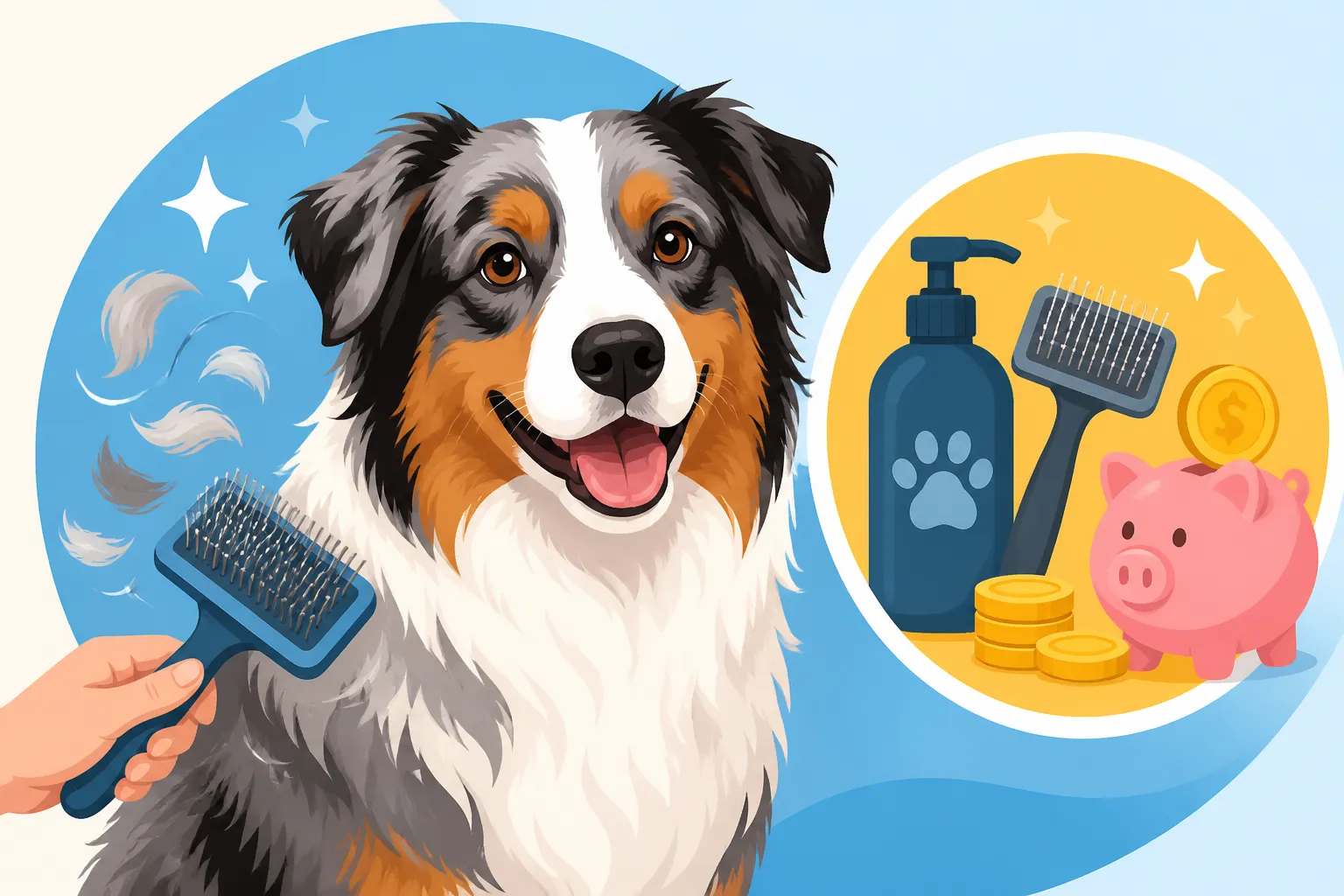
When it comes to tackling that dense Australian Shepherd undercoat, a regular slicker brush simply won't cut it for deep deshedding. You need specialized tools. Expect to spend anywhere from $15 to $50 for quality brushes, but remember, these are investments that will last years if cared for.
First, a good undercoat rake is non-negotiable. This tool has long, sturdy teeth designed to penetrate the dense topcoat and gently pull out loose undercoat without damaging the guard hairs. Brands like Furminator (while popular, use with caution as some versions can cut healthy hair), rake-style deshedding tools from Chris Christensen, or even simple, wide-toothed metal rakes are excellent choices. I personally prefer a sturdy, long-toothed undercoat rake that has rotating pins to prevent pulling. This is your primary weapon against coat blow. For a comprehensive guide on reaching that undercoat, see our article on The Rake That Reaches an Aussie Undercoat.
Second, a slicker brush is still useful, but more for finishing touches, fluffing, and removing surface mats. Look for one with a comfortable handle and densely packed pins. Third, a pin brush with rounded pins can be great for general daily brushing, especially on the longer feathering on legs and tail, and for working through minor tangles. Finally, for that serious shedding period, a deshedding blade (like a shedding rake with two sides, one fine and one coarse) can be incredibly effective, but again, use gently to avoid irritation. Brands like Kong and Safari offer decent options in this category. For specific recommendations, check out Aussie Deshedding Tools and What They Save.
Shampoos, Conditioners, and Drying Aids
Bathing your Australian Shepherd might not be a daily or even weekly task, but when you do, using the right products makes a significant difference in coat health and shedding management. Expect to budget around $15-$30 per bottle for good quality shampoo and conditioner, which can last several months depending on bath frequency.
Look for shampoos specifically formulated for double coats or for shedding. These often contain ingredients like oatmeal, essential fatty acids, or gentle cleansers that help loosen dead hair and moisturize the skin. Avoid harsh detergents or human shampoos, which can strip natural oils and dry out your dog's skin, potentially leading to itching and further shedding. A good conditioner is also vital, as it helps detangle the coat, making brushing easier and reducing breakage. Brands like Earthbath, TropiClean, or even specialized veterinary brands are good choices.
Drying an Australian Shepherd's thick double coat is another challenge. Air-drying can take hours and, if not done thoroughly, can lead to skin issues like hot spots. A high-velocity dog dryer (not a human hairdryer, which can be too hot and burn the skin) is a game-changer. These dryers blast water out of the coat, significantly reducing drying time and helping to push out more loose undercoat. A good dog dryer can cost anywhere from $70 to $200, but it will pay for itself in saved professional grooming costs and improved coat health. If you plan to bathe your Aussie regularly, especially after muddy adventures, this is a worthwhile investment. You can find excellent options on sites like Chewy.
Nail Trimmers, Grinders, and Ear Cleaners
Beyond the fur, there are other essential grooming tasks that contribute to your Aussie's overall health and comfort, and these also come with their own costs.
Nail care is crucial. Overgrown nails can cause pain, affect your dog's gait, and even lead to joint problems over time. You have a couple of options:
- Guillotine or scissor-style clippers: These cost around $10-$25. You need to be confident in using them to avoid cutting the quick (the sensitive part of the nail that contains blood vessels and nerves).
- Dremel or nail grinder: These electric tools sand the nails down gradually, reducing the risk of cutting too short. A good quality grinder can range from $30-$60. Many Aussies tolerate grinding better than clipping once they're accustomed to it, and it allows for a smoother, shorter nail. Learning to trim your Aussie's nails between grooms will save you frequent vet or groomer visits.
Ear cleaning is another important aspect, especially for a breed with floppy ears that can trap moisture and debris. An ear cleaning solution, specifically formulated for dogs, costs around $10-$20 a bottle. You'll also need cotton balls or gauze. Regular checks and cleaning can prevent painful and costly ear infections. Our guide on Australian Shepherd Ear Cleaning offers more specific advice.
Finally, while not strictly a grooming tool, don't forget dental care. Regular tooth brushing with dog-specific toothpaste (never human toothpaste!) and a dog toothbrush (around $5-$15 for a kit) can prevent tartar buildup and expensive dental procedures down the line. Check out Australian Shepherd Dental Care for more information.
Professional Grooming Services and Pricing
Even with the best intentions and a full arsenal of home grooming tools, sometimes you just need to call in the professionals. Professional groomers have specialized equipment, skills, and experience to handle even the most challenging Australian Shepherd coats. However, these services come with a price tag.
Full-Service Grooming Packages
A full-service groom for an Australian Shepherd typically includes a thorough bath, blow-dry with a high-velocity dryer, full brush-out to remove dead undercoat, nail trim, ear cleaning, and sometimes a sanitary trim (clipping hair around the private areas to keep them clean) and paw pad trim. Given the size and coat density of an Aussie, this is a labor-intensive job.
Prices for a full-service groom for an Australian Shepherd can vary significantly based on your location, the groomer's experience, and the condition of your dog's coat. Generally, you can expect to pay anywhere from $75 to $150 per session. In major metropolitan areas or with highly sought-after groomers, these prices can sometimes go even higher. Some groomers might offer a slight discount if you pre-book a regular schedule (e.g., every 6-8 weeks). The key here is consistency; regular professional grooming can prevent major matting issues, which can then incur additional "dematting" fees. For a general idea of costs, consider Australian Shepherd Grooming at $50 to $100 a Session, though for a full service on an Aussie, it's often at the higher end or more.
Deshedding Treatments and Add-ons
For many Australian Shepherd owners, the primary reason for visiting a professional groomer is for a dedicated deshedding treatment. This is especially true during those infamous "coat blow" seasons. Deshedding services usually involve special shampoos and conditioners designed to release undercoat, followed by an intense session with high-velocity dryers and various deshedding tools to pull out as much loose hair as possible.
These treatments can often be an add-on to a standard bath-and-brush package or a standalone service. Expect to pay an additional $20 to $50 on top of the base grooming price for a comprehensive deshedding treatment. This extra cost is often well worth it, as a good deshedding session can significantly reduce the amount of hair you find around your house for weeks afterward.
Other common add-ons might include:
- Specialty shampoos: If your Aussie has sensitive skin or allergies, a hypoallergenic or medicated shampoo might be used, often for an extra $5-$10.
- Dematting fees: This is where costs can truly escalate. If your Aussie arrives at the groomer with significant matting, the groomer will need extra time and specialized tools to carefully work through these tangles. This is often charged hourly, ranging from $15 to $30 per 15 minutes or per hour, depending on severity. This is why regular home brushing and professional visits are so crucial.
- Deodorizing treatments: For an Aussie who loves rolling in questionable things, a special deodorizing rinse might be offered for an extra $10-$20.
Specialized Services for Problem Coats or Anxious Dogs
Sometimes, your Australian Shepherd might require more than just a standard groom. This could be due to extreme matting, severe skin conditions, or a temperament that makes grooming difficult.
For a dog with a severely matted coat, a groomer might recommend a "comfort shave" rather than trying to demat. This involves shaving the entire coat down to the skin to relieve the dog from the discomfort of the mats. While we generally advise against shaving Aussies, in cases of severe matting that are causing pain or skin issues, it might be the most humane option. This service can be costly, often in the $100-$200+ range, as it requires delicate work to avoid cutting the skin hidden beneath tight mats, and groomers often charge extra for the significant wear and tear on their equipment.
For anxious or fearful dogs, some groomers offer force-free or cooperative care grooming. This approach focuses on building trust, using positive reinforcement, and taking breaks as needed. It's often slower and more methodical, sometimes requiring multiple shorter sessions to avoid overwhelming the dog. This specialized care typically comes at a premium, with prices that might be higher per session or structured differently than a standard groom. Finding a groomer who understands how to work with a dog that finds grooming stressful, especially an Aussie that might already be reserved with strangers, can be invaluable. If your Aussie falls into this category, you might find our insights on Grooming an Aussie That Hates the Table helpful for managing the process.
Long-Term Budgeting for Australian Shepherd Grooming
Understanding the upfront costs is one thing, but living with an Australian Shepherd means planning for the long haul. Grooming isn't a one-and-done expense; it's a recurring part of responsible dog ownership. Thinking about the annual and even lifetime costs will help you budget effectively.
Annual vs. Monthly Cost Breakdown
Let's break down what you might expect over a year.
If you primarily groom at home:
- Tools: Initial investment of $100-$200 for a good set of brushes, rakes, clippers/grinder, and a high-velocity dryer. These last for years, so annual cost is low after the first year (maybe $20-$30 for replacement blades or worn-out items).
- Consumables: Shampoo, conditioner, ear cleaner, dental supplies. Budget around $50-$100 per year, depending on frequency of use and brand.
- Occasional professional visits: Even home groomers might opt for one or two professional deshedding sessions during peak coat blow. Budget $75-$150 per session, so $150-$300 annually.
- Total Annual Home Grooming Cost (after initial tool investment): Approximately $220 – $430.
If you rely heavily on professional grooming:
- Full-service grooms: Most Aussies benefit from professional grooming every 6-8 weeks. Let's say 8 sessions per year. At $75-$150 per session, that's $600-$1200 annually.
- Deshedding add-ons: If you always get the deshedding treatment, add $20-$50 per session, so another $160-$400 annually.
- Tips: Don't forget to tip your groomer! 15-20% is standard. This could be an additional $100-$200 per year.
- Total Annual Professional Grooming Cost: Approximately $860 – $1800+.
As you can see, the difference is substantial. Building a Monthly Grooming Budgets for an Australian Shepherd based on your chosen approach will help you stay on track.
The Impact of DIY vs. Professional Care
The choice between DIY grooming and professional services significantly impacts your budget, but it also affects your time and your dog's comfort.
DIY Grooming Pros:
- Cost Savings: Clearly the biggest advantage. Your initial investment in tools pays off over time.
- Bonding: Grooming sessions can be a wonderful bonding experience if done patiently and positively.
- Flexibility: You can groom whenever your schedule allows or as needed for minor issues.
- Early Detection: You'll be intimately familiar with your dog's skin and coat, making it easier to spot lumps, bumps, parasites, or skin irritations early.
DIY Grooming Cons:
- Time Commitment: Thoroughly grooming an Aussie can take hours, especially during coat blow.
- Learning Curve: It takes practice to master techniques like nail trimming, dematting, and proper line brushing without causing discomfort.
- Equipment Investment: While it saves money long-term, the initial purchase of a good high-velocity dryer can be a hurdle.
- Physical Effort: Brushing out a dense coat can be physically demanding.
Professional Grooming Pros:
- Expertise: Groomers have specialized skills, tools, and techniques for efficient and effective grooming.
- Time-Saving: You drop off your dog and pick them up looking pristine.
- Better Results: Often, a professional groomer can achieve a deeper clean and more thorough deshedding than most owners can at home.
- Handling Difficult Dogs: Experienced groomers are often better equipped to handle nervous or difficult dogs safely.
Professional Grooming Cons:
- Higher Cost: This is the most significant drawback.
- Stress for Some Dogs: Some Aussies find the grooming salon environment stressful, with new smells, noises, and strangers.
- Less Frequent: Due to cost, professional grooms are often less frequent than daily home brushing, which means more shedding between appointments if not supplemented.
Many owners find a hybrid approach works best: daily or weekly home brushing to maintain the coat and regular professional deshedding treatments (perhaps quarterly or during peak shedding seasons) to keep things truly under control.
Unexpected Grooming-Related Expenses
Just when you think you've budgeted for everything, life with an Aussie can throw you a curveball. There are a few "hidden" or unexpected costs related to grooming and shedding that you should be aware of:
- Veterinary bills for skin issues: If matting is neglected, it can pull on the skin, leading to sores, infections, and hot spots. These require veterinary attention, including exams, medication, and sometimes sedation for professional shaving, which can quickly add up to hundreds of dollars. Similarly, allergies and skin conditions often manifest with excessive shedding or poor coat quality, leading to vet visits. You can read more about Australian Shepherd Skin, Coat and Allergy Problems for a better understanding.
- Increased cleaning supplies: Even with diligent grooming, you'll likely go through more vacuum bags, lint rollers, and cleaning products than the average pet owner. The cost of maintaining a hair-free (or at least hair-reduced) home is real. Consider our article on Vacuum and Cleaning Costs in an Aussie Household.
- Parasite treatments: If your Aussie spends time outdoors, especially in fields or woods, you'll need to be vigilant about checking for ticks and fleas during grooming. Finding these early is key, but if an infestation occurs, treatment costs (medicated baths, vet visits, home pest control) can add up quickly.
- Specialized diets for coat health: Sometimes, poor coat quality or excessive shedding can be linked to nutritional deficiencies or allergies. Your vet might recommend a specific diet or supplements, which can be more expensive than standard kibble. Brands like Ollie, known for fresh, human-grade food, or specific prescription diets from your vet, can be costly but beneficial. Similarly, Healthy Paws pet insurance might help cover unexpected vet bills if these issues are not pre-existing.
- Emergency vet visits for foreign objects: Grass seeds, foxtails, and burrs can burrow into an Aussie's dense coat and even migrate under the skin, requiring surgical removal. Regular grooming can help catch these before they become a serious problem, but if one goes unnoticed, it's an unexpected vet bill.
Minimizing Shedding and Maintaining Coat Health
While you can't stop an Australian Shepherd from shedding entirely (it's part of their genetic makeup!), you can definitely minimize the amount of loose hair floating around your home and ensure their coat remains healthy and beautiful. It's all about proactive care and consistent effort.
Nutritional Support for a Healthy Coat
A healthy coat starts from the inside out. What you feed your Australian Shepherd plays a huge role in the luster, strength, and overall health of their fur and skin, which in turn influences shedding. A dog with a dull, brittle coat will often shed more excessively or suffer from skin issues.
Look for high-quality dog food that lists a meat protein as the first ingredient. Ensure it contains a balanced profile of essential fatty acids, particularly Omega-3 and Omega-6. These fatty acids are crucial for skin health and coat quality, reducing dryness, flakiness, and excessive shedding. Many premium dog foods, like those offered by Ollie, are formulated with these benefits in mind, using fresh, real ingredients that nourish the coat. If your current food doesn't seem to be doing the trick, or if your vet suggests it, consider adding fish oil supplements to your Aussie's diet. A good quality fish oil can do wonders for a dry, flaky coat and can help reduce shedding by promoting healthier hair follicles. Always consult your veterinarian before adding any supplements to your dog's diet to ensure proper dosage and suitability for your individual dog. Sometimes, excessive shedding can also be a sign of underlying health issues like thyroid imbalance, so a vet check-up is always a good idea if you notice a sudden, drastic change in shedding.
Regular Brushing Routines for Shedding Management
This is the absolute cornerstone of managing Australian Shepherd shedding. You can buy all the fancy shampoos and pay for professional grooms, but if you're not brushing regularly at home, you'll always be fighting a losing battle against the fur.
Daily brushing is ideal, especially during peak shedding seasons. Outside of those times, 2-3 times a week is usually sufficient for maintenance. The goal isn't just to make the coat look tidy; it's to remove as much dead undercoat as possible before it falls out onto your floor. Use your undercoat rake to get deep into the coat, working in sections. Many owners make the mistake of only brushing the top layer, leaving dense mats of dead hair underneath. Start at the bottom of the leg or flank, and work your way up, ensuring you get right down to the skin.
Here's a quick routine:
- Pin Brush: Start with a pin brush to gently detangle the outer coat and remove any surface debris.
- Undercoat Rake: Systematically go through the entire coat with your undercoat rake, working in small sections. Hold the hair closer to the skin with one hand while you rake with the other to prevent pulling.
- Slicker Brush: Finish with a slicker brush to smooth the topcoat and give it a polished look.
Make brushing a positive experience for your Aussie. Offer treats, praise, and keep sessions relatively short if your dog is new to it. Consistency is key, not just for shedding, but for getting your dog comfortable with the process.
Environmental Controls and Household Cleanup
Even with the most diligent grooming routine, your Australian Shepherd will still shed. That's just a fact of life with a double-coated breed. So, the next step is to manage the hair that inevitably makes its way into your home.
Investing in a good vacuum cleaner designed for pet hair is non-negotiable. Look for models with strong suction, good filtration (HEPA filters are excellent for trapping dander and allergens), and attachments for upholstery. Brands like Dyson or Shark often have specific pet-focused models that handle Aussie hair surprisingly well. Robotic vacuums, like those from Roomba or Roborock, can also be a godsend for daily maintenance, picking up the constant trickle of hair between deeper cleans. For more on this, check out Vacuum and Cleaning Costs in an Aussie Household.
Other tips for managing the hair in your environment:
- Lint rollers: Keep them everywhere – by the door, in your car, in your closet. You'll use them constantly.
- Furniture covers/throws: Use washable covers on your furniture to protect it from hair and make cleanup easier.
- Air purifiers: These can help remove airborne pet dander and hair, improving air quality and reducing allergens, especially if you or a family member has sensitivities.
- Regular washing of pet bedding: Wash your Aussie's bed, blankets, and any dog towels frequently to remove accumulated hair and dander.
- Appropriate clothing: You'll quickly learn which fabrics attract and hold dog hair the most (hello, fleece!). Opt for smoother fabrics that shed hair more easily if you want to look presentable after a cuddle session.
By combining internal coat health, consistent brushing, and effective environmental management, you can significantly reduce the impact of Australian Shepherd shedding on your home and lifestyle.
Addressing Specific Grooming Challenges and Costs
While regular grooming is essential, sometimes Australian Shepherds face specific challenges that require extra attention, time, and potentially, more money. These aren't necessarily everyday concerns, but they're important to be prepared for.
Dealing with Mats and Tangles
Mats are perhaps the most common and frustrating grooming challenge for Australian Shepherd owners. Mats form when loose undercoat gets tangled and compacted, often exacerbated by moisture, friction, or infrequent brushing. Common areas for matting include behind the ears, under the armpits, in the "feathers" on the legs, around the neck where collars rub, and on the tail.
If caught early, minor tangles can often be worked out at home with a slicker brush, a pin brush, and a detangling spray or conditioner. Always be gentle, using your fingers to separate the mat as much as possible, and work from the outer edges of the mat inward. Never try to brush through a tight mat with force, as this will pull your dog's skin and cause pain. A mat splitter tool can be helpful for breaking apart large mats, but extreme caution is advised.
However, if mats become severe – tight to the skin, large, or numerous – professional intervention is often necessary. Trying to remove severe mats at home can be incredibly painful for your dog and can even result in skin tearing or damage. A professional groomer will have specialized tools and techniques, but as mentioned earlier, this usually incurs extra "dematting fees" on top of the regular grooming cost. These fees can add $15-$30 for every 15-30 minutes of extra work required. In very severe cases, especially if the mats are causing skin infections or restricting movement, the groomer might recommend a full shave-down, which also comes with a higher price tag. Prevention through regular, thorough brushing is by far the most cost-effective and humane approach. For specific strategies, our article on Mats in an Aussie Ruff and Trousers is a great resource.
Managing Allergies and Skin Issues Affecting the Coat
Australian Shepherds can, unfortunately, be prone to various allergies and skin conditions that manifest through their coat. These can include environmental allergies (pollen, dust mites), food allergies, or even contact allergies. Symptoms often include excessive itching, redness, hot spots, hair loss, a greasy or dull coat, and increased shedding.
Diagnosing allergies can be a lengthy and expensive process involving veterinary visits, skin scrapings, blood tests, or elimination diets. Veterinary appointments for skin issues can range from $50-$150 for an initial exam, with follow-up visits and tests adding hundreds more. Once diagnosed, managing allergies often involves a multi-faceted approach, and the costs can be ongoing.
This might include:
- Medicated shampoos and conditioners: These can cost $20-$40 per bottle and might be prescribed for frequent use.
- Oral medications: Antihistamines, corticosteroids, or newer medications like Apoquel or Cytopoint injections can range from $50 to several hundred dollars per month, depending on the specific drug and your dog's weight.
- Specialized diets: If a food allergy is diagnosed, switching to a prescription or novel protein diet can be expensive, often $80-$150+ per bag/month. Brands like Chewy and Ollie offer options, but always discuss with your vet first.
- Supplements: Omega-3 fatty acids, probiotics, or other skin support supplements can add $20-$50 per month.
These ongoing costs highlight the importance of prompt veterinary attention if you suspect skin issues or allergies. Pet insurance, such as Healthy Paws, can be incredibly valuable for covering a portion of these unexpected and recurring medical expenses, assuming the condition is not pre-existing before you enroll. Our guide on Food Allergy Itching in an Australian Shepherd offers more details.
Special Considerations for Senior Aussies or Dogs with Health Issues
As Australian Shepherds age, their grooming needs, and potentially costs, can change. Senior dogs, typically those over ten years old, might develop arthritis, reduced mobility, or other health issues that make grooming more challenging. Their skin can become thinner and more delicate, and their coat might change texture, becoming finer or coarser, and sometimes more prone to matting.
For an arthritic senior Aussie, standing for long grooming sessions can be painful. You might need:
- More frequent, shorter grooming sessions: This might mean more trips to a professional groomer or breaking up home grooming into several smaller segments.
- Gentle handling: Professional groomers who specialize in senior or special needs dogs often charge a bit more for the extra time and care required.
- Mobile groomers: For dogs with severe mobility issues, a mobile groomer who comes to your home can be a lifesaver, eliminating the stress of travel. This convenience often comes at a higher price point, possibly $150-$250+ per session.
- Medication: If pain or anxiety makes grooming difficult, your vet might prescribe anti-inflammatory drugs or mild sedatives to be given before grooming appointments, adding to your regular medication costs.
- Specialized shampoos: Older dogs might have drier skin, requiring more moisturizing shampoos or conditioners.
Dogs with other health issues, such as those on seizure medication (which can affect coat health), or those recovering from surgery, will also require tailored grooming approaches. Always communicate clearly with your groomer about any health conditions or sensitivities your senior Aussie or medically-compromised dog has. The priority shifts from aesthetics to ensuring the dog's comfort and well-being during the grooming process.
| Grooming Cost Category | DIY Home Grooming (Annual) | Hybrid Approach (Annual) | Professional Grooming (Annual) | Notes |
|---|---|---|---|---|
| Initial Tools | $100 – $200 (Year 1) | $100 – $200 (Year 1) | $0 | Subsequent years: lower for replacements. High-velocity dryer is a key investment for DIY. |
| Consumables | $50 – $100 | $50 – $100 | $20 – $50 | Shampoo, conditioner, ear cleaner, nail care items. Professional groomers supply their own. |
| Professional Grooms | $0 – $150 | $150 – $300 | $600 – $1200 | Full-service groom (8 sessions/year @ $75-$150) |
| Deshedding Add-ons | $0 | $80 – $200 | $160 – $400 | For professional deshedding treatments (8 sessions/year @ $20-$50) |
| Tips for Groomer | $0 | $20 – $50 | $100 – $200 | 15-20% is customary for professional services. |
| Household Cleanup | $50 – $150 | $50 – $100 | $30 – $80 | Vacuum bags, lint rollers, air filters. Higher for DIY due to more in-home hair. |
| Total Annual Cost | $220 – $430 | $450 – $850 | $910 – $1880+ | Does not include unexpected vet bills for coat/skin issues. Initial tool cost for Year 1 not factored into annual total after first year. |
Disclaimer
This article is intended for informational purposes only and is not a substitute for professional veterinary advice. Always consult with a qualified veterinarian or professional groomer for any health concerns or before making significant changes to your Australian Shepherd's care routine.