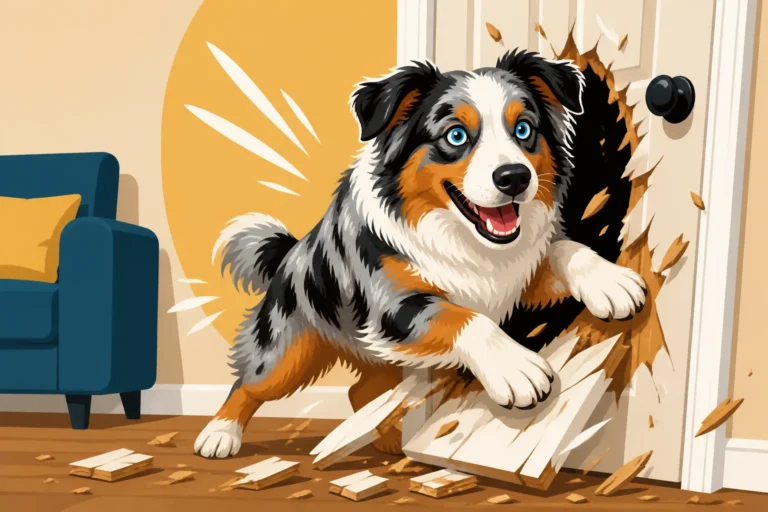
An Aussie Barking at Everything That Moves Outside
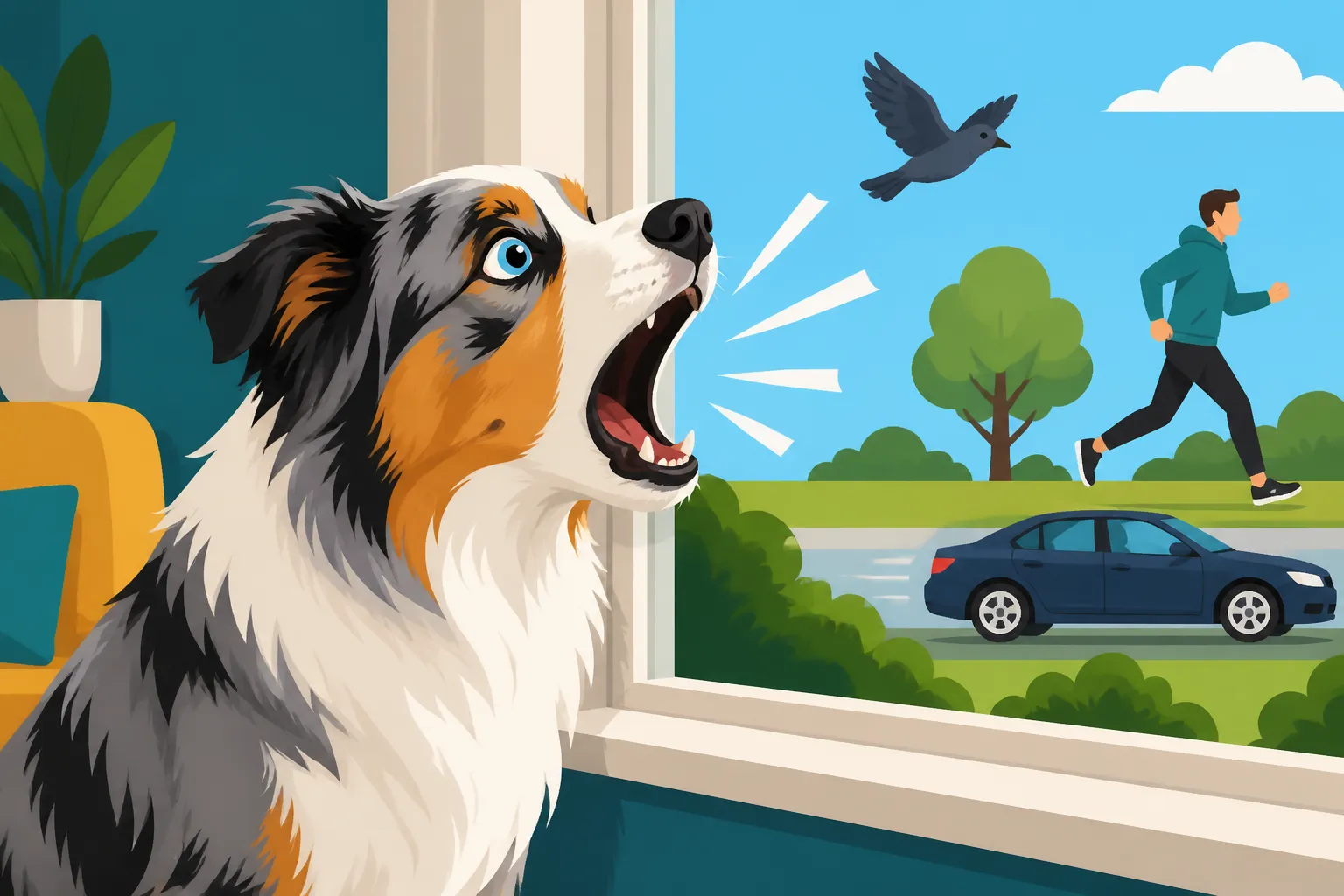
It's incredibly frustrating when your otherwise wonderful Australian Shepherd turns into a canine alarm system, barking incessantly at every leaf, squirrel, and passing car outside your window or yard. This constant noise can be embarrassing, stressful, and downright exhausting for everyone in the household. This guide will help you understand why your Aussie is so vigilant about outdoor movement and provide actionable strategies to manage and reduce this reactive barking, bringing a little more peace back to your home.
Understanding the Aussie's Alert System
Australian Shepherds were bred for a demanding job: herding livestock. This means they are inherently watchful, intelligent, and possess a strong instinct to monitor their environment and react to perceived changes. When they bark at things moving outside, they're not usually being "naughty"; they're often operating on deep-seated instincts.
The Herding Dog's Instinct to Observe and Control
Imagine your Aussie as a tiny, furry ranch foreman. On a ranch, a good foreman is constantly scanning the perimeter, noting every shifting shadow, every distant sound, and every creature that enters their territory. Their job is to keep things in order and alert the "boss" (you!) to anything out of place. This intense observational drive is hardwired into their DNA. When a person walks past, a bicycle whizzes by, or another dog trots down the street, your Aussie's brain often interprets it as something that needs to be "managed" or "announced." They see movement, and their instinct is to react, often by barking to warn it away or to alert you. This isn't just about aggression; it's often a deeply rooted drive to control their perceived space and everything within it. For a deeper dive into their core drives, you might find Why Herding Instinct Is the Aussie Operating System really insightful.
They aren't necessarily trying to be disruptive; they're trying to communicate. For many Aussies, that bark is their way of saying, "Hey! Something's out there! Are you seeing this? I'm on duty!" This behavior can escalate if they feel that their barking actually works, meaning the object eventually moves away (which it always does, coincidentally). This self-reinforcement can make it a really tough habit to break.
Overarousal and Sensory Overload
Beyond pure instinct, many Australian Shepherds are prone to overarousal. They get really wound up by external stimuli. Think about a child who gets too excited at a party – they might become loud, impulsive, and difficult to calm down. Aussies can experience something similar. Constant visual and auditory stimulation from outside – the mail carrier, the school bus, the neighbor's cat, the rustling leaves – can overwhelm their senses. This leads to a state of heightened excitement or anxiety, which often manifests as barking. It's not just about what they see; it's also about what they hear, smell, and even sense through vibrations.
This heightened state means their brain is working overtime, and they struggle to filter out irrelevant information. Every new stimulus is perceived as important, leading to a constant cycle of alert and bark. This can be particularly challenging for Aussies who live in busy environments, like urban areas or homes on main roads. They might be reactive to dogs on lead, skateboards, bicycles, or even just people walking their own dogs. If you've noticed your Aussie is particularly sensitive to sudden noises or movements, exploring Australian Shepherd Barking and Noise Sensitivity could provide additional context. This constant vigilance isn't just annoying; it can be incredibly stressful for your dog, too.
Practical Steps to Calm the Commotion
Managing outdoor barking requires a multi-faceted approach, combining environmental management, distraction, and training. It’s about setting your Aussie up for success and teaching them alternative, more appropriate behaviors.
Managing the Environment and Limiting Triggers
The first step in reducing reactive barking is to control what your Aussie sees and hears. If they can't see the triggers, they often won't bark at them. This isn't a long-term fix for the underlying reactivity, but it provides immediate relief and allows you to start working on training in a calmer environment.
Consider using window film or frosted glass on windows that offer a prime viewing spot for your dog. There are many affordable options available on Amazon that can be easily applied and removed. Simply blocking the lower half of the window can often be enough to disrupt their view of passing pedestrians or cars. Another strategy is to rearrange furniture so your Aussie doesn't have a direct line of sight to the street from their favorite napping spot. If your Aussie barks in the yard, supervise them closely and bring them inside the moment a trigger appears, before they even have a chance to start barking. This prevents the barking behavior from being practiced and reinforced. You might even consider a solid privacy fence in areas where visual triggers are constant, as a physical barrier can be more effective than a transparent one.
Teaching an Alternative to Barking
Once you've managed the immediate environment, you can start teaching your Aussie what you want them to do instead of barking. This is where positive reinforcement training comes in. The goal isn't to punish barking, which can actually increase anxiety, but to reward quiet observation or a different, incompatible behavior.
Start by identifying your Aussie's threshold – the distance or intensity at which they notice a trigger but don't yet react with barking. You want to work under this threshold. Have a high-value treat ready. When a trigger appears (e.g., a person walking by at a distance that your dog notices but stays calm), immediately mark the moment of quiet observation with a verbal cue like "Yes!" or a clicker, and give them a treat. Repeat this many times. The idea is to change their emotional response from "OMG, intruder!" to "Oh, a person! That means treats!" Over time, you can gradually decrease the distance to the trigger, always staying under that barking threshold.
Another effective technique is to teach a "look at me" or "settle" cue. When your Aussie notices something, instead of barking, you immediately ask them to look at you for a treat. This redirects their focus from the trigger to you. Consistency is key here. Every time you see them start to focus on an outdoor movement, preempt the bark by asking for the alternative behavior. A well-placed "Off switch" can be incredibly valuable for an Aussie, as discussed in Teaching an Australian Shepherd an Off Switch.
Enrichment and Training for a Quieter Life
While managing the environment helps, the long-term solution lies in addressing your Aussie's mental and physical needs. A bored, under-stimulated Aussie is far more likely to develop nuisance behaviors like excessive barking.
Providing Ample Mental and Physical Exercise
Australian Shepherds are incredibly intelligent and energetic dogs. Simply going for a walk around the block isn't enough to satisfy their needs. They require significant mental stimulation and structured physical exercise to be truly content and calm indoors. A tired Aussie is often a quiet Aussie. For a working breed like this, two hours of running might not tire them out if it's just repetitive physical exertion. They need mental work.
Incorporate activities that engage their minds, such as puzzle feeders (you can find many great options on Amazon), scent games, or trick training. Scent Games That Tire an Australian Shepherd offers some fantastic ideas. Instead of just throwing a ball, teach them to find it in tall grass. Enroll in a virtual training program like BAXTER & Bella, which offers comprehensive online courses that can guide you through various mental enrichment exercises and obedience training right from your living room. Consider exploring dog sports like agility, obedience, or even a local herding instinct test. These activities tap into their natural drives in a constructive way, giving them a "job" to do. Also, ensure their physical exercise is structured and varied. Hiking, swimming, or long sessions of fetch with a purpose (e.g., retrieving specific items) can be far more effective than aimless wandering. It’s also crucial to remember that How Much Daily Exercise an Australian Shepherd Needs isn't just about duration, but quality.
Building Positive Associations and Desensitization
The goal is to change your Aussie's perception of outdoor movements from a threat or exciting event to something neutral or even positive. This involves a systematic process of desensitization and counter-conditioning.
Start by exposing your Aussie to triggers at a very low intensity where they remain calm. This might mean sitting with them across the street from a park, or in your house with the blinds slightly open. As soon as a trigger appears (a person, a dog), reward your Aussie with high-value treats. The moment the trigger passes, the treats stop. This teaches them that the presence of the trigger predicts good things (treats), and the absence means the treats go away. The key is to keep the exposure brief and positive, never pushing them to the point of barking. Gradually, very, very slowly, you can decrease the distance or increase the duration of exposure. This process takes time and patience. It's not about making them ignore everything, but changing their emotional response. For an Aussie that reacts to skateboards or bikes, for instance, An Aussie That Reacts to Skateboards and Bikes offers tailored strategies.
Consistency and Long-Term Management
Successfully managing reactive barking in an Australian Shepherd is a marathon, not a sprint. It requires ongoing commitment and understanding that their ingrained instincts will always be there, just channeled differently.
Maintaining a Consistent Routine and Expectations
Dogs thrive on routine and clear expectations. A consistent daily schedule helps reduce anxiety and provides structure for your Aussie. This means regular feeding times, designated exercise slots, and predictable training sessions. When everyone in the household is on the same page with how to handle outdoor barking – using the same cues, rewards, and management techniques – your Aussie will learn faster. Inconsistent responses ("sometimes I get treats for being quiet, sometimes I get yelled at") will confuse your dog and hinder progress.
It’s also important to understand that there will be setbacks. A particularly exciting squirrel or a loud delivery truck might still elicit a bark. Don't get discouraged. Simply redirect, go back to basics, and continue practicing. Think of it like managing a chronic condition; you don't cure it, but you learn to manage it effectively. If you're finding it hard to get consistent advice, consider consulting a certified professional dog trainer who has experience with herding breeds. Vetting a trainer is crucial, as mentioned in Vetting a Trainer Before Booking an Aussie.
When to Seek Professional Guidance
While many barking issues can be managed with consistent effort at home, some cases require professional intervention. If your Aussie's barking is accompanied by signs of extreme fear, aggression (growling, lunging, snapping), or if it's causing significant distress to your dog or disruption to your life, it's time to call in the cavalry.
A certified professional dog trainer or a veterinary behaviorist can assess your Aussie's specific situation, identify underlying causes (like anxiety or fear), and develop a tailored training plan. They can help you implement techniques like counter-conditioning more effectively, suggest medication if anxiety is severe, and provide hands-on guidance. Sometimes, the barking isn't just a habit but a symptom of a deeper behavioral issue. Don't hesitate to seek help if you're feeling overwhelmed or not seeing progress. Organizations like the Certification Council for Professional Dog Trainers (CCPDT) or the American College of Veterinary Behaviorists (ACVB) can help you find qualified professionals in your area.
| Management Strategy | Description | Best For | Considerations |
|---|---|---|---|
| Window Film/Blinds | Physically blocks your Aussie's view of outside triggers. | Visual triggers (people, cars, other dogs). | Doesn't address sound or underlying reactivity; can make dogs more sensitive when view is available. |
| Sound Machines | Creates white noise or calming sounds to mask outdoor noises. | Auditory triggers (neighbors, distant sounds). | Doesn't address visual triggers; some dogs may still react to very loud or close sounds. |
| "Look At Me" Cue | Teaches your dog to redirect focus to you when a trigger appears. | Early intervention, mild to moderate reactivity. | Requires high-value treats and consistent practice; needs a calm environment to start. |
| High-Value Treats | Used to create positive associations with triggers or reward calm behavior. | Any training situation, especially counter-conditioning. | Must be truly motivating for your dog; avoid using if your dog is too overaroused to take food. |
| Enrichment Toys | Puzzle feeders, durable chew toys, snuffle mats to keep mind busy. | Boredom barking, general mental stimulation. | Not a direct fix for reactive barking but reduces overall frustration. |
| Designated "Safe Space" | A crate or room where your Aussie can't see or hear triggers. | Overwhelmed dogs, temporary relief during peak trigger times. | Should be a positive place; not a punishment. |
Disclaimer
This article is for general informational purposes only and does not constitute professional advice. Laws, prices and regulations vary by location and change over time. Consult a qualified professional for guidance on your specific situation.