An Aussie That Reacts to Skateboards and Bikes
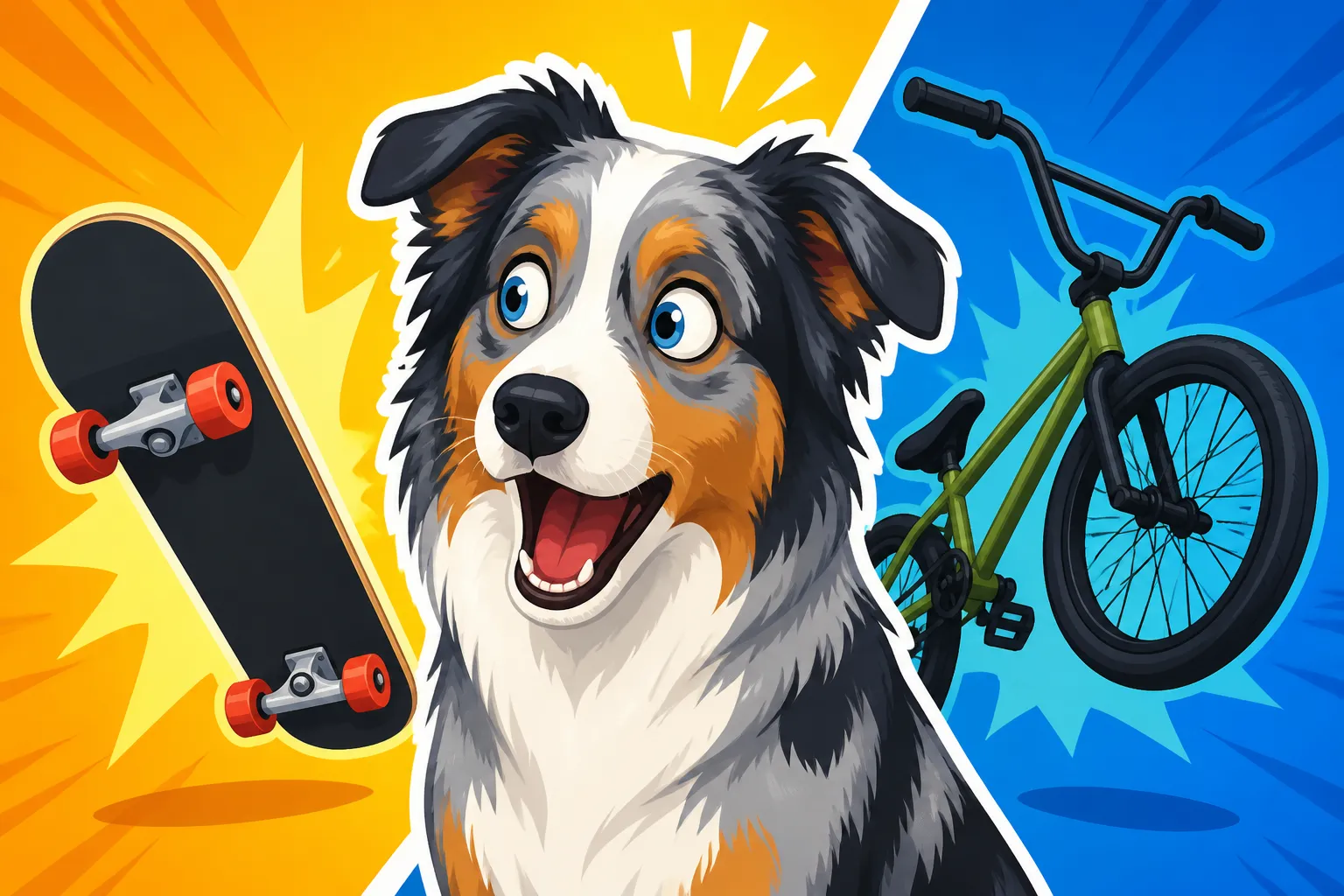
There’s nothing quite like the sudden lurch, the frantic barking, or the dramatic dart forward when your Australian Shepherd spots a skateboarder whizzing by or a cyclist approaching. It’s a common, incredibly frustrating scenario that leaves many Aussie owners feeling embarrassed, exhausted, and frankly, a bit helpless. You’re trying to enjoy a walk, and suddenly, your calm companion transforms into a reactive whirlwind. This guide is all about diving deep into why your Australian Shepherd might be reacting this way to fast-moving objects like skateboards and bikes, and more importantly, what practical strategies and training techniques you can employ to bring back peace to your outings.
Understanding the Aussie Drive Behind the Reaction
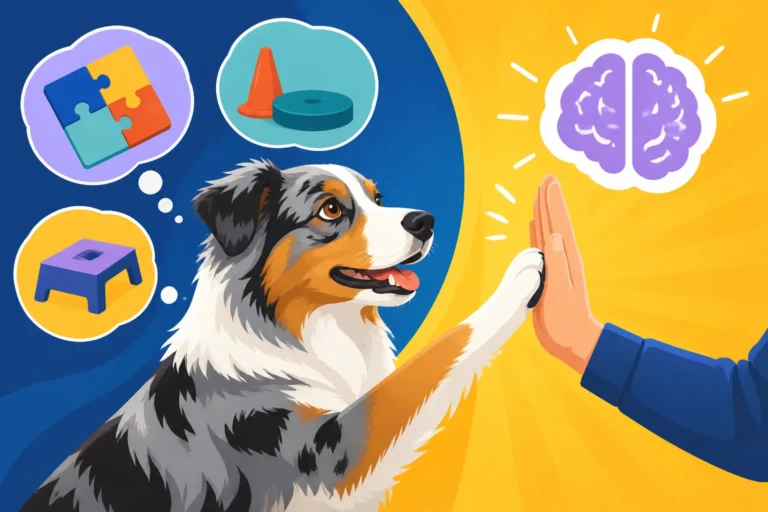
Let's be real, Australian Shepherds are bred to work. They're intelligent, high-energy dogs with a deeply ingrained herding instinct. This isn't just a cute quirk; it's a fundamental part of their operating system. When a skateboarder or cyclist zips past, it's not just a person on wheels to your Aussie; it's often perceived as a 'fleeing flock' or a 'moving object that needs to be controlled.' This instinct, combined with their sharp minds and often intense focus, can easily lead to reactivity.
The Herding Instinct and Moving Objects
Your Aussie's ancestors spent generations guiding sheep, cattle, and other livestock. Their job was to gather, turn, and direct animals using a combination of stare, bark, and strategic movement. Fast-moving objects—be they sheep breaking from the flock, or in our modern world, a bike—trigger this deeply rooted pattern. It’s not aggression in the typical sense; it's often an attempt to "stop" or "control" the movement. They might nip at heels, bark intensely, or try to cut off the path, all behaviors that would be highly effective on a flock of sheep but are absolutely unwelcome and potentially dangerous on a city sidewalk. You might find yourself thinking, "Why won't they just ignore it?" But to your dog, it's like asking a fish not to swim. It's that primal. This is why it's crucial to understand The Australian Shepherd Herding Drive You Cannot Train Out.
Overarousal and Frustration
Beyond pure herding instinct, many Australian Shepherds experience a profound sense of overarousal and frustration when faced with these triggers. Imagine you have an intense desire to do something, but you're constantly restrained. That's often what your leashed Aussie feels. The adrenaline surges, the brain goes into overdrive, and they become highly reactive to every sensory input. This can manifest as barking, lunging, whining, or even spinning on the leash. It’s not always malicious; sometimes it’s just overwhelming excitement and a desperate need to engage with the moving object, coupled with the frustration of being unable to act on that strong impulse. The cumulative effect of these repeated overarousal events can also make your dog generally more anxious and prone to reacting to other stimuli. Over time, it can contribute to a broader pattern of Australian Shepherd Reactivity and Overarousal.
Identifying Triggers and Body Language Cues
Before you can effectively manage and train, you need to become a detective of your dog's behavior. What exactly sets them off? And what do those subtle (or not-so-subtle) signs tell you before the full reaction erupts? Recognizing these patterns is key to intervention.
Specific Triggers: Skateboards, Bikes, and Beyond
While skateboards and bikes are common culprits, it's worth examining if there are more nuanced triggers for your Aussie. Is it the sound of the wheels, the speed of the object, the direction it's moving, or even the type of person riding it? For instance, some Aussies might react more intensely to a child on a scooter than an adult on a road bike. Some might only react if the object is moving directly towards them, while others are triggered by anything in their peripheral vision. Keep a mental log or a physical journal. Note the time of day, the environment (busy street vs. quiet park path), the type of object, and your dog's immediate response. This granular understanding will help you predict and prepare.
Early Warning Signs in Your Aussie's Body Language
A reactive outburst doesn't just happen out of nowhere. There are almost always subtle cues that precede it, if you know what to look for. Your Australian Shepherd might:
- Stiffen their body: A sudden tension, perhaps a slight lean forward.
- Fixate with their eyes: A hard stare, unblinking, locked onto the approaching object.
- Ears forward and alert: Pivoting to catch every sound.
- Tail raises or wags stiffly: Not a happy, loose wag, but a tight, high flag.
- Mouth closes tightly: No more panting or loose jaw.
- Subtle growl or huff: A low, almost imperceptible sound before the full bark.
Learning to read these early signals is your superpower. It gives you precious seconds to intervene before your dog goes "over threshold" and loses the ability to respond to you. For example, if you see that hard stare, that’s your cue to create distance or redirect.
Proactive Management Strategies
When dealing with a highly reactive Australian Shepherd, management isn't just a temporary fix; it's a vital, ongoing strategy that creates safety and reduces rehearsal of the unwanted behavior. Every time your dog practices lunging and barking, it reinforces that behavior. Good management prevents this.
Creating Distance and Avoiding Triggers
The simplest and most effective management technique is avoiding the situation altogether, especially in the early stages of training. If you know a particular street is a hotspot for skateboarders, change your walking route. If a park trail is popular with cyclists at 5 PM, go at 7 AM. When you can't avoid a trigger, create as much distance as possible. Cross the street, duck behind a parked car, or step onto a lawn. The goal is to keep your Aussie "under threshold" – at a distance where they notice the trigger but don't react explosively. This allows their brain to stay calm enough to learn.
Practical Tips for Distance Management:
- Scout your routes: Before you walk, observe busy areas at different times.
- Use visual barriers: Parked cars, bushes, or even a large lamppost can provide a visual block if you need a moment.
- Turn and walk away: If a trigger appears suddenly, don't hesitate to do an abrupt U-turn and walk in the opposite direction. Your dog will follow, and you've avoided the meltdown.
- Reflect on your gear: A comfortable, secure harness (like a front-clip harness) can offer more control than a flat collar, especially if your Aussie is a strong puller. You can find a good selection of these on Amazon, often with different options for a strong, deep-chested dog like an Aussie.
Equipment for Safety and Control
Having the right tools can make a significant difference in managing a reactive Aussie.
- Long Line: While counterintuitive for reactivity, a long line (10-30 feet) can be invaluable for practicing recall in a safe, open area away from major triggers. This allows your Aussie some freedom to move and explore while you maintain control, without the tension of a short leash that can escalate arousal. However, it's not for areas with sudden bike/skateboard traffic.
- Front-Clip Harness: As mentioned, this type of harness discourages pulling by redirecting your dog's momentum back towards you. Brands like Easy Walk or Freedom Harness are popular choices. This is different from a back-clip harness which can sometimes encourage pulling.
- Muzzle: For some reactive dogs, a muzzle isn't about aggression, but about safety and peace of mind. A well-fitted basket muzzle (like those from Baskerville or Leerburg) allows your dog to pant, drink, and take treats, while preventing any potential nips or bites if they do get too close to a trigger. It's a management tool that can reduce your stress, which in turn helps your dog. If you decide to go this route, take the time to properly Muzzle Training an Australian Shepherd so it's a positive experience for them.
- High-Value Treats: These are absolutely essential. Forget dry kibble; you need something irresistible: boiled chicken, cheese, hot dogs, or liverwurst. These treats are your currency for changing your dog's emotional response. Carry plenty, and make them easily accessible in a treat pouch.
Training Techniques to Shift Your Aussie's Mindset
Management buys you time and prevents rehearsals of unwanted behaviors. Training, however, is what fundamentally changes your Aussie's emotional response and equips them with alternative, more appropriate behaviors.
Counter-Conditioning and Desensitization
These are the bedrock of reactivity training. The goal is to change your dog's negative association with skateboards and bikes into a positive one.
- Find the Threshold: Start at a distance where your Aussie notices the trigger (skateboard, bike) but doesn't react. They might look at it, but they're not lunging, barking, or pulling. This is their "under threshold" zone.
- Observe and Treat: The instant your Aussie spots a skateboard or bike at that safe distance, start feeding them a stream of those high-value treats. Keep feeding until the trigger is gone. The moment the trigger disappears, stop feeding. The association you're building is: "Skateboard/bike appears = delicious treats happen!"
- Gradual Exposure: Over many sessions (days, weeks, or even months), very gradually decrease the distance to the trigger, or increase the intensity (e.g., a faster-moving bike), always staying at or below your dog's threshold. If your dog starts reacting, you've gone too fast; increase the distance again. This slow, methodical approach is crucial. You're literally re-wiring their brain's emotional response. This is a key part of Working a Reactive Aussie Under Threshold.
Teaching an Emergency Recall
A solid emergency recall is paramount for any Australian Shepherd, especially one prone to chasing. While counter-conditioning addresses the emotional response, an emergency recall provides a safety net if a trigger appears unexpectedly close.
- Choose a Unique Word: Pick a word or sound you only use for emergencies, like "COME!" or a specific whistle.
- Practice in Low-Distraction Environments: Start indoors, or in your fenced yard. Say your emergency recall word, and immediately reward your dog with the most incredible, high-value treat you have, followed by enthusiastic praise. Repeat, repeat, repeat.
- Increase Distractions Gradually: Once your dog reliably bolts to you for the reward in low-distraction settings, slowly introduce more distractions. This might be in a quiet park, then a slightly busier park, always ensuring success. Never practice this when you expect a bike or skateboard to appear; it's for building the foundation.
- Never Punish: If your dog doesn't come, don't punish them. It will only make them less likely to come next time. Just go get them, and make a note to decrease the distraction level next session. Building a reliable Australian Shepherd Recall Around Moving Things takes time and consistency.
Impulse Control and "Leave It"
Teaching strong impulse control commands can give your Aussie an alternative behavior to reacting.
- "Leave It": This teaches your dog to disengage from a tempting item. Start with low-value items on the floor, rewarding them for looking away. Gradually increase the value of the item and the duration they "leave it" alone. Eventually, you can generalize this to moving objects in the environment. The cue "leave it" means, "Don't engage with that, turn your attention to me, and you'll get something better."
- "Watch Me" / Eye Contact: This command teaches your Aussie to make eye contact with you on cue, shifting their focus away from the environment. Practice this often in various settings. When you see a trigger approaching, cue "Watch Me" and reward heavily for sustained eye contact.
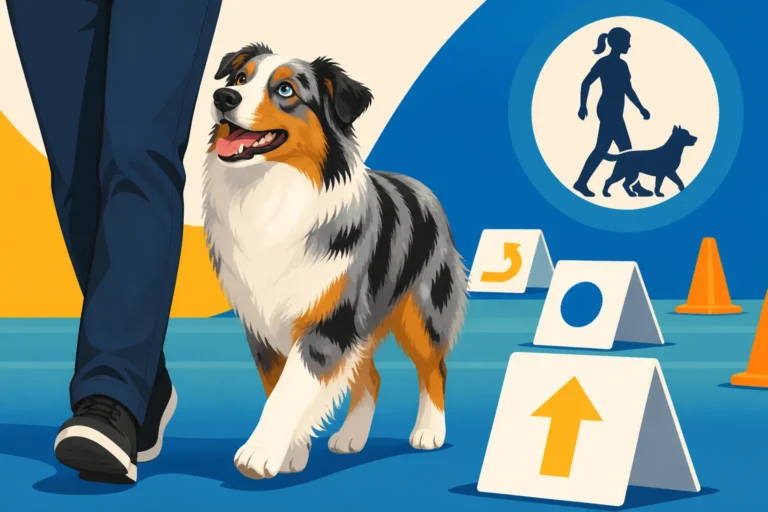
Many online training platforms, such as BAXTER & Bella, offer comprehensive courses that break down these concepts into easy-to-follow steps, often with video demonstrations that can be incredibly helpful for visual learners. They can guide you through the nuances of impulse control and polite leash manners, which are critical for an Aussie that likes to chase.
When to Seek Professional Guidance
Sometimes, despite your best efforts, your Aussie's reactivity feels overwhelming, or it simply isn't improving. That's not a sign of failure on your part; it's a sign that you might need a different kind of support.
Recognizing the Limits of Self-Training
While online resources and self-study are fantastic starting points, there are times when a dog's reactivity is so ingrained, fear-based, or intense that professional intervention becomes necessary. If your dog is consistently lunging, barking, snapping, or showing signs of extreme stress, or if you feel unsafe during walks, it’s time to call in the experts. Don't let the situation escalate to a point where you dread every outing. It's okay to ask for help.
Finding a Qualified Professional Trainer or Behaviorist
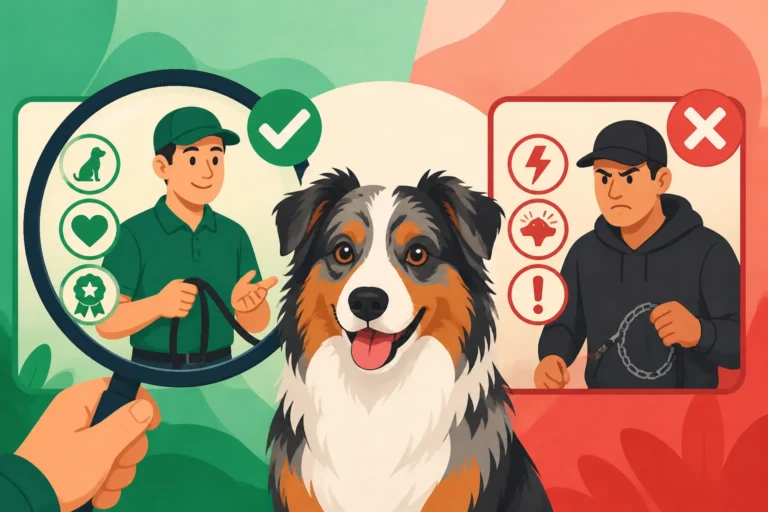
Not all trainers are created equal, especially when it comes to reactivity. Look for professionals who specialize in positive reinforcement and force-free methods. Avoid anyone who suggests harsh corrections, intimidation, or dominance theories, as these methods can exacerbate fear and aggression in a reactive dog.
- Certified Professional Dog Trainers (CPDT-KA): These individuals have demonstrated a certain level of knowledge and experience.
- Certified Dog Behavior Consultants (CDBC) or Veterinary Behaviorists (DACVB): For more severe cases of reactivity, a behavior consultant or veterinary behaviorist may be needed. Veterinary behaviorists are veterinarians with advanced training in animal behavior, who can also prescribe medication if deemed necessary.
When interviewing potential trainers, ask about their experience with Australian Shepherds and reactivity, their training philosophy, and their approach to working with clients and their dogs. A good trainer will teach you how to work with your dog and empower you with the skills to continue training effectively. They can help you implement strategies for An Australian Shepherd That Barks at Everything That Moves Outside and provide tailored advice for your specific dog.
The Role of Medication in Severe Cases
For some Australian Shepherds, reactivity is deeply rooted in anxiety, fear, or an inability to self-regulate their emotions. In these cases, behavioral modification alone might not be enough. A veterinary behaviorist, or even your general practice vet, might discuss the possibility of anti-anxiety medication. Medications are not a "cure-all" but can lower your dog's overall anxiety levels, helping them be calmer and more receptive to training. Think of it as turning down the static on a radio so your dog can actually hear and process your training cues. This is always a decision made in consultation with a qualified veterinarian.
The journey to managing an Aussie that reacts to skateboards and bikes is a marathon, not a sprint. It requires patience, consistency, and a deep understanding of your dog's breed-specific traits. But with the right strategies, management tools, and training techniques, you can transform those stressful encounters into manageable moments, building a stronger, more trusting relationship with your beloved Australian Shepherd.
Comparing Management vs. Training Approaches
It's helpful to see how management and training strategies complement each other. Management is about preventing undesirable behaviors in the moment, while training is about changing the underlying emotional response and teaching new behaviors for the long term.
| Aspect | Management Strategies | Training Techniques |
|---|---|---|
| Primary Goal | Prevent undesired behavior; ensure safety | Change emotional response; teach alternative behaviors |
| When to Use | Always, especially in early stages or high-risk situations | Continuously, in controlled environments |
| Examples | Changing walking routes; crossing the street; using a front-clip harness or muzzle; maintaining distance | Counter-conditioning (treats when trigger appears); emergency recall; "Leave It"; "Watch Me" |
| Impact | Reduces rehearsal of reactive behavior; lowers stress for both dog and owner | Builds new positive associations; improves impulse control; strengthens handler-dog bond |
| Duration | Ongoing for life | Ongoing for life, with intense periods in early stages |
Disclaimer
This article is for general informational purposes only and does not constitute professional advice. Laws, prices and regulations vary by location and change over time. Consult a qualified professional for guidance on your specific situation.