Vetting a Trainer Before Booking an Aussie
Bringing an Australian Shepherd into your life is an incredible joy, but it's also a commitment to managing a highly intelligent, intensely driven working dog. One of the biggest hurdles many Aussie owners face is finding the right support when it comes to training, especially when typical "dog trainer" advice just doesn't seem to click with their unique companion. This guide will walk you through the essential steps and crucial questions to ask when vetting a trainer, ensuring you find someone who truly understands the Aussie temperament and can help you build a strong, effective partnership.
Understanding the Unique Australian Shepherd Temperament
Before you even start looking for a trainer, it's vital to have a solid grasp of what makes Australian Shepherds, well, Aussies. They aren't just any dog, and a trainer who doesn't appreciate their specific wiring might do more harm than good, or simply be ineffective. You need someone who speaks "Aussie."
The Core of Their Herding Drive
At the heart of every Australian Shepherd lies a deep, unwavering herding instinct. This isn't just a quaint breed trait; it's their operating system. They were bred for centuries to gather and move livestock, often without direct human supervision, which means they are incredibly intelligent, independent problem-solvers. This drive manifests in various ways in a family home, from attempting to "organize" children, other pets, or even inanimate objects, to nipping at heels or circling people. Many first-time Aussie owners are completely caught off guard by the sheer intensity of this drive, thinking it's something they can simply train out.
A trainer who doesn't understand this fundamental aspect might try to suppress these natural behaviors without offering appropriate outlets, leading to frustration, anxiety, and even more pronounced behavioral issues. Imagine trying to train a retriever not to retrieve; it goes against their very nature. Similarly, expecting an Aussie to be a calm, quiet couch potato without adequate mental and physical engagement is a recipe for disaster. This isn't naughtiness; it's instinct. It’s important to remember The Australian Shepherd Herding Drive You Cannot Train Out, but you can redirect it.
Beyond Basic Obedience: Mental Stimulation Needs
While a solid foundation in basic obedience (sit, stay, come) is always important for any dog, for an Australian Shepherd, it's merely the starting point. Their keen intelligence demands constant mental engagement, and if they don't get it from you, they will find their own "jobs" – which often translates into undesirable behaviors like excessive barking, chewing, or becoming destructive. Many traditional obedience classes focus heavily on repetitive commands, which can quickly bore an Australian Shepherd, causing them to disengage or act out.
A truly effective trainer for an Aussie knows that mental stimulation is just as, if not more, important than physical exercise. This means incorporating puzzle-solving, trick training, scent work, or even introducing them to appropriate dog sports. A trainer who simply tells you to "walk your dog more" is missing the point entirely. You need someone who can help you channel that formidable brainpower productively, otherwise you'll find yourself living with a dog that cannot switch off and is always seeking its next project, often to your detriment. This comprehensive approach ensures that the dog's intrinsic drive is satisfied in a constructive manner, leading to a much happier, calmer companion. For more on this, check out Mental Work That Actually Tires an Australian Shepherd.
What to Look For in an Australian Shepherd Trainer
Now that you understand the unique needs of your Australian Shepherd, let's talk about how to find a trainer who truly meets those needs. This isn't just about finding a dog trainer; it's about finding the right dog trainer for your Aussie.
Experience with Herding Breeds
This is non-negotiable. A trainer might be fantastic with Labradors or Poodles, but that doesn't automatically qualify them to work with an Australian Shepherd. Herding breeds present a different set of challenges and require a nuanced approach. They can be incredibly sensitive, highly intelligent, and prone to overthinking, which means heavy-handed or purely mechanical training methods can backfire spectacularly, leading to a shut-down dog or one that develops fear-based aggression.
When you're interviewing prospective trainers, ask them directly: "What is your specific experience with Australian Shepherds or other high-drive herding breeds like Border Collies or Cattle Dogs?" Don't settle for vague answers like "I've trained all kinds of dogs." Ask for examples of how they've addressed common Aussie behaviors like heel-nipping, circling, or intense reactivity to movement. A good trainer will be able to articulate their understanding of the breed's instinctual drives and how they integrate that into their training plans, rather than trying to suppress it entirely.
Training Philosophies and Methods
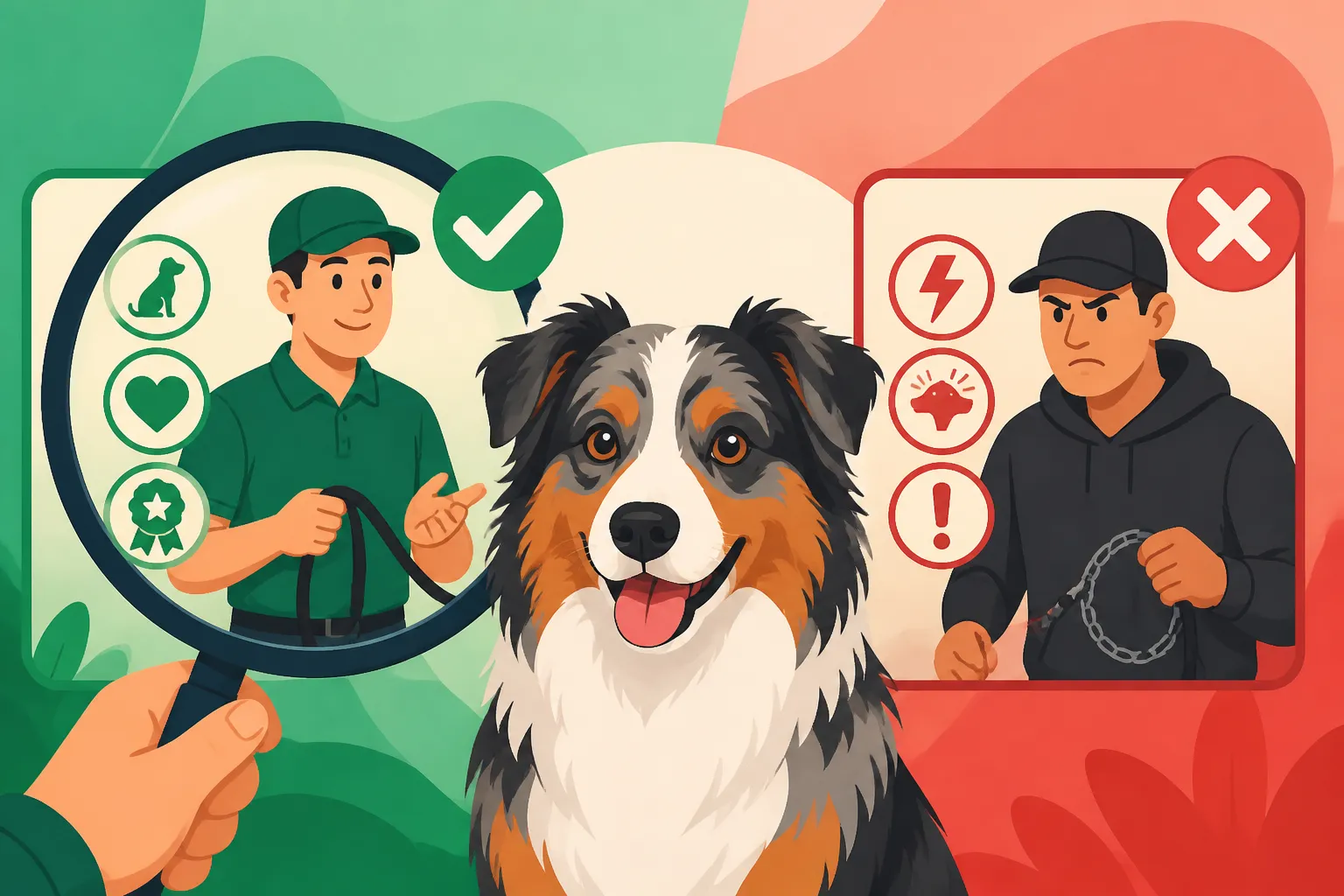
The world of dog training has many different philosophies, and it's crucial to understand a trainer's approach before committing. Generally, methods fall into a spectrum from purely positive reinforcement to balanced training (which incorporates both rewards and corrections) to more traditional, aversive-based training. For a sensitive and intelligent breed like the Australian Shepherd, purely aversive methods (like harsh leash corrections, shock collars, or intimidation) are generally counterproductive and can damage your dog's trust, leading to fear, anxiety, and potentially aggression.
Look for trainers who primarily use positive reinforcement, focusing on rewarding desired behaviors and managing the environment to prevent unwanted ones. If a trainer advocates for "balanced" methods, ask them to clearly define what "corrections" they use, when, and why. Ensure their methods are transparent, humane, and rooted in an understanding of canine behavior and learning theory. Be wary of anyone who promises quick fixes or insists on methods that make you feel uncomfortable or seem too harsh. Your Aussie needs a trainer who builds confidence and a desire to work with you, not fear or compliance through force. This often means they understand how to work with an Aussie's intelligence, rather than against it.
Transparency and Communication
A good trainer should be an open book. They should be willing to discuss their methods, explain the reasoning behind their techniques, and keep you informed about your dog's progress. Be wary of trainers who are secretive about their methods, won't let you observe sessions, or give vague answers to your questions. Training is a partnership between you, your dog, and the trainer, and clear, open communication is essential for success.
They should be able to break down complex concepts into understandable terms, empower you with the skills you need to continue training at home, and be responsive to your concerns. If you feel dismissed or confused, that's a red flag. A truly dedicated professional will want you to understand the process and be an active participant in your dog's learning journey.
Practical Steps to Vetting a Trainer
Okay, you know what you're looking for conceptually. Now, let's get down to the practical steps of finding and evaluating potential trainers for your Australian Shepherd. This is an investment in your dog's future, so take your time!
Initial Research and Referrals
Start your search by casting a wide net. Ask for recommendations from trusted sources such as your veterinarian, local Australian Shepherd breed clubs, reputable breeders, or even other experienced Aussie owners you know. These groups often have firsthand experience with trainers who truly excel with the breed. Online searches can also yield results, but always cross-reference information and look for reviews on multiple platforms.
Once you have a list of potential candidates, don't hesitate to ask them for client references. A professional trainer will be happy to provide contact information for past clients who can share their experiences. When you speak to references, ask specific questions:
- Did their dog have similar issues to yours (e.g., intense herding drive, reactivity)?
- How long did it take to see results?
- Did the trainer explain things clearly?
- Did they feel supported throughout the process?
- Would they use the trainer again?
Remember, a trainer's reputation is built on results and client satisfaction, especially with a breed as particular as the Australian Shepherd. It can be hard to find someone who gets it, but knowing Finding a Trainer Who Understands an Aussie is the first step.
The Interview Process: Questions to Ask
Once you've narrowed down your list, schedule initial phone calls or consultations. Treat this like a job interview, because you're hiring someone to educate both you and your dog. Here are some critical questions to ask:
- "What is your philosophy on dog training, and what methods do you primarily use?" Listen for keywords like positive reinforcement, force-free, science-based, and management. If they talk about "dominance" or "alpha," it's generally a sign of outdated methods.
- "How much experience do you have specifically with Australian Shepherds or similar herding breeds?" Ask for concrete examples of how they've worked with the specific challenges Aussies present.
- "How do you handle common Aussie behaviors like nipping, circling, or intense focus on movement?" Their answer should involve redirection, providing appropriate outlets, and rewarding alternatives, not just suppression.
- "What are your credentials and certifications (e.g., CPDT-KA, KPA-CTP, CCPDT, etc.)? Do you engage in continuing education?" Certifications indicate a commitment to professional standards and ongoing learning.
- "Can I observe a training session before committing?" A reputable trainer should welcome observation, as it allows you to see their methods in action and how dogs respond.
- "What tools do you use (e.g., clickers, harnesses, flat collars, long lines, muzzles)? Are there any tools you don't use?" This can give you insight into their approach. For instance, a trainer who doesn't use tools like slip leads or prong collars might be more aligned with force-free methods.
- "How do you ensure owner involvement and continuity of training at home?" A good trainer will teach you how to work with your dog, not just train your dog for you.
- "What happens if my dog isn't responding to the training?" They should have alternative strategies and be willing to adjust their plan.
- "Can you provide references from other Australian Shepherd owners?" (As mentioned above, but reiterate it during the interview).
Don't be afraid to take notes and compare answers. Your comfort level and the trainer's answers should instill confidence.
Observing a Session and Trusting Your Gut
After your interviews, if a trainer allows it, go and observe a session. This is arguably the most crucial step. What you see will tell you far more than what you hear. Pay close attention to:
- The trainer's interaction style: Are they calm, patient, and clear? Do they seem to enjoy working with the dogs and owners? Do the dogs seem happy and engaged, or stressed and shut down?
- The environment: Is it clean, safe, and relatively calm? For group classes, is the class size manageable?
- The dogs: Do they look comfortable and willing to work? Are they responding positively to the trainer's cues?
- The owners: Do they seem confident and understand what they're doing? Are they asking questions and getting clear answers?
Crucially, trust your gut feeling. If something feels off, if the dogs seem fearful, or if the methods just don't sit right with you, then that trainer is probably not the right fit for you and your Australian Shepherd. Aussies are incredibly perceptive, and they will pick up on tension or fear, so a calm, confident, and positive environment is key for their learning. Seeing An Aussie's First Agility Class or a similar activity can give you a great sense of a trainer's style and how they engage dogs.
Different Training Options and Their Suitability for Aussies
Once you've vetted potential trainers, you'll need to decide which training format best suits your Australian Shepherd's needs and your lifestyle. Each option has its own pros and cons, particularly for a high-drive breed.
Group Classes vs. Private Training
Group Classes: These are fantastic for socialization in a structured environment and for practicing obedience around distractions. For an Aussie, a well-run group class can be invaluable for teaching them to focus on you amidst other dogs and people, helping to manage their natural tendency to herd or react to movement. They also tend to be more affordable.
- Pros for Aussies: Excellent for controlled socialization, practicing focus around distractions, learning basic manners, and often fostering a sense of community with other dog owners. This is especially good for puppies learning The Aussie Puppy Curriculum Month by Month.
- Cons for Aussies: If your Aussie is easily overstimulated, highly reactive, or has significant behavioral issues (like intense fear or aggression), a group setting might be too much initially. The trainer's attention is also divided among several dogs.
Private Training: One-on-one sessions with a trainer offer personalized attention and a tailored curriculum to address your Aussie's specific needs and your unique goals. This is often the best choice for addressing complex behavioral problems, reactivity, or for owners who want to delve into specific sports or advanced skills.
- Pros for Aussies: Highly individualized approach, can work on specific issues (like managing intense herding impulses indoors), flexible scheduling, and the trainer can focus entirely on you and your dog.
- Cons for Aussies: Generally more expensive than group classes. It also doesn't provide the same level of distraction for practicing focus as a group setting, so you'll need to create those scenarios elsewhere.
The choice between Group Class Against Private Aussie Training often depends on your dog's current behavior and your budget. Many owners choose a combination, starting with private lessons to address specific challenges and then moving to group classes for socialization and advanced skills.
Board and Train Programs
Board and train programs involve sending your dog to live with a trainer for an extended period, typically a few weeks, for intensive training. While this sounds appealing for busy owners, it's often the most controversial option, especially for a sensitive breed like an Australian Shepherd.
- Pros (if done correctly): Can provide a consistent, immersive training experience, potentially yielding faster results for basic obedience.
- Cons for Aussies: The biggest concern is transparency regarding methods used when you're not present. Aussies bond deeply with their owners, and being separated for weeks, especially if force-based methods are used, can be traumatic and damaging to their trust. Results may also not generalize back to your home environment if you haven't been adequately trained to maintain the behaviors. It's crucial to understand Board and Train and Whether an Aussie Needs It.
If you are considering a board and train, exercise extreme caution. Demand complete transparency:
- Ask for daily video updates.
- Inquire about their specific methods for your dog.
- Ensure there's a comprehensive "go home" session where you are thoroughly taught how to maintain the training.
- Check that the program emphasizes positive reinforcement and humane methods.
For an Australian Shepherd, a program that focuses on building confidence and partnership with their primary handler is far more beneficial than one that simply gets "results" through suppression or intimidation.
Online Resources and Self-Paced Programs
In our modern world, online training resources have exploded, offering a flexible and often affordable alternative or supplement to in-person training. These can include video courses, webinars, and virtual coaching.
- Pros for Aussies: Extremely flexible, allowing you to work at your own pace from home. Great for learning new tricks, foundational obedience, or specific concepts. It can be particularly useful if you live in an area with limited access to Aussie-specific trainers. Online platforms like BAXTER & Bella provide comprehensive puppy and dog training programs that you can follow from your living room, which can be a fantastic start for a new Australian Shepherd puppy or for reinforcing behaviors in an adult. You can also find a plethora of excellent books on Australian Shepherd training and behavior on Amazon.
- Cons for Aussies: Lacks direct, real-time feedback from a trainer. It requires a high degree of self-motivation and the ability to accurately interpret your dog's body language and responses. It cannot fully replace in-person socialization experiences that group classes offer.
Online resources are an excellent tool for committed owners, especially those who enjoy a self-directed learning approach. They empower you to be your dog's primary trainer, which is always the goal.
Training Options for Your Australian Shepherd
| Training Type | Description | Aussie Suitability (Pros) | Aussie Suitability (Cons) | Key Considerations |
|---|---|---|---|---|
| Group Classes | Small groups of dogs and owners learning together in a shared space. | Excellent for structured socialization, practicing focus with distractions, basic obedience. | May be overstimulating for highly reactive/fearful Aussies, less individualized attention. | Ensure small class sizes, positive reinforcement methods, and a trainer experienced with managing diverse dog personalities and herding breed traits. |
| Private Training | One-on-one sessions with a trainer at your home or a dedicated facility. | Tailored to specific behavioral issues (e.g., reactivity, intense herding), flexible, focused. | More expensive, doesn't inherently provide distraction management or socialization opportunities. | Ideal for complex issues or specific skill development. You'll need to create distraction scenarios for generalization of learned behaviors. |
| Board & Train | Dog lives with a trainer for an intensive training period (weeks). | Consistent training environment, potentially faster results for basic obedience. | High risk of unknown/aversive methods, potential for damaging owner-dog bond, results may not generalize well. | Requires extreme vetting. Demand daily video updates, clear communication, transparent methods, and comprehensive "go-home" training for the owner. Generally not recommended for sensitive Aussies unless absolutely necessary and thoroughly vetted. |
| Online Programs / Virtual Coaching | Self-paced video courses, webinars, or live virtual sessions. | Flexible, affordable, accessible from anywhere, empowering owner as the primary trainer. | Lacks real-time physical feedback, requires strong self-discipline, limited for complex physical behaviors. | Great for foundational skills, trick training, problem-solving, and supplementing in-person training. Excellent for those with limited local options, like platforms such as BAXTER & Bella. |
Ultimately, finding the right trainer for your Australian Shepherd means doing your homework, asking tough questions, and trusting your instincts. This dedication will pay dividends in a well-adjusted, happy Aussie who thrives as part of your family.
Disclaimer
This article is for general informational purposes only and does not constitute professional advice. Laws, prices and regulations vary by location and change over time. Consult a qualified professional for guidance on your specific situation.