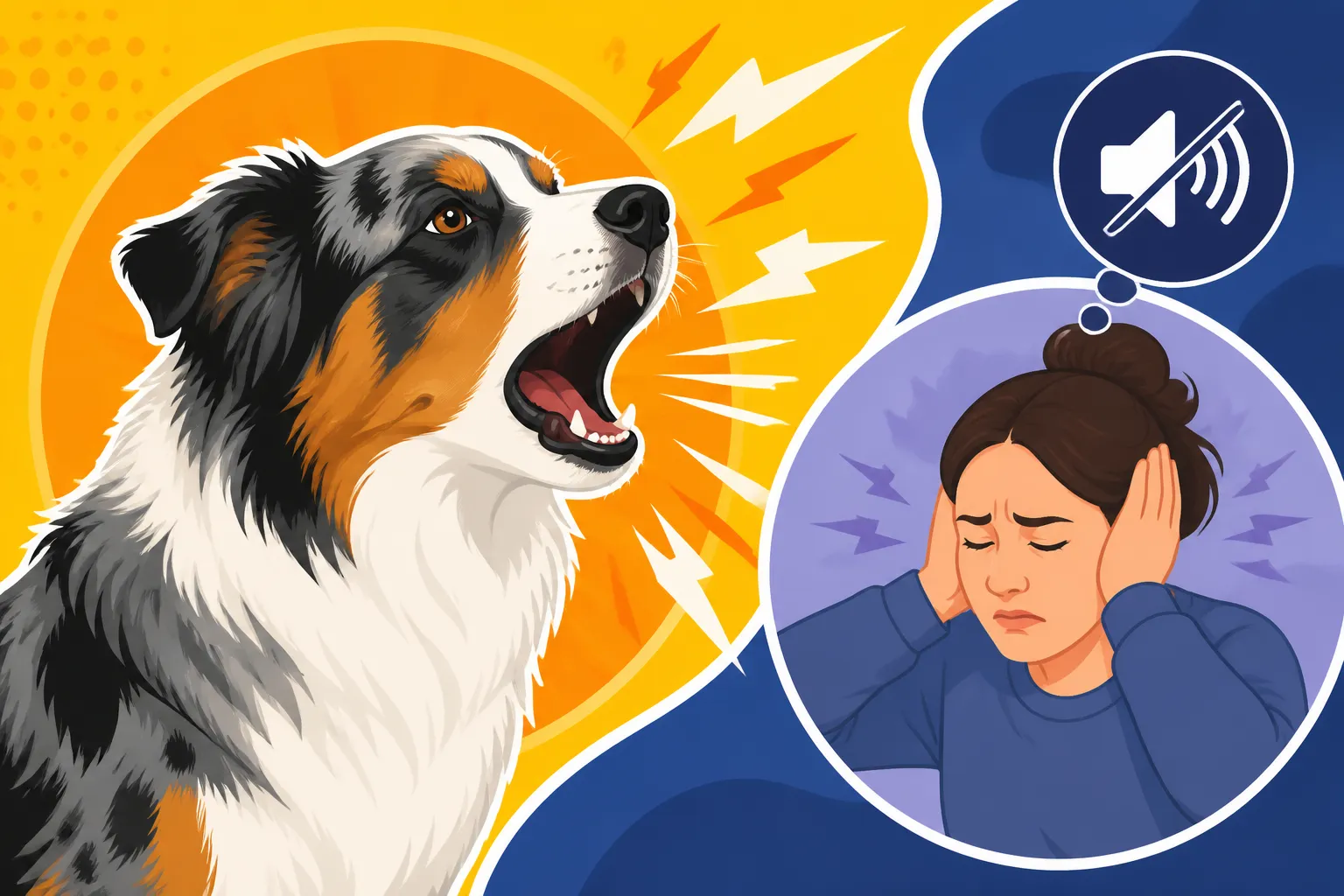
Australian Shepherd Barking and Noise Sensitivity
One of the most common, and let's be honest, frustrating challenges Australian Shepherd owners face is the relentless barking and seemingly hyper-sensitive reactions to everyday noises. It can feel like your otherwise brilliant, loving companion transforms into a furry alarm system, disrupting your peace and even straining neighborly relations. This comprehensive guide is here to help you understand why your Aussie barks, how their noise sensitivity develops, and most importantly, provide actionable strategies to manage and reduce excessive barking, helping both you and your dog find a calmer coexistence.
Understanding Why Your Australian Shepherd Barks So Much
Australian Shepherds are incredible dogs – intelligent, loyal, and bursting with energy. But these very traits, when not properly channeled, can lead to a symphony of barks that leaves you wondering if your home has become a permanent echo chamber. It’s not about malice; it's about instinct and unmet needs.
The Herding Instinct and Alert Barking
At their core, Australian Shepherds are working dogs, bred for centuries to control livestock. A crucial part of this job involves using their voice. They bark to gather stray sheep, to alert the shepherd to a perceived threat, or to move stubborn animals along. This deeply ingrained herding instinct doesn't vanish just because your Aussie lives in a suburban home instead of on a sprawling ranch. When they see a squirrel dart across the yard, a delivery truck pull up, or even your neighbor walking their dog, their brain registers it as "something that needs to be moved" or "something that needs to be alerted about."
This alert barking isn't necessarily aggressive; it's often more of a declaration. "Hey, something's happening! I see it! Are you seeing it too?" For an Aussie, the world is a dynamic place full of things that might need their attention. If they believe their job is to keep watch and communicate, they'll do it with gusto. This natural inclination to alert can be amplified if they perceive themselves as the primary protector of the home or if they feel their barking is effective in making things (like the mail carrier) "go away." Understanding The Australian Shepherd Herding Drive You Cannot Train Out is crucial here; you can redirect it, but you can't erase it.
Boredom, Under-stimulation, and Demand Barking
An under-exercised or under-stimulated Australian Shepherd is a recipe for a barking disaster. These dogs are built for action, both physical and mental. If they're not getting enough appropriate outlets for their energy, that pent-up drive has to go somewhere. Barking, for many Aussies, becomes a self-reinforcing activity. It's something to do. It gets attention. It releases some of that internal pressure.
Consider the scenario: your Aussie has been alone for a few hours, perhaps with only a brief potty break. They start to feel restless. They see you walk into the kitchen, and a little "woof" escapes. You turn and look. Success! So, they woof again, perhaps a little louder, a little more insistently. This quickly spirals into demand barking—barking for attention, for food, for a walk, for you to throw the ball. They've learned that barking gets results, and as highly intelligent dogs, they quickly figure out what works. This kind of barking often comes with other signs of boredom or frustration, such as pacing, destructive chewing, or digging. It’s a cry for engagement, a plea for mental and physical exertion. Without sufficient Mental Work That Actually Tires an Australian Shepherd, they will invent their own entertainment, which often includes noisy communication.
Fear, Anxiety, and Noise Sensitivity
Beyond instinct and boredom, a significant driver of excessive barking can be fear or anxiety, especially when it comes to noise sensitivity. Australian Shepherds, with their keen senses, can be particularly attuned to sounds. What might be a minor noise to us – a distant siren, a car backfiring, fireworks, thunder, or even the subtle hum of an appliance – can be profoundly distressing for a sensitive Aussie. This isn't just "startle"; it's a deep-seated reaction.
Noise sensitivity can stem from various sources: genetics, lack of early positive exposure to different sounds, or even a traumatic experience. When an Aussie hears a scary sound, their natural response is often to bark at it, attempting to make the perceived threat disappear or to alert their human to the danger. This barking is often accompanied by other signs of anxiety: trembling, panting, pacing, hiding, or trying to climb on you. The dog isn't being "naughty"; they're genuinely frightened and reacting defensively. Understanding this distinction is vital, as punitive methods will only exacerbate their fear and worsen the barking. They are trying to self-soothe or seek comfort in a stressful situation, and barking is their way of communicating that distress. Australian Shepherd Noise Sensitivity and Startle is a real and impactful concern for many owners.
Common Scenarios of Australian Shepherd Barking
It's one thing to know why Aussies bark, and another to pinpoint exactly when and where it's happening in your daily life. Let's break down some of the most common barking triggers that Aussie owners encounter.
Barking at the Door or Visitors
Ah, the doorbell. For many Australian Shepherds, it's not just a signal that someone is there; it's a full-blown invasion alert. The moment that chime sounds, or a knock echoes, your Aussie might launch into a frantic barking spree, often accompanied by excited jumping, tail-wagging, or even a dash to the door with a low growl. This behavior is a cocktail of their natural guarding instincts, a strong desire to alert you, and often, plain old excitement. They're telling you, and the visitor, "I'm here! This is my territory! What do you want?"
If you tend to rush to the door and create a flurry of activity every time, you're inadvertently reinforcing their behavior. Your quick response, from their perspective, validates their warning. They bark, you react, the "intruder" eventually enters or leaves. Mission accomplished, as far as the dog is concerned. This can make simply having friends over a real ordeal, especially if your Aussie considers everyone entering the house as part of their "flock" that needs supervision. They might even try An Australian Shepherd Herding Children in the Yard if they feel the kids are getting too rambunctious with visitors.
Barking at Outdoor Stimuli: Mail Carriers, Squirrels, Passing Dogs
This is the classic "fence fighter" or "window watcher" barking. Your Australian Shepherd is doing their job as they see it: monitoring their territory. Every movement, every sound outside the boundary of your home, becomes a potential target for their vocalizations. The mail carrier, the neighborhood squirrel, a jogger, a passing car, or another dog being walked down the street – all are fair game.
This type of barking often starts as a low alert bark, then escalates into a more intense, rapid series of barks, sometimes with lunging or frustrated whining. It's often highly reinforced because, from the dog's perspective, their barking effectively "drives away" the perceived threat or intruder. The mail carrier delivers the mail and leaves. The jogger runs past. The squirrel eventually scurries away. The dog thinks, "My barking worked!" Over time, this becomes a deeply ingrained habit, hardwired by success. For Aussies with strong prey drive, the sight of a squirrel or rabbit is like pressing a big red button labeled "CHASE AND BARK!" and their natural inclination to An Australian Shepherd Chasing Cars or other moving objects translates into vocalizations.
Barking at Sounds Indoors: Alarms, TV, Unexpected Noises
This category directly ties into noise sensitivity. While outdoor barking might be about territoriality, indoor noise barking is often rooted in fear, confusion, or overstimulation. Common triggers include the vacuum cleaner, the microwave beeping, a phone ringing, the washing machine cycle, a loud movie on TV, or even the unexpected clatter of something falling. For some highly sensitive Aussies, even the subtle hum of a refrigerator or the change in light when a storm rolls in can be enough to trigger a vocal reaction.
These sounds can be overwhelming for a dog whose auditory senses are far more acute than ours. They don't understand the source or the harmlessness of the noise, so they react with alarm. Barking in these situations is often an attempt to cope with the perceived threat or to express their distress. Unlike outdoor barking where the "threat" moves away, indoor noises often persist, leading to prolonged periods of barking and heightened anxiety. It's a genuinely stressful experience for them, and they aren't trying to be difficult; they're trying to navigate a confusing and sometimes frightening sensory world. If your Aussie has Australian Shepherd Startle at Loud Noises, this can be particularly challenging.
Addressing Noise Sensitivity in Your Australian Shepherd
Tackling noise sensitivity requires patience, understanding, and a systematic approach. It's not about silencing your dog completely, but about helping them feel safe and less overwhelmed by their environment.
Creating a Safe and Calm Environment
The first step in helping a noise-sensitive Australian Shepherd is to establish a secure, quiet retreat where they can decompress. This isn't a punishment; it's their personal sanctuary. This could be a The Crate a Fifty Pound Aussie Needs in a quieter part of the house, covered with a blanket to dampen sounds and light, or a cozy bed in a low-traffic room. The goal is to make this space consistently positive and predictable.
Introduce calming aids. A white noise machine or soft classical music can help mask sudden outdoor noises. Diffusers with dog-appeasing pheromones (DAP) might offer a subtle, comforting scent. Ensure they have engaging chew toys or puzzle feeders in their safe space. The key is that they choose to go there, and it's always a good experience. If they learn that this space means peace and quiet, they'll be more likely to retreat there when feeling overwhelmed. It's about empowering them to self-regulate their exposure to noise, rather than constantly being on high alert. For some Aussies, even just having a designated "settle" mat in the living room, where they can chew a Chew Toys That Last With an Australian Shepherd helps create a quiet zone.
Desensitization and Counter-Conditioning Techniques
This is where you gradually change your Aussie's emotional response to scary noises from negative to positive. It's a slow process, but highly effective. The principle is simple: expose your dog to the trigger sound at a very low volume (so low they barely react) while simultaneously providing something highly positive, like their favorite high-value treats or a beloved game.
You can use sound recordings of common triggers like thunder, fireworks, or doorbells. Start the sound almost imperceptibly quiet. The moment it plays, offer a treat. Stop the sound, stop the treats. Repeat. The goal is for your dog to associate the sound with good things. Gradually, over days or weeks, very slowly increase the volume, always staying below the threshold where your dog starts to show signs of fear or barking. If they react, you've gone too fast; dial it back. The aim is to build positive associations, so when they hear the sound, they think "treat time!" instead of "danger!" This process requires immense patience and keen observation of your dog's body language. For advanced noise sensitivities, working with a professional can guide you through these steps effectively. When your Aussie shows Noise Phobia in an Australian Shepherd, professional help is often warranted.
Management Strategies for Noise-Sensitive Aussies
While training is ongoing, management is about preventing your dog from practicing the barking behavior and minimizing their exposure to triggers. If your Aussie barks frantically at passersby, restrict access to windows with curtains or window film. If the doorbell is a major trigger, replace it with a knock, or use a sign asking visitors to text you upon arrival.
During anticipated noisy events like fireworks or thunderstorms, bring your Aussie into their designated safe space, use background noise, and provide high-value distractions. Consider dog-safe anxiety wraps or thunder shirts that apply gentle, constant pressure, which can have a calming effect on some dogs. For outdoor walks, if your Aussie barks at other dogs, consider walking them at off-peak hours or in quieter locations. The goal of management is to reduce the frequency of barking incidents, giving your dog (and you) a much-needed break from the stress and preventing the behavior from becoming even more ingrained. Using durable Australian Shepherd Beds That Survive Chewing can also help create a sense of security in their quiet spot.
Training Strategies to Reduce Excessive Barking
Beyond managing triggers, active training plays a crucial role in shaping your Australian Shepherd's barking habits. We want to teach them what to do instead of barking excessively, or how to stop when asked.
Teaching an "Off Switch" to Quiet Barking
One of the most valuable commands for an Aussie prone to barking is a reliable "Quiet" or "Enough" cue. This isn't about scolding them for barking, but teaching them to stop barking on command. Start this training in a low-distraction environment. Deliberately trigger a mild bark, perhaps by knocking softly on a wall or having someone lightly tap the door. The moment your Aussie barks once or twice, hold a high-value treat to their nose. Most dogs will stop barking to sniff the treat. The instant they are quiet for even a second, say "Quiet!" or "Enough!" and give the treat.
Repeat this many, many times. Gradually increase the duration of silence required before the treat is given. Over time, you can introduce more realistic scenarios, always starting with low-intensity triggers and gradually building up. The key is to reward the cessation of barking, not the barking itself. This teaches them that being quiet on cue is rewarding. Consistency is paramount. Everyone in the household needs to use the same command and follow the same procedure. This command provides them with a clear instruction and empowers you to communicate effectively when they get vocal. It’s an essential part of Giving an Aussie an Alternative to Barking.
Providing Appropriate Outlets for Herding Drive
Remember that innate herding drive? If your Australian Shepherd doesn't have constructive ways to express it, they'll find their own, often vocal, methods. Simply running them in the backyard for an hour isn't enough; their minds need to be engaged. Look for activities that simulate herding without actual livestock.
Flirt poles are fantastic for channeling prey drive and providing intense bursts of exercise. Herding balls, those large, hard plastic balls that dogs can push and chase, are excellent for urban herding and give them a "job" to do. Engage in structured fetch or retrieve games where they have to "gather" toys. Obedience training, rally, and trick training are also wonderful ways to engage their intelligent minds. Consider enrolling in dog sports like agility, disc dog, or even actual herding lessons if available and appropriate for your dog. A tired Aussie, both mentally and physically, is generally a quieter Aussie. Without these outlets, you might find yourself with An Australian Shepherd That Organizes the Dogs at the Park by barking at them. Treibball as an Aussie Alternative to Sheep is also an excellent option.
Enrichment and Mental Stimulation to Prevent Boredom Barking
Boredom barking is arguably the easiest to tackle once you understand the root cause. Australian Shepherds thrive on mental challenges. Integrating daily enrichment activities into their routine can dramatically reduce nuisance barking. This means going beyond simple walks.
- Puzzle Feeders: Ditch the bowl for at least one meal a day. Use puzzle feeders, snuffle mats, or treat-dispensing toys to make your Aussie "work" for their food. This engages their brain and makes mealtime a challenging game. Many great options are available from Amazon.
- Scent Work: Aussies have incredible noses. Hide treats around the house or yard and encourage your dog to find them. This is incredibly tiring mental work.
- Trick Training: Teach them new tricks! Not only is it fun, but it builds communication between you and gives your dog a sense of accomplishment. The BAXTER & Bella online puppy program, for example, offers a wealth of ideas for mental enrichment and trick training that can be adapted for all ages.
- Chew Sessions: Provide appropriate, long-lasting chew toys. Chewing is a natural, calming activity for dogs and can help alleviate stress and boredom.
- Rotation of Toys: Keep toys novel by rotating them. Don't leave all toys out all the time. Bring out a few new ones each day to keep their interest piqued.
Remember, a fifteen-minute scent game can be more tiring for an Aussie than an hour of mindless running. The goal is to provide activities that engage their powerful brains and fulfill their innate desire to work. This helps prevent them from becoming An Aussie That Cannot Be Left With Nothing to Do.
When to Seek Professional Help for Barking and Noise Sensitivity
While many barking and noise sensitivity issues can be managed at home with consistent training and enrichment, there are times when it’s best to call in the cavalry. Knowing when to escalate your approach can save you a lot of frustration and help your Aussie sooner.
Identifying When Barking Becomes a Problem
How do you know if your Aussie’s barking is just normal dog behavior or if it's crossed into problem territory? Ask yourself these questions:
- Frequency and Duration: Is your Aussie barking for long periods, multiple times a day, without an obvious immediate trigger you can easily address?
- Intensity: Is the barking frantic, panicked, or accompanied by other signs of distress like trembling, panting, or destructive behavior?
- Impact on Life: Is the barking significantly affecting your daily life, your sleep, your relationship with neighbors, or your ability to relax at home?
- Inability to Interrupt: Are you unable to interrupt or redirect the barking, even with high-value treats or known commands?
- Escalation: Has the barking worsened over time, or have new triggers emerged?
If you're answering "yes" to several of these, or if you feel utterly overwhelmed and don't know where to start, it's a strong indicator that professional guidance would be beneficial. Severe noise phobias, for instance, are rarely resolved without expert input. An Australian Shepherd That Gets Worse in the Evening might be experiencing heightened anxiety due to diminishing light or increased nighttime sounds, pointing to a deeper issue.
Finding a Qualified Trainer or Behaviorist
Not all dog trainers are created equal, especially when dealing with nuanced behavioral issues like chronic barking or noise sensitivity. Look for a professional who uses positive reinforcement, force-free methods. Avoid anyone who suggests harsh corrections, shock collars, or other aversive techniques, as these can actually worsen fear and anxiety-related barking.
Here’s what to look for:
- Certifications: Seek trainers certified by reputable organizations (e.g., CCPDT, KPA-CTP). For more severe cases, a certified dog behaviorist (CDBC) or a veterinary behaviorist (DACVB) is ideal. Veterinary behaviorists are veterinarians who specialize in behavior and can prescribe medication if necessary, which can be a game-changer for severe anxiety.
- Experience with Herding Breeds: Ask if they have specific experience with Australian Shepherds or other intelligent, high-drive herding breeds. They'll understand the nuances of their temperament better.
- Client References: Ask for references or testimonials from previous clients who had similar issues.
- Observation: A good trainer will want to observe your dog in their home environment or ask for videos, rather than making diagnoses over the phone.
A good professional will help you develop a tailored plan, provide hands-on guidance, and troubleshoot challenges as they arise. They can be invaluable in Vetting a Trainer Before Booking an Aussie.
Veterinary Consultation for Underlying Issues
Before diving deep into behavioral training, it’s always wise to rule out any underlying medical causes for excessive barking or increased sensitivity. Dogs, just like people, can become more irritable, anxious, or vocal if they are in pain or experiencing a health issue.
Schedule a thorough check-up with your veterinarian. They can assess for:
- Pain: Arthritis, dental pain, or other chronic pain can make a dog more reactive and vocal. Australian Shepherd Arthritis After Years of Work is a common concern in older Aussies, for example.
- Thyroid Issues: Hypothyroidism can sometimes manifest as behavioral changes, including anxiety or aggression.
- Hearing or Vision Changes: Older dogs might bark more if their senses are declining, leading to startling more easily or not understanding their environment.
- Cognitive Dysfunction: Senior Aussies can develop cognitive decline, similar to Alzheimer's in humans, which can lead to increased vocalization, especially at night. An Aussie That Stops Reading the Room could be showing signs of this.
- Neurological Conditions: Conditions like Australian Shepherd Epilepsy Starting Between One and Five can sometimes cause behavioral changes, even before a seizure.
Your vet might recommend blood tests, imaging, or refer you to a specialist if they suspect a medical issue. If a medical problem is found and treated, the barking often subsides significantly. Even if no medical cause is found, your vet can discuss anti-anxiety medications or supplements that, when used in conjunction with behavior modification, can help manage severe anxiety and noise phobias, making the training process more effective.
Living with a Noise-Sensitive Australian Shepherd: Long-Term Management
Managing barking and noise sensitivity in an Australian Shepherd isn't a one-and-done solution; it's a lifestyle. It requires ongoing commitment and a proactive approach, but the rewards of a calmer, happier home are immense.
Building Confidence and Trust
At the heart of reducing barking, especially anxiety-driven barking, is building a strong foundation of confidence and trust with your Aussie. A confident dog is less likely to feel the need to excessively bark or react to every perceived threat. Trust in you means they look to you for guidance and reassurance rather than feeling they have to handle every situation themselves.
This confidence building comes from consistent, positive reinforcement training. Every successful "Quiet" command, every puzzle feeder solved, every new trick learned, contributes to their self-assurance. Ensure your interactions are predictable and kind. Avoid punishment, which can erode trust and increase anxiety. Be your Aussie's calm, reassuring leader, showing them that you will handle things and that they don't need to be on constant alert. Engaging in activities like Australian Shepherd Rally and Obedience can greatly enhance this bond and build confidence. Spending quality, focused time with your Aussie, even just gentle grooming sessions, helps cement this bond.
Consistency is Key: A Family Effort
You know the drill: you’re diligently working on reducing barking, but then a well-meaning family member or guest accidentally reinforces the behavior. Boom, back to square one! Consistency is not just important; it's absolutely critical for success. Every member of the household needs to be on the same page regarding rules, commands, and responses to barking.
Hold a family meeting. Discuss the training plan, the "Quiet" command, the importance of ignoring demand barking, and how to redirect attention. Ensure everyone understands the management strategies, like closing curtains during peak mail delivery times or using white noise during fireworks. If one person allows the dog to bark at the window, while another is trying to train them not to, the dog receives mixed signals and progress will be slow or non-existent. Make it a team effort, and celebrate small victories together. This also applies to any dog walkers or pet sitters you employ; they need to understand and adhere to your methods.
Tools and Aids for Barking Management
While tools are never a substitute for training and management, certain aids can complement your efforts and make life a little easier for both you and your Aussie.
- Enrichment Toys: As mentioned, puzzle feeders and durable chew toys are invaluable. Brands like KONG offer a variety of options that keep dogs engaged. You can find a huge selection of Chew Toys That Last With an Australian Shepherd on Amazon.
- White Noise Machines/Fans: These can be incredibly helpful for masking external sounds, especially during quiet times or when your dog is settling in their crate.
- Soundproofing: For severe noise sensitivity, consider adding heavy curtains, rugs, or even temporary sound panels to a designated "safe room" to further dampen disruptive noises.
- Anxiety Wraps: Products like ThunderShirt provide gentle, constant pressure, which some dogs find comforting, similar to swaddling a baby. They can be particularly useful during known stressful events like thunderstorms or parties.
- Long Lines and Harnesses: For outdoor reactivity barking, a sturdy harness and a long line can give you better control without putting pressure on your Aussie's neck, making redirection easier and safer. A Long Line Length for an Australian Shepherd will provide freedom while maintaining control.
- Cameras: If barking is primarily an issue when you're not home, a pet camera with two-way audio can help you monitor the behavior and even occasionally intervene with your voice (though this should not be a primary solution). Some even have treat dispensers!
Remember, these are aids, not magic bullets. They work best when integrated into a comprehensive plan that includes training, management, and building your Aussie's confidence.
| Barking Type | Common Causes | Initial Solutions |
|---|---|---|
| Alert/Territorial | Mail carrier, visitors, passing dogs, squirrels, anything approaching the perceived territory. Herding instinct to warn. | Manage visual access (curtains, privacy film). Teach "Quiet" command. Reward calm behavior when triggers appear. Redirect with a toy or command the moment a trigger is spotted, before barking starts. |
| Boredom/Demand | Lack of physical or mental stimulation, seeking attention, frustration from unmet needs. | Increase physical exercise and mental enrichment (puzzle feeders, scent games, trick training, dog sports). Ignore demand barking (do not reward it with attention). Reward quiet, calm behavior with attention. Provide appropriate chew toys. |
| Fear/Anxiety | Loud noises (thunder, fireworks, alarms), unexpected sounds, general anxiety. | Create a safe, quiet space (crate with cover, white noise). Desensitize and counter-condition to specific sounds at low volume with treats. Use calming aids (DAP diffusers, anxiety wraps). Consult vet for severe cases (medication/behaviorist referral). |
| Frustration | Unable to reach a desired object/person/place (e.g., behind a fence, on a leash not allowed to greet). | Remove or manage the source of frustration. Teach impulse control (wait, leave it). Provide alternative appropriate outlets. Reward calm behavior when encountering frustrating situations. Increase exercise and mental work to reduce overall frustration levels. |
| Play/Excitement | During intense play, greeting people/dogs, highly stimulating situations. | Teach an "off switch" or "calm" command during play. Redirect over-arousal to a structured activity (e.g., short obedience drill). Manage play environment to prevent overstimulation. Ensure adequate enforced naps, especially for puppies or young adults who might get over-tired. |
Disclaimer
This article is for general informational purposes only and does not constitute professional advice. Laws, prices and regulations vary by location and change over time. Consult a qualified professional for guidance on your specific situation.