Aussie Frustration Barking at a Closed Gate
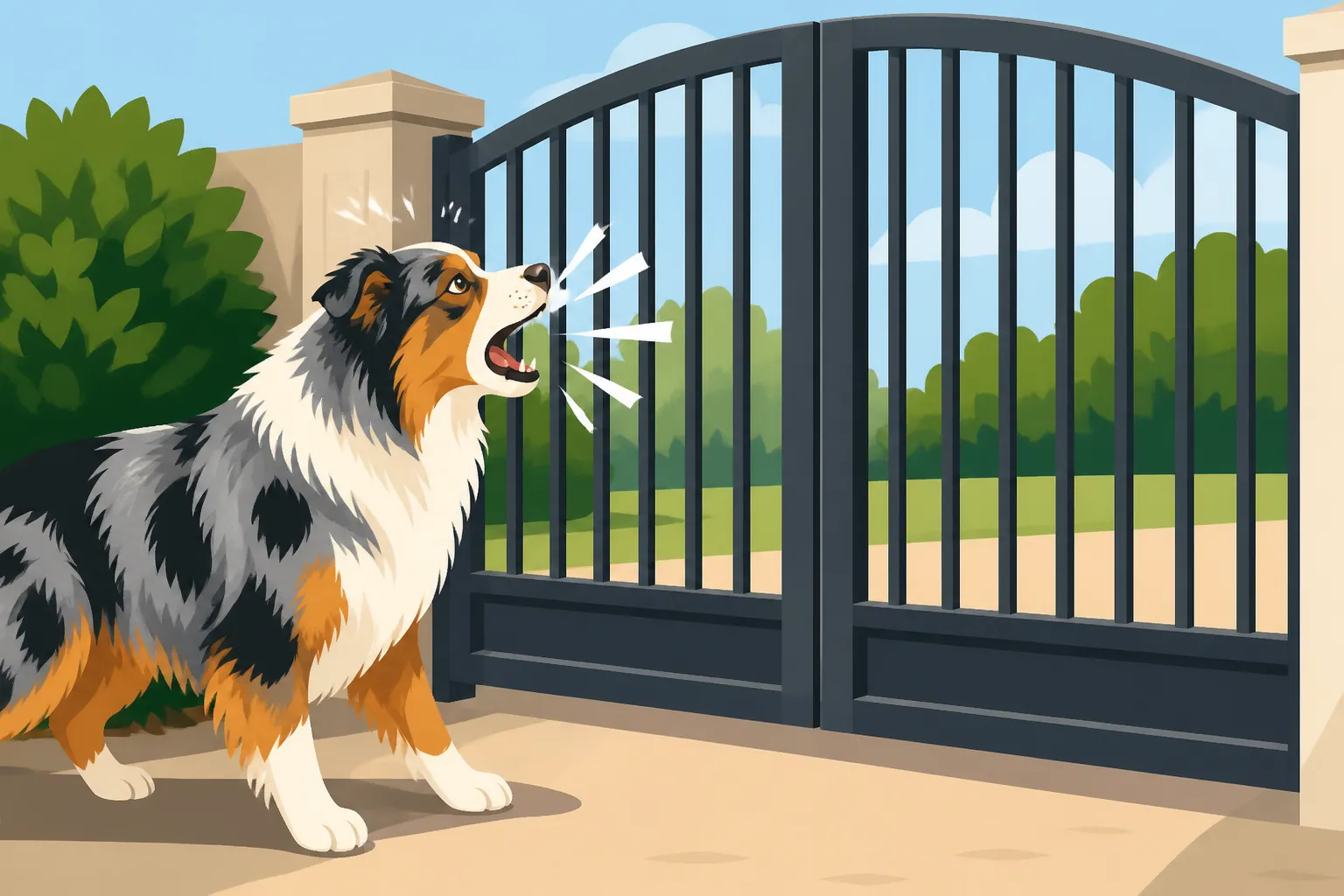
It's incredibly frustrating when your otherwise well-behaved Australian Shepherd starts barking incessantly at a closed gate, especially when you know what's on the other side. Whether it's the gate to the backyard where the squirrels play, the front gate that separates them from the passing world, or even an interior baby gate, that persistent vocalization can test anyone's patience. This guide will help you understand the root causes behind this specific barking behavior and provide actionable strategies to manage and reduce your Aussie's frustration at these barriers.
Understanding Why Your Aussie Barks at a Closed Gate
When your Australian Shepherd stands at a closed gate, barking with intense focus, it’s not just being "naughty." There’s a complex mix of instinct, emotion, and learned behavior at play. These are intelligent, driven dogs, and a closed gate represents a barrier to something they perceive as important or stimulating.
The Herding Instinct and Barriers
Australian Shepherds were bred for generations to work. Their core programming is about control, movement, and organizing their environment. When they see something stimulating on the other side of a gate – be it a person, another dog, a squirrel, or even a blowing leaf – their instinct kicks in. They want to move it, control it, or investigate it. A closed gate, however, prevents them from doing this. This creates a deep sense of frustration because their natural drive to act is being suppressed.
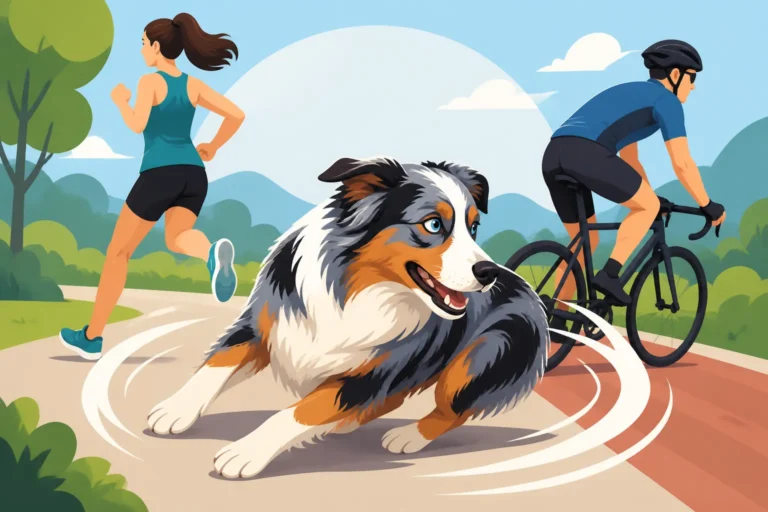
Think about it from their perspective: they see a "job" or an "intruder" (like a squirrel making off with nuts from their yard), and they are physically unable to perform their duty. This isn't just a mild annoyance; for a dog with such strong herding instincts, it can feel like a profound failure or an unacceptable breach of their territory. This is often the underlying emotional fuel for that insistent, demanding bark. You might notice this same intensity when an Australian Shepherd is An Australian Shepherd Herding Children in the Yard or An Australian Shepherd Circling Joggers and Cyclists.
Frustration, Arousal, and Predictable Triggers
Frustration barking at a gate often builds from a combination of high arousal and blocked access. Your Aussie might be generally excited about going outside, anticipating a walk, or simply wound up from the day. When they then encounter a gate blocking their path to that anticipated activity, the existing arousal has nowhere to go but out – often in the form of barking.
This behavior frequently becomes a predictable ritual. Maybe they bark every time the mail carrier approaches the front gate, or whenever you walk towards the back door with their leash. They learn that the appearance of the trigger (mail carrier, leash) means the opportunity for action, and the gate is the obstacle. The barking becomes a way to express their intense desire and frustration. The more predictable the trigger, the more ingrained the barking habit becomes, making it harder to interrupt. It's a classic case of an Australian Shepherd getting An Australian Shepherd That Gets Worse in the Evening because their excitement level peaks without an appropriate outlet.
Learned Behavior: "Barking Works!"
Here’s the kicker: sometimes, we inadvertently teach our Aussies that barking at the gate works. If your dog barks, and you eventually open the gate to let them out (even if it's just to get them to stop barking), you've just reinforced the behavior. Your dog thinks, "Ah, I barked, and then the gate opened! I should do that again next time." Even negative attention, like yelling at them to stop, can be a form of reinforcement for some dogs, as it still provides a reaction they crave.
This is especially true if the barking sometimes gets them what they want – whether it's access to the yard, attention from you, or even just a brief moment of relief when the mail carrier finally moves on. Breaking this cycle means being very consistent about not rewarding the barking, which can be incredibly challenging when you're just trying to get a moment of peace. It's crucial to understand that dogs don't do things "out of spite"; they do what works for them, and if barking gets results, they'll keep doing it.
Practical Strategies to Manage Gate Frustration Barking
Addressing gate barking requires a multi-pronged approach: management to prevent the practice, training to teach new behaviors, and potentially desensitization to change their emotional response to the trigger.
Management: Preventing the Barking Before It Starts
The easiest bark to stop is the one that never starts. Management is about preventing your Aussie from having the opportunity to rehearse the barking behavior. Every time they bark at the gate, it reinforces the habit, making it stronger.
- Block Visual Access: Can your dog see the trigger through the gate? If it's a front gate and they bark at passersby, consider installing privacy screening or planting dense shrubs. For an interior gate, a simple opaque barrier like a piece of cardboard or a sheet can do wonders. If they can’t see what they want to chase or herd, their arousal levels are likely to stay lower.
- Limit Access to the Gate Area: If you know certain times are high-trigger periods (e.g., mail delivery, school bus pickup), physically block your Aussie from reaching the gate. Use another baby gate further back, or put them in a separate room with a high-value chew toy or a stuffed Kong. This isn't punishment; it's proactive prevention.
- Structured Exercise Beforehand: A tired Aussie is a less reactive Aussie. Ensure your dog is getting adequate physical and mental exercise before those high-trigger times. A good game of fetch, a brisk walk, or a Scent Games That Tire an Australian Shepherd session can drain some of that pent-up energy and drive. A dog that has just completed a stimulating task is less likely to feel the overwhelming urge to bark at a squirrel.
Training for Calmness and Impulse Control
Management alone won't solve the underlying frustration. You need to actively teach your Aussie what to do instead of barking. This involves building a strong foundation of impulse control and calmness.
- "Go to Mat" or "Place" Training: Teach your Aussie to go to a designated mat or bed and stay there calmly, even when stimulating things are happening. Start this training in a quiet environment, rewarding generously for staying on the mat. Once they understand, gradually introduce distractions, including being near the gate while it's closed, but before a trigger appears. The BAXTER & Bella online puppy school offers excellent modules on "place" training that are easily adaptable for older dogs too. This gives them an alternative, calm behavior to perform.
- "Watch Me" or Eye Contact: Teach your Aussie to make eye contact on cue. This is an incredibly powerful tool for breaking focus on a trigger. When you see them start to fixate on the gate or an approaching trigger, cue "Watch Me!" and reward them for looking at you. This redirects their attention from the frustrating object to you, allowing you to then give them an alternative command like "settle" or "go to mat."
- Relaxation Protocol: Practice relaxation exercises where your dog learns to lie down and stay calm for extended periods. This can be as simple as rewarding them for quiet settling with high-value treats. The goal is to condition them to associate calmness with positive reinforcement, even in potentially exciting environments.
You can find great resources for durable chew toys and puzzle feeders on Amazon that can aid in these training efforts.
Desensitization and Counter-Conditioning
This approach changes your Aussie's emotional response to the triggers that cause barking. Instead of seeing the mail carrier as something to bark at, you want them to associate the mail carrier with something positive and calm.
- Controlled Exposure: Start with your Aussie at a distance from the gate where they notice the trigger but do not react with barking. This is called working "under threshold." For example, if the mail carrier causes barking when they are 50 feet away, start your training when they are 100 feet away.
- Positive Association: The moment your Aussie notices the trigger (e.g., the mail carrier in the distance), immediately start feeding them high-value treats. Continue feeding until the trigger is gone. The goal is to create an association: "Mail carrier appears = delicious treats!"
- Gradual Reduction of Distance: Over many sessions, slowly decrease the distance to the gate and the trigger, always ensuring your Aussie stays under threshold and doesn't bark. If they bark, you've moved too quickly. Back up to a distance where they can be successful. This takes immense patience and consistency. It’s a bit like teaching your Australian Shepherd Socializing an Aussie to Traffic and Crowds – slow, steady exposure with positive reinforcement.
It's important to remember that progress isn't linear. Some days will be better than others. The key is to celebrate small victories and not get discouraged by setbacks.
Tools and Resources for Gate Barking Challenges
Sometimes, managing and training an Aussie with persistent gate barking requires a little extra help or the right gear.
Enrichment Toys and Puzzle Feeders
A bored Aussie is a destructive and vocal Aussie. Providing appropriate mental stimulation can significantly reduce frustration barking.
- Long-Lasting Chews: Things like bully sticks, natural chews, or durable rubber toys stuffed with peanut butter or wet dog food can keep your Aussie engaged for extended periods. Offer these before a high-trigger situation or when you need them to be settled near the gate. Look for sturdy options on Amazon that can withstand an Australian Shepherd's chewing power.
- Puzzle Feeders and Snuffle Mats: These tools make your dog "work" for their food, engaging their brain and using their natural scenting abilities. Instead of just eating a bowl of kibble in 30 seconds, a puzzle feeder can turn mealtime into a 15-20 minute mental exercise. This can be particularly useful when you need to redirect their attention from a potential gate-barking scenario. They offer a great form of Mental Work That Actually Tires an Australian Shepherd.
- Flirt Poles and Herding Balls: While not for direct gate barking, these tools can help burn off excess physical and mental energy in a structured way, reducing overall arousal. A flirt pole allows you to simulate a chase-and-capture game, tapping into their prey drive in a controlled manner, while a herding ball offers a safe outlet for their innate desire to push and control.
Professional Help and Online Resources
You don't have to tackle this alone. Sometimes, an outside perspective and expert guidance can make all the difference.
- Certified Professional Dog Trainer (CPDT-KA): A good force-free trainer can observe your Aussie's behavior in person, identify specific triggers, and tailor a training plan for your unique situation. They can teach you the timing and mechanics of effective counter-conditioning and help you troubleshoot. When looking for a trainer, ensure they understand Finding a Trainer Who Understands an Aussie and their inherent working drives.
- Behavioral Veterinarian (DACVB): If the barking is severe, accompanied by anxiety or aggression, or if you suspect it's more than just frustration, a veterinary behaviorist can be invaluable. They are veterinarians with specialized training in animal behavior and can assess for underlying medical conditions or prescribe medication if necessary to help manage anxiety alongside behavioral modification.
- Online Training Programs: Resources like BAXTER & Bella offer comprehensive online courses that can guide you through various training challenges, including impulse control and calmness exercises. While not a substitute for an in-person trainer for severe issues, they provide a structured curriculum and support that many owners find incredibly helpful for foundational skills. You can also find countless educational videos and books on Amazon covering Australian Shepherd training and behavior.
- Support Groups: Connecting with other Australian Shepherd owners, especially those who have dealt with similar barking issues, can provide valuable insights and emotional support. Sometimes just knowing you're not alone in the struggle can make a huge difference.
Managing gate frustration barking in an Australian Shepherd is a journey, not a sprint. It requires patience, consistency, and a deep understanding of your dog's breed-specific needs. By implementing management strategies, focusing on calmness and impulse control through training, and systematically desensitizing them to triggers, you can help your Aussie learn that being calm at the gate is far more rewarding than barking at it. Remember, every little step forward is progress, and a calmer Aussie means a happier household for everyone.
Disclaimer
This article is for general informational purposes only and does not constitute professional advice. Laws, prices and regulations vary by location and change over time. Consult a qualified professional for guidance on your specific situation.