An Australian Shepherd Circling Joggers and Cyclists
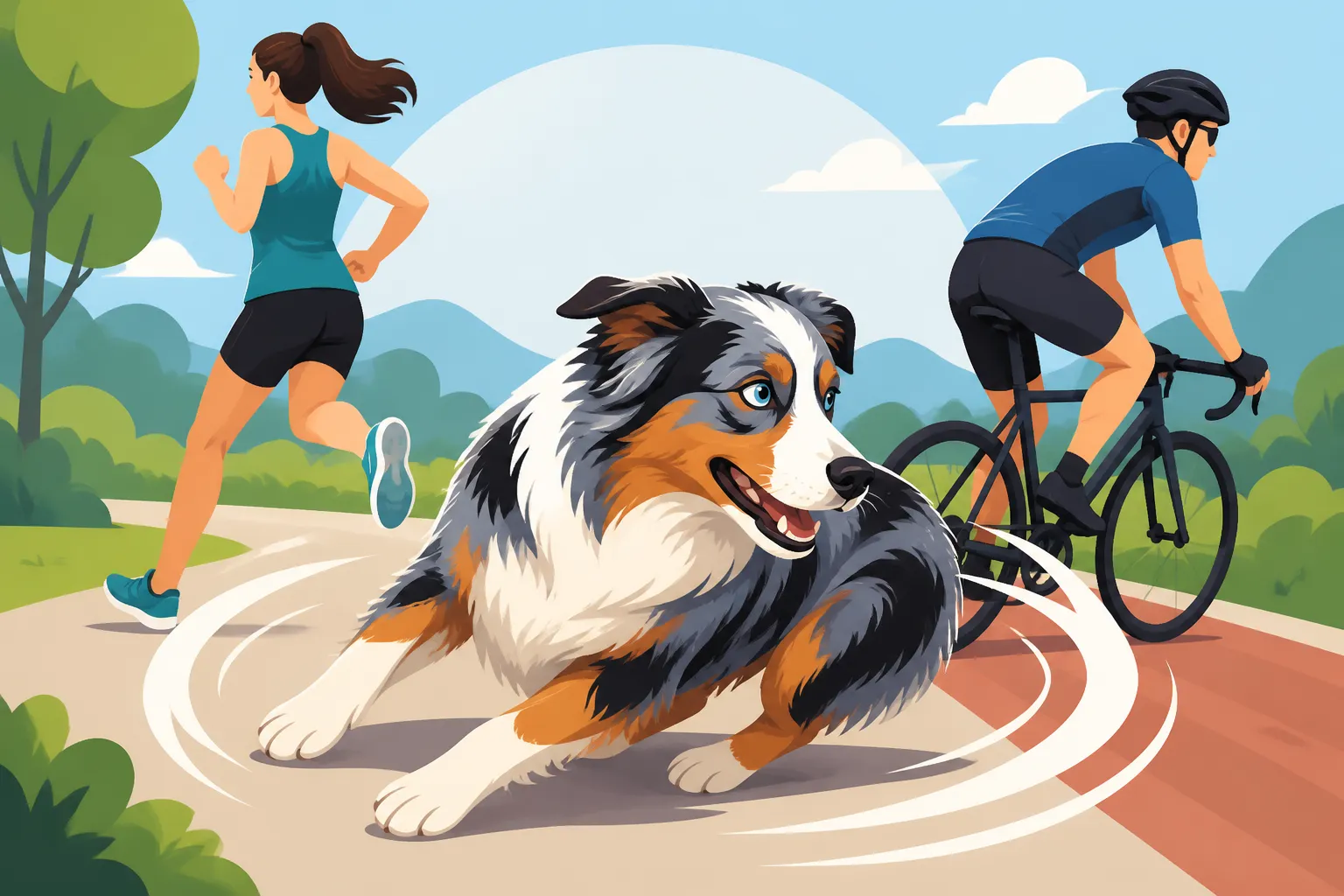
That moment when you're enjoying a walk with your Australian Shepherd, and suddenly, a jogger speeds past or a cyclist whizzes by, can instantly turn a pleasant outing into a high-stress event. Your Aussie might lunge, bark, or try to "herd" the moving target, often nipping at heels or attempting to cut them off. It's not just a nuisance; it's genuinely embarrassing and can be incredibly frustrating, leaving you wondering why your usually well-behaved dog transforms into a four-legged furry torpedo. This guide is here to help you understand the deep-seated instincts driving this behavior and equip you with practical, compassionate strategies to manage and redirect your Australian Shepherd's natural herding tendencies around joggers and cyclists.
The Innate Herding Drive of the Australian Shepherd
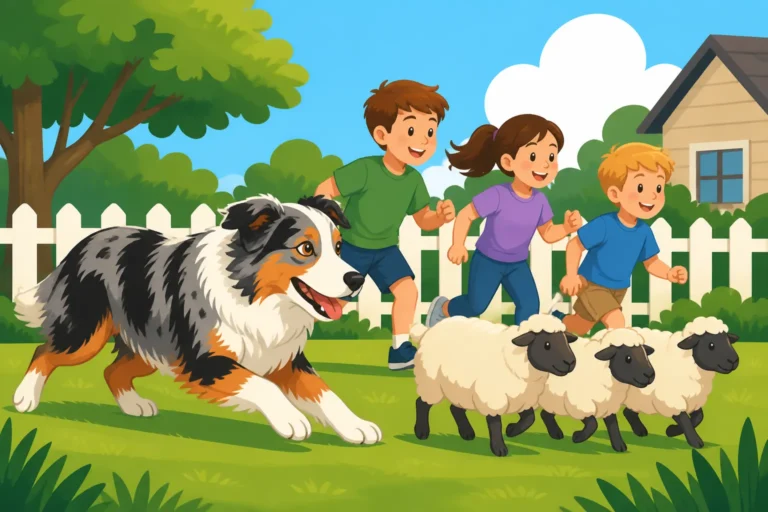
To truly tackle the behavior of an Australian Shepherd circling joggers and cyclists, we first need to get to the root of why they do it. It’s not about malice or disobedience; it's about ancient programming running deep in their DNA. Aussies were bred for centuries to work with livestock, primarily sheep and cattle, often in vast, open spaces. Their job involved gathering, moving, and controlling animals, sometimes with little more than a piercing stare, a low crouch, and quick, precise movements.
Why Herding Is the Aussie Operating System
Think of it this way: herding isn't just a hobby for an Australian Shepherd; it's their operating system. It's how they see the world and how they are wired to interact with it. From the moment they're born, many Aussies possess an inherent instinct to respond to movement. When a sheep breaks from the flock, an Aussie's instinct is to "head" it off and bring it back to the group. This involves a complex set of behaviors: stalking, staring, crouching, chasing, and yes, sometimes nipping at the heels to encourage movement or redirection. For them, a jogger or a cyclist isn't a person on a recreational activity; it's a "wayward sheep" that needs to be brought back into line, or at least controlled.
This drive is often exhilarating for the dog, a rush of instinctual purpose. While some Aussies might have a stronger "eye" (the intense stare) or a harder "grip" (the tendency to nip), all of them carry some degree of this herding package. Understanding that this isn't a choice your dog is making to annoy you, but rather a powerful, intrinsic urge, is the first step toward effective management. You can’t train out a hard-wired instinct, but you can certainly redirect it and manage its expression. For a deeper dive into this, you might find our article on The Australian Shepherd Herding Drive You Cannot Train Out incredibly insightful.
Instinct Versus Learned Behavior
It's crucial to differentiate between innate instinct and learned behavior. The desire to herd is instinctual. The way your dog executes that desire – barking, lunging, chasing, or nipping – can be shaped by experience, training (or lack thereof), and environmental factors. For example, a young Aussie might initially just stare intently at a moving object. If that stare leads to the object moving away (which a jogger naturally does), the dog might interpret that as success, reinforcing the behavior. If the dog then escalates to barking or lunging, and those behaviors also seem to "work" by making the object disappear, then those become learned components of the overall herding sequence.
This is where owners often struggle. We inadvertently reinforce the very behaviors we want to stop. If you pull back hard on the leash every time your Aussie lunges, that tension might actually amp up their arousal, or they might associate the presence of the jogger with your stress and a tight leash. Conversely, if your dog manages to make contact (even just a brush-by) with a moving target, the self-reinforcing thrill of the chase and the brief "control" it offers can make the behavior incredibly difficult to break. This is why addressing these behaviors early and consistently is so vital. It’s about understanding Why Herding Instinct Is the Aussie Operating System and then teaching them acceptable outlets for that drive.
The Triggers Behind Circling and Chasing
Identifying the specific triggers and understanding the sequence of events leading up to your Aussie's herding behavior is paramount to managing it. It’s rarely just one thing; it’s a combination of visual cues, ingrained impulses, and often, an overwhelming surge of excitement or frustration.
Movement as a Powerful Stimulus
For an Australian Shepherd, movement is almost universally the primary trigger. This isn't just fast movement, either. It can be a slow-moving stroller, a child on a scooter, another dog jogging by, or even rustling leaves if the dog is particularly sensitive. However, fast, linear, and often unpredictable movement, like that of a jogger or cyclist, tends to be the most potent. The upright posture, the rhythmic cadence, and the often direct line of travel mimic exactly what an Aussie would see in a wayward flock animal.
Your Aussie’s eyes are designed to detect subtle shifts in motion across a landscape, and their brain is hardwired to react. This isn't just about what they see; it's also about the energy and intention they perceive. A relaxed walker might not trigger them, but a focused runner with a steady pace can be like a siren call. The sheer speed of a cyclist, often combined with minimal noise until they're close, can be particularly startling and trigger a reactive response almost instantly. This explains why your Aussie might be fine with a person walking slowly, but utterly loses it when someone sprints past.
The Impulse to Gather and Control
Once triggered by movement, the Australian Shepherd’s deep-seated impulse to gather and control takes over. When they circle a jogger or cyclist, they are quite literally attempting to "flank" and "head" them, just as they would a sheep. They might try to get in front of the person to stop them, or dart behind to push them along, often accompanied by barking or nipping at the heels or tires. They're trying to influence the direction and speed of the moving object, to bring it under their control.
This isn't an aggressive act in the traditional sense of trying to cause harm; it's a working behavior. However, to a jogger or cyclist, a dog lunging and snapping is definitely perceived as aggressive and can be genuinely frightening. From your Aussie's perspective, they are simply doing their job – a job that, on the ranch, is highly valued. The challenge lies in teaching them that this particular moving object is not part of their "flock" and does not require their intervention. This is where you, as their handler, need to step in and provide clear, consistent guidance.
Frustration and Overarousal on the Leash
Another significant component of this behavior is often frustration and overarousal, especially when your Aussie is on a leash. A leashed dog feels constrained. Their natural herding instinct tells them to move, to circle, to chase, but the leash prevents them from fully executing these actions. This creates immense frustration, which can manifest as barking, lunging, whining, or even redirected biting at the leash itself. They are "all dressed up with nowhere to go," so to speak, in terms of their natural drive.
This frustration builds up, leading to a state of overarousal. When an Aussie is overaroused, their ability to think, process commands, and control their impulses diminishes significantly. They are operating purely on instinct and emotion. Imagine trying to solve a complex math problem while someone is loudly banging pots and pans next to your ear – it's difficult, right? It's similar for an overaroused Aussie. They are reacting, not responding. Recognizing the signs of Australian Shepherd Overarousal and Frustration is crucial because intervening before they hit that peak emotional state is much more effective than trying to pull them back once they're already there.
Practical Management Strategies
When dealing with a deeply ingrained behavior like herding moving targets, management isn't just a temporary fix; it's a fundamental part of the long-term solution. Training takes time, and during that time, you need strategies to keep everyone safe and prevent further rehearsal of unwanted behaviors.
Prioritizing Safety Through Management
The absolute first step is to manage the environment to prevent your Aussie from practicing the undesirable behavior. Every time your dog successfully "herds" a jogger or cyclist, even if it's just a lunge and a bark that makes the person speed up, the behavior is reinforced. You want to break that cycle.
This means being incredibly proactive about your walk routes and timings. Avoid busy parks or trails during peak jogging or cycling hours. If you know a particular stretch of road has a lot of bike traffic, choose a different route or walk at a quieter time. Consider a securely fenced yard for off-leash exercise instead of open areas where you might encounter unexpected movers. A good quality harness that offers control without causing discomfort can also be a game-changer. Brands like Ruffwear or Easy Walk often have good options that can be found on platforms like Amazon, offering better control than a flat collar alone, especially for a strong, driven Aussie.
Management also extends to your home environment. If your Aussie is constantly glued to the window, barking at every passerby, that's another opportunity for the behavior to be practiced and reinforced. Limit window access, use privacy film, or provide stimulating alternatives indoors. The goal is to minimize accidental encounters that reinforce the unwanted herding drive.
Redirecting Drive Onto Appropriate Outlets
Since you can't erase the herding drive, the next best thing is to redirect it onto appropriate, safe, and sanctioned outlets. This means giving your Aussie a "job" that satisfies their instinct without causing problems for people or other animals. Tug toys are fantastic for this. A high-quality, durable tug toy (again, many great options can be found on Amazon) can be used the moment you see a potential trigger approaching. Instead of letting your Aussie fixate on the jogger, immediately engage them in a vigorous game of tug. This redirects their attention, gives them an acceptable physical outlet for their energy, and allows them to fulfill their "prey drive" on an appropriate item.
You can also use flirt poles, which simulate the chase of prey without involving people. These can be great for burning off steam and satisfying that chase instinct in a controlled way in your yard. Regularly scheduled, structured play sessions, where you initiate and end the game, teach your Aussie that you control the fun and where their energy is directed. Our guide on Redirecting an Aussie Onto a Tug Instead of a Heel offers even more specific advice on this technique. Remember, an unfulfilled working dog is often a problematic dog; giving them a job, even if it's just playing tug or fetch, can make a huge difference.
Building Strong Impulse Control
Beyond redirection, building strong impulse control is critical. Your Aussie needs to learn to wait, to pause, and to defer to you even when their instincts are screaming at them to chase. This comes through consistent training in everyday scenarios. Simple exercises like "wait" before eating, "stay" before going out the door, or holding a "down-stay" in distracting environments are all building blocks.
Practice "leave it" with various distractions, starting with low-level ones and gradually increasing the difficulty. Can your Aussie "leave" a dropped treat? How about a rolling ball? And eventually, can they "leave" a jogger approaching in the distance? This takes time, patience, and many repetitions. The concept is to reward them for choosing to disengage and look to you, even when their instincts are pulling them strongly in another direction. This is a crucial skill for any Aussie owner, as it directly impacts their ability to cope with highly stimulating situations.
Effective Training Techniques and Tools
Once you have management strategies in place, you can actively start training to modify your Aussie's response to joggers and cyclists. This involves a combination of tools, positive reinforcement, and a lot of patience.
Mastering the Long Line and Leash Skills
A long line is an invaluable tool for working with an Australian Shepherd that has a strong prey or herding drive. It allows your dog a sense of freedom and space to move, while still giving you the ability to intervene and maintain safety. You can practice recall and redirection at a distance that's far enough away from potential triggers (joggers, cyclists) that your Aussie remains "under threshold"—meaning they are aware of the trigger but not yet reacting. How Long an Aussie Long Line Should Be is a key consideration; usually, 15 to 30 feet is a good starting point.
Use the long line in a safe, open area where you can spot triggers from a distance. The goal is not to yank them back, but to gently guide them or step on the line if they ignore a recall or redirection cue. This allows you to interrupt the incipient herding behavior before it fully erupts. Consistent practice of loose-leash walking, even on a regular leash, in increasingly distracting environments is also vital. Teach your Aussie that the leash means staying connected to you, not lunging at everything that moves. This takes thousands of repetitions and many, many high-value treats.
Desensitization and Positive Counter-Conditioning
This is the core of changing your Aussie's emotional response. Desensitization means gradually exposing your dog to the trigger (joggers, cyclists) at a distance and intensity where they don't react. Counter-conditioning means changing their emotional association with that trigger from negative (excitement, frustration, herding drive) to positive.
Here’s how it works:
- Find their threshold: Identify the distance at which your Aussie notices a jogger or cyclist but doesn't react. This might be 100 feet, 500 feet, or even across a football field. This is your starting point.
- Observe and Reward: When a jogger or cyclist appears at that safe distance, the instant your Aussie notices them (before they react!), immediately mark the moment with a verbal cue like "yes!" or a clicker, and give them a super high-value treat (think boiled chicken, cheese, or hot dogs).
- Repeat and Retreat: Repeat this process many times. The goal is for your Aussie to eventually see a jogger, look at you expectantly for a treat, rather than fixating on the jogger. If your dog starts to react, you're too close. Move further away and try again. This can be a very slow process, perhaps taking weeks or months to gradually decrease the distance. For more on this, check out Working a Reactive Aussie Under Threshold.
- Practice in varied environments: Once your Aussie is consistent at a certain distance in one location, try a different location, but start back at a greater distance if needed. Every new environment presents new challenges.
The Power of High-Value Reinforcement
When you’re asking an Australian Shepherd to override a deeply ingrained instinct, you need to make it worth their while. This is where high-value reinforcement comes in. Regular kibble often won't cut it when a jogger is zipping past. You need something truly irresistible.
Think about what your Aussie absolutely loves:
- Small pieces of cooked chicken, liver, or hot dogs
- Cheese sticks or cubes
- Peanut butter (xylitol-free!)
- Special squeaky toys or a favored tug toy
These high-value rewards should be reserved only for these challenging training scenarios. This increases their perceived value and motivates your dog to engage with you rather than the distraction. Don't be shy about using a lot of treats! You are literally re-wiring their brain to associate these triggers with positive outcomes and with you. Using a treat pouch (readily available on Amazon or through pet supply brands like BAXTER & Bella) that clips to your waist makes it easy to quickly deliver rewards. The speed of delivery is crucial; the treat needs to arrive milliseconds after the desired behavior (even if it's just glancing at the trigger, then at you).
Proactive Socialization and Environmental Management
While managing current reactions, it's also important to think proactively about your Aussie's overall experience in the world. Good socialization and appropriate environments can prevent problems from escalating and help your dog develop better coping mechanisms.
Thoughtful Exposure Beyond the Farm
True socialization for an Australian Shepherd isn't just about letting them "play" with other dogs or randomly meet people. It's about careful, positive exposure to a wide variety of sights, sounds, people, and situations, all while maintaining a sense of safety and calm. For an Aussie, who often has a natural reservation towards strangers or novel situations, this is particularly important.
When socializing your Aussie puppy, introduce them to joggers, cyclists, skateboarders, and other moving "distractions" from a safe distance where they can observe without feeling overwhelmed or compelled to react. This means going to a park, sitting on a bench far away from a path, and simply allowing them to watch the world go by, offering treats for calm observation. Never force interactions. If your puppy shows signs of fear or over-excitement, move further away or end the session on a positive note. Over-exposure or negative experiences during this critical developmental window can actually create reactivity later on. You might find our discussion on Socializing an Australian Shepherd Beyond the Farm helpful for more comprehensive tips.
Providing Sufficient Mental and Physical Exercise
An Australian Shepherd that is under-exercised, both physically and mentally, is a prime candidate for problem behaviors like herding joggers. These dogs are incredibly intelligent and have immense stamina. A simple walk around the block twice a day isn't enough. They need a job.
Physical exercise should be vigorous and varied. Running, hiking, swimming, and playing fetch or frisbee can help burn off excess energy. However, physical exercise alone often isn't enough to satisfy an Aussie's mind. They need mental stimulation just as much, if not more. Incorporate puzzle toys, scent work, trick training, or even enrolling in dog sports like agility or obedience. Thirty minutes of intense mental work can be more tiring than an hour of mindless running. A tired Aussie is often a well-behaved Aussie, and by "tired," we mean both body and mind. Consider the advice in Giving an Australian Shepherd a Job Instead of a Walk for ideas on how to channel their energy constructively.
Choosing the Right Environments for Success
Part of being a responsible Australian Shepherd owner is understanding that not every environment is suitable for your dog. For an Aussie prone to herding joggers and cyclists, busy urban parks, crowded trails, or even open fields adjacent to busy roads might be too much stimulation, especially during training.
Instead, seek out quieter paths, private fenced areas, or times of day when fewer people are around. If your Aussie thrives on off-leash running, find a securely fenced dog park or a private property where you can let them run safely without encountering unexpected triggers. If you do go to busier areas, keep your Aussie on a long line or leash and be hyper-aware of your surroundings, ready to redirect or move away as needed. The goal is to set your dog up for success, not to constantly challenge them to their breaking point. As they progress in their training, you can gradually introduce them to more distracting environments, but always at their pace and within their comfort zone.
When to Seek Professional Guidance
While self-help strategies and consistent training are powerful tools, there are times when an Australian Shepherd's herding behavior around joggers and cyclists becomes too intense, too dangerous, or simply overwhelming for an owner to manage alone. Knowing when to call in a professional is a sign of responsible pet ownership, not failure.
Recognizing When Behavior Escalates
Pay close attention to the severity and frequency of your Aussie's reactions. If the behavior is:
- Intense and persistent: Despite your best efforts, your dog continues to lunge, bark aggressively, or make physical contact, even after months of consistent training.
- Dangerous: There's a real risk of your dog causing injury to a person or themselves (e.g., pulling you down, darting into traffic).
- Unmanageable: You feel completely out of control, unable to predict or stop the behavior, and it's making you dread walks.
- Impacting quality of life: Both yours and your dog's quality of life are suffering. You might be avoiding walks entirely, or your dog is constantly stressed.
- Associated with other concerning behaviors: The herding is accompanied by aggression towards other dogs, resource guarding, or significant anxiety.
These are all strong indicators that you need more specialized help. An Aussie with a strong herding drive might require very specific handling techniques that are difficult to learn without expert guidance.
Finding a Qualified Trainer or Behaviorist
Not all dog trainers are equipped to handle the specific nuances of Australian Shepherd herding behavior or reactivity. When seeking professional help, look for someone with experience in herding breeds and a deep understanding of positive reinforcement and force-free training methods. Avoid trainers who advocate for harsh corrections, shock collars, or dominance-based approaches, as these can exacerbate fear, anxiety, and reactivity in sensitive breeds like Aussies.
Here's what to look for:
- Certifications: Look for trainers certified by reputable organizations (e.g., CCPDT, KPA-CTP) or veterinary behaviorists (DACVB).
- Experience with herding breeds: Ask specific questions about their experience with Australian Shepherds or similar working breeds and how they approach deeply ingrained instincts.
- Emphasis on positive reinforcement: They should focus on rewarding desired behaviors and modifying emotional responses, rather than punishing unwanted ones.
- In-person observation: A good trainer will want to observe your dog's behavior firsthand in a relevant environment.
- Clear communication: They should be able to explain their methods clearly and provide a comprehensive training plan.
Platforms like the Karen Pryor Academy or the Certification Council for Professional Dog Trainers can help you find qualified professionals in your area. Organizations like BAXTER & Bella also offer online resources and communities that can provide guidance and support, even if you’re looking for local, in-person help. Investing in a professional can provide you with tailored strategies, practical hands-on coaching, and the confidence to manage your Australian Shepherd's unique drive safely and effectively. Sometimes, that outside perspective from someone who truly understands the breed's working characteristics, as discussed in Finding a Trainer Who Understands an Aussie, is exactly what you need to make real progress.
| Strategy Type | Description | Benefits | Considerations |
|---|---|---|---|
| Management | Avoiding triggers, using long lines, securing environments. | Prevents rehearsal of unwanted behavior, ensures safety. | Doesn't train new behaviors; needs to be paired with active training. |
| Redirection | Engaging dog with a toy (tug, flirt pole) before reaction. | Channels instinct into appropriate outlets, provides mental/physical release. | Requires quick reflexes from owner; toy must be higher value than trigger. |
| Impulse Control | Training "leave it," "wait," "stay" in increasingly distracting settings. | Teaches dog to pause, defer to owner, and make calm choices. | Takes significant time and repetition; needs high-value rewards initially. |
| Desensitization | Gradual, controlled exposure to trigger at sub-threshold distances. | Reduces emotional impact of trigger; dog becomes less reactive over time. | Very slow process; requires meticulous planning and observation of dog's threshold. |
| Counter-Conditioning | Pairing trigger with positive experiences (high-value treats). | Changes dog's emotional association with trigger from negative to positive. | Must be done below threshold; consistency is key to re-wiring emotional response. |
Disclaimer
This article is for general informational purposes only and does not constitute professional advice. Laws, prices and regulations vary by location and change over time. Consult a qualified professional for guidance on your specific situation.