Food Allergies Hidden Under an Aussie Coat
It’s incredibly frustrating when your beloved Australian Shepherd starts scratching and licking incessantly, or develops persistent ear infections, and you just can't pinpoint why. Their gorgeous, thick double coat, while beautiful, can unfortunately become a perfect hiding spot for the early signs of skin irritation, making it even harder to diagnose what’s really going on. This comprehensive guide will walk you through how food allergies can manifest in your Aussie, how to identify them, and the steps you can take to bring your furry friend much-needed relief.
The Sneaky Signs of Food Allergies in Australian Shepherds
Unlike a sudden bee sting reaction, food allergies in Australian Shepherds often present as chronic, frustrating symptoms that can be easily mistaken for other issues. Because Aussies are known for their dense undercoat and protective outer coat, these subtle signs can fester beneath the surface for a while before they become obvious, leaving you and your vet playing detective. It’s not just about the occasional itch; it’s about a persistent, underlying irritation that can make your otherwise happy-go-lucky companion miserable.
Itching Beyond Seasonal Woes
One of the most common and often overlooked signs of a food allergy is relentless itching. You might first dismiss it as seasonal allergies, especially if your Aussie loves rolling in the grass, but if the scratching persists year-round or seems unusually intense, it's a huge red flag. This isn't just a casual scratch behind the ear; it's often frantic, focused itching, sometimes leading to raw spots or even self-mutilation. Owners often report their Aussies chewing at their paws, rubbing their faces on furniture, or constantly scratching their sides and tail base. This deep, irritating itch is difficult for them to ignore, and it can significantly impact their quality of life. The constant licking and chewing can also stain their fur, particularly on lighter-colored Aussies, leaving a reddish-brown tint from saliva enzymes. You might find yourself saying, "My Aussie is constantly itching, but I don't see fleas!" which is exactly the kind of puzzle food allergies present. For more on general skin issues, check out Australian Shepherd Skin, Coat and Allergy Problems.
Gastrointestinal Upset as a Clue
While skin problems are the most visible manifestation, food allergies can also wreak havoc on your Australian Shepherd's digestive system. This often means chronic, soft stools, intermittent diarrhea, or even frequent vomiting. It’s not always severe enough to send you to the emergency vet, but it's consistent enough to be a nuisance, leaving you constantly cleaning up messes or worrying about your dog's next potty break. You might notice unusual bloating, excessive gas, or a rumbling stomach that seems to bother your dog even if they don’t show overt signs of pain. Sometimes, a lack of appetite or picky eating can also be a subtle sign that their current food isn't sitting well with them. It’s easy to attribute these issues to a sensitive stomach, but if they persist despite trying different "sensitive stomach" formulas, it’s worth considering a food allergy as the root cause. This discomfort can make an otherwise energetic Aussie lethargic or withdrawn, as their body is constantly battling internal irritation.
Recurrent Ear and Skin Infections
The persistent inflammation caused by a food allergy creates an environment ripe for secondary infections. Your Aussie's ears might become a constant battleground, with recurrent yeast or bacterial infections that respond temporarily to medication only to flare up again a few weeks later. You’ll notice them shaking their head, pawing at their ears, and you might smell that tell-tale yeasty odor or see reddish-brown discharge. Similarly, chronic skin inflammation can lead to "hot spots" – those raw, weeping sores that appear almost overnight, often on their flanks, neck, or tail. These are areas where intense itching has led to compulsive licking and chewing, breaking the skin barrier and allowing bacteria to take hold. Because of an Aussie's dense coat, these hot spots can be deeply hidden and only discovered when they're already quite large and painful. It's a vicious cycle: the allergy causes the itch, the itch causes trauma, and the trauma leads to infection. Tackling these secondary infections without addressing the underlying allergy is like trying to empty a bathtub with the tap still running. For more on specific skin issues, read Hot Spots Hidden in an Aussie Undercoat.
Understanding How Food Allergies Develop in Aussies
It’s natural to wonder why a dog that’s been eating the same food for years might suddenly develop an allergy. Food allergies aren't like simple sensitivities; they involve an immune system gone awry, mistakenly identifying a harmless food protein as a threat. This isn't a condition that appears overnight; it often develops over time with repeated exposure to certain ingredients, making it even more challenging to pinpoint the culprit.
The Immune System's Overreaction
At its core, a food allergy is an adverse immune reaction to a specific protein found in food. When your Australian Shepherd eats something, their digestive system breaks it down into smaller components, primarily proteins, which are then absorbed into the bloodstream. In a healthy dog, these proteins are recognized as harmless nutrients. However, in an allergic dog, the immune system mistakenly identifies certain protein molecules as invaders. This triggers an inflammatory response as the body tries to "fight off" the perceived threat, leading to the various symptoms we discussed – itching, skin inflammation, and gastrointestinal upset. It's not the amount of the protein, but the immune system's recognition of it as an allergen that causes the problem. This means even a tiny amount of the offending ingredient can set off a significant reaction, making strict dietary control essential.
Common Allergenic Ingredients for Dogs
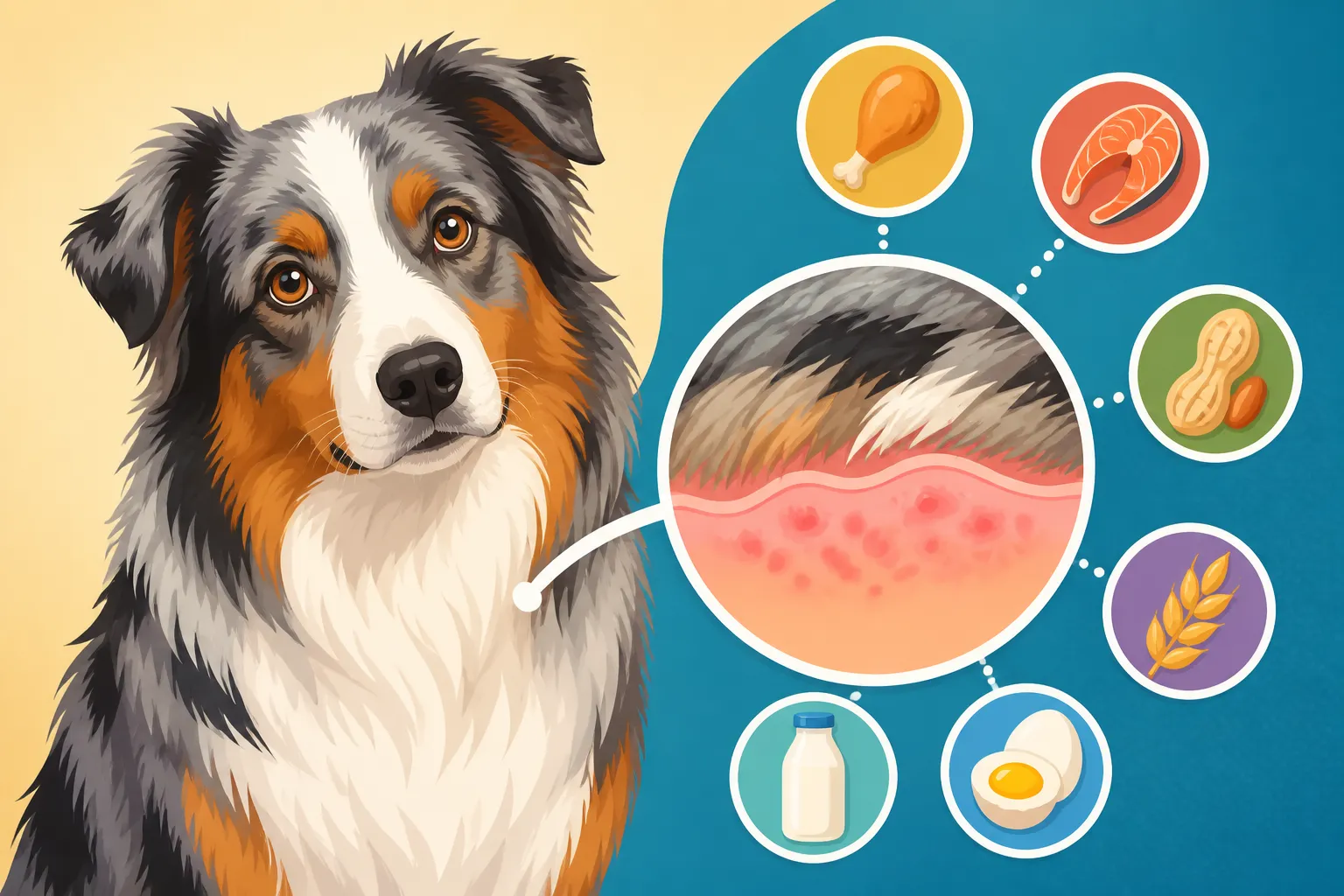
While any food ingredient can potentially trigger an allergy, some are far more common than others. The usual suspects tend to be the proteins that dogs are most frequently exposed to throughout their lives. Beef and chicken top the list for many dogs, followed by dairy, wheat, and soy. Lamb, fish, corn, and eggs can also be culprits. It’s important to note that a dog isn't allergic to "grain" in general, but rather to the protein found in specific grains like wheat or corn. So, when you hear about "grain-free" diets, it's often an attempt to avoid common grain proteins, not grains themselves as a category. The trick is that what's common in one dog might be perfectly fine for another, making diagnosis a highly individualized process. Because Aussies are so commonly fed kibble with these ingredients, their exposure over time can lead to the development of these sensitivities.
| Common Dog Food Allergens | Typical Symptoms Reported |
|---|---|
| Beef | Itching, skin inflammation, GI upset |
| Chicken | Itching, ear infections, vomiting |
| Dairy (lactose/protein) | Diarrhea, gas, itchy skin |
| Wheat (gluten) | Itching, paw chewing, soft stools |
| Soy | Skin rashes, GI distress |
| Lamb | Itching, ear discharge, anal gland issues |
| Corn | Excessive licking, patchy fur |
| Eggs | Skin lesions, vomiting, diarrhea |
Genetic Predisposition in Australian Shepherds
Like many purebred dogs, Australian Shepherds can have a genetic predisposition to certain health issues, and allergies are no exception. While it’s not a simple one-to-one inheritance, if an Aussie's parents or close relatives suffered from allergies – whether environmental or food-related – their offspring might be at a higher risk. This doesn't mean every Aussie will develop them, but it means their immune systems might be wired to be a bit more reactive than other breeds. Responsible breeders are often transparent about allergy history in their lines, but it's a complex issue without a simple DNA test for "food allergy." This genetic component often means that a food allergy might not appear until adulthood, sometimes even after years of eating the same food without issue. It's less about a sudden "switch" being flipped and more about a cumulative exposure reaching a tipping point in a genetically susceptible individual. This predisposition highlights why persistent symptoms should always be taken seriously, rather than just managed with symptomatic treatments.
The Elimination Diet: Your Best Detective Tool
When it comes to definitively diagnosing a food allergy in your Australian Shepherd, there's no shortcut. Blood tests or saliva tests can suggest sensitivities, but they are not reliable for a true food allergy diagnosis. The gold standard, universally recommended by veterinary dermatologists, is the food elimination diet. It's a commitment, requiring patience and strict adherence, but it's truly the only way to get a clear answer for your itchy Aussie.
Choosing a Novel Protein or Hydrolyzed Diet
The core principle of an elimination diet is to remove all potential allergens from your dog’s diet and feed them something entirely new – a "novel protein" – that they have never eaten before. For most Aussies, this means moving away from common proteins like chicken, beef, or lamb. Your vet might suggest a diet based on duck, venison, rabbit, kangaroo, or even insects as the sole protein source. The idea is that if your dog has never encountered this protein, their immune system hasn't had the chance to develop an allergic reaction to it. Alternatively, a "hydrolyzed protein" diet breaks down common proteins into such tiny fragments that the immune system doesn't recognize them as allergens. These specialized diets are usually only available through your veterinarian. Finding these novel protein options might mean looking at specialized pet food retailers, sometimes online through trusted sites like Chewy, or even exploring fresh dog food services like Ollie if they offer appropriate limited ingredient options. Remember, everything your dog consumes must be part of this novel diet, including treats, chews, and even medications if they contain flavorings. This is where the detective work truly begins.
Strict Adherence is Key
This is arguably the hardest part of the elimination diet: absolute, unwavering strictness. For a minimum of 8 to 12 weeks, your Australian Shepherd can eat nothing but the chosen novel or hydrolyzed diet. This means:
- No treats unless they are single-ingredient and approved by your vet as part of the novel protein source (e.g., plain cooked duck if duck is your novel protein).
- No table scraps. Period. Even a crumb can derail the process.
- No flavored medications or supplements unless cleared by your vet.
- No chewing on unknown objects outside, like stray bits of food on walks.
- No flavored toys or dental chews.
- If you have other pets, ensure your Aussie cannot access their food.
This level of rigor can be challenging, especially with an intelligent and often food-motivated Aussie. You might need to adjust your routine, keep them on a leash in the yard, or use puzzle feeders (many available on Amazon) filled with their new kibble to satisfy their mental needs. If symptoms clear up significantly during this period, you’ve found strong evidence that a food allergy is at play. It's a huge relief when you see that improvement, confirming your suspicions about Food Allergy Itching in an Australian Shepherd.
Reintroducing Ingredients Carefully
Once your Australian Shepherd's symptoms have cleared or significantly improved on the elimination diet, you've reached the diagnostic phase. This is where you systematically reintroduce ingredients, one at a time, to identify the specific culprits. For example, after 8-12 weeks of a duck and potato diet, you might introduce a small amount of chicken protein (e.g., boiled chicken breast) into their meals for 7-14 days, while continuing the duck and potato base. You'll be watching like a hawk for any return of itching, ear infections, or digestive upset. If symptoms reappear, you've identified an allergen! You then remove that ingredient, allow symptoms to resolve again, and then try the next ingredient (e.g., beef). This methodical process helps build a clear picture of what your Aussie can and cannot tolerate. It's a slow process, but it's the most accurate way to understand your dog's specific triggers and tailor a safe, healthy long-term diet.
Navigating Commercial Diets and Ingredient Labels
Once you have a clearer idea of your Aussie's food sensitivities, the next challenge is finding a commercial diet that works for them. The pet food aisle can be overwhelming, filled with marketing claims that don't always align with your dog's specific needs. Understanding labels and knowing what questions to ask is crucial for managing a food-allergic Australian Shepherd.
Deciphering "Limited Ingredient" Formulas
Limited Ingredient Diets (LIDs) have become incredibly popular, and for good reason. They are designed to minimize the number of ingredients, usually focusing on a single novel protein source and a single carbohydrate source (like sweet potato or tapioca). This simplicity can be a godsend for allergic dogs, as it reduces the chances of encountering a problematic ingredient. However, "limited ingredient" doesn't automatically mean "allergy-safe." You still need to carefully read the ingredient list to ensure it doesn't contain any of your Aussie's identified allergens. Some LIDs might still use common proteins as secondary ingredients, or be manufactured on shared lines that have cross-contamination. Always look for clear statements about ingredient sourcing and manufacturing processes. Brands like Merrick Limited Ingredient Diet or Natural Balance LIDs are often considered, but it's critical to verify the exact protein and carbohydrate sources to match your dog's unique profile. The goal isn't just fewer ingredients, but the right ingredients.
The Role of Grain-Free Diets
The term "grain-free" exploded in popularity, often associated with perceived allergy relief. For some Australian Shepherds, a grain-free diet might indeed help if they are specifically allergic to a grain protein like wheat or corn. However, it's a common misconception that all grains are inherently bad or allergenic for dogs. Many dogs thrive on diets that include grains. If your Aussie's elimination diet revealed an allergy to chicken but not to corn or rice, then a chicken-free, grain-inclusive diet would be perfectly fine. The focus should always be on identifying and avoiding the specific protein your dog reacts to, whether it's from meat, dairy, or a grain. Simply choosing "grain-free" without understanding the actual allergens might not solve the problem and could even lead to nutritional imbalances if not properly formulated. For those wondering about the efficacy of grain-free options, a deep dive into Whether Grain-Free Settles Aussie Itching can provide more context.
Seeking Veterinary Guidance for Prescription Options
For Australian Shepherds with severe or multiple food allergies, over-the-counter limited ingredient diets might not be sufficient. In these cases, your veterinarian might recommend a prescription hydrolyzed protein diet. These diets, such as those from Royal Canin or Hill's, use proteins that have been broken down into such tiny molecular weights that the dog's immune system usually cannot recognize them as allergens. They are highly digestible and rigorously manufactured to avoid cross-contamination. While these diets can be more expensive and typically require a vet's prescription, they offer the highest level of assurance for dogs with complex or extreme food sensitivities. They are often a last resort but an incredibly effective one for bringing relief to severely affected Aussies. Your vet is your best partner in navigating these specialized options and ensuring your Aussie gets precisely what they need.
Managing a Food-Allergic Australian Shepherd Long-Term
Once you've identified the offending ingredients and found a suitable diet, managing a food allergy becomes a lifelong commitment to consistency and vigilance. It's not just about what goes in the bowl; it's about being mindful of every morsel, every treat, and every potential exposure to ensure your Aussie remains comfortable and healthy.
Maintaining a Consistent Diet
The cornerstone of long-term management is maintaining a consistent, allergen-free diet. This means sticking to the food you've identified as safe, day in and day out. Avoid the temptation to switch foods frequently or introduce new treats without careful consideration. Even if your Aussie seems to be doing well, a sudden reintroduction of an allergen can trigger a flare-up. If you need to change foods in the future (perhaps due to availability or your dog's changing nutritional needs as they age), do so slowly and methodically, ideally under veterinary guidance. This consistency helps to keep their immune system calm and their digestive tract settled. Remember that if you have an Aussie that needs a lot of training, finding treats that are compatible with their strict diet is crucial. Plain, single-ingredient treats (like small pieces of the novel protein they tolerate) are often your best bet, or you can even use their kibble as training rewards. Considering Treats That Fit an Australian Shepherd Training Day can help you plan.
Avoiding Cross-Contamination and "Hidden" Ingredients
Even with the best intentions, cross-contamination is a real threat. If you use the same scoop for multiple dog foods, share bowls, or store different foods in close proximity, you risk exposing your allergic Aussie to trace amounts of an allergen. Be meticulous: dedicate a specific scoop and bowl, clean feeding areas regularly, and ensure all family members and visitors understand the strict dietary rules. "Hidden" ingredients are also a challenge. Many medications, supplements, and even dental chews contain flavorings or binders derived from common allergens. Always read labels carefully and discuss all products with your vet, asking about the full ingredient list. If you have children, educate them about not feeding your Aussie anything without your explicit permission. For example, a small piece of cheese from a child's hand can trigger a reaction if dairy is an allergen for your Australian Shepherd.
Addressing Secondary Issues (Infections, Hot Spots)
While the elimination diet works to resolve the underlying allergy, your Australian Shepherd might still have lingering secondary issues like skin infections or hot spots from prior flare-ups. These often require concurrent treatment, even as the new diet takes effect. Your vet might prescribe antibiotics for bacterial infections, antifungals for yeast, or topical treatments to soothe irritated skin. It’s vital to continue these treatments as directed, even if you see improvement from the diet, to fully clear up any residual problems. Grooming also plays a critical role here. Regular, gentle brushing can help you monitor their skin for new irritations and remove dead hair that could trap moisture and exacerbate skin issues. Be especially diligent in checking their dense coat for any signs of trouble. It can be easy for a hot spot to fester unnoticed under their thick fur, so regular checks are key. Learn more about preventing some of these problems by focusing on Australian Shepherd Dental and Ear Routine and understanding The Australian Shepherd Double Coat Explained.
Disclaimer
This article is for general informational purposes only and does not constitute professional advice. Laws, prices and regulations vary by location and change over time. Consult a qualified professional for guidance on your specific situation.