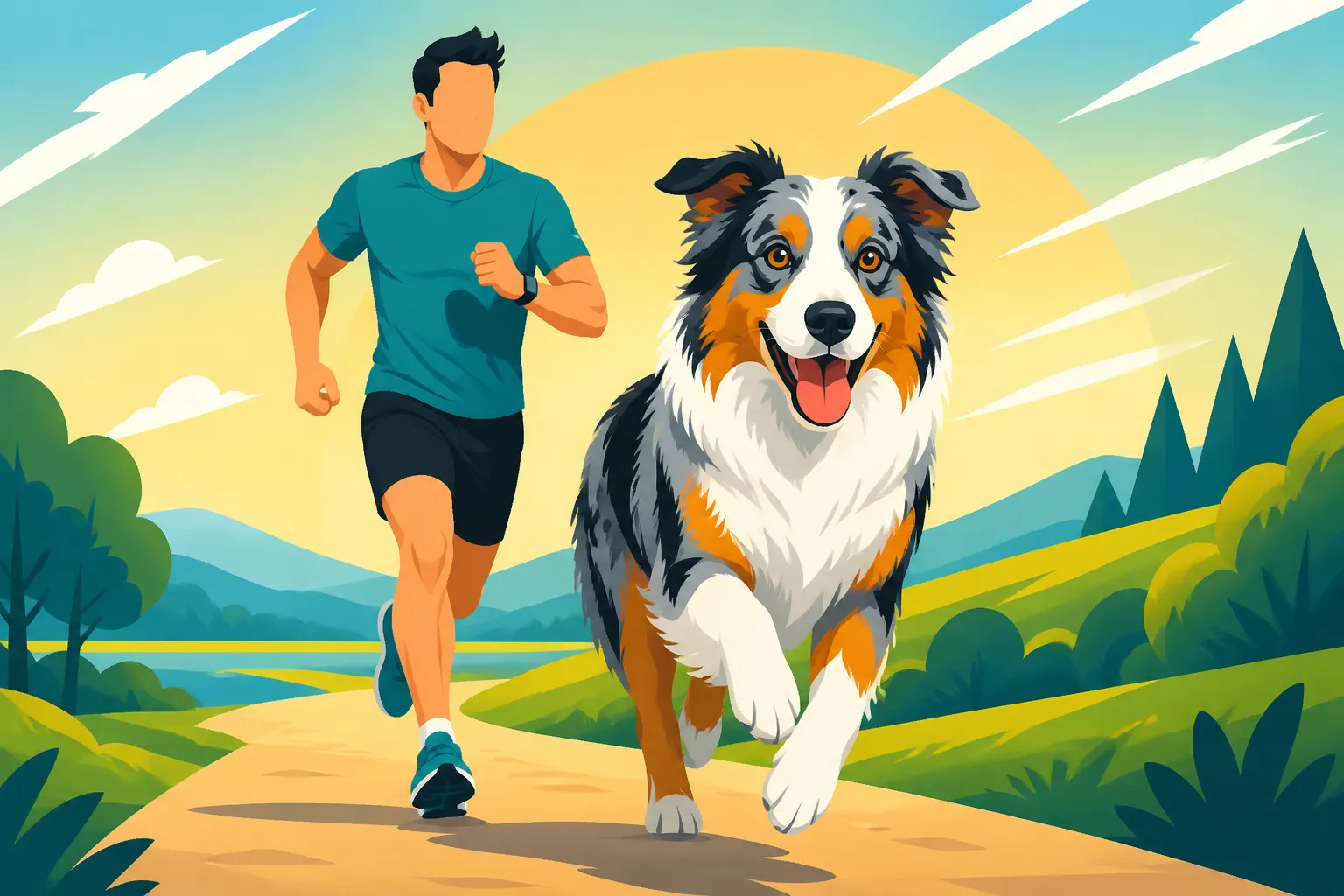
Running With an Adult Australian Shepherd
For many Australian Shepherd owners, the sheer boundless energy their dog possesses can feel like a riddle needing a daily solution. You've got this smart, driven companion who needs to move, and simply walking around the block just isn't cutting it for either of you. This guide is all about how to safely and effectively integrate running into your adult Australian Shepherd's exercise routine, ensuring both their physical needs are met and their long-term health is protected.
Is Your Australian Shepherd Ready for Running?
Before you even think about lacing up your own running shoes, it's absolutely critical to make sure your Australian Shepherd is physically prepared for the demands of running. Just because they have endless energy doesn't mean their bodies are always ready for sustained, high-impact activity. Skipping these preliminary steps can lead to serious injuries and a lot of heartache down the road.
Age and Physical Maturity
One of the biggest mistakes new Aussie owners make is starting high-impact activities like running too early. While your Australian Shepherd puppy might look like a fully grown dog at six or eight months old, their growth plates are still open. These are areas of cartilage at the ends of long bones that allow the bones to grow. Excessive stress on open growth plates can cause permanent damage, leading to lifelong lameness or chronic arthritis. For most Australian Shepherds, growth plates don't fully close until they are around 18 to 24 months old. Some larger or slower-maturing individuals might take even longer.
It’s truly tempting to hit the trails with your energetic youngster, especially when they’re bouncing off the walls. But patience here is paramount. Until your vet gives you the all-clear, stick to softer surfaces, shorter sessions, and activities that involve less pounding on their developing joints. Think about gentle hikes on varied terrain, swimming, or short bursts of fetch on grass rather than pavement running. This commitment to proper development in their younger years will pay dividends in their later life, helping them to maintain sound joint health for many years of happy activity.
Health Checks Before Hitting the Pavement
Even if your Aussie is past the two-year mark, a comprehensive health check with your veterinarian is non-negotiable before embarking on a regular running regimen. This isn't just a routine check-up; it's an opportunity to specifically assess their suitability for this type of exercise. Your vet will evaluate their overall physical condition, listen to their heart and lungs, and check for any underlying orthopedic issues. They’ll pay close attention to their hips, elbows, and knees, which are often susceptible to conditions like Australian Shepherd Hip Dysplasia and Working Joints or elbow dysplasia that could be exacerbated by running.
Discussing your running aspirations with your vet allows them to offer tailored advice based on your dog's individual health history and breed predispositions. They might recommend specific joint supplements, or even suggest x-rays if there are any concerns about their skeletal structure. This proactive approach helps identify potential problems early, allowing you to either mitigate risks or adjust your exercise plans to suit your dog's capabilities. Remember, the goal is always to enhance their quality of life, not to push them into discomfort or injury.
Building Stamina Gradually
You wouldn't jump off the couch and run a marathon, and neither should your Australian Shepherd. Building stamina is a gradual process that requires consistency and careful progression. Starting too fast can lead to muscle strains, fatigue, and can even turn your dog off running entirely if they associate it with pain or exhaustion. Begin with short, brisk walks, then gradually introduce short bursts of jogging within those walks. Think of it as interval training for your dog.
A good rule of thumb is to increase the distance or duration of your runs by no more than 10-15% each week. Pay close attention to your dog's cues: are they lagging behind, panting excessively, or showing any signs of discomfort? If so, it's time to slow down or shorten the session. It’s far better to under-do it than over-do it, especially in the early stages. Remember, consistency over intensity is key here. Gradually, your Aussie will develop the cardiovascular fitness and muscle endurance needed for longer, more enjoyable runs, allowing them to eventually cover The Distance an Adult Aussie Can Cover with ease.
Essential Gear and Safety Considerations for Runners
Running with your Australian Shepherd isn't just about putting on shoes and heading out the door. Just like any serious athlete, you and your dog need the right equipment to ensure safety, comfort, and optimal performance. Neglecting these details can lead to discomfort, injury, or even dangerous situations, particularly when dealing with an energetic, sometimes easily distracted Aussie.
Harnesses, Leashes, and Hands-Free Options
Choosing the right harness is crucial for your running buddy. A regular flat collar isn't suitable for running, as it can put undue pressure on your dog's trachea if they pull, potentially causing damage. Opt for a well-fitting, comfortable harness that allows full range of motion in their shoulders and chest. Many runners prefer a Y-front harness or an athletic-style harness that distributes pressure evenly across their chest and back, rather than restricting their natural stride. Brands like Ruffwear and Kurgo offer excellent designs that are popular among active dog owners.
For leashes, a hands-free option can be a game-changer. These leashes typically clip to a belt worn by the runner, allowing you to maintain your natural arm swing and balance without having to grip a leash. This is especially useful for managing a strong Australian Shepherd, providing more control while reducing strain on your arms and shoulders. Look for hands-free leashes with a bungee section, which can absorb some of the shock if your dog suddenly pulls, making the experience smoother for both of you. You can often find a wide variety of these specialized leashes and harnesses on platforms like Amazon or Chewy.
Paw Protection and Trail Surfaces
Your Australian Shepherd's paws are their primary contact with the running surface, and protecting them is paramount. Different surfaces present different challenges. Pavement can be abrasive and hot, especially during warmer months, leading to burns or excessive wear on paw pads. Rough trails with rocks, thorns, or sharp debris can cause cuts and abrasions. Australian Shepherd Paw Pads After Rough Ground need specific care and attention to prevent injury.
Consider investing in dog boots, especially if you're running on hot pavement, icy conditions, or very rough terrain. While some dogs take time to adjust to boots, they offer excellent protection. Regularly check your dog's paw pads for cracks, cuts, blisters, or excessive wear. Trim their nails regularly to prevent discomfort and splaying of their toes. During runs, be mindful of the surfaces you choose. Softer options like dirt trails, grass, or sand are generally gentler on joints and paws than concrete or asphalt.
Hydration and Temperature Management
Australian Shepherds have a thick double coat, which, while great for insulation in cold weather, can make them prone to overheating, particularly when exercising vigorously. Proper hydration and temperature management are non-negotiable. Always carry fresh water for both yourself and your dog, even on shorter runs. Collapsible bowls are incredibly convenient for water breaks on the go.
Be extremely vigilant about Australian Shepherd Exercise in Summer Heat. Avoid running during the hottest parts of the day; early mornings or late evenings are best. Pay attention to signs of overheating, such as excessive panting, drooling, lethargy, or a refusal to continue. These are serious warnings. Never push a dog showing these symptoms. Understanding Spotting Heat Trouble in a Working Aussie is a critical skill for any active Aussie owner. In warmer climates, a cooling vest or bandanna, part of a Cooling Kit That Works Under an Aussie Coat, can help regulate their body temperature during and after runs, but these are supplements to avoiding the heat, not replacements for good judgment.
Developing a Running Routine with Your Aussie
Once your Australian Shepherd is deemed physically ready and you've got your gear sorted, it's time to build a running routine that works for both of you. This isn't just about logging miles; it's about creating a consistent, enjoyable, and safe activity that strengthens your bond and fulfills your Aussie's inherent need for a job.
Starting Slow and Increasing Distance
The key to a successful and sustainable running routine is gradual progression. Remember the "couch to 5K" programs for humans? Apply that same philosophy to your Australian Shepherd. Start with a mix of walking and very short periods of jogging. For example, you might walk for five minutes, jog for one minute, walk for three, jog for one, and repeat. Over several weeks, slowly increase the duration of the jogging intervals and decrease the walking, until your dog is comfortably trotting for longer periods.
Consistency is more important than speed or distance in the beginning. Aim for several shorter, easier runs each week rather than one long, exhausting one. Observe your Aussie closely during and after each session. Are they enthusiastic at the start? Do they recover quickly? Do they seem stiff or tired later in the day? These observations will guide how quickly you increase the intensity and duration of your runs. Always err on the side of caution; a slow build-up prevents injuries like Cruciate Tears in a Working Australian Shepherd and keeps your dog eager for the next outing.
Mixing Up Your Runs: Sprints, Trails, and Urban Environments
While consistent running on pavement can be part of your routine, don't limit your Australian Shepherd to just one type of run. Variety keeps things interesting for their intelligent minds and works different muscle groups, which contributes to overall fitness. Incorporate sprints into your routine: short bursts of fast running followed by recovery jogs. This mimics their natural herding behaviors and builds explosive power.
Exploring different environments also adds richness to your runs. Dirt trails in parks or forests offer softer surfaces that are gentler on joints and paws, and the varied terrain provides mental stimulation as they navigate roots and rocks. Urban environments can expose them to different sights, sounds, and smells, offering valuable socialization opportunities, provided they are managed safely. Just be extra mindful of traffic and other distractions in busy areas. Remember, your Aussie thrives on having a "job," and navigating varied terrain or responding to quick directional changes on a sprint can engage their minds as much as their bodies.
Recognizing When to Rest or Stop
Even the most enthusiastic Australian Shepherds need rest. Over-training is a real risk and can lead to burnout, injuries, or even behavioral issues stemming from chronic fatigue. Pay close attention to your dog's energy levels and attitude. If they seem less enthusiastic about going for a run, are lagging behind, or showing any signs of stiffness or lameness, it's time for a rest day, or even a few days off. Sometimes, a "rest" might mean switching to a low-impact activity like swimming or a leisurely sniff-walk in a new area.
If you notice your dog limping or showing signs of pain, such as An Australian Shepherd Limping After Agility, stop immediately and consult your vet. Don't try to push through it. It's also vital to schedule active recovery days where you focus on shorter, less intense activities. Just like us, dogs benefit from stretching and gentle movement to keep their muscles supple. Incorporating joint supplements or a diet specifically formulated for active dogs, which you can find through Joint Support in a Working Aussie Diet, can also proactively support their long-term orthopedic health as they age and continue their running career.
Common Challenges and Troubleshooting
Even with the best intentions and preparation, running with an Australian Shepherd can present its own set of challenges. Their high drive, thick coat, and athletic build mean that certain issues are more common. Being prepared for these can help you navigate them safely and effectively, ensuring that running remains a positive experience for you and your furry partner.
Overheating and Heatstroke Prevention
We touched on this earlier, but it cannot be stressed enough: overheating is a major concern for Australian Shepherds. Their dense double coat, while beautiful, makes them less efficient at cooling down compared to many other breeds. Heatstroke is a medical emergency that can be fatal. Beyond avoiding peak heat times, you need a proactive strategy. Always start your runs well-hydrated. If you notice your Aussie's gums becoming tacky or their panting becoming shallow and rapid, these are early warning signs.
Consider reflective gear during hotter times to help bounce sunlight away. If you run in areas with natural water sources like streams or lakes, a quick dip can be an excellent way to cool down mid-run, but always supervise them closely and ensure the water is clean and safe. If your dog shows any severe signs of heatstroke, such as staggering, collapsing, or vomiting, immediately stop, try to cool them down gently with cool (not icy) water, and get them to an emergency vet right away. Prevention is the best medicine here, so make conservative choices when the temperatures rise.
Joint Stress and Long-Term Health
The repetitive impact of running, particularly on hard surfaces, can take a toll on your Australian Shepherd's joints over time. Even a genetically sound dog can develop issues if not managed properly. While running is fantastic exercise, it's not the only exercise your Aussie needs. Diversify their activities to include low-impact options like swimming, which builds muscle without joint stress, or hiking on varied, soft terrain. This comprehensive approach helps build supporting muscle around their joints and reduces constant impact on any one area.
Regular veterinary check-ups are important to monitor their joint health, especially as they get older. Your vet might recommend supplements containing glucosamine, chondroitin, or MSM to support cartilage health. Maintaining a healthy weight is also crucial; excess pounds place significantly more stress on their joints, accelerating wear and tear. A carefully portioned diet, perhaps through options like Ollie, ensuring they get the right nutrients for their activity level, can contribute immensely to their overall well-being and longevity. If you want your Aussie to be active well into their senior years, attention to their joint health now is non-negotiable.
Managing High Drive on the Run
Australian Shepherds are bred to work, and their high drive and intelligence mean they are constantly processing their environment. This can sometimes manifest as strong prey drive, a tendency to herd anything that moves (like cyclists or other runners), or simply being easily distracted by smells and sights. Trying to manage an Australian Shepherd who is constantly pulling, lunging, or trying to herd every jogger you pass can turn a fun run into a frustrating chore.
Consistent training is key here. Practice loose-leash walking and reliable recall in increasingly distracting environments before you attempt long runs. Use high-value treats and positive reinforcement to reward calm, focused behavior. If your Aussie tends to fixate on certain triggers, consider running in less-busy areas during peak training periods. A good quality, hands-free leash with a strong connection to a well-fitting harness can give you more control without disrupting your stride. Remember, your Aussie isn't trying to be "bad"; they are simply exhibiting their natural instincts. Your job is to channel that energy into appropriate behaviors, making your runs together a harmonious partnership.
| Aspect of Running | Consideration for Australian Shepherds | Best Practice |
|---|---|---|
| Age | Growth plates close around 18-24 months. | Wait until vet-confirmed maturity; avoid high-impact running before this. |
| Health | Prone to hip/elbow dysplasia. | Vet check-up before starting; discuss orthopedic history. |
| Stamina | High energy, but needs gradual conditioning. | Start with short walk/jog intervals, increase distance by max 10-15% weekly. |
| Gear | Flat collars can injure; strong pullers. | Use Y-front or athletic harness; consider hands-free leash with bungee. |
| Paws | Vulnerable to heat, abrasion, cuts. | Check paws regularly; use boots on hot pavement/rough terrain; prefer soft surfaces. |
| Temperature | Double coat makes them prone to overheating. | Avoid peak heat; carry water; learn heatstroke signs; consider cooling gear. |
| Joints | Repetitive impact can cause wear and tear. | Diversify exercise (swimming, soft trails); maintain healthy weight; consider joint supplements. |
| Drive | Strong prey drive, herding instinct, easily distracted. | Consistent leash training; practice recall in distractions; choose less busy routes initially. |
Disclaimer
This article is for general informational purposes only and does not constitute professional advice. Laws, prices and regulations vary by location and change over time. Consult a qualified professional for guidance on your specific situation.