Hearing Loss in an Aging Australian Shepherd
It’s a heart-wrenching reality of sharing our lives with Australian Shepherds that they, like us, grow old. One of the most subtle, yet impactful, changes we often notice as they reach their golden years is a decline in their hearing. It can be frustrating, confusing, and even a little sad when your once responsive, alert Aussie starts missing cues or seems to ignore you. This guide is here to walk you through recognizing these shifts, understanding why they happen, and most importantly, how to support your beloved senior companion through this natural part of aging.
Spotting the Quiet Changes: Recognizing Hearing Loss in Your Senior Aussie
When your Australian Shepherd starts to lose their hearing, it doesn't usually happen overnight. It’s a gradual process, and the signs can be subtle at first, easily mistaken for stubbornness or just being "old." But paying close attention to these early indicators can help you intervene and adapt sooner, making life easier for both of you. Many owners describe a feeling of sudden bewilderment when their dog, who always heard the treat bag crinkle from across the house, now sleeps through the doorbell.
Behavioral Shifts That Indicate Hearing Loss
One of the most common early signs is a change in how your Aussie responds to sounds they once reacted to instantly. Think about those everyday noises: the mail carrier, the vacuum cleaner, the car pulling into the driveway, or even the crinkle of a treat bag. If your dog starts to ignore these or shows a delayed reaction, it might not be selective hearing.
For example, if you call their name from another room and they don’t stir, but bolt upright when you enter their line of sight, that’s a big clue. Or perhaps they startle easily when approached from behind, even by a familiar family member, because they didn’t hear you coming. My own senior Aussie, Blue, began to sleep through thunderstorms that used to send him under the bed, which initially seemed like a blessing but soon became a clear indicator he just wasn't hearing them anymore.
Another sign can be a change in their vocalization. Some dogs with hearing loss might bark more frequently and loudly, almost as if they can no longer gauge the volume of their own voice. Others might become quieter, unsure if anyone can hear them. If your Aussie used to greet you with excited barks when you came home, and now they just lift their head when they see you, it’s worth noting. Pay attention to how they respond to other dogs too; a senior Aussie who seems to miss social cues from other canines could be struggling to hear their barks or growls. You might also notice them tilting their head more often, as if trying to catch a sound, or appearing generally more anxious in environments with unexpected movements, due to the lack of auditory warning.
Missing Cues and General Confusion
Beyond specific sounds, general confusion or a seeming inability to follow familiar commands can also be a red flag. If your Australian Shepherd, who has always been a pro at "sit" or "stay," suddenly seems to forget them, consider their hearing. They might be relying heavily on visual cues they’ve always associated with those commands, but when those visual cues aren't present, they appear lost.
Imagine you're outside in the yard, and you call your Aussie for dinner. If they don't respond until you walk closer and gesture, that's not necessarily disobedience. They might genuinely not have heard you. This can be particularly frustrating during playtime or when trying to manage their herding instincts; a dog that once responded to a sharp "leave it" now seems oblivious to the approaching squirrel or bicycle, putting them in potential danger.
A good way to test at home, if you suspect hearing loss, is to make a sudden, loud noise out of their sight when they are relaxed but not asleep. Clap your hands loudly behind them, jingle keys, or drop a book. If they don't react, or react only with a delayed startle that suggests they felt a vibration rather than heard the sound, it's a strong indication their hearing is diminished. This kind of observation is crucial for owners preparing for Senior Australian Shepherd Care After Ten. Don't assume they're just ignoring you; often, they truly can't hear.
| Sign of Hearing Loss | What it Looks Like | Potential Misinterpretation |
|---|---|---|
| No Response to Name | Doesn't look up when called from another room; only responds when you appear visually. | Stubbornness, distraction, "selective hearing" |
| Startling Easily | Jumps or flinches when touched from behind, even by familiar people. | Nervousness, changes in temperament |
| Increased Barking | Barks louder or more frequently, seemingly unaware of their own volume. | Aggression, increased anxiety, demand barking |
| Ignoring Familiar Sounds | Sleeps through the doorbell, doesn't react to car pulling up, misses treat bag crinkles. | Deep sleep, disinterest |
| Difficulty with Commands | Seems to "forget" commands unless accompanied by strong visual cues. | Disobedience, cognitive decline |
| Reduced Interaction | Less responsive to verbal praise, less interest in auditory toys. | Depression, general slowing down |
| Head Tilting | Tilts head more often, as if trying to focus on sounds they can barely perceive. | Curiosity (though often accompanied by confusion) |
The "Why" Behind the Silence: Causes of Age-Related Hearing Decline
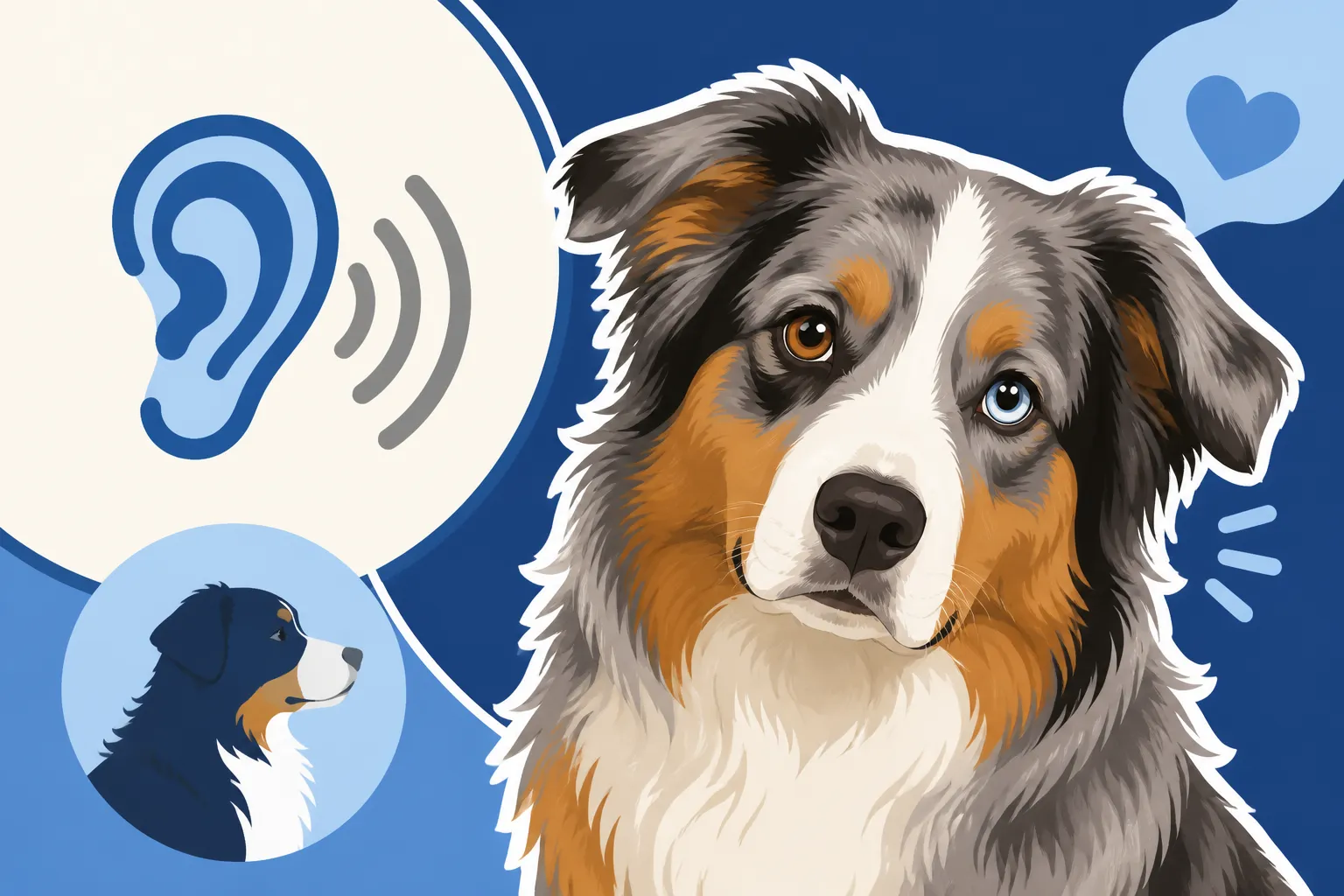
Just like humans, Australian Shepherds can experience a natural decline in hearing as they get older. This process, known as presbycusis, is the most common cause of hearing loss in senior dogs. It’s a slow, progressive degeneration of the structures within the inner ear, specifically the tiny hair cells that are responsible for converting sound vibrations into electrical signals that the brain interprets.
Presbycusis and Inner Ear Changes
Presbycusis is essentially the wear and tear of a lifetime of listening. Over time, these delicate hair cells in the cochlea can become damaged or die off, and they don't regenerate. This damage accumulates, leading to a gradual loss of hearing, typically starting with higher frequencies and then progressing to lower tones. This is why your Aussie might first stop responding to a sharp whistle but still react to a deeper, rumbling sound.
This isn't just about volume; it's about clarity and the ability to process sound. The brain receives less precise information from the aging ear, making it harder to distinguish specific words or sounds from background noise. This can be incredibly disorienting for a dog whose world was once full of clear auditory signals, from the rustle of leaves to your distinct voice.
While presbycusis is a natural part of aging, it's important to differentiate it from other causes of hearing loss that might be treatable. Other conditions can sometimes exacerbate or mimic age-related decline. For instance, chronic ear infections can cause scarring or blockages that impair hearing, as can excessive wax buildup. If your Aussie seems to be experiencing a rapid or sudden loss of hearing, or if there are other symptoms like head shaking, discharge, or pain, a vet visit is essential to rule out these issues. Timely diagnosis might save some of their remaining hearing.
Other Contributing Factors to Hearing Loss
While presbycusis is the primary culprit, other factors can contribute to or worsen hearing loss in an aging Australian Shepherd. Certain medications, especially some antibiotics or diuretics, are known to be ototoxic, meaning they can damage the ear structures and cause hearing loss. If your Aussie has been on long-term medication for another condition, it's worth discussing this possibility with your vet. Traumatic injuries to the head can also impact hearing, though this is less common as an age-related issue.
Moreover, underlying health conditions can indirectly affect an Aussie's hearing. For example, some studies suggest a link between hypothyroidism and hearing impairment in dogs, though this is not as clearly established as presbycusis. If your senior Aussie is showing signs of Thyroid Disease Behind a Flat Aussie Coat or other systemic illnesses, it's yet another reason to ensure regular veterinary check-ups. A comprehensive veterinary exam can help distinguish between simple age-related changes and more complex issues that might be contributing to their hearing difficulties. Having a good pet insurance plan, like one from Healthy Paws, can be incredibly beneficial for covering diagnostic tests and potential treatments for these various health concerns as your Aussie ages. Early detection and treatment of conditions like ear infections or thyroid issues can sometimes prevent further hearing decline or at least improve your dog's overall quality of life.
Navigating the New Normal: Adapting Your Home and Routine
Living with a hard-of-hearing or deaf Australian Shepherd requires patience, empathy, and a willingness to adapt. While it might feel challenging at first, many owners find that strengthening their bond through new forms of communication can be incredibly rewarding. The key is to create an environment where your Aussie feels safe, understood, and can still enjoy a high quality of life.
Enhancing Communication with Visual Cues
The most crucial adjustment you can make is transitioning to visual communication. Your Aussie is a smart, observant breed, already attuned to body language. Start teaching them hand signals for basic commands like "sit," "stay," "come," "down," and "wait." You can pair these signals with vocal commands initially, even if they can't hear them, to build a strong association. Over time, as their hearing fades, the hand signals will become their primary understanding. There are many great resources online and trainers who specialize in working with deaf dogs who can guide you on developing a comprehensive set of signals. Remember consistency is key; ensure everyone in the household uses the same signals.
For recall, which is absolutely vital for safety, consider a vibration collar. This isn't a shock collar, but rather a device that emits a gentle vibration on their neck to get their attention. When you activate the vibration, immediately follow up with your "come" hand signal and reward them enthusiastically when they respond. This teaches them that the vibration means "look at me, something important is coming next." This tool can be a game-changer for off-leash safety in secure areas. For an Aussie known to bolt after movement, a reliable "look at me" cue or a strong recall signal is paramount.
Creating a Safe and Predictable Environment
A deaf or hard-of-hearing Australian Shepherd can feel vulnerable, especially if they startle easily. It's essential to make your home a predictable and safe haven. Always approach your Aussie from the front or side, where they can see you coming, to avoid startling them. If they are asleep, gently touch their bed or the floor near them to create a vibration, or lightly tap their shoulder rather than just grabbing them. This gives them a moment to register your presence.
Safety outside the home becomes even more critical. Because they can't hear traffic or other dangers, your Aussie should always be on a leash or in a securely fenced area when outdoors. A long line can be a great way to give them a sense of freedom in a safe, open space while still maintaining control. For walks, consider a "Deaf Dog" vest or collar tag. This alerts others to their condition, preventing strangers from inadvertently startling them or letting them off-leash thinking they'll respond to verbal commands. This consideration goes hand-in-hand with making sure their other senses are supported, especially if they are also experiencing An Old Australian Shepherd Losing Its Sight.
Beyond the Ears: Holistic Support for Your Hard-of-Hearing Companion
Supporting an aging Australian Shepherd with hearing loss isn't just about teaching new signals; it's about looking at their overall well-being. A decline in one sense can impact other areas of their life, and a holistic approach ensures they remain happy, healthy, and engaged.
Maintaining Engagement and Mental Stimulation
Just because your Aussie can't hear doesn't mean their brain stops working! Australian Shepherds are incredibly intelligent and thrive on having a "job." Mental stimulation becomes even more critical as their hearing declines. Puzzle toys, scent work, and trick training using hand signals are fantastic ways to keep their minds sharp and prevent boredom or anxiety. Nose work, in particular, is an excellent activity as it relies entirely on their sense of smell, which typically remains strong well into old age. Hide treats around the house and encourage them to sniff them out, turning mealtimes into a stimulating game.
Continue to engage them in activities they enjoy, adapting as needed. If they loved fetch, they still can, but you'll need to rely on visual cues (like watching the ball) or tactile cues (like a gentle tap) to get their attention. Even simple, consistent routines can provide comfort and a sense of security for an aging dog. Regular, gentle exercise that accounts for potential Australian Shepherd Arthritis After Years of Work is also vital for both physical and mental health.
Regular Veterinary Care and Quality of Life
Routine veterinary check-ups become even more important for a senior Australian Shepherd with hearing loss. Your vet can monitor their overall health, check for other age-related conditions, and ensure any hearing aids or interventions (though rare for dogs) are discussed. They can also offer advice on managing anxiety that might arise from their diminished hearing. Make sure to clearly communicate to your vet about your Aussie's hearing loss, so they can adjust their approach during exams, using visual cues and gentle handling.
Discuss with your vet any concerns about their quality of life. Sometimes, other issues like cognitive dysfunction syndrome (CDS) can overlap with hearing loss, making an Aussie seem more confused or disoriented. There are medications and supplements that can help manage symptoms of CDS. A vet can also help you track their overall health using regular bloodwork, as outlined in Bloodwork Worth Running on a Senior Aussie. Ultimately, the goal is to provide your senior Australian Shepherd with as much comfort, understanding, and joy as possible in their later years. With your love and adaptation, they can continue to live a full and happy life, even as the world around them grows a little quieter.
Disclaimer
This article is for informational purposes only and is not a substitute for professional veterinary advice. Always consult with a qualified veterinarian regarding your Australian Shepherd's health, diagnosis, and treatment plan.