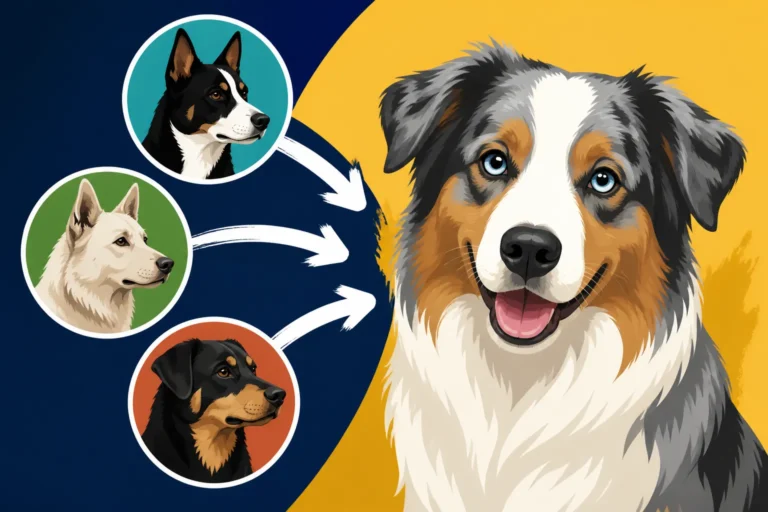
How Much Land an Aussie Really Needs
One of the biggest worries I hear from prospective Australian Shepherd parents, or even those who already have an Aussie but live in a smaller space, is about needing a sprawling ranch. It’s a common misconception that if you don't have acres of land, you simply can't provide a good life for this breed. This guide aims to dismantle that myth and show you exactly what an Australian Shepherd truly needs to thrive, regardless of your property size.
The Common Misconception: Why Acres Aren't Always the Answer
When people picture an Australian Shepherd, they often conjure images of a tireless dog galloping across vast fields, herding sheep or cattle. This iconic image, while rooted in the breed's history, often leads to the mistaken belief that an Aussie requires a massive amount of physical property to be happy and well-adjusted. The truth, however, is far more nuanced. While they certainly appreciate space, it's the quality and type of activity, not just the sheer acreage, that truly matters.
The Image of the Ranch Dog Versus Reality
It’s easy to romanticize the idea of an Australian Shepherd as a quintessential ranch dog, always working, always outdoors. Television shows, movies, and even some online forums perpetuate this vision. This imagery can be incredibly daunting for someone living in a suburban home with a modest yard, let alone an apartment. You start to feel guilty, wondering if you're depriving your beloved Aussie of its true calling, or if you're even capable of meeting its needs without buying a farm. But let's be realistic: most Australian Shepherds today aren't working livestock full-time on ranches. Many are beloved family companions, living in a variety of environments. The expectation of needing a ranch sets an unfair, and often unnecessary, bar for ownership.
Understanding the "Working Dog" Label
Yes, the Australian Shepherd is unequivocally a "working dog." This label is crucial, but it's often misinterpreted. It doesn't primarily mean they need a huge field to run wild in all day. What it does mean is that they possess an innate drive to have a job, to be engaged, and to use their intelligence and physical capabilities purposefully. This strong Why Herding Instinct Is the Aussie Operating System means they thrive on structure, mental challenges, and activities that mimic their ancestral tasks, even if those tasks are now agility courses or puzzle toys. A vast, empty field with no engagement is just as boring for an Aussie as a tiny apartment if their minds aren't stimulated. The key isn't the size of the land, but the owner's commitment to channeling that working drive appropriately.
Defining "Enough Space" for an Australian Shepherd
So, if acres aren't the primary requirement, what is "enough space" for an Australian Shepherd? It comes down to a combination of intentional exercise, rich mental stimulation, and a safe, secure environment that allows them to express natural behaviors without causing problems. Think of it less about square footage and more about providing a fulfilling lifestyle within whatever boundaries you have.
Quality of Exercise Over Sheer Quantity of Land
This is perhaps the most important distinction. An Australian Shepherd doesn't just need to run; they need to do something while running. Two hours of structured play, training, or vigorous activity in a smaller, fenced yard or at a local park is infinitely more beneficial than 10 hours spent wandering aimlessly in an unfenced acre. Their intense The Australian Shepherd Herding Drive You Cannot Train Out means they thrive on activities like fetch, flirt pole games, disc dog, or even supervised off-leash running in a secure area. These activities require interaction with you, engaging both their bodies and minds.
Consider this: a professional athlete doesn't just wander around a stadium all day; they engage in focused training sessions. Your Aussie is the canine equivalent. Short, intense bursts of activity, combined with varied movements like jumping, turning, and sprinting, are far more effective than just opening the back door and hoping they'll entertain themselves. Even if you have a massive yard, if you're not out there engaging with your Aussie, it quickly becomes just a big, boring space.
The Critical Role of Mental Stimulation
This cannot be stressed enough: Australian Shepherds are incredibly smart dogs. Their brains need just as much, if not more, exercise than their bodies. A dog with a tired mind is a calm dog, regardless of its physical surroundings. This is where dedicated mental work truly shines. Think about training sessions, puzzle toys (you can find a great selection of Puzzle Feeders and Enrichment Gear for an Aussie at places like Chewy), scent work games, or learning new tricks. These activities can be done indoors, in a small yard, or even on a leash during a walk.
For example, I know an Aussie named Rusty who lives in a small condo. His owner takes him for two brisk 30-minute walks a day, but the real magic happens indoors. They do daily 15-minute scent work sessions where Rusty has to find hidden treats, and his owner teaches him a new trick every week. By the end of the day, Rusty is mentally exhausted and happy to curl up on his bed, even without a sprawling yard. Mental Work That Actually Tires an Australian Shepherd is key to preventing boredom-driven behaviors, like excessive barking or destructive chewing, regardless of the size of your property.
Safety and Containment Considerations
Regardless of how much land you have, safety and containment are paramount for an Australian Shepherd. Their intelligence and strong prey drive mean they can be escape artists if given the opportunity. A secure, physical fence is always preferable. Invisible fences might work for some dogs, but for a breed with such intense focus and drive, the lure of a squirrel or a passing jogger can easily override any correction from an invisible boundary.
If you have a large property, consider how you will contain your Aussie when they are outdoors, especially if you live near busy roads or have neighbors with livestock or pets. A well-constructed, tall fence is an investment, but it provides peace of mind. Even on a ranch, working Aussies are typically managed within specific areas or with direct supervision. For those with smaller yards, ensuring the fence is escape-proof (no digging under, no jumping over) is equally vital. Proper containment ensures your Aussie's safety and prevents them from "self-employing" in ways that could lead to trouble. Fencing Costs for an Aussie That Herds Everything can be significant, but it's a necessary part of responsible ownership.
Making Various Living Situations Work for Your Aussie
The idea that an Australian Shepherd needs a "ranch" is more about their inherent drive and need for engagement than it is about the physical square footage of your home. You absolutely can have a happy, well-adjusted Aussie in a variety of living situations, from apartments to suburban homes, as long as you're committed to meeting their core needs.
Thriving in an Apartment or Small Home
Living in an apartment with an Australian Shepherd might sound like a recipe for disaster to some, but it’s entirely feasible with the right commitment. The key here is scheduled, high-quality outings and extensive indoor enrichment. Your apartment actually becomes a haven for rest and quiet, while the outside world becomes their playground and classroom.
You'll need at least two solid walks or runs daily, ideally lasting 30-60 minutes each, where your Aussie gets to stretch their legs and sniff to their heart's content. Think about incorporating brisk walks, short jogs, or dedicated fetch sessions in a local park. Beyond physical exercise, apartment living requires a strong focus on mental stimulation indoors. Tug-of-war, hide-and-seek with toys, training new tricks, or using interactive feeders can keep their minds busy. Regular trips to dog parks (if your Aussie is well-socialized and enjoys them), or even organized dog sports like agility or flyball, can provide the intense bursts of activity they crave. Using long lines for supervised exploration in safe, open areas is also a fantastic way to give them a sense of freedom without needing a massive yard. For indoor confinement, a comfortable and appropriately sized crate, perhaps purchased from a pet supplier like Chewy, can provide a secure den for your Aussie. Australian Shepherds in Apartments can thrive when their owners are proactive and consistent.
Maximizing a Suburban Yard
A suburban yard, even a modest one, offers a fantastic middle ground. It provides a convenient outdoor space for potty breaks, sunbathing, and short bursts of play. The mistake many owners make, however, is assuming the yard alone is enough exercise. For an Australian Shepherd, a yard without active human engagement quickly becomes boring.
To maximize your suburban yard, turn it into an extension of your training and play routine. Install a flirt pole for quick chasing games. Set up a few jumps or weave poles if you're interested in nascent agility work. Practice recall, send-aways, and boundary training. Use the yard for nose work games, hiding treats for your Aussie to find. A secure fence is non-negotiable, given their strong herding instincts and potential to chase after anything that moves outside the yard. Even with a yard, supplementing with daily walks, visits to larger parks, or enrollment in dog sports classes is crucial. The yard is a tool, not the sole solution for their exercise needs.
When a Larger Property Does Make a Difference
While acres aren't a requirement, it's certainly true that a larger property can be incredibly beneficial under specific circumstances. If you're involved in actual livestock herding, a large, fenced pasture is obviously essential. Similarly, if you compete in serious dog sports like Schutzhund, advanced agility, or disc dog, having ample space to set up courses or practice long throws without interruption is a huge advantage.
For the average pet owner, a larger property offers convenience. It might mean more opportunities for supervised off-leash running, longer games of fetch, or the ability to set up more elaborate scent trails. However, even with acres, the underlying principle remains: the space must be actively used to engage your Aussie. A dog left to its own devices on a large plot of land can become bored, destructive, or even territorial if not properly stimulated and managed. The land itself is not a substitute for your time, effort, and intelligent planning in meeting your Aussie's needs.
Practical Strategies for Fulfilling Your Aussie's Needs Anywhere
It boils down to this: an Australian Shepherd needs a job, intelligent engagement, and consistent interaction, far more than it needs endless unmanaged space. By implementing strategic routines and leveraging accessible resources, you can ensure your Aussie leads a rich, fulfilling life no matter your living situation.
Scheduled Activities and Structured Play
Routine is a comfort to many dogs, and especially to high-drive breeds like the Australian Shepherd. Establishing a predictable schedule for exercise and mental work can go a long way in managing their energy and preventing unwanted behaviors. This isn't about being rigid, but about ensuring their needs are met daily.
Consider breaking up their exercise into multiple sessions throughout the day. Instead of one massive two-hour walk, try a brisk 30-minute walk in the morning, a 15-minute training session at lunch, and another longer walk or structured play session in the evening. This also helps with An Australian Shepherd That Cannot Switch Off by providing clear "on" and "off" periods. Structured play means you are directing the activity – think precise retrieve games, fetch with rules, or controlled tug sessions where they learn to release the toy on command. Don't just toss a ball and hope for the best; use play as another opportunity for engagement and reinforce good manners. Whether you're in a dog park or your backyard, the interaction is what counts.
Engaging Their Herding Instinct Safely
The Australian Shepherd Herding Drive You Cannot Train Out is powerful. Rather than fighting it or wishing it away, learn to channel it into appropriate outlets. This is particularly crucial if you don't have livestock for them to work. There are many ways to satisfy this instinct in a safe, controlled manner, even in urban or suburban environments.
One popular option is a flirt pole, which simulates chasing prey and allows them to perform quick turns and sprints without needing vast distances. Large, sturdy herding balls can also provide an excellent outlet for their desire to push and control. Many areas offer "urban herding" classes or intro-to-herding sessions on actual livestock, which can be an incredibly enriching experience for an Aussie, even if it's just once in a while. Even playing "boundary games" in your yard, where they learn to "herd" you to a specific spot, can tap into that instinct. The goal is to give them a healthy way to use their hardwired behaviors, preventing them from trying to herd children, other pets, or even bicycles and cars, which can be dangerous.
Integrating Training and Enrichment into Daily Life
Your Australian Shepherd's happiness isn't solely dependent on running miles every day; it's also about having their clever minds put to work. This means integrating training and enrichment seamlessly into your everyday routine, no matter your property size. Regular short training sessions, even just 5-10 minutes, can be incredibly tiring for their brains. Work on new tricks, refine obedience commands, or practice Scent Games That Tire an Australian Shepherd.
Many everyday items can become enrichment tools. A simple cardboard box filled with crumpled paper and scattered treats becomes a scent puzzle. Your daily walks can become exploration trips, allowing them ample time to sniff and investigate. Interactive feeders and puzzle toys, readily available from retailers like Chewy, can turn mealtime into a mental challenge. Even simple things like asking them to "stay" while you open the door, or waiting patiently for their meal, are small acts of impulse control training that build their mental fortitude. The more you engage their minds, the less frantic their need for endless physical space will become.
| Myth vs. Reality for Australian Shepherd Land Needs |
| :———————————————- | :————————————————————————————————————— |
| Myth: Requires acres of land to be happy. | Reality: Quality of engagement and type of activity are far more important than sheer acreage. |
| Myth: Needs to run freely all day, every day. | Reality: Thrives on structured, purposeful exercise and mental challenges, often in shorter, intense bursts. |
| Myth: A large yard is sufficient for exercise. | Reality: An unengaged yard is boring. Human interaction and planned activities are crucial, regardless of size. |
| Myth: Apartment living is impossible. | Reality: Apartment Aussies can thrive with consistent, high-quality daily outings and indoor mental work. |
| Myth: "Working dog" means constantly herding. | Reality: "Working dog" means a strong drive for a job and mental engagement; this can be channeled in many ways. |
Ultimately, whether you live in a small apartment, a suburban home with a postage-stamp yard, or indeed on a sprawling farm, your Australian Shepherd’s happiness and good behavior are directly correlated with your commitment to engaging their unique combination of intelligence, energy, and herding drive. It's about how you use the space you have, not just how much of it there is.
Disclaimer
This article is for general informational purposes only and does not constitute professional advice. Laws, prices and regulations vary by location and change over time. Consult a qualified professional for guidance on your specific situation.