The Australian Shepherd Herding Drive You Cannot Train Out
One of the biggest eye-openers for new Australian Shepherd owners, and even some seasoned dog folks, is the sheer intensity of their herding drive. It’s not just a cute quirk; it's a deeply ingrained instinct that can lead to all sorts of frustrations, from nipping at your children's heels to chasing anything that moves. This guide is here to help you truly understand this powerful drive and, more importantly, learn how to redirect it constructively so you and your Aussie can live a happier, more harmonious life together.
Understanding the Innate Herding Instinct
When you bring an Australian Shepherd into your home, you're not just getting a dog; you're adopting centuries of working heritage wrapped up in a furry, intelligent package. This isn't a breed that was casually developed for companionship. Aussies were bred with a very specific, demanding job in mind, and every fiber of their being is geared towards it. Understanding this fundamental truth is the first step to truly managing their behaviors.
A Legacy of Livestock Work
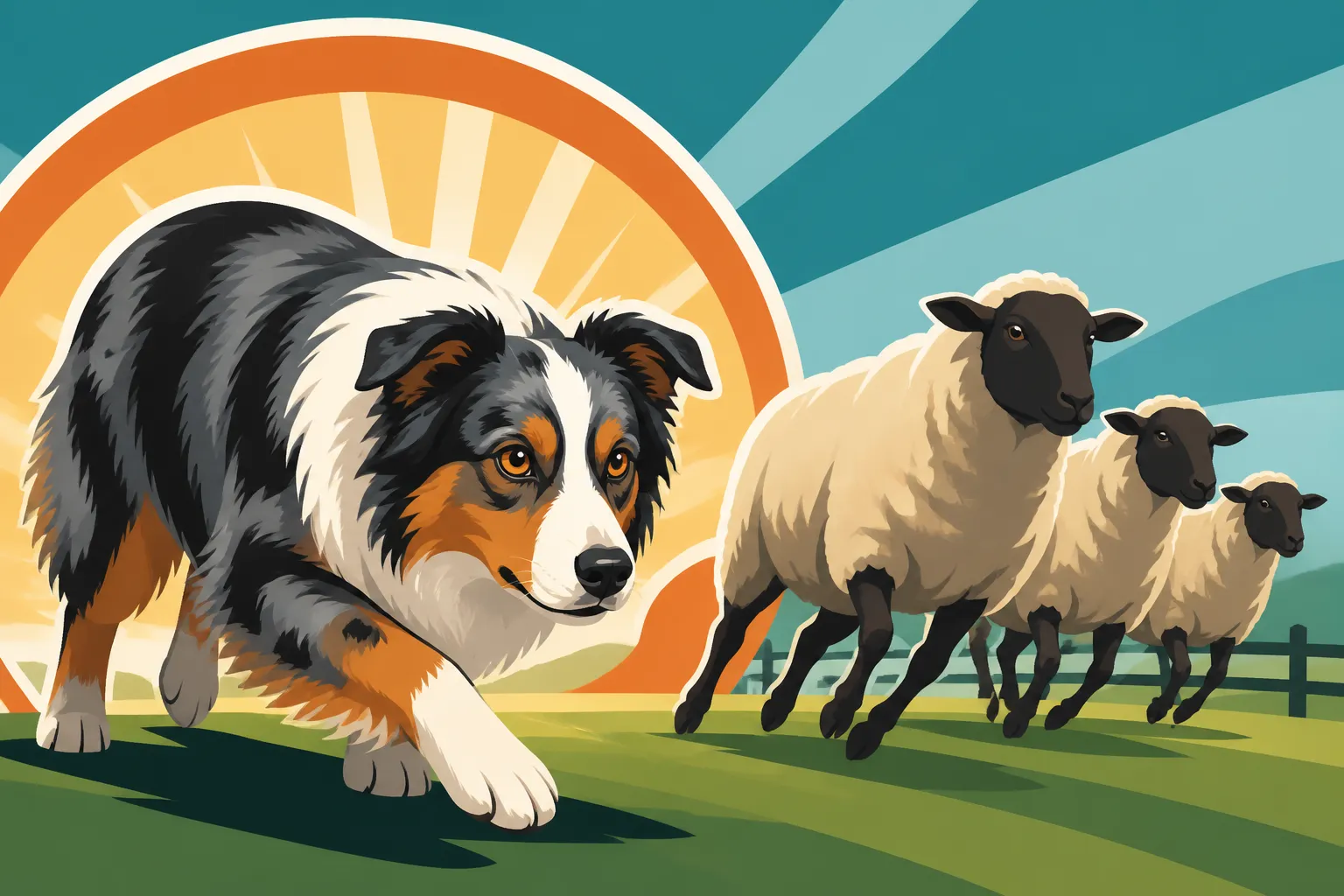
Australian Shepherds descend from a lineage of dogs specifically selected for their ability to gather, move, and control livestock, primarily sheep and cattle. Their ancestors were working dogs brought to the American West by Basque shepherds, not directly from Australia as their name might suggest. These dogs needed to be agile, intelligent, observant, and possess an unshakeable focus on their charges. Traits like a strong prey drive, the desire to chase and nip, and an innate understanding of how to influence movement were not just desirable; they were essential for survival and success on the ranch. This means that the "herding drive" isn't a learned trick; it's practically the Aussie operating system. Why Herding Instinct Is the Aussie Operating System It's hardwired into their DNA, a fundamental part of who they are, and it informs almost every interaction they have with their environment. They see the world through the lens of a shepherd.
This deep historical context is crucial because it explains why your Aussie behaves the way it does. It’s not being naughty or disobedient when it tries to round up your kids or stalk the cat. It's simply doing what generations of its ancestors were explicitly bred to do. Ranchers didn't want a dog that ignored a stray lamb; they wanted one that instinctively knew how to bring it back to the flock. They wanted a dog with a strong "eye" that could hold a cow steady with its gaze. When you recognize that these behaviors are echoes of a vital working past, you can approach them with empathy and a clearer strategy for redirection, rather than frustration.
What Herding Looks Like in Modern Homes
Fast forward from the sprawling ranches to your suburban living room or city park, and that powerful herding instinct often manifests in ways that are, shall we say, less than convenient. Without sheep or cattle to manage, your Aussie will find substitutes – and sometimes, those substitutes are your family members, other pets, or even inanimate objects. Imagine your Aussie seeing your toddler as a wayward lamb that needs to be brought back to the "flock" (which, to them, is you!).
This ingrained need to control movement and maintain order often translates into a dog that constantly monitors its environment, looking for things to "organize." They might patrol the perimeter of your yard, keeping an eye on every leaf that blows by, or try to gather all the toys into a neat pile. The intense focus that made them excellent ranch hands can become an all-consuming need in a home environment if not properly channeled. It’s a constant internal dialogue for them: "Is anything out of place? Can I bring it back together?" This isn't just about physical activity; it's a mental game they're always playing, and it can be exhausting for both you and your dog if they don't have appropriate outlets.
Recognizing Herding Behaviors in Everyday Life
Understanding the root cause is one thing, but pinpointing exactly what those inherited behaviors look like in your daily interactions is another. Sometimes, these actions can be subtle, while other times, they are undeniably overt and can even feel aggressive if you don't interpret them through the lens of herding instinct.
Nipping at Heels and Pant Legs
Perhaps one of the most common and often frustrating manifestations of herding drive in an Australian Shepherd is the tendency to nip at heels, ankles, and pant legs. This behavior is a direct carryover from their working days. On the ranch, a quick nip to the hock or heel of a stubborn sheep or cow was a non-injurious way to get it moving in the right direction. It was effective, efficient, and part of their job description.
In a home environment, however, this can be incredibly problematic. Imagine your Aussie seeing your toddler running across the room as a "flock member" straying too far. Their instinct kicks in, and they might dart in to deliver a correctional nip. This isn't done out of malice, but pure, unadulterated instinct. While typically not intended to harm, these nips can be painful, frightening for children, and certainly unwelcome. An Australian Shepherd Nipping a Toddler's Ankles It’s a clear signal that your Aussie feels the urge to control movement, and without proper redirection, it can become a deeply ingrained habit. This is where early intervention and consistent training are absolutely critical to prevent it from escalating into a serious issue.
Circling, Stalking, and Gathering
Beyond the nipping, Australian Shepherds display a whole repertoire of movements that are unmistakably herding behaviors. You might notice your dog circling around people or other pets, trying to "gather" them into a group. They often exhibit intense focus, sometimes called "the eye," where they stare intently at their perceived "flock" with a low, predatory crouch, much like a wolf stalking prey, but without the intent to kill. This is how they would visually control and intimidate livestock into moving.
This stalking can precede a chase, a bark, or a nip. You might see your Aussie trying to round up your family members in the living room, pushing them into a corner, or even trying to move the remote control back to its "proper" place on the coffee table. Even in play, they often revert to these patterns, attempting to gather toys or even other dogs into a confined space. This behavior, while fascinating to observe in its primal form, can be challenging in a domestic setting, especially if it leads to conflicts with other animals or discomfort for family members. It’s a constant expression of their deep-seated need to control their environment and the movement within it.
Herding People, Pets, and Objects
The herding drive isn't exclusive to livestock; it's a universal drive that applies to anything your Aussie perceives as needing to be managed or organized. This includes you, your spouse, your children, the neighbor's cat, the vacuum cleaner, or even a rogue tumbleweed. They might nudge you with their nose, block your path, or run in wide arcs around a group of playing kids. It's their way of saying, "Hey, you're out of position! Let me get you back where you belong!"
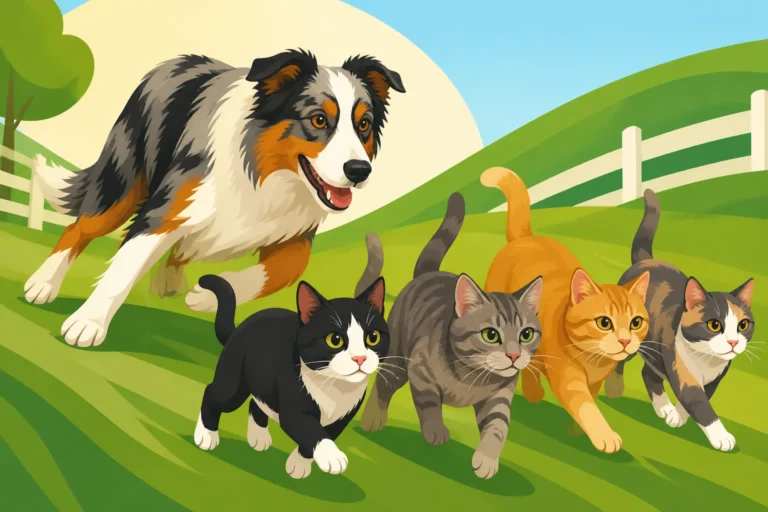
For multi-pet households, this can be particularly interesting. An Australian Shepherd might appoint themselves the "shepherd" of the other dogs or cats, constantly trying to organize them, sometimes to the annoyance of the other animals. I've seen Aussies try to herd everything from lawnmowers to bicycles, seeing any moving object as something that needs to be controlled. This instinct to manage everything around them is what makes them so intelligent and attentive, but it also means they need constant, positive guidance to ensure their "work" is appropriate for a modern home. If they don't have suitable outlets, they'll invent their own, and those usually aren't ideal for domestic harmony.
| Herding Behavior Manifestation | Description | Common Triggers |
|---|---|---|
| Heel Nipping | Quick nips at ankles, calves, or pant legs to direct movement. | Running children, fast-moving people, joggers, bikes. |
| Circling/Gathering | Running in wide arcs around a person, group, or object to bring them closer together. | Groups of people, other dogs in a park, toys scattered around. |
| Stalking/The Eye | Low crouch, intense stare, slow, deliberate movement to control perceived "flock." | Movement across a yard, small children playing, bicycles, skateboards. |
| Blocking Paths | Physically positioning themselves in front of a moving target to stop or redirect it. | Someone trying to walk away, another pet leaving a room. |
| Plopping | Suddenly lying down in front of a person or object, effectively creating a barrier. | To halt movement, to signify "this is where you stay." |
| Nose Nudging/Pushing | Using their nose or body to gently (or not so gently) push an individual or object. | To guide a person, to reposition an object. |
Why You Can't "Train Out" Herding Drive
It's a common misconception, especially for those new to working breeds, that aggressive training or punishment can simply eliminate unwanted herding behaviors. The truth is far more complex and rooted in canine biology. You can no more train an Australian Shepherd not to herd than you can train a bird not to fly. It's a part of their core identity.
Instinct vs. Learned Behavior
The critical distinction here is between instinct and learned behavior. A learned behavior is something a dog acquires through experience and training, like "sit" or "stay." These can be modified or even extinguished with consistent effort. Instinct, however, is an innate, unlearned, and often involuntary pattern of behavior crucial for survival. Herding is an instinct. It's a genetic blueprint, a set of predetermined responses that have been honed over centuries of selective breeding. Whether Aussie Herding Instinct Can Be Trained Away
When your Aussie crouches low and stares intently at a moving object, or when they nip at your heels, they aren't making a conscious choice to be disobedient or annoying. They are simply responding to an ancient, powerful urge that tells them to gather and control. Trying to "train out" this instinct through punishment or suppression would be like trying to train a retriever not to retrieve. It goes against their very nature. Instead of trying to eliminate it, our goal as responsible Aussie owners is to understand it, appreciate it, and most importantly, redirect it into acceptable and enjoyable activities.
The Dangers of Suppressing Drive
Attempting to suppress an Australian Shepherd's natural herding drive can lead to significant behavioral problems and even psychological distress for your dog. Imagine having a powerful, intrinsic need that you are constantly being told is wrong, without any appropriate outlet. This can manifest in several negative ways:
First, it can lead to frustration and anxiety. A dog that is constantly trying to inhibit its natural urges will likely become stressed, withdrawn, or develop compulsive behaviors. This might look like excessive licking, tail chasing, or pacing. Second, suppressed drive can sometimes lead to aggression. If a dog feels immense pressure to stop a natural behavior but has no alternative, that bottled-up energy might erupt in unexpected and potentially dangerous ways. Instead of a playful nip, you might see a snarl or a bite born of sheer frustration. Third, it can damage the bond you share with your Aussie. If your dog constantly feels misunderstood or punished for being who they are, their trust in you will erode. They might become fearful, less responsive to training, and generally unhappy. Our role is to guide, not to crush, their spirit.
Positive Redirection: Giving Your Aussie an Appropriate Job
Since you can't train out the herding drive, the most effective approach is to redirect it into constructive and enjoyable activities. An Australian Shepherd is happiest when they have a job, even if that job looks a little different from their ancestors' work on the ranch. Providing appropriate outlets for their intelligence and energy is paramount.
Utilizing Herding Balls and Flirt Poles
One of the best ways to satisfy that innate desire to chase, gather, and control movement is through specific interactive toys. Herding balls, sometimes called "push balls" or "jolly balls," are large, durable balls that Aussies can push and maneuver around a yard. They can spend considerable time "herding" these balls, satisfying their instinct without involving people or other pets. It's a safe, solitary way for them to practice their gathering skills. You can find excellent options for these on sites like Amazon, specifically designed for active, powerful breeds.
Another fantastic tool is the flirt pole. This is essentially a long pole with a rope and a lure (often a piece of fabric or a squeaky toy) attached to the end. You drag the lure along the ground, enticing your Aussie to chase, stalk, and "catch" it. This taps directly into their prey drive and mimics the chase-and-capture sequence that is part of herding. It's a phenomenal way to burn off energy and satisfy their natural instincts in a controlled, safe environment. Make sure to teach a "drop it" command so they release the lure, reinforcing your control. Tug as a Legal Outlet for Aussie Herding Drive Remember, the goal isn't to wind them up endlessly but to provide short, intense bursts of appropriate "work."
Engaging in Dog Sports and Activities
Australian Shepherds excel in a wide array of dog sports because these activities are often designed to channel their natural drives into structured, rule-bound fun. Herding trials, of course, are the ultimate expression of their genetics. If you have access to a facility with livestock and a qualified instructor, this can be an incredibly enriching experience for your Aussie. They get to perform the work they were born for, and it's truly amazing to watch their instincts come alive.
Beyond traditional herding, agility, flyball, disc dog, and even rally obedience can provide excellent outlets. Agility courses require focus, speed, and problem-solving, all while directing your dog's movement, much like herding. Flyball engages their chase drive, and disc dog (frisbee) is fantastic for their desire to run and catch. Even scent work, where they use their noses to find hidden odors, provides immense mental stimulation and gives them a "job" to do. Australian Shepherd Agility and Disc Sports These activities not only provide physical exercise but, more importantly, deep mental engagement, which is crucial for a breed as intelligent as the Aussie.
Mental Stimulation as a Key Component
It’s easy to think that if your Australian Shepherd is acting out, they simply need more physical exercise. While physical activity is absolutely necessary—Aussies need around How Much Daily Exercise an Australian Shepherd Needs one to two hours a day, often split into multiple sessions—it's rarely enough on its own. Their sharp minds need just as much, if not more, work than their bodies. A physically exhausted Aussie with an under-stimulated mind can still be a handful.
Mental stimulation can take many forms:
- Puzzle Feeders: These toys make your Aussie work to get their food or treats out. Brands like Kong and various interactive feeders found on Amazon can keep them engaged for significant periods. This taps into their problem-solving skills and can be a wonderful way to wind them down. Puzzle Feeders and Enrichment Gear for an Aussie
- Trick Training: Aussies love to learn! Teaching them complex tricks not only provides mental exercise but also strengthens your bond and gives them a sense of purpose.
- Scent Games: Hiding treats around the house or yard and having your Aussie find them is a low-impact, high-reward activity that engages their powerful sense of smell and their drive to search. Scent Games That Tire an Australian Shepherd
- Structured Training Sessions: Even 10-15 minutes of dedicated obedience or concept training (like impulse control games) can be as tiring as a long walk. Focus on tasks that require them to think and concentrate.
A combination of physical exercise and consistent mental work is the secret sauce for a well-adjusted Australian Shepherd.
Managing Herding Behavior in Challenging Situations
Even with plenty of appropriate outlets, there will be times when your Australian Shepherd's herding instincts flare up in less-than-ideal situations. Having strategies in place for these moments is vital for maintaining peace in your home and community.
Strategies for Guests and Children
When guests, especially children, come over, it's often a prime opportunity for your Aussie's herding drive to kick into overdrive. Running, squealing kids can look just like a scattered flock, triggering an intense desire to gather and control. This can be alarming for visitors and potentially dangerous for small children.
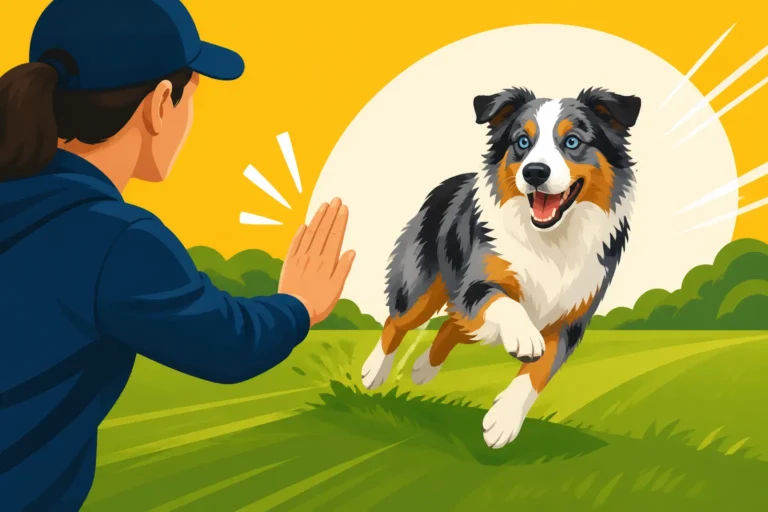
One of the most effective strategies is management and supervision. Never leave your Aussie unsupervised with young children who might trigger their herding instinct. Teach children how to interact calmly with the dog and avoid running games that might provoke a chase. For guests, consider giving your Aussie a "job" that keeps them engaged but separate. A stuffed Kong in a crate or a designated "place" command can provide a safe space and an occupation for your dog. For more active situations, a secure tether (always supervised) can help prevent unwanted herding. Consistently training a strong "leave it" or "off" command is also crucial, so you can interrupt budding herding attempts before they escalate. Remember, the goal is not to punish the instinct but to guide your Aussie to make different choices.
Handling Herding on Walks and in Public
Out on a walk, the world is full of tempting "flock members": joggers, cyclists, other dogs, and even cars. Your Aussie's instinct to chase and redirect movement can become a safety hazard, especially if they try to herd traffic or other people. This is where a robust recall and reliable leash manners become non-negotiable.
Always use a sturdy leash and harness (rather than just a collar) to give you better control. A long line can be a fantastic training tool for practicing recall in a safe, open area, allowing your Aussie to explore while you maintain control. Long Lines and Harnesses for an Australian Shepherd If your Aussie is prone to lunging or barking at moving targets, work on "look at me" and "leave it" commands rigorously. Reward calm attention on you. If a particular stimulus consistently triggers their herding drive, try to anticipate and avoid it, or create distance. For instance, if cyclists are a major trigger, move off the path and ask your dog to sit and focus on you until they pass. Online training resources, such as those offered by BAXTER & Bella, often have specific modules dedicated to managing leash reactivity and impulse control in high-drive breeds, which can be invaluable.
Creating a Calm Indoor Environment
While Aussies are naturally energetic, they also need to learn how to relax indoors. A dog that is constantly patrolling, restless, or trying to organize everything in the house is likely overstimulated or under-exercised (mentally, if not physically). Creating a calm indoor environment involves both physical setup and training.
Establish clear boundaries. A crate can be an invaluable tool for providing a safe, quiet den where your Aussie can relax without feeling the need to "work." Teach a strong "place" command, designating a specific mat or bed where your dog can go to settle. This provides an "off switch" for their drive. An Australian Shepherd That Cannot Switch Off Use management tools like baby gates to create zones, especially if you have areas where you want to reduce their herding influence, such as around young children or other pets. Consistency is key here; a calm environment isn't just about limiting triggers, but actively teaching your Aussie how to be calm and self-regulate, even in the midst of family activity. This involves rewarding calm behavior and providing plenty of appropriate chew toys to redirect any excess energy.
Essential Tools and Resources for Herding Aussies
Navigating life with an Australian Shepherd and their powerful herding drive means arming yourself with the right knowledge, tools, and support. There's no shame in seeking help or investing in resources that make life easier and more fulfilling for both you and your dog.
Training Aids for Drive Management
When it comes to managing an Aussie's herding drive, certain training aids can be incredibly helpful. We've already touched on flirt poles and herding balls, which are fantastic for channeling their chase and gathering instincts. Beyond these, consider the following:
- Durable Chew Toys: An Aussie with a strong mouth and a desire to "work" will benefit from toys that can withstand rigorous chewing. Look for high-quality, durable toys, often found on Amazon, that provide a safe and satisfying outlet for their oral fixation. These can help redirect potential nipping behaviors.
- Long Lines: As mentioned, a long line (15-30 feet) is indispensable for practicing recall and giving your Aussie a sense of freedom in controlled environments, while still giving you the ability to intervene if herding instincts kick in.
- Head Halters or Front-Clip Harnesses: For Aussies who pull or react strongly to triggers on leash, these can provide better control and help you redirect their attention more effectively without causing discomfort to their throat.
- Clickers and Treat Pouches: Positive reinforcement is the name of the game. A clicker helps mark desired behaviors precisely, and a treat pouch ensures you always have rewards handy to reinforce good choices, especially when they don't engage in unwanted herding.
Remember, these are aids, not solutions. They work best when combined with consistent training and a deep understanding of your dog's motivations.
Seeking Professional Guidance
Sometimes, despite your best efforts, you might feel overwhelmed by your Aussie's herding drive, especially if it's leading to significant behavioral challenges like aggression towards children or extreme leash reactivity. This is where professional guidance becomes invaluable.
Look for a certified professional dog trainer (CPDT-KA) or a certified dog behaviorist (CDBC) who has experience with herding breeds. They understand the nuances of Aussie temperament and can help you develop a tailored training plan. Vetting a Trainer Before Booking an Aussie A good trainer won't try to "break" your dog's spirit or suppress their drive; instead, they'll teach you how to effectively communicate with your Aussie, build their impulse control, and channel their instincts into positive outlets. If you're struggling with specific herding-related issues, they might even recommend an Australian Shepherd Herding Instinct Test to assess your dog's natural abilities and guide you towards appropriate activities. Don't hesitate to seek help; it's a sign of a responsible owner committed to their dog's well-being.
Living in Harmony with Your Herding Dog
Owning an Australian Shepherd is a unique journey. Their intelligence, loyalty, and boundless energy are incredible assets, but their powerful herding drive can be a lifelong management challenge if you're not prepared. Ultimately, living harmoniously with your herding dog is about acceptance, understanding, and consistent effort.
Embracing Their Unique Traits
The first and most important step to living happily with an Australian Shepherd is to truly embrace their unique traits. Their herding drive isn't a flaw; it's a defining characteristic of their breed. Instead of wishing they were different, learn to appreciate the incredible intelligence, focus, and athleticism that come hand-in-hand with that instinct. This isn't just about tolerating their quirks; it's about seeing the beauty in their working heritage.
An Aussie who is given appropriate outlets for their drive and mental energy is a joy to behold. They are engaged, responsive, and incredibly devoted companions. They thrive on having a purpose and feeling like they are part of a team. By understanding that Whether an Australian Shepherd Needs a Job to Be Calm it's in their nature to "work," you can shift your perspective from frustration to enablement, constantly looking for ways to provide constructive channels for their energy. This positive mindset will not only help you manage their behaviors but also deepen your bond with your remarkable dog.
The Rewarding Journey of an Aussie Owner
Being an Australian Shepherd owner is a commitment, certainly. There will be days when their endless energy or persistent herding attempts test your patience. But the rewards are immeasurable. These are dogs of unparalleled intelligence, loyalty, and heart. They form deep bonds with their families and bring a spark of vibrant, joyful energy to every day.
The journey of an Aussie owner is one of continuous learning and adaptation. You'll discover new dog sports, creative enrichment activities, and clever ways to integrate their natural drives into your life. You'll learn to read their body language, anticipate their needs, and celebrate their triumphs, whether it's a perfectly executed agility run or simply choosing to settle calmly at your feet instead of herding the cat. Australian Shepherd Behavior Problems From Under-Exercise By committing to meeting their physical and mental needs, and by embracing their herding heritage, you'll find that the challenges are far outweighed by the profound connection and companionship you share with your amazing Australian Shepherd.
Disclaimer
This article is for general informational purposes only and does not constitute professional advice. Laws, prices and regulations vary by location and change over time. Consult a qualified professional for guidance on your specific situation.