The Aussie Bobtail Gene and Its Lethal Pairing
It's incredibly charming to see an Australian Shepherd with that jaunty, seemingly natural bobtail, isn't it? It just adds to their unique character. But what many folks don't realize is that this distinct tail isn't always just a quirky aesthetic. Sometimes, it's the outward sign of a specific gene, and understanding that gene is crucial for responsible ownership and, especially, for ethical breeding practices. This guide will walk you through the fascinating and sometimes somber truth behind the Australian Shepherd's natural bobtail gene and why its "lethal pairing" is something every Aussie enthusiast should be aware of.
Understanding the Australian Shepherd's Natural Bobtail Gene
The natural bobtail (NBT) in Australian Shepherds is one of those distinctive traits that makes the breed instantly recognizable, right alongside those piercing eyes and beautiful merle coats. For many, it's part of the iconic Aussie look, conjuring images of working dogs darting across a field with a stubby wag. But there's a lot more to this short tail than meets the eye, and it all comes down to genetics.
What Exactly is the NBT Gene?
At its core, the natural bobtail in an Australian Shepherd is caused by a dominant gene, often referred to as the T-box transcription factor gene (C189G mutation in the T-box gene). What does "dominant" mean in this context? It means that if a dog inherits just one copy of this gene from either parent, it will typically display a bobtail. This isn't a recessive trait that hides away; it's right there, front and center.
The presence of this single gene causes a developmental abnormality in the formation of the tail vertebrae, leading to a tail that can range from completely absent (a full bob) to various lengths of shortened tails, sometimes just a few inches long, or even a 'half-tail' that's visibly shorter than a typical long tail but still has some length. So, while we often talk about the bobtail, there's actually a spectrum of tail lengths that can result from this gene. It's a fascinating biological quirk that highlights how even a single gene can have such a pronounced physical effect on an animal. This is why when you see an Aussie with a short tail, it's not always a uniform "bob" but can vary quite a bit. The Australian Shepherd Natural Bobtail explains more about the various appearances of these tails.
The Visible Trait vs. the Hidden Gene
Here's where things get a little tricky and often confusing for new Aussie owners or even those familiar with the breed: not every Australian Shepherd with a short tail actually carries the natural bobtail gene. Why? Because historically, and still sometimes today, many Australian Shepherds have their tails docked shortly after birth. Tail docking is a surgical procedure where the tail is shortened, usually to comply with breed standards in show rings or for practical reasons in working lines, mimicking the appearance of a natural bobtail.
This means you could have two Aussies with identical-looking short tails, but one might have been born with the NBT gene, and the other might have had its tail docked. For an owner with a pet Aussie, this distinction might seem purely academic. However, for a breeder, understanding the genetic reality behind a dog's short tail is paramount. Without genetic testing, it's impossible to tell the difference just by looking, and this uncertainty can lead to serious ethical dilemmas and heartbreaking outcomes in a breeding program. This is precisely why just looking at a dog's tail isn't enough to understand its genetic makeup.
The Lethal Pairing: Breeding Two NBT Carriers
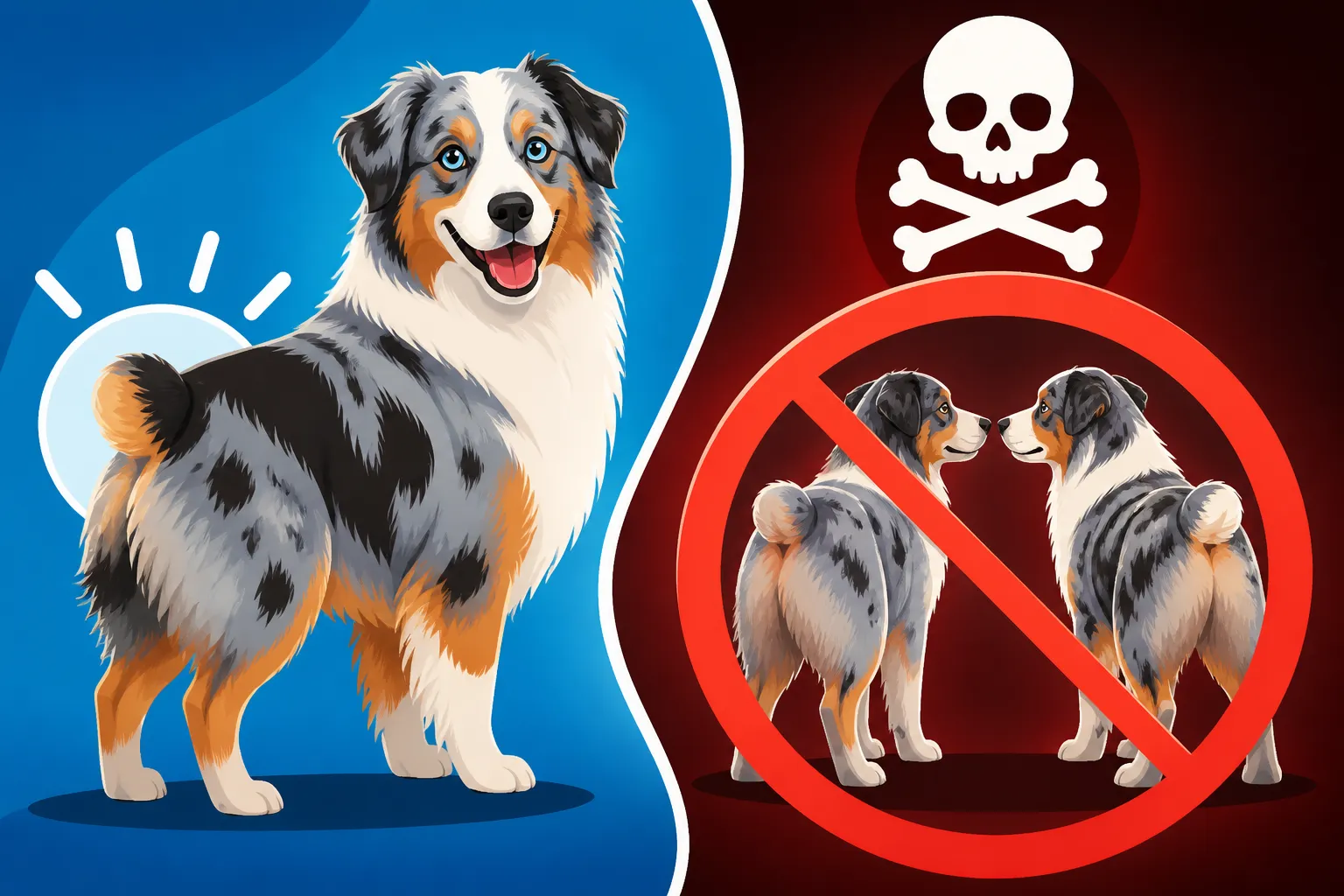
This is perhaps the most critical aspect of the NBT gene that every Australian Shepherd owner and prospective owner needs to understand. While a single copy of the NBT gene results in a healthy, bobtailed dog, the story changes dramatically when two dogs carrying the NBT gene are bred together. This is what's known as a "lethal pairing," and it's a stark reminder of the responsibilities involved in breeding.
The Consequences of NBT to NBT Breeding
When two Australian Shepherds who each carry one copy of the NBT gene (meaning they are N/BT, having one normal gene and one bobtail gene) are bred, the genetic odds dictate a specific outcome for their litter. Roughly 25% of the puppies will inherit two copies of the NBT gene (BT/BT). This homozygous dominant state is what's referred to as a "lethal pairing."
What does "lethal" truly mean here? It means that these embryos often don't survive. They are either reabsorbed by the mother early in gestation, or they are born with severe, often fatal, deformities, most commonly affecting the spine and central nervous system. These deformities can include severe spinal bifida, lack of anal opening, or other profound birth defects that are incompatible with life. Imagine the devastation for a breeder who discovers such a litter, or worse, has to make impossible decisions for puppies born with such severe conditions. This isn't just a physical trait; it's a matter of life and welfare for the unborn and newborn pups. The emotional and ethical toll on breeders who unwittingly make such a cross can be immense, highlighting the need for thorough genetic screening.
Ethical Breeding Practices for NBT
Given the potential for such devastating outcomes, ethical breeding practices around the NBT gene are incredibly clear: never breed two natural bobtail carriers together. A responsible breeder will always genetically test their breeding stock for the NBT gene. Dogs that are identified as NBT carriers (N/BT) are perfectly healthy and can be bred, but only to a dog that has two normal copies of the gene (N/N). This ensures that no puppy in the litter will ever inherit the lethal BT/BT combination.
This commitment to genetic testing isn't just about avoiding visible issues; it's about preventing suffering and ensuring the health and viability of every single puppy born. It reflects a deep respect for the animals and the breed standard, prioritizing welfare above all else. The Genetic Panel Every Australian Shepherd Needs often includes testing for NBT, among other critical health screens. The peace of mind for both the breeder and future owners, knowing that these preventable tragedies are avoided, is immeasurable. Ignoring these genetic realities is not only irresponsible but can lead to truly heartbreaking situations.
Managing NBT in Breeding Programs and for Owners
Understanding the NBT gene isn't just for breeders; it's valuable information for any Australian Shepherd owner, particularly if you're considering adopting a puppy or an adult dog. Knowing the genetic status can help you understand your dog's lineage and any potential implications, however rare, that might arise in the future.
Genetic Testing: Your First Line of Defense
For breeders, genetic testing is not merely recommended; it's a non-negotiable step. A simple DNA test, often done via a cheek swab, can definitively tell you your dog's NBT status. The results will typically come back as one of three genotypes:
- N/N (or NBT-free): This dog has two copies of the normal gene and will have a long tail (unless it's docked). This dog can be bred to any other Aussie without risk of lethal NBT pairings.
- N/BT (or NBT Carrier): This dog has one normal gene and one NBT gene. It will have a bobtail and is completely healthy. This dog can be bred, but only to an N/N dog, to ensure no BT/BT puppies are produced.
- BT/BT (or NBT Homozygous): This dog has two copies of the NBT gene. This is the lethal combination, and such an embryo would likely not survive to term. You will never see a living, healthy adult dog with this genotype because it is lethal.
This test is inexpensive and readily available through various canine genetic testing companies. Many responsible breeders will provide proof of these tests, along with others like MDR1, hip, and eye clearances, as part of their puppy packet. You can often find these genetic testing kits, along with other essential supplies like a new collar or food bowls, through reputable pet supply retailers like Chewy. This knowledge empowers breeders to make informed decisions that safeguard the health and future of the breed. Reading an Australian Shepherd DNA Panel can help you interpret these complex results.
| NBT Genotype | Phenotype (Appearance) | Breeding Implication (When Bred to N/BT) |
|---|---|---|
| N/N | Long Tail (unless docked) | 50% N/N, 50% N/BT (No lethal outcome) |
| N/BT | Natural Bobtail | 25% N/N, 50% N/BT, 25% BT/BT (Lethal) |
| BT/BT | Not viable (Lethal in utero) | N/A (Does not occur as living adult) |
Tail Docking vs. Natural Bobtail: A Visual Confusion
The presence of the NBT gene, especially its variability, can create confusion when compared to the practice of tail docking. Historically, and still in some places, Australian Shepherd tails are docked. This means a puppy born with a full-length tail has it surgically shortened to mimic the appearance of a natural bobtail. This practice has been done for various reasons, including preventing injury in working dogs or meeting breed standards for show. Australian Shepherd Docking and Where It Stands provides more context on this practice.
The problem arises when an owner or breeder can't distinguish between a dog that was born with a natural bobtail and one that had its tail docked. If an NBT carrier (N/BT) is bred to a dog whose short tail is the result of docking, but is also an NBT carrier (N/BT), you still face the 25% lethal risk. This highlights why appearance alone is insufficient for making breeding decisions. A breeder must know the genetic status of both parents. This knowledge is part of The Test Results an Aussie Breeder Must Produce for their dogs. Some breeders might even opt to dock the tails of their NBT-carrying puppies (N/BT) if the natural bob is longer than preferred, which can further complicate visual identification for future owners.
Living with an NBT Australian Shepherd
If you own an Australian Shepherd with a natural bobtail, you might be wondering what this all means for your beloved companion. The good news is, for the vast majority of NBT Aussies, there are no special concerns beyond understanding the genetic background.
Health and Temperament of NBT Aussies
Let's get this straight: a healthy Australian Shepherd that carries one copy of the NBT gene (N/BT) is just like any other Aussie. They are typically robust, intelligent, energetic dogs with no known health or temperament issues directly linked to their bobtail status. Their quality of life is not impacted by having a naturally short tail, nor does it affect their ability to participate in dog sports, herd livestock, or be a cherished family pet. These dogs live full, happy lives.
The crucial distinction, as emphasized, is the lethal pairing – the BT/BT genotype. But if your Aussie is living a normal life, they are absolutely not a BT/BT dog. They are either N/N (long tail) or N/BT (natural bobtail), both of which are healthy and normal. So, while the genetics are important for breeding, they shouldn't cause undue worry for the owner of a well-bred, healthy NBT pet. You'll still need to focus on all the regular care, from proper nutrition to grooming, which you can easily source from places like Chewy.
Identifying an NBT Dog in a Rescue
When you adopt an Australian Shepherd from a rescue organization, it's not always possible to know the full genetic history of the dog. Many Aussies end up in rescue due to common reasons like their high energy levels being underestimated, rather than specific health issues. However, if you encounter an Aussie in rescue with a short tail, it's perfectly reasonable to inquire about its background.
Reputable Australian Shepherd rescues often do their best to gather as much information as possible about the dogs in their care, including their health history and, sometimes, even known genetic statuses if previous owners provided the information. While they might not always have definitive NBT test results, they can often tell you if the tail was surgically docked or if it's believed to be a natural bobtail. It's less common for rescues to specifically test for NBT unless there's a known breeding background, but it's always worth asking what health screenings have been done.
The key takeaway is that adopting an NBT Aussie from a rescue is generally not a cause for concern regarding the dog's personal health. The lethal pairing issues are prenatal. However, if you were considering breeding a rescue dog (which rescue organizations typically discourage and often prevent through spay/neuter clauses), then understanding its NBT status would become critical. For pet owners, simply enjoying your NBT Aussie's unique charm and boundless energy is the most important thing. Providing them with a good home, proper exercise, and quality food, whether from a local store or delivered right to your door by Chewy, is what truly matters.
Disclaimer
This article is for general informational purposes only and does not constitute professional advice. Laws, prices and regulations vary by location and change over time. Consult a qualified professional for guidance on your specific situation.