Treibball as an Aussie Alternative to Sheep
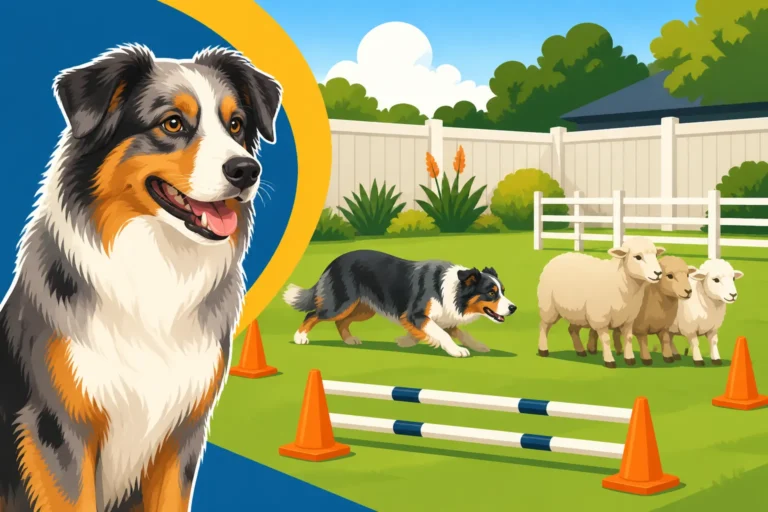
If you're an Australian Shepherd owner, you know that deep-seated herding instinct is always simmering, looking for an outlet. Sometimes, traditional sheep herding isn't an option, whether due to access, cost, or simply living in a city. That constant drive can manifest as heel-nipping, circling, or general restlessness, leaving you desperate for a constructive way to channel that energy. This guide is all about a fantastic alternative called Treibball, a fun and accessible dog sport that taps right into your Aussie's natural drives and gives them a rewarding "job" to do without needing a flock of sheep.
Understanding Treibball: A Herding Game for Modern Aussies
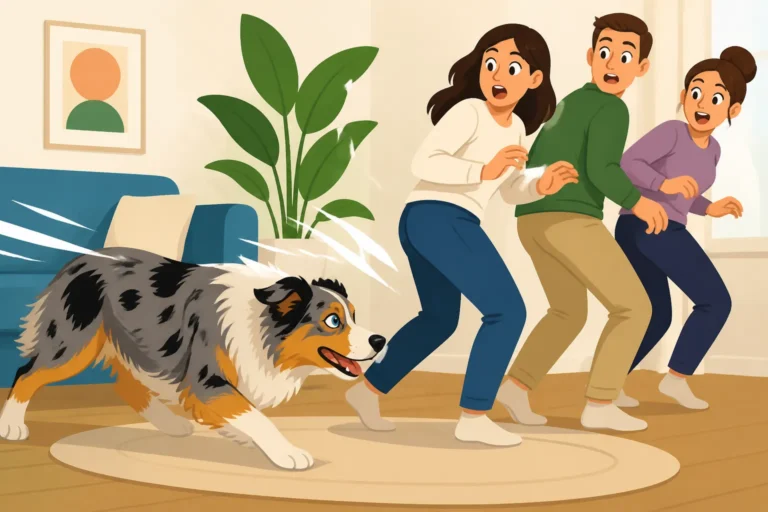
Australian Shepherds were bred for one thing: to work livestock, primarily sheep and cattle. This heritage is deeply ingrained in their DNA, manifesting as an intense desire to gather and control movement. When you bring an Aussie into a suburban or urban environment, that instinct doesn't just disappear. It needs an appropriate outlet, or it can lead to frustrated behaviors like trying to herd children, other pets, or even the vacuum cleaner. Traditional herding on livestock is ideal, but not always feasible for every owner, which is where innovative sports like Treibball step in.
What Exactly is Treibball?
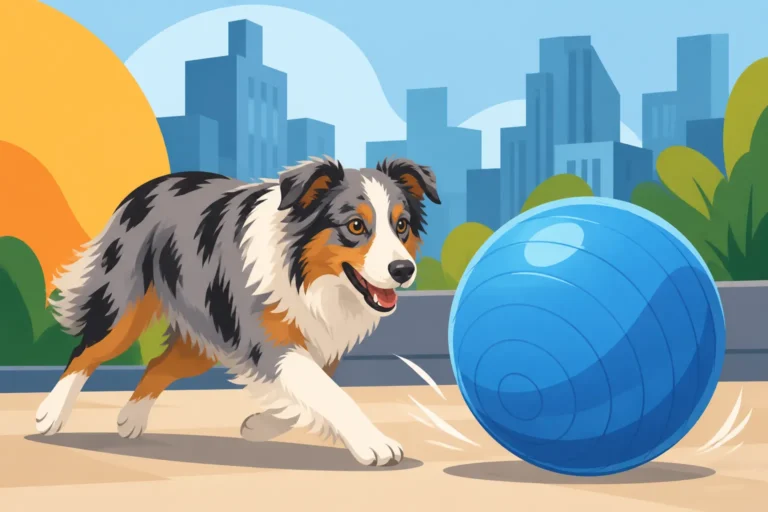
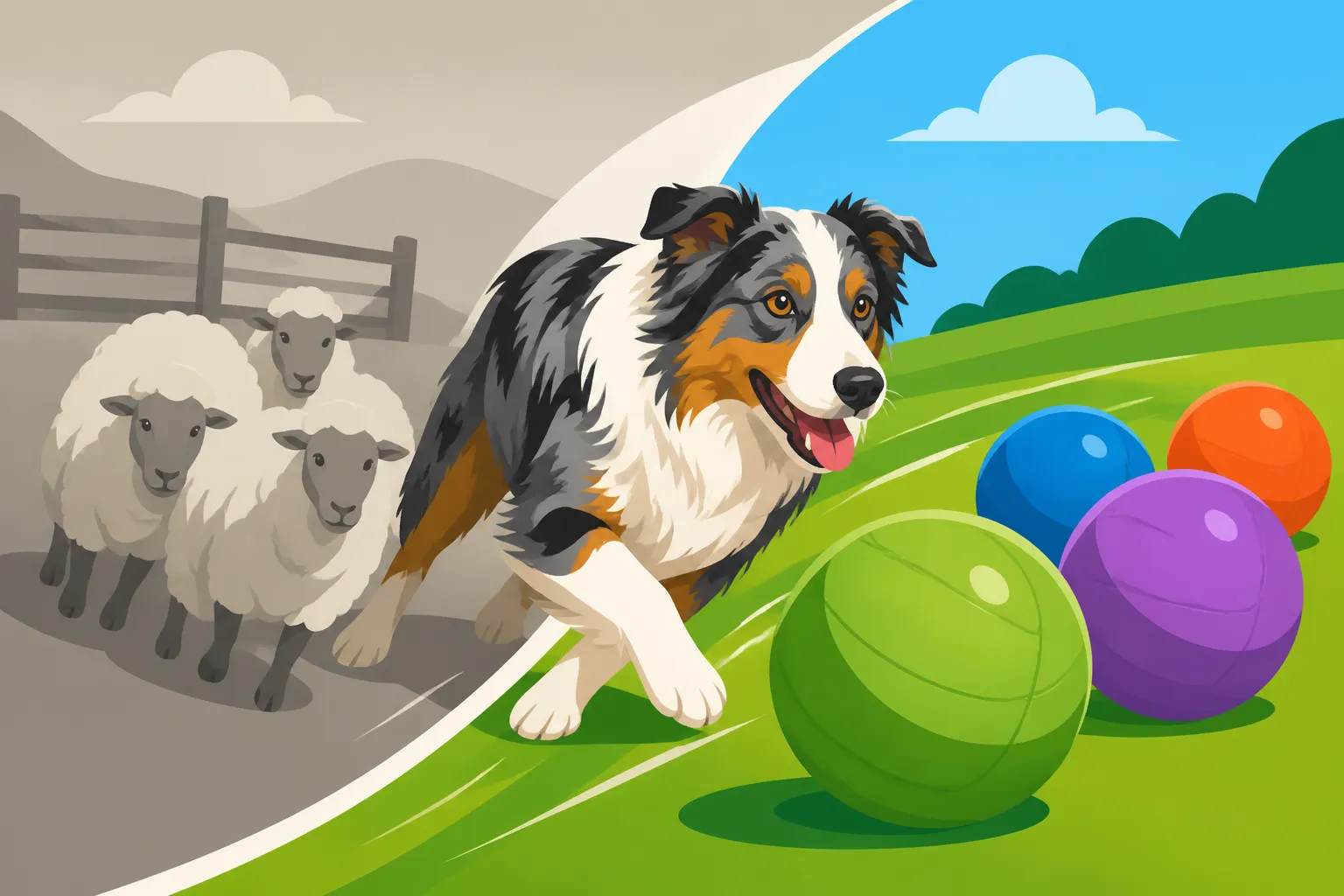
Treibball, pronounced "Tribe-ball," translates from German as "drive ball." It's a competitive dog sport where a dog, guided by its handler from a distance, "herds" large inflatable exercise balls into a designated goal. Imagine a giant game of canine billiards, but instead of cues, your dog uses its nose, chest, and body to push the balls. The handler communicates using verbal cues and hand signals, directing the dog to gather eight large balls scattered across a field and move them one by one into a soccer-style goal within a set time limit. It's a brilliant way to simulate the mental and physical demands of herding without any actual sheep.
The beauty of Treibball lies in its simplicity of equipment and the incredible mental engagement it demands. Your Aussie isn't just running around aimlessly; they are actively problem-solving, responding to complex cues, and using their innate herding strategy to achieve a goal. This is far more stimulating than endless games of fetch, which, while physically tiring, often don't satisfy the deeper intellectual needs of a working breed. It allows them to use that clever brain and body awareness in a directed, cooperative manner, reinforcing their bond with you.
Why Treibball is a Perfect Fit for an Australian Shepherd
Australian Shepherds thrive on having a purpose, a job to do. Their intelligence, agility, and natural instinct to gather make them phenomenal candidates for Treibball. Unlike traditional herding, which can sometimes be too intense or prey-driven for certain individual Aussies or urban settings, Treibball offers a more controlled and cooperative environment. Your Aussie learns to work with you to move the balls, rather than purely on instinct. This strengthens their communication skills and reinforces their focus on you as their primary director.
Moreover, Treibball is incredibly versatile. You don't need acres of land or a flock of sheep. A moderately sized fenced yard can be a great starting point for practice, and official competitions are held in various venues. This accessibility means more Aussie owners can engage in a sport that truly fulfills their dog's breed-specific needs, rather than feeling limited by their living situation. It’s also generally low-impact compared to high-speed agility, making it suitable for a wider range of ages and physical conditions, provided you adjust the intensity. For an Aussie, the mental workout is often as exhausting, if not more so, than the physical one, tapping into Mental Work That Actually Tires an Australian Shepherd.
Getting Started with Treibball Training
Diving into a new dog sport can feel daunting, but Treibball is surprisingly accessible. The core concept relies on basic obedience cues and a dog's natural inclination to push things with their nose. The key is to break down the process into small, achievable steps, building your Aussie's confidence and understanding along the way. Remember, consistency and positive reinforcement are your best friends.
Essential Gear You'll Need
Before you even think about pushing balls, you'll want to gather a few fundamental pieces of equipment. Luckily, Treibball doesn't require a huge investment. The main item is, of course, the balls! You'll start with just one and gradually add more. Look for exercise balls (sometimes called yoga or stability balls) that are sturdy and appropriately sized for your Aussie – large enough that they can't pick them up with their mouth, but not so big they can't manipulate them. Many owners find good options on Amazon. Beyond the balls, here's a quick rundown:
| Item | Description | Purpose |
|---|---|---|
| Inflatable Exercise Balls | Large, durable, PVC balls (65-75cm for most Aussies) | The "sheep" your dog will herd |
| Pump with Needle | To inflate and adjust firmness of the balls | Essential for ball maintenance |
| Clicker | For precise timing of rewards | Marks desired behavior instantly |
| High-Value Treats | Small, soft, incredibly tempting treats | Motivation and reward for correct actions |
| Treat Pouch | Keeps treats easily accessible | For quick rewarding during training |
| Long Line | A 15-30 foot leash | Safety and control in early stages, practicing recall |
| Cones or Markers | Small traffic cones or household items | To define a goal area and boundaries |
Remember, quality over quantity. One good ball is better than several flimsy ones. You can find excellent quality balls and other training essentials online, often on sites like Amazon, making it easy to get started without a huge trek to a specialty store.
The First Steps: Introducing the Ball
Your Aussie might be excited or a bit wary of a giant ball at first. The goal here is to build positive association. Start by simply having the ball in the yard. Let your dog investigate it at their own pace. Don't push them towards it. Once they show curiosity, even a sniff, mark that behavior with a click and a treat. The next step is encouraging them to interact with it, specifically with their nose or chest. Roll the ball gently a short distance and, as they nudge it, click and reward enthusiastically. You're teaching them that interacting with the ball in a gentle, pushing manner earns them good things.
Many online training programs, like those offered by BAXTER & Bella, provide step-by-step video guides that walk you through these initial stages. They often break down complex behaviors into tiny, manageable pieces, which is perfect for building a solid foundation. Focus on building a strong "push" cue. You might start by holding a treat behind the ball, encouraging your Aussie to nudge it to get the treat. Gradually, you'll introduce a verbal cue like "push" or "drive" as they perform the action, followed by that click and treat. Patience is key; don't rush through this phase. It's crucial for your Aussie to understand the basic mechanics of moving the ball cooperatively.
Building Directional Cues and Control
Once your Aussie confidently pushes a single ball, you can start introducing directional cues. This is where the real "herding" aspect of Treibball comes into play. You'll want to teach "left," "right," "come by" (go around the ball clockwise), "away to me" (go around counter-clockwise), and "send out" (move away from you towards the ball). Start with short distances and clear, consistent hand signals paired with your verbal cues. For example, to teach "send out," toss a treat a short distance away from you, encourage your dog to run to it, and then mark with the cue. Gradually place the ball between you and the treat, so your dog learns to "send out" past the ball.
This stage requires excellent timing and a lot of repetition. Practice in a quiet, distraction-free environment first. Use a long line to gently guide your Aussie if they're struggling to understand a directional cue, but try to fade its use as quickly as possible. The aim is for your dog to respond to your cues from a distance, mimicking a true herding scenario where they are away from your immediate reach. Remember the ultimate goal is for your Aussie to respond to Australian Shepherd Recall Around Moving Things and your other directives, even when the "moving things" are enticing inflatable balls.
Benefits Beyond Herding for Your Aussie
Treibball is more than just a fun game; it's a comprehensive activity that provides numerous benefits for your Australian Shepherd, far beyond merely satisfying their herding instinct. It touches on physical health, mental acuity, and strengthens the profound bond you share. This sport encourages controlled, cooperative work, which is invaluable for a breed often prone to overarousal or independent decision-making.
Enhancing Physical Fitness and Body Awareness
While not as high-impact as agility, Treibball provides a fantastic physical workout. Your Aussie will be moving, weaving, pushing, and circling, engaging various muscle groups. The constant movement helps maintain cardiovascular health and joint flexibility, especially when practiced regularly. Because the balls are soft and large, it's generally low-impact, making it a suitable activity for dogs who might have minor joint issues or those in their senior years who still crave a job but can't handle intense running or jumping. It also helps them develop incredible body awareness, learning how to use their entire body—not just their mouth or paws—to manipulate objects precisely.
Think about it: an Aussie pushing a ball needs to understand its own center of gravity, the force required, and the angle to get the ball moving in the desired direction. This level of coordination is engaging and builds strong core muscles. This translates to better overall physical condition and can help prevent injuries by improving balance and proprioception. Regular engagement in such a sport also helps manage weight, which is critical for long-term joint health, especially in active breeds like Aussies. Keeping them lean and fit means less stress on those hardworking joints, an important consideration as they age, possibly delaying issues like Australian Shepherd Arthritis After Years of Work.
Boosting Mental Stimulation and Problem-Solving Skills
This is where Treibball truly shines for intelligent breeds like the Australian Shepherd. The sport demands immense mental focus, concentration, and problem-solving. Your Aussie isn't just reacting; they're strategizing. They have to listen to your cues, understand the layout of the field, assess the position of the balls, and then execute a plan. This complex mental exercise is incredibly tiring in the best possible way. A mentally stimulated Aussie is a happy and calm Aussie at home, less likely to engage in destructive behaviors born out of boredom or frustration.
The step-by-step nature of Treibball training, from basic pushes to intricate patterns, encourages your dog to think critically and learn continuously. It's like teaching them a new language of movement and communication. This can significantly reduce instances of Australian Shepherd Behavior Problems From Under-Exercise because their mental tank is genuinely depleted after a good Treibball session. This cognitive engagement can also contribute to a dog's overall confidence, as they learn they are capable of understanding and executing complex tasks successfully.
Strengthening the Human-Canine Bond
Few things solidify the relationship between an owner and their dog like working together as a team. Treibball is a prime example of this cooperative effort. You and your Aussie become a unit, communicating through subtle cues and working towards a shared objective. This shared experience deepens trust, respect, and mutual understanding. As your Aussie learns to rely on your direction and you learn to "read" their intentions, your bond grows stronger.
The positive reinforcement nature of Treibball training means that every session is filled with encouragement, praise, and rewards. This builds a positive association with working with you, making your Aussie eager to engage and perform. It's a fantastic way to spend quality time together, fostering a relationship built on cooperation and joy rather than correction and frustration. This cooperative engagement is vital, particularly for a breed that often seeks to take charge, teaching them that working with their human is the most rewarding path.
Addressing Common Treibball Challenges
Like any dog sport, Treibball isn't without its hurdles. You might encounter moments where your Aussie seems confused, overly excited, or simply not "getting it." This is entirely normal! The key is to approach these challenges with patience, understanding, and a willingness to break things down even further. Remember, your Aussie wants to succeed and please you, but they might need a little extra guidance to understand what's being asked.
Over-Arousal and Excessive Herding Drive
For some Australian Shepherds, especially those with particularly strong herding instincts, the sight of the large, moving balls can trigger an intense, almost overwhelming, prey drive or over-arousal. Instead of gently pushing, they might try to mouth, chase wildly, or even jump on the balls. This is a common challenge, and it's essential to nip it in the bud before it becomes a habit. The goal of Treibball is calm, controlled herding, not frantic chasing.
If your Aussie is getting too amped up, take a step back. Reduce the excitement in the environment, use a calmer tone, and perhaps introduce the ball again in a more controlled way. A long line can be a lifesaver here, allowing you to prevent excessive chasing or mouthing while still giving them room to work. Focus on rewarding only the gentle pushing with the nose or chest. If they get too excited, put the ball away for a few minutes and re-engage when they are calmer. Short, frequent sessions are far more effective than long, frustrating ones. You want to teach them an "off switch" and that the ball is a tool for a job, not just a giant chase toy. For some Aussies, this is a direct application of teaching them Aussie Impulse Control With Moving Toys.
Distraction and Focus Issues
Training in a novel environment or with new objects can be distracting for any dog, and an Australian Shepherd, with their keen senses, can easily be sidetracked by a squirrel, a passing car, or even a leaf blowing across the yard. Maintaining focus on you and the task at hand is crucial for Treibball success. If your Aussie is constantly looking away or ignoring your cues, it's a sign that the environment might be too stimulating, or the task might be too difficult for their current skill level.
Start training in a very quiet, familiar place, like your backyard, where distractions are minimal. Gradually introduce more distractions as your Aussie's focus improves. Keep training sessions short and engaging, ending on a high note before your dog loses interest. Use high-value treats and enthusiastic praise to make working with you more rewarding than any potential distraction. If needed, a long line can help keep your Aussie's attention on you. If you're struggling, consulting with a trainer who understands the nuances of working breeds and positive reinforcement can be incredibly helpful. Look for a professional adept at handling The Australian Shepherd Herding Drive You Cannot Train Out.
Lack of Motivation or Understanding
On the flip side of over-arousal, some Aussies might initially show less enthusiasm for Treibball. Perhaps they don't immediately understand the game, or they might prefer other activities. It's also possible they simply haven't connected the dots between pushing a ball and receiving a reward. Don't mistake a lack of immediate interest for a complete disinterest in the sport. Often, it's a matter of breaking down the steps even further and finding the right motivators.
If your Aussie seems unmotivated, re-evaluate your rewards. Are your treats high-value enough? Is your praise enthusiastic? Try incorporating toys if your dog is more toy-motivated than food-motivated. Go back to the very basic steps, rewarding any tiny interaction with the ball, even a glance. Make it super easy for them to succeed in the beginning. Some dogs simply need more time to process new information. Sometimes, watching other dogs perform Treibball in a class or online video can spark their interest. Remember, every dog learns at their own pace, and celebrating small victories is the best way to build momentum and keep the fun alive for both of you.
Disclaimer
This article is for general informational purposes only and does not constitute professional advice. Laws, prices and regulations vary by location and change over time. Consult a qualified professional for guidance on your specific situation.