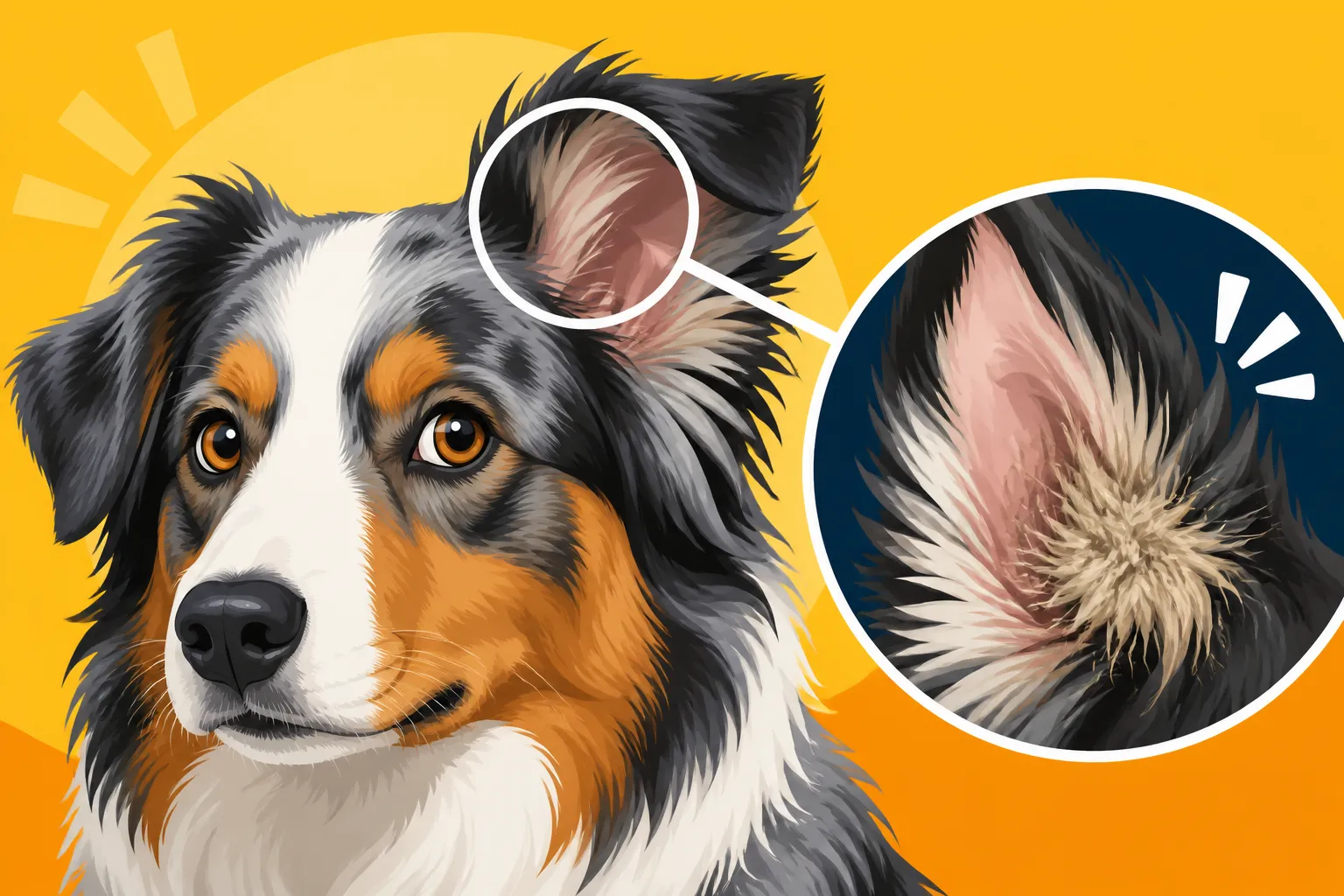
The Mats That Form Behind Aussie Ears
It's a frustratingly common sight for Australian Shepherd parents: that tangled mess of fur tucked right behind their ear, seemingly appearing overnight. These mats behind an Aussie's ears aren't just unsightly; they can be incredibly painful, pulling on the delicate skin and potentially leading to infections if left unchecked. This guide will walk you through why these sneaky mats form, how to prevent them with a consistent routine, and most importantly, how to safely and gently remove them when they do appear.
The Unique Anatomy That Makes Aussie Ears a Matting Hotspot
You might wonder why those specific spots behind the ears are such a magnet for tangles, while the rest of your Aussie's glorious coat seems to fare a bit better (at least for a while!). It's not just bad luck; it's a combination of their unique coat type, natural movement, and the environmental factors that collect there. Understanding why they form is the first step to preventing them.
The Double Coat's Role in Ear Matting
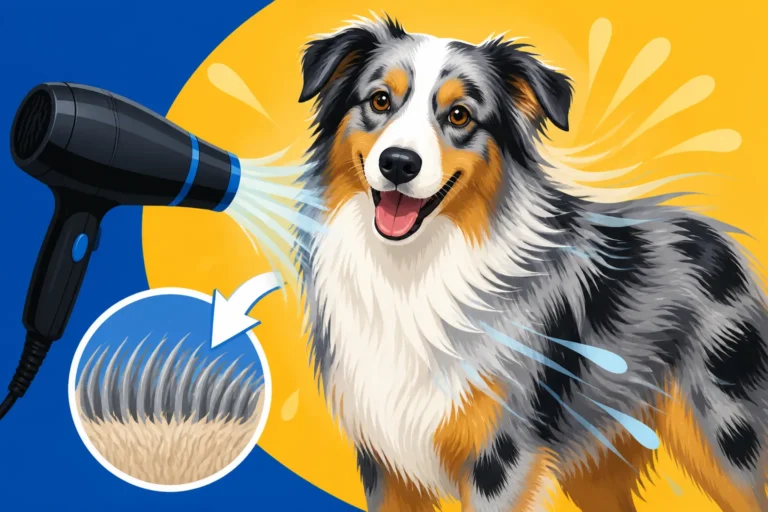
Your Australian Shepherd boasts a magnificent double coat, a marvel of natural engineering designed to protect them from the elements. This coat consists of a softer, dense undercoat and coarser, longer guard hairs. While this provides excellent insulation, it's also the primary culprit behind matting. Behind the ears, the fur tends to be finer and softer, often with a heavier concentration of that downy undercoat. This delicate texture, combined with constant movement – the flicking of ears when listening, shaking their head after a swim, or even just scratching an itch – creates friction. This friction causes the individual hairs to twist, knot, and felt together, forming those tight, stubborn mats. It's almost like nature's Velcro, but much less enjoyable for your pup. The hair in this area is also often a bit longer than the fur directly on the ear leather, making it more prone to intertwining with itself.
Moisture, Debris, and Neglected Spots
Beyond the hair type and movement, several other factors contribute to the perfect storm for mats behind an Aussie's ears. Moisture is a big one. Think about it: water from baths, dew from morning walks, or even just drool or ear wax can settle into that fine fur. Once wet, the hair is far more likely to clump and mat as it dries. Have you ever noticed how your own hair gets more tangled when wet? It's similar for your Aussie. Plus, this area is a collection point for all sorts of tiny debris. Burrs, grass seeds, small bits of leaves, dust, and even stray bits of kibble can easily get caught in the fine hair behind the ears. As your dog shakes its head or rolls around, these foreign objects become embedded, acting as anchors for mats to form around. And let's be honest, it's an easy spot to miss during a quick brush. When you're tackling the main body coat, those areas right behind and underneath the ear flap can be overlooked, allowing small tangles to progress into full-blown mats over days or weeks. This is why consistent, targeted attention to these vulnerable spots is so crucial. If you're looking for more general coat information, check out The Australian Shepherd Double Coat Explained.
Proactive Prevention: Keeping Those Ears Tangle-Free
The old adage "an ounce of prevention is worth a pound of cure" couldn't be more true when it comes to Australian Shepherd ear mats. Once a mat sets in, it's a battle. But with a consistent and mindful routine, you can drastically reduce the chances of your Aussie developing these painful knots. It's about making ear care a regular, almost meditative part of your grooming sessions.
Establishing a Daily Brushing Routine
For an Australian Shepherd, "daily brushing" isn't a suggestion; it's practically a commandment, especially for critical areas like behind the ears. This isn't just a superficial run-through with a brush; it needs to be thorough and intentional. Invest in a good quality slicker brush and, perhaps even more critically for these fine areas, a metal comb with both wide and fine teeth.
Start by gently separating the hair behind the ear from the ear leather itself. Hold the ear flap up and out of the way. Then, using your slicker brush, lightly brush in layers, starting from the tip of the ear down towards the neck. Once you've brushed a section, follow up with your metal comb. This comb is your mat detector. If the comb snags, stop immediately. Do not pull through a tangle with the comb, as this will only tighten it and cause pain. Instead, gently work the tangle out with your fingers, or use the very tips of the wide-toothed side of the comb to tease it apart. For denser undercoat, a specialized undercoat rake can also be incredibly useful, but use it sparingly and carefully in such a sensitive area. Make this a positive experience for your dog, with lots of praise and maybe even a small, high-value treat. Consistent, gentle handling will teach your Aussie to tolerate and even enjoy this essential daily ritual. For more brushing tips, see Brushing an Australian Shepherd Twice a Week and Slicker Brushes and Line Brushing an Aussie.
Strategic Trimming and Regular Ear Checks
While you should never shave your Australian Shepherd, as this can permanently damage their double coat's ability to regulate temperature and protect their skin, strategic trimming around the ears can be beneficial. This isn't about cutting their beautiful feathering, but about managing the very fine, wispy hairs that grow just behind and under the ear flap, which are often the first to mat. Using blunt-nosed grooming scissors, you can carefully thin out or trim these soft, flyaway hairs to a slightly shorter length. Always comb the hair out first, then snip only the very tips of the longest, fuzziest hairs. If you're unsure, a professional groomer can demonstrate this technique safely. The key is to reduce the volume of hair that's prone to tangling without compromising the coat's integrity or the dog's natural appearance.
Beyond trimming, regular tactile checks are vital. Make it a habit to run your fingers through the fur behind your Aussie's ears every single day, perhaps during cuddle time or after a walk. You're feeling for any small bumps or hardened areas that indicate the start of a mat. Catching a tiny knot when it's just a few hairs tangled is infinitely easier than dealing with a tight, felted mat that's been growing for weeks. This proactive approach allows you to address nascent tangles with a quick comb-out before they escalate into painful problems. Don't forget to keep an eye on other common matting spots like Mats in an Aussie Ruff and Trousers.
Safely Removing Existing Mats
Despite your best efforts, sometimes mats happen. A particularly muddy romp, an overlooked spot, or even a sudden growth spurt in coat density can lead to a dreaded mat forming behind your Aussie's ear. When you find one, the most important thing is to approach it with patience and the right tools. Ripping or yanking at a mat will not only cause significant pain to your dog but can also damage their skin.
Gathering Your Dematting Arsenal
Before you even think about touching the mat, gather all your supplies. Having everything within reach will make the process smoother and less stressful for both you and your Australian Shepherd. Here’s what you’ll need:
- A good quality metal comb: Ideally one with both wide and fine teeth. This is your primary tool for teasing out tangles.
- Slicker brush: For general brushing around the mat to isolate it.
- Detangling spray or coat conditioner: A good quality spray specifically designed for dogs can make a huge difference. Brands often offer these, and you can find a wide selection on sites like Chewy or Amazon. These products help lubricate the hair, making it easier for knots to slide apart.
- Blunt-nosed grooming scissors: Only for cutting into a mat, never for cutting close to the skin. The blunt tips are a safety feature to prevent accidental nicks.
- Mat splitter or dematting rake: These tools have sharp, inwardly curving blades designed to cut through dense mats without getting too close to the skin. Use with extreme caution.
- Treats! Plenty of high-value treats to reward cooperation and create a positive association.
- An extra pair of hands (optional but recommended): If your dog is wiggly, having someone gently hold them or offer distractions can be invaluable.
The Gentle Detangle-and-Pick Method
Once you have your tools, find a quiet, well-lit place where your Aussie can be comfortable.
- Isolate the Mat: Gently lift the ear flap to expose the mat. Use your slicker brush to brush away any loose, unmatted hair around the knot. This helps you see the mat clearly and prevents healthy hair from getting caught.
- Apply Detangling Spray: Liberally spray the mat with your detangling product. Make sure it penetrates deep into the mat. Allow it to sit for a minute or two to soften the hair.
- Protect the Skin: This is CRITICAL. Place your fingers between the mat and your dog's skin. Push the skin away from the mat as much as possible. You want to create a barrier and prevent any pulling on the skin.
- Start Picking: Using the wide-toothed side of your metal comb, start working only on the very outer edges of the mat. Gently pick at a few hairs at a time, pulling them away from the main knot. Think of it like trying to unravel a tightly wound ball of yarn. Work from the outside in, never trying to pull the whole comb through.
- Small Sections, Big Patience: Continue working on tiny sections. As small strands come loose, comb them out completely. This is a slow process, often requiring many repetitions. If your dog shows signs of discomfort or pain (yelping, pulling away, growling), take a break. Give them a treat, let them relax, and try again later. It's better to do several short sessions than one long, traumatic one.
- Using a Mat Splitter (With Caution): If the mat is very dense and picking isn't working, a mat splitter can be used. Again, place your fingers between the mat and the skin. Carefully insert the blade into the mat, parallel to the skin, and pull through to slice the mat into smaller sections. This turns one large, impenetrable mat into several smaller, more manageable ones that can then be picked apart. Never cut towards the skin.
- Emergency Scissors (Last Resort): If a mat is extremely tight, close to the skin, and causing severe discomfort, and other methods have failed, you may need to resort to blunt-nosed scissors. This is a last resort and carries risk. Always point the blunt tips away from the skin. Lift the mat away from the skin as much as possible, slide the blunt blade under the mat, parallel to the skin, and carefully snip into the mat, once again breaking it into smaller pieces. Never cut straight across a mat close to the skin, as it's almost impossible to tell where the skin ends and the mat begins, leading to accidental cuts. If you're at all unsure, stop and seek professional help.
Remember, praise and treats are essential throughout this process. You want your Aussie to associate ear care with positive experiences, not pain.
Knowing When to Call a Professional Groomer
There are times when a mat is simply beyond safe home removal. These include:
- Mats that are extremely tight and close to the skin: If you cannot easily get your fingers between the mat and the skin, trying to remove it yourself is very risky.
- Multiple large mats: If your Aussie has several significant mats, especially in sensitive areas, a professional can handle it more efficiently and safely.
- Mats causing skin irritation or sores: If the skin under the mat is red, inflamed, or has open sores, leave it to a professional or a vet. Trying to work on it will cause immense pain and could worsen the infection.
- An uncooperative dog: If your Australian Shepherd is highly stressed, aggressive, or won't tolerate any handling of the mat, forcing the issue will only make future grooming harder.
- Your own discomfort: If you feel nervous, frustrated, or simply out of your depth, that's your cue to call in the experts.
Professional groomers have specialized tools, techniques, and experience. They can often demat more safely and quickly, or, if necessary, humanely shave out the mat, prioritizing your dog's comfort and well-being. Sometimes, shaving a mat off is the kindest option, even if it leaves a temporarily bald spot.
Essential Grooming Tools for Comprehensive Aussie Ear Care
Having the right tools makes all the difference in maintaining your Australian Shepherd's magnificent coat, especially in those tricky areas around the ears. Don't underestimate the power of good equipment; it truly is an investment in your dog's comfort and health.
Brushes, Combs, and Rakes: Your Core Arsenal
To effectively tackle and prevent ear mats, you'll need more than just one type of brush. Each tool serves a specific purpose in navigating the nuances of your Aussie's double coat:
- Slicker Brush: This is your primary tool for general brushing. Its fine, wire bristles are designed to reach through the topcoat to the undercoat, helping to remove loose hair and minor tangles. For the ears, use a smaller, softer slicker brush or just the edge of a larger one to work around the delicate ear leather. Regular use of a slicker brush, like those widely available on Amazon, helps to keep the top layers of hair free of surface tangles before they can migrate and tighten into mats.
- Metal Greyhound Comb: This is arguably the most important tool for preventing and detangling mats behind the ears. Look for one with both widely spaced teeth on one end and finely spaced teeth on the other. The wide teeth are for initial detangling and separating hair, while the fine teeth are perfect for thoroughly checking for any remaining snags. After using a slicker brush, always follow up with the metal comb behind the ears. If the comb glides through smoothly from root to tip, you're clear! If it catches, you've found a tangle.
- Undercoat Rake: For overall coat health, an undercoat rake is invaluable, especially during shedding season (coat blow). While not used directly on a mat, gently using it around the ear can help remove loose undercoat that might contribute to matting. Be extremely careful with this tool around the ears due to the delicate skin. It's more for the neck and shoulder area adjacent to the ears. You can find excellent options for undercoat rakes on Chewy that are specifically designed for double-coated breeds.
Detangling Sprays and Conditioning Aids
These products are your secret weapon against stubborn knots. They don't just smell nice; they coat the hair shaft, making it smoother and more slippery, which allows tangles to loosen and slide apart with less pulling and breakage.
- Dematting/Detangling Spray: Apply this liberally to any tangled area before you begin combing. Let it soak in for a few minutes. Brands formulate these sprays with ingredients that help break down the static and friction that hold mats together. Even for routine brushing, a light spritz can make the comb glide more easily, preventing new tangles.
- Leave-in Conditioner: After bathing, applying a leave-in conditioner designed for dogs can help keep the coat hydrated and less prone to tangling. A well-conditioned coat is generally healthier and easier to manage, from tip to tail, and especially behind the ears where the hair can be particularly dry and fine. Good coat health can also reduce problems like Australian Shepherd Skin, Coat and Allergy Problems.
Safety Scissors and Mat Splitters
These tools are for when prevention hasn't been enough and you're faced with an actual mat. They require careful handling and a clear understanding of their purpose.
- Blunt-Nosed Grooming Scissors: As mentioned, these are for cutting into mats, not for cutting hair close to the skin. The blunt tips are a crucial safety feature. They allow you to slide the scissors under a mat with less risk of accidentally poking or cutting your dog's skin, especially in wiggly or sensitive areas. Use them to make small, careful snips into the mat, breaking it into smaller sections that are easier to comb out.
- Mat Splitter (or Dematting Rake with Blades): This tool is designed to slice through large, dense mats. It typically has a handle with a series of sharp, curved blades. You slide the tool into the mat, parallel to the skin, and gently pull. The blades cut through the felted hair, reducing the mat's size and density. Again, extreme caution is necessary, always keeping your fingers between the tool and the dog's skin to prevent injury. If you're hesitant about using such a tool, a professional groomer is always the safest bet.
Equipping yourself with these tools and understanding how to use them effectively will empower you to keep your Australian Shepherd's ears, and indeed their entire coat, in tip-top condition, ensuring they're comfortable and looking their best.
| Grooming Tool | Primary Purpose | Key Feature/Benefit | Usage for Ear Mats |
|---|---|---|---|
| Slicker Brush | Removing loose hair, surface tangles | Fine wire bristles, good for undercoat | Brushing around mats, light daily detangling |
| Metal Greyhound Comb | Detecting knots, detangling small mats | Dual-tooth spacing (wide/fine), reaches skin | Essential for thorough check & detailed mat picking |
| Undercoat Rake | Removing dense undercoat during shedding | Curved blades or teeth, efficient undercoat removal | General coat maintenance, use carefully near ears |
| Detangling Spray | Lubricating hair, easing mat removal | Reduces friction, softens hair | Apply liberally to mats before combing |
| Blunt-Nosed Scissors | Cutting into mats to break them up | Rounded tips for safety, prevents accidental nicks | Carefully snip into large mats, not across them |
| Mat Splitter | Slicing through dense, felted mats | Sharp, curved blades for efficient cutting | Use with extreme caution to break up severe mats |
Disclaimer
This article is for general informational purposes only and does not constitute professional advice. Laws, prices and regulations vary by location and change over time. Consult a qualified professional for guidance on your specific situation.