Feeding an Australian Shepherd That Works All Day
If you've got an Australian Shepherd, you already know they aren't just pets; they're partners, thinkers, and bundles of energy. And if your Aussie is one of the incredible working dogs, whether they're moving livestock, tearing up an agility course, or embarking on epic hiking adventures with you, their dietary needs are a whole different ballgame. It's not enough to just pour some kibble in a bowl and call it a day; these dogs burn serious fuel, and this guide is all about helping you understand how to properly power your hard-working Australian Shepherd for optimal health and performance.
Understanding the Working Australian Shepherd's Energy Needs
Let's be real, owning an Australian Shepherd means signing up for a life of perpetual motion. These aren't your couch potato breeds. Their very DNA hums with the drive to work, to move, to do something. When you talk about a "working" Aussie, you're not just talking about a dog that gets a daily walk around the block; you're talking about an athlete, a tireless machine that needs a specific kind of fuel to keep going strong, day in and day out.
The High Metabolism of a Herding Dog
Think about the original job of an Australian Shepherd: long hours spent covering vast distances, often at a quick pace, managing livestock. That kind of work demands an incredibly efficient and high-octane metabolism. Their bodies are designed to convert food into energy rapidly and sustain that energy output for extended periods. This isn't like a dog that just guards the house; they're constantly on alert, physically active, and mentally engaged.
This high metabolic rate means they burn through calories far quicker than a less active breed or even a pet Aussie who enjoys a more leisurely lifestyle. If you're not providing enough calories and the right kind of nutrients, your working Aussie will quickly start to show it, losing muscle mass, looking dull in the coat, and having less stamina for their important tasks. It's a careful balancing act, and one that many new Aussie owners underestimate until they see their dog start to flag.
Distinguishing True Work from "Zoomies"
It's easy to look at a young Aussie tearing around the yard in a fit of "zoomies" and think, "Wow, they're getting a great workout!" And sure, those bursts of energy burn some calories, but they're fundamentally different from sustained, focused work. True working activity – whether it's two hours of intense herding practice, a full day on the trail, or back-to-back agility runs – puts a different kind of demand on the body.
"Zoomies" are often short, high-intensity bursts followed by rest. Working activity, especially herding, involves prolonged periods of moderate-to-high intensity, often with sharp turns, stops, starts, and constant mental processing. This requires sustained energy from complex carbohydrates and fats, not just quick sugars. We need to distinguish between casual play and dedicated, physically demanding work when we assess their caloric needs. The former is fun, the latter is what truly dictates their dietary requirements. How Much Daily Exercise an Australian Shepherd Needs really delves into this.
The Impact of Age and Environment on Caloric Needs
Just like human athletes, a working Australian Shepherd's needs aren't static. A young, growing Aussie in the throes of adolescence, working hard and still developing, might need more calories per pound than a fully mature adult. Conversely, a senior Australian Shepherd who has slowed down considerably, even if still engaged in light work, will need fewer calories to prevent unhealthy weight gain, which can exacerbate conditions like Australian Shepherd Arthritis After Years of Work.
Environmental factors also play a huge role. An Aussie working outdoors in bitter winter temperatures will burn significantly more calories just to stay warm than the same dog working in a temperate climate. Think about an Aussie moving sheep in a Montana winter versus one doing light agility in a California autumn. The demands are vastly different. Similarly, high humidity and heat can impact energy levels and hydration needs. You have to consider the whole picture: age, activity level, and the conditions they're working in when planning their meals.
Choosing the Right Fuel: Quality Ingredients for Active Aussies
When your Australian Shepherd is giving their all, day after day, the quality of their food isn't just a suggestion—it's paramount. You wouldn't expect a finely tuned sports car to run on cheap, low-octane fuel, and you shouldn't expect your working Aussie to thrive on subpar ingredients. Their diet needs to support muscle development, sustained energy, quick recovery, and overall robust health.
Prioritizing Protein and Healthy Fats
For a working Australian Shepherd, protein is king. It's the building block for muscle repair and growth, crucial after intense physical exertion. Look for animal-based protein sources as the very first ingredient on the label. Chicken, beef, lamb, turkey, and fish are excellent choices. A high-quality dog food for active breeds will often have protein levels in the range of 25-30% or even higher. It's not just about the percentage, though; it's about the source and digestibility of that protein.
Healthy fats are the primary source of concentrated, sustained energy for working dogs. They provide more than twice the calories per gram compared to protein or carbohydrates, making them incredibly efficient fuel. Fats also contribute to healthy skin and a shiny, water-resistant double coat. Look for named fat sources like chicken fat, salmon oil, or flaxseed. Omega-3 fatty acids, found in fish oil, are particularly beneficial for their anti-inflammatory properties, which can aid in recovery and joint health for hard-working dogs. Joint Support in a Working Aussie Diet is essential for these athletes.
The Role of Carbohydrates and Fiber
While protein and fat are the stars, carbohydrates play a vital supporting role, especially for sustained energy during long periods of work. Complex carbohydrates like sweet potatoes, peas, and brown rice provide a steady release of glucose, helping to prevent energy crashes. They're not just quick energy; they help replenish glycogen stores in muscles after strenuous activity. For an Aussie working an all-day trial, these slow-burning carbs are crucial.
Fiber is also important for digestive health. It helps regulate bowel movements and supports a healthy gut microbiome, which is foundational to overall immune health. Good sources include beet pulp (a common ingredient in many quality dog foods), pumpkin, and certain vegetables. However, you don't want an overly high fiber content in a working dog's diet, as it can reduce the caloric density and lead to a dog feeling full before they've consumed enough energy. It's all about balance to keep their digestive system running smoothly, especially when stress from competition or travel can sometimes lead to issues.
Decoding Dog Food Labels for Quality
Navigating the sea of dog food brands can feel overwhelming. Everyone claims "premium" or "natural," but what does it really mean for your working Aussie? The key is to look beyond the marketing jargon and read the ingredient list carefully. The first few ingredients are the most abundant. As mentioned, look for named meat sources first, not "meat meal" or vague "by-products."
Avoid foods with excessive fillers like corn, wheat, or soy, especially as primary ingredients. While not inherently bad for all dogs, they offer less nutritional value for the calorie and can sometimes be culprits in sensitivities. Artificial colors, flavors, and preservatives should also be avoided. Brands like those found readily on Chewy.com often provide detailed ingredient breakdowns, allowing you to compare and choose wisely. Look for foods that are specifically formulated for "active" or "performance" dogs, as these will have the higher protein and fat content your Aussie needs. Always check The Label Details That Matter for an Aussie before making a purchase.
Calculating and Adjusting Daily Rations for Varied Workloads
One of the biggest challenges in feeding a working Australian Shepherd is that their "workload" isn't a constant. Some days might be full-on herding, requiring peak energy, while others are lighter training days, or even rest days. Their food intake needs to be a dynamic part of their overall care plan, not a static measurement.
Starting with Basal Metabolic Rate and Activity Factors
Think of your Aussie's basal metabolic rate (BMR) as the minimum calories they need just to exist—to breathe, digest, and maintain body temperature, even at rest. This is your baseline. From there, you add an activity factor based on how much work they're actually doing. A formula often involves multiplying their weight (in kilograms) by a certain factor and then applying another multiplier based on activity level.
For a true working Aussie, this activity factor is significantly higher than for a pet Aussie. This isn't just guesswork; many veterinary nutritionists or experienced performance dog handlers use these calculations. For instance, a dog performing light activity might need 1.6 times their BMR, while a very active working dog might need 2.5 times or more. The goal is to start with an educated estimate, then fine-tune based on observation. It's always best to Why an Aussie Ration Should Be Weighed for accuracy rather than relying on cup measurements, which can vary wildly.
Adjusting Portions for Intensive Herding or Agility Days
On days when your Aussie is truly working—think an entire weekend at a sheepdog trial, or multiple hours of high-intensity agility training—their caloric needs skyrocket. These aren't days to stick to the "average" portion. You might need to increase their food intake by 20-50% on these days, or even more, depending on the intensity and duration of the activity. Feeding an Australian Shepherd on a Working Day details this further.
It's not just about more food, but when you feed it. Splitting their daily ration into two or even three meals can aid digestion and provide a more sustained energy release throughout a demanding day, rather than one massive meal. Some handlers might even offer a small, easily digestible snack a few hours before intense work or a specific energy bar designed for performance dogs. The key is to prevent an energy crash midway through their job. Observe their energy levels, their body condition, and adjust. Are they still eager for the last run? Or are they lagging? Their performance is a direct indicator of whether their fueling strategy is working.
Maintaining Weight During Off-Season or Lighter Work
What happens when the competition season ends, or the farm work slows down? You absolutely cannot keep feeding your working Aussie the same amount of food they were getting at their peak. Overfeeding during periods of reduced activity is a fast track to unhealthy weight gain, which puts undue stress on their joints and overall health. How Weight Multiplies the Load on Aussie Joints is a stark reminder of this.
During off-season or lighter work phases, you'll need to gradually decrease their food intake to match their reduced energy expenditure. This might involve reducing the overall volume of food, or switching to a slightly less calorie-dense formula. The goal is to maintain an ideal body condition where you can easily feel their ribs but not see them protruding, and they have a distinct waist tuck. Regularly Scoring an Aussie Body Condition by Hand is crucial here. This often means carefully Portioning an Aussie Ration by Workload week by week, sometimes even day by day, depending on the schedule. It's a continuous process of observation and adjustment.
Managing Hydration and Supplements for Peak Performance
Feeding your working Australian Shepherd isn't just about the food in their bowl; it's equally about what they drink and any targeted support you give their body. Dehydration can severely impact performance and health, and certain supplements can give them an edge in maintaining their physical prowess.
Ensuring Constant Access to Fresh Water
This might sound obvious, but it's astonishing how often busy owners overlook consistent, easy access to water. For a working Aussie, especially one spending hours outside or engaged in intense activity, hydration is non-negotiable. They need fresh, clean water available at all times, both at home and when they're out working. That means multiple water bowls around the house, and a portable water bottle and travel bowl when you're on the go. Brands like those available on Amazon offer excellent portable water solutions.
During hot weather or intense training sessions, a working Aussie can become dehydrated quickly. Dogs don't sweat like humans do; they pant to cool down, which expels a lot of moisture. Make it a habit to offer water frequently during breaks, even if they don't seem immediately thirsty. Don't rely on them to find water; bring it to them. Australian Shepherd Water Needs on a Long Day Out are extensive, so plan accordingly.
Electrolytes and Hydration During Strenuous Activity
For exceptionally strenuous, prolonged activity, especially in warm climates, plain water might not be enough. Just like human athletes, working dogs can benefit from electrolyte supplements to replenish minerals lost through panting and exertion. These aren't meant for daily use but can be incredibly valuable during events like multi-day trials, long search-and-rescue missions, or extended periods of high-heat training.
These supplements come in powders or liquids that you can add to water. Always introduce them gradually and ensure your dog tolerates them well before a big event. The goal is to support fluid balance and nerve and muscle function, preventing fatigue and cramping. However, always consult your vet before adding any new supplement, especially electrolytes, to ensure it's appropriate for your individual Aussie's health status.
Considering Joint Support and Other Supplements
Years of jumping, running, and sharp turns take a toll on an Australian Shepherd's joints. Many working Aussie owners start their dogs on joint supplements early as a preventative measure. Ingredients like glucosamine, chondroitin, and MSM are common, aiming to support cartilage health and reduce inflammation. Omega-3 fatty acids, often found in fish oil, also have powerful anti-inflammatory properties that benefit joints.
Beyond joints, other supplements might be considered based on individual needs. Probiotics can support gut health, especially if your Aussie experiences stress-related digestive upset during travel or competition. Some owners consider antioxidants for overall cellular health. Again, the golden rule here is to discuss any and all supplements with your veterinarian. They can help you identify legitimate, safe, and effective products and ensure they won't interact negatively with any other medications or conditions your Aussie might have.
Feeding Strategies to Prevent Bloat and Digestive Upset
Australian Shepherds, with their deep chests, are unfortunately at a higher risk for a life-threatening condition called Gastric Dilatation-Volvulus (GDV), more commonly known as bloat. This is a terrifying emergency where the stomach fills with gas and can twist, cutting off blood supply. It's a stark reminder that how you feed your Aussie is just as critical as what you feed them.
The Dangers of Bloat in Deep-Chested Breeds
Bloat is not to be trifled with. It can progress incredibly rapidly, and without immediate veterinary intervention, it's almost always fatal. Symptoms include a distended abdomen, unproductive retching (trying to vomit but nothing comes up), restlessness, pacing, and signs of pain. Because Australian Shepherds fit the profile of a deep-chested breed, every owner needs to be acutely aware of the risks and preventative measures.
While the exact cause isn't fully understood, several factors are believed to contribute, including eating too quickly, exercising too close to a meal, stress, and genetics. For a working Aussie, who might be prone to gulping food down after an intense session or being stressed by travel, these risks are amplified. Understanding these risks is the first step toward effective prevention. Bloat Warning Signs in an Australian Shepherd should be something every owner commits to memory.
Slow Feeder Bowls and Meal Timing
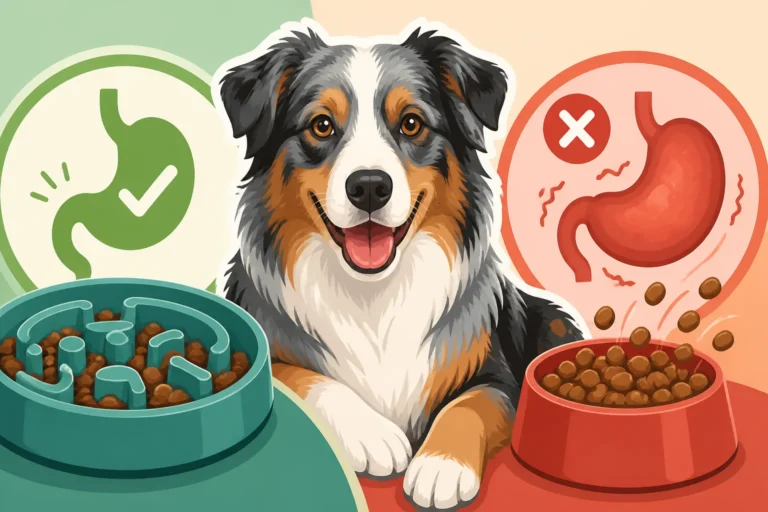
One of the most effective preventative strategies against bloat is slowing down how quickly your Aussie eats. This is where slow feeder bowls become invaluable. These bowls have ridges or obstacles that force your dog to eat around them, making it impossible to gulp down large quantities of food at once. You can find many options on Amazon or Chewy that are designed to challenge even the most enthusiastic eaters.
Beyond how they eat, when they eat also matters. Instead of one large meal a day, split your Aussie's daily ration into two or even three smaller meals. This reduces the amount of food in the stomach at any one time, lessening the risk of bloat. For dogs that are truly stressed by mealtime, a quiet, consistent feeding location, away from other pets or distractions, can also help them eat calmly.
Post-Meal Rest and Exercise Timing
This is crucial: never, ever allow your working Australian Shepherd to engage in strenuous exercise directly before or after eating. A good rule of thumb is to provide at least an hour of rest before a meal, and ideally two to three hours of calm activity after a meal. This allows the food to settle and begin digesting without the stomach sloshing around or putting undue pressure on ligaments.
This means you need to schedule your Aussie's work or training sessions carefully around their meal times. Don't come back from an agility trial, feed them immediately, and then let them run zoomies in the yard. Likewise, don't feed them right before heading out for a long hike. A relaxed walk on a leash after a meal is fine, but anything that involves running, jumping, or intense activity should be avoided. This simple habit can significantly reduce the risk of bloat.
Addressing Specific Dietary Needs and Sensitivities
Even with the best intentions and highest quality food, some Australian Shepherds have unique dietary quirks or sensitivities. It's not always a straight path, and sometimes you have to play detective to figure out what truly works for your individual dog.
Identifying Food Allergies and Intolerances
It's a frustrating scenario: your Aussie is itching, has a dull coat, or is experiencing digestive upset, and you suspect food might be the culprit. Food allergies or intolerances can manifest in various ways, from persistent scratching and hot spots to chronic ear infections or loose stools. Common allergens often include chicken, beef, dairy, wheat, and soy, but any ingredient can potentially cause a reaction.
Identifying the specific allergen usually requires an elimination diet. This involves switching your dog to a novel protein (one they've never eaten before, like duck, venison, or kangaroo) and a single, new carbohydrate source for a period of 8-12 weeks. During this time, absolutely no other foods, treats, or flavored medications can be given. If symptoms resolve, you then reintroduce ingredients one by one to pinpoint the culprit. This process requires patience but can be incredibly effective. Novel Protein Food for an Itchy Aussie is a great resource for this.
Managing a Sensitive Stomach or Picky Eater
Some Aussies just seem to have a perpetually sensitive stomach, prone to diarrhea or vomiting with even slight changes to their diet. Others are just plain picky, turning their nose up at perfectly good food. For a sensitive stomach, consistency is key. Find a food that works and stick with it. Probiotics can also be very helpful in supporting a healthy gut microbiome, which can lead to better digestion. Settling an Aussie Stomach After Antibiotics often involves probiotics, too.
For picky eaters, it's often more about behavior than true aversion. Sometimes, a dog learns that if they hold out, something better (like human food) will come along. Establishing a routine where the food is offered for a set amount of time (e.g., 15-20 minutes) and then picked up, regardless of whether it's eaten, can help. Avoid free-feeding, as it can encourage pickiness. Also, ensure you're not overdoing it with treats between meals. If your Aussie is truly under-eating and losing weight, it's time for a vet visit to rule out underlying medical issues.
Special Considerations for Skin and Coat Health
While not strictly an allergy, many Australian Shepherds can experience skin and coat issues that are tied to their diet. A dull, dry coat, excessive shedding (beyond their normal coat blows), or flaky skin can often be signs that their diet isn't providing enough essential fatty acids or other vital nutrients. Sometimes, owners wonder Whether Grain-Free Settles Aussie Itching, and while it might for some, it's not a universal solution.
Ensuring your Aussie's food contains a good balance of Omega-3 and Omega-6 fatty acids can dramatically improve skin and coat health. Supplements like fish oil can also be added. If you notice issues, examine the fat content and sources in your dog's food. For some, a switch to a higher-quality food with better fat profiles makes all the difference. Regular grooming also plays a role, helping to distribute natural oils and remove dead hair, but internal nutrition is the foundation.
Transitioning Diets and Monitoring Health
Changing your Australian Shepherd's food, even if it's for the better, isn't something to do overnight. Their digestive systems are sensitive, and abrupt changes can lead to upset stomachs. A slow, gradual transition is always the safest and most comfortable approach for your furry friend.
The Gradual Approach to Food Changes
Imagine suddenly switching your own diet from what you're used to to something completely new overnight. You'd likely feel some digestive discomfort! Your Aussie is no different. A sudden switch can lead to diarrhea, vomiting, or a complete refusal to eat. The goal is to slowly introduce the new food while phasing out the old one over a period of about 7-10 days.
Start by mixing a small amount of the new food (about 25%) with 75% of the old food for a few days. If your Aussie tolerates this well, increase the ratio to 50/50 for another few days, then 75% new food to 25% old food. Finally, you can transition to 100% new food. If at any point you notice digestive upset, slow down the transition and maintain that ratio for an extra day or two until their system adjusts. This patience prevents discomfort and ensures a smoother shift to their new diet.
Observing Stool, Coat, and Energy Levels
Once you've made a diet change (or even if you haven't, as a general practice), it's crucial to be an observant owner. Your Aussie's stool is a direct indicator of digestive health. It should be firm, moist, and easy to pick up. Loose, watery, or excessively hard stools are all signs that something might be off. Changes in color, consistency, or the presence of mucus or blood warrant a closer look and potentially a vet visit.
Beyond stool, pay attention to their coat. Is it shiny, soft, and free of excessive dandruff? Or is it dull, dry, and perhaps thinning? Their coat is a mirror of their internal health. And of course, their energy levels. For a working Aussie, you know their normal drive. Are they still eager for work? Are they recovering well? Or do they seem lethargic, fatigued, or disinterested? Any significant or prolonged changes in these areas should prompt an investigation into their diet and overall health.
When to Consult Your Veterinarian
As a responsible Australian Shepherd owner, you are your dog's first line of defense. While many minor issues can be resolved with dietary adjustments, there are definite times when you absolutely need to consult your veterinarian. Persistent vomiting or diarrhea, severe lethargy, sudden weight loss or gain, significant changes in appetite, or signs of pain are all red flags that require professional attention.
If you suspect food allergies, your vet can help guide you through an elimination diet and rule out other causes of itching or gastrointestinal upset. They can also advise on appropriate supplements for your dog's specific needs, especially if your Aussie has conditions like Australian Shepherd Epilepsy Starting Between One and Five or other health challenges that might impact dietary choices. Don't hesitate to reach out to them; they are your partners in keeping your working Aussie in peak condition.
Common Feeding Mistakes to Avoid with Working Aussies
Even the most well-meaning Australian Shepherd owner can make mistakes when it comes to feeding, especially with a breed as dynamic and high-energy as an Aussie. Being aware of these common pitfalls can help you provide the best possible nutrition and avoid potential health issues.
Overfeeding or Underfeeding
This is a Goldilocks scenario: you want it just right. Overfeeding is a common problem, often stemming from owners underestimating how much less food an Aussie needs on rest days compared to working days. Excess weight puts immense strain on joints, exacerbates conditions like Australian Shepherd Hip Dysplasia and Working Joints, and can shorten their lifespan. It's not a sign of love; it's a health risk. Regularly Taking an Australian Shepherd From Sixty to Fifty Pounds is a challenge many owners face.
Conversely, underfeeding a working Aussie can be equally detrimental. If they're not getting enough calories and nutrients, their performance will suffer, they'll lose muscle mass, and their immune system can become compromised. It's a fine line to walk, and it requires constant vigilance, body condition scoring, and adjusting portions based on their actual activity level.
Ignoring the Impact of Treats and Scraps
Those innocent treats and occasional table scraps? They add up. Fast. Especially for a high-drive Aussie who might be getting rewarded constantly during training sessions. While treats are excellent for motivation, they contribute to daily caloric intake and often provide empty calories without the balanced nutrition of their main meals. It's very easy to accidentally overfeed your working Aussie if you don't account for every single bite they consume.
If you use a lot of treats, consider using their regular kibble for training rewards, or choose very low-calorie, high-value options. When calculating their daily ration, remember to subtract the calories from treats to maintain balance. And table scraps? They often contain ingredients that aren't good for dogs (like excessive fat, salt, or even toxic foods) and can throw off a carefully balanced diet. Kitchen Foods That Are Toxic to an Aussie are more common than you might think. It's best to avoid them altogether.
Failing to Adapt to Changing Needs
Perhaps the biggest mistake an Aussie owner can make is treating their dog's diet as a static thing. An Australian Shepherd's nutritional requirements change throughout their life, with seasons, with fluctuations in their work schedule, and with any health changes. A puppy needs different nutrients and caloric density than an adult, and a senior dog's metabolism slows down considerably. Similarly, an Aussie recovering from an injury or illness will have different needs than one in peak physical condition.
Failing to adapt means you're either setting them up for weight gain, nutritional deficiencies, or slower recovery. You need to be proactive. Regularly assess their body condition, observe their energy and coat, and adjust their food. If your Aussie is going from intense agility training to a few months of light walks, their food needs to change with them. It’s an ongoing process of partnership and attention to detail that ensures your amazing working Australian Shepherd remains healthy, happy, and ready for whatever job comes next.
Disclaimer
This article is for general informational purposes only and does not constitute professional advice. Laws, prices and regulations vary by location and change over time. Consult a qualified professional for guidance on your specific situation.