Drying an Australian Shepherd Double Coat
The incredibly dense double coat of an Australian Shepherd is truly a marvel of nature, designed to protect them from the elements out on the ranch. But for us owners, that same thick, insulating coat can feel like a perpetual challenge when it comes to drying. If you've ever battled a damp Aussie for hours, only for them to emerge from their nap smelling like a wet sock, you know the frustration. This guide is here to walk you through the most effective ways to thoroughly dry your Australian Shepherd, preventing skin issues, matting, and that unmistakable "wet dog" odor.
Understanding the Australian Shepherd's Unique Double Coat
Before we dive into the how-to of drying, it's really helpful to understand why your Australian Shepherd's coat is such a formidable opponent. It's not just hair; it's a sophisticated insulation system.
The Anatomy of an Aussie's Insulating Layer
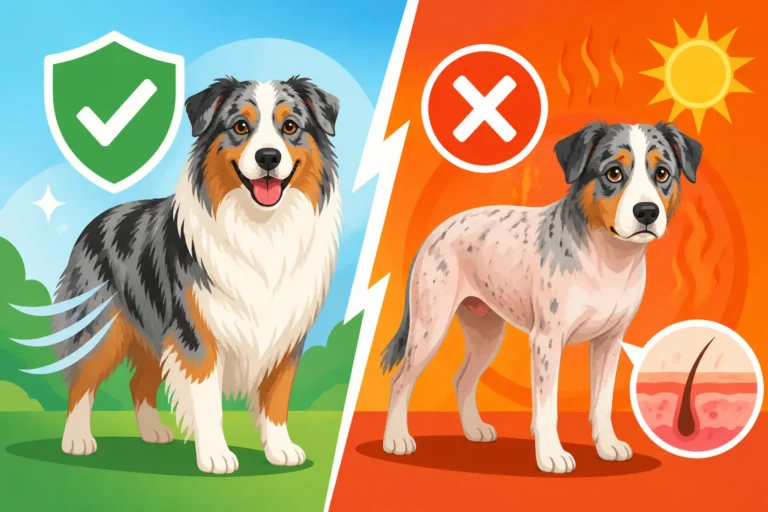
Your Aussie's coat is made up of two distinct layers, each with its own job. First, there's the incredibly soft, fluffy undercoat. This layer is dense and fine, acting like a thick wool sweater that traps air close to the body, providing warmth in winter and protection from heat in summer. It's often thicker around the neck, chest, and hindquarters, giving them that glorious fluff.
Then, you have the outer layer, known as the guard hairs. These are longer, coarser, and somewhat water-repellent. Their primary role is to protect the delicate undercoat from dirt, moisture, and physical abrasion. They lie smoothly over the undercoat, creating a protective barrier. Together, these two layers make up the distinctive "double coat" that defines breeds like the Australian Shepherd. It's a fantastic design for a working dog, but it's a nightmare for passive drying. For a deeper dive, check out The Australian Shepherd Double Coat Explained.
Why This Coat is a Drying Challenge
The very qualities that make the double coat so effective at insulating also make it a pain to dry. The guard hairs, while somewhat water-repellent, aren't completely waterproof. Once water penetrates them, it gets trapped in the dense undercoat. Imagine trying to dry a thick wool blanket that's been soaked through – it's a similar principle. The undercoat absorbs and holds onto moisture with remarkable tenacity.
Because the undercoat is so tightly packed and close to the skin, air circulation is naturally restricted. This means that simply towel-drying and letting your Aussie "air dry" can take hours, even a full day, and often leaves damp pockets deep within the coat. These damp pockets are where problems begin to brew, creating the perfect environment for bacteria and fungi.
The Risks of Incomplete Drying
It might seem like a minor inconvenience, but not thoroughly drying your Australian Shepherd can lead to a host of health and hygiene issues that are far from pleasant for both you and your dog.
Skin Irritations and Hot Spots
One of the most immediate and painful consequences of incomplete drying is the development of skin irritations, often escalating into what we commonly call "hot spots." When moisture gets trapped in that dense undercoat, especially in warm conditions, it creates a humid, dark environment perfect for bacterial or yeast growth. These microorganisms thrive, leading to intense itching.
Your Aussie, being an Aussie, will try to relieve this itch by licking, chewing, or scratching the area relentlessly. This self-trauma quickly breaks the skin, allowing more bacteria in and accelerating the infection. What starts as a small damp patch can rapidly become a large, inflamed, oozing lesion overnight. Hot spots are incredibly uncomfortable for your dog and require veterinary attention. Preventing them starts with thorough drying. You can learn more about this in Hot Spots Hidden in an Aussie Undercoat.
Matting and Undercoat Impaction
Another significant risk, particularly with a shedding undercoat, is severe matting and impaction. A damp undercoat clumps together much more easily than dry hair. As your Aussie moves, and as old undercoat sheds, the wet hair tangles and twists, forming tight, dense mats close to the skin. These mats act like sponges, trapping even more moisture and exacerbating skin issues.
Over time, if not addressed, these mats can become incredibly tight and painful, pulling on the skin and restricting movement. They can even cut off circulation to areas of the skin, leading to necrosis in severe cases. Furthermore, a matted coat cannot regulate temperature effectively, making your dog uncomfortable in both heat and cold. Brushing becomes impossible once mats form, often necessitating professional grooming with clippers. Areas behind the ears, in the armpits, and on the "trousers" (the feathering on the back legs) are especially prone to matting. Understanding this helps you prevent it, especially after a bath, as detailed in The Mats That Form Behind Aussie Ears.
The Lingering "Wet Dog" Smell
We've all been there: your Aussie has been thoroughly towel-dried, seems mostly dry, and then settles down for a nap. An hour later, a distinctly unpleasant, musky "wet dog" smell permeates the room. This isn't just the smell of water; it's the smell of bacteria and yeast multiplying in the damp warmth of their coat.
When their coat remains even slightly damp for an extended period, these microorganisms multiply rapidly, producing volatile organic compounds that give off that characteristic odor. It's not only unpleasant for you but also a sign that your dog's skin isn't truly clean and dry. A fully dry coat, where bacteria have no damp haven to flourish, will smell much fresher and cleaner for longer.
Chilling in Colder Weather
While their double coat is designed for insulation, a damp double coat can actually make your Aussie more susceptible to feeling cold, especially in cooler climates. Water conducts heat away from the body much faster than air. If the undercoat remains wet, it pulls heat from your dog's body, effectively compromising their natural insulation.
This can be particularly problematic after a winter walk in the snow or a chilly swim. A damp Aussie, even indoors, can shiver and feel uncomfortable, potentially leading to a weakened immune system or simply an unhappy dog. Ensuring they are thoroughly dry helps their coat perform its insulating job as intended, keeping them warm and cozy.
Essential Tools for Efficient Aussie Drying
You wouldn't try to build a house with a spoon, and you shouldn't try to dry an Australian Shepherd's double coat with just a flimsy towel. Having the right tools makes all the difference, turning a laborious chore into a much more manageable task.
High-Velocity Dog Dryers
If there's one tool that will revolutionize your Aussie drying routine, it's a high-velocity dog dryer. These are not human hair dryers, and that's an important distinction. High-velocity dryers use a powerful stream of unheated or minimally heated air to literally blast water out of the coat. The sheer force of the air separates the hair strands, allowing the air to reach deep into the undercoat and push the water away.
They work incredibly quickly, cutting drying time down significantly, often by 50% or more compared to towel drying alone. Beyond just speed, they are crucial for preventing mats because they help de-shed loose undercoat as they dry, blowing out dead hair that would otherwise tangle. When looking for one, consider models with variable speed settings, as this allows you to start gently and increase power as your dog gets comfortable. You can find excellent options on Amazon or specialized pet supply retailers.
Absorbent Towels and Microfiber
Even with a high-velocity dryer, good quality absorbent towels are your first line of defense. The goal is to remove as much surface water as possible before you even think about using a dryer. This speeds up the entire process. Regular bath towels work, but they can quickly become saturated.
Microfiber towels designed specifically for pets are a fantastic investment. They are much more absorbent than cotton towels and have a larger surface area, allowing them to wick away significantly more water. They also tend to dry faster themselves, so you can have multiple on hand. The trick is to blot and squeeze, rather than rub vigorously, which can tangle the coat. Gently press the towel against your Aussie's fur, drawing out as much moisture as you can from their back, sides, legs, and especially their feathery undercarriage.
Brushes and Combs for the Drying Process
Brushing isn't just for grooming; it's an integral part of the drying process. As you're drying your Aussie, whether with towels or a high-velocity dryer, using the right brushes helps immensely. A slicker brush with fine, bent wire pins is excellent for fluffing the coat and separating strands, allowing air to penetrate more effectively.
An undercoat rake is another indispensable tool. It has long, widely spaced teeth designed to reach through the guard hairs and gently pull out loose undercoat without damaging the topcoat. Using an undercoat rake while drying, especially with a high-velocity dryer, can remove an astonishing amount of dead hair, preventing future mats and speeding up drying by reducing the density of wet fur. You can find a good selection of these tools on sites like Chewy, ensuring you have the right arsenal for your Aussie's magnificent coat. To find out more about these tools, check out Undercoat Rakes and Brushes for an Aussie.
Step-by-Step Drying Techniques
Now that you have your tools, let's talk about the process. Drying an Australian Shepherd isn't just about blowing air at them; it's a strategic operation to ensure every layer of that beautiful double coat is bone-dry.
Towel Drying Fundamentals
The very first step after a bath, or a swim in the lake, is to get as much water off with towels as possible. Remember the golden rule: blot, don't rub.
- Squeeze Gently: Start by gently squeezing excess water from your Aussie's legs, tail, and feathering with your hands.
- Blot and Press: Drape a highly absorbent towel over your dog's back and press down firmly. Work your way down their body, blotting and pressing. Don't rub back and forth, as this can create tangles and mats in wet fur.
- Multiple Towels: You'll likely go through several towels, especially with a large Aussie. Have them ready. Swap out a saturated towel for a dry one to maximize water absorption.
- Focus on Problem Areas: Pay extra attention to the chest, belly, armpits, and behind the ears – these areas tend to hold a lot of water and are prone to matting.
The more water you can remove with towels, the less work your dryer will have to do, and the faster the overall process will be.
Mastering the High-Velocity Dryer
Once the bulk of the water is off, it's time for the heavy artillery: the high-velocity dryer. This is where you can truly get your Aussie dry to the skin.
- Introduce Gradually: If your Aussie is new to the HV dryer, introduce it slowly. Start on the lowest setting, holding it a foot or so away, and offer high-value treats. Get them used to the noise and sensation without pointing it directly at them initially. Gradually work up to direct contact. Ear protection (like a Snood or Happy Hoodie) can help reduce noise anxiety.
- Work in Sections: Don't just point it generally. Systematically work one section of your dog's body at a time, from head to tail or vice versa.
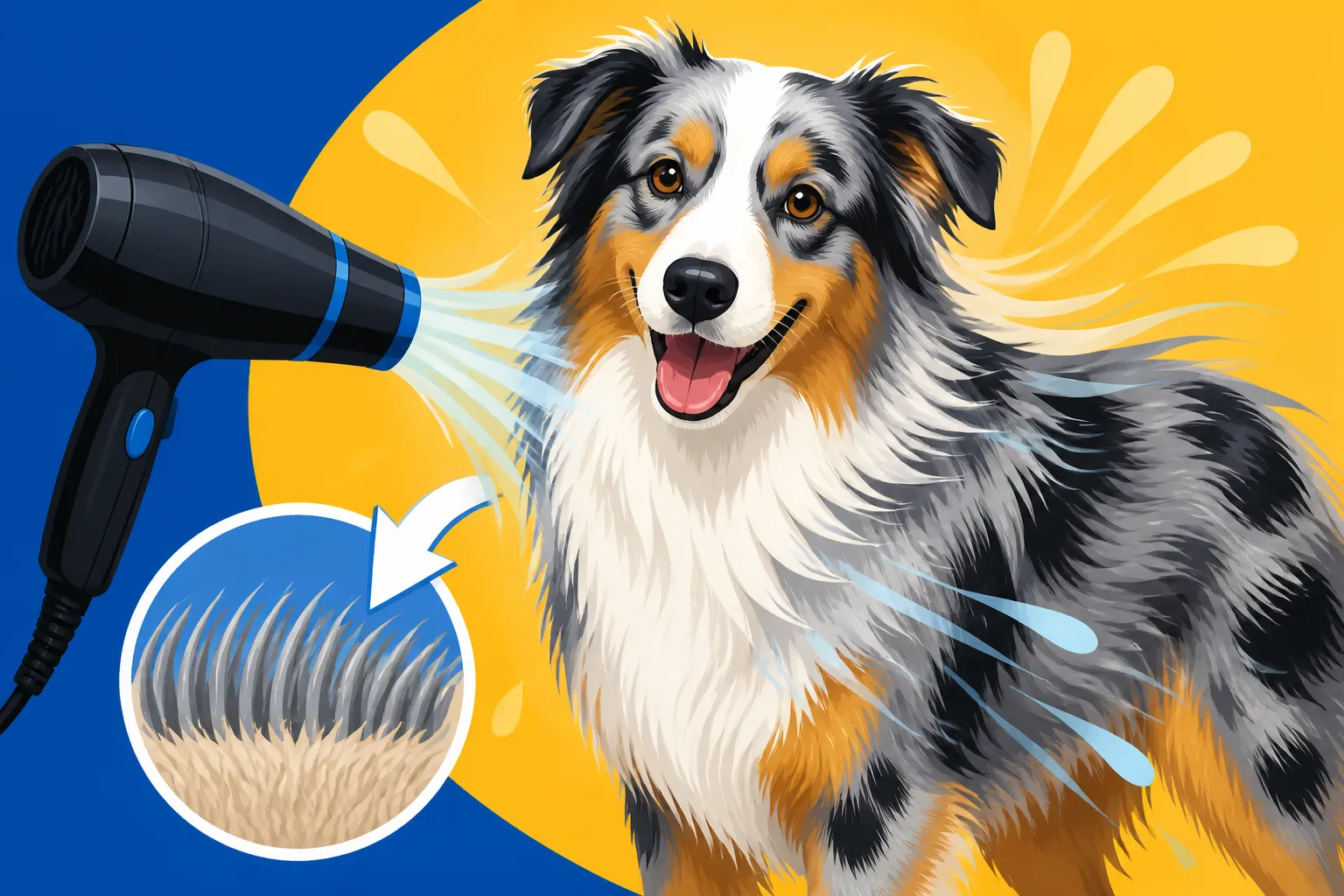
- Lift the Hair: Hold the nozzle close to the coat, pointing the airflow against the grain of the hair. This lifts the coat, allowing the air to blast directly down to the skin, pushing trapped water out. You'll literally see a spray of water coming off as you work.
- Brush as You Go: As mentioned, use your slicker brush or undercoat rake in the section you're drying. The dryer will loosen dead undercoat, and the brush will help remove it, which significantly aids drying.
- Check for Dampness: Continuously run your fingers through the coat to the skin to feel for any remaining dampness. Pockets of moisture can easily hide. Pay meticulous attention to the chest, armpits, hocks, and tail.
Consistency and patience are key. Make it a positive experience with praise and treats, and your Aussie will learn to tolerate, and perhaps even enjoy, their drying sessions.
Combining Drying Methods for Best Results
For optimal results, particularly after a full bath, a layered approach to drying works wonders. No single method is usually sufficient on its own for an Aussie's double coat.
- Initial Towel Dry: Begin with aggressive but gentle towel drying using highly absorbent microfiber towels. Get out as much standing water as you possibly can. This saves energy and time on the next step.
- High-Velocity Dryer Session: Move to your high-velocity dryer. This is the main event for deep-drying the undercoat and blasting out loose hair. Work systematically, section by section, always aiming the air against the lay of the fur to lift it and push water out. This is also your primary de-shedding opportunity.
- Finishing with a Cooler Dryer (Optional): If your Aussie is still slightly damp in certain areas, or if you want a really fluffy finish, you can use a stand dryer (a hands-free human hair dryer alternative for pets, with lower heat) or even a regular human hair dryer on its coolest setting, held far away from the coat. This is mainly for styling and ensuring every last strand is dry. Be extremely cautious with heat, as human dryers can quickly overheat a dog's skin and coat.
- Final Brush Out: Once completely dry, give your Aussie a thorough final brush-out with a slicker brush and a wide-toothed comb to ensure there are no tangles and the coat is smooth and fluffy. This also helps distribute natural oils.
This combined approach ensures not only a fully dry dog but also a comfortable one with a healthy, well-maintained coat.
Special Considerations for Aussie Drying
Not all drying situations are equal. There are specific scenarios where you might need to adjust your approach to effectively dry your Australian Shepherd.
Drying After a Bath
A full bath for an Australian Shepherd is an undertaking, and the drying process is perhaps even more critical than the washing itself. After you've spent time Washing Right Down to an Aussie's Skin, you need to ensure all that hard work isn't undone by improper drying.
Immediately after rinsing out all shampoo and conditioner, gently squeeze as much water out of the coat as possible while they're still in the tub or on a grooming table. Use your hands to express water from the feathering on their legs and tail. Then, transition to the intense towel drying as described earlier. The goal here is to get them damp, not dripping wet. This prepares them for the high-velocity dryer, which will then systematically push water out of every layer. If you skip steps, even the best shampoo won't prevent hot spots or that dreaded wet dog smell.
Drying After Swimming or Outdoor Adventures
Australian Shepherds often love water, whether it's a lake, a creek, or even a muddy puddle. After a good romp or a refreshing swim, their coat will be saturated, but you might not have the time or facilities for a full bath and dry routine.
In these cases, focus on key areas. Towel-dry vigorously, especially the belly, chest, and legs, where water can pool and cause chilling. If you have a portable high-velocity dryer, it can be a lifesaver for outdoor adventures, allowing you to quickly blow out most of the moisture before they get in the car or back into the house. If not, focus on towel-drying, then keep them moving or in a warm, dry spot to encourage faster evaporation. Be extra vigilant about checking for ticks and debris that can hide in a wet coat. For more tips on outdoor coat care, refer to Aussie Coat Care After Swimming in a Lake.
Maintaining Coat Health During Drying
The drying process isn't just about removing water; it's also an opportunity to maintain and even improve the health of your Aussie's coat.
Consider using a leave-in conditioning spray or a detangling spray before you start the high-velocity drying. These products can help smooth the hair cuticles, making them less prone to tangling and matting as the air blasts through. They can also add a layer of protection, moisturize the skin, and leave the coat feeling softer and shinier. Some even have anti-static properties, which is a bonus when dealing with a powerful dryer. Simply spritz it lightly over the damp coat and gently work it in before you begin drying. This small step can make a big difference in the final look and feel of your Aussie's coat, and in how easy it is to brush out afterward.
Common Mistakes to Avoid
There are several pitfalls Aussie owners commonly fall into when it comes to drying their dogs. Avoiding these can save you time, frustration, and potential vet bills.
Air Drying an Australian Shepherd
Perhaps the biggest mistake an Australian Shepherd owner can make is relying solely on air drying. While it might seem convenient, the dense nature of their double coat makes it a recipe for disaster. As we've discussed, air drying leaves pockets of moisture deep within the undercoat for extended periods.
This prolonged dampness creates the ideal breeding ground for bacteria and yeast, leading to hot spots, skin infections, and that persistent "wet dog" smell. It also allows the undercoat to clump and mat tightly as it dries, turning into painful knots that are incredibly difficult to remove without shaving. Even on a hot, sunny day, the air won't penetrate deep enough or quickly enough to fully dry an Aussie's undercoat. Always use mechanical means (towels, powerful dryers) to ensure your Aussie is dry to the skin.
Using Human Hair Dryers
Another common misstep is grabbing your personal human hair dryer to dry your Aussie. While it might seem like a quick fix, human hair dryers are simply not designed for a dog's coat and skin, and they pose significant risks.
- Excessive Heat: Human hair dryers operate at much higher temperatures than pet-specific dryers. A dog's skin is more sensitive than human skin, and they can quickly get burned, especially if the air is concentrated on one spot. The heat can also damage their coat, making it brittle.
- Insufficient Airflow: While they produce heat, human dryers lack the powerful, concentrated airflow needed to push water out of a dense double coat. You'll end up just blowing hot air on the surface, leaving the undercoat damp and potentially cooking the top layers.
- Loud Noise: Many human dryers are also incredibly noisy, which can be distressing for a dog with sensitive hearing.
Invest in a dedicated pet dryer or learn proper towel-drying techniques rather than risking your dog's comfort and health with a human appliance.
Skipping the Brushing Step
It's tempting to think drying is just about removing water, but skipping the crucial brushing step during the process is a mistake that leads to more work down the line. As the high-velocity dryer blasts air through the coat, it dislodges a tremendous amount of loose, dead undercoat. If this hair isn't brushed out, it will tangle and mat as it dries, becoming even more embedded.
Brushing while you dry serves multiple purposes: it helps separate the hair strands, allowing air to penetrate more effectively and speeding up drying; it removes dead hair, which prevents future mats; and it helps fluff the coat, giving your Aussie a beautiful, finished look. Make sure to use a slicker brush and an undercoat rake to get through both layers. Consistent brushing, not just during drying, is vital for managing an Aussie's coat year-round, as discussed in Brushing an Australian Shepherd Twice a Week. Without it, you're fighting an uphill battle against mats and shedding.
Summary of Drying Methods
To help you choose the best drying approach for your Australian Shepherd, here's a quick comparison of the most common methods.
| Drying Method | Pros | Cons | Efficiency | Safety | Best For |
|---|---|---|---|---|---|
| Air Drying | Free, no equipment needed | Very slow, high risk of matting, hot spots, and odor | Very Low | Low | Never recommended for full coat |
| Towel Drying (alone) | Simple, low cost, helps absorb initial water | Does not dry to the skin, leaves dampness, still slow | Low | Medium | Initial water removal only |
| Human Hair Dryer | Readily available, provides heat | High heat risk (burns), inefficient airflow, very noisy | Medium | Very Low | Not recommended at all |
| High-Velocity Dryer | Fastest, most effective, de-sheds, prevents mats | Initial cost, can be noisy, requires training for dog | Very High | High | Full baths, routine drying, de-shedding |
| Stand Dryer (Pet type) | Hands-free, controlled heat, good for finishing | Slower than HV, still requires brushing | High | High | Finishing touches, dogs sensitive to HV |
By combining effective towel drying with the power of a high-velocity dryer, you can ensure your Australian Shepherd is not just surface dry, but truly dry to the skin, preventing common coat and skin problems. It might seem like a lot of effort, but a well-maintained, dry coat is a healthy and happy coat!
Disclaimer
This article is for general informational purposes only and does not constitute professional advice. Laws, prices and regulations vary by location and change over time. Consult a qualified professional for guidance on your specific situation.