What 70 Percent Leaves on an Aussie Hip
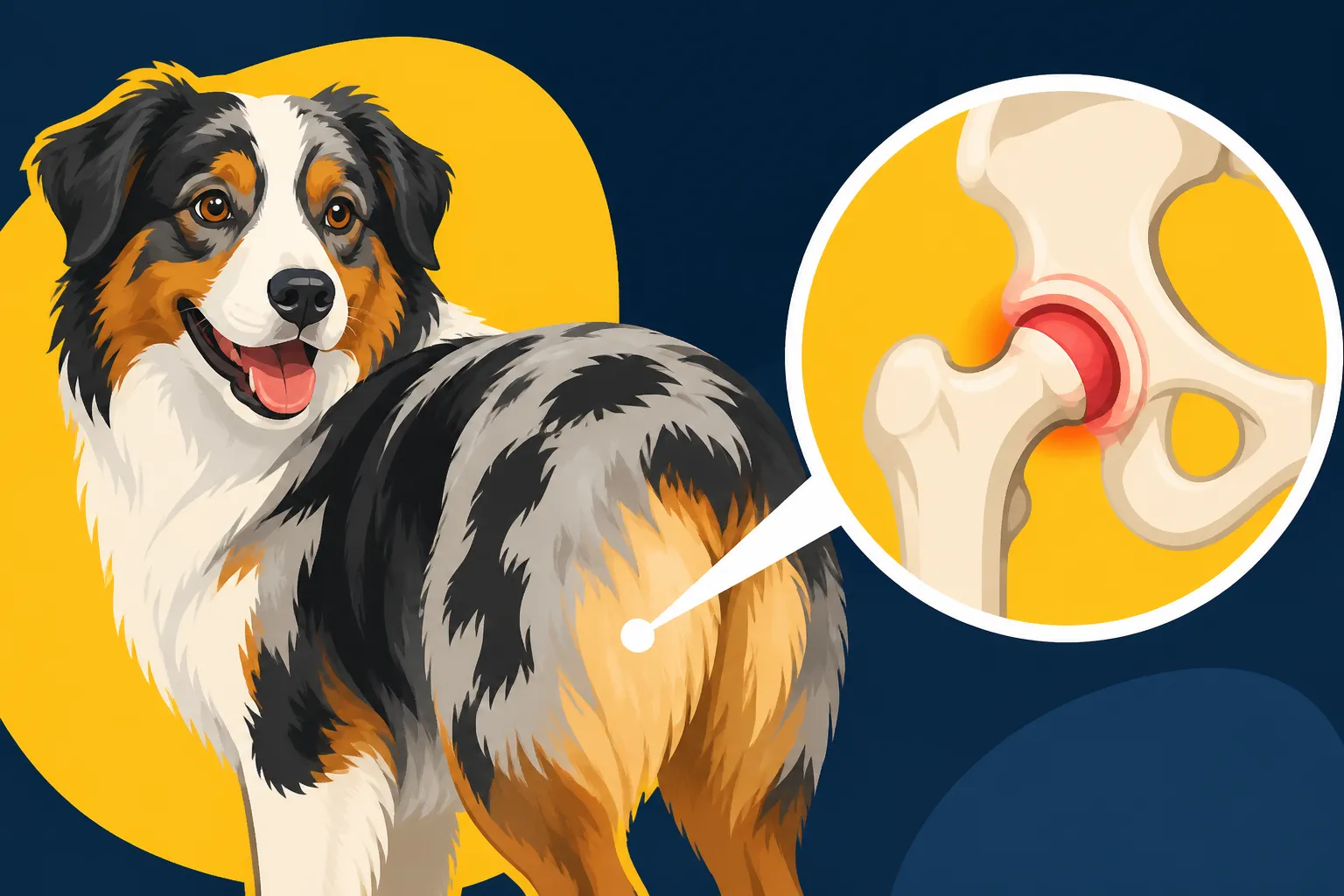
There's nothing quite like the gut punch of hearing your beloved Australian Shepherd has hip dysplasia. You see them struggling, maybe limping after a good run, or having trouble getting up, and your heart just breaks. Then comes the vet's diagnosis, often followed by a hefty quote for surgery, and the immediate thought is, "Thank goodness I have pet insurance!" But if your policy states it covers "70 percent," you might be in for a rude awakening about what that truly leaves you to pay out of pocket. This guide is here to walk you through the realistic financial landscape of Aussie hip surgery, breaking down what that 70% actually means for your wallet.
The Staggering Reality of Australian Shepherd Hip Surgery Costs
When your vet first lays out the options for addressing your Australian Shepherd's hip dysplasia, the numbers can feel dizzying. It's not just a single cost; it's a whole cascade of expenses that begins even before the surgery itself.
The Initial Shock: What a TPO or FHO Really Means for Your Wallet
Let's talk about the big-ticket items first: the surgical procedures themselves. For a condition like Australian Shepherd hip dysplasia, especially if it's severe, your vet might recommend a Femoral Head Ostectomy (FHO), a Triple Pelvic Osteotomy (TPO), or in more advanced cases, a Total Hip Replacement (THR). These aren't minor procedures, and their costs reflect that complexity and specialized skill required.
An FHO, where the head of the femur is removed to alleviate pain, can range from $1,200 to $4,000 per hip. This is often considered a salvage procedure, best for smaller, lighter dogs or those where other options aren't feasible. For a muscular, active Australian Shepherd, it might not be the optimal long-term solution. A TPO, more common for younger Aussies with hip laxity but no significant arthritis, involves cutting and reorienting the pelvic bone. This is a more involved surgery and can easily run anywhere from $3,500 to $6,000 per hip. Then there's the gold standard for severe cases: a Total Hip Replacement. This is precisely what it sounds like – replacing the diseased hip joint with prosthetic components. While offering excellent long-term outcomes, this procedure is significantly more expensive, often costing between $6,000 and $10,000 per hip.
Remember, these figures are ballpark estimates and can vary wildly based on your geographic location (vet costs in a major metropolitan area like Los Angeles or New York City will often be higher than in a rural clinic), the specific veterinary surgeon's experience, and the facility itself. And here's the kicker: hip dysplasia often affects both hips. While vets typically operate on one hip at a time, allowing for recovery, the prospect of needing two major surgeries can double your initial cost projections. This is where understanding your insurance, and what Australian Shepherd Hip Replacement Cost Per Hip truly means, becomes paramount.
Beyond the Operation: Ancillary Costs You Cannot Ignore
The surgical fee itself, as daunting as it is, is just one piece of the puzzle. There's a whole slew of other necessary expenses that can quickly add up, and these are often overlooked when you're first presented with the big number.
Before any cutting even happens, your Australian Shepherd will need extensive pre-surgical diagnostics. This includes detailed X-rays to assess the severity of the dysplasia, often requiring sedation to get clear images for an accurate diagnosis and surgical planning. You'll also need bloodwork to ensure your Aussie is healthy enough for anesthesia and surgery, checking organ function and clotting times. In some complex cases, a CT scan or MRI might be recommended, adding hundreds, if not thousands, to the diagnostic bill.
Post-surgery, the care continues. Your Aussie will need pain medication, anti-inflammatories, and possibly antibiotics, all of which incur pharmacy costs. Then comes the crucial rehabilitation phase. This isn't optional; it's vital for a successful recovery and to regain muscle strength and mobility. Physical therapy sessions, which might include hydrotherapy, therapeutic exercises, and laser treatments, can cost $50-$150 per session, and your Aussie might need multiple sessions a week for several months. Follow-up vet visits and X-rays to monitor healing are also part of the package. Some Aussies might even benefit from specific joint supplements or prescription diets during recovery. These ongoing expenses, while smaller individually, accumulate rapidly and are critical for your dog's long-term comfort and mobility.
Deciphering Your Pet Insurance Policy's "70 Percent"
You might breathe a sigh of relief when you remember you have pet insurance, confident that "70 percent coverage" means a huge chunk of that overwhelming bill will be taken care of. While pet insurance is absolutely invaluable, that 70% isn't as straightforward as it sounds, and there are several layers of costs you'll still be responsible for.
The Deductible: Your First Out-of-Pocket Hit
Before your insurance company even begins to reimburse you for 70% of the covered costs, you first have to meet your deductible. Think of it like your car insurance: you pay a certain amount out-of-pocket before your coverage kicks in. For pet insurance, common deductibles might be $250, $500, or even $1,000.
Some policies have an annual deductible, meaning you pay it once per policy year, regardless of how many different conditions your Aussie might experience. Others have a per-incident deductible, meaning you'd pay a deductible for each new condition or illness. For a condition like Australian Shepherd hip dysplasia, which is a single, ongoing condition (even if it affects both hips), you'd typically only pay your deductible once per policy year under an annual deductible plan. However, if your Aussie later developed another unrelated issue, like an allergy or an ear infection, you might have to pay a separate deductible if your policy is structured with a per-incident deductible. Knowing how Setting an Aussie Deductible Against Hip Bills works for your specific plan is crucial for accurate financial planning.
So, if your Aussie's surgery and associated costs total $6,000 and you have a $500 annual deductible, that first $500 comes directly from your pocket. Only after that $500 is met does the 70% reimbursement percentage even enter the picture.
Coinsurance Explained: That Remaining 30 Percent
Once your deductible is met, your insurance company will then apply the coinsurance percentage. If your policy states "70 percent coverage," it means the insurance company will reimburse you for 70% of the eligible costs, and you, the pet parent, are responsible for the remaining 30%. This 30% is your coinsurance.
Using our previous example: after your $500 deductible on a $6,000 bill, there's $5,500 left. Your insurance policy will cover 70% of that $5,500. This means they will pay $3,850 ($5,500 x 0.70). You are then responsible for the remaining 30%, which is $1,650 ($5,500 x 0.30). So, your total out-of-pocket cost for that $6,000 bill would be your $500 deductible plus the $1,650 coinsurance, totaling $2,150.
It's vital to remember that the 70% (or 80% or 90%, depending on your plan) is applied to what the insurer deems reasonable and customary for a particular procedure in your area. This means if your vet charges significantly more than what your insurance company's internal data suggests is typical for an FHO in your region, the insurance payout might be based on the lower, "reasonable and customary" amount, not the full amount your vet billed. This can leave you with a higher out-of-pocket percentage than you initially anticipated.
Annual Limits and Payout Caps
Beyond deductibles and coinsurance, most pet insurance policies also have annual limits or payout caps. This is the maximum amount your insurance company will pay out in a single policy year. These limits can range from $5,000 to $10,000, $15,000, or even "unlimited."
For an Australian Shepherd facing hip dysplasia, especially if it requires expensive surgery or affects both hips, these limits can be a major factor. If your Aussie needs a Total Hip Replacement on one hip costing $8,000, and your annual limit is $10,000, you might be fine. But what if they need a second THR on the other hip a few months later, bringing the total to $16,000? Even with 70% coverage, if your annual limit is $10,000, the insurance company will only pay up to that $10,000 maximum, no matter what your reimbursement percentage would have dictated. The remaining $6,000 (minus your deductible and coinsurance on the covered portion) would be entirely your responsibility. This is a critical detail that can catch many pet parents off guard, underscoring the importance of reviewing your policy's full terms and conditions for Australian Shepherd Insurance at $35 to $55 a Month.
Practical Examples: What 70% Actually Looks Like on an Aussie Hip Bill
Let's put some real numbers to these concepts to illustrate what you might genuinely expect to pay out of pocket. It's often not as simple as taking 30% of the total bill.
Scenario 1: A Straightforward Unilateral Surgery
Imagine your Australian Shepherd needs a TPO on one hip.
- Total Vet Bill (Surgery + Diagnostics + Post-op meds): $5,500
- Your Insurance Policy: $500 annual deductible, 70% reimbursement, $10,000 annual limit.
- Pre-existing condition clause: Hip dysplasia is not a pre-existing condition, and you've passed the Hip Dysplasia Waiting Periods on an Aussie Policy.
Here's the breakdown:
- Meet the Deductible: You pay the first $500 out of your pocket.
- Remaining Eligible Bill: $5,500 (total bill) – $500 (deductible) = $5,000
- Insurance Reimbursement: The insurance company covers 70% of the $5,000. So, 0.70 * $5,000 = $3,500.
- Your Coinsurance (Remaining 30%): You pay 30% of the $5,000. So, 0.30 * $5,000 = $1,500.
- Your Total Out-of-Pocket Cost: $500 (deductible) + $1,500 (coinsurance) = $2,000
- Insurance Pays: $3,500
In this "straightforward" scenario, even with 70% coverage, you're still responsible for $2,000 of a $5,500 bill. That's almost 36% of the total cost, not 30%. The deductible significantly impacts the initial payout.
Scenario 2: Bilateral Surgery and Annual Limits
Now, let's consider a more complex scenario: your Australian Shepherd needs THR on both hips, ideally spaced out for recovery.
- First Hip THR Bill: $8,000 (including diagnostics, surgery, initial meds)
- Second Hip THR Bill (months later): $8,000 (same as above)
- Total Combined Bill: $16,000
- Your Insurance Policy: $500 annual deductible, 70% reimbursement, $10,000 annual limit. (Assume both surgeries fall within the same policy year.)
Let's calculate the first hip:
- Meet the Deductible: You pay the first $500.
- Remaining Eligible Bill: $8,000 – $500 = $7,500
- Insurance Reimbursement: 70% of $7,500 = $5,250
- Your Coinsurance: 30% of $7,500 = $2,250
- Your Total Out-of-Pocket for First Hip: $500 + $2,250 = $2,750
- Insurance Pays for First Hip: $5,250. This uses up $5,250 of your $10,000 annual limit, leaving $4,750.
Now for the second hip:
- Deductible: Since it's an annual deductible, it's already met.
- Remaining Eligible Bill: $8,000
- Insurance Reimbursement (limited by annual cap): The insurance would pay 70% of $8,000 ($5,600). However, you only have $4,750 remaining on your annual limit. So, the insurance company will only pay $4,750.
- Your Out-of-Pocket for Second Hip: This is where it hurts. You pay the full difference between the $8,000 bill and the $4,750 insurance payout. $8,000 – $4,750 = $3,250.
- Your Grand Total Out-of-Pocket for Both Hips: $2,750 (first hip) + $3,250 (second hip) = $6,000
- Total Insurance Payout: $5,250 (first hip) + $4,750 (second hip) = $10,000 (hitting the annual limit).
In this scenario, with two major surgeries and a $10,000 annual limit, your total out-of-pocket jumped to $6,000 on a $16,000 combined bill. This is 37.5% of the total cost, significantly more than the stated 30% coinsurance. It really highlights how important it is to have high annual limits, especially for a breed prone to orthopedic issues like the Australian Shepherd.
The Hidden Costs That Don't Get Covered
Beyond the direct surgical and reimbursement figures, there are often other costs associated with hip dysplasia care that pet insurance policies typically don't cover. These can include:
- Pre-existing Conditions: This is the big one. If your Aussie showed any signs or symptoms of hip dysplasia before your insurance policy's waiting period was over or before you even enrolled, it will almost certainly be excluded. This is why it's so important to insure your puppy early and understand The Aussie Conditions Insurers Exclude.
- Waiting Periods: Most policies have waiting periods (e.g., 6 months for orthopedic conditions) before they'll cover specific issues. If your Aussie is diagnosed during this period, it could be considered pre-existing.
- Prescription Diets and Supplements: While some policies might cover certain prescription medications, specialized prescription foods (like joint-support diets) or over-the-counter supplements (like glucosamine and chondroitin, or fish oil for joint health) are usually not covered. Many owners find products from places like Chewy to help with these needs.
- Alternative Therapies: While incredibly beneficial, treatments like acupuncture, chiropractic care, or specialized massage therapy are often not covered unless explicitly added as a rider or if your policy is very comprehensive.
- Travel and Lodging: If you need to travel to a specialty veterinary orthopedic surgeon, the costs for gas, hotels, or time off work are, of course, entirely your responsibility.
- "Exam Fees" for routine check-ups: Many policies only cover emergency exam fees or those related to a covered incident. Routine wellness exam fees typically aren't covered.
| Cost Category | Typical Range (Per Hip) | Your Deductible ($500) | Your Coinsurance (30%) | Insurance Pays (70%) |
|---|---|---|---|---|
| Total Hip Replacement | $6,000 – $10,000 | Covered (once per incident/year) | Applied After Deductible | Applied After Deductible |
| TPO (Triple Pelvic Osteotomy) | $3,500 – $6,000 | Covered (once per incident/year) | Applied After Deductible | Applied After Deductible |
| FHO (Femoral Head Ostectomy) | $1,200 – $4,000 | Covered (once per incident/year) | Applied After Deductible | Applied After Deductible |
| Pre-surgical Diagnostics (X-rays, bloodwork) | $300 – $1,000+ | Covered | Applied After Deductible | Applied After Deductible |
| Post-op Pain Meds/Antibiotics | $100 – $300 | Covered | Applied After Deductible | Applied After Deductible |
| Physical Rehab (per session) | $50 – $150 (often not fully covered or requires rider) | N/A | N/A | Limited/None |
| Joint Supplements/Rx Food | $30 – $100/month (usually not covered) | N/A | N/A | None |
This table provides general estimates. Actual costs and coverage vary greatly by provider, policy, location, and specific veterinary practice.
Strategies for Managing the Financial Burden
Facing the costs of Australian Shepherd hip surgery is overwhelming, but there are proactive steps you can take to mitigate the financial impact and ensure your beloved companion gets the care they need.
Choosing the Right Insurance Plan Proactively
The single best piece of advice for managing these costs is to get pet insurance as early as possible – ideally when your Australian Shepherd is a puppy, before any signs of hip dysplasia or other conditions emerge. This avoids the dreaded "pre-existing condition" clause. When comparing plans, don't just look at the monthly premium. Dig into the details:
- Reimbursement Percentage: While 70% is good, 80% or 90% plans will significantly reduce your out-of-pocket coinsurance. The higher the percentage, the less you pay after your deductible.
- Deductible Options: Consider whether an annual deductible or per-incident deductible works best for your budget and peace of mind. A higher deductible usually means a lower monthly premium, but a larger initial out-of-pocket expense when an issue arises.
- Annual Limits: As we saw, high annual limits are critical for expensive, recurring, or bilateral conditions like hip dysplasia. If your budget allows, opting for an unlimited plan can provide immense relief.
- Orthopedic Coverage Specifics: Some insurers, like Healthy Paws, are known for robust orthopedic coverage, but always read the fine print. Look for plans with short orthopedic waiting periods and clear definitions of what constitutes a pre-existing condition.
- Wellness vs. Accident & Illness: While wellness plans cover routine care, they typically don't cover major surgeries. You need a comprehensive accident and illness plan for hip dysplasia.
- Reputation and Customer Service: Look at reviews and talk to other pet owners about their experiences with different providers. Good customer service can make a huge difference during a stressful time.
Alternative Funding and Support
Even with insurance, you might face substantial out-of-pocket costs. It's smart to have a few other strategies in your back pocket:
- Emergency Fund: Building a dedicated savings account for pet emergencies is always a good idea. Even setting aside $50-$100 a month can make a significant difference over time.
- Payment Plans with Your Vet: Many veterinary clinics understand the financial strain of major surgery and are willing to work with clients on payment plans. It never hurts to ask!
- CareCredit: This is a credit card specifically for healthcare expenses, including veterinary care. It often offers deferred interest periods if the balance is paid within a certain timeframe. Be sure to understand the terms fully.
- Breed-Specific Rescues and Charities: Organizations dedicated to Australian Shepherds, or general pet-help charities, sometimes offer financial assistance or grants for emergency veterinary care. Research groups like the Australian Shepherd Health & Genetics Institute (ASHGI) or local breed rescues.
- Crowdfunding: Platforms like GoFundMe can be a lifeline for many pet parents, allowing friends, family, and even strangers to contribute to your Aussie's medical bills.
- Pet Savings Accounts: Some banks offer specific savings accounts for pet care that might accrue a bit of interest.
Proactive Care and Prevention
While genetic hip dysplasia can't be entirely prevented, proactive care can help manage its progression and severity, potentially delaying the need for surgery or reducing its complexity.
- Responsible Breeding: Always choose a reputable breeder who performs all recommended health clearances, including OFA or PennHIP evaluations for hips, on both parent dogs. This significantly reduces the risk. Ask to see the results of The Health Tests Every Australian Shepherd Parent Needs.
- Weight Management: Keeping your Australian Shepherd at a lean, healthy weight is one of the most impactful things you can do for their joint health. Excess weight puts tremendous strain on the hips, exacerbating dysplasia. A balanced diet, potentially including fresh food options like those offered by Ollie, tailored to their energy needs, is crucial. For more insights, you might check out How Weight Multiplies the Load on Aussie Joints.
- Appropriate Exercise for Growth: For Australian Shepherd puppies, avoid high-impact, repetitive activities like jumping or long-distance running until their growth plates have closed, usually around 12-18 months. Instead, focus on controlled walks and mental enrichment.
- Joint Supplements: Many vets recommend starting joint supplements, such as glucosamine, chondroitin, and MSM, even in younger Aussies from lines prone to hip issues, or those already showing mild signs. These won't cure dysplasia, but they can support joint health and potentially slow progression. Find out more about Starting Joint Support on a Young Working Aussie.
- Regular Vet Check-ups: Consistent veterinary care ensures that any subtle signs of hip pain or lameness are caught early, allowing for timely intervention and management.
Taking these steps can help you be better prepared, both financially and emotionally, if your Australian Shepherd ever faces a hip dysplasia diagnosis. The love and companionship they provide are priceless, but ensuring their health can come with a significant price tag, which is why understanding every facet of insurance coverage is so important.
Disclaimer
The information provided in this article is for general informational purposes only and does not constitute veterinary medical advice. Always consult with a qualified veterinarian for any health concerns or before making any decisions about your pet's medical care, treatment, or insurance plans. Pet insurance policies vary widely; always review your specific policy's terms and conditions to understand coverage, deductibles, and limitations.