Enforced Naps for an Overtired Aussie Puppy
If you’ve ever found yourself with an Australian Shepherd puppy who seems to have boundless, chaotic energy, zooming around, nipping at everything, and simply refusing to settle down, you're not alone. It's a common misconception that all that wildness is just a puppy being a puppy, but often, it's a clear sign of an overtired Aussie. This guide is here to walk you through the surprising truth about puppy energy and how the simple, yet powerful, strategy of enforced naps can transform your home into a calmer, happier space for both you and your furry companion.
Understanding Overtiredness in Australian Shepherd Puppies
It’s easy to look at a puppy tearing through the house, batting at imaginary foes, and nipping at your ankles, and think, "Wow, they have so much energy!" We often assume a tired puppy will simply curl up and snooze. But with an Australian Shepherd puppy, a breed known for its sharp intelligence, high drive, and incredible stamina, the reality is often quite different. Their inherent "push through" mentality, born from generations of working livestock, means they can easily become utterly exhausted yet still be running on fumes, appearing hyperactive rather than sleepy. It’s like a toddler who’s been up too long and starts throwing a tantrum instead of asking for a cuddle.
The Signs Your Aussie Puppy is Overtired
Recognizing overtiredness in an Aussie puppy can feel counterintuitive because the symptoms often mimic extreme energy. You might see a sudden increase in what looks like hyperactivity, often dubbed the "witching hour" or "zoomies." Your puppy might be tearing around the house, running laps, bumping into furniture, and generally appearing unable to calm itself. This isn't necessarily a sign that they need more exercise; it's often the opposite.
Another common sign is increased nipping and mouthing. Australian Shepherds are naturally mouthy, given their herding heritage where they use their mouths to gently (or not-so-gently) guide sheep. When overtired, this natural tendency can escalate into frantic, painful nipping, especially at moving targets like your ankles or pant legs. They might also become more vocal, barking excessively at minor disturbances, or even at nothing at all. Their impulse control might completely disappear, making it impossible for them to listen to cues they usually know, or they might seem agitated and unable to focus. They might refuse to lie down, even in their bed, pacing restlessly. It's a frustrating experience for you, but remember, it's even more frustrating for them as they're literally fighting their body's need for rest.
Why Australian Shepherd Puppies Get Overtired So Easily
Australian Shepherd puppies are like sponges, constantly absorbing new information and experiences. Every new sight, sound, smell, and interaction is a huge mental and physical workout. From learning basic commands to exploring the backyard, or even just observing household activity, their brains are working overtime. Unlike adult dogs, puppies lack the ability to self-regulate their sleep effectively. They don't always know when to stop and rest, especially a high-drive breed like an Aussie.
Their natural curiosity and desire to engage with their environment mean they will often push past the point of fatigue, trying to keep up with everything around them. If they're constantly exposed to stimulation without adequate downtime, their little bodies and developing brains simply can't cope. Think about how you feel after a day of intense work or travel; you might feel wired but utterly exhausted. Puppies experience this on a daily basis. Without structured rest, they get stuck in a cycle of overstimulation, leading to overtiredness, which then manifests as even more frantic behavior. It’s a vicious cycle that only you, their loving owner, can help them break.
The Art of the Enforced Nap for Your Aussie Puppy
Enforced naps aren't about punishing your puppy or shutting them away. They are a deliberate and crucial strategy to ensure your young Australian Shepherd gets the deep, restorative sleep their growing bodies and busy minds desperately need. It's about proactively managing their energy and teaching them to relax, rather than waiting for them to crash (or melt down). Think of it as hitting the "reset" button.
Setting Up the Perfect Nap Environment
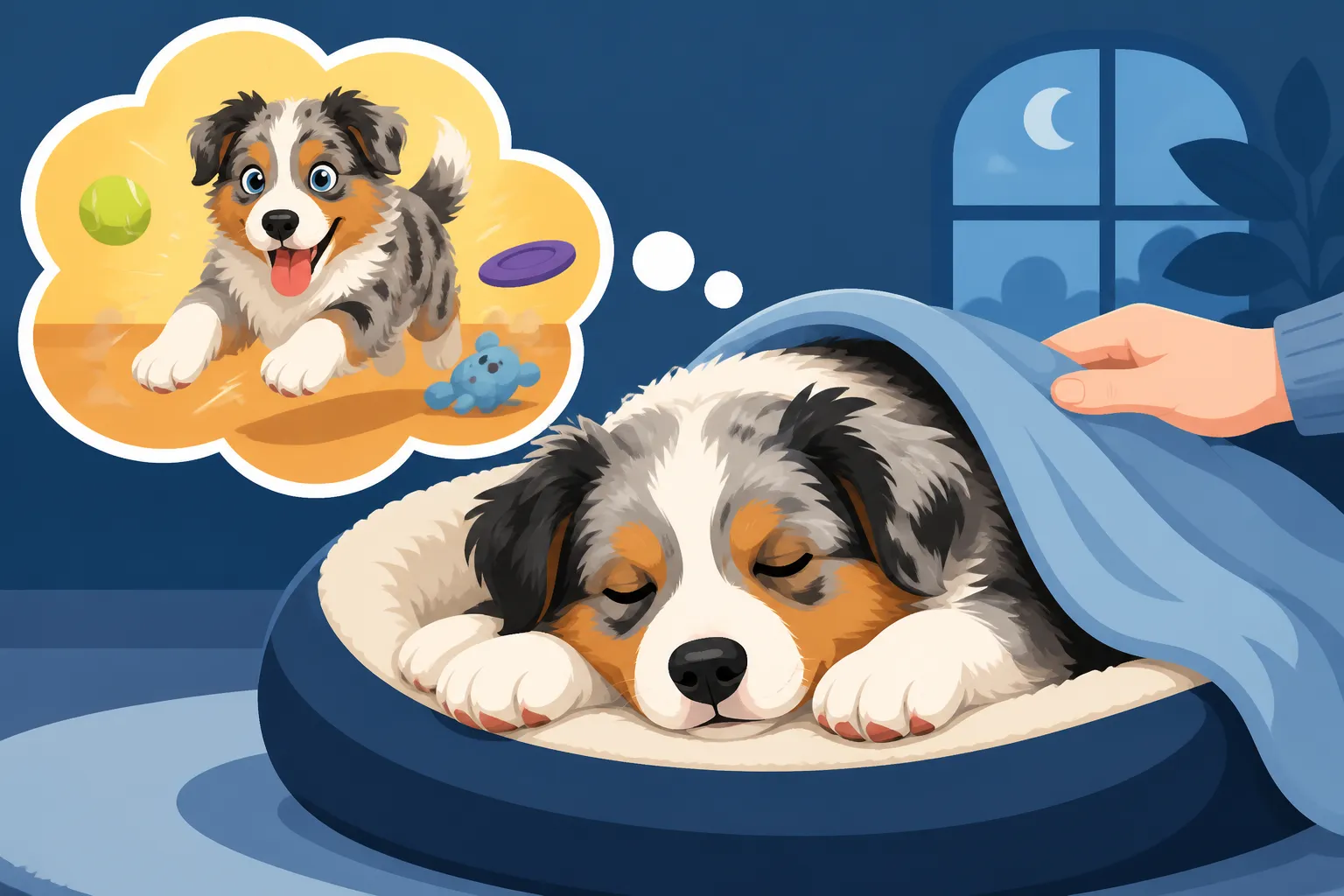
For an enforced nap to be successful, the environment needs to be conducive to sleep. The goal is to create a den-like space where your Aussie puppy feels safe, secure, and undisturbed. A crate is typically the ideal place for this. Ensure the crate is the right size – large enough for your puppy to stand up, turn around, and lie down comfortably, but not so big that they can relieve themselves in one corner and sleep in another. For an Aussie that will grow into a substantial dog, you'll want to plan for The Crate a Fifty Pound Aussie Needs.
Darkness is key for signaling sleep, so consider covering the crate with a blanket or a specific crate cover. This blocks out visual distractions and helps regulate their circadian rhythm. A quiet location, away from the main thoroughfare of your home, is also crucial. A spare room, a corner of your bedroom, or even a utility room that isn't too cold or isolated can work well. You might also find a white noise machine or a fan helpful in masking household sounds that could startle your sleeping pup. Make sure the crate is comfortable with a soft, washable bed or blanket. Some puppies enjoy a safe chew toy or a small, puzzle feeder toy (empty) to help them settle in, associating the crate with positive, calm experiences.
Implementing a Consistent Nap Schedule
Consistency is the bedrock of successful enforced napping. Puppies thrive on routine, and knowing when to expect a nap helps them settle down more easily. A popular guideline is the "one hour up, two hours down" rule, especially for very young puppies (8-12 weeks). This means after an hour of awake time—which includes potty breaks, play, training, and feeding—your puppy goes down for a two-hour nap. This might seem like a lot of sleep, but it's exactly what their developing bodies need. As they get older, their awake periods might extend slightly, but the principle remains. You'll find that a structured routine benefits both of you, making house training easier and reducing undesirable behaviors.
Here's a sample nap schedule:
| Time | Activity | Notes |
|---|---|---|
| 7:00 AM | Wake up, Potty, Breakfast | Morning routine |
| 7:30 – 8:30 AM | Play, Training, Socialization | Structured engagement, mental work |
| 8:30 – 10:30 AM | Enforced Nap (Crate) | Crucial rest period |
| 10:30 AM | Wake up, Potty, Light Play | Short burst of activity |
| 11:00 AM – 1:00 PM | Enforced Nap (Crate) | Another essential rest |
| 1:00 PM | Wake up, Potty, Lunch, Training | Midday activities |
| 1:30 – 3:30 PM | Enforced Nap (Crate) | Helps avoid the afternoon "witching hour" |
| 3:30 PM | Wake up, Potty, Play, Dinner Prep | More active period |
| 4:30 – 6:30 PM | Enforced Nap (Crate) | Vital for a calm evening |
| 6:30 PM | Wake up, Potty, Dinner, Family Time | Evening wind-down |
| 7:30 – 8:30 PM | Quiet Chews, Cuddles, Last Potty | Preparing for bedtime |
| 8:30 PM | Bedtime (Crate) | Overnight sleep |
This is just a template, and you'll need to adjust it to your household's rhythm. The key is identifying those critical windows where your puppy's energy starts to escalate, before they become fully overtired. Gently guide them to their crate with a calm demeanor. Don't make a big fuss; it's just part of their day. A training program like BAXTER & Bella often integrates structured nap times into their puppy curriculum, providing a clear roadmap for new owners. Regularly follow something like The Aussie Puppy Curriculum Month by Month to keep their days balanced.
Common Challenges and Troubleshooting Enforced Naps
Even with the best intentions, implementing enforced naps can present some hurdles. Your clever Australian Shepherd puppy might protest, or you might struggle to differentiate between genuine energy and that wired, overtired state. It’s all part of the puppy journey, and with a little patience and consistency, you can overcome these challenges.
My Aussie Puppy Hates the Crate for Naps
This is perhaps the most common struggle, and it’s completely understandable. Many puppies will whine, bark, or even howl when first introduced to the crate for an enforced nap. It's a natural reaction to being separated from their new family and feeling confined. Remember, this isn't punishment; it's for their well-being. The key is to build a positive association with the crate before you start enforcing naps.
Start by making the crate a happy place. Feed meals in the crate, toss in high-value treats, and play gentle crate games. Never use the crate as a punishment. When it’s naptime, lead your puppy calmly to the crate. You can give them a special chew toy that they only get in the crate to help them settle. If they start to whine, resist the urge to immediately let them out. Waiting for a brief pause in crying before opening the door teaches them that quiet behavior gets attention, not noise. Start with short durations and gradually increase. If your puppy has serious objections, check out Crate Training an Aussie That Protests for more in-depth strategies. Remember, a little protest is normal and will usually subside with consistency.
Distinguishing True Energy from Overtiredness
This is where Australian Shepherd owners often get tripped up. True energy in an Aussie puppy looks like focused play, enthusiastic engagement in training, or a happy trot on a leash walk. An energetic puppy might run, but they respond to cues, maintain focus, and can often settle when asked. They engage in play appropriately without excessive nipping or wild, undirected running.
An overtired puppy, on the other hand, exhibits frantic, almost desperate energy. Their play becomes clumsy and over-the-top, their nipping more intense and less controlled, and they ignore commands they usually know. They might zoom around with a glazed look in their eyes, unable to make eye contact or respond to their name. Instead of engaging with you, they seem to be working themselves up. If your puppy seems to get "worse" in the evening, becoming particularly unruly, it's often a classic sign of being overtired, as detailed in An Aussie That Gets Worse in the Evening.
A good rule of thumb: if your puppy is acting like a little monster, it’s probably time for a nap. Offer a brief potty break, then gently guide them to their quiet nap spot. Sometimes, a short burst of mental stimulation, like a brief training session or a few minutes with a puzzle feeder, can help shift their focus before a nap, but it’s not a substitute for the sleep itself. These smart dogs really need Mental Work That Actually Tires an Australian Shepherd.
Adjusting Nap Schedules as Your Aussie Grows
Just like human children, puppy sleep needs evolve. While the "one up, two down" might be perfect for an 8-12 week old, an older puppy (say, 4-6 months) might be able to handle slightly longer awake periods, perhaps 1.5-2 hours up, followed by 1-2 hours down. By 6-12 months, many Australian Shepherds might transition to one longer nap during the day, in addition to their overnight sleep.
Pay close attention to your individual puppy’s cues. Are they still melting down at the same times? Or are they genuinely calm and settled, even after a longer awake period? If your puppy is consistently calm and able to self-settle after a longer awake period, you can gradually extend their "up" time by 15-30 minutes. However, if you see the old overtired behaviors creeping back in, it’s a sign you’ve pushed it too far, and you should revert to more structured naps. Even adolescent Aussies, who often appear to have endless energy, still benefit from enforced quiet time. You might still find your adolescent Aussie struggling to An Australian Shepherd That Cannot Switch Off without your help. Remember, your Australian Shepherd's overall development, including their training and general well-being, hinges on getting adequate rest throughout their formative months.
Enforced naps are not a magic bullet, but they are a foundational tool in raising a well-adjusted, calm, and happy Australian Shepherd. By understanding the unique needs of this intelligent and driven breed, creating a supportive nap environment, and maintaining a consistent schedule, you’re setting your puppy up for success. You’ll find that a well-rested Aussie puppy is a much more cooperative, focused, and joyful companion, ready to take on the world without dissolving into an overtired chaos monster. It might feel like a lot of work at first, but the payoff in a calmer household and a more balanced dog is absolutely worth every consistent effort you make.
Disclaimer
This article is for general informational purposes only and does not constitute professional advice. Laws, prices and regulations vary by location and change over time. Consult a qualified professional for guidance on your specific situation.