Why the Australian Shepherd Carries That Name
It’s a question that perplexes so many new Australian Shepherd parents, and honestly, even some seasoned owners scratch their heads when they really think about it: why on earth is this incredible dog called an "Australian" Shepherd when almost everyone agrees it didn't actually come from Australia? This guide is going to peel back the layers of history, geography, and pure frontier grit to uncover the fascinating, and frankly, quite American story behind the name of our beloved Aussies.
The Misleading Name: Unpacking the "Australian" Connection
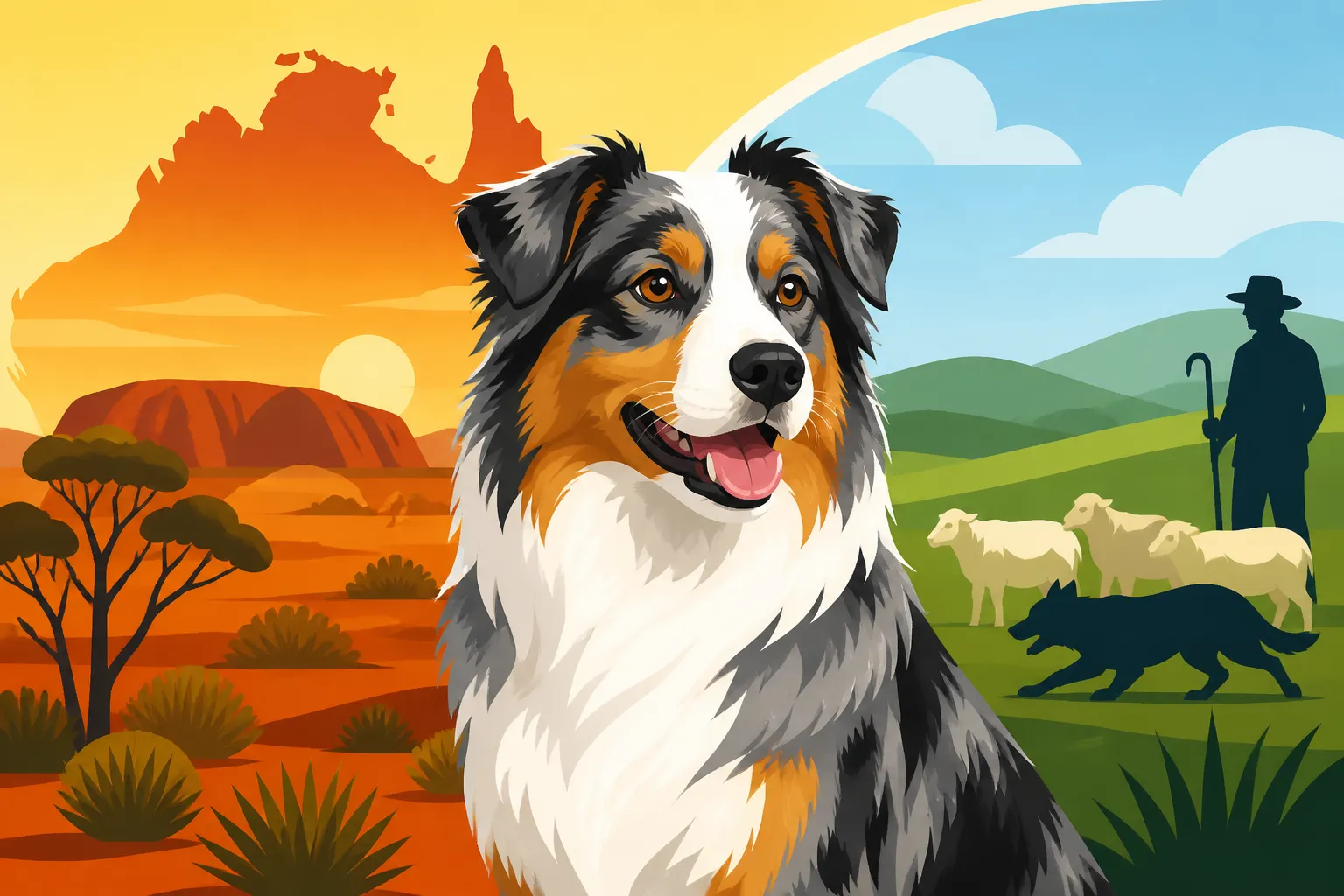
When you first hear the name "Australian Shepherd," your mind naturally jumps to wide-open spaces, maybe some kangaroos hopping in the background, and definitely a sense that this dog hails from the land down under. But here's the kicker, and it's a frustration many of us have shared: the Australian Shepherd, as we know it today, was developed right here in the American West. So, where did that "Australian" part even come from? It’s a classic case of mistaken identity, or perhaps, a naming convention that just stuck.
No Australian Ancestry: Dispelling the Myth
Let's get this out of the way upfront: if you're picturing your Aussie's ancestors rounding up sheep on the vast plains of Australia, you're looking in the wrong hemisphere. The breed has virtually no direct lineage traceable to Australia itself. This fact can be quite baffling, especially when the name is so definitive. It's like calling a German Shepherd a "French Shepherd" – it just doesn't line up with the history. The Australian Shepherd's story is deeply intertwined with the rugged landscape and pioneering spirit of the United States, specifically the western states. Their development was driven by the practical needs of ranchers and farmers, not by the unique ecosystem of Australia.
The common assumption that the breed originated in Australia is a deeply ingrained myth, passed down often by word of mouth rather than historical record. It's easy to see why it persists; the name itself acts as a powerful suggestion. You buy a book titled "Australian Shepherd History," and you expect chapters on Sydney and Melbourne, not California and Nevada. This pervasive misconception often leads new owners to misunderstand the true heritage and influences that shaped their dog's temperament and working drive. When you understand that their roots are elsewhere, it reframes how you look at their inherent abilities and instincts.
A Common Misconception and Its Persistence
The endurance of the "Australian" label is fascinating. Despite extensive research by breed historians and geneticists, the definitive link to Australia remains absent. Yet, the name has stuck fast, becoming the internationally recognized moniker for these intelligent and versatile dogs. Perhaps it's the romanticism of a faraway land, or simply the fact that once a name is coined, it’s incredibly difficult to change. Imagine trying to rebrand an entire dog breed after decades or even a century of established use – it's a monumental task. The name became part of their identity long before widespread genetic testing or easy access to historical archives existed.
This persistence often sparks conversations at dog parks or during vet visits. You tell someone you have an Australian Shepherd, and they might ask, "Oh, from Australia?" and you find yourself launching into a mini history lesson. It's a testament to how deeply names can embed themselves, even when they carry a geographical inaccuracy. For many, the mystery of the name simply adds to the allure of the breed. It begs the question: if not from Australia, then why that name? The answer lies in the movement of people, sheep, and dogs across continents and through the American frontier.
The Basque Shepherds: Tracing the True Origins
To truly understand the Australian Shepherd's name, we have to travel back in time, not to the shores of Australia, but to the rugged mountains of Europe and then across the Atlantic to the burgeoning American West. The story begins with a resourceful and enduring group of people: the Basques.
Old World Roots: The Pyrenean Influence
The ancestors of the Australian Shepherd were not a distinct, formally recognized breed in the way we think of them today. Instead, they were robust, intelligent, and highly capable working dogs brought by Basque shepherds. These shepherds hailed from the Basque Country, a region spanning the western Pyrenees mountains between what is now France and Spain. For centuries, these people were renowned for their sheep-herding prowess, and their dogs were indispensable tools of their trade. These were dogs bred for function, for their ability to navigate treacherous terrain, control vast flocks, and work tirelessly alongside their human companions.
It’s believed that the dogs they brought with them were often similar to what we now call the Pyrenean Shepherd, or other regional sheepdogs that were common throughout that mountainous area. These dogs were selected for their herding instincts, their resilience, and their ability to thrive in demanding conditions. They weren't bred for a specific look or show ring standard; they were bred to work. The genetic panel every Australian Shepherd needs today can hint at these ancestral connections, showing a diverse background that speaks to their pragmatic origins. It’s a lineage built on necessity and survival, not pedigree papers, and this rugged practicality is still deeply ingrained in our modern Aussies.
Emigration to America: Bringing Dogs and Dreams
As the 19th century progressed, and particularly during the late 1800s and early 1900s, many Basque people, facing economic hardship and seeking new opportunities, began to emigrate. A significant number of them set their sights on the vast, untamed lands of the American West. They came seeking fortunes, often in mining or ranching, and they brought with them their most valuable assets: their knowledge of sheep management and their invaluable working dogs.
These dogs were their partners, their protectors, and an extension of their will over immense flocks. They made the arduous journey across the ocean and then traversed the American continent, often on foot or by wagon, demonstrating their incredible hardiness and adaptability. These were not luxury pets; they were essential components of a shepherd's livelihood, selected for generations based purely on their ability to perform demanding tasks. Imagine the incredible bond forged during such a journey, where survival depended on the collective efforts of human and canine. Their journey wasn't just physical; it was the migration of an entire working culture, with its most loyal four-legged members leading the way.
The American West: Forging a New Breed
Once these Basque shepherds and their dogs arrived in the American West, the stage was set for the evolution of a new type of herding dog, one that would eventually become the Australian Shepherd we recognize today. This era was characterized by a blend of old-world traditions and the unique challenges of the American frontier.
The Gold Rush Era and Sheep Farming Expansion
The mid-19th century saw the California Gold Rush explode, drawing people from all corners of the globe. While many sought riches in the mines, the massive influx of people created an incredible demand for resources, including food and clothing. This demand fueled a significant expansion in sheep farming across the western states. Vast tracts of land were opened up for grazing, and flocks grew to immense sizes, often numbering in the thousands. This was a land of big skies, open ranges, and plenty of work for a good sheepdog.
The Basque shepherds, with their inherited skills and hardy dogs, were perfectly positioned to meet this demand. They understood how to manage large flocks efficiently, often moving them across vast distances to find pasture. Their dogs, adapted to the challenging Pyrenean terrain, proved equally capable of handling the diverse landscapes of California, Nevada, and other western states. This period of intense sheep farming was a crucible for herding dogs, demanding intelligence, stamina, and an unflappable temperament. The dogs that excelled in these conditions naturally became the preferred breeding stock. It’s a history that reminds us why The Australian Shepherd Herding Drive You Cannot Train Out is so deeply ingrained.
Crossbreeding and Adaptation on American Ranches
The dogs that arrived with the Basque shepherds were not a closed gene pool. In the melting pot of the American West, they inevitably encountered and interbred with other working dogs already present on American ranches. This would have included various types of British Collies and other local herding dogs, each bringing their own valuable traits to the mix. The goal was always functionality: to create the most effective and versatile herding dog for the specific conditions and types of livestock found in the American West. Ranchers weren't concerned with maintaining a "pure" breed; they wanted dogs that could get the job done.
This crossbreeding led to a refinement of the developing breed, enhancing their herding ability, intelligence, and athleticism. The dogs that emerged were highly adaptable, able to work cattle as well as sheep, and capable of enduring the harsh conditions of the American frontier. The focus was on inherent ability – a strong herding instinct, intelligence, and biddability – over any particular physical appearance. The result was a dog that could manage everything from a handful of wayward lambs to a thousand-head flock being moved across miles of open range. When you consider Where Aussie Ancestors Worked in California, you can almost see the rugged landscape shaping these dogs. Resources like Chewy can help new owners connect with the right equipment to channel these strong instincts, from durable leashes for long walks to puzzle toys for mental stimulation.
The "Australian" Label: How the Name Took Hold
Now we arrive at the heart of the mystery: why "Australian"? It turns out the name isn't about where the dog came from, but rather about where the sheep they were herding originated. It's a subtle but crucial distinction that often gets lost in translation.
The "Australian Sheep" Connection
Here's the most widely accepted and historically supported theory for the name: as the American West's sheep industry boomed, many of the finest sheep breeds were imported to improve local flocks. A significant number of these imported sheep, particularly high-quality Merino sheep known for their excellent wool, came from Australia. These "Australian sheep" often arrived via New Zealand or other Pacific ports before making their way inland to American ranches.
When the Basque shepherds and their highly effective dogs were seen working these specific flocks of "Australian sheep," local American ranchers and cowboys began to associate the dogs with the sheep they were so expertly managing. They'd refer to them as the "dogs that work the Australian sheep," or simply, "Australian Shepherds." The name was a practical identifier, not a geographical claim about the dog's origin. It was a shorthand, a way to distinguish these particular working dogs from other types of herding dogs present at the time. This simple association, though technically inaccurate for the dog itself, was enough to cement the name. The concept of The Sheep Boom That Created the Australian Shepherd is key to understanding this crucial misdirection.
Rodeo Arenas and Popularity in the Post-War Era
The name "Australian Shepherd" had already begun to take root by the mid-20th century, but it was in the rodeo and horse show circuits that the breed truly gained widespread public recognition. After World War II, there was a surge in interest in Western riding and cowboy culture. Ranchers and horsemen like Jay Sisler, a famous trick dog trainer, began showcasing the incredible intelligence, agility, and biddability of these "Aussies" in their acts. Sisler's dogs were legendary, performing complex tricks and herding demonstrations that captivated audiences across the nation.
These dogs, already called Australian Shepherds, became synonymous with the vibrant, exciting world of Western entertainment. Their striking looks, often with captivating blue or bi-colored eyes, combined with their unparalleled working ability, made them stars. As people flocked to see these talented dogs perform, the name "Australian Shepherd" became firmly established in the popular imagination. It didn't matter that the name was a historical misnomer; it simply became the name for these remarkable animals. Australian Shepherds in Rodeo Arenas became a powerful vehicle for the breed's ascent, solidifying a name that started as a casual observation on the ranch.
Formal Recognition and Breed Development
While the name had been in use for decades, the formalization of the Australian Shepherd as a distinct breed was a process driven by dedicated enthusiasts who wanted to preserve its unique qualities. This effort cemented the "Australian" name, regardless of its origin story.
Defining the Breed Standard
As the breed gained popularity, particularly through rodeo and word-of-mouth among working dog circles, breeders and enthusiasts recognized the need for standardization. They wanted to ensure that the qualities that made the Australian Shepherd such an exceptional working dog – its intelligence, drive, structure, and temperament – were preserved for future generations. This led to the formation of breed clubs, most notably the Australian Shepherd Club of America (ASCA) in 1957. These clubs began to develop and refine the official breed standard, which outlined the ideal physical characteristics and temperament of the Australian Shepherd.
By this point, the name "Australian Shepherd" was so universally accepted that there was no question of changing it, despite the growing awareness of its true origins. The focus was on defining what an Aussie was, not on correcting a historical naming quirk. The breed standard became the blueprint, guiding breeders in their efforts to produce healthy, functional dogs. Later, in 1991, the breed was accepted into the AKC's Herding Group, further solidifying its place in the canine world under its established name. Understanding ASCA and the AKC Australian Shepherd Standards helps clarify the importance of this formalization.
| Feature | Common Misconception | Historical Reality |
|---|---|---|
| Origin Country | Australia | United States (American West) |
| Ancestry | Australian native dogs or British imports | Basque sheepdogs (Pyrenean Shepherd-like) |
| Migration Path | From Australia to the US | From Europe (Basque Country) to the US |
| "Australian" Link | The dog itself originated in Australia | The sheep the dogs herded were imported from Australia |
| Development Driven By | Specific Australian conditions | American frontier ranching needs (Gold Rush era) |
The Legacy of a Misnomer
The "Australian Shepherd" name stands as a testament to how history can weave complex, sometimes inaccurate, narratives around things we cherish. It's a name born not of geographical origin, but of historical circumstance and association. Despite being a misnomer, it has become intrinsically linked with a breed renowned for its intelligence, loyalty, and unmatched working drive. It evokes images of vast landscapes, dedicated work, and an unbreakable bond between human and dog.
Ultimately, the name "Australian Shepherd" tells a story – a story of hardy Basque shepherds, ambitious American pioneers, and the invaluable dogs that helped build the American West. It's a reminder that sometimes, names are less about precise origins and more about the journeys taken and the roles played. For those of us who share our lives with these incredible dogs, the name itself has taken on a meaning beyond geography; it represents a spirit of versatility, smarts, and unwavering devotion. When you look at your Aussie, you're not just seeing a dog with a curious name; you're seeing the living legacy of a powerful, practical history. You can find many wonderful products, like durable toys and specialized food for active breeds, at retailers such as Chewy, which supports your Aussie's continued health and happiness.
Disclaimer
This article is for general informational purposes only and does not constitute professional advice. Laws, prices and regulations vary by location and change over time. Consult a qualified professional for guidance on your specific situation.