Long Drives With a Restless Australian Shepherd
Hitting the open road with your adventurous Australian Shepherd can sound like a dream, but anyone who’s actually tried it knows the reality can be a whirlwind of restless energy, whining, and constant demands for attention. It's frustrating to want to share these experiences with your beloved companion, only to find yourself white-knuckling the steering wheel, wondering if you'll ever arrive with your sanity intact. This guide is here to help you navigate those long drives, offering practical strategies to make car travel more peaceful and enjoyable for both you and your high-energy Aussie.
Preparing Your Australian Shepherd for the Journey Ahead
Long car rides don't just happen; they require thoughtful preparation, especially when your co-pilot is an Australian Shepherd known for their intelligence and boundless energy. Simply tossing them in the car and hoping for the best is a recipe for chaos. A well-prepared Aussie is a happier, calmer travel companion.
Pre-Trip Exercise and Mental Stimulation
Before you even think about loading up the car, your Australian Shepherd needs a proper workout. This isn't just a quick potty break; it's a full-on session designed to burn off that signature Aussie energy. Think about it: a working breed like an Aussie is hardwired to be busy. If they haven't had a chance to expend that energy, they'll find other, less desirable ways to do it in the confines of your vehicle.
Start the day with a vigorous play session or a long walk. We're talking more than just a stroll around the block. A solid hour or even two of active exercise can make a world of difference. This could be a challenging hike, an intense game of fetch in a large, secure field, or even some focused training drills that engage their brain as much as their body. For ideas on how much activity your dog needs, check out our guide on Australian Shepherd Exercise at One to Two Hours a Day. Beyond physical exertion, don't forget mental stimulation. Aussies thrive on having a "job." Engage them with puzzle toys, scent work games, or a good training session right before you leave. This helps tire out their sharp minds, making them more inclined to settle down during the drive. A quick round of "find the treat" hidden around the house can be a fantastic way to engage their nose and brain simultaneously.
Meal Timing and Potty Breaks
Timing your Aussie's meals before a long drive is crucial to prevent upset stomachs and minimize the need for unexpected potty stops. Generally, it's a good idea to feed them a few hours before you plan to depart, or even hold off on their main meal until you reach your destination or a significant break point. A full stomach, especially combined with motion, can lead to car sickness, which is miserable for everyone involved. If your Aussie is prone to car sickness, discuss this with your vet ahead of time; they might suggest certain medications or natural remedies.
Ensure your Aussie has had ample opportunity for thorough potty breaks right before you leave. Don't just let them out for five minutes; give them a good 15-20 minutes to sniff around and truly empty their bladder and bowels. A pre-departure walk also gives them a chance to relax and take care of business without feeling rushed. Carrying plenty of water and a collapsible bowl is essential, even for short trips, so you can offer water during stops without overfilling their bladder too close to the drive. Regular hydration is important, but careful timing prevents accidents.
Introducing the Car as a Positive Space
For some Aussies, the car itself can be a source of anxiety or over-excitement, leading to excessive barking, panting, or general restlessness. If your dog isn't thrilled about car rides, or is too thrilled, you need to work on positive associations. Start small:
- Short, positive trips: Go for very short drives to fun places like the park or a friend's house, not just the vet.
- Treats and praise: Lavish them with praise and high-value treats every time they get in and out of the car calmly.
- Familiar items: Bring their favorite blanket or toy to make the car feel more like home.
- Crate training: If you plan to use a crate, make sure they are comfortable and happy in it outside the car first. A well-loved crate can be a secure den even in a moving vehicle. Our guide on The Crate a Fifty Pound Aussie Needs offers great advice on choosing and conditioning a crate.
By building positive experiences, you help your Aussie understand that the car isn't something to fear or frantically overreact to, but simply another part of their routine, full of good things.
Keeping Your Aussie Content During the Drive
Once you're on the road, the real work of managing a restless Australian Shepherd begins. It’s not enough to just drive; you need to actively engage with their needs to keep them settled and happy.
Safe and Secure Containment
Safety is paramount when traveling with any dog, especially a wiggly Aussie. An unrestrained dog can become a dangerous projectile in an accident, or a distracting hazard if they decide to explore the back seat or jump into the front. Plus, for a dog prone to anxiety, being securely contained can actually be calming.
Several options exist for safe car travel:
- Crates: A sturdy, crash-tested dog crate secured in the back of your SUV or hatchback is often the safest option. It provides a familiar, den-like space where your Aussie can feel secure. Make sure the crate is large enough for them to stand, turn around, and lie down comfortably, but not so large that they can be tossed around within it.
- Carriers/Seat Belts: For smaller Aussies or those who prefer to be closer to you, crash-tested car seats or harnesses that clip into a seatbelt are available. Always choose a product that has undergone safety testing. These prevent your dog from moving around the car, but don't offer the same level of protection as a hard-sided crate in a serious collision.
- Barriers: A car barrier, whether metal or fabric, can keep your Aussie safely confined to the cargo area or back seat, preventing them from interfering with your driving. This offers less protection in a crash but prevents wandering.
Consider what works best for your specific Aussie's temperament and size, and prioritize their safety above all else. For an Aussie with strong prey drive, a secure barrier or crate can also prevent them from seeing something outside and becoming overly agitated or reactive, which is a common issue for the breed. If your Aussie tends to bark at everything passing by, which can indicate Australian Shepherd Reactivity and Overarousal, a crate might provide enough enclosure to reduce external triggers.
Strategic Rest Stops
Just like humans, Australian Shepherds need to stretch their legs, sniff around, and take potty breaks. Planning these stops into your route is essential. Don't push your Aussie for too long – every 2-3 hours is a good general guideline, but you know your dog best. If they start getting restless, whining, or pacing, it’s probably time for a break.
During rest stops:
- Leash up immediately: Always have your Aussie leashed before opening the car door. Their high prey drive and tendency to bolt after moving objects mean even a momentary lapse can lead to a dangerous situation.
- Active breaks: Don't just let them pee and jump back in. Take them for a brisk 10-15 minute walk. Let them sniff trees, explore new scents, and truly stretch their muscles. This is also a good time for a quick game of tug or fetch if space permits, to re-engage their minds and bodies.
- Water breaks: Offer fresh water, but don't let them gulp down too much at once, especially if they are prone to bloat.
- Food: If it's mealtime, offer a small portion, ensuring they have plenty of time to digest before getting back in the car.
These strategic stops aren't just for your dog's physical needs; they are crucial mental breaks that help prevent restlessness and anxiety from building up over hours in the car.
Engaging Mental Stimulation and Chew Toys
Simply being in the car can be incredibly boring for an intelligent breed like an Australian Shepherd. They need something to occupy their minds. This is where a carefully curated selection of car-safe toys and treats comes into play.
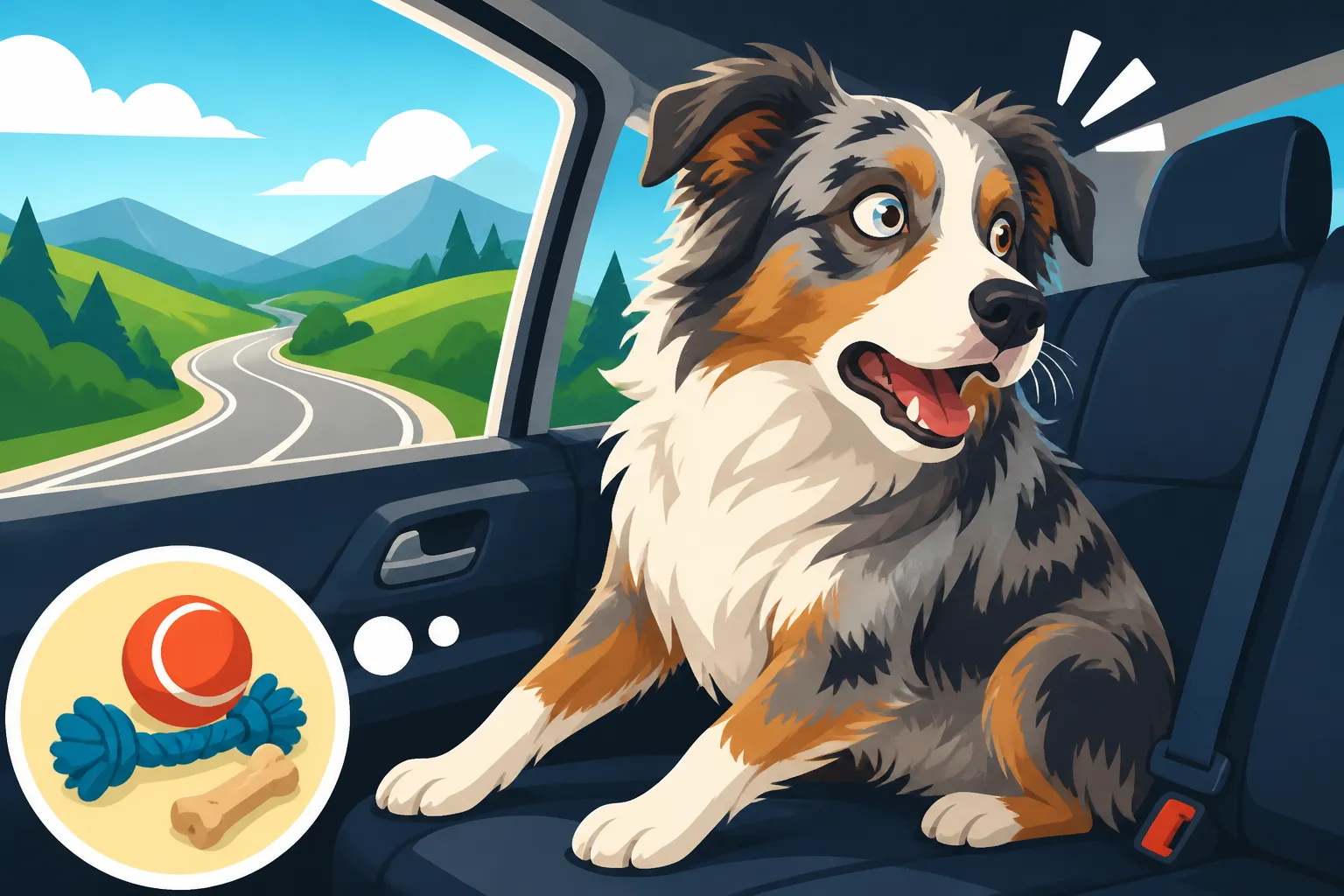
- Long-lasting Chews: A bully stick, a sturdy Kong stuffed with frozen peanut butter or a high-quality treat paste, or a durable chew toy can keep an Aussie occupied for extended periods. Make sure it’s something safe that won't splinter or be entirely consumed too quickly. You can find excellent options on Chewy that are designed for power chewers. These types of items give them a "job" to do, channeling their energy into something constructive.
- Puzzle Toys (if safe): Some puzzle toys might be suitable for car use, provided they don't have small parts that could get lost or become a choking hazard in a moving vehicle. The goal is to provide mental engagement without creating a mess or requiring your constant interaction.
- Rotate Toys: Don't give them all the toys at once. Rotate them to keep things novel and interesting. A toy that only comes out for car rides can quickly become a high-value item.
- Quiet Praise: Occasionally offering calm, quiet praise or a gentle pet can reinforce good behavior without over-exciting them.
Remember, the goal is to provide enrichment that encourages calm, independent occupation, rather than requiring you to constantly entertain them. Many Aussies struggle to just relax, so giving them something to focus on can be a lifesaver on long journeys. Our guide on Puzzle Feeders and Enrichment Gear for an Aussie has more ideas that can be adapted for car travel.
Addressing Common Travel Challenges
Even with the best preparation, long drives can present specific challenges with an Australian Shepherd. Being prepared to address these issues can save you a lot of stress.
Managing Car Sickness and Anxiety
Car sickness and travel anxiety are common woes for dog owners. An Aussie might express these by drooling excessively, panting, yawning repeatedly, whining, vomiting, or exhibiting general restlessness.
- Gradual Acclimation: If car sickness or anxiety is a known issue, start acclimating your Aussie to the car with short, positive trips, as mentioned earlier. Don't feed them right before these trips.
- Consult Your Vet: For severe cases, your veterinarian might recommend anti-nausea medication, anti-anxiety medication, or natural calming supplements. Always discuss these options well in advance of your trip.
- Motion Sickness Remedies: Some owners find success with ginger (in safe, vet-approved doses), CBD products, or pheromone sprays that can create a calming environment.
- Create a Den: A securely covered crate can help reduce visual stimulation that might contribute to motion sickness or anxiety. The enclosed space can feel safer.
- Maintain Routine: As much as possible, stick to your dog's regular routine at stops to reduce stress. This consistent predictability can be very comforting.
Remember, patience is key. For a dog that truly hates car rides, long trips might not be feasible without significant training and vet intervention. Sometimes, a short-term solution like boarding them at a trusted facility or hiring a pet sitter might be a less stressful option if the destination isn't dog-friendly. Always ensure you have appropriate pet insurance, like a plan from Healthy Paws, to cover any unexpected vet visits that might arise from travel stress or accidents.
Minimizing Barking and Whining
A persistent barker or whiner in the car can quickly turn a scenic drive into a torture test. Aussies, with their natural vocal tendencies and strong desire to "herd" anything that moves, are particularly prone to this.
- Rule Out Needs: First, ensure all basic needs are met: potty break, water, and they've had enough exercise and mental stimulation. A dog barking might simply be telling you they need something.
- Address Triggers: Is your Aussie barking at cars, people, or animals outside the window? Consider using a crate cover or a car shade to block their view. Reducing visual triggers can often significantly reduce reactivity.
- Redirection: When they start to vocalize, try to redirect their attention to a high-value, long-lasting chew toy or a puzzle. The goal is to interrupt the barking and offer an acceptable alternative behavior.
- Ignore and Reward Silence: This is tough, but sometimes ignoring unwanted vocalizations and immediately rewarding quiet moments can work. As soon as they are silent for a second, even just taking a breath, offer a treat. Gradually increase the duration of silence required for a reward.
- Positive Reinforcement for Calmness: Praise and reward your Aussie when they are quietly settled, even if it's just for a few minutes. Reinforce the calm behavior you want to see.
It’s crucial to understand that barking or whining isn't always "bad" behavior; it's often a dog communicating their discomfort, boredom, or over-excitement. Addressing the underlying cause is more effective than simply trying to suppress the noise.
Essential Gear for the Australian Shepherd Road Trip
Being well-equipped for a long drive can make all the difference. Beyond the obvious leash and collar, there are several items that can vastly improve the experience for you and your Aussie.
Travel Bowls and Water Supply
Staying hydrated is crucial for your Aussie, especially on long journeys. However, a regular water bowl will slosh everywhere.
- Collapsible Bowls: These are lightweight, easy to pack, and perfect for offering water during rest stops. Many are silicone and fold flat.
- No-Spill Water Bowls: Some travel bowls are designed with a tapered opening or a floating disc that reduces splashing, allowing your dog to drink in the moving car without soaking everything. These can be particularly useful for a quick drink right before or after a rest stop.
- Ample Water: Always carry more water than you think you'll need. A gallon jug is a good starting point, and you can refill smaller bottles from there.
- Cooling Options: In warmer climates, consider adding a few ice cubes to their water or bringing a cooling mat for their crate to prevent overheating under their double coat.
First Aid Kit and Emergency Information
Accidents and minor injuries can happen anywhere, and being prepared on the road is vital. A comprehensive pet first aid kit is a non-negotiable item.
- Basic Supplies: Include gauze, antiseptic wipes, vet wrap, adhesive tape, sterile saline rinse, tweezers (for splinters or ticks), blunt-tip scissors, a digital thermometer, and disposable gloves.
- Medications: Pack any prescription medications your Aussie takes, clearly labeled, along with their doses. Don't forget any anti-nausea meds from the vet.
- Emergency Contact Info: Keep your vet's number, the number for the nearest emergency vet clinic to your destination, and the Poison Control hotline readily accessible.
- MDR1 Information: If your Aussie has the MDR1 mutation, carry a laminated card with a list of drugs they cannot take or need adjusted doses for. Our article on Telling Your Vet an Australian Shepherd Is MDR1 Positive has more details on this critical information. This could be life-saving in an emergency vet visit away from home.
- Proof of Vaccination/Health Records: A small folder with copies of their vaccination records, especially rabies, and any significant health history (like epilepsy, which you can learn more about in Australian Shepherd Epilepsy Starting Between One and Five) can be invaluable if you need to visit an unfamiliar vet.
Comfort Items and Clean-Up Essentials
Even the tidiest Aussie can make a mess on a long trip. Having these items on hand will make life easier.
- Familiar Bedding/Blanket: A favorite blanket or crate pad can provide comfort and familiarity, helping your Aussie relax. The scent of home is incredibly soothing.
- Towels: Keep several old towels handy for muddy paws, unexpected spills, or if your Aussie gets wet.
- Waste Bags: Essential for every potty break. Be a responsible pet owner and always pick up after your dog.
- Enzyme Cleaner: For any accidents that happen in the car, an enzymatic cleaner will neutralize odors and stains much more effectively than regular soap.
- Grooming Wipes/Brush: Quick wipes can clean paws or faces, and a brush can help remove loose hair or burrs after a stop, especially with that thick Aussie coat. For ideas on managing their fur, check out Brushing an Australian Shepherd Through Coat Blow.
- Food and Treats: Pack their regular food to avoid stomach upset from sudden diet changes. Ollie, for instance, offers pre-portioned fresh food that can be convenient for travel if your dog is already on it. Don't forget plenty of training treats for rewarding good behavior.
By thinking ahead and packing these essentials, you'll be well-prepared for whatever the road throws at you and your Australian Shepherd, turning what could be a stressful journey into a memorable adventure.
Australian Shepherd Travel Gear Comparison
To help you decide on the best containment and comfort items for your restless Australian Shepherd on long drives, here's a quick comparison of common travel gear.
| Gear Type | Pros | Cons | Best For |
|---|---|---|---|
| Crash-Tested Crate | Highest safety in collision; familiar den; reduces visual triggers; contains mess. | Can be bulky/heavy; takes up significant space; initial investment. | Aussies prone to motion sickness or anxiety; multi-dog households; owners prioritizing maximum safety; dogs comfortable with crating. |
| Crash-Tested Harness | Allows dog to sit/lie on seat; keeps dog restrained; more compact than a crate. | Variable safety (research brands carefully); less protection in major collision; doesn't contain mess. | Aussies who are calmer in the car and prefer an open view; those where a crate is too large for the vehicle; single-dog travel. |
| Car Barrier | Keeps dog in specific area (e.g., cargo); prevents driver distraction; allows more space to move around within confines. | Offers no impact protection; dog can still be a projectile; doesn't contain mess or fur. | Aussies who are generally calm but tend to wander; larger vehicles with ample cargo space; owners who want to keep the back seat clear. |
| Booster Seat/Carrier | Elevates smaller Aussies for view; secure and contained; sometimes has storage. | Only suitable for smaller Aussies (puppies or small females); limited crash protection; can be outgrown. | Aussie puppies or smaller adult Aussies who enjoy looking out the window; owners wanting to secure their dog in the back seat with a view. |
| Long-Lasting Chews | Keeps Aussie mentally occupied; reduces boredom and destructive chewing. | Can be messy; some may pose choking hazards if not appropriate for dog's chew style; requires careful selection. | Any Aussie who gets restless or bored in the car; a great tool for redirection from whining or barking. |
| Puzzle Toys | Excellent mental stimulation; can keep an Aussie quietly engaged for long periods. | May require some supervision; can be messy with certain fillings; not all designs are car-friendly. | Intelligent Aussies who need a "job" to stay calm; those who are not prone to frantic chewing that could break the toy in the car. |
Disclaimer
This article is for general informational purposes only and does not constitute professional advice. Laws, prices and regulations vary by location and change over time. Consult a qualified professional for guidance on your specific situation.