Mental Work That Actually Tires an Australian Shepherd
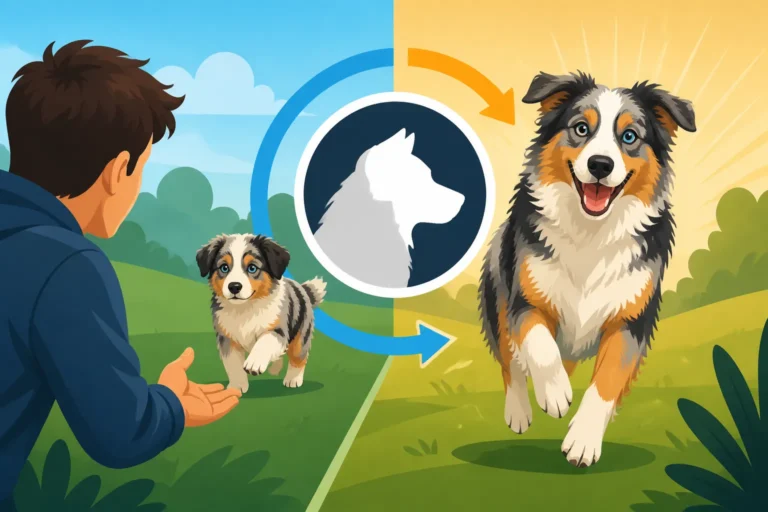
It’s a scenario so many Australian Shepherd parents know intimately: you’ve just gotten home from an epic two-hour hike, your Aussie ran miles, chased the ball a hundred times, and sniffed every blade of grass on the trail. You walk in the door, thinking, "Finally, they'll crash!" But then, five minutes later, there they are, pacing, nudging a toy, or giving you that intense stare, clearly still wired and ready for more. The truth is, physical exercise, while crucial, often isn't enough for these incredibly intelligent and driven dogs. This guide is here to unravel the mystery of the Aussie brain and show you how to provide the mental work that truly tires them out, leading to a calmer, happier companion.
Understanding the Aussie Brain: More Than Just a Pretty Face
Australian Shepherds were bred for incredibly demanding work, spending long days herding livestock across vast ranches. This isn't just about physical stamina; it's about sharp intellect, problem-solving, anticipation, and quick decision-making. Their brains are wired for complex tasks, not just mindless running. When we only give them physical outlets, we're addressing half of their needs, leaving the other half to simmer, often leading to undesirable behaviors born out of boredom and untapped mental energy.
Why Physical Exercise Alone Never Settles an Aussie
You can run an Australian Shepherd for hours, and while their body might get tired, their mind can still be buzzing with energy. Imagine going for a long walk yourself; you might be physically fatigued, but your brain can still be active, perhaps planning your next project or replaying a conversation. It's the same for our Aussies, especially those who come from strong working lines. Their ancestors were tasked with intricate jobs like moving a flock of sheep from one pasture to another, navigating fences, dealing with stubborn stragglers, and responding to subtle commands from a handler often hundreds of yards away. This required constant mental engagement, strategic thinking, and intense focus. Just running around doesn't tap into that deep-seated drive. Why Physical Exercise Alone Never Settles an Aussie delves deeper into this phenomenon.
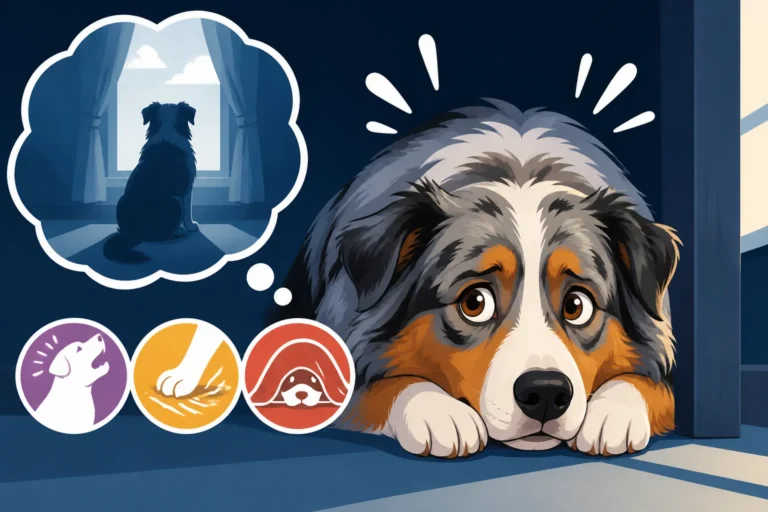
Without mental stimulation, an Aussie's mind can become restless, leading them to invent their own "jobs." This might manifest as herding family members, barking excessively at perceived threats (like a leaf blowing across the yard), or even destructive chewing as they try to solve the "problem" of boredom. It's not malicious behavior; it's simply a dog trying to fulfill its genetic imperative in the absence of appropriate outlets. We often underestimate just how much their intelligence needs to be challenged.
The Herding Drive: A Constant Need for "Work"
The quintessential characteristic of an Australian Shepherd is their strong herding drive. This isn't just about chasing; it's about control, strategy, and organization. They inherently want to gather, direct, and manage. Whether it's the neighborhood squirrels, your children, or even stray dust bunnies, an Aussie will often try to apply their herding instincts to whatever is available. You literally cannot train out this fundamental aspect of their being; it’s their operating system. The Australian Shepherd Herding Drive You Cannot Train Out explains this in detail.
This drive means their minds are constantly observing, processing, and looking for something to "work." If we don't provide a constructive outlet, they'll find one, and it might not be one you appreciate. Engaging their mind through activities that mimic problem-solving and strategic thinking, even if they're just games, helps satisfy this deep-seated need. It allows them to use their intellect for good, rather than turning their considerable smarts towards behaviors that become a headache for us.
Types of Mental Work: Engaging Their Inner Genius
Once you understand why mental work is so critical, the next step is discovering what kind of mental work resonates most with your Australian Shepherd. The good news is there's a huge variety, so you can mix and match to keep things fresh and exciting. From structured training to independent puzzles, each type taps into different aspects of their intelligence and drive.
Scent Work and Nose Games
Perhaps one of the most natural and deeply satisfying forms of mental enrichment for any dog, but especially intelligent working breeds like Aussies, is scent work. A dog's sense of smell is millions of times more acute than ours, and using it for a purpose is incredibly tiring. Think about it: when you try to solve a complex puzzle, your brain gets tired, right? For an Aussie, using their nose intensively for even 15-20 minutes can be as exhausting as a long walk. Scent Games That Tire an Australian Shepherd offers more ideas.
You can start simple: hide treats around the house or yard and encourage your Aussie to find them. As they get better, make it harder – hide them under blankets, in boxes, or in more challenging outdoor spots. You can also invest in snuffle mats, which are fabric mats with many folds where treats can be hidden, forcing your dog to sniff and root them out. For something more advanced, consider formal nose work classes, where dogs are trained to identify specific scents, much like detection dogs. Brands like BAXTER & Bella often incorporate scent games into their broader training programs, emphasizing how beneficial they are for focus and mental fatigue. Many affordable options for snuffle mats and puzzle feeders are available on Amazon, making it easy to get started.
Puzzle Toys and Interactive Feeders
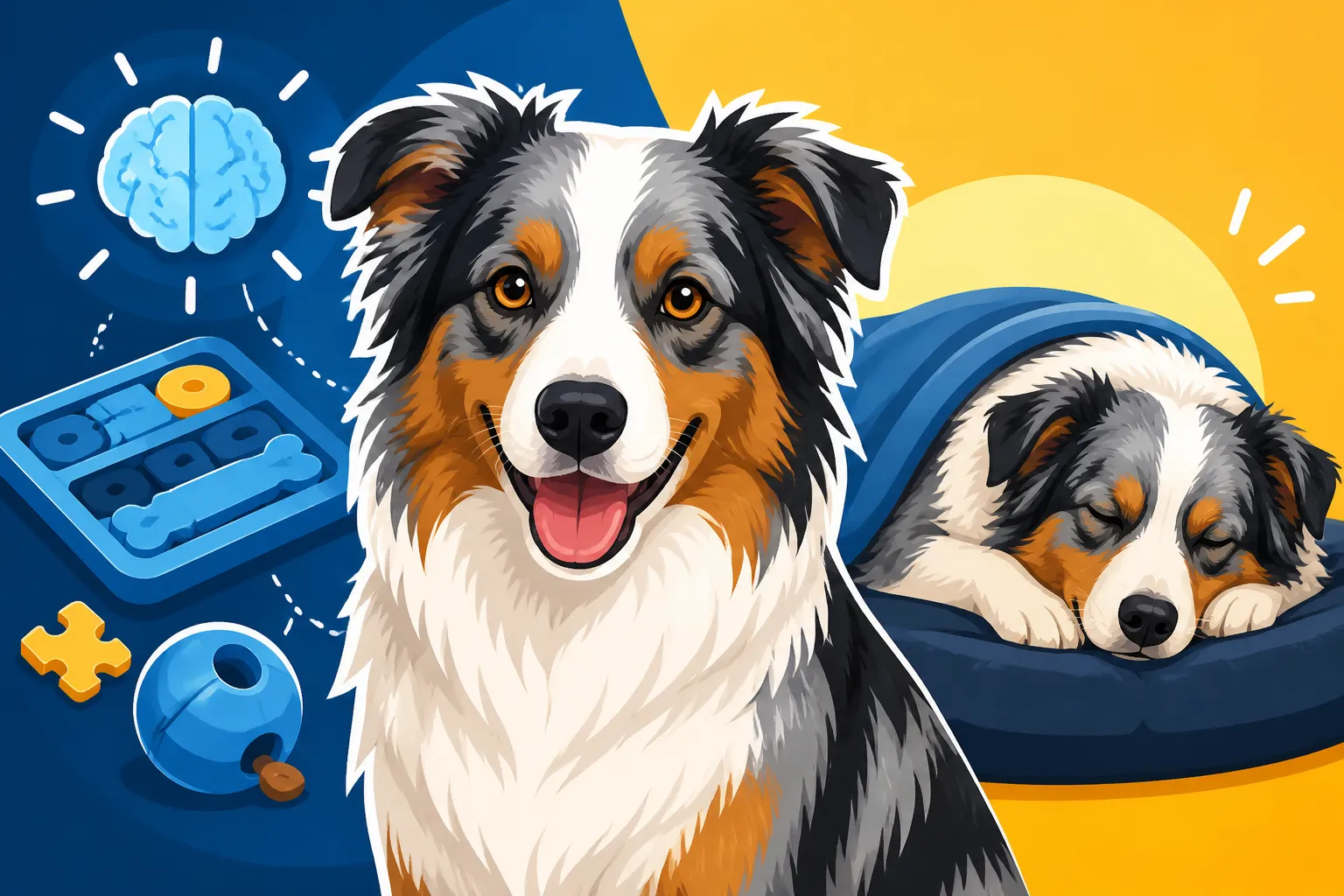
These are fantastic tools for independent mental enrichment, perfect for when you need a moment to yourself or when your Aussie needs to be occupied indoors. Puzzle toys require your dog to manipulate parts, push levers, or slide panels to get a treat or their regular kibble. This engagement stimulates their problem-solving abilities and satisfies their natural foraging instincts. It's more than just a distraction; it's a mental workout.
When choosing puzzle toys, consider the difficulty level. Start with easier ones to build confidence, then gradually introduce more complex challenges. Rotating toys can also keep things fresh, preventing boredom with the same puzzle every day. Some of these are designed for beginners, where a simple nudge releases a treat, while others involve multiple steps and mechanisms. Brands offer everything from basic treat-dispensing balls to elaborate multi-stage puzzles. Always supervise your Aussie initially to ensure they understand the game and don't get frustrated or try to chew the toy destructively. These toys are not meant to be chew toys, so choose durable options appropriate for your dog's chewing habits, but always prioritize supervision. Puzzle Feeders and Enrichment Gear for an Aussie provides a great overview of popular options.
Trick Training and Advanced Obedience
Teaching your Australian Shepherd new tricks or refining their obedience commands is a powerful way to engage their mind. It requires focus, memory, and an understanding of concepts. Plus, it strengthens your bond as you work together. Think beyond just "sit" and "stay"; an Aussie is capable of learning dozens, if not hundreds, of commands and behaviors. Trick Training as Aussie Mental Work highlights how valuable this can be.
Consider teaching them fun tricks like "weave through legs," "play dead," "fetch a specific item by name," or even complex sequences. Advanced obedience, like competitive obedience or rally, demands precision and sustained attention, which is incredibly mentally taxing. Even just practicing existing commands in new, distracting environments can provide a significant mental challenge. The key is to keep training sessions short, positive, and frequent. Use high-value treats and praise to make it a rewarding experience. This type of structured learning allows them to use their intelligent minds in a way that is productive and builds confidence.
Structuring Mental Enrichment into Your Aussie's Day
It’s easy to feel overwhelmed by the idea of adding more to your already busy schedule, but integrating mental work doesn’t have to be a monumental task. The beauty of mental enrichment is that even short, focused sessions can be incredibly effective. Consistency and variety are far more important than long, drawn-out activities.
Short, Frequent Sessions Are Key
Unlike physical exercise, which often requires longer durations to achieve fatigue, mental work can be highly effective in shorter bursts. Aim for 10-15 minute sessions, scattered throughout the day. For example, a quick sniff game in the morning, a puzzle toy during your lunch break, and a trick training session in the evening can add up to significant mental stimulation without demanding huge chunks of your time. This approach also mirrors how Aussies might have worked on a ranch, with varied tasks and periods of intense focus followed by breaks.
These shorter, more frequent sessions prevent over-stimulation and keep your Aussie engaged and eager for more. If a session is too long, they might lose interest or become frustrated. End on a high note, leaving them wanting more, which makes them look forward to the next session. This also helps with dogs that might have a tendency to get "zoomed in" or over-aroused, providing a structured way to engage without pushing them past their threshold.
Incorporating Mental Challenges into Daily Routines
You don't always need special equipment or dedicated time slots for mental enrichment. Many everyday activities can be transformed into mental challenges. Instead of simply putting down your Aussie's food bowl, use a puzzle feeder or scatter their kibble in the yard, turning mealtime into a foraging exercise. When heading out for a walk, incorporate some obedience cues on the leash, asking for sits, stays, and heeling at different intervals.
Even something as simple as asking your Aussie to "wait" before going through a door or "stay" while you walk to the mailbox and back requires impulse control and mental focus. Make them "work" for things they want, like their dinner, a favorite toy, or permission to go outside. This isn't about being harsh; it's about building mental discipline and teaching them that good things come from cooperation and thought. This helps reinforce your role as a leader and makes them think before acting, which is invaluable for a dog with such high drive. Mat Settle Training for a Restless Aussie is another excellent way to build mental calm into daily routines.
Consistency and Variety to Prevent Boredom
Just like us, dogs can get bored with the same routine day in and day out. While consistency in providing mental enrichment is important, consistency in the type of enrichment can lead to a rut. Vary the activities you offer. If you did scent work yesterday, try a trick training session today. If they mastered one puzzle toy, introduce a different one or make the current one harder.
Think of it like building a workout plan for yourself; you wouldn't do the same exercise every single day. Keep a mental (or actual) list of activities your Aussie enjoys and rotate through them. Introduce new toys, new scents for nose work, or new environments for training. This keeps their brain stimulated and prevents them from becoming complacent or losing interest. It ensures that their mental muscles are constantly being challenged in new ways, which is crucial for overall well-being and preventing behavioral issues stemming from boredom.
Advanced Mental Challenges and Dog Sports
For the truly driven Australian Shepherd, or for owners looking to dive deeper into engaging their dog's mind, formal dog sports and more advanced challenges offer incredible opportunities. These activities combine physical exertion with intense mental focus, often replicating the complex decision-making and teamwork that working Aussies thrive on.
Herding Instinct Tests and Live Stock Work
For many Australian Shepherds, especially those from working lines, there is no mental work more fulfilling than engaging with livestock. Even if you don't live on a ranch, you can often find facilities that offer herding instinct tests or beginner herding lessons. These sessions allow your Aussie to tap into their innate abilities in a controlled, safe environment. Observing an Aussie "turn on" when they see sheep or ducks is a profound experience. It’s where their entire being comes alive, demanding intense focus, strategy, and responsiveness to the handler.
These experiences are incredibly mentally and physically draining in the best possible way. Even if it's just a few sessions a year, it can provide a deep level of satisfaction for a herding dog. It's not about making them a working farm dog, but about acknowledging and fulfilling a core part of their genetic makeup. Finding an experienced instructor who understands the nuances of herding breeds is crucial to ensure a positive and safe experience for both you and your dog.
Agility, Rally, and Other Performance Sports
Dog sports like agility, rally obedience, and disc dog are fantastic ways to combine physical activity with significant mental engagement. Agility courses require your Aussie to navigate obstacles like jumps, tunnels, and weave poles in a specific sequence and often at high speeds, all while listening to your commands. This demands incredible focus, problem-solving, and a strong partnership between you and your dog. Australian Shepherd Agility and Disc Sports covers these exhilarating activities in more detail.
Rally obedience is a bit like an obedience course with a twist; you and your dog move through a series of stations, performing different exercises as indicated by signs. This requires constant communication, attention, and precise execution. These sports not only burn energy but also build confidence, improve coordination, and strengthen the bond between you and your Aussie. They provide a structured "job" that many Australian Shepherds truly excel at and find immensely rewarding. Many local dog training clubs offer classes, making it accessible to get started.
Canine Good Citizen and Therapy Dog Training
Beyond competitive sports, there are other structured ways to engage your Aussie's mind while also contributing positively to the community. Training for the Canine Good Citizen (CGC) title involves mastering ten basic obedience skills, demonstrating good manners, and proving they can be a polite member of society. This program is an excellent foundation that requires significant focus and self-control from your dog.
For Aussies with stable temperaments and a love for people, therapy dog work can be incredibly rewarding. Visiting hospitals, nursing homes, or schools requires immense mental control, sensitivity, and the ability to remain calm and focused in various environments. The training for this involves not just basic obedience but also desensitization to novel sights, sounds, and interactions. It's a "job" that demands a great deal of mental energy and provides a unique form of fulfillment for an intelligent, people-oriented Aussie.
Choosing the Right Mental Work for Your Aussie
Every Australian Shepherd is an individual, and what truly clicks for one might not be the perfect fit for another. Their personality, past experiences, and even physical limitations can influence what types of mental enrichment they enjoy and benefit from the most. Finding the right balance and activities is a journey of discovery.
Assessing Your Aussie's Preferences and Temperament
Take some time to observe your Australian Shepherd. Do they love to sniff everything on walks? Scent work might be a hit. Are they highly motivated by food? Puzzle feeders will be excellent. Do they enjoy learning new things and responding to your cues? Trick training or advanced obedience could be their calling. Some Aussies are naturally more independent and might prefer solo puzzle toys, while others thrive on direct interaction and working alongside their human.
Consider their current behavior: are they destructive when left alone? This points to a need for independent enrichment. Are they constantly looking at you, waiting for direction? They might enjoy more interactive training. Their individual quirks, their past history (especially if adopted), and even their energy levels on a given day should guide your choices. It's about finding what sparks their interest and sustains their engagement without causing frustration.
Balancing Independent Play with Interactive Sessions
A well-rounded mental enrichment plan typically includes a mix of independent and interactive activities. Independent puzzle toys or sniff mats are great for those times when you can't actively engage with your Aussie but still need them to use their brain. They teach your dog to entertain themselves constructively. Ensure the items you give them are safe. Chew Toys That Last With an Australian Shepherd suggests good options, but remember puzzle toys are not chew toys.
Interactive sessions, such as trick training, obedience practice, or structured fetch games (where they have to "wait" or "drop" on command), strengthen your bond and allow for direct communication. Both types are important for different reasons. Independent play fosters self-reliance, while interactive play builds teamwork and responsiveness. The balance between these two will shift depending on your daily schedule and your Aussie's specific needs, but aiming for both ensures a more holistic approach to mental well-being.
| Mental Work Type | Primary Skill Engaged | Interaction Level | Typical Duration (minutes) | Equipment Needed | Benefits |
|---|---|---|---|---|---|
| Scent Games / Nose Work | Olfactory discrimination, focus | Low to Medium | 10-20 | Treats, snuffle mat, boxes | Calming, confidence building, natural instinct |
| Puzzle Feeders | Problem-solving, fine motor | Low | 15-30 | Interactive feeder, kibble | Independent entertainment, slows eating |
| Trick Training | Memory, coordination, communication | High | 5-15 (multiple sessions) | Treats, clicker (optional) | Bond building, cognitive flexibility, fun |
| Advanced Obedience | Focus, impulse control, precision | High | 10-20 | Leash, treats, quiet space | Discipline, reliability, mental endurance |
| Herding Instinct Test | Instinct, strategy, decision-making | High | 10-15 (per dog) | Livestock, experienced trainer | Deep fulfillment, genetic outlet |
| Agility/Rally Training | Speed, precision, teamwork, sequence | High | 15-30 | Course obstacles, treats | Physical & mental challenge, confidence |
When to Consult a Professional Trainer
If you're struggling to find activities that truly engage your Australian Shepherd, or if your dog is exhibiting frustration, excessive barking, or destructive behaviors despite your efforts, it might be time to seek help from a professional. A good trainer can help you understand your Aussie's specific drives and tailor a mental enrichment plan. Look for trainers who have experience with herding breeds and positive reinforcement methods. Finding a Trainer Who Understands an Aussie is a valuable resource for this search.
They can help you troubleshoot issues, teach you new techniques for engaging your dog, and even introduce you to dog sports or activities you might not have considered. Sometimes, an outside perspective and expert guidance are exactly what's needed to unlock your Aussie's potential and create a harmonious, mentally stimulated household. Don't hesitate to reach out; it's an investment in your dog's happiness and your peace of mind.
Disclaimer
This article is for general informational purposes only and does not constitute professional advice. Laws, prices and regulations vary by location and change over time. Consult a qualified professional for guidance on your specific situation.