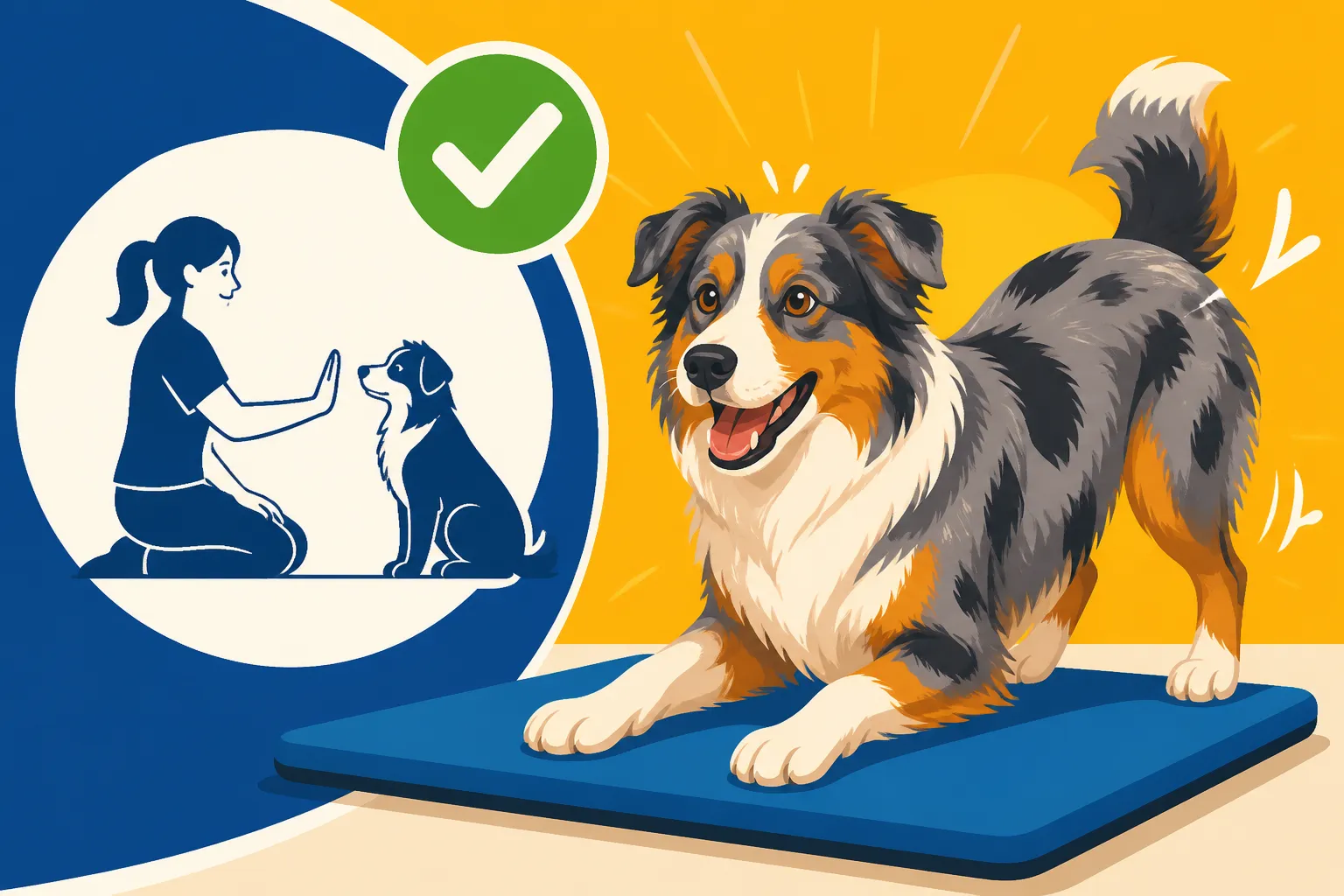
Mat Settle Training for a Restless Aussie
If you've ever felt like your Australian Shepherd has two speeds—full throttle and off-the-charts—you're not alone. Many Aussie owners struggle with a dog that finds it almost impossible to truly relax, constantly pacing, seeking attention, or reacting to every little sound. This guide is all about teaching your restless Aussie the invaluable skill of "mat settle," a foundational behavior that fosters calm and provides a much-needed "off switch" in a busy world.
Why a Mat Settle is a Game-Changer for Your Restless Aussie
Let's be honest, living with an Australian Shepherd can feel like managing a furry, four-legged hurricane at times. Their intelligence and drive, while incredible for performance, can also make them incredibly restless and struggle to self-regulate. They often have an "always on" mentality, ready to spring into action at a moment's notice, which can be exhausting for both dog and owner. That’s where a dedicated mat settle comes in.
The "Always On" Nature of Australian Shepherds
Australian Shepherds were bred for intense work, often spending entire days herding livestock, making split-second decisions, and constantly monitoring their environment. This genetic blueprint means they're wired to be alert, observant, and highly responsive. In a modern home environment, without a herd of sheep to manage, this innate drive can manifest as perpetual motion, an inability to relax, or constant "checking in" with their human, often with a nudge or a bark. It’s not that they’re being naughty; it's simply their nature to be engaged and active. Trying to force them to be still without a clear understanding of how to be still is like asking a fish to climb a tree—it goes against their very being. You might recognize this feeling if your dog constantly seems to be looking for a job, even if that job is just staring intensely at you. For more on this, check out An Australian Shepherd That Cannot Switch Off.
Beyond Physical Exercise: The Need for Mental Calm
Many Aussie owners pour hours into physical exercise, and rightly so—these dogs need to run, jump, and play! But even after a solid two-hour hike or an intense agility session, you might find your Aussie still pacing the living room, nose-poking you for more, or alert barking at a leaf blowing by the window. This is because physical exercise alone, while crucial, often doesn't address the mental aspect of their restlessness. Their brains are still buzzing, processing everything, and waiting for the next cue. A mat settle teaches them that doing nothing is also a command, a valuable skill that engages their brain in a different, calming way. It's about shifting from constant action to deliberate stillness. It’s why you might spend hours trying to physically exhaust your dog, only to find that Why Physical Exercise Alone Never Settles an Aussie.
The Benefits of a Reliable Settle Command
Teaching a mat settle offers a myriad of benefits that extend far beyond simply having a calm dog for a few minutes. It provides your Aussie with a clear understanding of what "calm" looks like and how to achieve it in various situations. Imagine having guests over, and instead of your Aussie exuberantly greeting (or herding!) everyone, they calmly lie on their designated mat. Or picture enjoying a quiet dinner without a paw nudging your arm every few minutes. This skill isn't just for downtime at home; it's a foundation for managing public outings, vet visits, or even just teaching them to chill while you work from home. It gives them, and you, a tool for emotional regulation. The mat becomes their personal "safe space," a portable oasis of calm they can retreat to, or be sent to, when things get overwhelming or when you simply need a moment of peace. It's a direct route to Teaching an Australian Shepherd an Off Switch.
Laying the Foundation: Introducing the Mat
Starting mat settle training is one of the most rewarding things you can do for your Australian Shepherd. It’s all about making the mat a positive, boring, and predictable place. Don’t rush this initial phase; patience here will pay dividends down the line.
Choosing the Right Mat and Space
The "mat" itself can be almost anything: a bathmat, a dog bed, a small rug, or even a towel. The key is that it's distinct and easily portable, so you can move it around the house and eventually take it with you. Avoid using their main sleeping bed if possible, as you want this mat to be specifically associated with the "settle" behavior, not just general sleeping. Consistency is crucial. Pick one mat, or a couple of identical ones, and ensure it's always available. When choosing a location, start in a low-distraction area of your home, perhaps in a corner of the living room or kitchen where you spend time, but away from high-traffic zones. You want them to focus on the mat, not what's happening outside the window. As they progress, you can eventually introduce the concept of settling into The Crate a Fifty Pound Aussie Needs as another designated calm space.
The "Lure and Reward" Method: Getting Started
The easiest way to introduce the mat is using a classic lure-and-reward technique. Grab some high-value treats – small, soft, and easy for your Aussie to gobble up quickly.
Here’s a simple step-by-step:
- Introduce the Mat: Place the mat on the floor. With your Aussie nearby (but not on the mat), hold a treat near their nose.
- Lure Onto the Mat: Lure your dog by moving the treat over the mat. As soon as even one paw steps on the mat, say "Yes!" (or click) and give them the treat. Repeat this several times until they are confidently stepping onto the mat.
- Lure to a Down: Once they are stepping on the mat, use the treat to lure them into a down position on the mat. Move the treat from their nose, down to their chest, and then straight back between their paws. As their elbows touch the mat, "Yes!" and treat.
- Add the Cue: Once they are consistently going into a down on the mat, you can start adding your verbal cue, "Mat" or "Place." Say the cue as you lure them onto the mat and into the down.
- Initial Short Stays: Once they are down on the mat, start rewarding them for simply staying there for a few seconds. Drop a treat every 2-3 seconds, then gradually increase the time between treats. The goal here isn't long duration yet, but frequent positive reinforcement. If they get up, no big deal – just reset and lure them back.
- Release Cue: Have a clear release cue, like "Okay!" or "Break!" This tells them when they are finished and can get off the mat. Always release them, don't let them wander off on their own.
Keep these early sessions very short, just a few minutes at a time, several times a day. The key is to end before your Aussie gets bored or frustrated. For a general guide to early training, consider consulting a resource like BAXTER & Bella, which offers structured programs that can complement this foundational work.
Building Initial Duration and Reinforcement
Once your Aussie is reliably going to the mat and lying down, it’s time to slowly increase how long they stay there. This requires patience and timing. Start by waiting just one extra second before delivering the next treat, then two, then three. The moment they shift or look like they might get up, deliver a treat. You're rewarding the thought of staying, not just the action.
Think of it like this: if you reward them right before they try to get up, you're teaching them that staying calm pays off. If you only reward them after they've been on the mat for a minute, they might get up halfway through the minute because they're not seeing the reward. Use a quiet, calm voice, and keep your body language relaxed. You want to convey a sense of peace, not excitement. Sometimes, an overtired puppy just needs this enforced quiet time, as discussed in Enforced Naps for an Overtired Aussie Puppy. This mat work is a step towards that self-settling ability.
Advancing Your Aussie's Mat Settle Skills
Once your Australian Shepherd understands the basic concept of going to their mat and lying down for a short period, it's time to build on that foundation. This involves gradually making the exercise more challenging by increasing the duration, introducing distractions, and generalizing the skill to various environments.
Gradually Increasing Time and Distance
This is where the real "settle" starts to emerge. After your Aussie can stay on the mat for about 15-30 seconds with you standing right next to them, you can begin to increase both time and distance.
- Increasing Time: Keep adding a few seconds at a time. Instead of giving a treat every 5 seconds, try every 7, then 10, then 15. Mix it up so they don't anticipate the exact timing. Random reinforcement often works best once the behavior is established. You can also transition from frequent treat delivery to intermittent reinforcement, where you reward a longer duration, but not every single second.
- Increasing Distance: Once they're comfortable with you standing still nearby, take one small step away from the mat, then return to reward. Repeat. Gradually increase the number of steps you take. Maybe you walk to the kitchen counter and back, then across the room, then eventually out of sight for a few seconds. Always return to the mat and reward for them staying. If they break position, just calmly lead them back to the mat and restart. Remember, it's a process. This mental effort of maintaining a stay can actually be a form of Mental Work That Actually Tires an Australian Shepherd.
Introducing Distractions Effectively
Australian Shepherds are highly observant and easily distracted by movement, sounds, and new people. Introducing distractions needs to be done slowly and systematically. Don't throw them into a chaotic environment too soon!
- Start Small: Begin with very mild distractions at home. Maybe you shuffle your feet, drop a spoon, or have someone walk quietly past the mat. Reward heavily for ignoring these things.
- Increase Intensity: As your Aussie succeeds, you can increase the level of distraction. Turn on the TV, have a family member walk through the room more actively, or have another pet briefly enter the area.
- Controlled Exposure: If your Aussie struggles with Australian Shepherd Reactivity and Overarousal, this is where mat work can be incredibly valuable. Use the mat as a safe zone where they can observe potential triggers from a distance, without having to engage. This teaches them to process stimuli calmly. For example, have a friend with a dog stand across the yard while your Aussie practices their mat settle, rewarding calm behavior consistently. Ensure you're always Working a Reactive Aussie Under Threshold—meaning, the distraction is far enough away that your Aussie can choose to stay calm. If they're too stressed, they won't learn.
Generalizing the Mat Settle to New Environments
The ultimate goal is for your Aussie to understand "mat settle" regardless of where they are. This requires practice in many different places.
- Different Rooms: Once they're solid in your initial training spot, move the mat to different rooms in your house. The kitchen, bedroom, entryway, etc. Each new location is a mini-training session.
- Outdoor Spaces: Progress to quiet outdoor spaces, like your backyard or a calm park during off-peak hours. The sounds, smells, and sights will be a huge increase in distraction.
- Public Places: Eventually, you can try more stimulating public places like a pet-friendly cafe patio or a community event. Always bring high-value treats and be prepared to manage the environment.
- Consistency is Key: No matter where you are, use the same mat and the same cues. This helps your Aussie generalize the behavior. Consider using a puzzle feeder or a long-lasting chew toy (like those found on Amazon) to keep them engaged on the mat, especially in novel environments, allowing them to truly settle in. This can really help, as detailed in Puzzle Feeders and Enrichment Gear for an Aussie.
| Training Stage | Goal | Key Focus | Typical Environment |
|---|---|---|---|
| Introduction | Aussie goes to mat and lies down on cue | Lure & Reward, positive association, short duration | Quiet, low-distraction home |
| Duration Building | Aussie stays on mat for increasing periods | Random reinforcement, gradual time increase | Still low-distraction home |
| Distance Building | Aussie stays on mat with handler moving away | Small steps, returning to reward, clear release | Home, slightly varied rooms |
| Distraction Proofing | Aussie stays on mat despite mild distractions | Gradual introduction of sights/sounds, high value rewards | Home, controlled outdoor |
| Generalization | Aussie performs settle in various locations | Practice in new places, consistent cues, higher distractions | Public spaces, friend's house |
Troubleshooting and Refining Your Aussie's Settle
Even with the best intentions and methods, you're bound to hit a few snags with an intelligent and energetic breed like the Australian Shepherd. Don't get discouraged! These challenges are normal and offer opportunities to refine your training.
When Your Aussie Won't Stay: Common Pitfalls
It's frustrating when your Aussie pops up the second you turn your back or before you've even finished saying "stay." This is a common issue and usually points to one of a few things:
- Too Much, Too Soon: You might be asking for too long a duration or too much distance before they're truly solid at the previous step. Go back to basics for a bit, make it easier, and build back up more slowly. Remember, success breeds success.
- Weak Reinforcement: Are your treats high-value enough? For an Aussie, a tiny piece of kibble might not cut it when faced with the irresistible urge to move. Try small pieces of cooked chicken, cheese, or hot dogs.
- Fading Lures Too Quickly: Ensure you're not entirely dropping the lure (or visual cue) before your dog consistently responds to the verbal cue. Some dogs need that visual prompt for longer.
- Lack of Clear Release: Are you using a consistent release word? If your Aussie is constantly self-releasing, they don't understand that you dictate when the exercise is over.
- Overtiredness or Under-Stimulation: Sometimes, an Aussie simply cannot settle because they are either completely over-threshold from too much excitement or genuinely bored and under-exercised. In the first case, a quiet break might be needed, sometimes even a supervised Enforced Naps for an Overtired Aussie Puppy. In the second, ensure their physical and mental exercise needs are being met before asking for a long settle.
Addressing Reactivity While on the Mat
Australian Shepherds can be prone to reactivity, whether it's barking at passing dogs, people, or simply sudden noises. Teaching them to settle on a mat can be a powerful tool for managing this, but it requires careful implementation. If your Aussie is reacting (barking, lunging, whining) while on the mat, it means one thing: the distraction is too intense or too close.
- Increase Distance: Move further away from the trigger. If it's another dog, move to the opposite side of the park. If it's the window, move the mat to a more secluded part of the room or close the blinds.
- Decrease Duration: Ask for shorter settles initially. Just a few seconds of calm observation before they react, then reward and release.
- Change the Trigger: If your dog barks at everything, try to isolate one trigger first, like a specific sound, and work on that. For example, if your Aussie exhibits Australian Shepherd Barking and Noise Sensitivity, you could play a low volume recording of that sound while they're on the mat, rewarding quiet acceptance.
- Positive Association: The mat should be a happy, safe place. If they are constantly stressed on the mat due to distractions, they will develop a negative association with it. The goal is to create a positive emotional state even when triggers are present. This ties into the principles of Working a Reactive Aussie Under Threshold. When they're below their threshold, they can learn and choose to be calm.
Consistency and Patience: The Long Game
Training an Australian Shepherd is always a marathon, not a sprint. This is especially true for a nuanced behavior like "settle." There will be days when your Aussie seems to have forgotten everything, and days when they're a rockstar. That's perfectly normal.
- Short, Frequent Sessions: Instead of one long, arduous session, aim for multiple short, positive training bursts throughout the day (5-10 minutes each).
- Family Involvement: Ensure everyone in the household uses the same commands and expectations. Inconsistency can confuse your Aussie and slow progress.
- Celebrate Small Wins: Every time your Aussie chooses to settle, even for a moment, acknowledge it with praise or a quiet treat. These small successes build confidence and reinforce the desired behavior.
- Don't Give Up: A reliable mat settle is an invaluable life skill for an Australian Shepherd, offering both them and you a sense of calm and control. Stick with it, keep it positive, and you'll soon have a dog that understands the beauty of an "off switch." If you ever feel stuck or need more personalized guidance, online training platforms like BAXTER & Bella can be a fantastic resource for structured lessons and expert advice.
Disclaimer
This article is for general informational purposes only and does not constitute professional advice. Laws, prices and regulations vary by location and change over time. Consult a qualified professional for guidance on your specific situation.