House Training an Aussie Puppy in Six Weeks
Bringing a new Australian Shepherd puppy home is an incredibly exciting time, full of wagging tails and adorable antics. But let's be real: it also comes with the daunting challenge of house training, which often feels like a never-ending cycle of cleaning up puddles and hoping for the best. It's a frustrating period for many new owners, filled with worries about whether their clever Aussie will ever truly "get it." This guide is here to walk you through a realistic, structured plan to help house train your Australian Shepherd puppy in approximately six weeks, focusing on consistency, positive reinforcement, and understanding your pup's unique needs.
Understanding Your Aussie Puppy's Potty Needs
Before we dive into schedules and techniques, it's crucial to understand a few things about your Australian Shepherd puppy's natural instincts and physical capabilities. They aren't trying to spite you when they have an accident indoors; they're simply operating on instinct and an undeveloped bladder. Your Aussie is a smart cookie, but even the brightest puppy needs clear communication and repetition to grasp abstract concepts like "only potty outside."
How Often Puppies Need to Go
One of the biggest eye-openers for new puppy parents is just how frequently a young pup needs to relieve itself. Their tiny bladders can't hold much, and their digestive systems work quickly. Generally, a puppy can hold its bladder for approximately one hour for every month of its age. So, an eight-week-old (two-month-old) puppy might only last about two hours between potty breaks during the day. This isn't a hard and fast rule, but it gives you a starting point for planning.
Factors like activity level, water intake, and even excitement can drastically reduce this time. After waking up, eating, or a burst of play, your puppy will almost certainly need to go. Learning to anticipate these moments is key. If you wait until your puppy is already sniffing around or squatting, you've waited too long, and an accident is often inevitable. Understanding this physiological reality helps you set realistic expectations and prevents a lot of self-blame when accidents occur.
Recognizing Potty Signals
Australian Shepherd puppies, like all dogs, will give subtle signals before they need to go. The trick is learning to recognize them. Common signs include sniffing the ground intently, circling, whining, scratching at the door, or suddenly darting away to a secluded spot. Some puppies will stand by the door, while others might just stop playing and start looking around with a focused gaze.
Every puppy is different, so spend the first few days observing your Aussie closely. What does your puppy do right before they squat? Once you spot a potential signal, act immediately. Scoop them up, say your chosen potty command (like "go potty" or "outside"), and hustle them to their designated potty spot. The faster you respond to their signals, the quicker they'll associate the urge with going outside. Remember, positive reinforcement when they go outside is paramount.
Setting Up Your House Training Environment
A successful house training journey starts with a well-prepared environment that guides your puppy toward the right choices and minimizes opportunities for mistakes. Think of your home as a giant classroom, and you're setting up the ideal learning conditions. This involves more than just a crate; it's about managing space, having the right tools, and being ready for those inevitable mishaps.
Designating a Potty Spot
Consistency is king, and that includes where your puppy does their business outside. Choose one specific area in your yard, away from high-traffic zones, that will be your puppy's dedicated potty spot. Take your puppy to this exact spot every single time. The familiar smells will encourage them to go, and it helps them understand that this specific place is where pottying happens.
When your puppy successfully goes in their designated spot, lavish them with praise and perhaps a small, high-value treat. Make it a celebration! The idea is to make going potty outside the most rewarding activity ever. Avoid playing or long walks immediately after they've gone; keep it strictly business, then bring them back inside for playtime. This teaches them that potty time is for potty, and playtime is a separate reward.
Essential Tools for House Training
Having the right gear on hand can make a world of difference. First and foremost, you'll need a good enzymatic cleaner. Accidents will happen, and regular household cleaners often don't remove the scent entirely, which can encourage your puppy to revisit the same spot. Products available on platforms like Amazon are designed to break down the enzymes in urine, eliminating the odor completely.
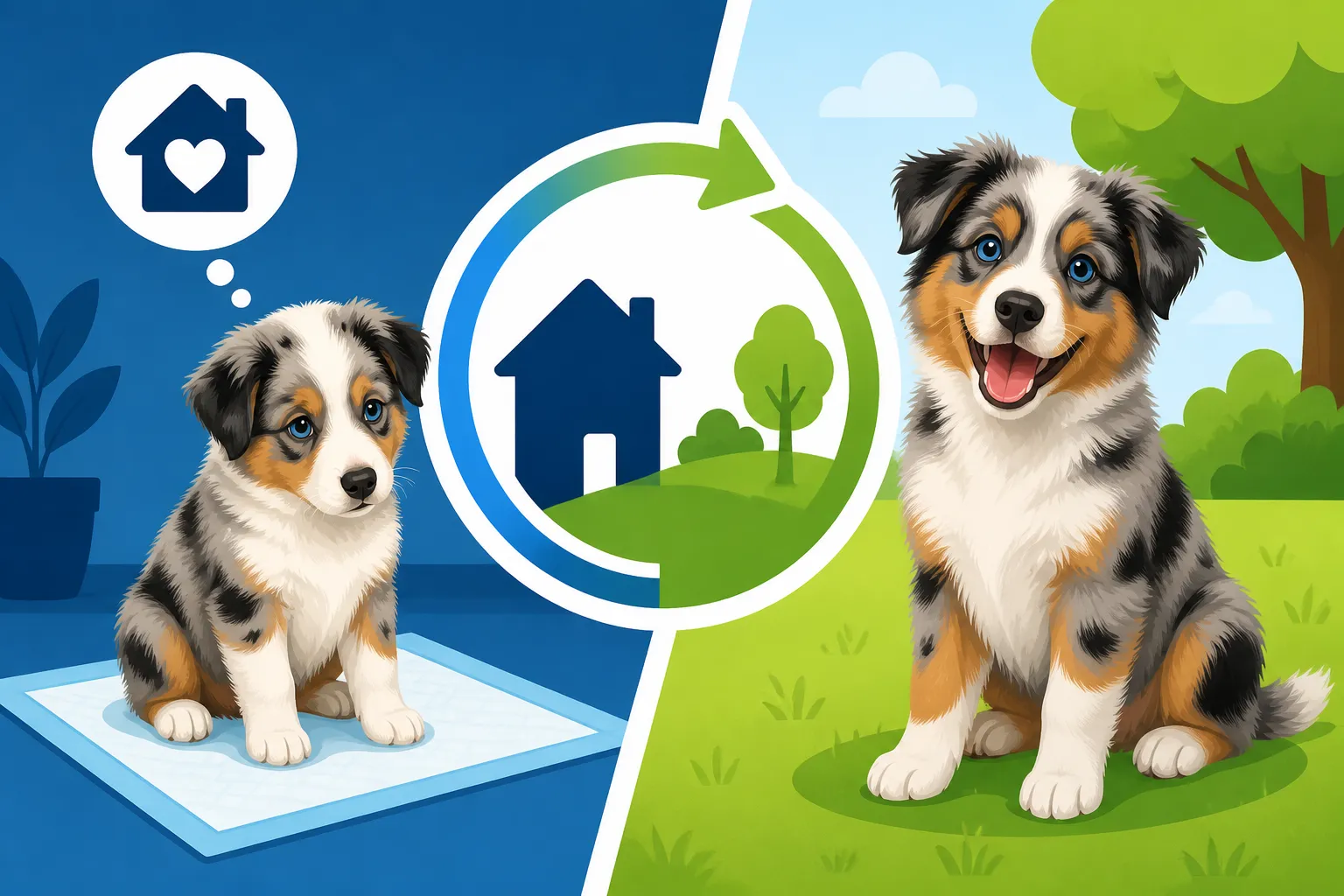
Other essentials include a leash and collar for supervised potty trips, plenty of high-value training treats, and puppy pads if you plan to use them initially (though many trainers recommend going straight to outdoor pottying to avoid confusion). Consider a bell system by the door; teaching your Aussie to ring a bell to go outside can be incredibly effective, giving them a clear way to communicate their need. Some owners even invest in a small, portable playpen for temporary containment when they can't actively supervise their puppy, preventing unsupervised accidents in larger areas of the house.
The Crate: Your Best Friend in House Training
The crate is arguably the most powerful tool in your house training arsenal, working with your Australian Shepherd's natural denning instincts. When used correctly, it's not a punishment, but a safe, comfortable space that also prevents accidents by leveraging your puppy's reluctance to soil their sleeping area.
Crate Sizing and Comfort
Choosing the right size crate is crucial. It should be just large enough for your Australian Shepherd puppy to stand up, turn around, and lie down comfortably. If the crate is too big, your clever Aussie might decide one end is for sleeping and the other is for pottying, completely defeating the purpose. Many crates come with a divider, allowing you to adjust the size as your puppy grows. You can find a wide range of crates, from wire to plastic, on Amazon.
Make the crate a positive space. Never use it for punishment. Instead, line it with a soft, comfortable bed or blanket, and toss in a favorite chew toy or two. Feed your puppy meals in the crate, and encourage them to enter it voluntarily with treats and praise. The goal is for your Aussie to view their crate as a safe, cozy den, their private bedroom where they feel secure. This positive association is vital for making the crate an effective house training tool. The Crate a Fifty Pound Aussie Needs offers more insights into choosing the perfect size.
Crate Training for Potty Breaks
The magic of the crate lies in scheduling. When your puppy is in their crate, they're typically less likely to have an accident. This buys you time between supervised potty breaks. The general rule is to take your puppy out of the crate and immediately to their designated potty spot outside. Don't dally; don't let them play inside first. The moment they exit the crate, the command should be "outside!" or "go potty!"
If they go potty outside, great! Celebrate, reward, and then they can have some supervised freedom in the house. If they don't go, bring them back inside and put them back in the crate for another 15-20 minutes, then try again. This teaches them that freedom is earned by pottying outside. This cycle, repeated consistently, reinforces the desired behavior. Remember that very young puppies may only be able to hold it for short periods, even in a crate, so vigilance is key. Enforced Naps for an Overtired Aussie Puppy often happens in the crate, helping with both rest and potty training.
Establishing a Consistent Potty Schedule
Consistency is the bedrock of successful house training. Your Australian Shepherd puppy thrives on routine, and a predictable schedule helps them understand when and where they're expected to relieve themselves. This isn't just about physical needs; it's about building good habits and communication.
Daily Routine Breakdown
A structured daily schedule is vital, especially in the first few weeks. Think of it as a series of "potty windows" throughout the day. Here’s a sample breakdown, but remember to adjust it to your specific puppy’s age, individual needs, and your household's rhythm:
| Time | Activity | Purpose |
|---|---|---|
| 6:00 AM | Wake up, immediately outside to potty spot | First thing in the morning, bladder is full |
| 6:15 AM | Breakfast, water available | Food stimulates digestion |
| 6:30 AM | Immediately outside to potty spot | After eating, often need to go |
| 6:45 AM | Supervised play/training indoors or in fenced yard | Mental and physical stimulation |
| 7:45 AM | Outside to potty spot | Before unsupervised crate time |
| 8:00 AM | Crate time / Nap time | Prevents accidents, allows rest |
| 10:00 AM | Wake up, immediately outside to potty spot | After napping, bladder is full |
| 10:15 AM | Supervised play/training | Exercise and enrichment |
| 11:15 AM | Outside to potty spot | Before another period of activity or rest |
| 12:00 PM | Lunch, water available | Midday meal, stimulates digestion |
| 12:15 PM | Immediately outside to potty spot | After eating |
| 12:30 PM | Supervised play/training | Continued activity |
| 1:30 PM | Outside to potty spot | Before crate time |
| 1:45 PM | Crate time / Nap time | Prevents accidents, allows rest |
| 3:45 PM | Wake up, immediately outside to potty spot | After napping, bladder is full |
| 4:00 PM | Supervised play/training | Afternoon activity burst |
| 5:00 PM | Outside to potty spot | Before dinner prep |
| 5:30 PM | Dinner, water available | Evening meal |
| 5:45 PM | Immediately outside to potty spot | After eating |
| 6:00 PM – 8:00 PM | Supervised family time / Play | Socialization and bonding |
| 8:00 PM | Outside to potty spot | Last chance before bed preparation |
| 8:30 PM | Wind-down time, limited water | Helps minimize overnight potty urges |
| 9:30 PM | Final potty trip outside before bed | Crucial last break |
| 9:45 PM | Crate for the night | Safe sleep, reduces nighttime accidents |
| 2:00 AM | Optional Overnight potty break (for very young puppies) | Prevents accidents, reduces stress (phase out as able) |
This schedule requires dedication, but it truly pays off. Sticking to it teaches your Australian Shepherd puppy what to expect and helps them develop the physical control needed to hold it. The Aussie Puppy Curriculum Month by Month often incorporates such routines.
Nighttime Potty Strategy
Nighttime can be the trickiest part of house training, especially with a very young puppy. The goal is to get them through the night without accidents, gradually increasing the time they can hold it. Limiting water intake about an hour or two before bed can help, but always ensure your puppy has access to water during the day.
The "final potty trip" is crucial. Make sure your puppy empties their bladder right before they go into their crate for the night. For very young puppies (under 12-14 weeks), you might need an alarm set for an overnight potty break, perhaps once or twice depending on their age. Take them out on a leash, directly to the potty spot, with minimal fuss and no play. As soon as they go, praise them quietly, and back into the crate they go. As they get older and have fewer accidents, you can gradually extend the time between these nighttime breaks until they can sleep through the night. This takes patience, but it's a phase that will pass!
Handling Accidents and Setbacks
Let's face it: accidents are going to happen. No matter how diligently you follow a schedule or how smart your Australian Shepherd is, a puppy is still a puppy. The key is how you react to these setbacks, as your response can either reinforce good habits or create confusion and fear.
Cleaning Up Effectively
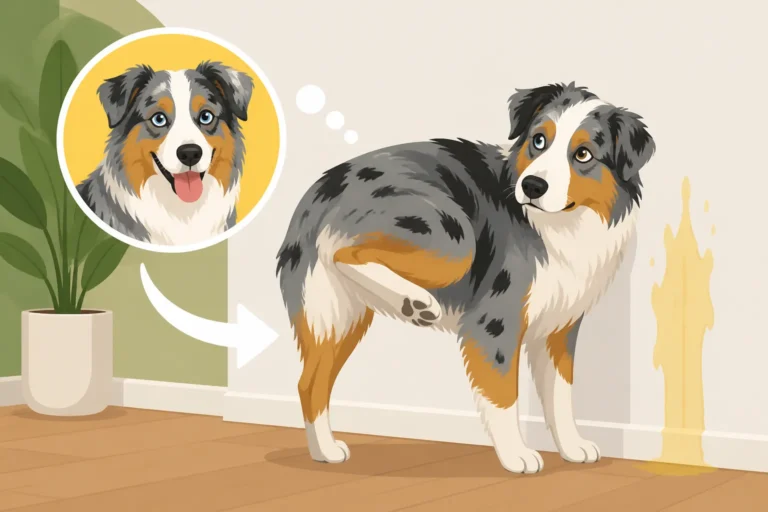
When an accident happens indoors, your immediate response should be calm and efficient. First, don't scold, punish, or rub your puppy's nose in it. Your Aussie doesn't understand punishment in this context, and it will only teach them to fear you or to hide their pottying from you, making house training much harder. If you catch them in the act, quickly interrupt them with a sharp "Ah-ah!" or clap, immediately pick them up, and rush them outside to their designated potty spot. If they finish going outside, praise and reward enthusiastically.
Once they're outside (or if the accident happened without you noticing), clean the area thoroughly with an enzymatic cleaner. As mentioned before, a product from Amazon that specifically breaks down pet odors is essential. If the scent remains, your puppy is more likely to use that spot again, signaling to them that it's an acceptable "bathroom." Old habits die hard, so eliminate the scent cue completely.
Troubleshooting Common Problems
If you're finding that accidents are happening frequently despite your best efforts, it's time to do some troubleshooting.
Problem 1: Too Much Freedom Too Soon. Are you giving your puppy too much unsupervised access to the house? Young puppies need constant supervision. Consider tethering them to you, keeping them in a puppy-proofed room with you, or using their crate more frequently. Restricting their access prevents them from sneaking off to potty.
Problem 2: Inconsistent Schedule. Is everyone in the household adhering to the potty schedule? Even one missed potty break can lead to an accident. Ensure all family members are on board and understand their role. This also applies to the rewards; everyone should be praising and treating for outdoor success.
Problem 3: Not Truly Emptying Their Bladder. Sometimes a puppy might "dribble" a bit outside and then hold the rest to come inside. Stay outside with them for longer, especially after meals or waking up. Wait until they've done both pee and poop if possible, and give them ample opportunity. Walk around a bit in the potty spot rather than just standing still.
Problem 4: Underlying Medical Issues. If your Australian Shepherd puppy was previously house trained and suddenly starts having frequent accidents, or if they're having very frequent, small pees, it's always wise to rule out a medical issue like a urinary tract infection (UTI) or parasites. A quick vet visit can ease your mind and address any health concerns. Australian Shepherd Puppy Diarrhea After Homecoming can be a sign of such issues.
Advanced Steps and Maintaining Good Habits
Once your Australian Shepherd puppy starts to consistently potty outside and has fewer accidents indoors, you can gradually begin to relax your strict house training routine. However, it's important not to rush this phase. Like any learned behavior, house training needs reinforcement to become truly ingrained.
Gradually Expanding Freedom
As your puppy gets older and more reliable, you can start to gradually increase their freedom in the house. Begin by allowing them unsupervised access to one room for short periods, slowly extending the time and adding more rooms as they prove trustworthy. Keep an eye on them from a distance, or use baby gates to create safe zones. If they have an accident, it's a sign you've moved too quickly, and you need to go back to a more restricted setup for a little while.
Continue to praise and reward for outdoor potty successes, even if they become less frequent. Your Aussie is learning that going outside is simply the way things are done. Remember that adolescence can bring some behavioral regressions, so don't be surprised if your older puppy (around 6-12 months) has an occasional lapse. Just calmly and consistently redirect them back to the established routine.
Phasing Out the Crate (If Desired)
Many Australian Shepherd owners find that their dogs continue to love their crates as adult dogs, viewing them as a safe den. If you wish to transition away from the crate for daytime use, ensure your Aussie is reliably house trained and trustworthy in the house for extended periods. You can start by leaving the crate door open during the day while you are home, allowing them to come and go.
If you plan to leave them loose in the house when you're gone, gradually increase the time you leave them alone. Start with short errands, always checking for accidents upon your return. This process can take many months, and some Aussies may never be completely trustworthy alone in the house without risk of accidents or destructive chewing. Always prioritize their safety and your peace of mind.
Reinforcing Good Habits Long-Term
House training isn't a one-and-done deal; it's a commitment to consistent management and positive reinforcement, especially with an intelligent breed like the Australian Shepherd. Even after your puppy is fully house trained, maintain a routine. Continue to take them out first thing in the morning, last thing at night, and after meals. Always take them out before you leave the house, even for a short time.
Keep that enzymatic cleaner handy, just in case. Life happens, and even adult dogs can have accidents due to illness, stress, or simply holding it too long. Your calm, consistent response in those rare instances will reinforce that outdoor pottying is always the preferred option. Celebrating those successful outdoor potty breaks, especially during the early weeks, makes a huge difference. Consider joining an online puppy school, such as one offered by BAXTER & Bella, which can provide ongoing support and structured lessons that integrate house training with other critical puppy skills, ensuring you have expert guidance through every stage of your Aussie's development. By staying vigilant and patient, you'll ensure your clever Aussie remains a reliably house-trained companion for years to come.
Disclaimer
This article is for general informational purposes only and does not constitute professional advice. Laws, prices and regulations vary by location and change over time. Consult a qualified professional for guidance on your specific situation.