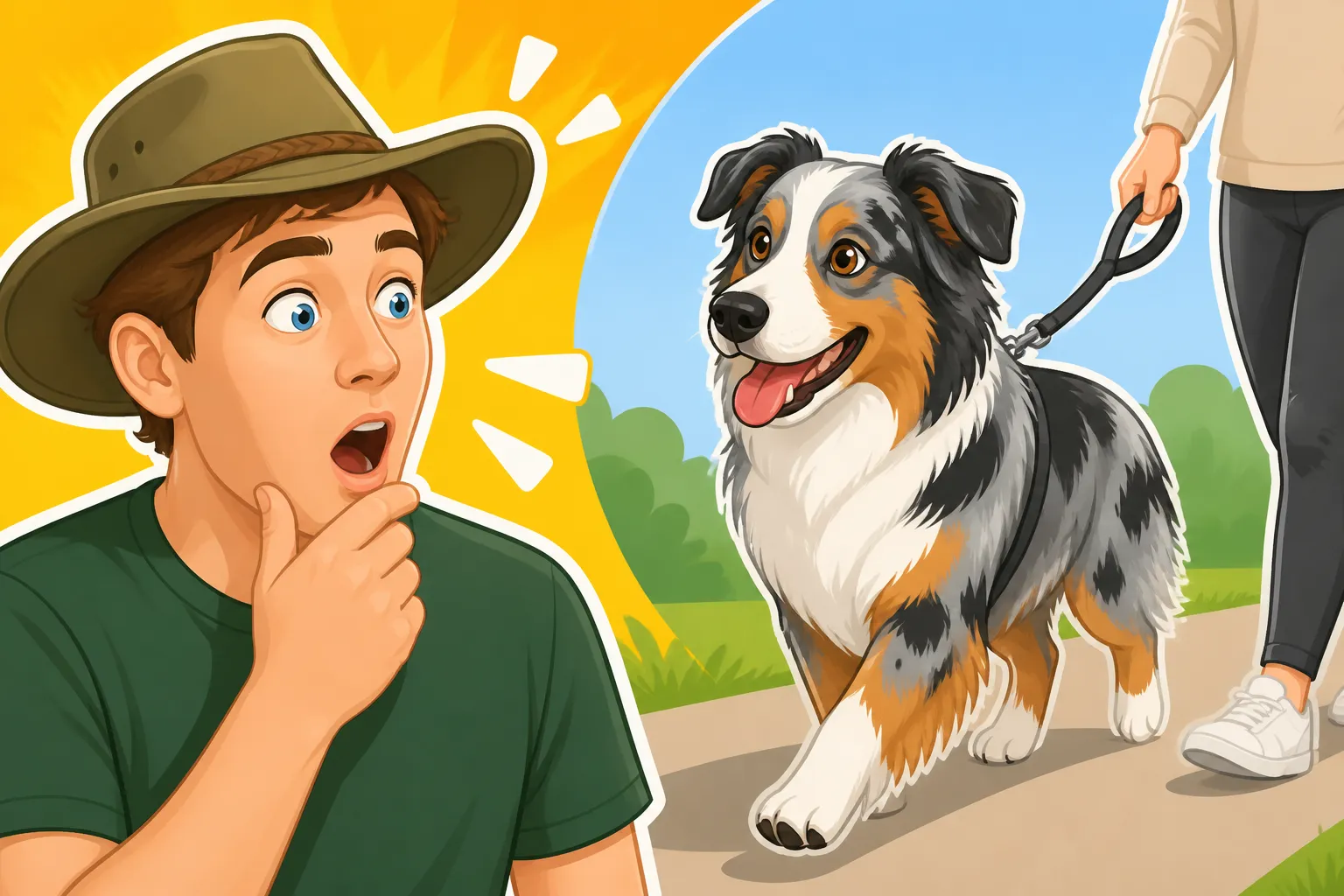
An Aussie Reacting to Dogs on the Lead
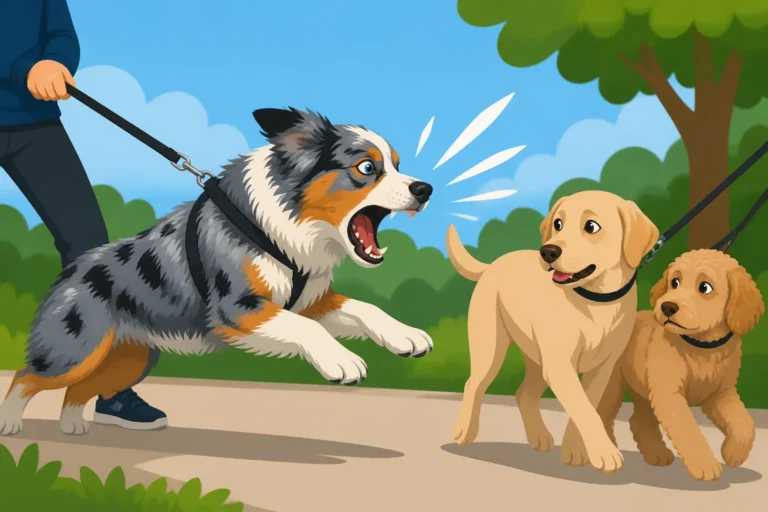
It’s incredibly frustrating, and often embarrassing, when your otherwise wonderful Australian Shepherd turns into a barking, lunging, pulling maniac the moment another dog appears on the horizon. Many Aussie owners feel like they’re doing something wrong, or that their dog is simply "bad," but this intense reaction to other dogs on the lead is a common struggle for our highly sensitive and often over-aroused herding breeds. This guide will help you understand why your Australian Shepherd might be reacting this way, and more importantly, what concrete steps you can take to manage and improve the situation.
Understanding Leash Reactivity in Australian Shepherds
Leash reactivity is a common behavioral challenge, and it's particularly prevalent in breeds like Australian Shepherds. It's not about your dog being "mean" or "aggressive" in a malicious sense; it's usually a cocktail of frustration, fear, over-excitement, or a perceived need to control the environment. Being on a leash severely limits your dog's natural responses, leading to an amplified reaction when they can't choose to approach, retreat, or herd as they would off-leash.
What Leash Reactivity Looks Like
When we talk about leash reactivity, we're describing a spectrum of behaviors that crop up when your Australian Shepherd spots another dog while on a lead. This isn't just a casual glance; it's an intense, focused response that can escalate quickly. You might see your Aussie start to stiffen, their ears perk up, and their gaze lock onto the other dog. Then comes the physical manifestation: pulling with all their might, often straining against their collar or harness, accompanied by loud, insistent barking, growling, or even snapping in the air. Their body language can look alarming—tail up, hackles raised, a rigid posture—which understandably makes other dog owners give you a wide berth. It can feel like your otherwise calm and biddable dog transforms into a completely different animal, seemingly deaf to your commands and oblivious to your presence.
What's particularly challenging is that these displays are often highly contextual. Your Aussie might be perfectly fine with dogs off-leash at the park, or even with specific dogs they know well. The leash is the critical factor, acting as a barrier that prevents natural canine social interactions, such as polite sniffing or creating space. This restriction can amplify feelings of anxiety, frustration, or even over-excitement, because your dog simply can't execute their desired action, whatever that may be.
Why Aussies Are Prone to It
Australian Shepherds are incredible dogs, known for their intelligence, intense loyalty, and, let's be honest, their sometimes overwhelming drive. These very traits, which make them exceptional working dogs and devoted companions, can also contribute to leash reactivity. First, their genetic predisposition to herd means they are inherently vigilant and reactive to movement and changes in their environment. Another dog approaching can trigger this instinct, causing them to want to "gather" or control the situation, and the leash prevents them from doing so naturally. This leads to immense frustration.
Secondly, Aussies are often highly sensitive and can be prone to overarousal. A walk, which should be a pleasant outing, can become an overwhelming sensory experience for them. The sight, sound, and smell of another dog can push them past their threshold, leading to an uncontrolled emotional outburst. Think of it like a highly tuned instrument; even a slight bump can send it off-key. They also tend to be rather reserved with strangers and new dogs, which can morph into suspicion or fear when they feel trapped on a leash. What looks like aggression might actually be a defensive display born from insecurity or a feeling of being cornered. Understanding Australian Shepherd Reactivity and Overarousal is a key step in managing these intense responses.
Distinguishing Reactivity from Aggression
It's easy for an owner, or even a casual observer, to mistake leash reactivity for pure aggression. When your Aussie is barking, lunging, and growling, it certainly looks aggressive. However, it’s crucial to understand the subtle but important differences, because the approach to training and management will vary based on the underlying motivation. True aggression, in the context of dog-on-dog interactions, is often driven by an intent to cause harm or assert dominance. While reactive dogs can become aggressive if their fear or frustration is consistently ignored or mishandled, the initial driver is often something else entirely.
| Trait | Leash Reactivity | True Aggression |
|---|---|---|
| Primary Motivation | Frustration, fear, anxiety, over-excitement, seeking distance | Intent to harm, territoriality, resource guarding, dominance |
| Body Language | Often frantic, chaotic, high-pitched barking, pulling hard, signs of internal conflict (e.g., whale eye, lip licking before outburst) | More deliberate, lower growls, direct stare, stiff posture, snarling, biting if contact made |
| Response on Contact | Often melts away or becomes submissive if leash tension is released or direct contact is made; may be fine off-leash | Likely to escalate; intent to fight if contact made |
| Handler Focus | Often looks back at handler for reassurance or direction, even if ignored in the moment | Less concern for handler, solely focused on the threat |
| Emotional State | Can be fear-based, insecure, or over-the-top excited/frustrated | Confident, assertive, or intensely fearful with an intent to defend aggressively |
Many reactive Aussies, if their leash were magically removed when another dog appears, would either dart away, try to initiate play (albeit rudely), or perhaps sniff briefly before moving on. They might not engage in a full-blown fight. The leash prevents these natural responses, leading to an explosion of frustrated energy. A truly aggressive dog, on the other hand, is likely to follow through with aggressive actions even off-leash, and may not show the same internal conflict or signs of insecurity. The intense displays of Australian Shepherd Overarousal and Frustration are often at the core of reactivity rather than malicious intent.
Identifying the Triggers and Root Causes
To effectively address your Australian Shepherd's leash reactivity, you first need to become a detective. What exactly sets them off? Is it every dog? Only certain types of dogs? What about the environment? Pinpointing these triggers is the first critical step in developing a successful management and training plan.
Common Environmental Triggers
Your Aussie's reactivity isn't happening in a vacuum; the environment plays a huge role. It’s not just the presence of another dog, but often the context in which that dog appears. For many Australian Shepherds, a common trigger is proximity. Seeing a dog across a wide field might elicit a mild interest, but seeing a dog suddenly round a corner on a narrow sidewalk can trigger a full-blown meltdown. The lack of space to maneuver or create distance can be incredibly stressful for them.
Visual triggers are paramount for an Aussie. Their keen herding eyes are always scanning for movement. Fast-moving dogs, dogs that suddenly appear from behind parked cars, or even dogs walking directly towards them can be highly triggering. Some Aussies are particularly reactive to certain breeds (often larger, boisterous dogs), or to dogs exhibiting specific behaviors like intense staring, high-energy bouncing, or loud barking. Pay attention to sound as well. A sudden bark from a yard dog, or the jingling of another dog's tags, might set off your sensitive Aussie before the dog is even visible. Recording these incidents, noting the time of day, location, type of dog, and distance, can reveal important patterns. Sometimes, even the presence of a human stranger can increase an Aussie’s overall stress, making them more prone to reacting to a dog.
Underlying Fear or Frustration
Beneath the outward display of barking and lunging, there are often deeper emotional currents at play: fear or frustration. Many reactive Australian Shepherds are, at their core, fearful dogs. They might have had a negative experience with another dog in the past, or perhaps they weren't adequately socialized during their critical puppy development period to a variety of dogs and environments. When they see another dog approaching on leash, they may genuinely believe they are in danger, and their reactivity is a "keep away" signal—a desperate attempt to make the perceived threat retreat. Because they are confined by the leash, they can't flee, so their only option is to put on an impressive, loud display. This behavior is often self-reinforcing: if the other dog (and its owner) backs away or changes course due to your Aussie's outburst, your dog learns that their strategy "worked" to make the scary thing go away.
On the other hand, some Aussies are primarily driven by frustration. These are the dogs who desperately want to greet and play with every dog they see, but the leash prevents them from doing so. The constant thwarting of this desire builds up tension, leading to a frustrated outburst that looks aggressive but is actually a tantrum. Imagine a child wanting a toy but being held back; they might scream and flail. It's similar for these dogs. This type of reactivity is common in highly social, energetic Aussies who love other dogs but haven't learned impulse control when on leash. They often whine and pull excitedly before the barking starts. Understanding whether your Aussie is saying "go away" or "let me go!" is vital for choosing the right training approach.
The Role of Insufficient Exercise and Mental Stimulation
While it might seem counterintuitive, simply giving an Australian Shepherd more physical exercise won't necessarily cure leash reactivity, and in some cases, it can even make it worse if the exercise itself is overstimulating. However, a significant underlying factor in many Aussie behavior problems, including reactivity, is insufficient mental stimulation and appropriate physical exercise. An Australian Shepherd is a working breed, bred to be constantly engaged, thinking, and moving with purpose for hours on end. If this innate drive isn't met, they don't just become bored; they become restless, anxious, and prone to finding their "own job," which often manifests as unwanted behaviors.
A dog that hasn't had its mental and physical needs met is like a coiled spring, wound too tight. They have a lower threshold for stress and excitement, meaning even small triggers can push them over the edge into a reactive outburst. A long, sniff-filled walk where they can explore, puzzle toys that make them think, or even a short training session working on tricks or obedience can do wonders for their overall emotional state. Remember, Why Physical Exercise Alone Never Settles an Aussie is a crucial concept. It's about quality, not just quantity. Running for two hours won't tire out an Aussie's brain if they're not challenged mentally. Incorporating Mental Work That Actually Tires an Australian Shepherd into their daily routine can make a profound difference in their overall calmness and ability to handle triggers on walks. Without this foundational fulfillment, any leash reactivity training will be an uphill battle, as you're trying to train a dog whose basic needs aren't being met.
Management Strategies for Walks
When dealing with a leash-reactive Australian Shepherd, management is your immediate best friend. Before you even begin intensive training, you need strategies to prevent reactive episodes, keep your dog (and yourself) safe, and reduce the frequency of their unwanted outbursts. Management is about controlling the environment and your dog's exposure to triggers, not necessarily changing their emotional response in the moment.
Avoiding Triggers Altogether
The simplest, yet often most effective, management strategy is to proactively avoid triggers. If seeing another dog at close range causes a meltdown, then your primary goal on walks is to ensure that doesn't happen. This might sound restrictive, but it's essential for several reasons. Each reactive outburst reinforces the behavior for your Aussie and increases their stress levels. By avoiding triggers, you prevent them from practicing the unwanted behavior and give their nervous system a much-needed break.
This means being strategic about when and where you walk. Avoid peak dog-walking hours in busy parks or popular neighborhood routes. Instead, opt for quieter times, less populated areas, or even private, fenced fields if available. If you live in an urban environment, this might mean early morning or late-night walks, or even driving to less congested areas for your daily exercise. Utilize your surroundings: if you see a dog approaching, duck behind a car, step into an alleyway, or cross the street. Your job is to be a vigilant lookout, spotting potential triggers long before your Aussie does, giving you time to react. This proactive approach helps your dog understand that you are in control and they don't need to take on the "job" of herding or reacting to every dog.
Creating Distance and Space
While complete avoidance is the ideal, it's not always realistic. Life happens, and sometimes you will encounter other dogs. In these situations, your next best management tool is creating distance and space. The further away you are from a trigger, the less intense your Aussie's reaction is likely to be. Every dog has a "threshold"—a specific distance at which they can observe a trigger without reacting. Your goal is to identify your Aussie's threshold and consistently stay below it.
When you spot an approaching dog, immediately start to create more space. This could mean stepping off the sidewalk, moving behind a bush, or making a wide arc to cross the street. Don't wait until your Aussie is already stiffening; intervene the moment you see a potential trigger. The key is to make these movements calmly and deliberately, not frantically. If you get agitated, your Aussie will pick up on your stress, which can exacerbate their own anxiety. Think of it as a smooth, flowing dance to maintain distance. The more consistently you manage this space, the more your Aussie will learn that other dogs can exist in their environment without leading to a stressful encounter. This consistent management is what sets the stage for effective counter-conditioning, helping your dog learn to be Working a Reactive Aussie Under Threshold.
Gear That Can Help
The right equipment can make a significant difference in managing a leash-reactive Australian Shepherd, both for your comfort and their safety. While no piece of gear is a "magic bullet," certain tools can give you better control and make walks less stressful.
A well-fitting harness is often preferable to a flat collar for reactive dogs. A harness that clips in the front (like those from brands you can find on Amazon or at local pet stores) discourages pulling by redirecting your dog's momentum back towards you, rather than allowing them to pull straight ahead with full force. This reduces strain on their neck and throat, which can be injured by constant pulling against a collar, and helps you maintain control without causing discomfort or pain that could heighten their reactivity. Avoid retractable leashes, as they offer no control and can actually encourage pulling and increase the distance your dog can lunge. A sturdy 6-foot leash made of nylon or leather gives you adequate length for sniff breaks while still allowing for quick adjustments when a trigger appears.
For dogs with severe reactivity, a head halter (like a Gentle Leader or Halti) can be a game-changer. These fit over your dog's muzzle and allow you to steer their head, much like a horse halter. If your Aussie's head isn't pointed at the trigger, it's much harder for them to lunge with full force or bark directly at the other dog. While some dogs initially dislike head halters, with positive introduction (think lots of treats!), many accept them readily, and they provide an unparalleled level of control for strong, determined Aussies. Combining appropriate gear with management techniques gives you the best chance of navigating walks more successfully.
Training Techniques for Improvement
Once you have management strategies in place to minimize reactive outbursts, you can start actively working to change your Australian Shepherd's emotional response to other dogs on leash. This isn't about suppressing their barking, but changing how they feel about seeing other dogs. It takes patience, consistency, and a lot of high-value treats!
Counter-Conditioning and Desensitization
These two techniques are the cornerstone of training a leash-reactive dog. The goal is to change your Aussie's negative emotional association with other dogs into a positive one.
Desensitization means gradually exposing your dog to the trigger (other dogs) at a distance or intensity where they don't react. This is where your understanding of their "threshold" comes into play. Start so far away that your Aussie barely notices the other dog, or just gives a calm glance. This is the sweet spot.
Counter-conditioning means changing their emotional response. The moment your Aussie calmly notices another dog (while still below their threshold), immediately reward them with something amazing—a super high-value treat, like cooked chicken or cheese. The sequence is: other dog appears (at a safe distance) -> Aussie sees dog calmly -> super treat! The idea is to create a new association: "Other dog means good things happen!" We're trying to shift their internal monologue from "Oh no, a dog!" to "Yay, a dog! That means treats!"
Practice this in short, frequent sessions, slowly decreasing the distance as your Aussie becomes more comfortable. If your dog starts to react, you've gone too far, too fast. Increase the distance again and go back to an easier level. It’s crucial that the dog remains calm; if they're already barking, the treats won't work, as they're too overstimulated to learn. You are essentially building positive experiences from scratch. A great resource for guided training is an online program like BAXTER & Bella, which often provides structured approaches for these types of behavioral challenges.
"Look At That" Game
The "Look At That" (LAT) game is a specific application of counter-conditioning that teaches your Australian Shepherd to look at a trigger (like another dog) and then voluntarily disengage and look back at you for a reward. This gives them an alternative, desirable behavior to perform instead of reacting.
Here's how to play:
- Spot a Trigger: When you see another dog (again, at a distance where your Aussie is below threshold and not reacting), don't point it out.
- Wait for the Look: Wait for your Aussie to notice the other dog. The moment they glance at it, before any stiffening or pulling, say "Yes!" or use a clicker.
- Reward for Disengagement: The instant they turn their head back towards you (which they will often do naturally after hearing the marker), reward them with a high-value treat.
- Repeat: Continue this pattern. Eventually, your Aussie will learn that seeing another dog isn't a cue to react, but a cue to look at you for a treat. They are actively choosing to engage with you rather than the trigger.
This game empowers your dog by giving them a choice and reinforcing calm observation. It turns a potential threat or frustration into a predictable, rewarding interaction with you. Over time, you can gradually reduce the distance to the other dog as your Aussie's confidence and ability to disengage improve. Consistency is paramount here; every calm glance followed by a treat builds the foundation for a more relaxed future.
Engaging Your Aussie
A major part of addressing leash reactivity is teaching your Australian Shepherd to maintain focus and attention on you, even in the presence of distractions. This doesn't happen overnight, especially with a breed so keen on observing its environment. You need to become the most interesting thing on the walk.
Start practicing engagement games in a low-distraction environment, like your backyard. Work on reliable "watch me" cues, quick sits, and touch games where your dog targets your hand. Use those high-value treats we talked about earlier. Once your Aussie is consistently engaged with you in a calm setting, gradually introduce mild distractions, then more intense ones.
On walks, be prepared to interrupt your Aussie's focus on a potential trigger before they can escalate. This means being proactive. If you see a dog approaching, quickly ask for a "watch me," a rapid-fire series of "sits," or even a fun trick they know well. The goal is to get their brain to switch gears and focus on you and the rewarding interaction you provide, rather than hyper-focusing on the other dog. Carrying a squeaky toy or a tug toy can also be effective; if your Aussie is over-excited but not fearful, redirecting that energy into a quick game of tug can sometimes prevent a full-blown reaction. Remember, your Aussie is looking for a job, and you need to ensure you're providing it. Consistent engagement builds a stronger bond and teaches your dog that looking to you for direction is always more rewarding than reacting to the environment. For more ideas on constructive training, consider programs that focus on The Aussie Puppy Curriculum Month by Month or Australian Shepherd Recall Around Moving Things, as these build a strong foundation of focus and obedience.
When to Seek Professional Help
Even with the best intentions and consistent effort, dealing with a leash-reactive Australian Shepherd can be incredibly challenging. There's no shame in admitting you need a little extra guidance. In fact, for a breed as smart and sensitive as the Aussie, professional help can be invaluable.
Recognizing When You Need a Trainer
It’s completely normal for owners to feel overwhelmed, frustrated, or even embarrassed by their Aussie’s leash reactivity. If you've been consistently applying management and training techniques for several weeks or months, and you're simply not seeing consistent improvement, or if the problem seems to be getting worse, it's definitely time to call in a professional. Other signs that a trainer is needed include:
- Your dog's reactivity is escalating: The lunging and barking are becoming more intense, or occurring at greater distances.
- You feel unsafe: You worry about losing control of your dog, or that they might accidentally injure someone or another dog.
- You're avoiding walks altogether: This negatively impacts your Aussie's quality of life and your relationship.
- You're emotionally exhausted: The constant vigilance and stress of walks are taking a toll on you.
- Your dog shows actual aggression: If your Aussie is consistently attempting to bite or has made contact with another dog, this moves beyond simple reactivity into a more serious issue requiring expert intervention.
A good professional can assess your specific situation, help pinpoint the exact triggers and underlying motivations, and tailor a training plan that's right for you and your Aussie. They can also provide hands-on coaching, which is often crucial for timing and technique. Don't let the problem fester; early intervention can prevent more entrenched behaviors.
Finding the Right Professional
Choosing the right professional for your leash-reactive Australian Shepherd is paramount. Not all dog trainers are created equal, and some methods can actually worsen reactivity. You need someone who understands positive reinforcement, force-free methods, and specifically, the nuances of Finding a Trainer Who Understands an Aussie with their unique herding drive and sensitivities.
Look for a certified professional dog trainer (CPDT-KA), a certified behavior consultant (CBCC-KA), or a veterinary behaviorist (DACVB). These certifications indicate a commitment to ethical, science-based methods. When interviewing potential trainers, ask them:
- What methods do they use? (They should emphasize positive reinforcement, counter-conditioning, and desensitization, and explicitly state they do not use aversive tools like shock collars, prong collars, or physical corrections).
- Do they have experience with reactive dogs, especially herding breeds?
- What does their initial assessment involve?
- Can they provide references?
- What is their philosophy on reactivity? (A good trainer will focus on changing emotional responses, not just suppressing symptoms).
Avoid any trainer who promises a quick fix, uses dominance theory, or suggests methods that involve pain, fear, or intimidation. While these might seem to stop the behavior in the short term, they typically create more fear and anxiety in the dog, often exacerbating reactivity or leading to other behavioral problems down the line. Investing in a qualified, ethical trainer is an investment in your Aussie's long-term well-being and your peace of mind. Online resources like BAXTER & Bella also offer virtual consultations that might connect you with certified trainers experienced in these areas.
Medical Considerations
It's absolutely vital to rule out any underlying medical causes for your Australian Shepherd's reactivity, especially if the behavior has started suddenly or seems to be worsening unexpectedly. Pain can drastically alter a dog's temperament and tolerance levels. An Aussie experiencing discomfort in their hips, elbows, or back might become snappy or fearful because they anticipate pain if another dog bumps into them or if they have to move quickly. Even something like poor vision or hearing loss can make a dog more reactive because they are easily startled and feel vulnerable.
Before embarking on an intensive training plan, schedule a thorough veterinary check-up. Your vet can perform a physical examination to check for any hidden pain, conduct blood work to rule out hormonal imbalances (like thyroid issues which can affect behavior), and discuss any changes in diet or medication that might be contributing. If your Aussie is entering their senior years, underlying Australian Shepherd Arthritis After Years of Work could make them less tolerant. Sometimes, even subtle dental pain can lead to irritability. A vet might also recommend specific supplements for anxiety or pain management, which can make your Aussie more receptive to training. Always be transparent with your vet about the behavioral changes you're observing, as they are a crucial part of your support team in addressing reactivity.
Living With a Leash Reactive Aussie
Coming to terms with a leash-reactive Australian Shepherd means accepting that walks might always look a little different for you, but it doesn't mean you can't have a fulfilling life together. It's about shifting your mindset, celebrating small victories, and committing to your dog's emotional well-being.
Building Confidence in Your Dog
A significant part of helping a leash-reactive Aussie is building their overall confidence, not just in specific situations, but in general. Many reactive dogs are actually quite insecure, and empowering them can reduce their need to react defensively. You can build confidence through various avenues:
- Successful Training: Every time your Aussie learns a new trick or masters an obedience cue, their confidence grows. Positive reinforcement training, where they consistently succeed and are rewarded, reinforces that they are capable and that engaging with you is rewarding.
- Enrichment: Provide plenty of mental enrichment at home. Puzzle toys, snuffle mats, and scent work games (which you can find readily available on Amazon) allow your Aussie to use their natural instincts to problem-solve and "work" their brain in a low-stress environment. This builds self-efficacy.
- Controlled Social Experiences: If your Aussie has specific dog friends they are truly comfortable with, arrange playdates in a secure, neutral location. Positive experiences, even limited ones, can slowly generalize to a more positive outlook on other dogs. However, be cautious and always prioritize quality over quantity when it comes to social interactions.
- Choice and Predictability: Whenever possible, give your Aussie choices. "Do you want to turn left or right?" on a walk (within safe boundaries), or letting them choose which game to play, can empower them. Predictable routines also reduce anxiety.
By consistently creating opportunities for success and positive experiences, you help your Australian Shepherd realize they don't need to be constantly on guard, and that the world (and other dogs) isn't always something to be feared or frustrated by.
Managing Owner Frustration
Let's be real: owning a leash-reactive Australian Shepherd can be incredibly frustrating. The embarrassment, the stress of constant vigilance, the feeling of judgment from other dog owners, and the slow pace of progress can all take a heavy toll. It's okay to feel these emotions. Acknowledging your own feelings is the first step toward managing them.
It’s easy to get caught in a cycle of negativity, where every walk feels like a battle. To combat this, change your perspective. Instead of focusing on what went wrong, celebrate the tiny victories. Did you spot a dog and manage to cross the street before your Aussie reacted? That's a win! Did they only bark three times instead of ten? Another win! Keep a journal of these successes; sometimes, looking back at the progress, no matter how small, can be incredibly motivating.
Also, lean on your support system. Talk to other owners of reactive dogs—you'll find you're not alone. Online communities or local training groups can offer validation and practical tips. Don't be afraid to take a break. If you're having a particularly stressful day, a short backyard playtime or a decompression walk in a very secluded area might be better for both of you than forcing a walk in a triggering environment. Your emotional state directly impacts your dog, so taking care of yourself is also taking care of your Aussie. Remember, you're doing your best, and patience is a virtue in this journey.
Long-Term Commitment
Addressing leash reactivity in an Australian Shepherd is rarely a quick fix; it's a long-term commitment. For many Aussies, especially those with strong herding instincts or deeply ingrained fear, reactivity might always be something you manage to some degree. The goal isn't necessarily to have a dog that greets every other dog politely, but rather one that can calmly coexist with them in public spaces without intense outbursts.
This commitment means:
- Ongoing Training: Even after significant improvement, you'll need to continue practicing your management and training techniques to maintain progress. It's like physical therapy for their brain.
- Adaptability: Be prepared to adapt your routines as needed. What works one day might not work the next, or a new environmental factor might emerge. Flexibility is key.
- Advocacy: You are your Aussie's advocate. Don't be afraid to politely tell other owners, "My dog needs space," or to manage situations preemptively, even if it feels awkward. Your dog's comfort and safety come first.
- Patience and Empathy: There will be setbacks. There will be days where you feel like you've made no progress. On these days, remind yourself that your Aussie isn't giving you a hard time; they're having a hard time. Approach them with empathy and understanding, and recommit to the journey.
Living with a leash-reactive Australian Shepherd can be a challenging but ultimately rewarding experience. It deepens your understanding of your dog and strengthens your bond as you navigate the world together. With consistent effort, the right tools, and a healthy dose of patience, you can help your Aussie live a much calmer and happier life, making your walks something to look forward to again.
Disclaimer
This article is for general informational purposes only and does not constitute professional advice. Laws, prices and regulations vary by location and change over time. Consult a qualified professional for guidance on your specific situation.