Why an Australian Shepherd Nips at Heels
Oh, the infamous Australian Shepherd heel-nip! If you're reading this, chances are you've experienced that sharp, often startling little grab at your ankles or the back of your leg. It’s frustrating, sometimes painful, and can leave you wondering if your sweet, fluffy companion is secretly plotting against your Achilles tendon. You're not alone in facing this peculiar Australian Shepherd quirk, and this guide is here to explain why it happens and, more importantly, what you can actually do to manage and redirect it effectively.
The Deep Roots of Australian Shepherd Heel-Nipping: Instinct at Play
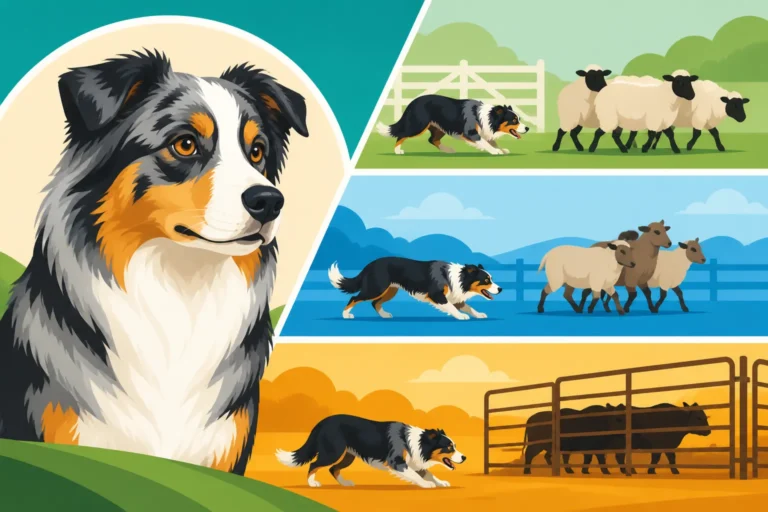
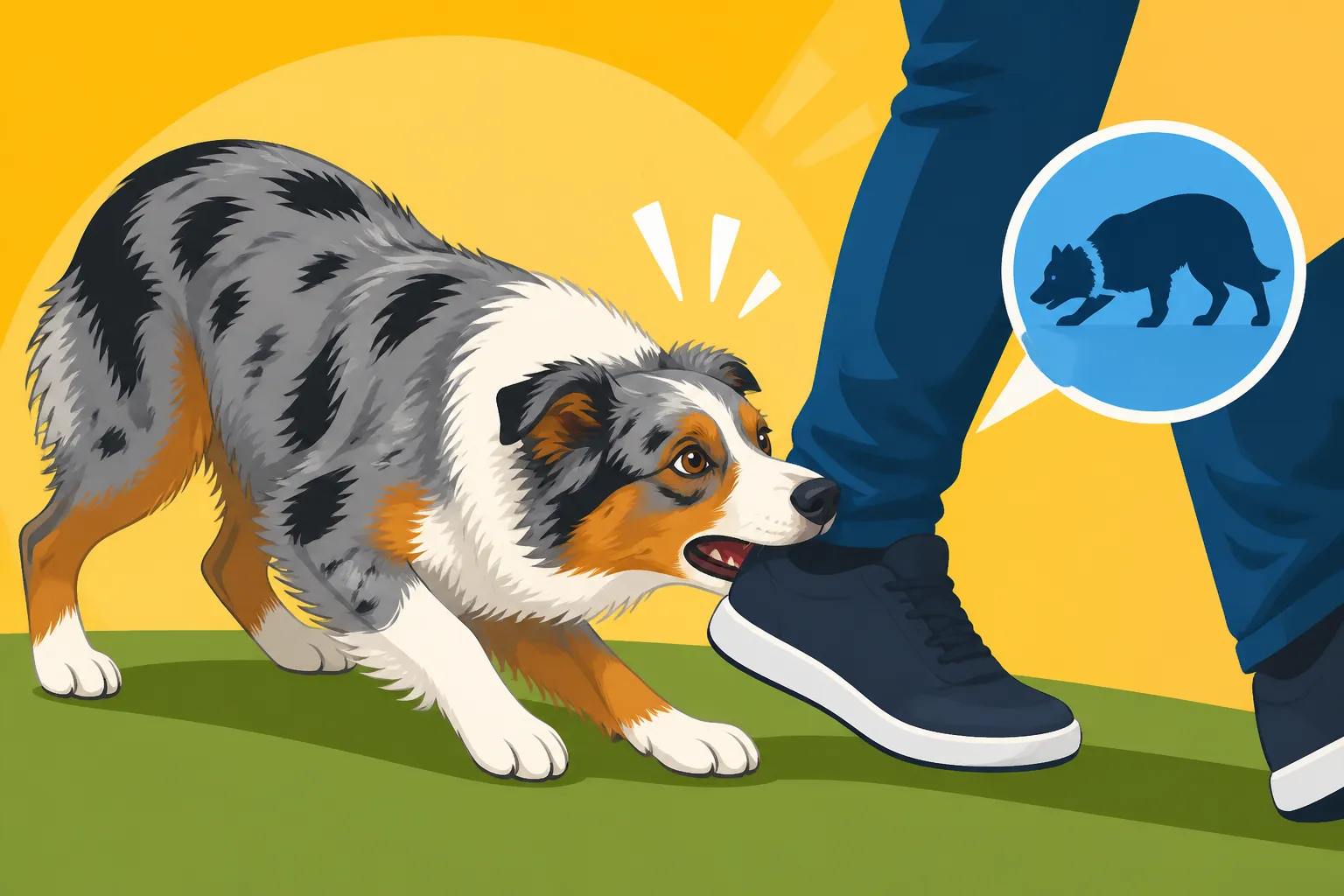
When your Australian Shepherd nips at your heels, it’s rarely out of malice or aggression. Instead, you're witnessing one of the most fundamental, deeply ingrained behaviors of the breed: their powerful herding instinct. These dogs were quite literally bred for generations to move livestock, and that instinct doesn't just vanish when they become beloved family pets. It just finds new, sometimes inconvenient, targets.
Understanding the Herding Blueprint
Think of the herding instinct as your Australian Shepherd's operating system. It’s the default program running in the background, constantly scanning for movement, anticipating direction, and feeling the urge to gather and control. Nipping at the heels is a classic herding maneuver, designed to prompt a reluctant sheep or cow to move forward. It’s a low-level form of persuasion, a gentle (or not-so-gentle, depending on the dog) push to get things going in the right direction. It’s not meant to injure, but to communicate.
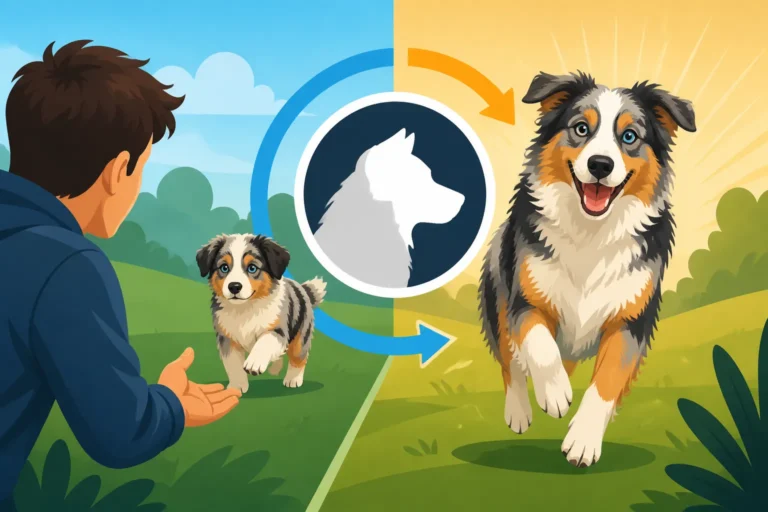
This behavior often manifests early in puppyhood. Those adorable little nips during play aren’t just typical puppy biting; they often carry the undertones of their future "job." As they mature, especially during adolescence, this instinct can become even more pronounced. Your Aussie isn't trying to be naughty; it's simply following ancient programming, trying to herd you like a wayward sheep. It's a testament to their intelligence and drive, even if it's a pain in the… well, you know. To truly appreciate this fundamental trait, you might want to delve into Why Herding Instinct Is the Aussie Operating System.
When and Why Heel-Nipping Emerges
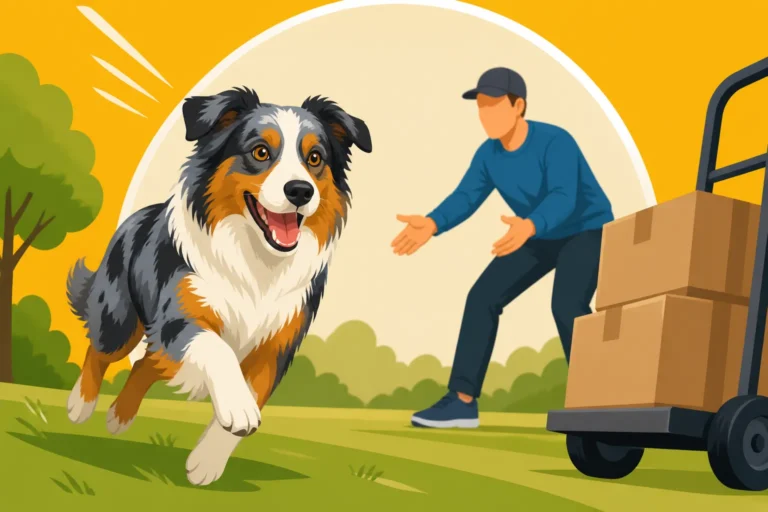
Heel-nipping in an Australian Shepherd isn't usually a constant behavior; it tends to be triggered by specific situations. Movement is the biggest catalyst. Are you walking quickly through the house? Jogging down the street? Turning suddenly? All of these can mimic the movement of livestock, activating that deep-seated desire to control and gather. Excitement can also play a huge role. A burst of energy, perhaps when you first come home, during an enthusiastic play session, or when the doorbell rings, can heighten their arousal and trigger the instinct to herd.
Frustration is another common driver. If your Aussie feels ignored, isn't getting enough mental stimulation, or can't quite figure out how to get you to do what it wants, that pent-up energy and confusion can easily boil over into heel-nipping. It's their way of saying, "Hey! Pay attention! Let's do something!" or "Move it! Where are we going?!" Understanding these triggers is the first step in managing the behavior, because it allows you to anticipate when it might happen and intervene proactively.
Common Scenarios and Who Gets Nipped
It's not just your heels that might be subject to your Aussie's herding tendencies. This instinct can pop up in a variety of situations and target different "flock" members, whether they have two legs or four. Recognizing these patterns can help you manage and prevent future incidents.
Nipping Family Members and Visitors
Unfortunately, children are often the primary targets for an Aussie's heel-nipping. Their quick, unpredictable movements, often accompanied by excited squeals and running, are like a siren call to a herding dog. A child darting across the yard or even just walking quickly through the living room can trigger an Aussie to "gather" them by nipping at their ankles. This isn't aggression, but it can certainly be alarming for both the child and the parent. It’s crucial to teach children how to interact calmly with the dog and to always supervise these interactions. A detailed look at specific scenarios involving children can be found in An Australian Shepherd Nipping a Toddler's Ankles.
Adults aren't immune either. Imagine you're bustling around the kitchen, preparing dinner, or perhaps heading out the door in a hurry. Your sudden changes in direction, rapid movements, or even just turning your back can make you a prime target. The nip might be followed by your Aussie trying to "push" you in a certain direction with their nose or body. It's their way of maintaining order in their perceived flock. Visitors, especially those who aren't familiar with herding breeds, might be particularly confused or even scared by this behavior, which highlights the importance of proactive management.
Redirecting Herding Drive onto Objects
The herding instinct isn't limited to just people or other animals. Your Australian Shepherd's desire to manage and organize can extend to inanimate objects that move or can be moved. Have you ever noticed your Aussie circling the vacuum cleaner while it's running? Or trying to "herd" the lawnmower as it goes across the yard? That's the same instinct at play. These objects represent something that needs to be controlled and directed. It's quite fascinating, if a little inconvenient.
Other common targets can include bicycles, skateboards, remote control cars, or even fallen leaves blowing in the wind. Anything that moves in a way that catches their eye can become their "sheep." Even if they aren't actively nipping these items, the intense focus, circling, and body posturing are all indicators of their strong herding drive at work. For a fun, yet insightful, read on this, check out An Australian Shepherd Herding a Vacuum Cleaner. Understanding that this drive is so encompassing helps us realize that we can't just train it out of them, but rather, we must provide appropriate, safe outlets for it.
Practical Strategies to Manage and Redirect Nipping
Dealing with heel-nipping requires a multi-faceted approach that combines immediate intervention, consistent training, and thoughtful environmental management. It's about working with your Aussie's natural instincts, not against them.
Immediate Interventions for Active Nipping
When your Australian Shepherd actually nips, your immediate reaction is crucial. The goal is to interrupt the behavior without inadvertently rewarding it with attention. A sharp "ouch!" or a quick withdrawal of attention (like turning your back and walking away, or stepping behind a baby gate) can work. The key is to immediately follow up by redirecting their attention to an appropriate outlet. Always have a tug toy or a sturdy chew toy nearby. The moment you see that body language signaling an impending nip, or if a nip occurs, immediately present the toy. Engaging them in a game of tug can be a fantastic way to satisfy their "mouthy" instinct and give them a legal, acceptable target for their herding drive. This technique is explored further in Presenting a Toy the Second an Aussie Nips.
Spatial management is also your best friend. If you know your Aussie tends to nip when you're busy in the kitchen, use a baby gate to keep them in an adjacent area where they can still see you but can't reach your heels. Keeping a leash on them in the house (dragging it, not holding it) can also give you a way to gently interrupt and guide them away from temptation without direct physical interaction, which can sometimes escalate the nipping. Consistency from everyone in the household is vital.
Long-Term Training and Environmental Management
Beyond immediate fixes, long-term success comes from consistent training and managing their environment. Positive reinforcement is the cornerstone here. Reward calm behavior, especially around moving feet. Teach a "leave it" command for ankles and a "settle" or "place" command for when excitement levels rise. A well-trained "off switch" is invaluable for an Australian Shepherd, allowing them to calm down and disengage from their high-drive state.
Providing appropriate outlets for their herding drive is paramount. This doesn't necessarily mean you need sheep! Herding balls, flirt poles, or structured games of fetch can all tap into that instinct in a safe, controlled way. Engaging in dog sports like agility, obedience, or even trick training can also channel their incredible intelligence and energy into productive activities. Many online training platforms, such as BAXTER & Bella, offer comprehensive courses that can guide you through these training steps, often with specific modules for managing high-drive breeds.
Remember, physical exercise alone is often not enough for an Australian Shepherd. They need mental work too. Puzzle feeders, scent games, and regular training sessions that challenge their minds are just as important as a good run. For more ideas on how to properly exercise and stimulate your Aussie, explore How Much Daily Exercise an Australian Shepherd Needs and Scent Games That Tire an Australian Shepherd. A tired Aussie, both physically and mentally, is much less likely to resort to heel-nipping. Sometimes, the core issue is that Whether an Australian Shepherd Needs a Job to Be Calm is answered with a resounding "yes!"
Tools and Resources to Help Your Aussie (and Your Heels)
You don't have to tackle this challenge empty-handed. There are some fantastic tools and resources available that can make a real difference in managing your Australian Shepherd's heel-nipping behavior.
Essential Gear for Management and Training
Having the right gear on hand can significantly aid your efforts. Here's a quick rundown of what I find most helpful:
| Tool/Item | Purpose | How it Helps with Heel-Nipping |
|---|---|---|
| Tug Toys | Redirect biting/nipping instinct, mental outlet | Provides an appropriate target for mouthy behavior. |
| Flirt Pole | Channels prey drive, controlled chase | Mimics chasing prey, satisfies herding urge safely. |
| Puzzle Feeders | Mental stimulation, slows eating | Engages their brain, reduces boredom, calming. |
| Baby Gates | Spatial management, prevention | Creates physical barriers, prevents access to heels. |
| Long Lines | Supervised freedom, recall practice | Allows practice of recall and redirection at a distance. |
| Durable Chews | Satisfies chewing urge, stress relief | Keeps their mouth busy and engaged on acceptable items. |
You can find many of these items, like durable chew toys and baby gates, readily available on platforms like Amazon. I always recommend investing in high-quality, Aussie-proof items, as these smart dogs are experts at demolishing lesser toys!
Professional Help and Continued Learning
Sometimes, despite your best efforts, you might feel stuck. That's perfectly normal! Australian Shepherds are complex, intelligent dogs, and there's no shame in seeking professional help. Look for a certified professional dog trainer who has experience with herding breeds. They can offer personalized advice, observe your dog's specific triggers, and help you develop a tailored training plan. A good trainer will focus on positive reinforcement methods and understand the nuances of the herding drive.
Beyond in-person training, there are excellent online resources. Programs like BAXTER & Bella offer comprehensive online courses and virtual support that can be invaluable, especially if you don't have a local trainer specializing in Aussies. They provide step-by-step guidance, video tutorials, and often access to a community of fellow dog owners and trainers, which can be incredibly supportive. Never hesitate to reach out for help when you need it; a well-managed Aussie is a happy Aussie, and a happy Aussie makes for happy owners (and un-nipped heels!).
Disclaimer
This article is for general informational purposes only and does not constitute professional advice. Laws, prices and regulations vary by location and change over time. Consult a qualified professional for guidance on your specific situation.