The Australian Shepherd Socialization Checklist
Australian Shepherds are incredible companions, but their natural instincts and inherent wariness can sometimes make them prone to suspicion or reactivity if not properly guided. Many owners find themselves asking, "How do I ensure my Aussie is confident and well-adjusted, not fearful or overly protective?" This comprehensive guide will walk you through creating and implementing a socialization checklist tailored to your Australian Shepherd, helping them navigate the world with grace and confidence.
Understanding the Aussie Temperament and Socialization Needs
Before we dive into the "how," it’s crucial to understand the "why" behind an Australian Shepherd's unique socialization requirements. These dogs were bred to be vigilant, intelligent, and keenly aware of their surroundings, traits that are fantastic for herding but can lead to challenges in a busy domestic environment.
Why Aussies Can Be Naturally Reserved
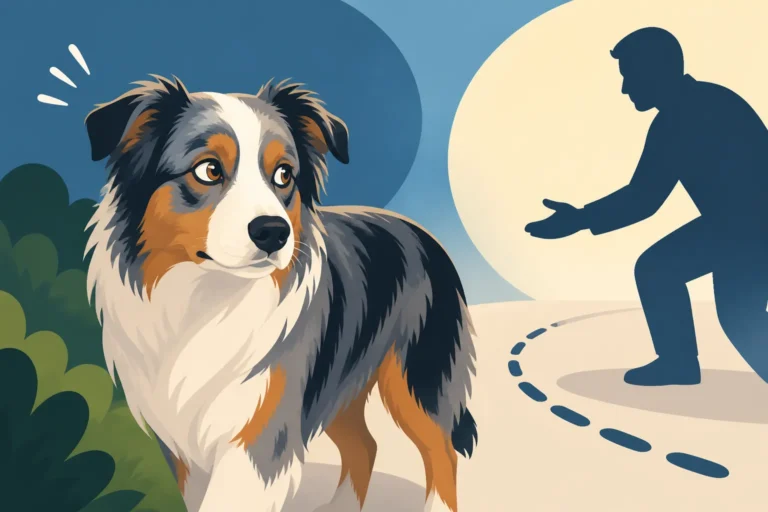
Unlike some breeds that greet every stranger with slobbery kisses, Australian Shepherds often possess a natural reserve. This isn't shyness or fear, but rather a characteristic rooted in their working heritage. A good herding dog needs to be observant, assess new situations, and sometimes even be aloof to strangers so they can focus on their job. They're not "everybody's dog" and that's perfectly okay. However, without careful exposure during critical developmental periods, this natural reserve can easily tip into fear, anxiety, or even defensive aggression, especially if they perceive a threat to their family or territory. It's about teaching them that most new things and people are neutral, if not positive, rather than potential threats.
You see this vigilance play out in many ways. They might bark at a new person approaching the house or stare intently at someone wearing a hat they haven't seen before. They process a lot of information, and without positive experiences to shape their understanding, they might decide that unfamiliarity equals danger. Understanding this inherent trait is the first step in effective socialization, helping you prepare for potential triggers and manage interactions proactively. This thoughtful approach means you're building a foundation of trust and neutrality, rather than forcing them into uncomfortable situations.
The Critical Socialization Window
The period between approximately 3 to 16 weeks of age is often referred to as the "critical socialization window" for puppies. This is when their brains are like sponges, soaking up every experience and forming lasting impressions about the world. For an Australian Shepherd puppy, this window is especially vital. Positive exposure to a wide variety of sights, sounds, people, and gentle interactions with other dogs during this time can set them up for a lifetime of confidence. Missing this window doesn't doom your dog, but it does mean that subsequent socialization efforts might require more patience, careful management, and potentially professional help.
Think of it this way: every new positive experience during this time builds a little brick in their foundation of confidence. If they only see the same few things, their world view becomes very narrow, and anything outside that narrow view can be frightening. It's not just about meeting dogs, but about experiencing different floor textures, unusual smells, the sound of a vacuum cleaner, a doorbell ringing, or seeing someone in a wheelchair. The goal is to create positive associations with these novel stimuli, showing them that the world is a fascinating, safe place. This early work directly impacts how well your Aussie navigates new situations as an adult.
Beyond Puppyhood: Lifelong Socialization
While the puppy socialization window is critical, socialization is absolutely not a "one and done" event. For a smart, engaged breed like the Australian Shepherd, it's a lifelong process. Their intelligent minds are constantly learning and adapting. If you stop exposing them to new things, they can regress, or their natural reserve might creep back in, especially during adolescence, which often brings a new wave of caution and selective hearing. Think of a teenager who suddenly finds everything annoying or suspicious! This is why continued, positive exposure is key.
Regularly introduce them to new places, people, and scenarios. This doesn't mean dragging them to crowded events if they're uncomfortable, but rather finding controlled, positive ways to broaden their horizons. A quiet walk on a new trail, a visit to a friend's house with a calm dog, or even just listening to different types of music at home can all contribute to their ongoing education. The aim is to reinforce that new experiences are generally good and not something to be feared. This continuous effort helps them maintain a balanced temperament and prevent them from becoming overly protective or anxious later in life. Remember, a well-socialized Aussie is a joy to live with, and that means putting in consistent effort.
Building Your Australian Shepherd's Socialization Checklist
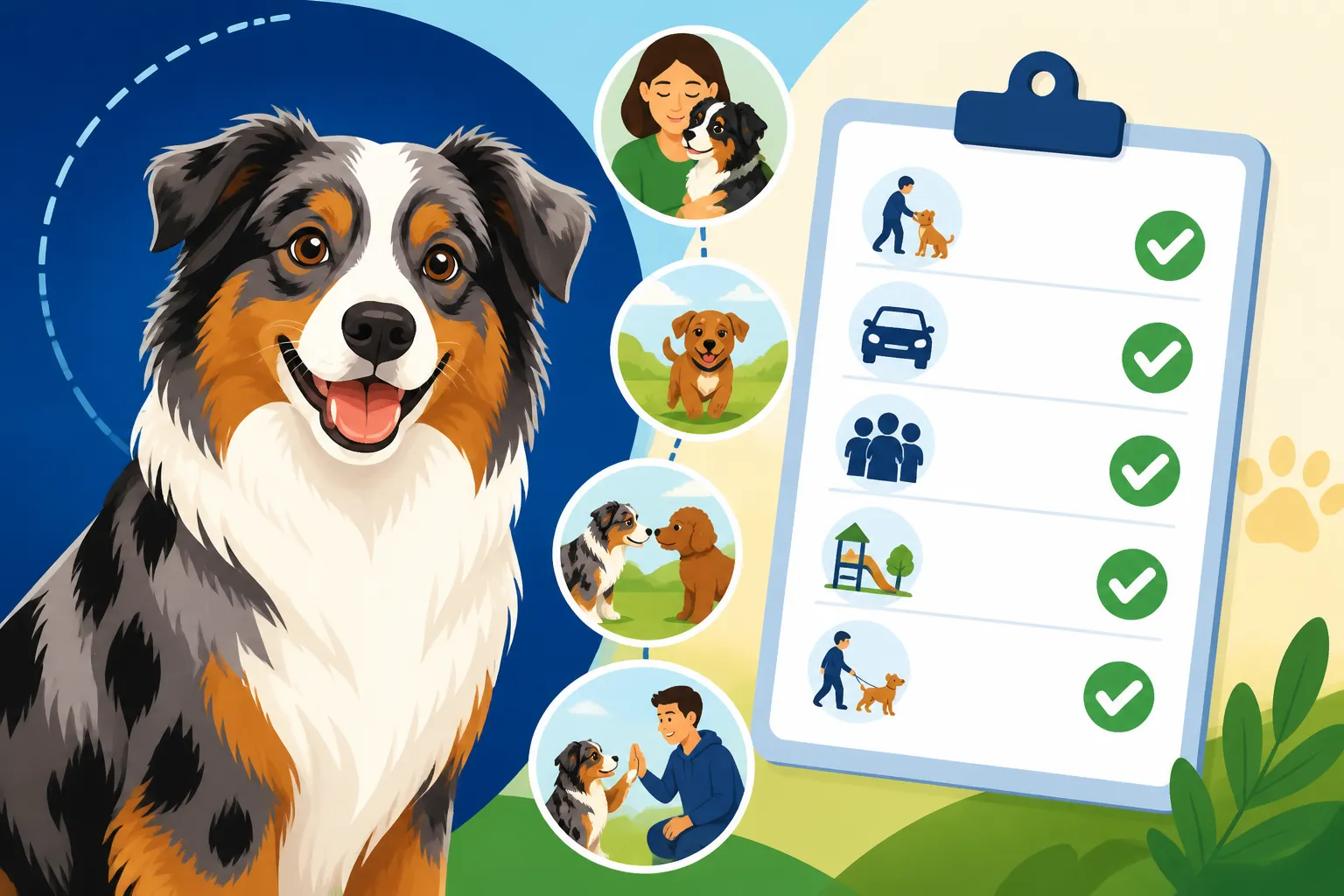
Now that we understand the importance, let’s get practical. A structured checklist ensures you’re covering all your bases and providing a well-rounded set of experiences for your developing Australian Shepherd. Don't feel pressured to tick every box every day; consistency and positive association are far more important than speed.
People and Diverse Appearances
Aussies, with their natural inclination to protect their flock (aka your family), need to learn that not all strangers are threats. This means exposing them to a wide variety of people from an early age, making sure each encounter is positive and low-pressure.
- Age Ranges: From young children (always supervised and gentle!) to teenagers, adults, and seniors. Each group interacts differently.
- Appearances: People with hats, glasses, beards, uniforms (delivery drivers, mail carriers), umbrellas, canes, or walking aids. These seemingly innocuous items can alter a person's silhouette and be startling to a cautious dog.
- Movements: People walking slowly, quickly, jogging, limping, or using wheelchairs or strollers.
- Interactions: Controlled, gentle petting from strangers (if your Aussie is comfortable), hearing different voices, and observing people from a distance without direct interaction. This helps them understand that not everyone needs to be acknowledged up close.
Novel Sounds and Environments
The world is full of sounds, many of which can be alarming to a sensitive Australian Shepherd if they haven't been introduced positively. Their acute hearing can make them particularly susceptible to noise phobias.
- Household Sounds: Vacuum cleaners, blenders, hair dryers, doorbells, washing machines, children playing loudly, dropped items. Start with sounds at a low volume and gradually increase as your puppy becomes comfortable.
- Outdoor Sounds: Traffic noises (cars, trucks, motorcycles), sirens, construction sounds, distant thunderstorms, fireworks (start with recordings at low volume), children playing, lawnmowers, birds, other dogs barking.
- Surfaces and Textures: Walking on grass, concrete, gravel, wood floors, carpet, linoleum, metal grates, stairs. Let them explore these different tactile sensations.
- Environments: Visiting a quiet park, a pet-friendly store (like a hardware store or pet supply store, initially during off-peak hours), a friend's backyard, a calm walking trail, even just sitting in your car in a parking lot observing the world go by. Remember the goal is calm exposure, not overwhelming immersion.
Other Dogs and Species
Interacting appropriately with other animals is crucial for an Aussie's social etiquette and safety. This requires careful management to ensure positive experiences.
- Vaccinated, Known Dogs: Arrange playdates with calm, vaccinated adult dogs who are known to be good with puppies. Avoid dog parks for very young puppies due to disease risk and potential for overwhelming or negative interactions.
- Different Breeds: Expose them to a variety of dog breeds, as they look and move differently. A tiny Chihuahua is very different from a large Golden Retriever.
- Cats: If you have a cat, controlled, positive introductions are key. If not, observing a cat from a distance in a safe environment can be helpful. Your Aussie's herding instinct might kick in with cats, so An Australian Shepherd Rounding Up the Family Cats is a good read.
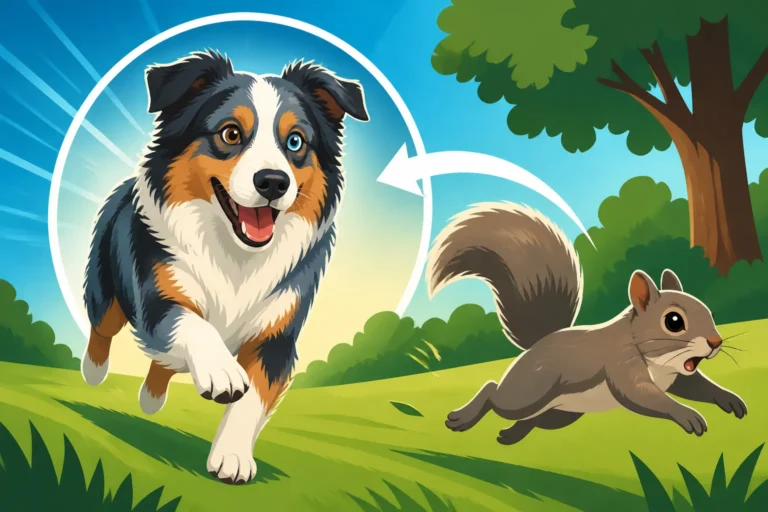
- Other Animals: If safe and appropriate, allow them to observe other animals like horses, sheep (if you're on a ranch), or even squirrels and birds from a distance. Again, the goal is calm observation, not chase.
Handling and Grooming Experiences
Regular handling is essential for vet visits, grooming, and general care throughout your Aussie's life. Starting early and making these experiences positive will save a lot of stress for both of you down the line.
- Body Handling: Gently touch their ears, paws (including between the toes), tail, mouth, and belly. Reward generously with treats. This helps with future nail trims, ear cleanings, and vet exams. For more on ear care, check out Australian Shepherd Ear Cleaning.
- Grooming Tools: Introduce them to a soft brush, a comb, and even the sound of nail clippers or a dremel. Short, positive sessions are best. Read Brushing an Australian Shepherd Twice a Week for brushing tips.
- Vet Visits: Take your puppy for "happy visits" to the vet where they get treats and praise but no poking or prodding. This helps build positive associations with the clinic.
- Restraint: Practice holding them gently for short periods, mimicking what a vet or groomer might do, always pairing it with high-value rewards.
| Category | Examples of Exposure | Goal for Your Aussie |
|---|---|---|
| People | Diverse ages, appearances (hats, uniforms), movements (strollers, limping), quiet observations, gentle interactions. | Learn that most strangers are neutral/positive, not threats. |
| Sounds | Household appliances, traffic, sirens, construction, distant thunder/fireworks (recordings), children playing. | Develop resilience to novel noises, preventing noise phobias. |
| Environments | Different floor textures (carpet, tile, gravel), quiet parks, pet-friendly stores, bustling (but not overwhelming) streets, car rides. | Build confidence in various settings, understanding the world is safe to explore. |
| Animals | Calm, vaccinated dogs (known temperaments), cats (if appropriate), observation of other species (squirrels, birds) from a distance. | Learn appropriate social cues with other animals; manage herding instincts. |
| Handling/Grooming | Gentle touching of paws, ears, mouth, tail; introduction to brushes, clippers, vet staff (happy visits). | Tolerate essential care procedures with minimal stress; build trust. |
Implementing the Checklist Safely and Effectively
A checklist is only as good as its implementation. For an Australian Shepherd, safe and thoughtful execution is paramount to prevent creating negative associations or overwhelming their sensitive nature.
Quality Over Quantity: Positive Experiences Matter
When it comes to socialization, a few truly positive, controlled experiences are far more valuable than dozens of rushed, stressful ones. Your goal isn't just to expose your Aussie to something, but for them to have a positive feeling about it. This means keeping every experience short, sweet, and always paired with high-value treats and praise. If your Aussie shows any signs of fear – tail tucked, ears back, lip licking, yawning, refusing treats – that's your cue to create distance, calm the situation, and re-approach more slowly next time, or from a greater distance.
For example, instead of forcing your puppy to interact with every person at the park, let them observe from a distance, rewarding them for calm behavior. If someone approaches, and your Aussie seems comfortable, a quick, gentle pet and a treat from the stranger (if permitted) can create a great association. This is where a good online program, like the one offered by BAXTER & Bella, can be invaluable. They often provide structured lessons and tips on how to introduce new experiences in a positive, incremental way, making sure you're always reinforcing confidence and not fear. Remember, one bad experience can undo weeks of good work, so prioritize positive reinforcement above all else.
Avoiding Overwhelm and Negative Associations
Australian Shepherds are highly intelligent and observant. If an experience is too much, too soon, they can quickly form a negative association that is hard to shake. An overwhelmed Aussie might become fearful, reactive, or even shut down. This is particularly important for Australian Shepherd Reactivity and Overarousal. Signs of overwhelm include excessive panting, pulling away, barking, lunging, trembling, or hiding. If you see these signs, immediately remove your dog from the situation and let them decompress in a quiet, safe space.
It’s crucial to understand your individual dog's threshold and respect it. Some Aussies are naturally bolder, others more cautious. Always introduce new stimuli at a distance or intensity level where your dog can remain calm and take treats. Gradually decrease the distance or increase the intensity only as your dog shows comfort and curiosity. Think about it like slowly turning up the volume on a radio. You wouldn't blast it immediately; you'd start low and increase it as needed. This approach prevents fear-based behaviors from developing and helps your Aussie build genuine confidence. This careful handling is especially important during The Aussie Teenage Months and What Changes.
Leveraging Tools and Resources
There are many fantastic tools and resources available to help you with your Australian Shepherd's socialization journey. Using the right gear can make a huge difference in managing situations and ensuring safety.
- Long Line: A long line (15-30 feet) purchased easily from Amazon allows your Aussie to explore a new environment or practice recall from a distance while still giving you control and security. This is excellent for working on Australian Shepherd Recall Around Moving Things in a safe, open area.
- High-Value Treats: These are your secret weapon! Small, soft, incredibly tasty treats (like cheese, cooked chicken, or specialized training treats) will make every new experience a positive one.
- Crate: A comfortable crate can be a safe haven for your Aussie when they need a break from overwhelming situations or when you need them to settle. Check out The Crate a Fifty Pound Aussie Needs for guidance.
- Online Training Programs: As mentioned, programs like BAXTER & Bella offer comprehensive, step-by-step guidance on socialization, obedience, and dealing with specific challenges. Their online format means you can work at your own pace from the comfort of your home, supplementing real-world experiences with expert advice. These programs can provide structure and help you understand specific breed traits like Australian Shepherd Suspicion of Strangers.
- Professional Trainers: Don't hesitate to seek out a certified professional dog trainer, especially one experienced with herding breeds. They can offer personalized advice, help you navigate challenges, and even run structured socialization classes. Finding a trainer who truly understands the nuances of an Aussie temperament is key.
What to Do When Socialization Isn't Enough
Sometimes, despite our best efforts, a particular situation or a specific trigger can still cause anxiety or reactivity in an Australian Shepherd. This is not a failure on your part, but an indication that your dog needs a different approach or specialized support.
Recognizing Signs of Fear or Reactivity
It's vital to be fluent in your Aussie's body language. Subtle cues often precede overt reactions. Look for:
- Subtle signs: Lip licking, yawning (when not tired), looking away, tail tucked slightly, ears pulled back, stiff body posture, paw lifts, refusal of treats, sniffing the ground excessively. These are often "calming signals" or early signs of stress.
- Overt signs: Barking, lunging, growling, snapping, hiding, trembling, trying to escape. These indicate your dog is significantly over threshold and feeling threatened or overwhelmed. An Aussie That Stops Reading the Room delves into these behavioral changes.
If you consistently see these signs, especially when your dog is still young, it's a call to action. Ignoring these signals can lead to entrenched behavioral problems that are much harder to resolve later on. Early intervention is always best. Understanding these warning signs allows you to intervene before a full-blown reaction occurs, helping your dog feel safer and more secure in challenging situations.
Seeking Professional Guidance
If your Australian Shepherd is consistently showing signs of fear, aggression, or reactivity despite your socialization efforts, it's time to bring in the pros. This is not something to tackle alone. Look for:
- Certified Professional Dog Trainers (CPDT-KA): These trainers specialize in positive reinforcement methods and can help you create a behavior modification plan. They often run specialized classes like "Reactive Rover" or "Fearful Fido." They can offer specific strategies for managing challenging situations and building your Aussie's confidence.
- Veterinary Behaviorists (DACVB): For more severe cases of fear, anxiety, or aggression, a board-certified veterinary behaviorist is the highest level of expertise. They are veterinarians with specialized training in animal behavior and can diagnose underlying medical conditions that might contribute to behavior, prescribe medication if necessary, and develop comprehensive treatment plans.
- Breed-Specific Experience: Whenever possible, seek trainers or behaviorists who have experience with Australian Shepherds or other intelligent, sensitive herding breeds. They will better understand the nuances of their temperament and working drive. Finding someone who truly understands The Australian Shepherd Herding Drive You Cannot Train Out will be invaluable.
Ongoing Management for a Confident Aussie
Even with professional help, some Aussies may always be a bit more reserved or sensitive than others. The goal then shifts from "fixing" them to "managing" their environment and interactions to set them up for success. This means:
- Avoiding Triggers: If your Aussie is consistently reactive to certain stimuli (e.g., skateboards, small children running, certain types of dogs), it's okay to avoid those situations when possible, or manage them very carefully from a distance. You don't always have to "cure" a reactivity; sometimes it's about making smart choices to reduce stress for both of you.
- Continued Training: Keep up with positive reinforcement training, focusing on obedience, confidence-building exercises, and impulse control. A confident, well-trained Aussie is generally a happier Aussie. For more on this, consider Australian Shepherd Puppy Curriculum Month by Month.
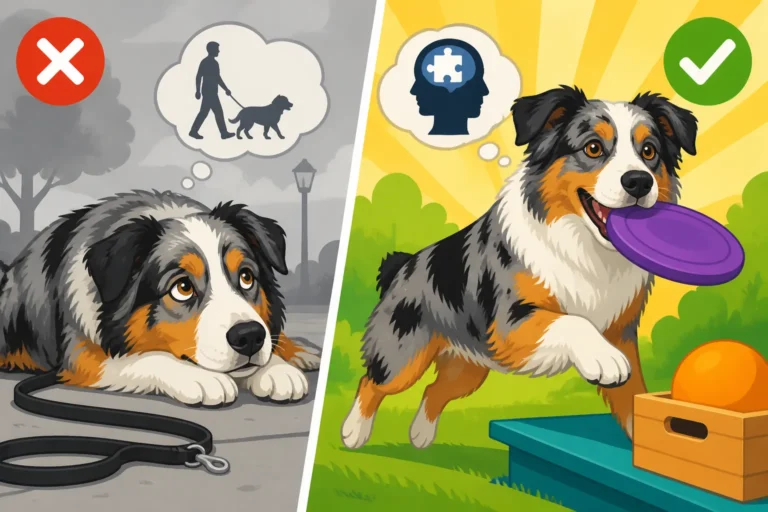
- Enrichment: Provide plenty of mental stimulation through puzzle toys, scent work, and trick training. A mentally fulfilled Aussie is less likely to engage in anxious or reactive behaviors.
- Creating a Safe Space: Ensure your Aussie always has a quiet, comfortable "safe space" in your home where they can retreat when feeling overwhelmed. This might be their crate, a bed in a quiet room, or a designated mat.
Remember, every Australian Shepherd is an individual. What works for one might not work for another. Be patient, be observant, and always prioritize your dog's emotional well-being above all else. A well-socialized Aussie isn't necessarily one who greets everyone, but one who can navigate the world calmly and confidently, feeling safe and secure by your side.
Disclaimer
This article is for general informational purposes only and does not constitute professional advice. Laws, prices and regulations vary by location and change over time. Consult a qualified professional for guidance on your specific situation.