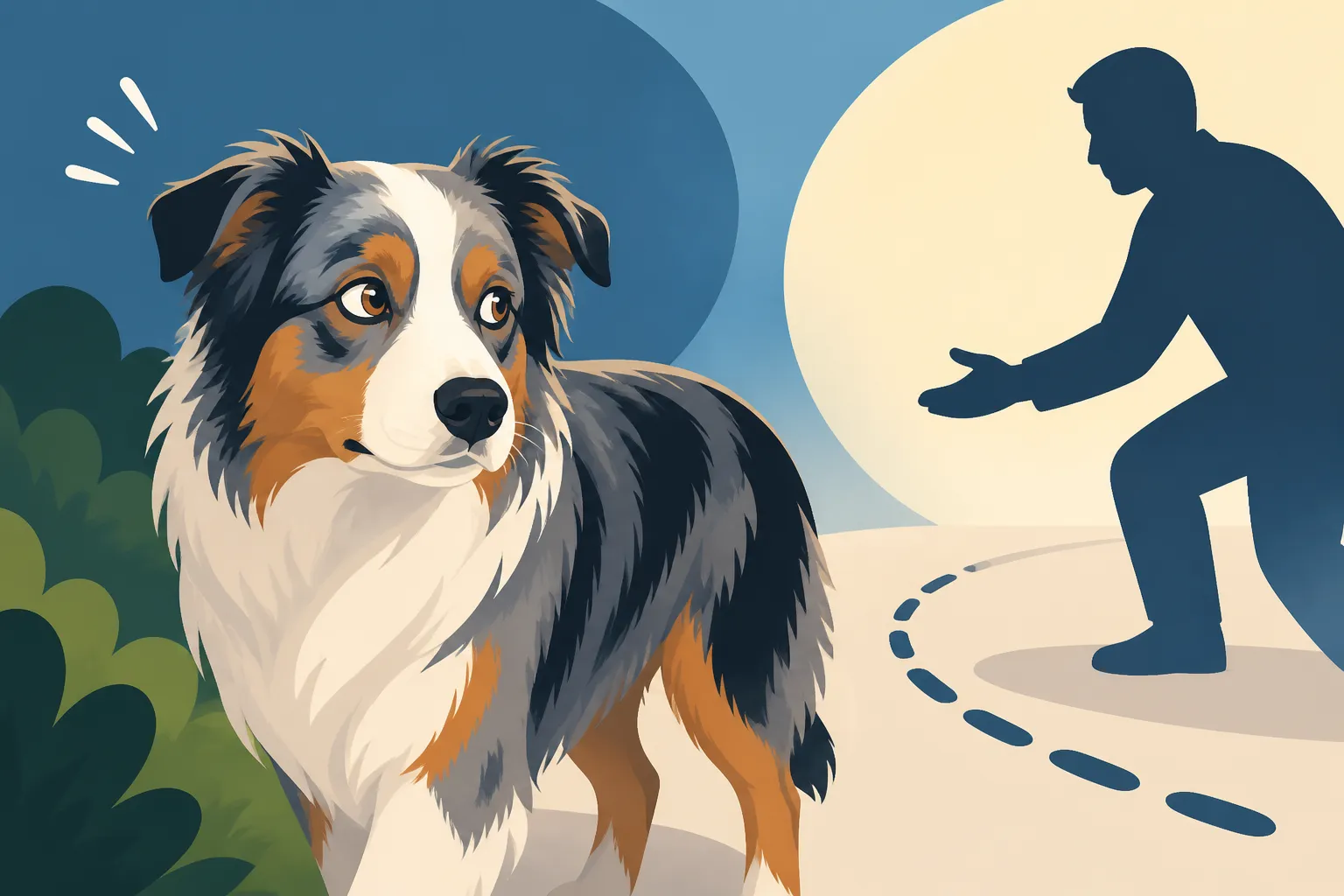
Why an Australian Shepherd Hangs Back From Strangers
It can be incredibly frustrating and even a little disheartening when your Australian Shepherd, known for its intelligence and loyalty, seems to shrink away or act wary around new people. You want your beloved companion to be comfortable and confident, but their instinct to hang back from strangers often leaves you feeling puzzled or embarrassed. This guide aims to thoroughly explore the underlying reasons behind an Aussie's reserved nature and provide you with actionable strategies to help your dog navigate social situations with greater ease and confidence.
Understanding the Australian Shepherd's Natural Reserved Temperament
Australian Shepherds are phenomenal dogs, brimming with intelligence, drive, and a deep loyalty to their chosen family. But here's the thing many new owners don't realize: they're not typically the "life of the party" type who greet every new face with exuberant enthusiasm. Their breed history and inherent traits often lead to a more reserved demeanor, particularly around those they don't know well. This isn't a flaw; it's part of what makes an Aussie an Aussie.
The Herding Dog Instinct to Observe
Think about what a herding dog does for a living. They're constantly scanning their environment, assessing situations, and making quick judgments about movement, intent, and potential threats to their flock. This deep-seated instinct doesn't just switch off when they become a family pet. When an unfamiliar person approaches, your Aussie's brain is likely kicking into that same assessment mode. They're not necessarily fearful, but they are observing. They're trying to figure out if this new person is predictable, if they pose a threat, or if they're simply irrelevant. This often manifests as a slight hesitation, a watchful gaze, or a quiet withdrawal rather than an immediate friendly approach. It's their way of gathering information before committing. It's a key part of The Temperament the Aussie Standard Requires.
The Difference Between Reserve and Fear
It’s crucial to distinguish between an Aussie who is genuinely reserved and one who is truly fearful. A reserved Australian Shepherd might simply ignore a stranger, keep a polite distance, or take a moment to assess before deciding if they want to engage. They might accept a treat gently if offered, but won't seek out physical interaction. They might even just move slightly behind your legs, using you as a comfortable barrier. This is often just their personality, a part of their natural guardian instinct.
On the other hand, a fearful Australian Shepherd will display more obvious signs of distress. This could include a tucked tail, flattened ears, trembling, excessive panting, repetitive lip-licking, yawning, or even trying to hide or flee. In some cases, fear can escalate to growling or snapping if they feel trapped or overly pressured. Recognizing the subtle cues of discomfort is vital for helping your dog. A reserved Aussie can often be helped to gain confidence with positive experiences, while a truly fearful one needs a more delicate approach, often with professional guidance.
Early Experiences and Genetic Predisposition
Just like people, dogs have individual personalities influenced by both their genetics and their early life experiences. Some Australian Shepherds are simply born with a more sensitive or cautious disposition, even with excellent socialization. This isn't something you can train out entirely, but you can certainly help them build coping mechanisms and confidence. Conversely, a lack of appropriate socialization during their critical puppy development window can significantly contribute to wariness around strangers. If a puppy isn't exposed to a wide variety of sights, sounds, people, and experiences in a positive way between 3 and 16 weeks of age, they can develop anxieties and fears that stick with them into adulthood. A reputable breeder will have already started this process, but it's vital to continue it yourself.
Common Reasons Your Aussie Might Be Wary of New People
While a certain degree of reserve is natural for the breed, excessive shyness or outright fear around strangers isn't something to ignore. There are several common factors that can contribute to this behavior, and understanding them is the first step toward helping your dog.
Inadequate Socialization as a Puppy
The period between eight and sixteen weeks is often called the "fear imprint period" for puppies. This is when they are highly impressionable, and both positive and negative experiences can have a lasting impact. If an Australian Shepherd puppy wasn't exposed to a diverse array of people – men, women, children, people with hats, glasses, beards, different gaits, and voices – during this critical time, they might default to caution. They essentially missed out on crucial lessons about the world being a safe and varied place. It's not about forcing interactions but about controlled, positive exposures. For example, simply sitting at a park bench and letting them observe people from a safe distance, rewarding calm behavior, is far more beneficial than pushing them into a crowd of strangers. Think of it like a Australian Shepherd Puppy Curriculum Month by Month, where varied exposure is key. Online programs, like those offered by BAXTER & Bella, often emphasize comprehensive puppy socialization precisely for this reason, guiding owners through safe exposure methods.
Negative Past Experiences
Even with good early socialization, a single negative encounter can set an Aussie back significantly. Perhaps a well-meaning but overzealous stranger leaned over them too quickly, startled them with a loud voice, or attempted to pet them without permission when the dog was already feeling unsure. Dogs learn quickly from these incidents. If a past interaction taught your Aussie that strangers can be unpredictable or scary, they will naturally be hesitant to approach new people in the future. This is particularly true for rescue Aussies whose past history might be unknown. They may have had traumatic experiences that make them inherently distrustful. It's not about being stubborn; it's about self-preservation based on prior learning.
Overwhelm and Sensory Input
Australian Shepherds are incredibly perceptive, and their working dog instincts mean they often process a lot of sensory information. A busy environment with many unfamiliar people, loud noises, and unpredictable movements can be incredibly overwhelming for them. Imagine stepping into a crowded, bustling party where everyone is speaking a language you don't understand, and occasionally someone reaches out to touch you unexpectedly. That's how many reserved Aussies feel in highly stimulating social situations. They might shut down, try to escape, or even lash out due to overstimulation and anxiety. Recognizing when your dog is An Aussie That Stops Reading the Room because of stress is crucial. They need you to advocate for them and remove them from situations that are too much, too soon.
Practical Strategies for Helping Your Aussie Build Confidence
Helping your Australian Shepherd feel more comfortable around strangers is a marathon, not a sprint. It requires patience, consistency, and a commitment to positive reinforcement. The goal isn't necessarily for them to be a social butterfly, but rather for them to feel safe and calm in the presence of new people.
Structured and Positive Introductions
When introducing your Aussie to new people, structure is your best friend. Avoid letting strangers rush up to your dog. Instead, manage the environment. Ask people to approach calmly, perhaps turning sideways to appear less imposing, and to avoid direct eye contact initially. Have them offer a high-value treat without trying to pet your dog right away. The goal is for your Aussie to associate the presence of a stranger with something positive and rewarding. If your dog approaches on their own terms, that’s a win! If not, that's okay too. Just the act of a stranger being present and food appearing is building a positive association.
Consider these steps for a structured introduction:
- Prep Your Friend: Ask your friend to have some incredibly tasty, small treats ready. Think bits of cheese, cooked chicken, or hot dogs.
- Keep Distance: Start with your Aussie on a leash, at a distance where they acknowledge the person but aren't showing signs of stress (no tucked tail, no backing away).
- No Pressure: Ask the friend to stand still or casually walk a short distance, not directly towards your dog. No staring, no talking to the dog initially.
- Treat Delivery: Your friend can gently toss a treat near your Aussie (not directly at them) as they pass or stand still. This allows your dog to approach and take the treat without feeling cornered.
- Observe and Progress: If your Aussie eats the treat and remains calm, you can gradually decrease the distance in subsequent sessions. Only allow petting once your Aussie is actively soliciting it, perhaps by nudging the person's hand. Focus on slow, gradual progress. This approach is often what trainers mean when they talk about Working a Reactive Aussie Under Threshold. Using a long line, easily found on Amazon, can give your Aussie space while still keeping them safe during these controlled encounters.
Building a Strong Foundation with Training
A well-trained Australian Shepherd is often a more confident Australian Shepherd. Basic obedience commands like "sit," "stay," "come," and "down" give your dog a framework for understanding what you expect of them, which can reduce anxiety in uncertain situations. More importantly, focusing on confidence-building games and tasks can do wonders. Things like teaching new tricks, practicing nose work, or engaging in simple agility exercises can boost your Aussie's self-esteem. When a dog feels capable and understands its role, it's less likely to feel overwhelmed by external stimuli.
Beyond basic commands, teach your Aussie a "settle" cue. This means they learn to lie down and relax on a mat or bed, even when there's activity around them. This provides them with a safe, predictable place to retreat to mentally and physically. Programs like BAXTER & Bella often incorporate these types of confidence-building exercises and impulse control into their curriculum, which can be invaluable for a naturally reserved breed. Having a reliable "go to mat" command can be a lifesaver when visitors arrive, giving your dog a job and a safe space.
Creating a Safe and Predictable Environment
Your Aussie looks to you for safety and guidance. By creating a predictable home environment and advocating for your dog, you reinforce their sense of security.
Here’s how you can help:
- Respect Their Space: Teach visitors and family members to respect your Aussie's boundaries. They shouldn't be forced into interactions. If your dog chooses to retreat, let them.
- Safe Retreat Zones: Ensure your home has designated "safe zones" where your Aussie can go to be undisturbed. This might be a comfy crate in a quiet room or a dog bed in a corner. These spaces are invaluable, especially when you have guests.
- Predictable Routines: Dogs thrive on routine. Knowing when walks, meals, and training sessions occur can help reduce overall anxiety.
- Advocate for Your Dog: Don't be afraid to politely tell friends or strangers, "Please give him space; he's a bit shy," or "It's best not to stare directly at him." You are your dog's protector, and setting these boundaries protects their mental well-being.
- Manage Greetings: When people come to your door, consider having your Aussie on a leash initially. This allows you to manage the interaction and prevent them from feeling overwhelmed by someone entering their territory. This is especially helpful if you find your Aussie is An Australian Shepherd That Barks at Visitors.
When to Seek Professional Guidance for Stranger Wariness
While many Aussies can make great strides with consistent, positive reinforcement at home, there are times when professional help is not just beneficial, but necessary. Recognizing the signs that indicate a need for expert intervention can save you and your dog a lot of stress and potential problems down the road.
Recognizing Signs of Escalating Fear or Aggression
It's one thing for your Aussie to simply keep their distance or be politely reserved; it's another entirely if their wariness starts to escalate into overt fear or aggression. If you observe any of the following behaviors regularly, it's a strong indicator that you need professional help:
- Intense Fear Responses: Persistent trembling, excessive panting, drooling, urinating, or defecating when strangers are present.
- Avoidance That Becomes Flight: Actively trying to escape or hide, even bolting away if given the chance.
- Warning Signals: Consistent growling, snapping, or lunging at strangers, even from a distance. These are clear signs your dog feels threatened and is trying to create space.
- Panic Attacks: Your dog seems to go into a full panic, unable to respond to your cues or calm down.
- Impact on Daily Life: Their fear of strangers prevents you from going on walks, having visitors, or engaging in normal activities.
Ignoring these signs can lead to ingrained behavioral issues that are much harder to address later. An Aussie exhibiting these behaviors is not being "bad"; they are genuinely distressed and need help learning to cope safely. This is often an indication of Australian Shepherd Reactivity and Overarousal.
Finding the Right Trainer or Behaviorist
If you're seeing concerning signs, don't just pick the first trainer you find. It's vital to seek out professionals who use positive reinforcement, force-free methods, and have a solid understanding of herding breed temperaments. Avoid any trainer who suggests using dominance theory, fear-based tools (like prong collars or shock collars), or punitive methods. These approaches will only exacerbate your Aussie's fear and damage your relationship.
Look for a Certified Professional Dog Trainer (CPDT-KA), a Certified Dog Behavior Consultant (CDBC), or a Veterinary Behaviorist. Here's what to look for when you're seeking Finding a Trainer Who Understands an Aussie:
- Experience with Herding Breeds: Ask if they have experience working with Australian Shepherds or similar breeds known for their intelligence and sometimes reserved nature.
- Positive Reinforcement Philosophy: Confirm their methods are exclusively positive and force-free. They should focus on rewarding desired behaviors and managing the environment to prevent unwanted ones.
- Individualized Plans: A good professional will assess your dog individually, observing their body language and reactions, and then create a tailored training plan.
- Client Education: They should teach you how to understand and work with your dog, empowering you with the skills to continue the training.
- Vet Collaboration: For severe cases, a veterinary behaviorist or a trainer who works closely with vets (especially if medication might be considered as part of a comprehensive plan for severe anxiety) is ideal.
Remember, getting professional help isn't a sign of failure; it's a responsible step towards ensuring your Australian Shepherd lives a happier, more confident life. It's an investment in their well-being and your peace of mind.
| Behavior Type | Description | Signs to Watch For | Action Needed |
|---|---|---|---|
| Reserved | Dog observes, maintains distance, not actively seeking interaction. | Ignores strangers, moves behind owner, takes treats gently, no obvious stress. | Continue positive, structured introductions. Focus on confidence building. Advocate for their space. |
| Shy/Cautious | Dog is hesitant, might show mild stress, but doesn't react aggressively. | Lowered head, averted gaze, slight tail tuck, slow movements, mild lip-licking. | Increase distance, build positive associations with treats. Avoid forced interactions. Continue socialization. |
| Fearful/Reactive | Dog displays clear distress, might try to flee or use warning signals. | Trembling, tucked tail, flattened ears, excessive panting, growling, lunging, snapping. | Immediately remove from situation. Seek professional guidance from a certified behaviorist or trainer. |
By understanding your Australian Shepherd's unique disposition and addressing their wariness with patience, positive reinforcement, and sometimes professional support, you can help them navigate the world with greater confidence and peace.
Disclaimer
This article is for general informational purposes only and does not constitute professional advice. Laws, prices and regulations vary by location and change over time. Consult a qualified professional for guidance on your specific situation.