Sudden Aussie Aggression and a Vet Check
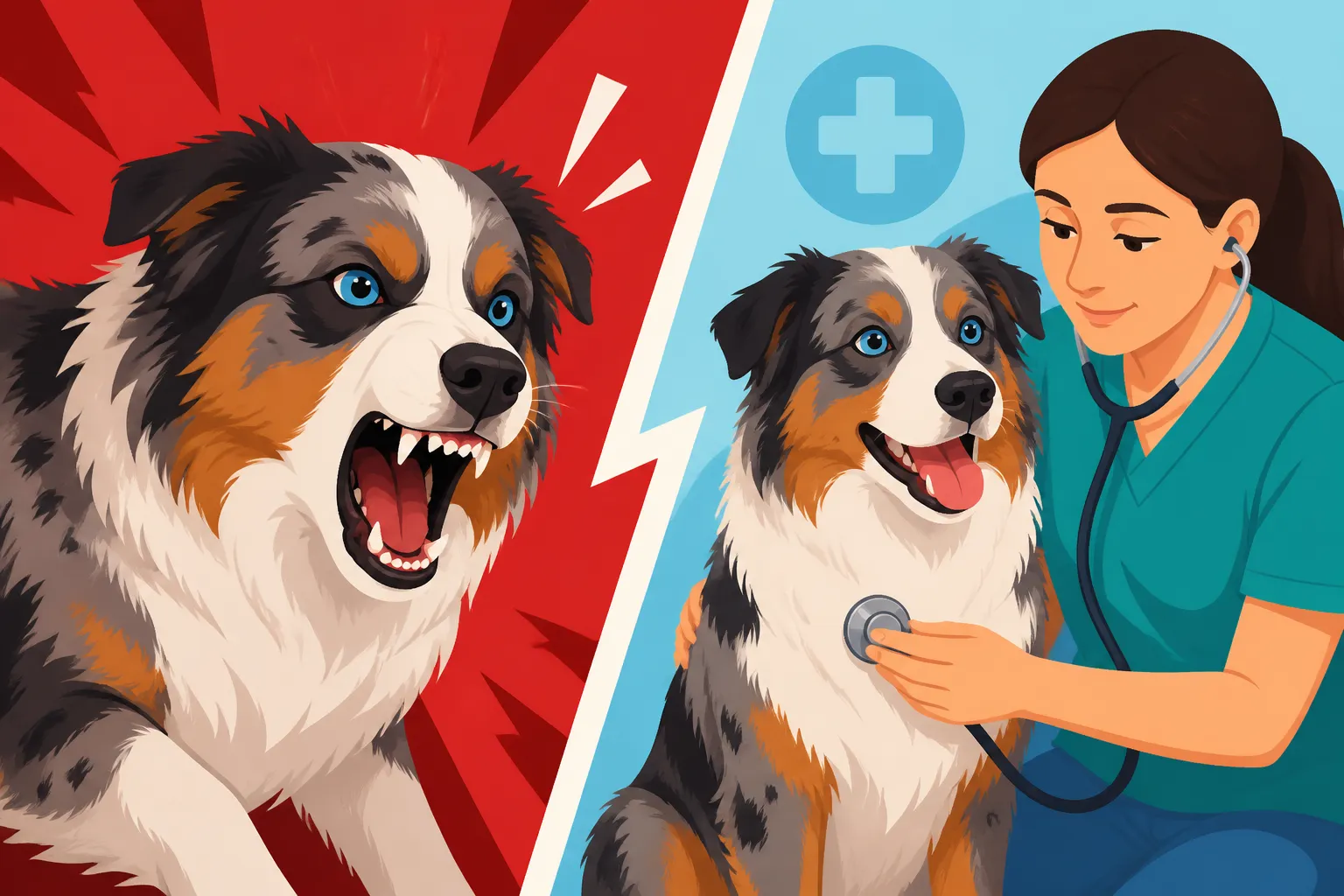
It's absolutely terrifying and heartbreaking when your usually sweet, well-adjusted Australian Shepherd suddenly turns aggressive, whether it's a growl, a snap, or even a bite. This abrupt change in behavior isn't just a "bad phase" or your dog suddenly becoming "mean"; it's a blaring siren that something is deeply wrong, and often, that something is rooted in their physical health. This guide will walk you through why a sudden shift to aggression in your beloved Aussie almost always warrants an immediate vet check, detailing the hidden medical reasons that could be causing such a distressing change.
Why Sudden Aggression Is a Red Flag, Not Just a "Bad Dog" Moment
When an Australian Shepherd, known for their loyalty, intelligence, and generally stable temperament, suddenly exhibits aggression, it's not a light switch flipping from good to bad. This isn't usually a lapse in training or a deliberate act of defiance. Instead, it's a desperate form of communication, a cry for help that their usual methods of expressing discomfort or pain have failed. Owners often feel confused, hurt, and even a little scared, wondering if their dog has fundamentally changed. But for most Aussies, this sudden shift points directly to an underlying issue that needs to be identified and addressed.
The Shift in Temperament
Imagine your Aussie, usually the first to greet you with a wagging tail and a happy nudge, suddenly recoiling when you reach out, or even letting out a low growl when you try to pet their back. Perhaps they’ve always been friendly with the kids, allowing them to clamber all over, but now they snap if a child gets too close to their head or tail. This isn't just a dog having a "bad day." This is a profound alteration in their typical emotional and physical responses. Their threshold for tolerance has plummeted, and interactions that once brought them joy or indifference now provoke a strong, negative reaction. They might become easily startled, jumpy, or display defensive behaviors seemingly out of nowhere. This isn't aggression for aggression's sake; it's a symptom.
The Instinct to Mask Pain
Dogs, especially those with working dog instincts like Australian Shepherds, are masters at hiding pain. In the wild, showing weakness makes an animal vulnerable to predators. While our companion Aussies live very different lives, this primal instinct is still hardwired into their DNA. They will often push through discomfort, limping only slightly, or gritting their teeth through aches, not wanting to appear vulnerable. It’s often only when the pain becomes excruciating, relentless, or when a specific movement or touch intensifies it dramatically, that they resort to extreme measures like snapping or growling to make the painful interaction stop. They're not trying to be "mean"; they're trying to protect themselves from further agony, and their prior, more subtle warnings might have been missed or misinterpreted. This makes a sudden aggressive outburst an urgent signal that the discomfort has escalated to an unbearable level.
Common Health Issues Masked as Aggression
It’s astonishing how many medical conditions can manifest as behavioral problems, particularly aggression. When your Australian Shepherd suddenly acts out, the very first place your mind should go isn't to a training problem, but to a potential health crisis. Here are some of the most frequent culprits that can lead to sudden aggression in an Aussie.
Pain-Related Conditions
Pain is arguably the number one medical cause of sudden aggression in dogs. When every movement or touch becomes agony, a dog's patience wears thin, and their instinct to protect themselves takes over.
- Joint Pain: Australian Shepherds are active dogs, and unfortunately, conditions like Australian Shepherd Hip Dysplasia and Working Joints and elbow dysplasia are not uncommon. Arthritis can also develop with age, turning once-comfortable movements into sources of sharp pain. Imagine trying to stand up, lie down, or climb stairs with excruciating joint pain; a quick touch to a sore hip could easily provoke a snap.
- Spinal Issues: A pinched nerve, a slipped disc, or other spinal problems can cause immense pain and neurological deficits. If petting along their back or neck causes a jolt of pain, an Aussie might react defensively.
- Dental Pain: A broken tooth, severe gum disease, or an abscess can be incredibly painful. If you try to check their mouth, or if they accidentally bite down on something hard, the resulting pain can lead to a sudden, aggressive reaction. Similarly, head or facial pain from an ear infection can make an Aussie reactive to touches near their ears or face.
- Internal Injuries or Illnesses: Even something like pancreatitis, a urinary tract infection, or an abdominal injury can cause referred pain or general discomfort that lowers an Aussie's tolerance. Any area that becomes sensitive can trigger a defensive response if touched.
Neurological Disorders
The brain is the control center for behavior, so any disruption there can have profound effects.
- Epilepsy: While we often think of seizures as overt convulsions, sometimes they can manifest as subtle "focal" seizures or even changes in behavior before or after a full-blown seizure. An Aussie experiencing the pre-ictal (before seizure) or post-ictal (after seizure) phase might be disoriented, irritable, anxious, or even aggressive due to the neurological disturbance. Australian Shepherd Epilepsy Starting Between One and Five is a condition many owners have to navigate. It's crucial to understand these Behavior Changes After an Australian Shepherd Seizure to better manage their condition.
- Brain Tumors: Tumors can press on parts of the brain controlling temperament, perception, and pain, leading to sudden, uncharacteristic aggression, confusion, or even hallucinations.
- Cognitive Dysfunction (Dementia): Especially in older Aussies, cognitive decline can lead to disorientation, anxiety, and irritability. An older dog might lash out because they are confused by their surroundings or don't recognize a familiar person, feeling threatened or vulnerable. This is a critical consideration in Senior Australian Shepherd Care After Ten.
Hormonal and Metabolic Imbalances
Sometimes, the culprit is an invisible chemical imbalance within the body.
- Thyroid Issues: Hypothyroidism, a common condition in dogs including Aussies, can lead to a range of symptoms beyond just a dull coat or weight gain. It can also cause irritability, anxiety, and even aggression. An Australian Shepherd Autoimmune Thyroiditis diagnosis can often be linked to behavioral shifts. When the thyroid isn't producing enough hormones, it can affect their mood and stability, turning a once mellow dog into one prone to unexplained outbursts. Hypothyroidism and a Dull Australian Shepherd Coat is a visual sign, but the behavioral changes can be far more concerning.
- Addison's Disease: While less common, this adrenal gland disorder can cause lethargy, gastrointestinal issues, and also behavioral changes, including increased anxiety and aggression due to stress and electrolyte imbalances.
Sensory Decline
A loss of sight or hearing can make an Aussie feel incredibly vulnerable, especially if it happens suddenly or gradually without proper adjustment.
- Vision Loss: An Aussie losing its sight, perhaps due to cataracts or progressive retinal atrophy, might become aggressive if startled by an unexpected touch or approach from a direction they couldn't see. They can feel trapped and resort to biting as a defense mechanism.
- Hearing Loss: Similarly, a deaf Aussie might not hear someone approaching and react defensively when touched. They lose the auditory cues that help them anticipate interactions, making them more prone to startling. These changes can be particularly difficult to manage, making a thorough vet check essential to rule out all possibilities.
The Importance of a Thorough Veterinary Examination
When your Australian Shepherd suddenly starts showing aggression, your very first call should be to your veterinarian. This isn't a situation to try and "train out" of your dog or assume they're just being stubborn. A vet check is non-negotiable because, as we've discussed, a medical issue is often at the heart of the matter.
What the Vet Will Look For
Your vet will conduct a comprehensive examination, looking for clues that might not be obvious to you at home.
- Physical Exam: This is where it all starts. The vet will perform a thorough palpation, checking your Aussie from nose to tail for any signs of pain, swelling, lumps, or sensitivity. They'll examine joints for range of motion, feel along the spine, check teeth and gums for dental disease, look into ears for infections, and examine eyes. They might observe your Aussie's gait and posture for subtle lameness that indicates joint pain. For instance, they'll gently flex and extend hips to check for signs of An Aussie Snapping Because Its Hips Hurt.
- Blood Tests: A full blood panel, including a complete blood count (CBC) and a chemistry panel, can reveal a wealth of information. This can detect infections, inflammation, organ dysfunction, and hormonal imbalances (like thyroid levels). A urinalysis might also be done to check for urinary tract infections.
- Imaging: If pain or neurological issues are suspected, X-rays might be taken to examine bones and joints (e.g., hips, elbows, spine). In more complex cases, or if a brain tumor or severe spinal issue is suspected, your vet might recommend advanced imaging like an MRI or CT scan.
- Neurological Assessment: This involves checking reflexes, coordination, and assessing mental alertness. It helps the vet determine if there's a problem with the brain, spinal cord, or peripheral nerves.
- Other Diagnostics: Depending on initial findings, your vet might suggest other tests, such as an eye exam by a veterinary ophthalmologist, a hearing test (BAER test), or even a biopsy if a mass is detected.
Preparing for Your Vet Visit
To help your vet, you need to be their eyes and ears at home. Keep a detailed log of your Aussie's behavior.
| Observation Category | What to Document |
|---|---|
| Aggressive Incidents | Date, time, specific behavior (growl, snap, bite), target (person, animal, object) |
| Triggers | What happened immediately before the aggression (e.g., tried to pet head, approached while sleeping, loud noise, new person entering room) |
| Body Language | Ears back/forward, tail tucked/wagging, stiff posture, lip licking, yawning, whale eye, piloerection (raised hackles) |
| Severity | Intensity of the reaction, any injury caused |
| Frequency | How often is this happening? |
| Changes in Routine | Recent changes in diet, exercise, family members, environment, medications |
| Physical Symptoms | Limping, vomiting, diarrhea, lethargy, increased thirst/urination, changes in appetite, disorientation, seizures (even subtle ones). Keep a log for Logging Aussie Seizures for the Neurologist if applicable. |
Bringing this detailed log will give your vet a much clearer picture, helping them narrow down potential causes. Also, think about any new medications, changes in food, or recent stressful events your Aussie might have experienced. For Aussies with known sensitivities, it’s also good to let the vet know if your Aussie is MDR1 positive, as this can affect certain drug choices. If your dog is prone to anxiety during vet visits, you might want to consider Muzzle Training an Australian Shepherd proactively for safety, or discuss Cooperative Care for an Australian Shepherd at the Vet strategies with your clinic beforehand.
What to Do After the Vet Rules Out Medical Causes
If your veterinarian has conducted a thorough examination, run all the necessary diagnostics, and given your Australian Shepherd a clean bill of health, it's a huge relief on one hand, but it also means the puzzle isn't fully solved. This is the point where you pivot from medical investigation to behavioral assessment.
Consulting a Certified Professional Dog Trainer or Behaviorist
Once medical causes have been ruled out, the next step is to seek the guidance of a qualified professional who specializes in dog behavior. It’s important to understand the distinction between a dog trainer and a veterinary behaviorist or certified professional dog trainer (CPDT) with a specialty in behavior issues.
- Veterinary Behaviorists (DACVB): These are veterinarians who have gone on to complete extensive residency training in animal behavior and are board-certified. They can diagnose and treat behavioral problems, often using a combination of behavior modification techniques and, when appropriate, medication. They are best equipped for severe or complex cases of aggression.
- Certified Professional Dog Trainers (CPDT-KA, CDBC): These are professionals who have demonstrated knowledge and experience in animal training and behavior. They can help implement behavior modification plans and teach management strategies. Look for certifications from reputable organizations.
An experienced professional will conduct a detailed behavioral history, often observing your Aussie in different scenarios to understand the triggers and context of the aggression. They won't judge; they'll help you understand the "why" behind the behavior. Online platforms like BAXTER & Bella can offer initial resources and guidance for understanding common behavioral challenges, and some even connect you with trainers or provide courses that can lay groundwork before more intensive intervention. However, for true aggression, hands-on, personalized guidance is usually essential.
Understanding Behavioral Triggers
Even without an underlying medical condition, there are many behavioral reasons an Australian Shepherd might display aggression. These are often rooted in fear, anxiety, resource guarding, or territoriality.
- Fear-Based Aggression: An Aussie who feels threatened, cornered, or overwhelmed might resort to aggression to make the scary thing go away. This could be directed at strangers, novel objects, or even specific environments. A dog that was not properly socialized as a puppy, or one that had a traumatic experience, might develop fear-based reactions later in life. Understanding Reading an Aussie Body Language Under a Full Coat is crucial here; subtle signs of fear like lip-licking, yawning, or a tucked tail often precede a more overt aggressive display.
- Anxiety and Stress: Chronic stress or anxiety can lower a dog's tolerance for almost anything. An Aussie that is consistently under-exercised (both physically and mentally), left alone too much, or living in a chaotic environment can become anxious and reactive. Even without a medical cause, profound changes in routine or environment can lead to stress-induced aggression.
- Resource Guarding: This is when an Aussie becomes aggressive to protect something it perceives as valuable – food, toys, a favorite resting spot, or even a person. They might growl or snap if someone approaches their food bowl or tries to take a toy.
- Territorial Aggression: Some Aussies may become aggressive towards strangers or other animals when they enter their perceived territory, whether that's the house, yard, or even the car. This is their way of saying, "This is mine, stay away."
- Redirected Aggression: This happens when an Aussie is highly aroused or frustrated by something they can't get to (e.g., barking at a dog outside the window) and then bites or snaps at whoever is closest, such as you trying to calm them down.
Working with a professional, you'll learn to identify these triggers and develop strategies to manage and modify your Aussie's responses through positive reinforcement training, counter-conditioning, and desensitization. Sometimes, simple management tools like better containment for anxious moments (found readily on Amazon, like a secure crate or baby gate) or careful monitoring of interactions can prevent incidents while you work on the underlying behavior. The goal is to build your Aussie's confidence and teach them more appropriate ways to cope with their fears or protect their resources without resorting to aggression.
Disclaimer
This article is for general informational purposes only and does not constitute professional advice. Laws, prices and regulations vary by location and change over time. Consult a qualified professional for guidance on your specific situation.