Foxtails in an Australian Shepherd Ear
Oh, the dread of foxtail season! If you're an Australian Shepherd owner, you know the exquisite pain of finding one of these insidious little barbs burrowed into your dog's paw, nose, or, even worse, its ear. It's a constant battle, and the worry about those tiny, barbed seeds causing serious harm is enough to keep any of us on edge. This guide is here to walk you through everything you need to know about foxtails in an Australian Shepherd's ear, from identifying the subtle signs to swift prevention and treatment.
The Sneaky Danger of Foxtails for Australian Shepherds
There’s a reason foxtails strike fear into the hearts of dog owners, especially those with active, outdoor-loving breeds like our Australian Shepherds. These aren't just annoying plant bits; they're biological weapons designed by nature to travel. Understanding what they are and why Aussies are so vulnerable is the first step in protecting your furry family member.
What Exactly Are Foxtails and Why Are They So Bad?
Foxtails aren't a specific plant, but rather the barbed seed heads of various types of wild grasses. You'll often hear them referred to as "cheatgrass," "hordeum," or "rye grass," but the common denominator is their nasty, arrow-like shape. These dry, sharp seed clusters are designed by nature to burrow into the ground to plant their seeds. They have tiny, stiff barbs that act like a one-way street: they can easily move forward, catching onto fur, skin, or clothing, but those barbs prevent them from backing out. This design is what makes them so dangerous.
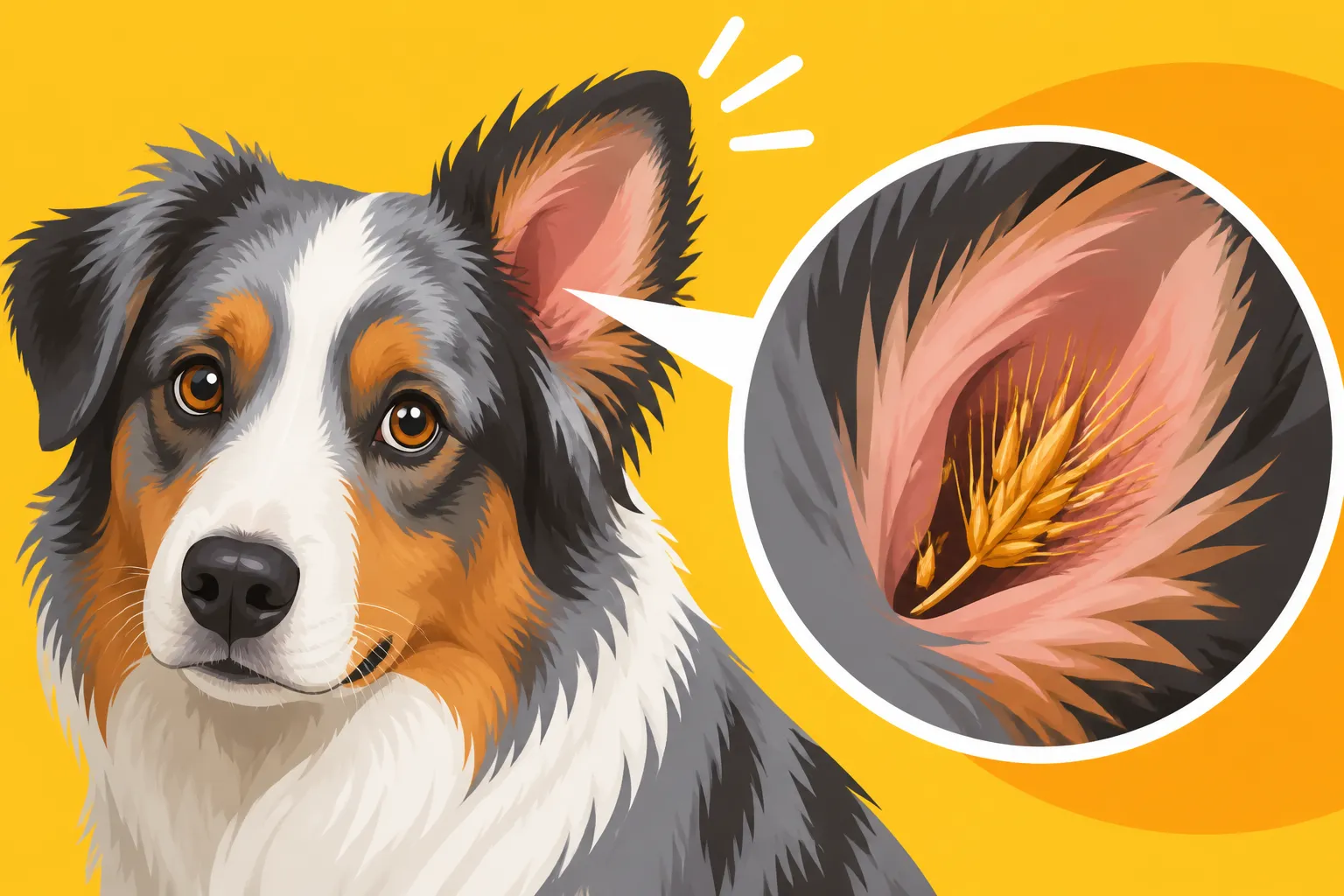
Imagine a tiny, sharp arrow. Now imagine it getting caught in your dog's dense coat. As your Aussie moves, the foxtail doesn't just sit there; it migrates. It can work its way into skin, between paw pads, up nostrils, into eyelids, and, most alarmingly, into the ear canal. Once inside an ear, the barbs prevent it from dislodging naturally. Every head shake, every scratch, just pushes it further inward, causing increasing pain and creating a perfect breeding ground for infection.
Why Australian Shepherds Are Particularly Susceptible
Our beloved Australian Shepherds are, unfortunately, almost perfectly designed to pick up foxtails. Their active, energetic lifestyle means they spend a lot of time outside, often running through fields, brush, and tall grasses where foxtails thrive. A quick romp in a seemingly innocent meadow can turn into a nightmare if those grasses are laden with foxtails. They love to explore, sniff every interesting scent, and charge through anything that moves, which inevitably puts them in direct contact with these plant hazards.
Beyond their adventurous spirit, the Australian Shepherd's magnificent double coat and their feathered ears and legs act like a natural magnet for these prickly seeds. The longer hair around their ears, especially on the fringes, creates a perfect net to catch foxtails as they run, jump, and shake their heads. Once caught, the foxtail can quickly work its way into the ear canal, where it can be incredibly difficult, and often impossible, for you to remove safely at home. This is why vigilance, especially during the dry summer and fall months when foxtails are most prevalent in regions like the Western United States, is absolutely paramount. Their ears are particularly vulnerable to these grass seeds. Many areas, especially in California and other dryer states, are notorious for these plants.
Recognizing the Signs of a Foxtail in Your Aussie's Ear
Catching a foxtail intrusion early can make a world of difference in your Aussie's comfort and the complexity of veterinary treatment. It’s easy to dismiss a little head shaking as a minor itch, but with foxtails, every moment counts. Knowing the tell-tale signs is your superpower.
Immediate and Obvious Symptoms to Watch For
The most common and immediate symptom of a foxtail lodged in an Australian Shepherd's ear is a sudden onset of intense, frantic head shaking. Your dog might suddenly stop what they're doing and shake their head repeatedly, often tilting it to the side of the affected ear. This isn't just a casual shake; it's usually an urgent, distressed movement. They might also paw vigorously at the ear, sometimes even scratching so hard they cause visible redness or broken skin on the outside.
You might also notice your Aussie whining or yelping when the ear is touched, or if they try to shake their head too hard. They may become reluctant to let you inspect the ear, pulling away or even snapping, which is very out of character for many normally compliant Aussies, indicating significant pain. Another common sign is rubbing the affected ear or side of their head against the carpet, furniture, or the ground, trying desperately to dislodge the irritant. If you observe any of these behaviors after your Australian Shepherd has been playing in grassy areas, a foxtail should be your top suspicion.
Less Obvious or Developing Signs of Deeper Trouble
If a foxtail has been in the ear for a longer period, or if it has migrated deeper, the symptoms can become more severe and indicative of a secondary infection. You might start to notice redness and swelling around the opening of the ear canal. There could be a discharge emanating from the ear – this might be pus, a watery fluid, or even blood, all signs of inflammation and infection. A foul odor coming from the ear is another strong indicator of infection, often accompanying a discharge.
The pain can become so intense that your Australian Shepherd might show discomfort when chewing food or opening their mouth wide, as the movement can exacerbate the pain in their inner ear. Beyond the ear itself, you might see more general signs of illness, such as lethargy, a decreased appetite, or changes in their usual playful demeanor, simply because they are in so much discomfort. These more advanced symptoms underscore the urgent need for veterinary attention. Ignoring these signs can lead to more serious complications, including eardrum rupture or deeper migration into the head.
Here's a quick comparison of early versus more developed symptoms:
| Symptom Category | Early/Obvious Signs | Later/Deeper Trouble Signs |
|---|---|---|
| Head Movement | Sudden, frantic head shaking, head tilting | Persistent head tilt, reluctance to move head normally |
| Ear Contact | Pawing at ear, scratching, rubbing ear on surfaces | Increased pawing causing skin lesions, extreme sensitivity |
| Vocalization | Whining, yelping when ear is touched | Constant low whimpering, pain when eating |
| Ear Appearance | No visible external changes (initially) | Redness, swelling, discharge (pus, blood), foul odor |
| Behavioral Changes | Reluctance to allow ear inspection | Lethargy, loss of appetite, general discomfort |
What to Do (And What Not to Do) If You Suspect a Foxtail
Discovering your Australian Shepherd is suffering from a suspected foxtail in the ear can be distressing, but knowing the right course of action is crucial. While your first instinct might be to reach for tweezers, resisting that urge is often the best thing you can do for your dog.
The Critical Importance of Immediate Veterinary Care
If you suspect a foxtail has entered your Aussie's ear canal, the most important thing you can do is to contact your veterinarian immediately. Seriously, this isn't a "wait and see" situation. Unlike a simple insect bite or an allergy itch, a foxtail won't come out on its own, and every moment it remains embedded increases the risk of it burrowing deeper, causing severe infection, or even damaging the eardrum. Attempting to remove it yourself with household tweezers or cotton swabs is incredibly dangerous. You're far more likely to push the foxtail further into the ear canal, break off a piece (leaving part of the barb inside), or even injure the delicate structures of your dog's inner ear. It’s an easy mistake to make in a moment of panic, but it can have serious consequences.
Your veterinarian has specialized tools and expertise to safely remove a foxtail. They will likely use an otoscope, which is a lighted instrument designed to view deep into the ear canal. Many Aussies will need light sedation or even general anesthesia for the procedure, as the ear is often extremely painful, and your dog will naturally resist attempts to probe it. Under sedation, the vet can carefully extract the entire foxtail using specialized forceps, ensuring no pieces are left behind. They may also flush the ear to clear out any debris or infection. Prompt veterinary intervention is critical to prevent a simple irritation from escalating into a serious ear infection, eardrum perforation, or even an abscess deeper within the ear structures. When considering The Aussie Cost Owners Never See Coming, emergency vet visits for things like foxtails are often high on that list.
Prevention Strategies for Foxtail Season
While you can't eliminate every foxtail from the planet, you can significantly reduce your Australian Shepherd's risk. Prevention really is the best medicine here. The most effective strategy is a thorough routine check after every walk or play session, especially if your dog has been in grassy areas. Pay particular attention to their ears, paws, and anywhere with longer feathering. Visually inspect and gently feel around their ears for any lurking seeds.
Grooming plays a huge role in prevention. Keeping the hair around your Aussie's ears, as well as on their paws and legs, neatly trimmed can reduce the surface area for foxtails to latch onto. Talk to your groomer about a "sanitary trim" specifically targeting these areas during foxtail season. Regular brushing with a good quality slicker brush or undercoat rake, which you can find on platforms like Chewy or Amazon, helps remove loose fur where foxtails might otherwise hide. This is part of a comprehensive Australian Shepherd Paw and Coat Care After Fieldwork routine.
Beyond grooming, be mindful of where you allow your Australian Shepherd to run. If you know certain fields or parks are notorious for foxtails, consider finding alternative routes or keeping your Aussie on a leash in those areas. Keeping your own yard mowed short can also help reduce the presence of foxtails if they're common in your region. For very active Aussies involved in intense fieldwork or hunting, some owners opt for protective gear like snoods that cover the ears, preventing foxtails from entering. Investing in quality grooming supplies from reputable brands is a proactive step, so look for good rakes and brushes on Chewy or even Amazon.
Long-Term Management and Recovery After a Foxtail Incident
Once a foxtail has been removed from your Australian Shepherd's ear, the immediate crisis is over, but the work isn't quite done. Ensuring a full recovery and implementing ongoing prevention are key to protecting your beloved companion.
Post-Removal Care and Monitoring for Complications
After your veterinarian has successfully removed the foxtail, your Australian Shepherd will likely be sent home with a course of medication. This usually includes antibiotics to combat any secondary bacterial infection that may have already started or to prevent one from developing. Anti-inflammatory medications might also be prescribed to reduce pain and swelling, making your Aussie much more comfortable during the healing process. It's crucial to administer all medications exactly as prescribed, even if your dog seems to be feeling better after a few days. Stopping antibiotics too soon can lead to a resurgence of infection.
Your vet might also recommend specific ear cleaning solutions or techniques to help clear out any residual debris and aid healing. Follow these instructions meticulously. Over-cleaning or using the wrong product can irritate the sensitive ear canal further. You'll need to continue to monitor your Aussie closely for any lingering symptoms such as persistent head tilting, renewed pawing at the ear, unusual discharge, or a foul odor. If these symptoms return or worsen, it's vital to contact your vet immediately, as it could indicate an incomplete removal or a stubborn infection. Often, a follow-up visit will be scheduled to ensure the ear is healing properly and completely free of issues.
Adapting Your Routine to Minimize Future Risk
A foxtail scare is a powerful reminder of how easily these environmental hazards can affect our dogs. It's an excellent opportunity to re-evaluate and adapt your daily routine to minimize future risks. Start by revisiting your Australian Shepherd's exercise routes. If you were regularly walking through areas known for tall, dry grasses, consider finding alternative paths. Perhaps explore paved trails, groomed parks, or even indoor training facilities, especially during peak foxtail season. For highly active Aussies who need their Australian Shepherd Exercise at One to Two Hours a Day, it might mean shifting where that exercise happens.
Developing a consistent, thorough grooming and inspection routine is your best defense. Make it a habit to check your Australian Shepherd from nose to tail, paying special attention to the ears, between the paw pads, and any areas with longer feathering, every single time they come in from outdoors. This can take a few extra minutes, but it's time well spent. Investing in good quality Australian Shepherd Ear Cleaner and Grooming Supplies can make these daily checks easier and more effective. You can find excellent grooming tools, from undercoat rakes to specialty ear cleansers, readily available at online retailers like Chewy or Amazon. Remember that the goal is not just to prevent foxtails but to maintain overall ear health, as covered in articles like Australian Shepherd Ear Cleaning. By staying vigilant and proactive, you can help ensure your adventurous Aussie stays happy, healthy, and foxtail-free.
Disclaimer
This article is for general informational purposes only and does not constitute professional advice. Laws, prices and regulations vary by location and change over time. Consult a qualified professional for guidance on your specific situation.