Checking an Australian Shepherd for Ticks
Finding a tiny tick nestled deep within your Australian Shepherd's luxurious, thick double coat can feel like searching for a needle in a haystack, and the worry about potential diseases they carry is enough to make any dog owner anxious. Ticks are not just creepy crawlies; they pose real health threats, from Lyme disease to Anaplasmosis, and spotting them early is crucial. This guide will walk you through a thorough, systematic approach to checking your Australian Shepherd for ticks, ensuring you know exactly what to look for, where to look, and what to do if you find one, helping you protect your beloved companion from these unwelcome parasites.
Why Regular Tick Checks Are Crucial for Australian Shepherds
Australian Shepherds are vibrant, active dogs with an insatiable love for the outdoors. Whether they're herding livestock, tearing through an agility course, hiking a mountain trail, or simply romping in your backyard, their adventurous spirit often leads them into environments where ticks thrive. This inherent trait, combined with their dense coat, makes them particularly susceptible targets for these parasites, making regular and diligent tick checks an absolute necessity for their health and well-being.
The Aussie's Love for the Outdoors and Tick Exposure
It's no secret that Aussies need a job, and that job often involves being outside. They're drawn to tall grasses, wooded areas, brush, and leaf litter – all prime habitats for ticks waiting to hitch a ride. A quick sprint through a field or a sniff along a forest edge is all it takes for a tick to latch onto their fur. Owners often describe their Aussies as "velcro dogs" when it comes to burrs and debris, and ticks are no different; they cling on and then begin their slow crawl to a cozy spot. Even if your Aussie is a city dog, ticks can be found in urban parks and even your own backyard, carried in by wildlife like deer, squirrels, or birds. You might think your fenced yard is safe, but ticks are opportunistic and incredibly resilient. Their exposure isn't just limited to the wilderness; it's practically anywhere your Aussie explores.
The Challenge of a Double Coat
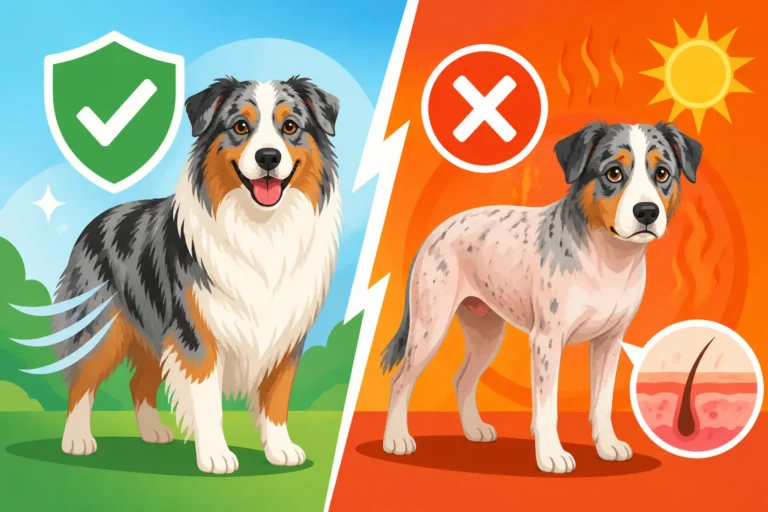
The Australian Shepherd's magnificent double coat, while beautiful and functional for insulation, presents a significant challenge when it comes to tick detection. The dense outer coat and soft, thick undercoat provide ample camouflage for ticks, allowing them to hide easily and often go unnoticed for hours or even days. A small, unengorged tick can feel like a tiny speck or a piece of dirt, especially when buried in such thick fur. This makes it incredibly difficult to spot them by sight alone, requiring a more tactile and systematic approach to ensure no tick is missed. You might run your hands over your dog quickly, but without a deep dive, you're likely to miss something. Understanding What the Undercoat Does on an Aussie is key to realizing just how good it is at hiding things.
Health Risks Associated with Tick Bites
Ticks aren't just gross; they're vectors for a variety of serious diseases that can severely impact your Australian Shepherd's health. Lyme disease, Anaplasmosis, Ehrlichiosis, and Rocky Mountain Spotted Fever are just a few of the debilitating illnesses that can be transmitted through a tick bite. These diseases can lead to a range of symptoms, including lameness, fever, lethargy, loss of appetite, and joint pain. In severe cases, they can affect vital organs and even be life-threatening. Early detection and removal are critical to minimize the risk of disease transmission, as many pathogens require a certain period of attachment to infect the host. The longer a tick is attached, the higher the risk. This makes every tick check a vital preventative health measure for your Aussie.
The Systematic Approach to Checking Your Aussie for Ticks
Checking your Australian Shepherd for ticks isn't a race; it's a careful, methodical process that requires patience and attention to detail. Because of their thick coats, you can't just glance over them. You need to get hands-on and really feel for these tiny invaders. Establishing a routine and knowing where ticks prefer to hide will make your checks much more effective and give you peace of mind.
Gathering Your Tick-Checking Toolkit
Before you even begin, set yourself up for success with the right tools. Having everything at hand means you won't have to stop mid-check, potentially losing track of your progress or, worse, a tick. You'll need:
- Good lighting: A bright room or a headlamp will illuminate hidden spots.
- Gloves: Optional, but they can make some people feel more comfortable handling ticks.
- Tick removal tool: This is non-negotiable. Fine-tipped tweezers or a specialized tick remover tool are essential. Products available on platforms like Amazon or Chewy are specifically designed to grasp the tick close to the skin without squeezing its body.
- Antiseptic wipes or rubbing alcohol: For cleaning the bite area after removal.
- Small container with rubbing alcohol: To safely dispose of any removed ticks. This prevents them from crawling away and ensures they are killed.
- Treats: Keep your Aussie happy and cooperative during what might be a lengthy process.
Step-by-Step Tick Check from Nose to Tail
The key is a systematic approach. Don't just randomly pet your dog; follow a logical path to ensure every inch is covered.
- Start at the head and face: Gently part the fur around your Aussie's muzzle, around their eyes, and especially within and around their ears. Ticks love the warm, dark folds of the ear flaps and inside the ear canal. Pay close attention to any areas of thin fur or skin. This is also a good time to look for signs of Australian Shepherd Ear Infections which might make them more sensitive.
- Move down the neck and chest: Feel against the grain of the fur, applying gentle pressure to detect any small bumps. The ruff (the thicker fur around the neck) is a common hiding spot. Check under their chin and around their throat.
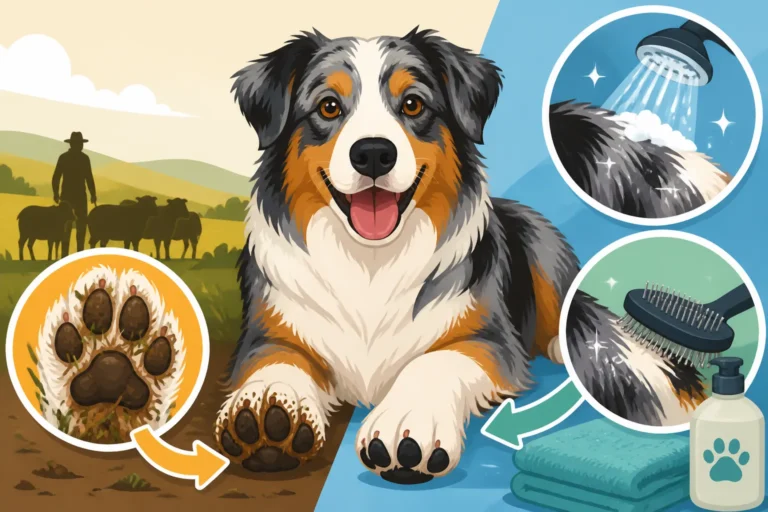
- Inspect the front legs and armpits: Ticks often congregate in the armpits, as it's a warm, protected area. Extend their legs to get good access to the skin folds. Work your way down their legs to their paws, checking between their toes and on their paw pads. Remember, Australian Shepherd Paw and Coat Care After Fieldwork is crucial for detecting things like ticks and burrs.
- Cover the back and belly: Systematically run your hands over their back, parting the fur and feeling for anything unusual. For the belly, gently roll your Aussie onto their back (if they're comfortable) and check their groin area and all along their underside. This area often has thinner fur, but plenty of skin folds to hide in.
- Examine the hind legs and tail: Just like the front legs, check the hind legs, paying close attention to the "armpits" of their back legs (their groin/inner thigh area). Extend their legs and check between their toes. Don't forget their tail, especially underneath where it meets the body. For Aussies with a natural bobtail, ticks might still hide at the base.
As you go, if you find a suspicious bump, part the fur carefully. Many times, it will just be a skin tag or a dried bit of mud, but it’s always better to be sure.
Common Tick Hiding Spots on an Aussie
Ticks are sneaky and prefer areas where they can attach undisturbed, making certain spots on your Aussie particularly high-risk. Knowing these hotspots can help you focus your efforts:
- Ears (inside and out): Warm, dark, and often overlooked. Ticks can embed deeply, sometimes causing irritation that mimics an ear infection.
- Armpits and Groin: These areas offer protection, warmth, and thin skin for easy attachment.
- Between Toes and Paw Pads: Especially after walks through tall grass or wooded areas. Ticks can burrow here, causing discomfort and lameness.
- Under the Collar: The collar provides a sheltered spot for ticks to attach, often going unnoticed.
- Around the Eyes and Muzzle: Thinner skin makes these areas attractive, though ticks here are usually easier to spot.
- Around the Tail Base: Another protected, warm area where ticks can hide.
| Body Area | High Risk Tick Hiding Spots | How to Check |
|---|---|---|
| Head & Face | Inside/outside ears, around eyes, under chin, muzzle folds | Part fur, use fingers to feel for bumps, check ear folds thoroughly. |
| Neck & Chest | Underneath collar, ruff (thick fur), folds of skin | Run fingers against fur growth, lift collar, check all skin folds. |
| Legs & Paws | Armpits, between toes, paw pads, inner thighs | Extend legs, spread toes, apply pressure to pads, feel deep in armpits/groin. |
| Body (Back/Belly) | Along spine, flanks, belly, groin area | Systematically run hands over body, parting fur; roll onto back for belly/groin. |
| Tail | Base of tail, underside, under any longer feathering | Lift tail, feel all around the base, check for bumps hidden in feathering. |
By methodically checking these areas, you significantly increase your chances of finding and removing ticks before they can transmit diseases.
What to Do If You Find a Tick on Your Australian Shepherd
Finding a tick can be alarming, but panicking won't help. The most important thing is to remove it safely and completely. Improper removal can leave parts of the tick embedded in your Aussie's skin, leading to infection or continued irritation. Having a plan and the right tools makes all the difference.
Safe and Effective Tick Removal Techniques
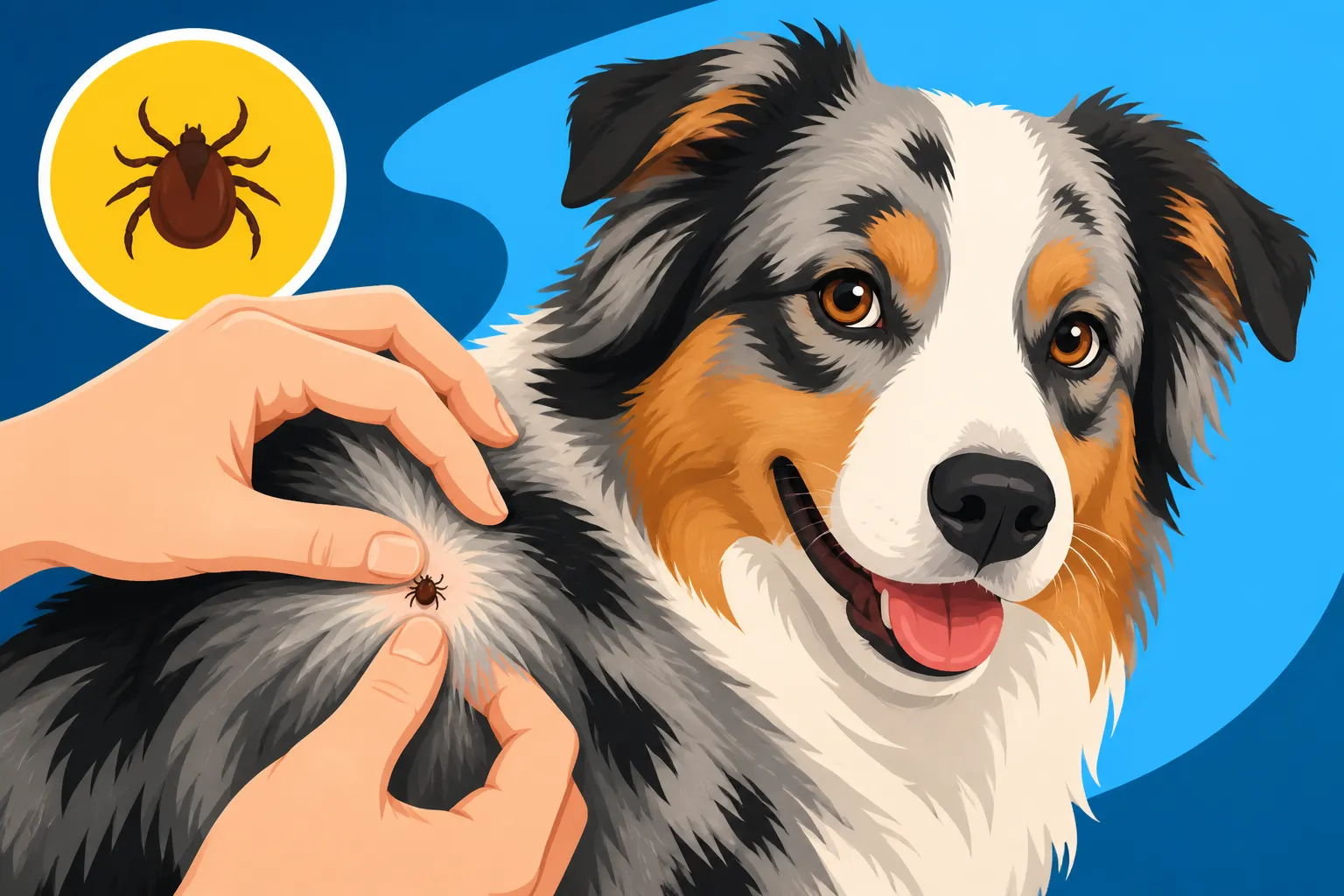
The goal is to remove the tick, head and all, without crushing its body. Crushing the tick can force harmful bacteria into your dog's bloodstream.
- Stay Calm and Prepare: Reassure your Aussie with gentle words and treats. Get your tick removal tool, antiseptic, and the alcohol-filled container ready.
- Part the Fur: Gently part your Aussie's fur around the tick to expose the attachment site. You want a clear view of where the tick's mouthparts enter the skin.
- Use Your Tool:
- Fine-tipped tweezers: Grasp the tick as close to the skin's surface as possible, ideally at the head or mouthparts, not the body. Pull upwards with steady, even pressure. Do not twist or jerk, as this can break off the mouthparts.
- Specialized tick remover (e.g., tick twister): These tools are often easier to use, especially for those uncomfortable with tweezers. Slide the notch of the tool under the tick, close to the skin. Gently twist in one direction until the tick releases its grip. The twisting motion dislodges the mouthparts effectively. Many pet owners find these tools incredibly helpful and can purchase them easily from retailers like Chewy or Amazon.
- Verify Complete Removal: Once the tick is removed, inspect it to ensure the entire body, including the head, is intact. Also, check your Aussie's skin to confirm no mouthparts were left behind. If parts are still embedded, try to remove them with tweezers if they are visible, but avoid digging into the skin as this can cause more harm. Sometimes, embedded mouthparts will eventually work their way out on their own.
- Dispose of the Tick: Drop the removed tick into the container of rubbing alcohol. This will kill it and prevent it from reattaching or laying eggs. Never crush a tick with your fingers or flush it down the toilet, as they can survive and find a new host.
Aftercare for the Bite Site
Once the tick is removed, a little aftercare goes a long way to prevent secondary issues.
- Clean the Area: Clean the bite area thoroughly with an antiseptic wipe or rubbing alcohol. This helps prevent bacterial infection.
- Monitor the Site: Keep a close eye on the bite area for several days to weeks. Look for signs of irritation, redness, swelling, or infection. A small bump or scab is normal, but excessive redness, pus, or a spreading rash warrants a vet visit. Sometimes, an irritated bite can turn into a Hot Spots Hidden in an Aussie Undercoat if your dog licks or scratches it excessively.
- Observe Your Aussie: Beyond the bite site, monitor your Australian Shepherd for any signs of illness in the weeks following a tick bite. Symptoms like lethargy, loss of appetite, limping, fever, or joint pain could indicate a tick-borne disease. If you notice any concerning changes, contact your veterinarian immediately. It’s a good idea to mention the tick bite when you call, as it provides crucial context.
When to Consult Your Veterinarian
While many tick bites are harmless once the tick is removed, there are specific situations where a vet visit is highly recommended:
- Incomplete Removal: If you couldn't remove the entire tick, or if mouthparts are clearly embedded and causing significant irritation.
- Signs of Infection: If the bite site becomes very red, swollen, painful, or discharges pus.
- Symptoms of Illness: Any signs of lethargy, lameness, fever, or other systemic illness following a tick bite should prompt an immediate vet visit. Early diagnosis and treatment of tick-borne diseases are crucial for a better prognosis. This is when an Australian Shepherd Emergency Vet Visit might be necessary.
- Unusual Tick: If you're unsure about the type of tick or if it looks particularly engorged and strange, your vet might want to identify it. Some vets may even suggest you bring the tick in (in alcohol) for identification.
Preventative Measures to Keep Ticks Away From Your Australian Shepherd
The best defense against ticks is a good offense. Implementing preventative strategies can drastically reduce your Aussie's risk of tick exposure and subsequent disease transmission. It's about creating a multi-layered shield that protects your dog in all their adventurous pursuits.
Tick Prevention Products and Medications
The market offers a wide array of tick prevention options, each with its own benefits and application methods. It's essential to discuss these with your veterinarian to choose the best fit for your Australian Shepherd, considering their lifestyle, geographical location, and any specific health concerns they might have, such as the MDR1 Mutation Half of Australian Shepherds Carry.
- Oral Medications: These are popular choices that typically come in chewable tablet form and offer protection for one to three months. They work by entering your dog's bloodstream, killing ticks when they bite. Brands like Bravecto, NexGard, and Simparica are common examples. They are generally unaffected by bathing or swimming.
- Topical Treatments: These liquid medications are applied to a small area of skin, usually between the shoulder blades, and spread across the dog's body. They often repel and kill ticks on contact or after they bite. Frontline Plus and K9 Advantix II are well-known topical options. They usually require waiting a certain period before bathing.
- Tick Collars: Some collars contain active ingredients that repel or kill ticks. They can be effective, but their efficacy can vary depending on the brand and how well they fit. Ensure it's a dedicated tick collar and not just a flea collar, as the active ingredients can differ. Always ensure there's enough space for two fingers to fit comfortably under the collar.
- Shampoos and Dips: While some shampoos can kill ticks on contact, their residual effect is minimal. Dips, which are liquid concentrates mixed with water and applied to the coat, offer more prolonged protection but can be messy and potent. These are often used in high-infestation situations under vet guidance.
- Environmental Sprays: For your yard, certain sprays can help reduce tick populations in grassy or wooded areas. Always ensure any product used around your home is pet-safe.
When considering any medication, especially for an Australian Shepherd, always consult your vet about genetic sensitivities. For instance, you’ll want to be extra cautious with products if your Aussie has The MDR1 Mutation Half of Australian Shepherds Carry. Discussing The Flea Products Dangerous to an MDR1 Aussie and Parasite Prevention Safe for an MDR1 Australian Shepherd with your vet is a critical step to avoid adverse drug reactions.
Environmental Management and Yard Care
While prevention products protect your dog directly, managing their environment reduces the number of ticks they might encounter in the first place.
- Mow Regularly: Keep your lawn mowed short. Ticks prefer tall grass and dense vegetation.
- Clear Brush: Remove leaf litter, brush, and tall weeds from your yard, especially around fences and property lines. Creating a barrier of wood chips or gravel between your lawn and wooded areas can also deter ticks.
- Discourage Wildlife: Ticks often arrive on the backs of deer, raccoons, opossums, and other wildlife. Fencing your yard to deter these animals can help. Avoid leaving pet food outdoors, as it attracts wildlife.
- Sunshine: Ticks dislike dry, sunny areas. Prune trees and shrubs to allow more sunlight into shaded parts of your yard.
Regular Grooming and Inspection Routines
Even with preventative medications and a well-maintained yard, regular physical checks remain your first line of defense. Incorporate tick checks into your daily grooming routine.
- Daily Checks: After every outdoor excursion, especially walks in parks, hikes, or time spent in tall grass, perform a quick but thorough check.
- Brush Thoroughly: Brushing your Australian Shepherd regularly, particularly during Brushing an Australian Shepherd Through Coat Blow season, can help dislodge loose ticks before they have a chance to attach firmly. Use a good quality undercoat rake and slicker brush to get deep into their fur.
- Mindful Walking: Stick to marked trails and avoid walking through tall grass or dense brush where ticks are likely to be waiting. This is especially important for areas where your Aussie might get Checking an Australian Shepherd for Burrs and Foxtails.
- Check Yourself: Ticks don't just stick to dogs. They can latch onto you too. After spending time outdoors with your Aussie, check your clothing and body carefully.
By combining preventative products, diligent environmental management, and consistent grooming and inspection routines, you can significantly reduce the risk of ticks bothering your Australian Shepherd and, more importantly, protect them from potentially life-threatening tick-borne diseases. It’s all part of being a responsible Aussie parent, ensuring their health and happiness through all their outdoor adventures.
Disclaimer
This article is for general informational purposes only and does not constitute professional advice. Laws, prices and regulations vary by location and change over time. Consult a qualified professional for guidance on your specific situation.