Summer Pavement Under an Aussie Foot
The summer sun might feel glorious on your skin, but for our beloved Australian Shepherds, the blazing heat of pavement can be a silent, agonizing threat to their sensitive paw pads. Many of us don't realize how quickly sidewalks and asphalt can reach scorching temperatures, leading to painful burns and serious injury for our active companions. This guide is here to unravel the hidden dangers of hot surfaces and equip you with practical strategies to protect your Aussie's paws, ensuring their summer adventures remain joyful and safe.
The Hidden Danger of Hot Summer Surfaces to Your Aussie's Paws
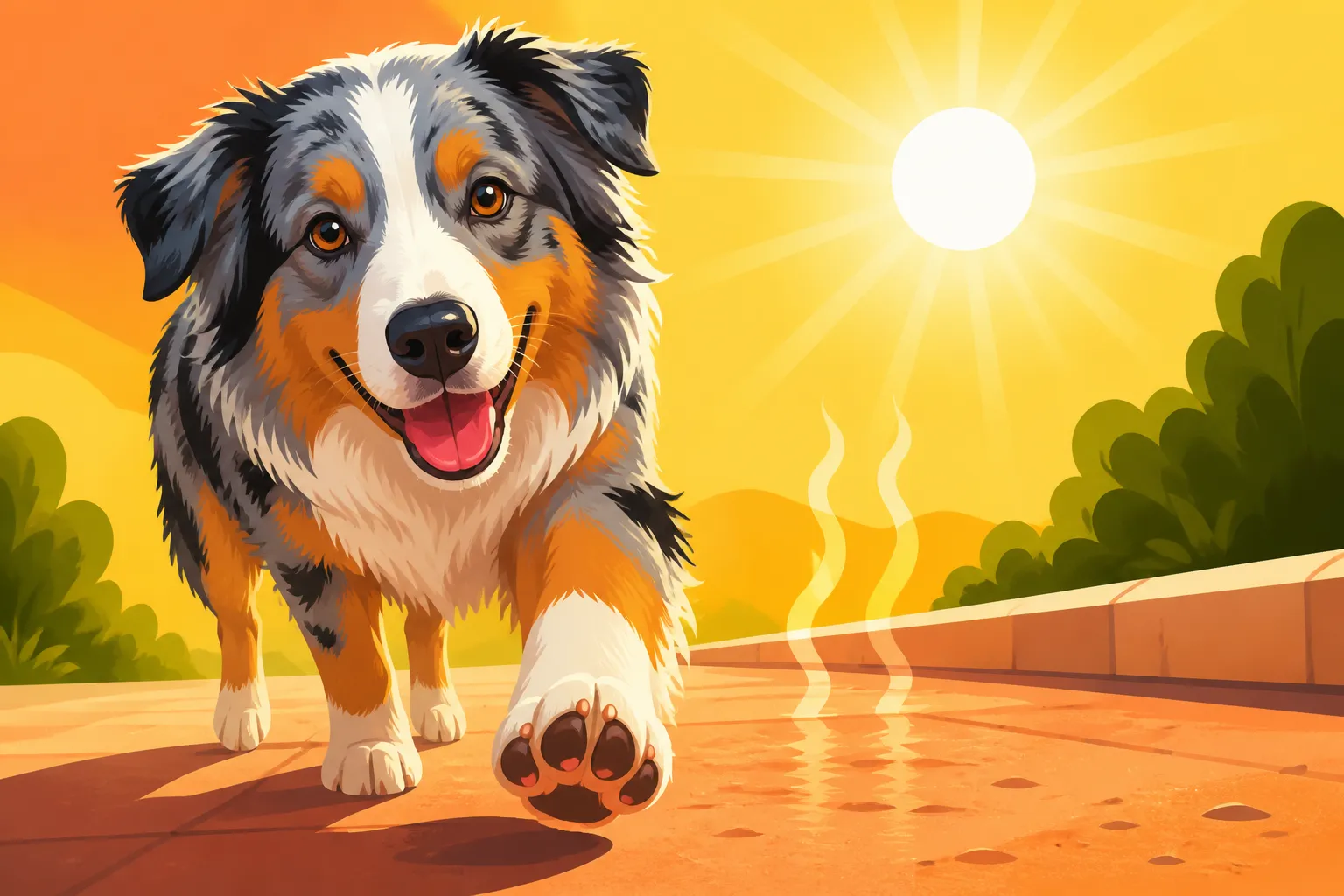
It's easy to assume that if the air feels warm to us, it's just warm for our dogs too. But the reality is far more dangerous. The surfaces we walk on, especially in direct sunlight, can become significantly hotter than the ambient air temperature, turning a pleasant stroll into a torturous ordeal for an Australian Shepherd's unprotected paws. Their pads are tough, yes, but they are not impervious to extreme heat, and they don't have the luxury of wearing shoes like we do.
How Quickly Pavement Can Reach Dangerous Temperatures
You might step outside on an 85-degree Fahrenheit day and think, "This is fine, just a little warm." However, that 85-degree air can mean asphalt is a blistering 135 degrees, and concrete is closer to 120 degrees. Dark surfaces, like asphalt, are particularly adept at absorbing and retaining solar radiation. Imagine walking barefoot on a blacktop parking lot in the middle of a summer afternoon – that's essentially what we're asking our Aussies to do. The sun beats down, heating the ground rapidly, and the heat then radiates upwards, staying trapped close to the surface. It’s not just about the peak temperature; these surfaces hold onto that heat for hours, long after the sun has begun to set. A short five-minute walk on such a surface is more than enough to cause severe damage.
The Types of Injuries Hot Pavement Causes
When an Australian Shepherd’s paw pads come into contact with excessively hot surfaces, the consequences can range from mild discomfort to severe burns. Initially, you might see your Aussie start lifting their paws, limping, or trying to walk on the grass verge. If forced to continue, the pads can develop blisters, much like human skin. These blisters can then rupture, leading to open wounds that are incredibly painful and highly susceptible to infection from bacteria in the environment. In severe cases, the pads can actually peel away, exposing raw tissue underneath. Not only is this excruciating, but it also means a long, slow, and expensive recovery process, often involving bandages, antibiotics, and strict rest. It’s a devastating injury that's entirely preventable, and a stark reminder that our Aussies rely on us to look out for these hidden dangers.
Knowing When Pavement Is Too Hot for Your Australian Shepherd
The key to preventing paw burns is knowing when it's safe to walk. Relying solely on your own perception of the air temperature is a common pitfall. Our shoes protect us, and our hands, which we might briefly touch the pavement with, are far less sensitive than an Aussie's delicate paw pads, which bear their entire body weight on those hot surfaces. It’s crucial to implement reliable methods to assess surface temperature accurately.
The Five-Second Rule: A Simple Home Test
The absolute simplest and most effective test you can do is the "five-second rule." Before you head out for a walk, place the back of your hand flat on the pavement, sidewalk, or any surface your Aussie will be walking on. Hold it there for a full five seconds. If you find it uncomfortable to hold your hand there for that duration – if it feels too hot for you – then it's definitely too hot for your Australian Shepherd's paw pads. It’s a non-negotiable rule. If you can't comfortably keep your hand there, you shouldn't ask your dog to walk on it. This rule works because your hand's sensitivity is a good approximation of the threshold for paw pad injury. Don't just tap it quickly; hold it there to truly gauge the heat retention.
Other Environmental Factors to Consider
Beyond the five-second rule, several other factors play a role in surface temperature. Direct sunlight, even on a cooler day, can significantly heat up pavement. A cloudy day, on the other hand, can keep surfaces much cooler. Consider the time of day: midday sun is the most intense, while early mornings and late evenings offer cooler conditions. Different materials heat up and cool down at different rates.
Consider this handy table to compare common surfaces:
| Surface Type | Heat Absorption | Cooling Rate | Risk Level | Notes |
|---|---|---|---|---|
| Asphalt (blacktop) | Very High | Very Slow | Extremely High | Absorbs sunlight intensely, radiates heat for hours. |
| Concrete (sidewalk) | High | Slow | High | Lighter than asphalt, but still dangerous. |
| Sand (beach) | High | Moderate | High | Can burn even when wet. |
| Artificial Turf | High | Slow | High | Synthetic materials hold heat. |
| Dirt/Packed Earth | Moderate | Moderate | Moderate | Cooler than pavement, but can still get warm. |
| Grass (shaded) | Low | Fast | Low | Ideal walking surface, especially in shade. |
Humidity can also play a role, as high humidity can make the perceived temperature feel even hotter to your dog. Always prioritize natural, shaded surfaces like grass, dirt trails, or wooded paths over concrete or asphalt whenever possible during warmer months. Remember, your Aussie's paws are their primary interface with the world, and protecting them is paramount to their comfort and health. For more on overall health, you might want to read Australian Shepherd Skin, Coat and Allergy Problems.
Protecting Your Aussie's Paws from the Summer Heat
Once you understand the dangers, the next step is proactive protection. It's not just about avoiding hot surfaces, but also about creating a summer routine that keeps your Australian Shepherd active and happy without putting their paws at risk. This might require a shift in your habits, but your Aussie's comfort and well-being are absolutely worth it.
Adjusting Your Walking Schedule and Routes
The simplest and most effective way to protect your Aussie's paws is to adjust when and where you walk. During summer, the golden rule is to walk early in the morning before the sun has a chance to bake the pavement, or late in the evening after the sun has set and surfaces have had ample time to cool down. This often means waking up with the sun or enjoying twilight strolls. Daytime walks should be reserved for emergencies or carried out exclusively on natural, shaded surfaces. Think about walking your Aussie on grassy parks, dirt trails in wooded areas, or even exploring nature reserves where paved paths are minimal. If you live in an urban environment, seek out areas with mature trees that cast consistent shade on sidewalks. Remember that even brief dashes across hot pavement to get to a grassy patch can cause injury, so plan your entire route carefully. For more on planning your dog's activity, check out Australian Shepherd Exercise at One to Two Hours a Day.
Paw Protection: Boots and Balms
Sometimes, avoiding hot pavement entirely isn't possible, or your Aussie simply needs extra protection. This is where paw protection gear comes in. Dog boots can be incredibly effective, acting as a barrier between your Aussie's paws and searing surfaces. They come in various styles, from lightweight mesh designs for breathability to more rugged options for rough terrain. The trick is finding a pair that fits well and is comfortable, and then patiently training your Aussie to wear them. Start with short durations indoors, offering lots of praise and treats, gradually increasing the time spent wearing them. Many pet supply retailers like Chewy or Amazon offer a wide selection of dog boots, so you can find one that suits your Aussie's paw shape and your budget.
Paw balms, while wonderful for conditioning and protecting paw pads from dryness or cracking, are not a substitute for boots when it comes to hot pavement. They create a protective barrier against moisture and minor abrasions, helping to keep pads healthy and resilient, but they do not provide significant thermal insulation. Think of them as a good skincare product for paws, not heat shields. Use them regularly to maintain paw health, but always pair them with sensible walking times or boots when hot pavement is a concern. For more extensive paw care, see Australian Shepherd Paw and Coat Care After Fieldwork.
Providing Alternative Exercise When Pavement Is Unsafe
On those days when the pavement is just too hot for outdoor walks, it doesn't mean your high-energy Australian Shepherd has to become a couch potato. Aussies thrive on mental and physical stimulation, so finding alternative ways to burn off energy indoors or in cooler, safe environments is crucial. Indoor fetch, learning new tricks, or engaging in scent work games can provide excellent mental stimulation. Puzzle feeders, which can be easily sourced from places like Amazon or Chewy, are fantastic for making mealtime a challenging game, engaging your Aussie's problem-solving skills. You can even try hiding high-value treats from brands like Ollie around the house for a fun "find it" game.
If you have access to a shaded yard with grass, a game of flirt pole or a splash in a shallow dog-friendly pool (not too cold, of course!) can be a great way to cool down and get some physical exercise. Some dog daycares offer temperature-controlled indoor play areas, which might be an option on particularly scorching days. Remember, managing heat exposure isn't just about paws; it's about preventing overheating, especially for a double-coated breed. Keep an eye on signs of heat stress and ensure they have plenty of water; see Australian Shepherd Water Needs on a Long Day Out for more on hydration.
What to Do If Your Aussie Burns Its Paws
Despite our best efforts, accidents can happen. If you suspect your Australian Shepherd has burned its paws, acting quickly and appropriately is crucial to minimize pain and prevent further complications. Knowing immediate first aid steps and when to seek professional veterinary help can make a significant difference in your Aussie's recovery.
Immediate Steps for First Aid
If you notice your Aussie limping, licking their paws excessively, or showing signs of discomfort after walking on a warm surface, get them off the hot ground immediately. Carry them if possible, or direct them to a cooler surface like grass or dirt.
- Cool the Paws: Gently rinse their paws with cool (not icy cold) water for about 10-15 minutes. You can use a hose on a low setting, a cool damp cloth, or stand them in a shallow basin of cool water. The goal is to bring down the tissue temperature.
- Examine the Paws: Carefully inspect each paw pad. Look for redness, swelling, blisters, or any peeling skin. Even if it looks minor, the damage could be deeper than it appears.
- Prevent Licking: Once you've cooled them, try to prevent your Aussie from licking their paws. Licking can introduce bacteria and worsen the injury. You might need to use an E-collar (cone) if you have one on hand.
- Gentle Cleaning: If there's any visible dirt or debris, gently clean the area with a mild, antiseptic solution if recommended by your vet, or simply more cool water. Avoid harsh chemicals or rubbing alcohol, which can cause further irritation.
For any noticeable injury, even mild redness, it’s always best to contact your veterinarian. They can assess the severity of the burn and provide proper guidance. You can also refer to Australian Shepherd Paw Injuries From Hard Running for related information on paw health.
When to Seek Veterinary Attention
It's tempting to think a minor burn will heal on its own, but paw pad burns can be serious and quickly become infected without proper care. You should absolutely seek immediate veterinary attention if you observe any of the following:
- Blistering or Peeling Skin: This indicates a second-degree or worse burn and requires professional treatment to prevent infection and promote healing.
- Deep Redness and Swelling: Significant inflammation suggests a more severe burn.
- Extreme Pain or Lameness: If your Aussie is unwilling to put weight on their paw, constantly licking, or vocalizing in pain, they need veterinary care for pain management and wound assessment.
- Signs of Infection: Pus, foul odor, worsening redness, or persistent swelling days after the initial injury are all red flags indicating an infection that needs antibiotics.
- Reluctance to Eat or Lethargy: General malaise can be a sign that your Aussie is in significant pain or that the injury is affecting their overall health.
Your vet might prescribe pain medication, antibiotics, special wound dressings, or recommend specific cleaning routines. Following their instructions meticulously is key to a smooth recovery and preventing chronic issues. Remember, your Aussie's paws are vital for their mobility and quality of life, and prompt, professional care for burns is non-negotiable. Keeping your Aussie comfortable and healthy into their later years, even with active lives, is key, so remember resources like An Aussie Stiff After a Career in Agility to keep their movement pain-free.
Disclaimer
This article is for general informational purposes only and does not constitute professional advice. Laws, prices and regulations vary by location and change over time. Consult a qualified professional for guidance on your specific situation.