An Australian Shepherd Puppy Growth Chart
Watching your Australian Shepherd puppy grow from a tiny, fluffy bundle into a confident, lean working dog is one of the most exciting parts of bringing them into your home. However, it’s also common to feel a little anxious, wondering if your pup is on track, if they’re gaining enough weight, or if their legs look a bit too long and gangly. This guide is here to walk you through what a typical Australian Shepherd puppy growth chart looks like, what milestones to expect, and what factors might influence your unique Aussie’s journey.
Understanding Your Australian Shepherd Puppy's Growth Journey
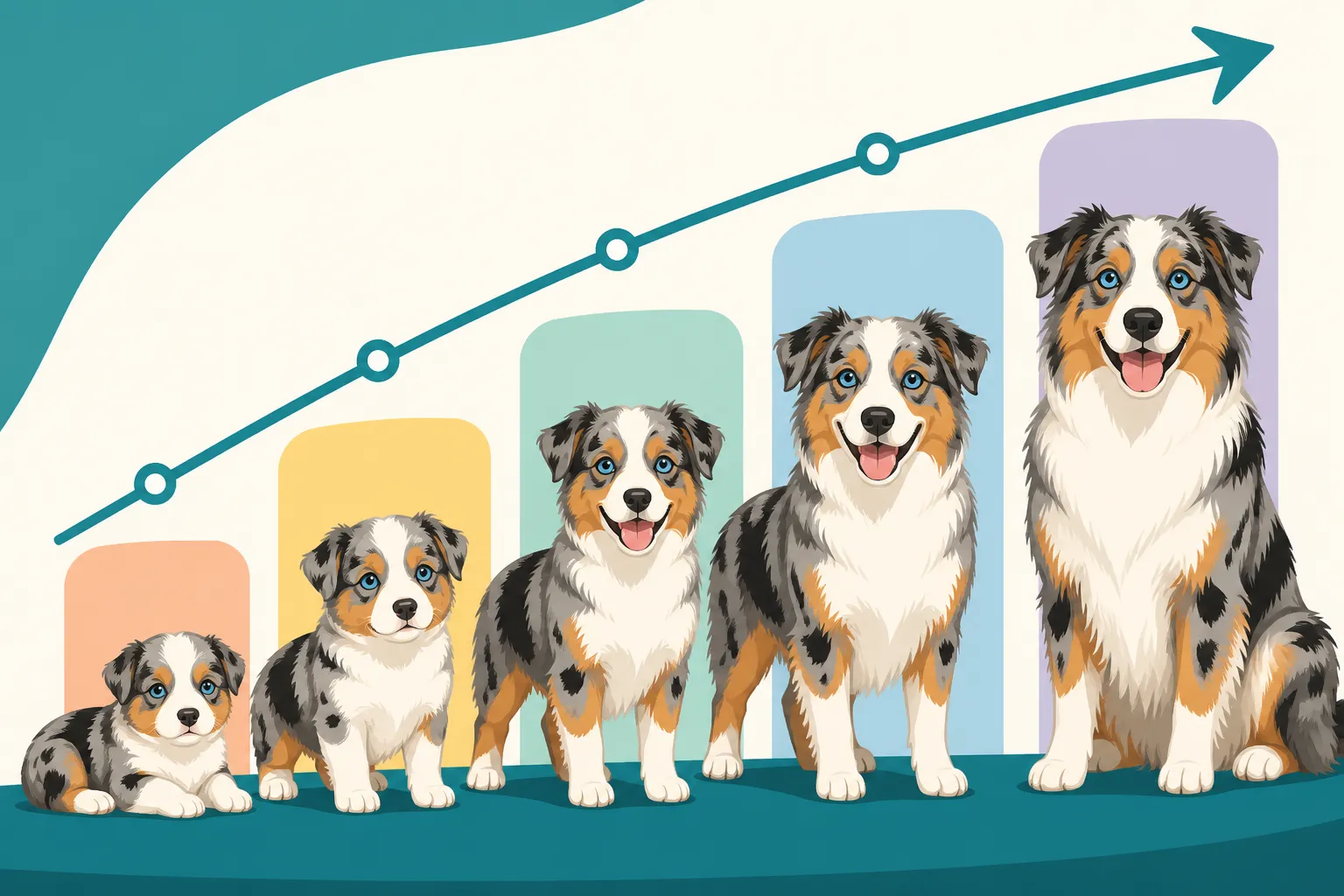
It’s easy to look at a squishy eight-week-old Australian Shepherd puppy and imagine them staying that adorable size forever, but Aussies are known for their strong growth spurts, especially in their first year. They’re not tiny dogs, nor are they giants; they land right in that medium-large category, usually topping out between 35 and 70 pounds, and standing 18 to 23 inches tall at the shoulder. But getting there isn't a straight line. You'll see periods of rapid growth, sometimes weekly, followed by plateaus. This can make their proportions look a little strange sometimes – those long, awkward legs that seem too big for their body are completely normal as they stretch out before filling in.
The journey from puppyhood to adulthood is typically a two-year process for an Australian Shepherd, even if most of their height and much of their weight are gained within the first 12 to 18 months. Those first few months are incredibly impactful, setting the stage for their skeletal and muscular development. Proper nutrition during this time is absolutely critical, ensuring their bones and joints develop correctly without too much stress. It’s not just about weight, either; it's about the healthy development of their entire structure, which supports their active, herding lifestyle.
One thing to remember is that every puppy is an individual, even within the same litter. There will always be some variation, influenced by genetics, nutrition, and even how much activity they get (though it’s crucial not to over-exercise a growing pup!). Don’t get too caught up comparing your puppy daily to their littermates or other Aussies you see online. Focus on steady, healthy gains and consult your vet if you have any significant concerns. What we're aiming for is strong, consistent development, not necessarily being the biggest or heaviest pup on the block.
What Does "Average" Growth Look Like for an Aussie?
When we talk about an "average" growth chart for an Australian Shepherd, we're really giving you a general guideline. These numbers are derived from typical ranges for the breed, acknowledging that male Aussies tend to be larger than females, both in height and weight. Think of these as markers, not strict rules carved in stone. Your puppy might hit some of these benchmarks a little earlier, or a little later, and that's usually perfectly fine. The key is to observe a consistent upward trend.
For example, a male Australian Shepherd might reach 40 pounds by six months, while a female might be closer to 30-35 pounds. By their first birthday, most Aussies will have reached nearly their full height, but they'll still be "filling out" and gaining muscle and density until they're around 18-24 months old. This "filling out" phase is often overlooked but it's where they transition from a lanky adolescent into a powerful adult. During this time, you might not see the scale move as dramatically, but you'll notice their chest widening, their shoulders broadening, and their overall physique maturing.
Consider what you know about your puppy's parents if you've met them. A puppy from two smaller parents is unlikely to grow into a giant, just as a puppy from two very large parents might exceed the typical average. These genetic predispositions play a huge role. Knowing the general growth trajectory helps you anticipate changes, adjust their food portions, and ensure they have appropriate gear, like a crate that will still fit them a few months down the line.
| Age | Average Male Weight (lbs) | Average Female Weight (lbs) | Notes |
|---|---|---|---|
| 8 Weeks | 8-15 | 7-13 | Ready for new homes, significant weekly growth starts. |
| 3 Months | 20-30 | 18-25 | Rapid growth phase, puppy proportions are often awkward. |
| 6 Months | 35-50 | 30-45 | Nearing full height, but still lanky; major muscle development to come. |
| 9 Months | 45-60 | 40-55 | Filling out, gaining density. |
| 12 Months | 50-65 | 45-60 | Close to adult size, still maturing, especially males. |
| 18-24 Months | 50-70+ | 40-55+ | Reaching full adult weight and muscle mass. |
This chart gives you a quick visual, but again, remember it’s a guide!
The Importance of Tracking Your Puppy's Weight
Regularly tracking your Australian Shepherd puppy's weight isn't about hitting certain numbers precisely, but about identifying trends and ensuring steady, healthy progress. Especially in those early months, weekly weight checks can be incredibly reassuring. You don't need fancy equipment; a simple bathroom scale can work. Weigh yourself, then weigh yourself holding your puppy, and subtract your weight to get a good estimate. This simple routine allows you to quickly notice if your pup suddenly stops gaining weight, or worse, starts losing it, which could signal a potential health issue.
Beyond just the numbers on the scale, it's also about visual and tactile assessment. Learning to perform a body condition score on your puppy is a skill every Aussie owner should have. You should be able to feel their ribs easily without seeing them, and they should have a discernible waist when viewed from above. If the ribs are too prominent, they might be underweight; if you can't feel them at all, they might be carrying too much weight. This is particularly important for a breed like the Australian Shepherd, which needs to maintain a lean, athletic build for optimal health and joint support.
Maintaining a small journal or a spreadsheet to log their weight each week, along with any significant observations (like a sudden growth spurt or a period of decreased appetite), can be invaluable. This record becomes a powerful tool you can share with your veterinarian during check-ups. It provides concrete data beyond just "he seems to be growing well," allowing your vet to make more informed assessments about their overall health and nutritional needs. This kind of diligent tracking empowers you to be a proactive advocate for your Aussie's health.
Key Milestones on the Australian Shepherd Puppy Growth Chart
Beyond just size and weight, there are several developmental milestones your Australian Shepherd puppy will hit that mark their journey to adulthood. These aren't always reflected on a numerical chart, but they are crucial indicators of their overall health, temperament, and readiness for various stages of training and activity. Knowing these milestones can help you plan your training approach and ensure you're providing the right environment for their physical and mental development.
From the emergence of their first baby teeth to the closing of their growth plates, each stage brings new responsibilities and considerations. Understanding when these changes typically occur can help you anticipate certain behaviors, prevent potential injuries, and tailor their care appropriately. For instance, knowing when their adult teeth are coming in means you'll want to have plenty of appropriate chew toys on hand. Recognizing the signs of puberty means understanding why their recall might suddenly go out the window, or why they're testing boundaries more frequently. It’s all part of the wild and wonderful journey of raising an Aussie!
Eight Weeks: Homecoming and Initial Growth Spurts
When your Australian Shepherd puppy comes home at around eight weeks old, they’re typically a bundle of wiggles, enthusiasm, and sharp little teeth. At this age, they're generally weighing in between 7 and 15 pounds, depending on their sex and lineage. This is a period of intense change and rapid growth. You'll notice they seem to grow almost daily, filling out a little more, and their puppy fuzz starting to transition into a denser coat. This is also when their socialization window is wide open, and every new experience is crucial. It’s important to begin with gentle, positive exposures to sights, sounds, and people. You should also ensure they get their The Aussie Puppy Eye Check at Six Weeks to rule out any early vision issues.
Their appetite will be robust, and they'll likely be eating three meals a day. This is a critical time for proper nutrition. Consult with your breeder and vet about the best food for them, focusing on formulas designed for large breed puppies or all life stages, to support their rapid bone and muscle development without encouraging too-fast growth, which can be detrimental to their joints later on. Three Meals a Day for an Aussie Puppy is usually the standard at this age.
Potty training is a huge focus now, and consistency is key. Expect frequent potty breaks – every 20-30 minutes when they're awake, and immediately after waking, eating, or playing. They're like little sponges, soaking up information, but their bladders are tiny! This early period is also when you'll start working on basic obedience, like their name, sit, and maybe a gentle leash introduction. Keep sessions short, fun, and positive.
Six Months: Adolescent Energy and Lanky Limbs
By six months, your Australian Shepherd puppy is usually a gangly adolescent, having hit a significant portion of their adult height. They might weigh anywhere from 30 to 50 pounds. This is often described as the "awkward" stage, where their legs seem disproportionately long, and they haven't quite filled out into their adult physique. They're bursting with energy and curiosity, and their herding instincts might start becoming more apparent, perhaps with some gentle Australian Shepherd Puppy Biting and Herding Nips at your heels. This is the perfect time to give them appropriate outlets for that drive.
Mentally, they're often challenging boundaries. Their puppy cuteness is still there, but it's mixed with a surge of independence and perhaps a touch of "selective hearing." Consistency in training is paramount during these months. They need clear rules, continued positive reinforcement, and plenty of appropriate mental and physical stimulation. This is also the stage where many owners start exploring structured puppy classes or more advanced obedience. Remember The Aussie Puppy Curriculum Month by Month is a great resource to follow.
Physically, while they have a lot of energy, it’s vital to be mindful of their developing joints and Exercise Limits for a Growing Australian Shepherd. Over-exercising a young Aussie on hard surfaces or with repetitive, high-impact activities can put undue stress on their Australian Shepherd Growth Plates and When They Close, potentially leading to long-term orthopedic issues. Focus on controlled play, varied terrain, and mental enrichment activities rather than endless, unsupervised running or jumping. Continued proper nutrition, perhaps transitioning to an adult formula if recommended by your vet, is also important as they continue to mature.
One Year: Nearing Full Stature, Still Maturing
When your Australian Shepherd celebrates their first birthday, they are largely at their adult height, though some may still grow another inch or two. Weight-wise, males might be in the 50-65 pound range, with females around 45-60 pounds. However, despite reaching their height, they are far from fully mature. This next year, from 12 to 24 months, is all about filling out. Their chests will deepen, their muscles will develop, and they’ll lose that lanky, adolescent look in favor of a more robust, athletic build.
Behaviorally, they might still act like a giant puppy, but they are more capable of impulse control and sustained attention. This is a great time to delve deeper into training, perhaps exploring dog sports like agility, obedience, or even basic herding if you have access. Their boundless energy still requires significant outlets, and consistent daily exercise and mental challenges are non-negotiable for a well-adjusted Aussie. Without it, you might find them inventing their own "jobs," which often aren't to your liking!
Continuing with a high-quality adult dog food, appropriate for their activity level, is essential to support this filling-out phase. Products from brands like Chewy, offering a wide range of premium dog foods, can be a great place to start your search. Regularly assessing their body condition will help you determine if their caloric intake needs adjusting. Remember that while they may look grown-up, their growth plates are still fully closing, and their minds are still developing. They are still susceptible to injury from overexertion, and their emotional maturity is still a work in progress. Patience and consistent guidance remain key during this second year.
Factors Influencing Your Aussie Puppy's Size and Development
It's fascinating how much variety we see even within the same breed. While the growth charts provide a roadmap, several factors can steer your particular Australian Shepherd puppy onto its own unique path. Understanding these influences can help you better interpret your pup's growth and anticipate potential variations from the average. It's never just one thing, but a combination of elements that determine their ultimate size and how quickly they get there.
From the genetic blueprint inherited from their parents to the food in their bowl and the adventures they embark on, each aspect plays a role. Sometimes, these factors are within your control, and sometimes they're simply part of the unique individual your Aussie is destined to become. Recognizing these influences also helps you make informed choices, particularly around nutrition and exercise, to support healthy growth and minimize risks associated with rapid or unbalanced development.
Genetics: The Blueprint from Parents
Without a doubt, genetics play the most significant role in determining your Australian Shepherd puppy's adult size and general growth trajectory. Think of their parents as the blueprint. If both parents are on the smaller side of the breed standard, it's highly probable their offspring will also be smaller. Conversely, if you've seen two larger-than-average parents, you can expect a larger puppy. This isn't just about height and weight; it's also about bone structure, muscle density, and even the speed at which they grow. Some lines simply mature faster than others.
Responsible breeders will often be able to provide you with information about the size and growth patterns of previous litters from the same parents, offering a clearer picture of what to expect. They also conduct comprehensive The Genetic Panel Every Australian Shepherd Needs to screen for hereditary health issues that could indirectly impact growth or overall health. This includes checking for things like the MDR1 mutation, which doesn't affect size but is crucial for their drug sensitivity.
It’s also worth considering the lineage – whether your Aussie comes from working lines or show lines. While both are Australian Shepherds, working lines can sometimes be a bit leaner and more athletic, while some show lines might trend towards a more substantial build. However, these are generalizations, and individual variation is always present. The key takeaway is that your puppy's ultimate size is largely predetermined by the genes they inherited.
Nutrition: Fueling Healthy Growth
What you feed your Australian Shepherd puppy is arguably the most critical factor you control in their healthy development. Providing appropriate, high-quality nutrition is paramount. This means selecting a dog food formulated for puppies, specifically "large breed puppy" formulas or "all life stages" foods that meet the nutritional needs for growing large breed dogs. These foods are designed with a careful balance of calcium and phosphorus, as well as protein and fat levels, to promote steady, not rapid, growth. Rapid growth, often fueled by too many calories or an imbalance of minerals, can put undue stress on developing joints and lead to orthopedic problems like hip or elbow dysplasia.
Brands like Ollie, which offers fresh, human-grade food, can be an excellent option for ensuring optimal nutrition, provided the formulas are balanced for growth. Similarly, many reputable kibble brands available on platforms like Amazon also offer excellent large-breed puppy formulations. Always read labels carefully and choose foods that have passed AAFCO feeding trials for growth. When you're Feeding an Aussie Puppy to Fifty Pounds, it's not just about the volume of food, but the quality and balance of nutrients.
Overfeeding can be just as detrimental as underfeeding. A plump puppy might look adorable, but excess weight puts extra strain on their still-developing bones and joints. Use the body condition score described earlier to monitor your puppy's weight. Adjust their food intake as needed based on their activity level, metabolism, and growth phase. Your veterinarian is your best resource for specific dietary recommendations tailored to your Aussie’s individual needs.
Exercise and Activity Levels: Balance is Key
The Australian Shepherd is a high-energy breed, and it’s natural to want to exercise them thoroughly. However, when they are puppies, especially during those rapid growth phases, finding the right balance of exercise is crucial. Too little exercise can lead to boredom, destructive behaviors, and insufficient muscle development. Too much, especially high-impact or repetitive activities, can stress their immature joints and growth plates, potentially causing long-term damage. This is why understanding Australian Shepherd Growth Plates and When They Close is so important.
For young puppies (up to about 4-6 months), exercise should mostly be free play in a safe, enclosed area, allowing them to self-regulate. Short, leash-walks of 5-10 minutes a few times a day are sufficient. Avoid forced running, long hikes, jumping from heights, or excessive stair climbing. As they get older (6-12 months), you can gradually increase the duration and intensity of walks and playtime. Fetch on a soft surface is fine, but don't overdo it with endless repetitions. Focus on varied activities that engage their minds as well as their bodies.
Once they reach about 12-18 months, and definitely by 18-24 months when their growth plates are typically closed, you can start introducing more strenuous activities like longer hikes, running, or dog sports. But even then, build up stamina gradually. Always observe your puppy for signs of fatigue or discomfort, and remember that mental exercise, like puzzle toys or training sessions, can be just as tiring and beneficial as physical exercise. A well-rounded approach ensures their body develops strongly without unnecessary strain.
When to Consult Your Vet About Your Aussie's Growth
While variations in growth are normal, there are certainly times when a quick call or visit to your veterinarian is warranted. Trust your gut instinct as a pet parent. If something just doesn't feel right, it's always better to err on the side of caution. Your vet has the expertise and diagnostic tools to properly assess your Australian Shepherd puppy's development and address any underlying issues. Don't hesitate to reach out if you have concerns, no matter how small they might seem.
Catching potential problems early can make a huge difference in outcomes, especially with a breed prone to certain orthopedic or genetic conditions. Your vet can provide tailored advice, adjust feeding recommendations, or suggest further investigations if necessary. Regular check-ups are already built into a puppy's first year, so use those appointments to voice any observations you've made about their growth and overall well-being.
Sudden Changes or Stunted Growth
One of the most immediate reasons to contact your vet is if you notice a sudden, unexplained change in your Australian Shepherd puppy's growth pattern. This could be a dramatic slowdown in weight gain after a period of steady increase, or even worse, weight loss. While a slight plateau might occur naturally, a significant drop off the growth curve is a red flag. Similarly, if your puppy appears noticeably smaller or much less developed than expected for their age, especially when compared to siblings or typical breed standards, it warrants investigation.
Potential causes for stunted growth or sudden changes can range from dietary deficiencies or internal parasites (like worms, which are common in puppies) to more serious underlying health conditions. Malabsorption issues, chronic infections, or even organ problems can manifest as a failure to thrive or gain weight appropriately. Your vet will conduct a thorough physical examination, ask about their diet, energy levels, and bathroom habits, and may recommend fecal tests or bloodwork to pinpoint the cause. Early detection and treatment are vital to get your pup back on track and ensure their long-term health. Australian Shepherd Puppy Diarrhea After Homecoming can sometimes be a sign of issues that could impact growth, so don't ignore persistent digestive upset either.
Limping, Pain, or Abnormal Gait
Australian Shepherds are active dogs, and a little occasional clumsiness during their lanky growth phases isn't unheard of. However, persistent limping, favoring a leg, or any signs of pain when moving are serious concerns that need immediate veterinary attention. Puppies' bones and joints are still developing, making them particularly vulnerable to injuries or developmental orthopedic diseases. Issues like osteochondritis dissecans (OCD), panosteitis (growing pains), or early signs of hip or elbow dysplasia can present as lameness or an abnormal gait.
If you observe your puppy consistently struggling to get up, reluctance to play, a change in how they run or walk, or a visible swelling on a joint, do not wait. Prompt diagnosis is key. Your vet will likely perform a lameness exam, checking range of motion and pain responses, and may recommend X-rays to assess bone and joint health. While some conditions like panosteitis are self-limiting, others may require specific management or even surgical intervention to prevent long-term disability. Remember, a working breed like an Aussie needs healthy joints for a full and active life, so any signs of discomfort should be taken seriously.
Not Meeting Expected Milestones
Beyond physical size, there are developmental milestones that encompass behavior, coordination, and sensory development. While every puppy develops at their own pace, significant delays in reaching these milestones can sometimes indicate an underlying issue. For instance, if your puppy is much older than eight weeks and still struggles with basic coordination, or if their social interactions are unusually withdrawn or aggressive for their age, these could be points to discuss with your vet.
Similarly, if you notice concerns about their vision or hearing – perhaps they don't react to loud noises, or they bump into things frequently – these are important to investigate. Conditions like congenital deafness or certain eye defects, though rare, can be present from birth. Responsible breeders often perform early health checks, but issues can still arise. Your vet can help assess sensory functions and refer you to specialists if needed. While this article focuses on physical growth, the overall developmental picture is what truly matters for a healthy, happy Aussie. Don't be afraid to voice any concerns about their general progress. The Health Tests Every Australian Shepherd Parent Needs is a great reference for what screenings good breeders prioritize.
Disclaimer
This article is for general informational purposes only and does not constitute professional advice. Laws, prices and regulations vary by location and change over time. Consult a qualified professional for guidance on your specific situation.